Is Osaka Worth Visiting? (2026)
Disclosure: Some links in this guide are affiliate links. If you book or buy through them, we may earn a small commission at no extra cost to you — it helps keep our guides free.
Osaka is worth visiting as its own overnight stop, not merely a day trip from Kyoto, because its food scene, nightlife, and Universal Studios Japan outperform anything reachable within the 13-minute shinkansen ride to Kyoto or the 2-hour-30-minute run to Tokyo.
It stops being worth a dedicated stay if your total Japan trip is under 6 nights and you are already sleeping in Kyoto, because the round trip eats an evening you would spend better inside either city.
| Traveller type | Worth it? | Nights to give it | Why |
|---|---|---|---|
| First-timer with 10+ days in Japan | Yes | 2 | Food, nightlife, and Universal Studios Japan earn a proper stay |
| First-timer with under 6 days total | Day trip only | 0 | The Kyoto round trip costs less time than checking into a new hotel |
| Food and nightlife travelers | Yes | 2-3 | Dotonbori and Kuromon Ichiba outclass Kyoto’s quieter dining streets |
| Families with kids under 12 | Yes | 2 | Super Nintendo World is the strongest single draw in the Kansai region |
| Temple and history travelers | Day trip only | 0-1 | Kyoto’s density of historic sites has no Osaka equivalent |
| Repeat Japan visitors chasing something new | Yes | 1-2 | Less touristy than Kyoto after dark, cheaper than a Tokyo night out |
What Osaka does better than Kyoto or Tokyo
Osaka wins on food density, after-dark energy, and one theme park that has no real equivalent in either neighboring city.
Dotonbori and Kuromon Ichiba Market pack a concentration of street food stalls, izakayas, and standing bars into a few walkable blocks that Kyoto’s more reserved dining streets do not match, and the area stays lively well past the hour Kyoto starts winding down.
The nightlife also reads less staged for tourists than Gion’s evening crowds, since much of it is local salarymen and students rather than camera-carrying visitors.
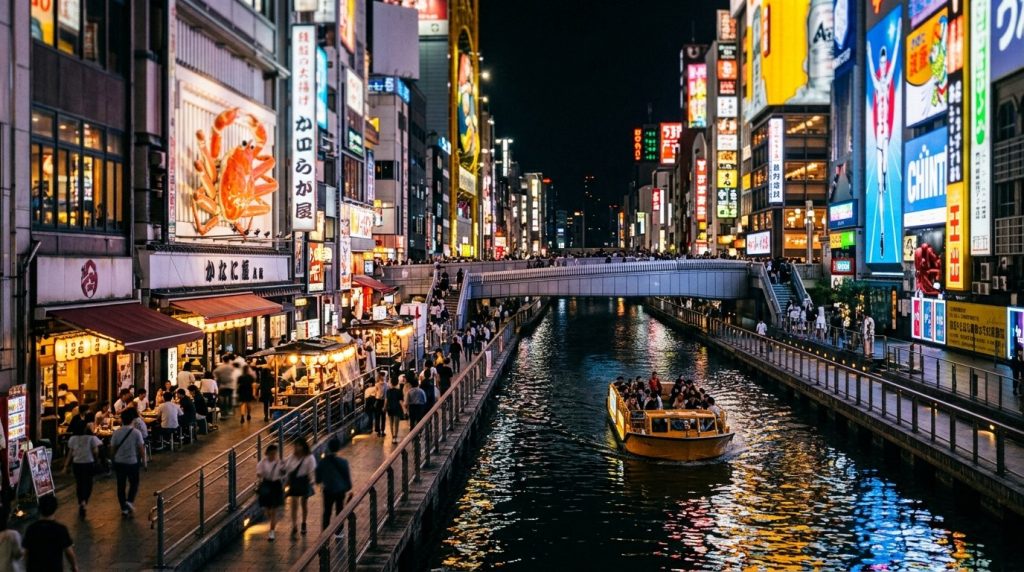
The other advantage is Universal Studios Japan, home to Super Nintendo World, which pulls families and Nintendo fans that neither Kyoto nor Tokyo can offer at this scale.
Since January 2026, entry into Super Nintendo World has required a free Area Timed Entry Ticket booked through the official USJ app, so plan to register your party as soon as you’re through the gate rather than assuming a walk-in works during busy hours.
That single park is often the deciding factor for families choosing Osaka nights over an extra Kyoto or Tokyo night.
Osaka also carries a looser, more talkative street culture than either neighbor, the kind visitors describe as brasher and friendlier at the same time. Strangers heckle you into takoyaki stalls, comedians work small theaters most tourists never find, and the whole city feels tuned for eating and being loud about it rather than for reverence.
That character is a genuine point of difference, not a consolation prize for missing out on Kyoto’s temples.
What Osaka is genuinely weak at
Osaka is thin on marquee historic sites and, right now, has nothing to show from last year’s World Expo. Expo 2025 Osaka closed in October 2025, and the Yumeshima site has been under dismantling into 2026, so it is not a working attraction and should not factor into your planning this year.
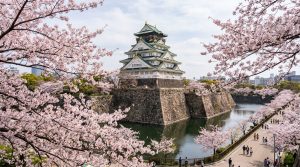
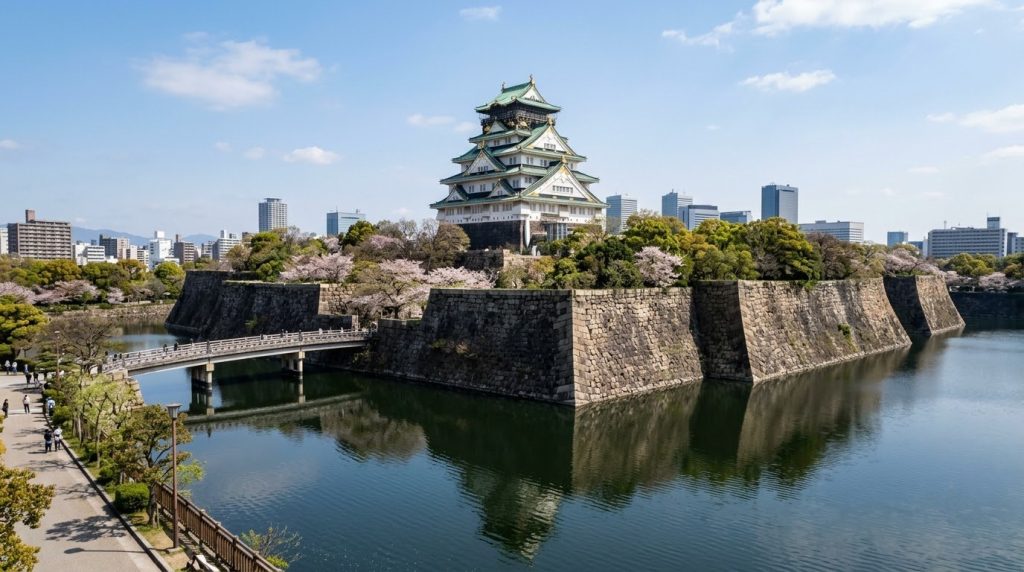
Compared with Kyoto’s dense cluster of temples, shrines, and preserved streets, Osaka’s sightseeing list is short and leans commercial: an aquarium, an observation deck, a castle park, and the entertainment districts already covered above.
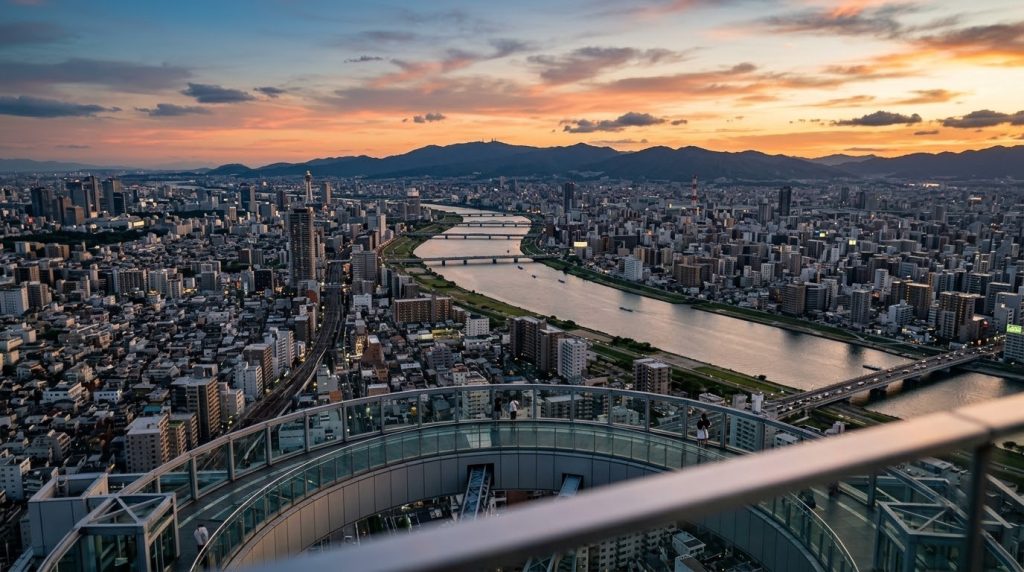
The skyline is also more utilitarian than scenic, built around office towers and shopping complexes rather than the kind of postcard streets that make Kyoto worth wandering without a plan. If your idea of a good travel day is quiet temple courtyards, Osaka will feel like a letdown between meals, and no amount of good food fixes that mismatch.
Osaka as a base versus Osaka as a day trip
Basing yourself in Kyoto and day-tripping into Osaka works fine because the ride is genuinely short, but basing yourself in Osaka only pays off if Tokyo, not Kyoto, is the other city anchoring your trip.
Shin-Osaka to Kyoto Station takes about 13 minutes on the fastest Nozomi shinkansen and up to 17 minutes on a Hikari, which is shorter than many subway commutes, so an evening in Dotonbori does not require packing a bag or losing a hotel night.
That short hop is exactly why the full day-by-day Osaka itinerary works whether you sleep in Osaka or ride in from Kyoto.
Shin-Osaka to Tokyo is a different scale of decision: roughly 2 hours 30 minutes by shinkansen, with the fastest Nozomi departures closer to 2 hours 21 minutes.
Trading a Tokyo night for an Osaka night means giving up half a travel day each way, so that trade only makes sense if you are genuinely choosing between the two cities rather than treating Osaka as a side trip.
For the Kyoto-specific version of this trade-off, see the Tokyo vs Kyoto comparison, which covers where each city wins on its own terms.
There is also a luggage angle worth naming plainly. Staying overnight in Osaka means you check into a hotel once and explore on foot from there, while a day trip means carrying anything you buy back onto a crowded evening train to Kyoto. That one-hotel advantage is why Osaka works as a day-trip base, with Kyoto, Nara, Kobe and Himeji all 20 to 60 minutes away by train.
If your Kyoto hotel is central and you travel light, that is a non-issue; if you are hauling suitcases between cities on a JR Pass timeline, an Osaka overnight removes one more round of packing.
Who should skip Osaka
Skip a dedicated Osaka stay if you have fewer than 6 nights in Japan, you are prioritizing temples over food halls, or you already dislike crowded neon districts. Travelers running a tight Tokyo-plus-Kyoto trip gain little by carving out Osaka nights, since a day trip from Kyoto covers the food and the castle grounds without the hotel switch.
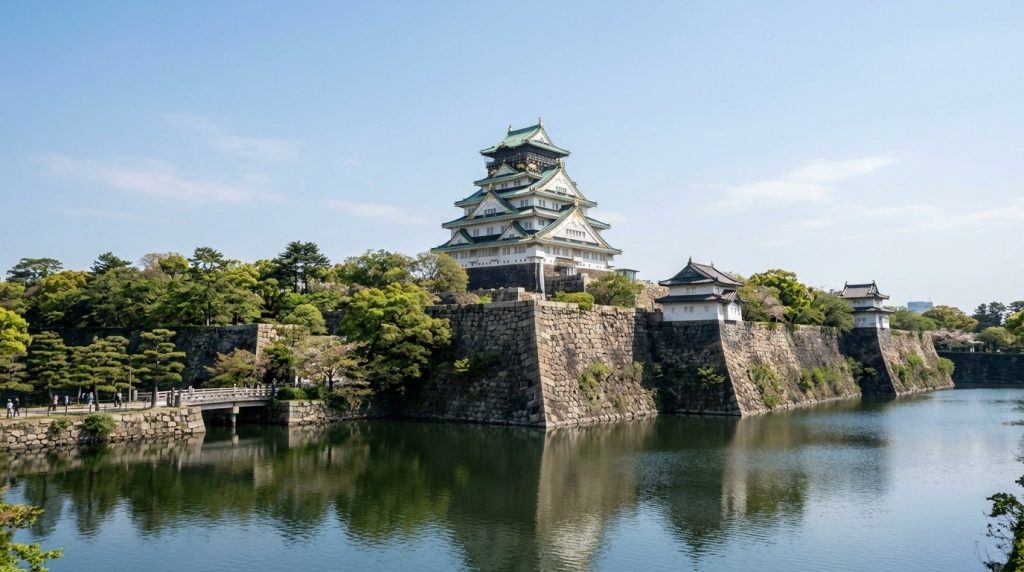
Anyone chasing quiet, contemplative travel will find Dotonbori loud, bright, and thick with tour groups on weekend evenings, and Shinsaibashi’s shopping streets get genuinely uncomfortable at peak hours. If temples, gardens, and a slower pace are the point of your trip, Osaka is a poor use of a night you could give to Kyoto or Nara instead.
Solo travelers on a strict budget should also think twice, since Osaka’s best moments are communal – shared grills, standing bars, crowded counters – and lose most of their appeal eaten alone in a hotel room.
How many nights to give it if you go
Two nights is enough to cover the food scene, the nightlife, and a full day at Universal Studios Japan without padding. That is a starting point, not a formula, since families adding a second theme park day or travelers building in a Nara side trip need more room.
The full trip-length math, including how Osaka nights trade off against Kyoto and Tokyo, is covered in how many days to spend in Osaka, which is the page to check before booking hotel nights.
Getting around, and whether the Osaka Amazing Pass is worth it
Osaka’s subway and private rail network covers Namba, Umeda, Dotonbori and the Shin-Osaka shinkansen terminal well enough that most visitors never need a taxi.
The Osaka Amazing Pass, sold directly through the official Osaka Amazing Pass site, costs JPY 3,500 (about USD 22) for a 1-day version or JPY 5,000 (about USD 32) for 2 days, and includes unlimited rides on Osaka’s subway, city buses and most private railway lines, plus free entry to roughly 40 attractions such as the Umeda Sky Building observation deck and Osaka Castle’s main tower.
It does not cover JR lines, which rules out using it for the short hop to Universal Studios Japan on the JR Yumesaki Line, so factor a separate fare in for that leg regardless of which pass you buy.
The pass earns its price mainly for travelers stacking two or more paid attractions into a single day on top of regular transit use; for a trip built mostly around Dotonbori’s food stalls, Kuromon Ichiba Market and a single evening out, paying for individual subway rides as you go is usually cheaper than the pass.
A standard IC card, either Icoca or a national one such as Suica or Pasmo, tapped on and off at every gate, covers Osaka’s trains, buses and most convenience-store purchases without the planning the Amazing Pass requires, and is the simpler default for anyone not building a full day around paid sightseeing.
Decide which approach fits your plans before you land, since the Amazing Pass only pays off once two or more of its included attractions are actually on your list for that day, not as a blanket transit ticket.
Where to stay if you decide to go
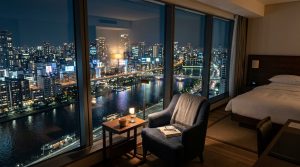
Stay near Namba or Umeda so dinner, nightlife, and the train to Universal Studios Japan all sit within about 15 minutes on foot or one subway line. Namba puts you inside walking distance of Dotonbori and Kuromon Ichiba, while Umeda favors travelers who want faster access to Shin-Osaka for day trips to Kyoto.
For specific properties in both areas, see the best hotels in Osaka guide rather than guessing from a map alone.
Find your Osaka hotel on the map
Live prices from Booking, Airbnb and more — move the map or change dates to compare stays across Osaka.