Best Hotels in Osaka (2026)
Disclosure: Some links in this guide are affiliate links. If you book or buy through them, we may earn a small commission at no extra cost to you — it helps keep our guides free.
| Hotel | Area | Tier | Price/night (USD · JPY) | Best for |
|—|—|—|—|—|
| The Ritz-Carlton, Osaka | Umeda / Kita | Luxury | USD 500-865 (JPY 78,000-135,000) | High-floor skyline views and a signature rooftop-level bar |
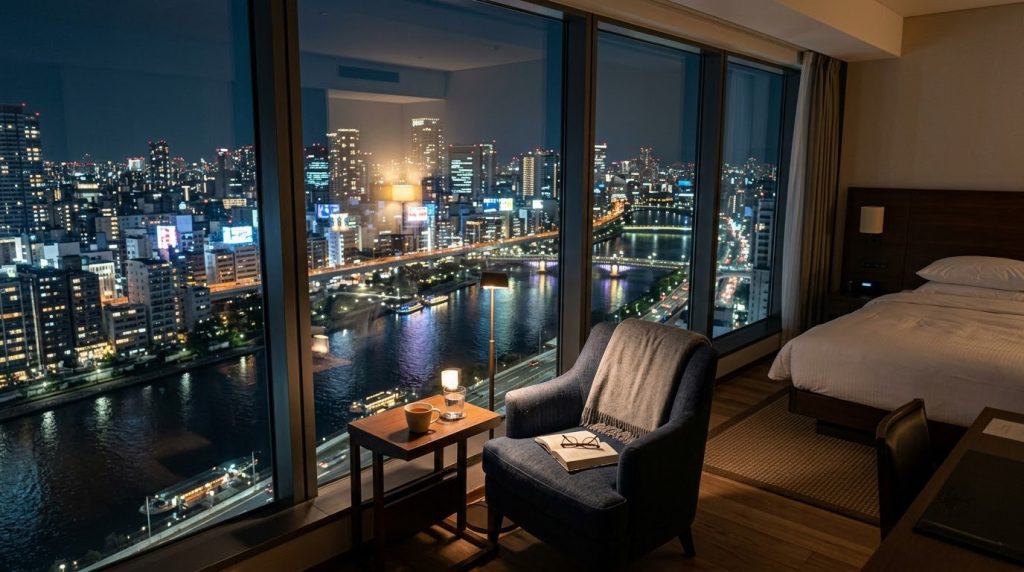
| Conrad Osaka | Nakanoshima | Luxury | USD 380-650 (JPY 59,000-101,000) | Floor 33-40 rooms facing the river and Dotonbori skyline |
| InterContinental Osaka | Umeda / Grand Front | Luxury | USD 380-430 (JPY 59,000-67,000) | Direct mall access and a 5-minute walk to JR Osaka Station |
| Hotel Granvia Osaka | Umeda / Shin-Osaka side | Mid-range | USD 100-150 (JPY 16,000-23,000) | Sleeping directly above JR Osaka Station |
| Swissotel Nankai Osaka | Namba | Mid-range | USD 190-330 (JPY 30,000-51,000) | A tower built straight over Namba Station |
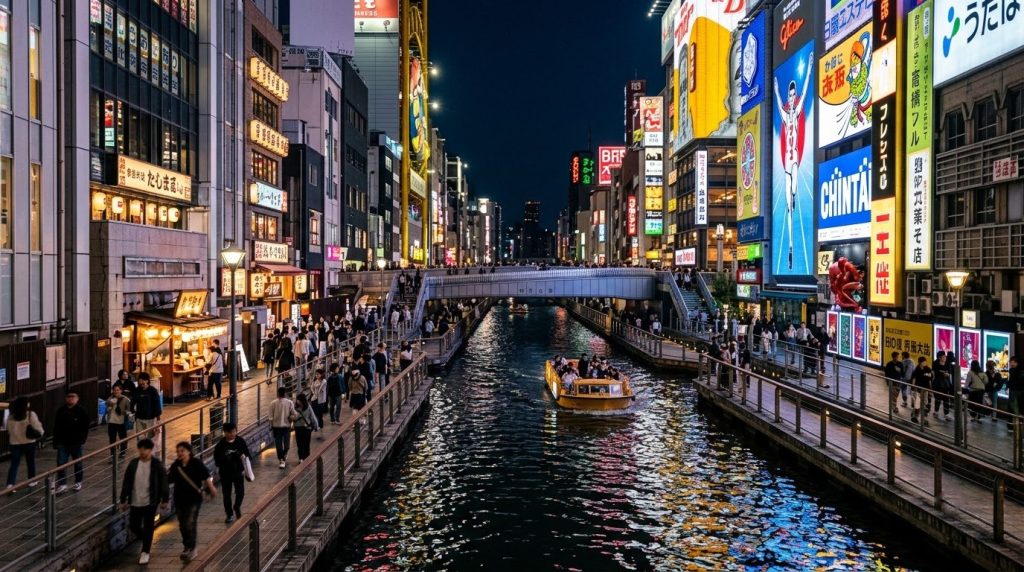
| Cross Hotel Osaka | Shinsaibashi / Dotonbori | Mid-range | USD 100-230 (JPY 16,000-36,000) | Walking to Dotonbori’s canal-side neon in under 5 minutes |
| Nine Hours Namba Station | Namba | Budget (capsule, per person) | USD 31-61 (JPY 4,900-9,500) | Solo travelers who want a private pod inside Namba Parks |
| Centurion Hotel CEN Osaka Namba | Namba | Budget | USD 51-138 (JPY 8,000-22,000) | A private room close to Namba for under USD 100 most nights |
| Toyoko Inn Shin-Osaka-eki Higashi-guchi | Shin-Osaka | Budget | USD 49-104 (JPY 8,000-16,000) | Early bullet-train connections without a taxi to the station |
Source: Booking.com, Trip.com, Kayak and Tripadvisor listings, checked September 2026.
Quick answer: This guide breaks down the best areas and stays in Osaka. See live prices and availability now:
The best hotels in Osaka span USD 31 to USD 865 a night, and the sweet spot for a first-time visitor sits between USD 100 and USD 230 in Namba or Umeda. Luxury towers suit travelers who want a private skyline view, mid-range hotels suit anyone splitting nights between Osaka and Kyoto, and capsule or budget rooms suit solo travelers on a rail-pass itinerary.
Where to book, at a glance
Find your Osaka hotel on the map
Live prices from Booking, Airbnb and more — move the map or change dates to compare stays around Osaka.
Namba and Dotonbori sit on the map above as the densest cluster of options, with Umeda a close second for travelers who prefer a quieter, business-district base. Move the pins toward Shin-Osaka if an early Shinkansen departure matters more than nightlife access. USD/JPY traded near 156 in early September 2026, so every price above converts at that rate; check the live rate before booking since it shifts week to week.
Best luxury hotels in Osaka
The Ritz-Carlton, Osaka occupies a tower in Umeda, and its upper-floor rooms look out over the Kita skyline toward the mountains on a clear day. The hotel’s high-floor bar pours cocktails against the same view, and rooms run USD 500 to USD 865 a night depending on season and floor. Book this property for an anniversary trip or a splurge night before a Shinkansen departure from nearby Shin-Osaka.
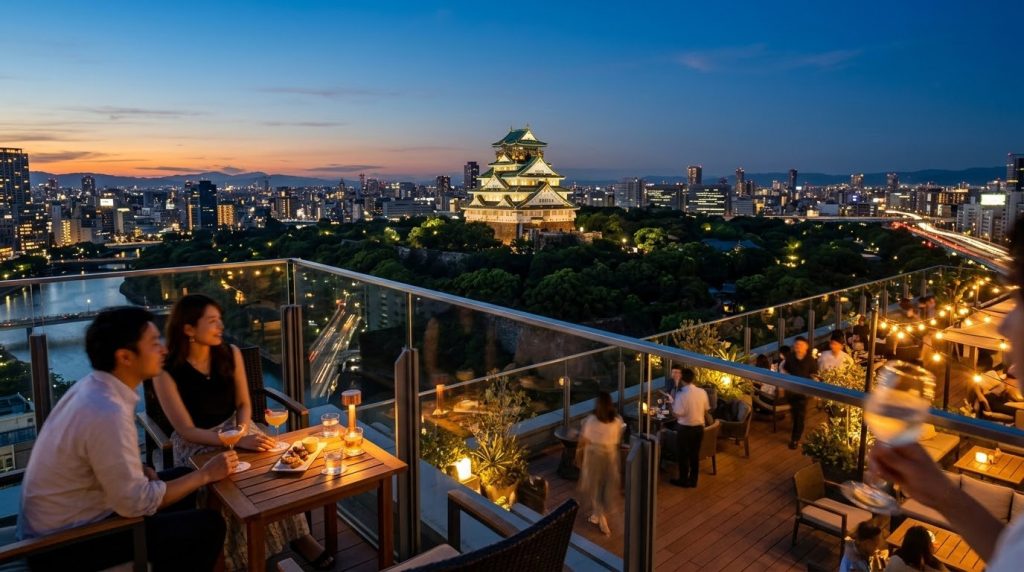
Conrad Osaka sits inside the Nakanoshima Festival Tower, and its guest floors start at level 33, so nearly every room frames the Dotonbori River and the glowing signs of Dotonbori itself after dark. Rates run USD 380 to USD 650 a night. This is the pick for couples chasing a skyline photo without leaving the room, and the hotel’s spa occupies the top two floors of the tower.
InterContinental Osaka connects directly to the Grand Front Osaka mall and sits a 5-minute walk from JR Osaka Station, with rooms priced USD 380 to USD 430 a night. Choose it when a full day of shopping and a short walk back to a five-star bed matter more than a river view.
Best mid-range hotels in Osaka
Hotel Granvia Osaka sits directly above JR Osaka Station, so a Shinkansen connection or an airport limousine bus stop is an elevator ride away. Rooms run USD 100 to USD 150 a night, making this the easiest mid-range base for anyone juggling luggage between cities. The station-top design means zero outdoor walking on a rainy Umeda evening.
Swissotel Nankai Osaka rises straight out of Namba Station, and guests reach Dotonbori’s canal-side restaurants in about 8 minutes on foot. Rates span USD 190 to USD 330 a night, the widest range on this list, so book early for the lower end. This hotel works best for travelers who want Namba’s energy without stepping outside after checking a bag.
Cross Hotel Osaka sits in Shinsaibashi, close enough to Dotonbori that the neon reflections on the canal are visible from street level outside the lobby. Nightly rates run USD 100 to USD 230, and the design-forward rooms and rooftop terrace draw travelers who want a boutique feel at a mid-range price.
Best budget hotels in Osaka
Nine Hours Namba Station puts capsule pods inside the Namba Parks complex, with per-person rates from USD 31 to USD 61 a night depending on the pod tier. Solo travelers get a private sleeping capsule, a locker, and shared bath facilities, all a short walk from Namba Station’s exits.
Centurion Hotel CEN Osaka Namba offers a private room, not a pod, for USD 51 to USD 138 a night within walking distance of Namba. It suits budget travelers who still want a locked door and their own bathroom.
Toyoko Inn Shin-Osaka-eki Higashi-guchi sits steps from Shin-Osaka Station’s east exit, with rooms priced USD 49 to USD 104 a night. Choose this one for an early bullet-train departure toward Kyoto, Hiroshima, or Tokyo without a taxi ride at dawn.
Popular amenities in Osaka hotels
Business hotel chains such as Toyoko Inn and APA, which make up most of Osaka’s budget and lower mid-range tier, provide a consistent set of basics: soap, shampoo, a toothbrush and toothpaste, a razor, cotton buds, a shower cap and towels are normally supplied in the room, so packing full toiletries is rarely necessary on a Japan-only trip.
Rooms typically include a television, air conditioner, telephone, hairdryer, a small refrigerator and an electric water boiler with complimentary tea bags, and free wireless internet is standard across nearly every tier from capsule to luxury.
Vending machines selling drinks and snacks are a near-universal lobby fixture at the business hotel level, a small holdover from before most travelers carried their own streaming devices.
Coin-operated laundry rooms sit on roughly every second or third floor in most business hotels, with washing and drying machines side by side and an iron sometimes available in the same room or on request at the front desk.
This matters most for trips longer than about a week, since it removes the need to pack enough clothing for the entire stay.
Breakfast availability varies more by hotel than by tier: some business hotels include a simple buffet in the room rate, others sell it separately at the front desk, and higher-end properties in the mid-range and luxury bands are more likely to include a full breakfast buffet as standard, so checking the specific listing’s inclusions matters more than assuming a pattern by price alone.
A traditional Japanese breakfast at the properties that do include one typically centers on rice, miso soup, grilled fish and pickled vegetables, a noticeably different spread from a Western hotel buffet and worth trying at least once even for travelers who plan to eat convenience-store breakfasts the rest of the trip.
Luxury towers add amenities the budget and mid-range tiers do not, such as a dedicated spa floor, a high-floor bar or lounge, and in some cases an indoor pool, while capsule-style budget stays trade a private room for a locker, shared bath facilities and a sleeping pod, which suits a solo traveler more than a couple or family.
Matching the amenity list to trip length and travel party size is as useful as comparing nightly rates when the price gap between two options is small.
A solo traveler on a short stopover gains little from a spa floor they will not have time to use, while a couple splitting a week between Osaka and Kyoto may find the laundry room in a mid-range hotel more valuable day to day than a rooftop bar visited once.
Which Osaka area to book
Namba and Dotonbori deliver the densest concentration of restaurants, bars, and canal-side photo spots, but the streets stay loud past midnight on weekends. Umeda and Kita suit travelers who want a five-star base with a quieter evening, plus direct rail links to the airport.
Shin-Osaka exists almost entirely for Shinkansen connections, so book there only when an early departure outweighs nightlife access. Tennoji sits south of the tourist core, with lower rates and a calmer, more residential feel near Tennoji Park and Shitennoji Temple.
Osaka’s accommodation tax
Osaka Prefecture charges a per-person, per-night accommodation tax on top of the room rate, and the current rate structure has applied since September 1, 2025.
The tax is based on the room-only fee, including mandatory service and cleaning charges but excluding meals, and it is collected directly by the property at check-in or check-out rather than folded into the advertised nightly rate shown on most booking sites.
The current tiers replaced an earlier, lower structure that applied through August 31, 2025, so a traveler comparing notes with someone who stayed in Osaka before that date will hear different numbers than the ones that apply now.
| Accommodation fee per person, per night | Tax per person, per night |
|---|---|
| Under JPY 5,000 (about USD 32) | Not taxed |
| JPY 5,000-14,999 (about USD 32-95) | JPY 200 (about USD 1.30) |
| JPY 15,000-19,999 (about USD 95-127) | JPY 400 (about USD 2.50) |
| JPY 20,000 (about USD 127) or more | JPY 500 (about USD 3.20) |
For a two-night stay in one of the mid-range hotels listed above, at roughly JPY 20,000-30,000 a night, that works out to an extra JPY 1,000 (about USD 6.30) per person over the stay, on top of whatever rate a booking site displays.
Luxury rooms above JPY 20,000 a night add the full JPY 500 per person, per night rate, while most of the budget and capsule listings above sit under the JPY 5,000 threshold and owe no tax at all.
The charge applies per guest sharing the room, not per room, so a family of four in one mid-range room pays the tax four times over, not once.
The tax is small next to the room rate itself, but it is worth setting aside cash or keeping a card ready at checkout, since not every front desk flags it clearly as a separate line before presenting the final bill.
Kyoto and Tokyo both run their own, differently structured accommodation taxes, so the per-tier amounts above apply to Osaka Prefecture specifically and should not be assumed to carry over to hotels booked elsewhere on the same trip.
Good to know before you book
Japan’s hotel industry runs on a tighter check-in and check-out clock than many Western travelers expect. The Japan Tourism Agency’s standard window puts check-in at 2pm to 3pm and check-out at 10am to 11am, with the gap between the two reserved for housekeeping’s cleaning turnaround rather than flexible early access.
Arriving before check-in opens is routine, and nearly every hotel accepts a free bag drop at the front desk so travelers can sightsee, eat, or visit a bathhouse before returning in the afternoon.
Hotels that do offer paid early check-in typically charge roughly JPY 1,000-3,000 (about USD 7-20) per hour for the earlier access, rather than granting it for free just because a room happens to be ready.
Airport-to-hotel baggage delivery services, which carry suitcases from the arrival terminal directly to the hotel for same-day or next-day delivery starting from around JPY 2,000 (about USD 13) per bag, solve the same problem from the other direction, letting a traveler land, hand off luggage at the airport counter, and spend the hours before check-in sightseeing with just a day bag.
Many business hotels in Osaka, particularly newer properties, use self check-in and check-out machines in the lobby instead of a staffed front desk around the clock. Guests receive a card-style key from the machine and settle any incidental charges, such as the accommodation tax above, at checkout through the same terminal.
This is standard practice rather than a sign of a lower-quality stay, though travelers who want a staffed desk available at 2am for questions should check a specific listing’s description rather than assuming every hotel offers one.
Luxury hotels and most mid-range towers still run a conventional, staffed front desk around the clock, so the self-service pattern concentrates mainly in the budget and capsule tiers where the room rate does not cover full-time staffing.
Booking through a major site typically requires a credit card to hold the reservation, and many Osaka hotels, especially in the budget and capsule tiers, charge the room rate in full at check-in rather than pre-authorizing the card weeks ahead.
Cancellation policies vary by rate type on every booking platform, so a free-cancellation rate is nearly always available for a modest price difference over a non-refundable one, which is worth paying for any Osaka stay booked more than a few weeks out.
Non-refundable rates usually undercut a free-cancellation rate by only a modest margin at the hotels listed earlier on this page, so the flexibility is rarely expensive relative to the risk it removes, particularly for a multi-city itinerary where a single delayed train can push a hotel arrival past a non-refundable booking’s grace window.
When these hotels are the wrong choice
Travelers building a Kyoto-heavy itinerary should base in Kyoto instead and day-trip to Osaka, since the train between the two cities runs under 15 minutes on the fastest Shinkansen and closer to 45 minutes on local rapid service; see where to stay in Kyoto for area-by-area picks.
Anyone sensitive to street noise should skip Namba’s core blocks, since Dotonbori’s bars run loud until the early hours on weekends.
Visitors focused on Universal Studios Japan are better off at a hotel inside Universal Citywalk or a short shuttle ride from the park entrance, not in Namba or Umeda, since the commute from either area runs 30 to 40 minutes each way by train.
Rates across every tier above also spike during cherry blossom season in late March and Golden Week in late April, so book 60 to 90 days ahead if travel falls in either window.
Pairing Osaka with Kyoto and the rest of Japan
Most first-time visitors split a 7 to 10-day Japan trip between Osaka, Kyoto, and Tokyo, using Osaka as the Kansai base for day trips to Nara and Kobe. A 3-day Kyoto itinerary pairs naturally with 2 to 3 nights in Osaka, since the two cities sit less than 30 minutes apart by train. Once you have a hotel, our guide to trips out of Osaka ranks six options, four of them under USD 10 each way by train. If Tokyo is the other city on your list, our guide to choosing Tokyo or Osaka notes the Nozomi links them in about 2.5 hours for USD 93.
Travelers still deciding how to split their time should compare Tokyo vs Kyoto before locking hotel dates, and check the best time to visit Kyoto since Kansai’s cherry blossom and autumn foliage windows shift Osaka hotel rates too.