6 Day Trips from Osaka Worth the Train Ride (2026)
Disclosure: Some links in this guide are affiliate links. If you book or buy through them, we may earn a small commission at no extra cost to you — it helps keep our guides free.
The 6 best day trips from Osaka are Kyoto, Nara, Kobe, Himeji, Mount Koya and Hiroshima, and the first 4 sit just 20 to 60 minutes away by train for under USD 10 each way. That is why Osaka works as a base: one hotel, great food every night, and Japan’s top temples and best original castle without repacking. Here is each trip’s train time, fare, what to see and who it suits.
| Day trip | Train, one-way time | One-way fare | Best for |
|---|---|---|---|
| Kyoto | JR Special Rapid, 29 min | USD 3.70 (JPY 580) | First-timers, temples |
| Nara | Kintetsu Rapid Express, 40 min | USD 4.30 (JPY 680) | Families, half days |
| Kobe | JR Special Rapid, 20 min | USD 2.70 (JPY 420) | Foodies |
| Himeji | JR Special Rapid, 60 min | USD 9.40 (JPY 1,490) | Castle fans |
| Mount Koya | Nankai plus cable car, 2 hr | USD 25 (JPY 3,980) round-trip pass | Slow travelers |
| Hiroshima | Shinkansen, 1 hr 25 min | USD 63–70 (JPY 10,000–11,000) | JR Pass holders |
Prices are converted at USD 1 = JPY 158 and are standard adult fares, which can shift by a few yen after annual adjustments.
Kyoto: the obvious pick that is still right
If you take one trip, make it Kyoto. The JR Special Rapid from Osaka Station reaches Kyoto Station in about 29 minutes for JPY 580 (USD 3.70). Hankyu from Osaka-Umeda to Kyoto-Kawaramachi is cheaper at JPY 410 (USD 2.60) and 43 to 48 minutes, and it drops you closer to Gion.
The Shinkansen takes 13 to 15 minutes from Shin-Osaka, but at JPY 1,450 (USD 9.20) unreserved it rarely saves time once you count getting to Shin-Osaka.
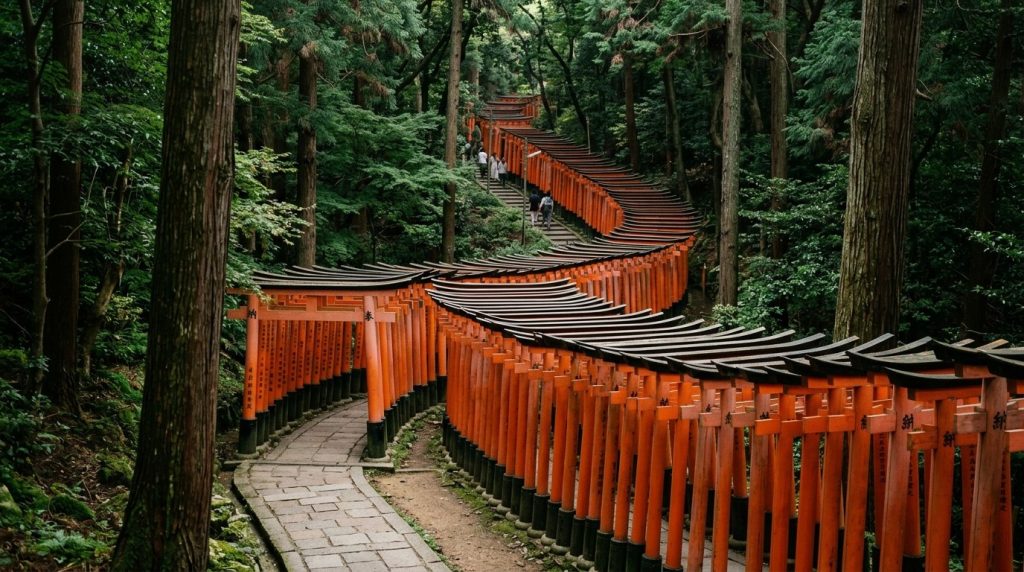
What to see: Fushimi Inari before 8 a.m., Kiyomizu-dera, then Gion and the Higashiyama lanes. On a second visit, add Uji, the matcha town, where Byodoin costs JPY 700 (USD 4.40).
Who it suits: every first-timer. Our Osaka vs Kyoto comparison explains why many travelers sleep in Osaka and day-trip in.
Nara: deer, a giant Buddha, an easy half day
Nara works even with kids and jet lag. The Kintetsu Rapid Express from Osaka-Namba reaches Kintetsu-Nara, the station closest to Nara Park, in about 40 minutes for JPY 680 (USD 4.30). JR Pass holders can take the JR Yamatoji Rapid from Osaka Station: about 50 minutes, JPY 840 (USD 5.30). The Kintetsu Limited Express (around JPY 1,200, USD 7.60) saves only a few minutes.
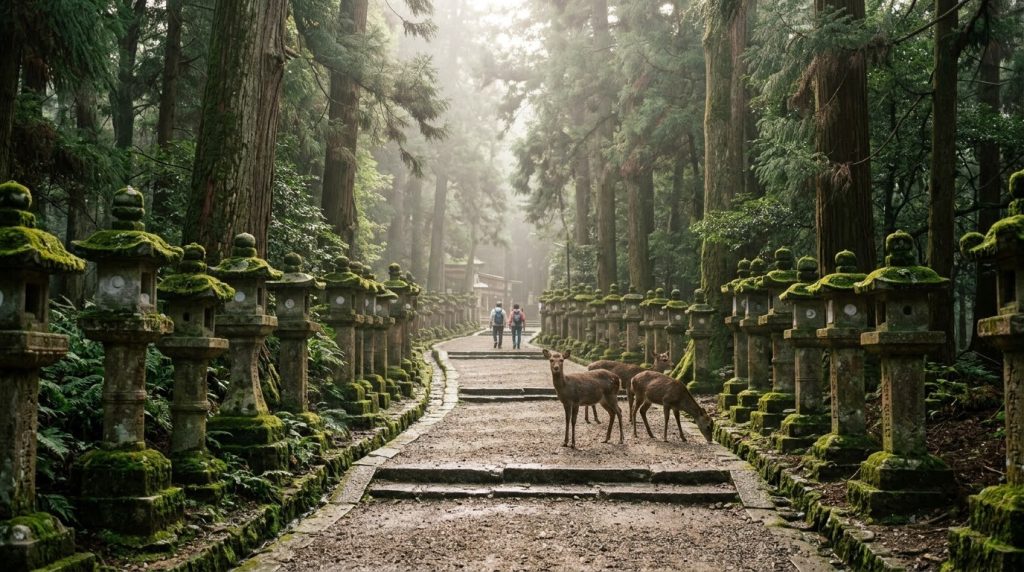
What to see: Todai-ji’s Great Buddha Hall (JPY 800, USD 5), Kasuga Taisha’s lantern-lined approach, and the deer, fed with crackers for about JPY 200 (USD 1.30). Plan 5 to 6 hours.
Who it suits: families and anyone who wants a short day before dinner in Dotonbori.
Kobe: the shortest hop, built around food
Kobe is about 20 minutes away on the JR Special Rapid to Sannomiya, for roughly JPY 420 (USD 2.70). It is more about eating and wandering than sights.
What to see: the Western-style merchant houses of Kitano-cho, Nankinmachi (Chinatown), Meriken Park, and the Great Hanshin Earthquake Memorial Museum (JPY 600, USD 3.80). Book Kobe beef at lunch, when sets cost far less than dinner. Arima Onsen, an ancient hot spring town with iron-red “gold” water, is about 1 hour from Osaka.
Who it suits: food-focused couples and repeat visitors. First-timers short on days can leave it out.
Himeji: Japan’s best original castle
Himeji is the strongest single-sight trip. The JR Special Rapid from Osaka Station takes 60 to 65 minutes for about JPY 1,490 (USD 9.40). Nozomi Shinkansen trains from Shin-Osaka take about 23 minutes for about JPY 3,520 (USD 22) unreserved. JR Pass holders can ride Sakura, Hikari and Kodama, but not Nozomi or Mizuho without a supplement.
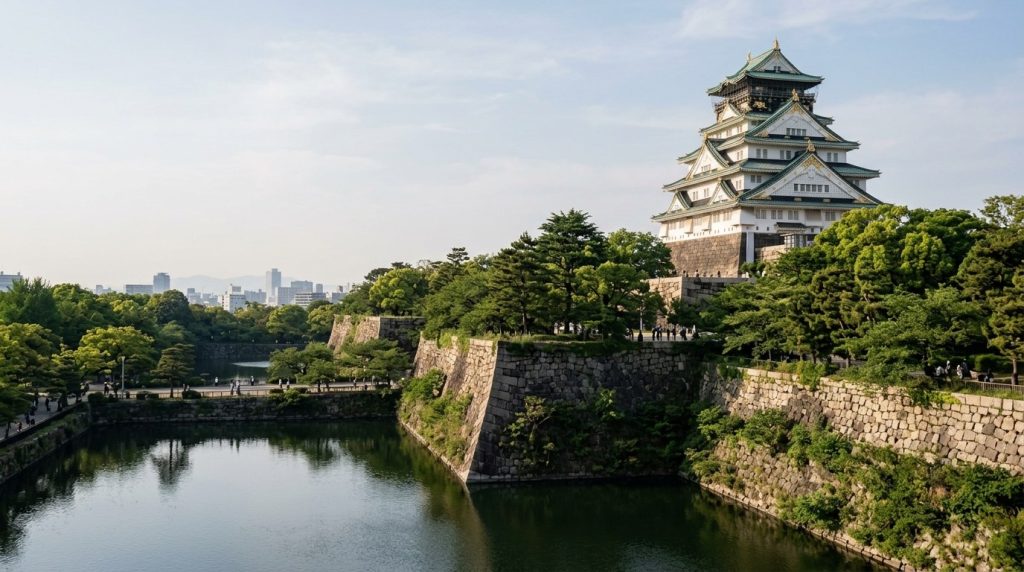
What to see: the castle (JPY 2,500, USD 16), or castle plus Kokoen garden for JPY 2,600 (USD 16.50). It opens 9:00 to 17:00 (18:00 in summer) with last entry an hour before closing, so arrive by early afternoon. Check details on japan-guide’s Himeji Castle page.
Who it suits: history buffs and photographers who can handle steep wooden stairs.
Mount Koya: a monastery town in the cedars
Koyasan is the slowest trip and the most different. From Namba, Nankai’s Rapid Express with a change at Hashimoto takes about 100 minutes for JPY 930 (USD 5.90), then a JPY 500 (USD 3.20) cable car climbs the mountain; budget 2 hours each way. The Koyasan World Heritage Ticket costs JPY 3,980 (USD 25) digital and covers the round trip plus local buses for 2 days.
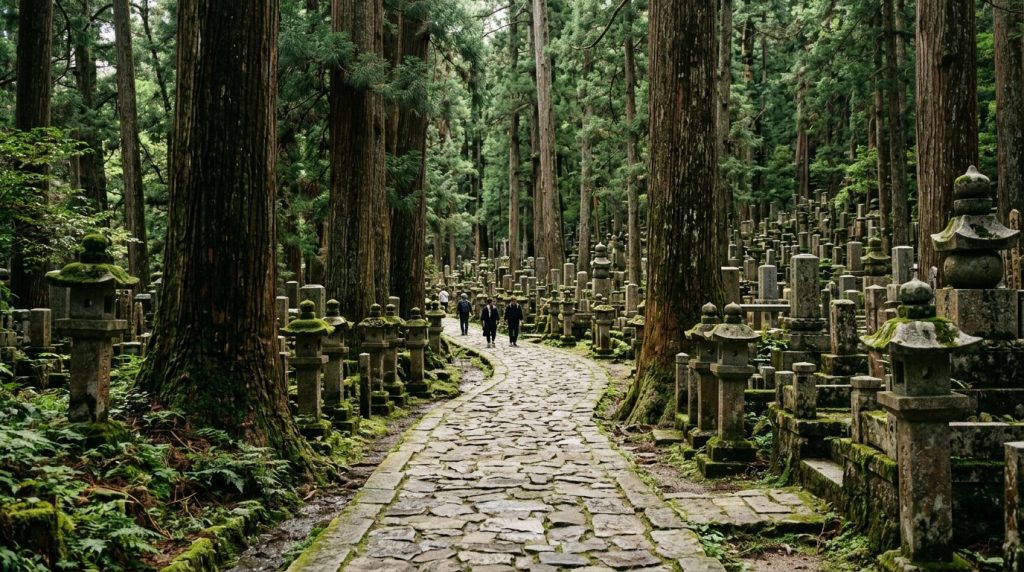
What to see: Okunoin cemetery under ancient cedars and the Danjo Garan complex. About 50 temples offer shukubo stays with vegetarian monk’s meals and morning prayers, and an overnight beats a rushed day.
Who it suits: quiet walkers. Not ideal with small kids.
More day trips worth considering: Uji, Lake Biwa and Nagoya
If the five trips above do not fill your schedule, three more destinations are realistic additions from an Osaka base, though none beats Kyoto or Nara for a first visit and none needs to replace them.
Uji sits between Osaka and Kyoto and works well as its own half-day rather than an extension of a Kyoto trip. The Keihan Line connects Yodoyabashi Station to Uji, with travelers reporting journey times anywhere from about 1 hour to 1.5 hours depending on transfers, for a fare of around JPY 680 (USD 4.30) one-way.
The town built its reputation on matcha, with tea houses along the road up to Byodo-in selling matcha parfaits and ceremonial-grade leaves you will not find as easily in Kyoto’s busier shops. Plan at least three hours on the ground, since the appeal here is slow browsing and tea tasting rather than a single ticketed sight you rush through.
Lake Biwa, Japan’s largest lake, is reached from Osaka Station on the JR Special Rapid to Otsu, a ride of about 45 minutes for JPY 800 to 1,000 (USD 5 to 6.30). It suits travelers who have already done the temple circuit and want open water, lakeside parks and a slower pace instead of another shrine.
Few Osaka-based itineraries include it, so expect smaller crowds than Kyoto or Nara on the same day, and treat it as a half-day add-on rather than a destination that fills an entire schedule on its own.
Nagoya is the farthest of the three and only makes sense with a JR Pass or a specific reason to go, such as the castle or a car museum. The Shinkansen from Shin-Osaka takes 47 minutes on the fastest Nozomi, 48 minutes on the Hikari or 59 minutes on the Kodama, all for about JPY 5,940 (USD 37.60) unreserved.
JR Pass holders can ride Hikari and Kodama for free but still pay a supplement for Nozomi, which is the fastest option.
Nagoya Castle, largely a postwar reconstruction with an observation deck, and the Toyota Commemorative Museum of Industry and Technology are the two sights that justify the trip beyond a rail-pass stopover, and both sit a manageable walk or short subway ride from the Shinkansen station.
None of these three replaces Kyoto, Nara, Kobe or Himeji on a first trip. They suit a second or third visit to the Kansai region, once the headline sights are checked off and a quieter, more specific day appeals more than another top-five stop.
Day trips to skip from Osaka
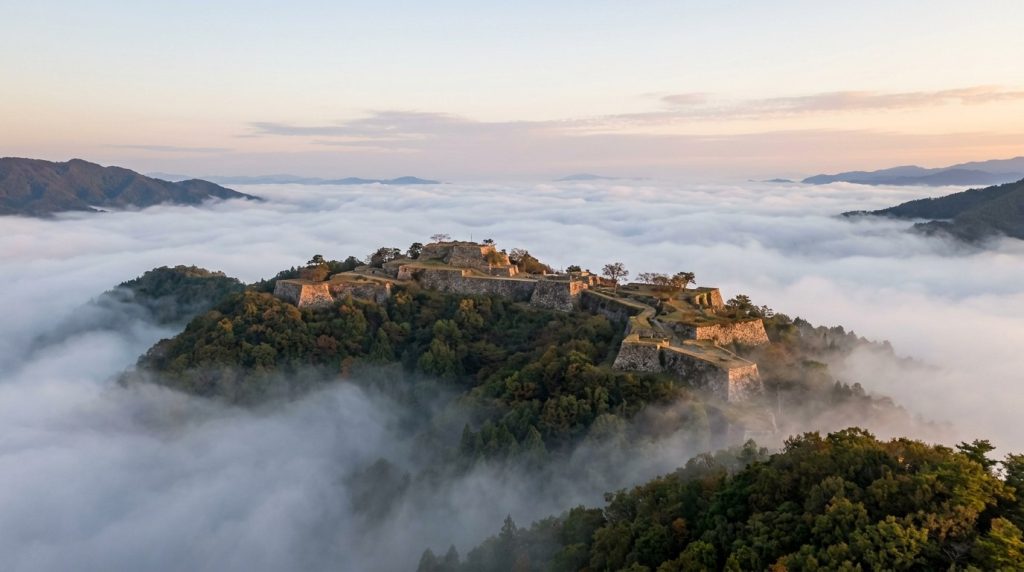
– Tokyo: about 3 hours each way by Shinkansen. Six hours on a train for a city that deserves 3 days. – Takeda Castle ruins: about 2 hours 50 minutes each way, and the “castle in the clouds” view needs a dawn start. – Kumano Kodo: about 1 hour 45 minutes by car to the trail; it is a multi-day walk. – Hiroshima without a JR Pass: worthwhile, but at USD 63–70 each way the round trip costs more than a hotel night. Stay over instead.
Also don’t stack Nara and Kyoto into one day; you end up seeing neither properly.
Should you book a guided day tour?
Trains cover every destination above, so a guided tour is optional rather than necessary. Stations have English signage, ticket machines offer an English-language option, and a rechargeable IC card such as ICOCA or Suica works on every line mentioned in this guide, including the Shinkansen gates, so there is no language barrier standing between you and any trip on this list.
A tour makes sense in three situations: you want the day planned for you, you are traveling with people who find train transfers stressful, or you want a guide who can explain what you are looking at rather than relying on signage and an app. Prices vary widely by format.
Join-in group day tours that combine Kyoto and Nara run around USD 53 per person, including transport between the two cities and often an optional lunch upgrade.
Private van or car tours covering the same two cities cost far more, with sample full-day private itineraries from Osaka priced around USD 293 per adult, though the rate per person drops in a larger group since the vehicle and guide are shared rather than booked individually.
For most of the trips in this guide, the price difference is hard to justify. A round trip to Kyoto on local trains costs under USD 10, and the route is close to impossible to get wrong even on a first visit to Japan.
Where a tour earns its cost is Mount Koya, where the multi-step train, cable car and bus connections are more involved, and a guide who can explain the cemetery and temple etiquette adds real value beyond logistics.
A private day tour can also make sense for travelers combining Kyoto, Nara and Osaka in a single day without a fixed return time, since a driver can adjust the order on the fly in a way a train timetable cannot.
How to fit day trips into your Osaka plan
Alternate: one day trip, then one city day. Our Osaka itinerary slots Kyoto and Nara between food days, and our breakdown of how many days in Osaka helps you set your nights. Kyoto and Nara are packed in cherry blossom and fall foliage season, so check the best time to visit Osaka first. Still unsure about the city itself? Read whether Osaka is worth visiting.
Taking kids on day trips from Osaka
Japan’s child fares make day trips easy to budget for. Kids under 6 ride free on JR and private lines when traveling with a paying adult, and children 6 to 11 pay half the adult fare on every route in this guide, including the Shinkansen.
A child-rate ICOCA or Suica card needs to be purchased at a staffed ticket counter, since vending machines are usually set up for adult fares only, and the discount does not apply automatically if you load a card bought at a kiosk.
For strollers, Kyoto, Nara and Kobe stations all have elevators, but platforms get crowded during the morning and late-afternoon commuter rush, so aim to leave Osaka by mid-morning once the first wave of commuters has cleared.
Himeji Castle’s steep original wooden stairs are not stroller or wheelchair friendly, and families with toddlers often find the castle grounds and Kokoen garden enough without the climb inside, skipping the interior entirely without missing the point of the visit.
Nara remains the easiest full day with young kids, since the park is flat, the deer are the main attraction rather than a side note, and Todai-ji’s Great Buddha Hall has wide, step-free paths.
Pack snacks and water for Mount Koya, where shops thin out once you are away from the main cable car station, and budget extra transition time everywhere, since train platforms and ticket gates take longer to navigate with a stroller or a tired child than the timetables assume.
Kobe and Himeji both work for a half day with kids if you skip the farther sights and focus on one easy walk and one meal, rather than trying to pack in everything described earlier in this guide.
Prefer a guided option? Compare guided day trips from Osaka on GetYourGuide, with reviews and free cancellation on most tours.
Where to stay
Stay near the station your train leaves from.
– Umeda / Kita: home to JR Osaka Station and Hankyu Umeda, the best base for Kyoto, Kobe and Himeji. Suits first-timers and JR Pass holders. – Namba: Kintetsu and Nankai trains leave here, ideal for Nara and Mount Koya. Suits food lovers who want Dotonbori outside the door. – Shin-Osaka: the Shinkansen hub. Dull at night but practical for Hiroshima or Himeji by bullet train.
Our best hotels in Osaka list has picks by area and budget.
Find your Osaka hotel on the map
Live prices from Booking, Airbnb and more — move the map or change dates to compare stays across Osaka.
Frequently Asked Questions
What is the best day trip from Osaka?
Kyoto is the best day trip from Osaka for most first-time visitors. The JR Special Rapid takes about 29 minutes and costs JPY 580 (USD 3.70), and the city holds Fushimi Inari, Kiyomizu-dera and Gion. If you have already seen Kyoto, Himeji Castle is the strongest single-sight alternative.
Is Nara or Kyoto better as a day trip from Osaka?
Kyoto offers more but needs a full day and an early start. Nara is smaller and easier, done in 5 to 6 hours, with the deer and Todai-ji’s Great Buddha as highlights. Families with young kids usually enjoy Nara more; energetic temple lovers should pick Kyoto.
Can you do Himeji and Kobe in one day from Osaka?
Yes. Kobe sits on the same JR line, about 20 minutes from Osaka, while Himeji is about 60 minutes away. Tour Himeji Castle in the morning, then get off at Sannomiya on the ride back for a Kobe beef dinner. It is the one double-up that works.
Is the Japan Rail Pass worth it for day trips from Osaka?
Usually not. Kyoto, Nara and Kobe each cost under USD 6 one way on regular trains. A pass only pays off when your trip also includes long Shinkansen rides, such as Tokyo to Osaka plus Hiroshima, and it does not cover Nozomi trains without a supplement.