
Disclosure: Some links in this guide are affiliate links. If you book or buy through them, we may earn a small commission at no extra cost to you — it helps keep our guides free.
5-Day Hanoi Itinerary 2026: The Complete District-by-District Guide
Five days in Hanoi gives you enough time to eat your body weight in pho, cycle around Hoan Kiem Lake at dawn, and still squeeze in a day trip to the surrounding highlands — without feeling rushed. We’ve structured this itinerary around Hanoi’s distinct neighborhoods so each day flows logically and you’re never doubling back across the city.
Key Takeaways
– Hanoi received 4.6 million international visitors in 2025, up 18% year-on-year (Vietnam National Authority of Tourism, 2025)
– Average daily travel budget for mid-range travelers is USD $55-80/day including accommodation, food, and activities (Numbeo, 2026)
– The Old Quarter alone contains over 36 ancient trade streets — each historically specializing in a single craft (Hanoi Heritage House, 2025)
– A SIM card with 30 days of 5G data costs roughly $6-9 USD — or get an Airalo eSIM before you land for instant connectivity
– Grab (ride-hailing) trips within the city average $1.50-3.00 USD, making Hanoi one of Southeast Asia’s cheapest cities to navigate
Day 1: Old Quarter Immersion and Hoan Kiem Lake
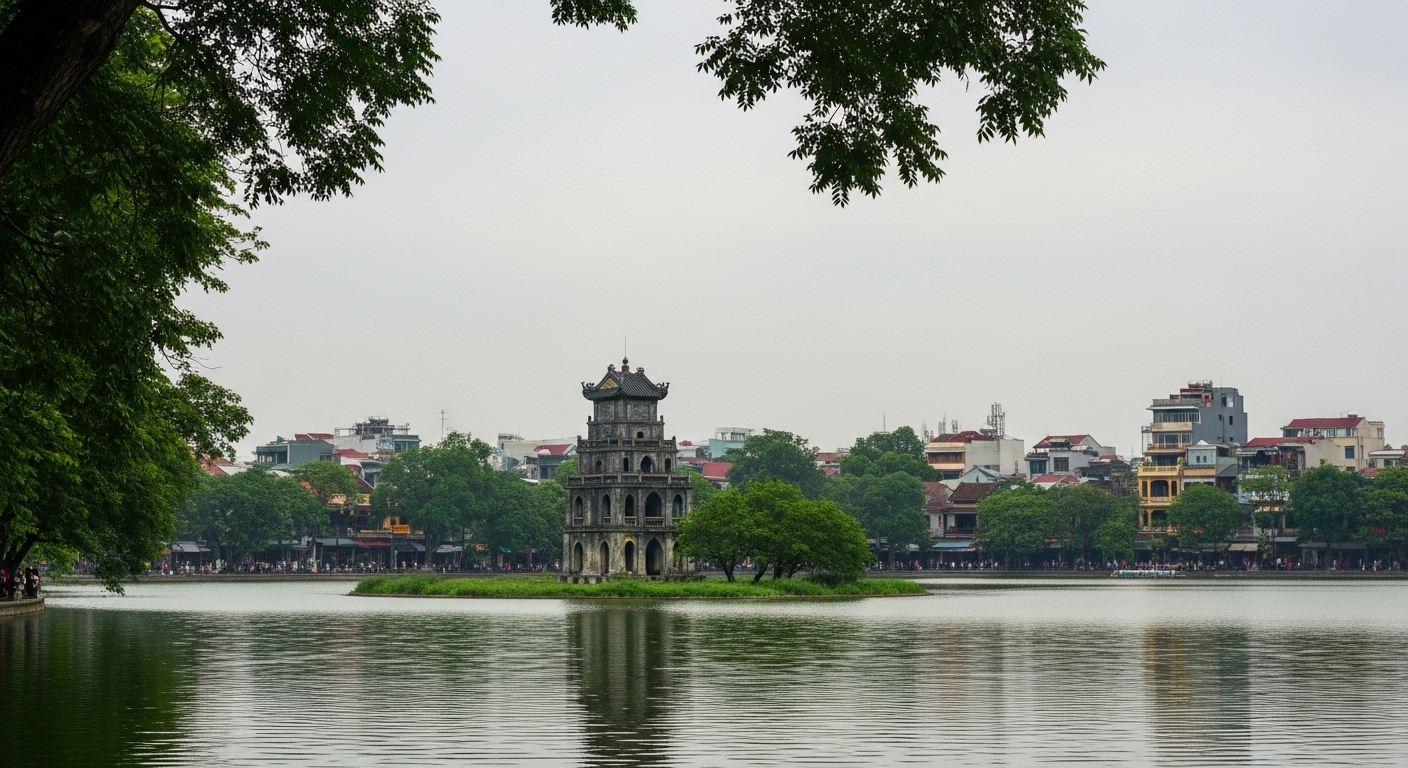
Start your first morning in Hanoi where the city’s energy is most concentrated: the 36-street Old Quarter (Pho Co). Arrive at Hoan Kiem Lake by 6:30 AM and you’ll catch locals doing tai chi on the banks and street vendors setting up their carts — this is Hanoi before it wakes up properly, and it’s worth every early alarm. The lake itself is compact (about 12 hectares) but carries outsized cultural weight as the city’s geographic and spiritual heart.
After circling the lake, cross the red Huc Bridge to Ngoc Son Temple (entry: 30,000 VND / ~$1.20) — one of Hanoi’s best-preserved 19th-century temples. Then spend the late morning exploring the tangle of Old Quarter streets: Hang Gai for silk and tailoring, Hang Ma for paper goods and decorations, and Hang Bac for silver jewelry. Most shops open by 9 AM.
For lunch, head to Bun Cha Huong Lien on Le Van Huu — this is where President Obama famously ate with Anthony Bourdain in 2016. A full set meal (grilled pork, vermicelli noodles, broth, spring rolls) costs 70,000-90,000 VND (~$2.80-3.60).
In the afternoon, book a cyclo tour of the Old Quarter through GetYourGuide — 90-minute tours start at around $12 USD per person and cover alleyways you’d miss on foot. As the sun sets, walk to Ta Hien Street (Beer Street) for a cold bia hoi (draft beer at ~5,000 VND per glass, roughly $0.20).
Where to stay: For the Old Quarter experience, Hanoi Graceful Hotel and Spa or La Siesta Premium Hang Be both sit within walking distance of the lake. Rates start at $45-70/night. Book via Booking.com for flexible cancellation.
Day 2: Ho Chi Minh Mausoleum Complex and the French Quarter
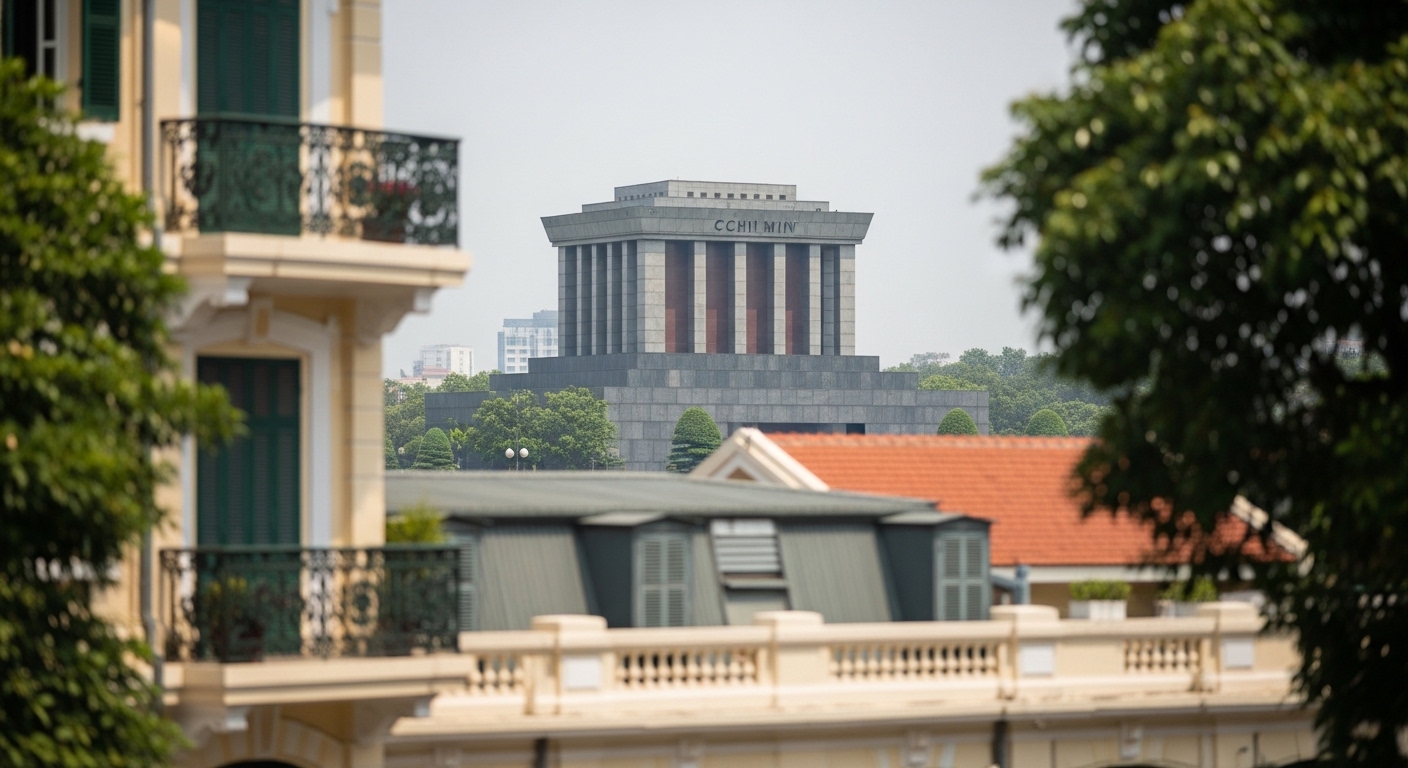
Day 2 takes you west and south to Hanoi’s political and colonial districts. Arrive at the Ho Chi Minh Mausoleum (Ba Dinh Square) by 8 AM — the mausoleum opens Tuesday-Thursday and Saturday-Sunday from 8:00-11:00 AM (closed Monday and Friday). Entry is free but dress codes are strictly enforced: no shorts, no sleeveless tops, no hats inside. Bags must be checked.
The mausoleum complex also includes Ho Chi Minh’s Stilt House (the wooden home he lived in from 1958-1969), the Presidential Palace (French colonial, 1906), and One Pillar Pagoda — budget two to three hours. The One Pillar Pagoda was originally built in 1049 during the Ly dynasty; the current structure is a 1955 reconstruction after French forces demolished it during withdrawal.
From Ba Dinh, walk 15 minutes south into the French Quarter. This district — built between 1875 and 1945 — contains Hanoi’s widest boulevards and most intact colonial architecture. The Vietnam Museum of Ethnology (120,000 VND / ~$4.80) is a 15-minute taxi ride west and ranks among Southeast Asia’s best ethnographic museums: 54 ethnic groups, outdoor reconstructed village houses, and well-curated English-language exhibits.
For lunch in the French Quarter, Cha Ca La Vong on Cha Ca Street is Hanoi’s most famous single-dish restaurant — turmeric-marinated fish grilled at your table over charcoal, served with rice noodles, dill, and shrimp paste. Expect to pay 170,000-220,000 VND (~$6.80-8.80) per person.
Prices are approximately $29-35 USD per person.
Day 3: Day Trip to Ninh Binh or Perfume Pagoda

Day 3 is your natural escape valve from the city — and you’ve got two strong options depending on your interests. Ninh Binh (90 km south, ~2 hours by bus or private car) offers dramatic limestone karst scenery, ancient capitals, and river caves. The Perfume Pagoda (60 km southwest, ~2.5 hours) is Vietnam’s largest Buddhist festival site, combining a river boat ride with a mountain pilgrimage.
For Ninh Binh, we recommend a guided day tour — GetYourGuide and Klook both offer full-day options including transport, boat rides at Trang An (UNESCO World Heritage Site since 2014), a visit to Hoa Lu Ancient Capital, and cycling through Tam Coc valley. Prices range from $30-55 USD per person including lunch. Trang An’s rowing boats are operated by local women, and the 2-hour circuit through limestone caves and rice paddies is one of Vietnam’s most photogenic experiences.
If you prefer less structure, you can reach Ninh Binh independently on the Hanoi-Ninh Binh open-tour bus (bus tickets from ~70,000 VND / $2.80 one-way from My Dinh station). Trang An boat tickets cost 250,000 VND (~$10) and Hoa Lu entry is 20,000 VND (~$0.80).
For the Perfume Pagoda route, most day tours are boat-heavy: a 2-hour row boat journey along the Yen Stream, then a cable car or hike up to the main Huong Tich Cave pagoda. Tours from Hanoi cost $25-40 USD including transport. Note that the main festival season is January-March — visiting outside that window means smaller crowds and cooler weather.
Either way, you’ll be back in Hanoi by 7-8 PM. Grab dinner near your hotel and rest — Day 4 involves another early start.
Find your Hanoi hotel on the map
Live prices from Booking & Airbnb — tap a pin to compare stays around the Old Quarter and beyond.
Day 4: West Lake, Tay Ho District, and Temple of Literature
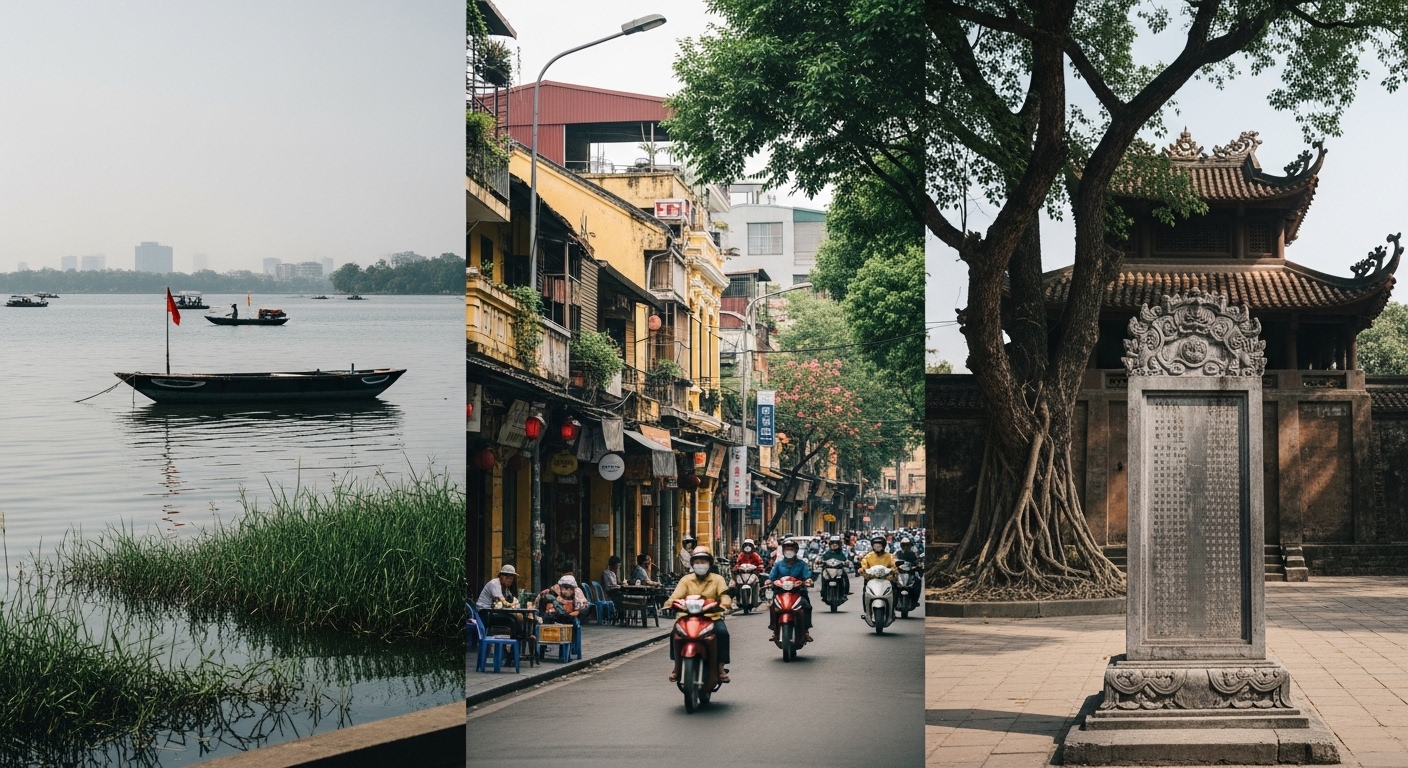
West Lake (Ho Tay) is Hanoi’s largest lake at 500 hectares, and the Tay Ho district surrounding it has evolved into the city’s most liveable neighborhood — full of expat cafes, wine bars, and boutique guesthouses. Start the morning with a rental bicycle circuit around the lake (bike hire: 30,000-50,000 VND/hour from multiple spots on Thuy Khue Street).
At the lake’s southern edge, Tran Quoc Pagoda sits on a small peninsula connected to the shore by a causeway. Dating to the 6th century AD, it’s believed to be Hanoi’s oldest pagoda. Entry is free; dress conservatively. The multi-tiered tower (built 1815) reflected in the lake makes for one of the city’s most photographed scenes — arrive before 9 AM to beat tour groups.
From West Lake, take a Grab south to the Temple of Literature (Van Mieu) — Vietnam’s first national university, founded in 1070 under Emperor Ly Thanh Tong. Entry: 70,000 VND (~$2.80). Allocate 60-90 minutes to walk the five courtyards, read the doctoral steles (82 stone tablets inscribed with the names of scholars who passed exams between 1442 and 1779), and visit the main pavilion.
For lunch near the Temple of Literature, Bun Cha Ta on Nguyen Huu Huan serves regional Vietnamese dishes — try the bun thang (Hanoi’s signature multi-ingredient noodle soup). Prices: 60,000-90,000 VND ($2.40-3.60) per bowl.
In the afternoon, explore the Vietnam Fine Arts Museum on Nguyen Thai Hoc Street — three floors of Vietnamese art from the Bronze Age to contemporary. Entry: 40,000 VND (~$1.60). If contemporary art is more your speed, the nearby Manzi Art Space hosts rotating exhibitions and has one of Hanoi’s best rooftop cafe-bars.
For dinner, the Tay Ho area delivers: Maison de Tet Decor on Xuan Dieu Road is a good splurge option with wine-friendly Vietnamese dishes at $15-25 USD per person.
Day 5: Hoa Lo Prison, Dong Xuan Market, and Farewell Pho
Your final day combines Hanoi’s weightier history with its most chaotic market energy before a ceremonial farewell bowl of pho. Start at Hoa Lo Prison (the “Hanoi Hilton”) on Hoa Lo Street — this French colonial-era prison held Vietnamese revolutionaries from 1896, and later American POWs including Senator John McCain during the Vietnam War. Entry: 50,000 VND (~$2.00). Budget 60-90 minutes; the bilingual exhibits are detailed and the architecture is genuinely striking.
A 10-minute walk north brings you to Dong Xuan Market — Hanoi’s largest covered wholesale and retail market, built in 1889. Three floors of textiles, clothing, household goods, and fresh produce. It’s chaotic, smells of dried fish and incense, and entirely authentic. This is where Hanoians shop, not tourists — prices are negotiable and local vendors don’t speak much English, but pointing and a calculator app get you far. Budget souvenirs: lacquerware boxes (50,000-150,000 VND), silk scarves (100,000-200,000 VND), and embroidered linens.
For your final Hanoi lunch, we’re sending you to Pho Thin Bo Ho on Dinh Tien Hoang — this tiny corner shop serves a beef pho that’s been simmering since the 1950s. A bowl costs 60,000-75,000 VND (~$2.40-3.00). The broth is cleaner and more ginger-forward than the southern style, with hand-sliced rare beef added tableside.
If your flight departs late, spend the afternoon at the Vietnam Museum of Women (36 Ly Thuong Kiet, entry: 40,000 VND) or the HIVE social enterprise concept store on Ma May Street for last-minute ethically-made gifts. For connectivity beyond Vietnam, pick up an Airalo eSIM before you leave — regional Asia packages cover multiple countries from about $9-15 USD for 30 days of data.
Practical Logistics: Getting Around Hanoi
Hanoi is compact enough that you don’t need a car for most of the itinerary above. Grab is the most reliable option — download the app before arrival, add a payment card, and fares within the city consistently come in at $1.50-3.50 USD per trip. For longer day trips (Ninh Binh, Perfume Pagoda), a private car or guided tour is far more practical than public buses.
The Hanoi metro Line 2A (Cat Linh – Ha Dong) runs southwest from Hanoi station and costs 8,000-15,000 VND ($0.32-0.60) per trip — useful if you stay in the Ha Dong corridor but less relevant for Old Quarter-based travelers. The airport bus (86 Express) runs between Noi Bai Airport and the city center for 35,000 VND (~$1.40) and takes 45-60 minutes depending on traffic. A Grab from the airport costs roughly $8-12 USD.
For Vietnam SIM cards, Viettel and Vietnamobile sell tourist packages at the airport arrivals hall: 30-day cards with 60-100GB of 5G data run 150,000-200,000 VND ($6-8). Alternatively, Airalo’s Vietnam eSIM (1GB/7 days from $4.50; 3GB/30 days from $8.50) lets you arrive connected without hunting for a SIM vendor.
| Transport | Route | Cost (USD) | Duration |
|---|---|---|---|
| Grab (ride-hail) | Old Quarter to Ba Dinh | $1.50-2.50 | 10-15 min |
| Grab (ride-hail) | Old Quarter to Tay Ho | $2.50-4.00 | 15-25 min |
| Airport bus 86 | Noi Bai to city center | $1.40 | 45-60 min |
| Grab from airport | Noi Bai to Old Quarter | $8-12 | 30-45 min |
| Open-tour bus | Hanoi to Ninh Binh | $2.80 one-way | ~2 hours |
| Bicycle hire | West Lake circuit | $1.20-2.00/hr | Self-paced |
Where to Stay in Hanoi: Neighborhood Guide
The Old Quarter is the default choice for first-time visitors and puts you within walking distance of Day 1 and Day 5 sights. Streets like Ma May, Hang Bac, and Luong Ngoc Quyen have the densest hotel concentration — budget guesthouses from $18/night, boutique hotels from $45/night, and a small number of design hotels in the $80-120/night range.
The French Quarter (around Hoan Kiem’s south side and Ly Thuong Kiet Street) is quieter, slightly more upscale, and better for travelers who want a break from Old Quarter noise. The Sofitel Legend Metropole — a 1901 colonial landmark — remains Hanoi’s most prestigious address at $200-350+/night. Mid-range options like the Apricot Hotel cluster near the lake.
Tay Ho (West Lake) is the expat residential neighborhood with the best coffee shops, boutique hotels, and wellness spaces. It’s a 20-25 minute Grab from most Day 1-2 sights but offers a more local, less touristy feel. We recommend Tay Ho for stays of 7+ days; for a 5-day trip, staying in or near the Old Quarter saves commute time.
Check availability and current pricing across all neighborhoods via Booking.com — their flexible cancellation filter is worth using given how frequently Vietnam’s weather shifts the plan.
Frequently Asked Questions
How many days do you actually need in Hanoi?
Five days is the sweet spot for first-time visitors — enough to cover the Old Quarter, Ba Dinh historical district, West Lake, and one day trip without feeling rushed. Three days covers the highlights if you’re short on time; seven days works well if you add Ha Long Bay or Ninh Binh as an overnight side trip.
What’s the best time of year to visit Hanoi?
October through April is the most comfortable window for visiting Hanoi. October-December brings dry skies, cooler temperatures (18-25C), and low humidity — this is peak season. January-February can be chilly (12-18C) but is clear. Avoid May-September if possible: the summer monsoon season brings heavy afternoon rain and temperatures regularly reaching 36-38C.
Is Hanoi safe for solo travelers?
Hanoi is generally safe for solo travelers including solo women. The main risks are traffic (cross streets with confidence and consistent pace — vehicles flow around you) and minor street scams around tourist areas. Be firm but polite with cyclo drivers who don’t confirm prices before departure. The Old Quarter is well-lit, busy, and patrolled until late.
How much does 5 days in Hanoi cost?
Budget travelers spending $20-30/night on accommodation and eating at local restaurants can manage 5 days for $200-280 USD total including one guided day trip. Mid-range travelers — boutique hotels, one or two nicer restaurants per day, guided tours — should budget $350-500 USD for 5 days. These figures exclude international flights.
Do I need a Vietnam visa?
Citizens of 45+ countries receive a free 45-day e-visa waiver to Vietnam as of 2023, including UK, most EU countries, and Australia. US passport holders are also now eligible for the 45-day exemption. You can apply for a Vietnam e-visa at evisa.xuatnhapcanh.gov.vn — cost is $25 USD and processing takes 3 business days. Check the official Vietnam immigration site for current exemption lists before travel.
Should I get Vietnamese Dong at the airport or in the city?
Skip the airport currency exchange desks — their rates are 3-5% worse than city ATMs. Once in Hanoi, use Techcombank or Vietcombank ATMs for the best rates (typically within 1% of mid-market). Most ATMs dispense VND in 500,000 VND notes; withdraw multiples of 2,000,000 VND for tidy stacks. Debit cards with no foreign transaction fees (Wise, Charles Schwab, Revolut) are the most cost-effective option.
Can I use a Klook or GetYourGuide tour for the day trips?
Yes — and we’d recommend it for Ninh Binh and Perfume Pagoda specifically. The logistics of reaching these sites independently (bus stations, local boats, ticketing) eat up significant time that’s better spent on the experience itself. Klook’s Ninh Binh day tours include hotel pickup, guide, boat tickets, and lunch for $30-45 USD. GetYourGuide has strong options for Perfume Pagoda and Old Quarter food tours.
Plan Your 5 Days: You’ve Got Enough to Go On
This itinerary covers the Hanoi that most 5-day visitors miss — not just the lake and a temple or two, but the lived city: dawn markets, colonial boulevards, a day in the karst countryside, and the specific bowls of pho worth crossing the city for. Book your accommodation early (Old Quarter fills fast in October-December), grab an Airalo eSIM before departure for seamless arrival connectivity, and pre-book the Ninh Binh day trip at least 48 hours out during peak season.
For the rest of your Vietnam trip, read our guides to Hoi An in 3 days, Ha Long Bay planning, and Vietnam’s best street food cities to keep the momentum going south.