25 Best Things to Do in Hanoi 2026 — Local Tips & Prices
Disclosure: Some links in this guide are affiliate links. If you book or buy through them, we may earn a small commission at no extra cost to you — it helps keep our guides free.
- Hanoi’s Old Quarter covers 36 guild streets in under 1 sq km — most top sights are walkable from any guesthouse in the area (Hanoi Tourism Authority, 2025).
- A street food tour in Hanoi costs USD 25-45 per person with a local guide in 2026 — far cheaper than equivalent food tours in Bangkok or Kuala Lumpur.
- The Ho Chi Minh Mausoleum is free to enter but closed every Monday and Friday, and from September to mid-November for annual maintenance.
- eSIM data for Vietnam starts at USD 4.50 for 7 days via Airalo — cheaper than airport SIM cards at Noi Bai International.
At a glance
| Attraction | Entry | Hours | Time needed |
|---|---|---|---|
| Old Quarter walk | Arrive before 8 am | two to three hours | |
| Vietnam Museum of Ethnology | VND 40,000 | two to three hours | |
| Ho Chi Minh Mausoleum | Free | Complex closes at 11:30 am | |
| One Pillar Pagoda | Free | 15 minutes | |
| Water Puppet Theatre | VND 200,000 | Eight to ten shows daily | |
| Hoa Lo Prison | VND 30,000 | 60 to 90 minutes | |
| Cyclo tour | USD 10-15 | 45 to 60 minutes | |
| Vietnam Fine Arts Museum | VND 40,000 | 90 minutes | |
| Military History Museum | VND 40,000 | two hours | |
| Pho Gia Truyen | VND 75,000 | Opens at 6 am |
Where you sleep decides your mornings
Hanoi rewards curious travelers more than almost any other Southeast Asian capital — dense history, absurdly good food, and a walkable old quarter that’s changed surprisingly little since the French colonial era. We’ve pulled together 25 of the best things to do in Hanoi, sorted by category, with real 2026 prices so you can plan your budget before you land. Typical daily costs and money-saving tips are covered in our Hanoi travel budget guide. Travelers heading this way often look for this Hanoi travel guide before mapping out transport, neighborhoods, and a rough daily schedule.
1. Walk the 36 Streets of Hanoi’s Old Quarter
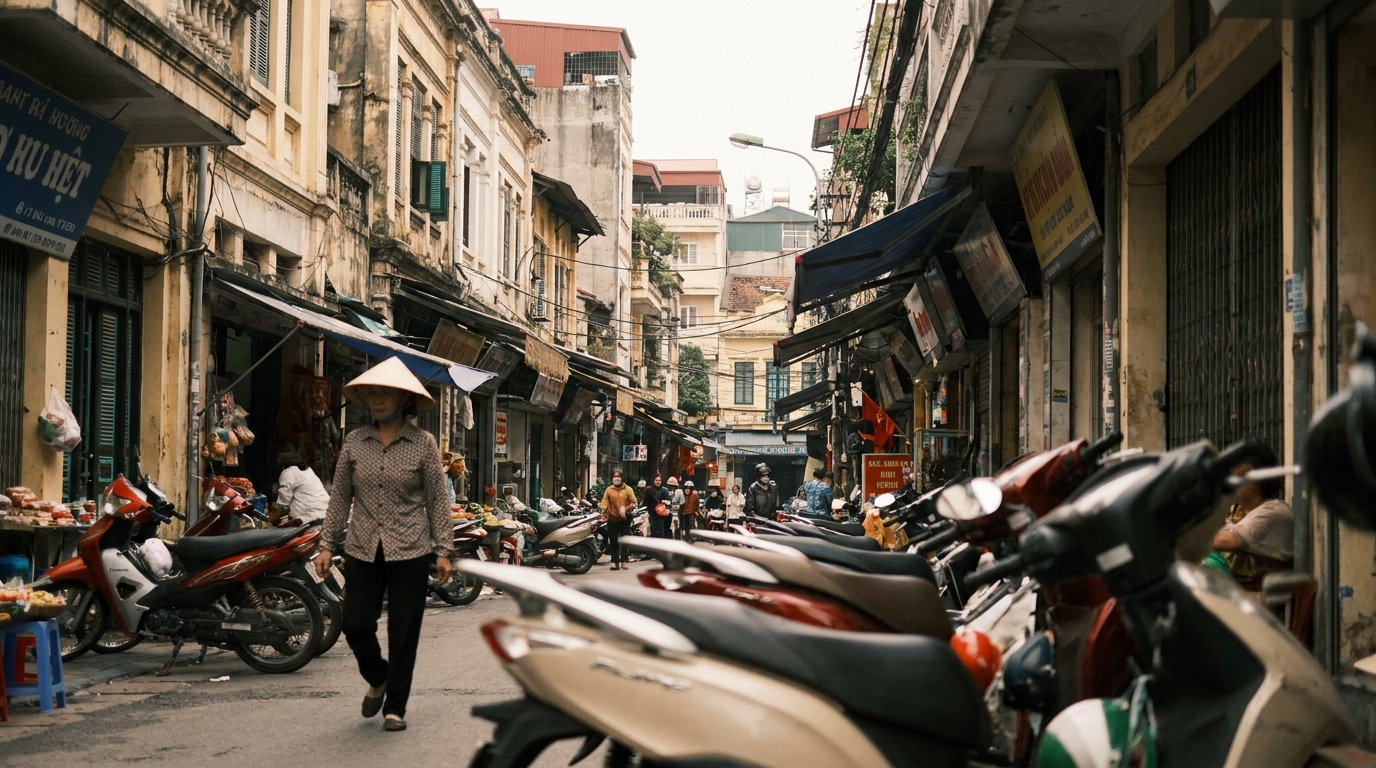
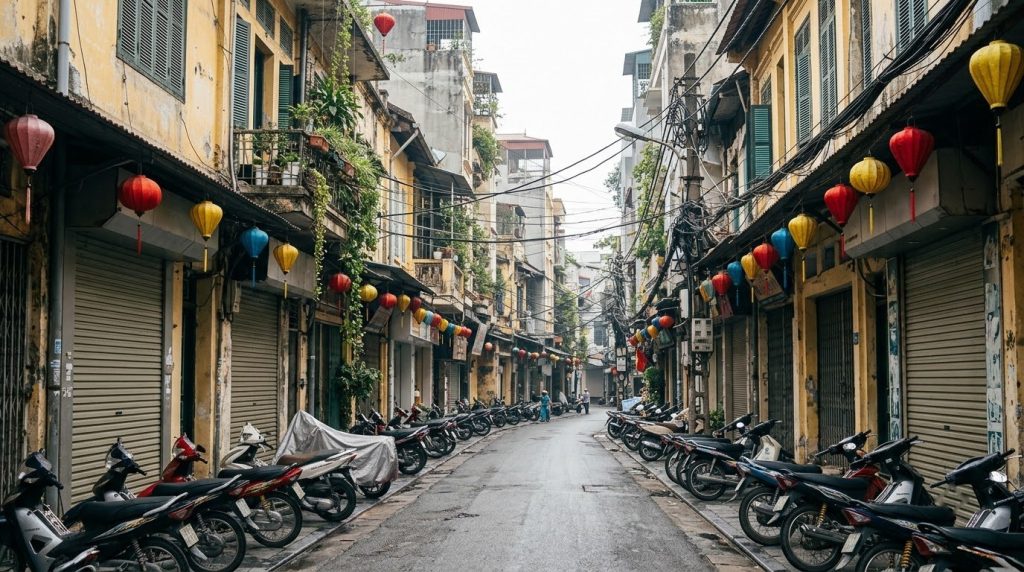
The Old Quarter is the single best thing to do in Hanoi, and it doesn’t cost a cent. Each of the 36 streets historically sold one trade — Hang Bac for silver, Hang Ma for paper offerings, Hang Ga for chickens — and traces of that specialisation still show in the shop fronts today.
We recommend arriving before 8 am when motorbike traffic is light and the light on the narrow tube houses is genuinely beautiful. Budget two to three hours for a serious wander, and pick up a free walking-map from most hotel receptions.
2. Visit Hoan Kiem Lake and Ngoc Son Temple
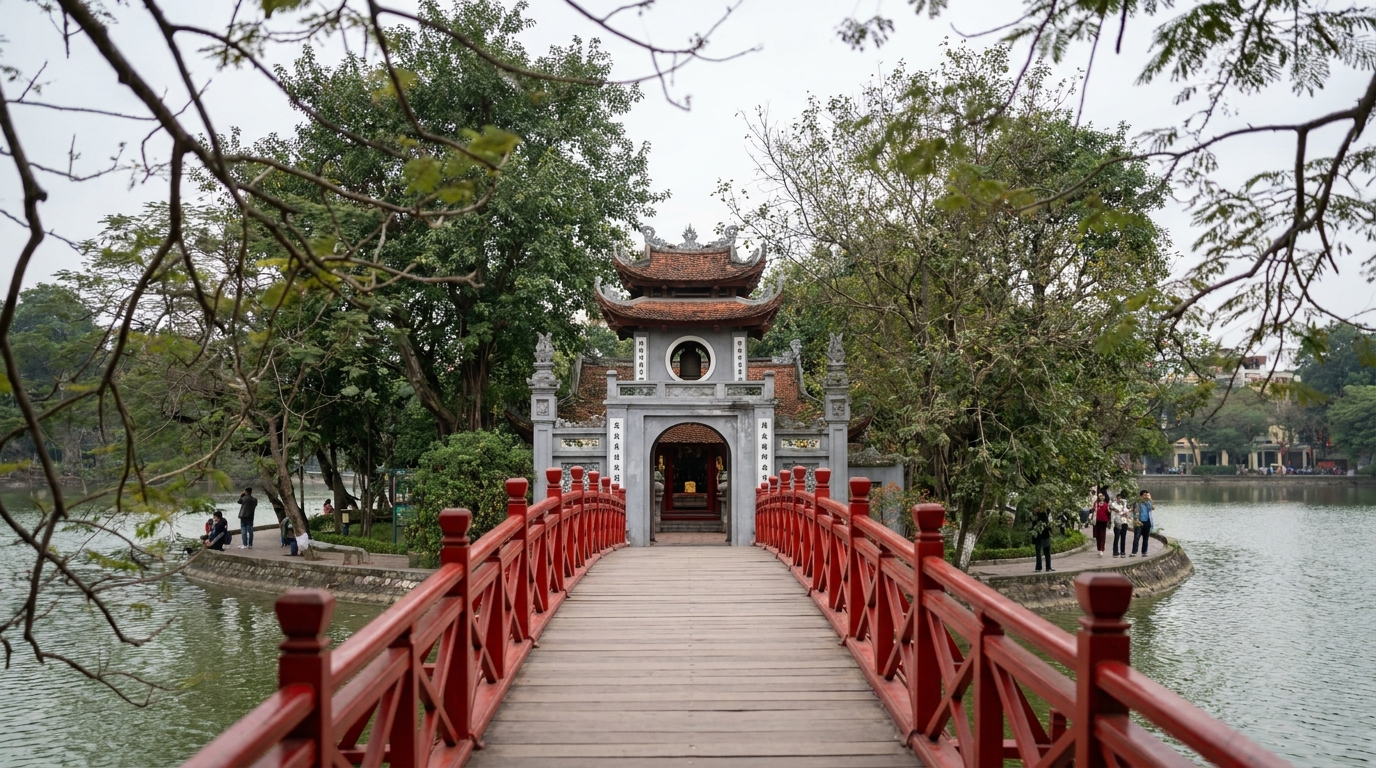
Hoan Kiem Lake sits at the heart of Hanoi and has anchored city life for centuries. The Turtle Tower on a small island is visible from the shore all day, but the real highlight is Ngoc Son Temple, reached via the red The Huc Bridge. Entrance to Ngoc Son costs VND 30,000 (about USD 1.20) in 2026.
The preserved giant soft-shell turtle inside the temple — the last of its species in the lake — is genuinely unlike anything else in the region.
3. Explore the Vietnam Museum of Ethnology
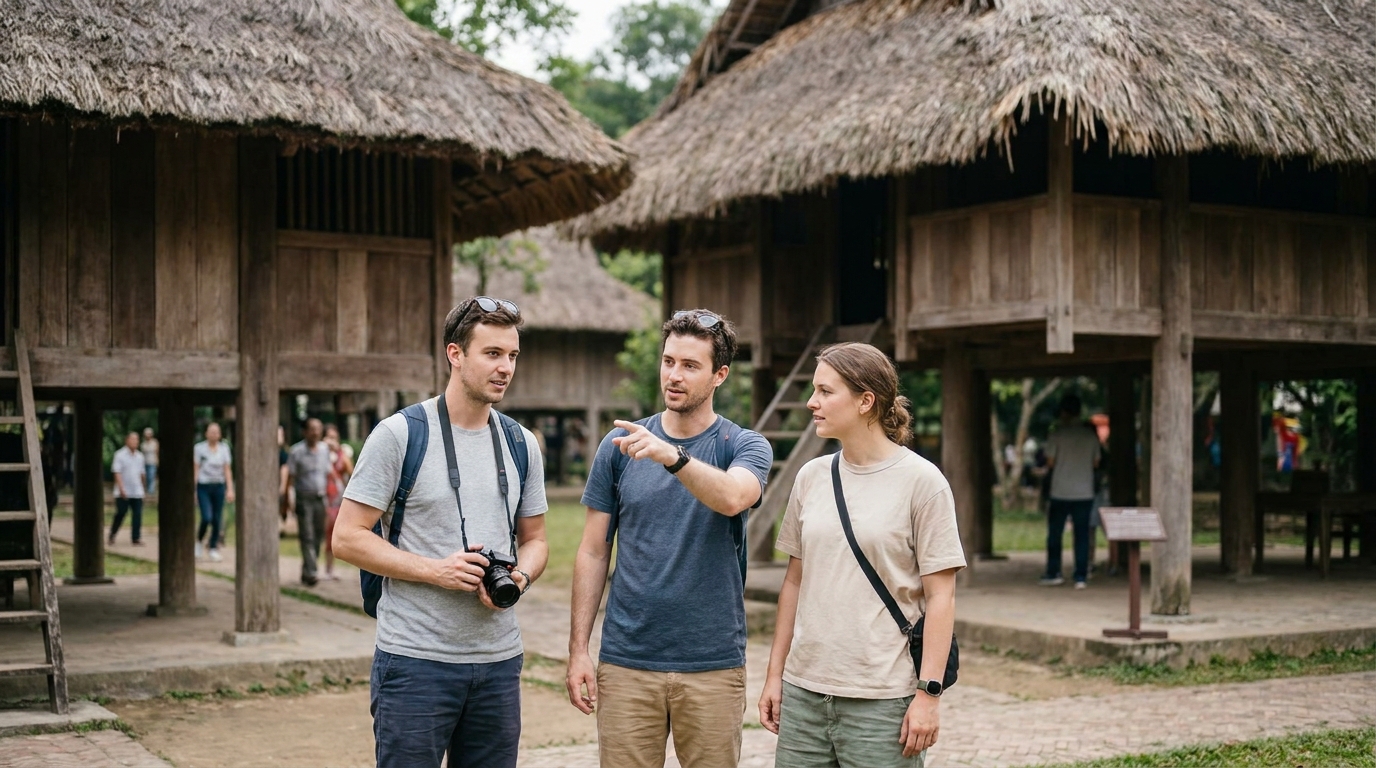
This is the most underrated museum in Hanoi, and we say that without hesitation. More than 15,000 artefacts represent Vietnam’s 54 officially recognised ethnic groups, with outdoor reconstructed stilt houses you can walk through. Admission is VND 40,000 (USD 1.60) for adults in 2026.
Allow two to three hours, and don’t skip the outdoor section — the full-scale Bahnar communal house is extraordinary. It’s a 15-minute taxi ride from the Old Quarter, or grab a Grab (Vietnam’s Uber equivalent) for around VND 50,000.
4. Pay Respects at the Ho Chi Minh Mausoleum and Museum
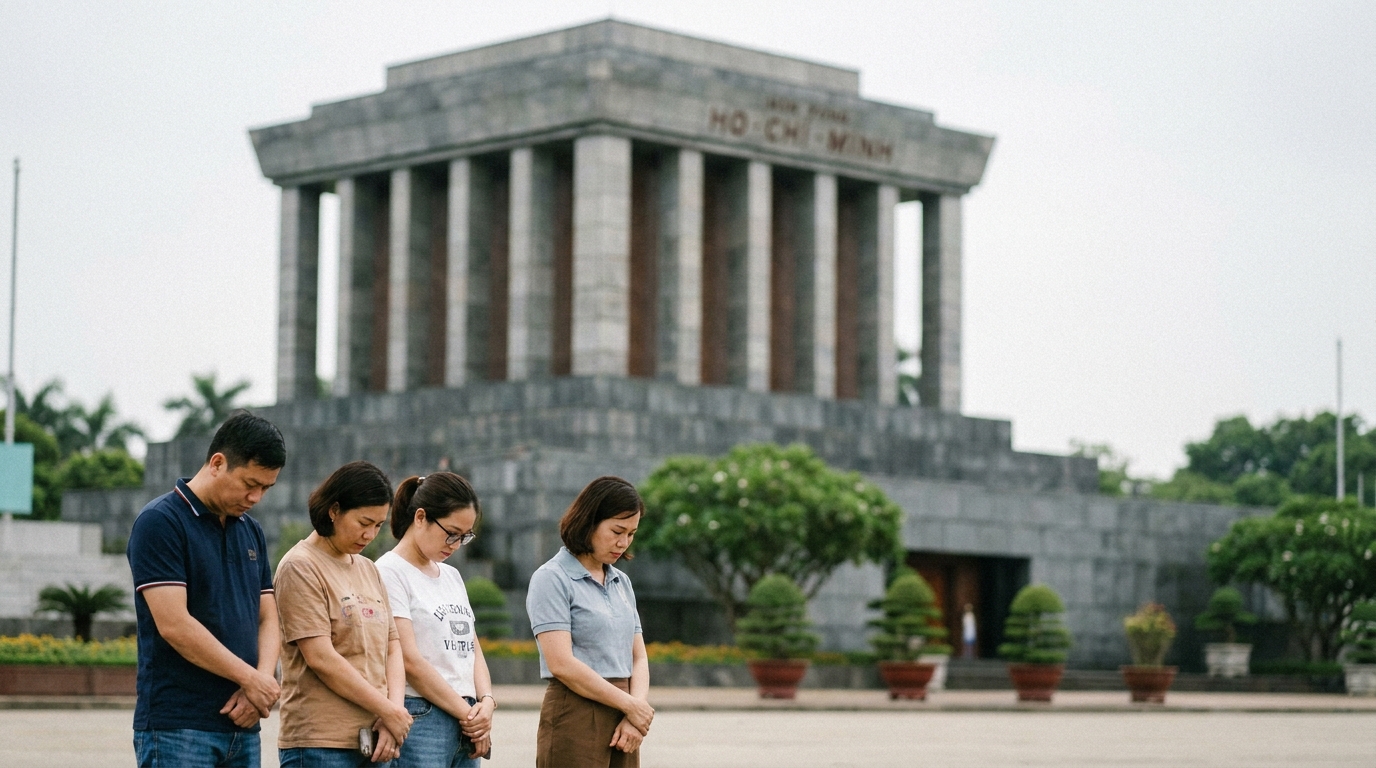
The embalmed body of Ho Chi Minh lies in a granite mausoleum on Ba Dinh Square — one of the most visited and most solemn sites in Vietnam. Entry is free, but strict rules apply: no shorts, no sleeveless tops, phones must stay in your bag, and silence is enforced.
The adjacent Ho Chi Minh Museum (VND 40,000 / USD 1.60) offers deep context on his life and the independence movement. Go early — queues form from 7:30 am and the complex closes at 11:30 am most days.
5. Book a Street Food Tour of the Old Quarter
Hanoi’s street food scene is world-class, and exploring it with a local guide removes every barrier — they know which carts are safe, which stalls have been operating for 30 years, and which bun cha spot Graham Norton queued at.
GetYourGuide lists several highly-rated evening food tours starting at USD 28 per person in 2026, covering six to eight stops including pho, bun cha, banh mi, egg coffee, and bia hoi (street beer).
6. Drink Egg Coffee (Ca Phe Trung) at a Traditional Cafe
Egg coffee is Hanoi’s most distinctive drink — a thick, sweet custard of whipped egg yolk and condensed milk floated over a short, strong Vietnamese coffee. It was invented at Cafe Giang in 1946, and that original cafe on Hang Gai Street still serves the best version in the city for around VND 45,000 (USD 1.80).
Cafe Dinh on Dinh Tien Hoang is the second-best, with better street views.
7. Day Trip to Ha Long Bay or Ninh Binh
Hanoi’s greatest advantage as a base is its proximity to two UNESCO World Heritage sites. Ha Long Bay is 3.5 hours east and genuinely earns every superstition about limestone karsts rising from green water. A one-night cruise starts at USD 95 per person through operators bookable via GetYourGuide in 2026.
Ninh Binh — often called “Ha Long Bay on land” — is closer at 1.5 hours south by bus and costs far less; day trips start at USD 20. See our full guide to Ha Long Bay day trips.
8. Visit the Temple of Literature (Van Mieu)
Vietnam’s first national university was founded here in 1070 during the reign of Emperor Ly Thanh Tong, making the Temple of Literature one of the oldest academic institutions in Southeast Asia. Five walled courtyards lead to the main sanctuary, and 82 stone stele mounted on stone tortoises record the names of 1,307 doctoral laureates from 1484 to 1779.
Admission is VND 30,000 (USD 1.20). It’s quietly photogenic in the early morning and extremely crowded with local school groups by 10 am.
9. See the One Pillar Pagoda
The One Pillar Pagoda (Chua Mot Cot) is one of Vietnam’s most iconic structures — a small wooden temple on a single stone pillar rising from a lily pond, built to resemble a lotus flower. The original dates to 1049; the current structure was rebuilt after French forces destroyed it during their 1954 withdrawal. Entry is free.
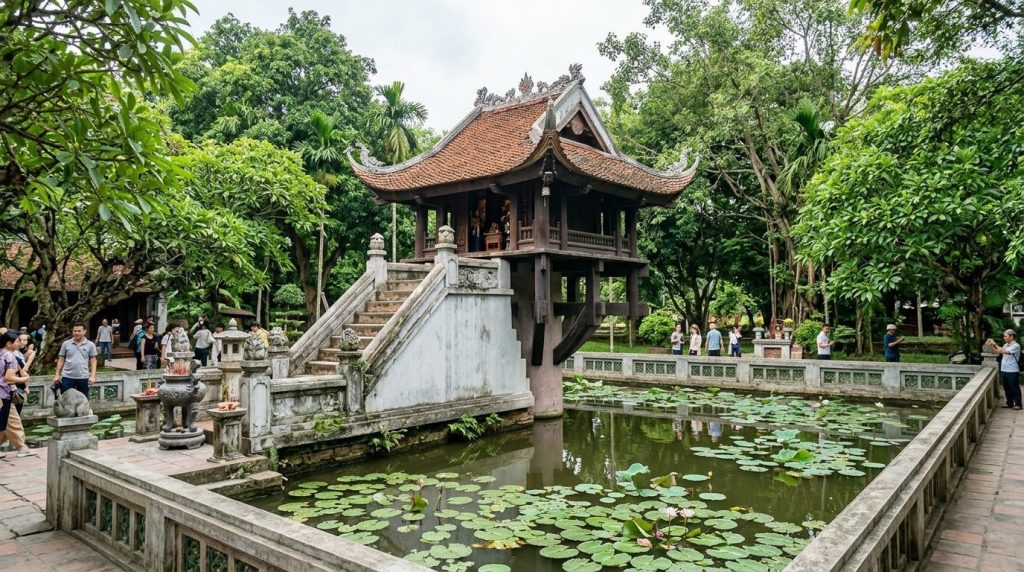
It’s right next to the Ho Chi Minh Mausoleum, so most visitors combine both in a single morning. Takes 15 minutes to see properly; beautiful for photos between 7 and 9 am.
10. Catch a Water Puppet Performance
Hanoi is the birthplace of water puppetry, a 1,000-year-old art form unique to northern Vietnam. Puppeteers stand waist-deep behind a bamboo screen and manipulate lacquered wooden figures across a pool using submerged rods.
The Thang Long Water Puppet Theatre on the north shore of Hoan Kiem Lake runs eight to ten performances daily; tickets are VND 200,000 (USD 8) for standard seats in 2026. We recommend the evening shows — the combination of live traditional music and lit puppets is more theatrical after dark.
11. Tour Hoa Lo Prison (“The Hanoi Hilton”)
Hoa Lo Prison was built by the French in 1896 to hold Vietnamese political prisoners; later it held US POWs during the American War. The museum presents both chapters with deliberate contrast — the brutal French-era cells are shown alongside comparatively comfortable photos of American prisoners. Admission is VND 30,000 (USD 1.20).
It’s confronting, informative, and one of the most thought-provoking museums in Southeast Asia. Allow 60 to 90 minutes. Read our guide to Hanoi’s war history sites.
12. Hire a Cyclo for an Hour
A cyclo — a three-wheeled pedal rickshaw — is the oldest way to navigate Hanoi’s narrow streets, and still one of the most enjoyable for first-time visitors. Legitimate cyclo tours of the Old Quarter run 45 to 60 minutes for USD 10-15 per person in 2026 when booked through a hotel or reputable operator.
Agree the price and route before you sit down. The perspective from a cyclo is uniquely low and slow — you notice architectural details and food stalls that you’d miss on foot.
13. Sample Bun Cha — Hanoi’s Signature Dish
If pho is Vietnam’s most famous dish internationally, bun cha is Hanoi’s local obsession. Grilled pork patties and fatty pork belly are served in a sweetish fish-sauce broth alongside cold rice vermicelli and a mountain of fresh herbs.
The best bun cha in the Old Quarter is intensely debated by locals; we rate Bun Cha Huong Lien on Le Van Huu Street (where President Obama ate with Anthony Bourdain in 2016) highly, but the queue is long. Expect to pay VND 60,000-80,000 (USD 2.40-3.20) per bowl anywhere decent.
14. Explore the French Quarter and Opera House
The French Quarter south of Hoan Kiem Lake is Hanoi’s most architecturally elegant neighborhood, lined with colonial-era buildings in butter-yellow and white. The Hanoi Opera House, completed in 1911 and modeled on the Palais Garnier in Paris, anchors the neighborhood. Before finalizing plans, it helps to check this where to stay in Hanoi before picking a neighborhood that matches the planned pace of the trip.
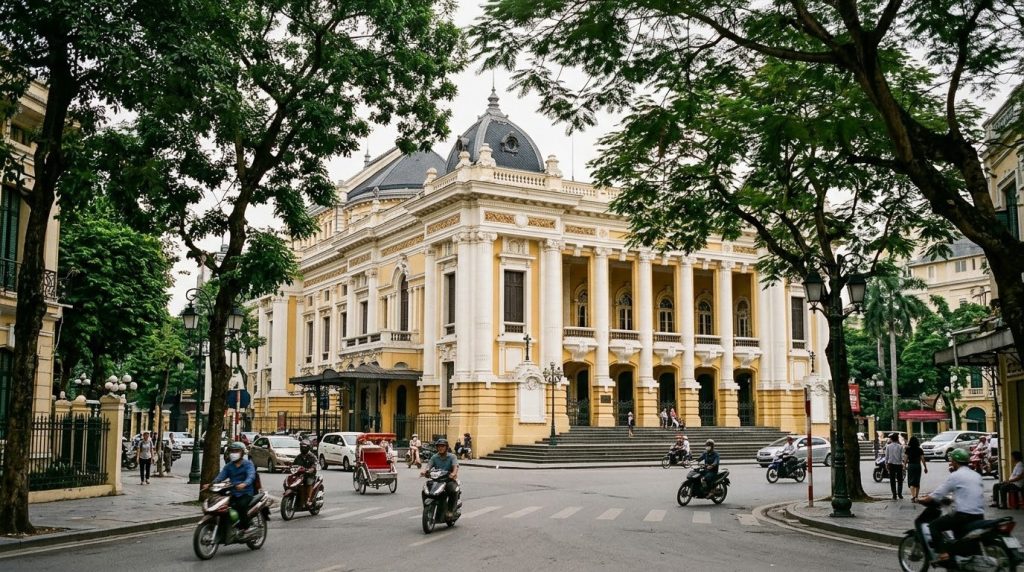
Exterior viewing is free; interior tours run VND 50,000 (USD 2) when available, but check the Hanoi Opera House website as the tour schedule is irregular. Several of Hanoi’s best international restaurants cluster on the surrounding streets.
15. Visit the Vietnam Fine Arts Museum
Three floors of Vietnamese art spanning centuries — from Cham sculpture and lacquer paintings to French colonial-era oils and wartime propaganda posters — make this museum far richer than its modest admission price suggests. Entry is VND 40,000 (USD 1.60) in 2026.
The propaganda art section on the top floor is the most distinctive room in any museum in Hanoi; vivid, technically skilled, and genuinely moving in historical context. Allow 90 minutes. It’s a five-minute walk from the Temple of Literature.
16. Catch the Sunrise at West Lake (Ho Tay)
West Lake is Hanoi’s largest lake — 500 hectares — and the wealthy residential neighborhood around it has the city’s best coffee shops and a noticeably slower pace than the Old Quarter. Arrive at 5:30 am on a weekend and you’ll find hundreds of locals doing tai chi, fishing, and cycling the perimeter path.
The Tran Quoc Pagoda on a small peninsula on the eastern shore is the oldest Buddhist temple in Hanoi, dating to the 6th century. Entry is free. Grab breakfast at one of the banh cuon (steamed rice roll) stalls near the pagoda afterward.
17. Take a Cooking Class
Learning to make Vietnamese food is one of the most durable souvenirs you can take home from Hanoi. Half-day cooking classes in 2026 cost USD 30-55 per person and typically include a market visit, three to four recipes (often pho, spring rolls, and a dessert), and a sit-down meal of everything you cooked.
GetYourGuide lists highly-reviewed options with pickup from Old Quarter hotels. Classes fill quickly on weekends — book at least 48 hours ahead. Browse cooking classes in Hanoi.
18. Drink Bia Hoi at a Street Corner
Bia hoi — fresh, draught lager brewed daily without preservatives — is one of Hanoi’s great pleasures. At VND 10,000-15,000 per glass (USD 0.40-0.60), it’s among the cheapest beer on earth.
The junction of Ta Hien and Luong Ngoc Quyen streets in the Old Quarter is known as Bia Hoi Corner and fills with locals and travelers every evening from around 5 pm. It’s chaotic, sociable, and completely authentic. Don’t overthink it — pull up a plastic stool and order.
19. Get a SIM Card or eSIM Before You Land
Connectivity in Hanoi is excellent, but airport SIM cards at Noi Bai cost USD 8-12 and require in-person activation. We recommend buying an Airalo eSIM before you fly — Vietnam data packages start at USD 4.50 for 7 days / 1 GB and activate instantly. It works on arrival for maps, Grab rides, and translation apps before you’ve even cleared immigration.
20. Browse Dong Xuan Market
Hanoi’s largest covered market occupies an entire block north of the Old Quarter and has traded continuously since the French colonial era. Four floors cover everything from fresh produce and dried goods on the ground floor to fabric, clothing, and household goods above. It’s not a tourist market — prices are local, bargaining is expected, and the experience is genuinely immersive.
Go between 9 am and noon for the busiest trading atmosphere. Budget shoppers can find silk scarves for USD 3-5 and lacquerware from USD 8.
21. Visit the Military History Museum
The Military History Museum on Dien Bien Phu Street is one of the most substantive war museums in Southeast Asia. Captured US and French military hardware is displayed in the courtyard — aircraft, artillery, and tanks — while the interior galleries cover the French Indochina War and the American War in chronological detail. Admission is VND 40,000 (USD 1.60).
The 40-metre flag tower adjacent to the museum is one of the few surviving Nguyen dynasty structures in Hanoi. Allow two hours for a thorough visit.
22. Take a Motorbike Street Food Tour at Night
The night version of Hanoi’s food scene differs markedly from daytime — different dishes, different streets, and a different energy. Motorbike food tours cover ground that walking tours don’t reach, and several operators run 3-4 hour evening rides through the Old Quarter, West Lake area, and residential neighborhoods where the food is best and cheapest.
Prices start at USD 35 per person via GetYourGuide in 2026. Helmets are provided; shorts and closed shoes are recommended.
23. Find the Best Pho in the City
Pho in Hanoi bears little resemblance to the southern Vietnamese version or the westernised bowls you get abroad. Northern pho broth is cleaner, less sweet, and more deeply beefy; the noodles are slightly wider; condiments are minimal.
Pho Gia Truyen at 49 Bat Dan Street opens at 6 am and often sells out by 9 am — the queue moves fast, the broth is extraordinary, and a bowl costs VND 75,000 (USD 3). Read our full guide to pho in Hanoi.
Find your Hanoi hotel on the map
Live prices from Booking & Airbnb — tap a pin to compare stays around the Old Quarter and beyond.
24. Book Accommodation in the Old Quarter
Staying in the Old Quarter puts you within walking distance of virtually every attraction on this list and keeps transport costs near zero. Hostels start at USD 8 per night for a dorm bed; mid-range boutique hotels with Old Quarter addresses run USD 35-70 for a double room in 2026.
We recommend booking via Booking.com for the most transparent pricing and free cancellation policies — filter for Old Quarter or Hoan Kiem District and sort by guest score. Search Old Quarter hotels on Booking.com.
25. Plan a Ha Giang Loop or Sapa Extension
If your schedule allows more than three days, Hanoi is the jumping-off point for two of Vietnam’s most dramatic landscape experiences. The Ha Giang Loop — a three to four-day motorbike circuit through far-northern Vietnam — is technically demanding but delivers scenery that rivals anything in the country.
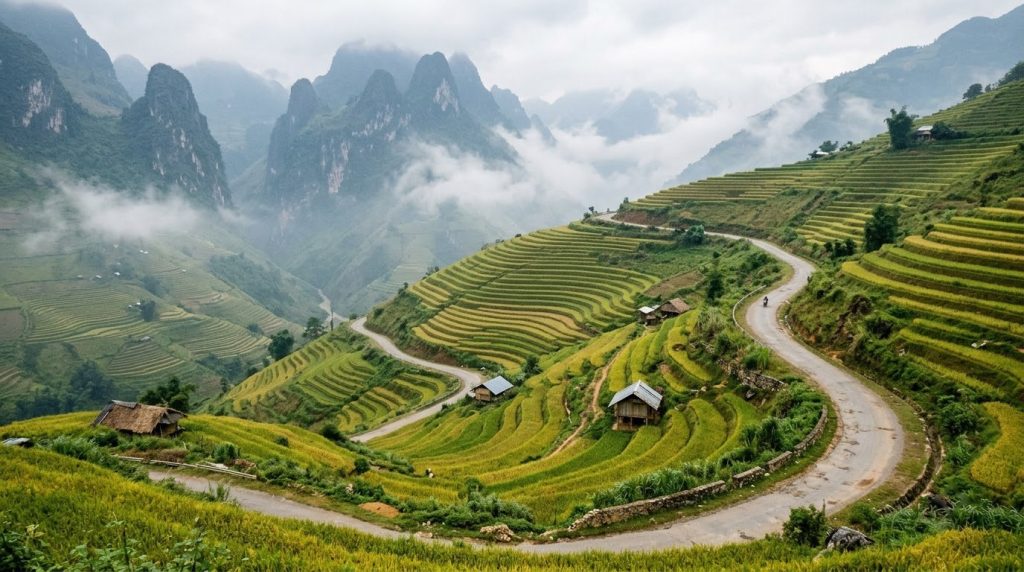
Sapa, a hill-town 5 hours northwest by overnight train, offers trekking through terraced rice fields and homestays with Hmong families. See our guide to the Ha Giang Loop.
Hanoi Train Street: What Is Changing and What to Check First
The narrow railway lane where trains pass within arm’s reach of cafe tables is one of the most photographed spots in Hanoi. It is also one of the least stable attractions on any list, because the rules have changed several times.
What reports say
- In March 2025, Hanoi’s tourism department told travel agencies and tour operators not to bring visitors to the street, citing safety.
- Cafes reopened after a police enforcement sweep in November 2025, according to local media.
- In January 2026, city officials proposed ending passenger trains through the street, and on February 27, 2026 authorities agreed to cut passenger train frequency and suspend freight on this stretch and the Long Bien Bridge.
Reports after March 2026 on the cafes’ permit status were not available, so treat anything you read about opening hours as provisional.
If you still want to go
- Ask your hotel whether the street is open and whether trains are still running today.
- Follow staff instructions and stay behind any barrier. Trains pass very close to the tracks.
- Do not step onto the rails for photos.
- Consider a plan B, such as the train-themed cafes or the Long Bien Bridge described below, in case the lane is closed.
With fewer trains planned, the famous moment of a train squeezing between the houses may become rarer, so do not build a day around it.
The Old Quarter Weekend Night Market
On weekend evenings, the streets running north from the Hoan Kiem Lake area are closed to vehicles and turn into a long pedestrian market. Sources give the schedule as Friday through Sunday, from about 6 pm until 11 pm or midnight, so plan for closing between those times.
The market starts near Hang Dao Street, close to the lake, and runs north through Hang Ngang and Hang Duong to the Dong Xuan Market area. One source puts the full length at roughly 3 kilometers, so you can dip in for 30 minutes or walk the whole route.
What to do there
- Browse souvenirs, clothing and handmade goods. Compare prices at a few stalls before you buy, and bargain politely.
- Try street snacks from the carts that line the route, using the same food-safety rules as elsewhere in the city: choose busy stalls with fresh turnover.
- Watch street performers and the crowd of local families.
Tips
Keep your phone in a front pocket or zipped bag. Crowds are heavy around Dong Xuan, so approach from the lake end if you prefer a gradual start. Combine it with the water puppet show or a street food tour on the same night, since the lake is a short walk away.
Getting Around Hanoi: Metro, Airport Bus and Walking
The Old Quarter is walkable, but several sights on this list sit well outside it. Hanoi now has two elevated metro lines, and the airport bus is the cheapest way into town.
From Noi Bai Airport
Noi Bai International Airport is about 35 km (22 miles) northeast of downtown. Bus 86 runs directly from both terminals to the Old Quarter and the main railway station for VND 45,000 (about USD 1.80). Taxis wait outside the arrival areas at both terminals. International flights use Terminal 2, and a free electric shuttle links it with domestic Terminal 1.
The metro
Two lines are open. Line 2A runs 13.1 km with 12 stations between Cat Linh and Yen Nghia and opened in November 2021. Line 3 runs 8.5 km with 8 stations between Nhon and Cau Giay and opened in August 2024, though its underground section is still under construction.
Fares are low. A short trip costs VND 9,000 (about USD 0.36), and the longest trips cost VND 15,000-19,000 (USD 0.60-0.76). A day pass costs VND 40,000 (about USD 1.60).
Paying for a ticket
Paper tickets and vending machines are being phased out. Line 3 now sells QR tickets at counters or in the Hanoi Metro app. Both lines accept cash and VietQR at counters, local wallets such as Momo, and Visa contactless cards at the gate. Carry a small amount of cash as a fallback.
The metro is best for reaching the western districts without a taxi. For the Old Quarter itself, Hoan Kiem Lake and the French Quarter, walking beats any vehicle.
Vietnamese Women’s Museum: An Easy Indoor Stop
The Vietnamese Women’s Museum is a compact, well-organized museum at 36 Ly Thuong Kiet, a short ride from the Old Quarter. It covers women’s roles in family life, in the independence wars and in modern Vietnam, with exhibits on traditional costume and everyday objects.
Most sources list daily hours of 8:00 am to 5:00 pm, although one reports a Monday closure. Adult admission is most often reported at VND 40,000 (about USD 1.60), with lower fares for students and children and free entry for children under 6. Prices vary by listing, so check at the ticket window.
Why include it
- It is a good rainy-day or midday-heat option, with air conditioning and clear English labels.
- It pairs well with the Fine Arts Museum and the Hoa Lo Prison in the same part of the city.
- Most visits take around one to one and a half hours, so it fits between a morning market and an afternoon coffee stop.
For a first-time visitor who has seen the mausoleum and the temple, the museum adds a human-scale view of the country that the large monuments do not provide.
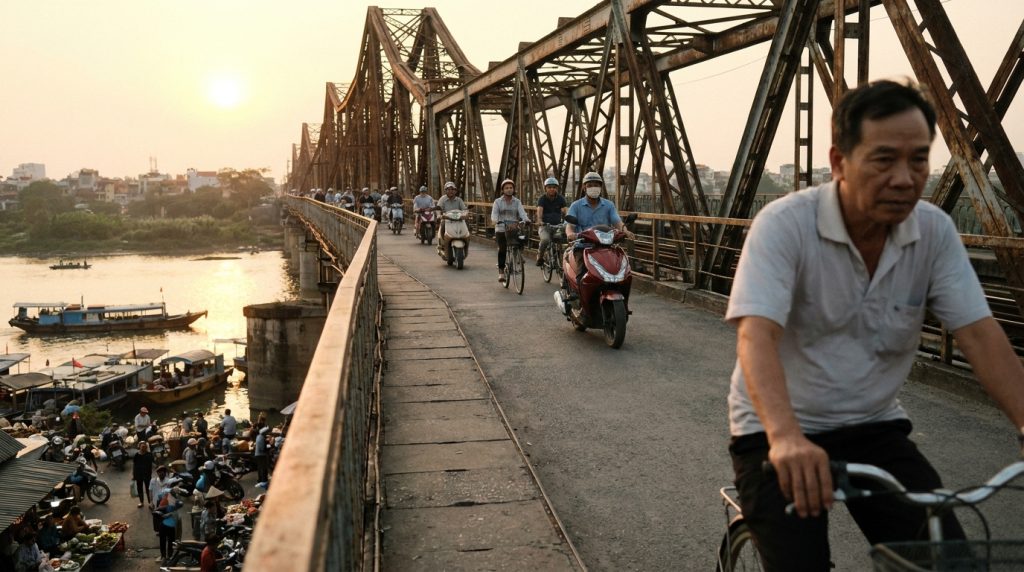
Long Bien Bridge: A Walk Through Hanoi’s History
Long Bien Bridge was the first steel bridge across the Red River, built between 1898 and 1902. It links Hoan Kiem district with Long Bien district and still carries trains, motorbikes and pedestrians on separate lanes, which gives it a distinctly working character.
Best time to go
Early morning and late afternoon are the best times, when the light is soft and the heat is lower. Sunrise brings fishermen, fruit sellers and locals crossing to the riverside markets and farm plots on the far side.
Practical points
- Wear shoes with a good grip. The surfaces can be uneven and rusted in places.
- Stay in the pedestrian area and away from the tracks, especially because train schedules on this section are being reduced.
- The bridge sits at the northern end of the Old Quarter, so you can walk there from the night-market route and return by taxi or ride-hailing.
Allow around 45 minutes to an hour for a round trip on foot. It is free to visit, and it is better as a short, scenic detour than as a destination on its own.
When to Visit: Hanoi by Season
Hanoi has a monsoon-influenced humid subtropical climate, and the season changes which items on this list are comfortable. These figures come from the 1991-2020 climate normals for central Hanoi.
| Period | Average daily temperature | Rain | What it means for sightseeing |
|---|---|---|---|
| December-February | About 61-65 F (16-18 C) | Under 21 mm (under 1 inch) a month | Cool and dry, best for long walks and the lake loop |
| June-August | About 84 F (29 C) | 254-274 mm (10-11 inches) a month | Hot and wet, plan indoor stops for the afternoon |
| October | About 77 F (25 C) | 155 mm (6 inches) | Easing heat and rain |
| November | About 71 F (21.5 C) | 61 mm (2.4 inches) | Mild and drier |
Annual rainfall averages roughly 1,600 mm (63 inches), and most of it falls between May and October. January is the coolest month, with a mean daily temperature near 61 F (16 C). July is the hottest, near 84 F (29 C).
Planning around the weather
- Hot months: do outdoor sights such as the Old Quarter walk and West Lake at sunrise, then move to museums, the water puppet show or a long cafe lunch.
- Rainy months: keep the Museum of Ethnology, the Fine Arts Museum and the Military History Museum as your backup plan.
- Cool months: pack a light jacket for evenings.
Hanoi 2026 Quick-Reference Price Table
| Activity | Cost (VND) | Cost (USD approx.) |
|---|---|---|
| Ngoc Son Temple | 30,000 | 1.20 |
| Temple of Literature | 30,000 | 1.20 |
| Hoa Lo Prison | 30,000 | 1.20 |
| Ho Chi Minh Mausoleum | Free | Free |
| One Pillar Pagoda | Free | Free |
| Vietnam Museum of Ethnology | 40,000 | 1.60 |
| Vietnam Fine Arts Museum | 40,000 | 1.60 |
| Military History Museum | 40,000 | 1.60 |
| Water Puppet Theatre | 200,000 | 8.00 |
| Street Food Tour (guided) | 700,000+ | 28.00+ |
| Cooking Class (half-day) | 750,000+ | 30.00+ |
| Ha Long Bay 1-night cruise | 2,400,000+ | 95.00+ |
| Airalo Vietnam eSIM (7 days) | – | 4.50 |
| Bia Hoi (glass) | 10,000-15,000 | 0.40-0.60 |
| Bowl of bun cha | 60,000-80,000 | 2.40-3.20 |
How to Combine These Sights Into Three Days
The list works better as a schedule than as 25 separate stops. Use the opening rules already noted above, and group sights by area so you are not crossing the city twice a day.
Day 1: Old Quarter and the lake
- Early morning: walk the 36 streets while traffic is light.
- Late morning: Hoan Kiem Lake and Ngoc Son Temple.
- Afternoon: Dong Xuan Market and a break from the heat.
- Evening: street food tour or a water puppet performance.
Day 2: History and museums
Start at Ba Dinh Square for the mausoleum, which is closed Mondays and Fridays and during annual maintenance. Queues form from 7:30am and the complex closes at 11:30am on most days. Strict dress rules apply, so cover your shoulders and knees.
After lunch, add the Temple of Literature, which is crowded with school groups by 10am, so go as early as possible. Fit the One Pillar Pagoda and the Military History Museum into the same area before heading back.
Day 3: A day trip or a slower day
Ninh Binh is about 1.5 hours south by bus, and Ha Long Bay is about 3.5 hours east, which makes it a one-night trip rather than a rushed day. If you stay in the city, use the third day for the Museum of Ethnology, a cooking class and an evening at the French Quarter.
Leave one slot a day empty. Hanoi’s traffic and weather make a packed schedule hard to keep.
Frequently Asked Questions
How many days do you need in Hanoi?
Three days is the practical minimum for Hanoi’s core sights — the Old Quarter, major museums, and a food tour. Four to five days lets you add a day trip to Ninh Binh or Ha Long Bay. Most travelers who stay longer (7-10 days) are using Hanoi as a hub for northern Vietnam side trips.
Is Hanoi safe for solo travelers?
Hanoi is broadly safe for solo travelers, including solo female travelers. Petty theft and bag-snatching from motorbikes occur in tourist areas — keep bags on the inside of the pavement and don’t use your phone while walking near roads. Book taxis via Grab to avoid fare overcharging, and use Booking.com-listed accommodation for reliable security standards.
What is the best time of year to visit Hanoi?
October to April is the most comfortable period — temperatures range from 17 to 25 degrees Celsius and rainfall is low. May to September brings high humidity and occasional typhoon-related rain; temperatures regularly hit 35-38 degrees. The Tet lunar new year (late January or February) is vibrant but many businesses close for a week.
How do you get from Hanoi airport to the city?
Noi Bai International Airport is 30 km from the Old Quarter. The Vietnam Airlines minibus (VND 40,000 / USD 1.60) runs to the Old Quarter but takes 60-90 minutes. A Grab car costs USD 10-14 and is the most reliable option in 2026. Metered taxis from approved airport ranks cost similar but confirm the meter is running before you depart.
What currency do you need in Hanoi?
Vietnamese Dong (VND) is essential for street food, local markets, temple admissions, and cyclos. Most Old Quarter hotels and tour operators accept USD at roughly 25,000 VND per dollar, but you’ll get better value exchanging at a bank or Agribank ATM. Avoid airport exchange counters — their rates are 5-8% worse than city ATMs.
Do you need a visa for Vietnam?
Citizens of the US, UK, and Australia all qualify for Vietnam’s 90-day e-visa as of 2026. Apply at evisa.xuatnhapcanh.gov.vn at least 3 business days before travel; the fee is USD 25. E-visa holders can enter via Noi Bai International Airport. Double-check official visa requirements before booking as policies update regularly.
Can you drink tap water in Hanoi?
No. Tap water in Hanoi is not safe to drink directly. Every hotel provides either bottled water or a filtered-water station. Bottled water costs VND 5,000-10,000 (USD 0.20-0.40) at any convenience store. Ice at reputable restaurants and hotels is made from filtered water; street-stall ice is a judgment call we generally skip.
Conclusion
Hanoi in 2026 is one of Southeast Asia’s most rewarding city breaks — rich in history, exceptional for food, and still genuinely affordable compared to regional peers. The 25 best things to do in Hanoi range from free morning walks through the Old Quarter to curated street food tours and day trips to World Heritage landscapes.
Start with the Old Quarter and Hoan Kiem Lake, add a guided food tour on your first evening, and let the city reveal its layers from there.
Ready to book?