Ultimate Hanoi Travel Guide 2026: Plan Your Perfect Trip
Disclosure: Some links in this guide are affiliate links. If you book or buy through them, we may earn a small commission at no extra cost to you — it helps keep our guides free.
- Hanoi’s average daily budget for mid-range travelers runs $50-70 USD in 2026, well below Bangkok or Kuala Lumpur (Numbeo Cost of Living Index, 2026)
- The city receives over 2.3 million international visitors per year, peaking October through April (Hanoi Department of Tourism, 2025)
- E-visa processing for most nationalities now takes 3 business days and costs $25 USD (Vietnam Immigration Department, 2026)
- Grab ride-hailing fares across the entire Old Quarter average $1.50-3.00 USD per trip (Grab Vietnam, 2026)
- Hanoi’s street food scene spans 36 named food streets; bun cha and pho bo remain the signature dishes cited by 78% of visitors in exit surveys (Vietnam National Administration of Tourism, 2025)

Hanoi rewards the traveler who pays attention — its layered French colonial boulevards, 36-street Old Quarter, and street-food culture that feeds millions daily make it one of Southeast Asia’s most compelling capitals. This guide pieces together exactly what works, what’s overpriced, and what you’ll regret missing. Many visitors planning transport and lodging turn to this things to do in Hanoi before deciding which attractions are worth the time on a short visit.
In this guide, we cover everything: when to go, where to stay, what to eat, how to get around, and how to do it all without burning your budget. Anyone mapping out the trip usually consults this where to stay in Hanoi before picking a neighborhood that matches the planned pace of the trip.
When Is the Best Time to Visit Hanoi?
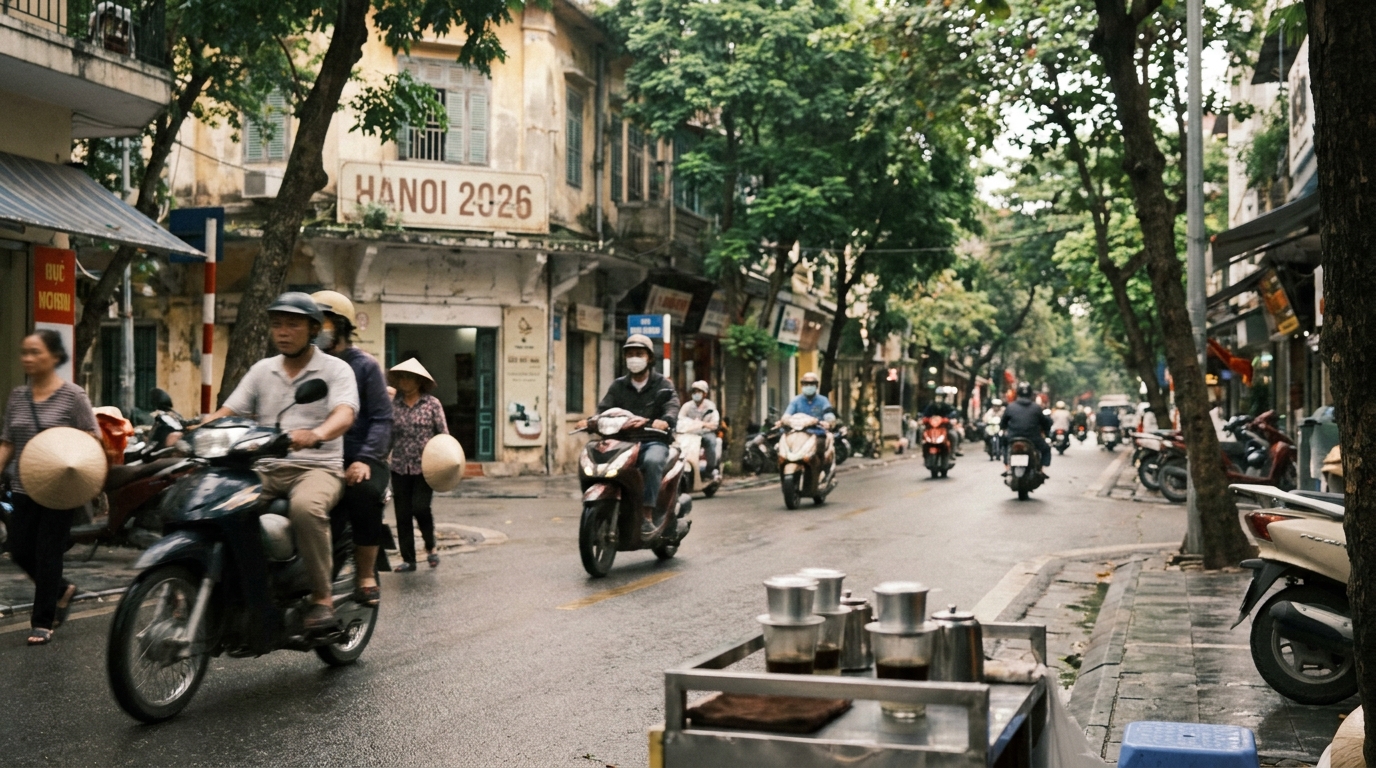
The best time to visit Hanoi is October through April, when temperatures sit between 16-25C (61-77F) and rainfall is minimal. According to the Vietnam National Administration of Tourism’s 2025 Visitor Report, this six-month window accounts for 64% of all annual international arrivals — and for good reason.
We’ve been in Hanoi in August, and the heat-plus-humidity combination — 35C with 90% humidity — genuinely wears you down by noon if you’re trying to do anything active.
That said, the shoulder months of May and early September bring lighter crowds and hotel rates that run 20-30% below peak-season pricing. If budget matters more than perfect weather (and for many travelers, it should), September is a strong pick: there’s still plenty of warmth, some afternoon rain that cools things down, and far fewer tour groups in the Old Quarter.
Tet (Vietnamese Lunar New Year, which falls in late January or early February in 2026) deserves special mention.
It’s one of Asia’s most atmospheric festivals — lanterns everywhere, lion dances, family altars on every doorstep — but it also means that about 60-70% of restaurants and shops close for 5-7 days, transport clogs up dramatically, and hotel prices can triple compared to normal rates.
If you’re traveling during Tet, book at least six weeks ahead, set your expectations for reduced services, and lean into the festive atmosphere rather than fighting it.
| Season | Months | Temp (C) | Avg Hotel Rate (3-star) | Notes |
|---|---|---|---|---|
| Peak (Dry) | Oct – Apr | 16-25 | $45-70/night | Best weather, book 3-4 weeks ahead |
| Tet Holiday | Late Jan – Feb | 15-20 | $80-130/night | Festive but many services closed |
| Hot Season | May – Aug | 28-38 | $30-50/night | Cheaper rates, afternoon rain possible |
| Shoulder | Sep, May | 25-32 | $35-55/night | Best value overall for most travelers |
Find your Hanoi hotel on the map
Live prices from Booking & Airbnb — tap a pin to compare stays around the Old Quarter and beyond.
Which Hanoi Neighborhood Should You Stay In?
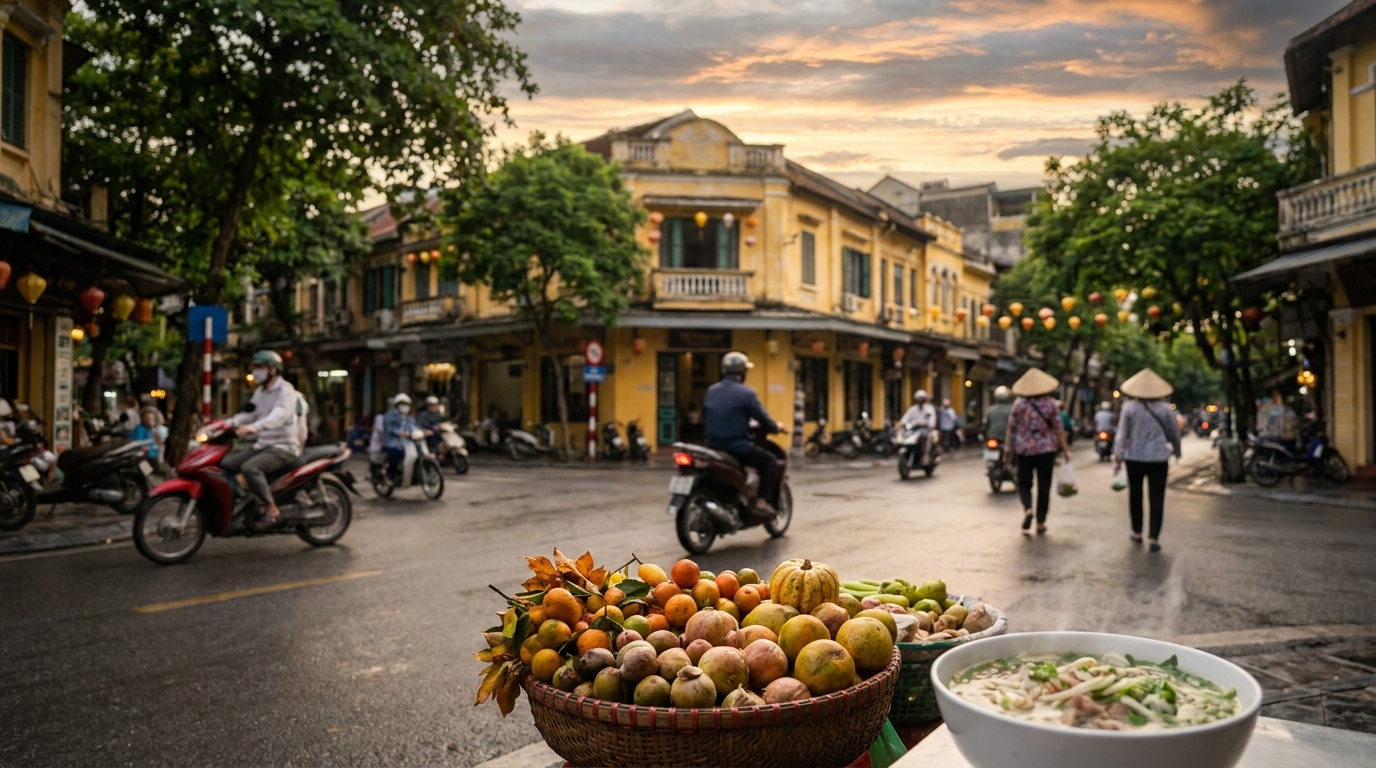
Your neighborhood choice shapes the entire trip, so don’t just default to the cheapest hostel in the Old Quarter without thinking it through. Hanoi’s districts feel genuinely different from one another — the energy, pace, noise level, and price point all shift significantly as you move away from the historic center.
Hoan Kiem / Old Quarter is right for first-time visitors. It puts you within walking distance of Hoan Kiem Lake, street food at every corner, and the density of budget hotels is unmatched. Expect noise until 11pm and early-morning delivery trucks from around 5am — earplugs are not optional here if you’re a light sleeper.
In 2026, Check live hotel prices lists over 280 properties in this district, with private rooms starting at $18-25/night and mid-range boutique hotels running $55-90/night. We’d recommend staying at least three nights here so you stop feeling like a tourist and start feeling like a temporary resident.
The density of life in these 36 streets genuinely rewards repeat walking — you’ll find alleyways on day three that you walked right past on day one.
Tay Ho (West Lake) is Hanoi’s expat and long-stay district, and it’s genuinely pleasant in a way the Old Quarter isn’t. Streets are quieter, cafes are design-forward and laptop-friendly, and the lakeside cycling path is one of the best urban cycling routes in Vietnam.
Hotel rates run 15-25% higher than equivalent Old Quarter quality — budget $70-120/night at a mid-range boutique — but the breathing room makes it worth it for stays longer than five days. The Tran Quoc Pagoda, one of Vietnam’s oldest Buddhist temples, sits right on the lake and is a ten-minute walk from most Tay Ho hotels.
Ba Dinh sits adjacent to the Ho Chi Minh Mausoleum complex and the Temple of Literature, making it a strong base for travelers with young kids or a serious interest in Vietnamese history. It’s calmer than the Old Quarter, hotel prices sit between the two districts described above (roughly $35-70/night for a 3-star), and the wide French colonial avenues make for comfortable morning walks without fighting motorbike traffic.
Dong Da and Hai Ba Trung are the up-and-coming districts where younger Vietnamese Hanoians are opening coffee shops and boutique restaurants. Rates are lower than the Old Quarter by 20-30%, and the areas give a more authentic sense of daily Hanoi life — but the walking distance to main tourist sights is greater, making Grab rides a daily necessity.
How Do You Get to Hanoi?
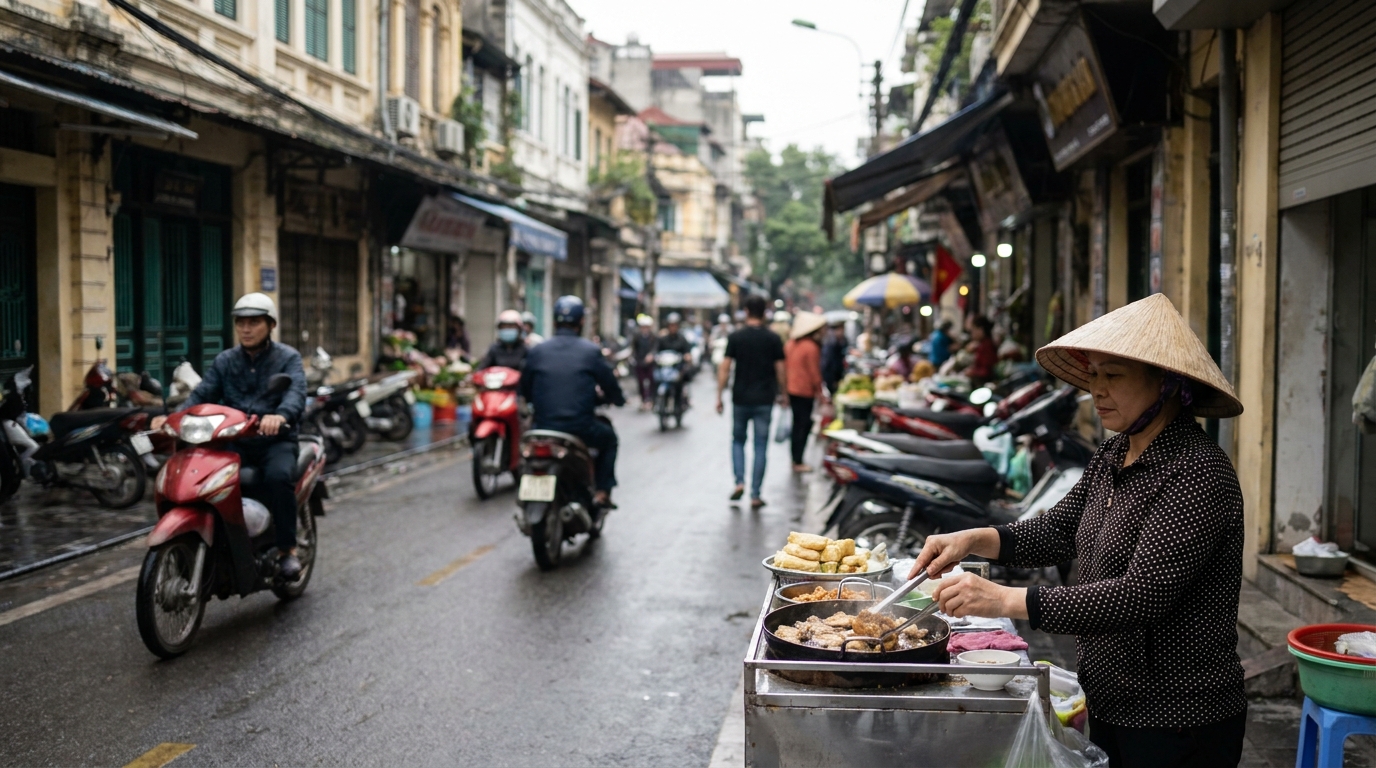
Noi Bai International Airport (HAN) handles all international flights and sits 28km north of the city center. The official flat-rate taxi into the Old Quarter costs $10-14 USD in 2026 and takes 35-50 minutes depending on traffic — use Vietnam Airlines Taxi or Noi Bai Taxi counters in arrivals and avoid unmarked cabs that congregate outside exits.
Grab is available from the designated ride-hailing zone and typically costs $7-10 USD to the Old Quarter.
The airport bus (Route 86, branded Hanoi Express) runs every 20-30 minutes from 5:30am to 10:30pm and costs 45,000 VND (roughly $1.80 USD). It’s by far the cheapest option if you’re not loaded with heavy luggage, with a journey time of 45-60 minutes. Google Maps tracks it in real time.
For regional rail connections within Vietnam, trains link Hanoi to Ho Chi Minh City (the Reunification Express, 30-33 hours, from $30 USD hard seat to $80 USD soft sleeper), Da Nang (16-18 hours, from $25 USD), and Hue (12-14 hours, from $20 USD). We always recommend booking train tickets a week or more ahead during peak season.
Omio aggregates Vietnam Railways options alongside regional bus routes if you want to compare journey types side by side.
If you’re arriving overland from Laos or southern China, bus routes operate from Hanoi’s My Dinh bus station (southwest of center, accessible by bus or Grab). The Hanoi-Vientiane sleeper bus takes approximately 24 hours.
What Are the Visa and Entry Requirements for Vietnam in 2026?

Most Western visitors can enter Vietnam visa-free for 45 days under the unilateral visa waiver that was expanded in 2023 and remains in full effect in 2026. According to the Vietnam Immigration Department’s 2026 guidelines, this waiver covers US, UK, Australian, Canadian, French, German, Spanish, Italian, and 23 other nationalities — a significant expansion from pre-2023 rules that required either a visa on arrival or e-visa for nearly everyone.
For nationalities not covered by the waiver, or for travelers wanting to stay longer than 45 days, the e-visa remains the standard route. It costs $25 USD, processes in 3 business days, and allows 90-day single or multiple entry. Apply directly at the official Vietnam e-visa portal (evisa.xuatnhapcanh.gov.vn) — third-party services charging $60-100 for the same outcome are entirely unnecessary and the portal is user-friendly in English.
One practical step we always take before any Southeast Asia trip: buying an eSIM before departure. Airalo offers Vietnam data-only eSIMs from $4.50 USD for 1GB over 7 days up to $18 USD for 20GB over 30 days.
You activate it from home, and the moment you land at Noi Bai you have Google Maps running, Grab installed, and currency conversion working — no hunting for a SIM counter at the airport with bags in hand.
| Nationality | Visa-Free Days | E-Visa Cost | Max Stay (E-Visa) |
|---|---|---|---|
| US, UK, AU, CA | 45 days | $25 USD | 90 days |
| EU (Schengen) | 45 days | $25 USD | 90 days |
| Japan, South Korea | 45 days | $25 USD | 90 days |
| India | Not covered by waiver | $25 USD | 90 days |
| China | 15 days (bilateral) | $25 USD | 90 days |
What Are the Best Things to Do in Hanoi?
Hanoi’s best experiences are almost all free or under $5 USD — the real cost is your willingness to walk, get slightly lost, and resist the tour-bus itinerary mentality. Here’s where we’d genuinely put our hours.
Hoan Kiem Lake and Ngoc Son Temple — The lake is the geographic and emotional heart of the city. Walk the perimeter at 6am when locals are doing tai chi and badminton, not at 10am when tour groups arrive.
Ngoc Son Temple on the small island at the lake’s northern end costs 30,000 VND ($1.20 USD) to enter and takes about 20 minutes — it’s not the most spectacular temple in Vietnam, but the setting over the water is beautiful in early morning light.
The Old Quarter’s 36 Streets — The old guild quarter where each street historically sold one specific type of product: Hang Bac for silver, Hang Ma for paper goods, Hang Gai for silk, Hang Thiec for tin. It’s commercial and tourist-facing now, but the narrow street patterns, tube-house architecture, and chaotic energy are unlike anything else in Southeast Asia.
We’d spend a half-day just walking without a specific destination — the best finds come when you’re not looking.
Ho Chi Minh Mausoleum Complex — The mausoleum itself is open Tuesday-Thursday and Saturday-Sunday, 7:30-10:30am only, and admission is free but the dress code is strict (no shorts, no sleeveless tops, no bags, phones must be stowed). The surrounding Ba Dinh Square, One Pillar Pagoda, and Ho Chi Minh Museum (40,000 VND/$1.60 USD) fill a solid half-day. Arrive before 8am to avoid the worst of the queue.
Temple of Literature (Van Mieu) — Vietnam’s first national university, founded in 1070 under King Ly Thanh Tong. The architecture is genuinely excellent and the grounds are calm in a way that feels restorative after Old Quarter noise. Entry costs 70,000 VND ($2.80 USD) in 2026. Morning visits before 9am are significantly cooler and far less crowded.
Hanoi Street Food Tours — We don’t always recommend guided food tours, but Hanoi’s food geography is genuinely confusing: the best pho bo stalls are in Ba Dinh, the best bun cha is on side streets off Hang Dieu, and the spots locals actually eat at aren’t on Google Maps yet.
GetYourGuide lists walking food tours from $25-40 USD per person, covering 6-8 stops over 3 hours with a knowledgeable local guide. GetYourGuide also offers well-reviewed evening food bike tours from $22 USD — these are genuinely some of the best-value guided experiences in Asia.
Hoa Lo Prison (Hanoi Hilton) — The colonial-era prison turned war museum is one of Hanoi’s most sobering and intellectually rich sites. Entry is 40,000 VND ($1.60 USD) and a self-guided visit takes about 90 minutes. The exhibits on the French colonial period are particularly well-done.
Day Trips from Hanoi — Ha Long Bay sits 4 hours from Hanoi by road and is justifiably famous; an overnight cruise starts at $89 USD and includes transport, accommodation, and most meals.
Ninh Binh (2 hours, $8 USD by bus, UNESCO-listed limestone karst landscape) is often called the “inland Ha Long Bay” and is more intimate than the real thing. Sapa (overnight train from $22 USD) offers mountain trekking and minority culture visits. For all day trips, GetYourGuide has the most consistently reviewed options with cancellation flexibility.
What Should You Eat in Hanoi?
Hanoi’s food culture is hyper-local in a way that surprises even experienced Southeast Asia travelers. Dishes that are the city’s signature — bun cha, cha ca, banh cuon — aren’t widely replicated elsewhere in Vietnam, and Hanoians are quietly but persistently proud of this.
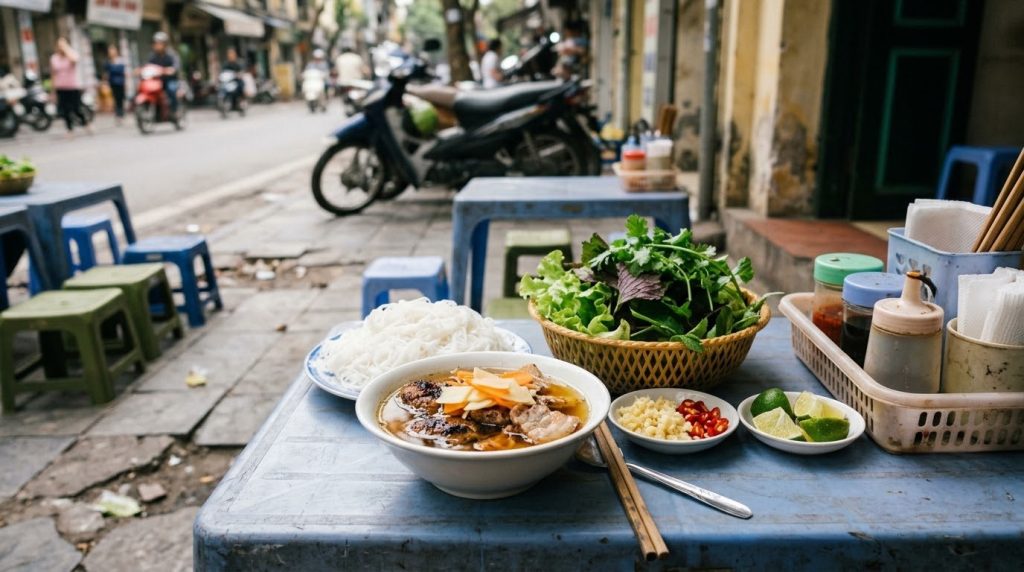
The Vietnam National Administration of Tourism’s 2025 exit survey found that 91% of international visitors rated food as a “very important” factor in their Hanoi experience, the highest rating of any single trip element. Here’s how to eat well without overpaying.
Pho Bo — Hanoi-style pho uses a cleaner, less sweet broth than Saigon pho, and it’s eaten without the herb pile common in the south.
Two consistently excellent spots: Pho Bat Dan (49 Bat Dan Street, open 6-10am and 6-8pm only, 70,000 VND/$2.80 USD, expect a queue of 10-15 minutes at peak times) and Pho Thin (13 Lo Duc Street, stirred-fat pho style, 80,000 VND/$3.20 USD). Both are legitimately worth the wait.
Bun Cha — Grilled pork patties in a sweet-savory dipping broth with rice noodles and fresh herbs, universally adored and made internationally famous by Anthony Bourdain’s now-legendary visit. Budget 50,000-70,000 VND ($2-2.80 USD) at local spots; the tourist-zone versions on Dinh Liet and Ta Hien charge 120,000-150,000 VND for an identical dish.
Cha Ca La Vong — Turmeric-marinated fish pan-fried at your table with dill and spring onions, served with vermicelli and roasted peanuts. The original Cha Ca La Vong restaurant at 14 Cha Ca Street has been operating since 1871 and charges 350,000 VND ($14 USD) per person.
It’s a tourist institution now, but the dish is genuinely distinctive and the ritual of cooking it yourself at the table makes it worth doing once.
Banh Mi — The Vietnamese baguette sandwich is a French colonial legacy executed with more finesse in Vietnam than anywhere in France. At 25,000-40,000 VND ($1-1.60 USD) per sandwich, it’s the best-value meal in the city. Banh Mi 25 (25 Hang Ca Street) is consistently rated the best in the Old Quarter and has been featured in international food press.
Egg Coffee (Ca Phe Trung) — Whipped egg yolk and condensed milk over strong Vietnamese drip coffee, invented at Cafe Giang (39 Nguyen Huu Huan Street, founded 1946, 45,000 VND/$1.80 USD). Sit upstairs on the second floor for the full atmospheric experience. Don’t substitute it with the versions at modern cafes — the original technique matters.
Bun Bo Nam Bo — Stir-fried beef with rice noodles, herbs, and roasted peanuts, a dry noodle dish that’s lighter and faster to eat than pho. Often overlooked by tourists, very popular with locals. Budget 55,000-75,000 VND ($2.20-3.00 USD).
| Dish | Local Price (VND) | USD Equiv. | Best Area to Find It |
|---|---|---|---|
| Pho Bo | 60,000-80,000 | $2.40-3.20 | Ba Dinh, Old Quarter |
| Bun Cha | 50,000-70,000 | $2.00-2.80 | Old Quarter side streets |
| Banh Mi | 25,000-40,000 | $1.00-1.60 | Citywide |
| Cha Ca | 300,000-400,000 | $12-16 | Cha Ca Street |
| Egg Coffee | 40,000-55,000 | $1.60-2.20 | Old Quarter (Cafe Giang) |
| Bun Bo Nam Bo | 55,000-75,000 | $2.20-3.00 | Old Quarter |
| Banh Cuon | 40,000-60,000 | $1.60-2.40 | Old Quarter morning stalls |
How Do You Get Around Hanoi?
Hanoi’s traffic is a spectacle before it’s a problem. Once you understand the flow — keep moving at a steady pace, don’t stop suddenly in the middle of the road, make eye contact with motorbike drivers before stepping out — crossing streets becomes second nature within a day. For getting between neighborhoods efficiently, here are your practical options and what each one realistically costs in 2026.
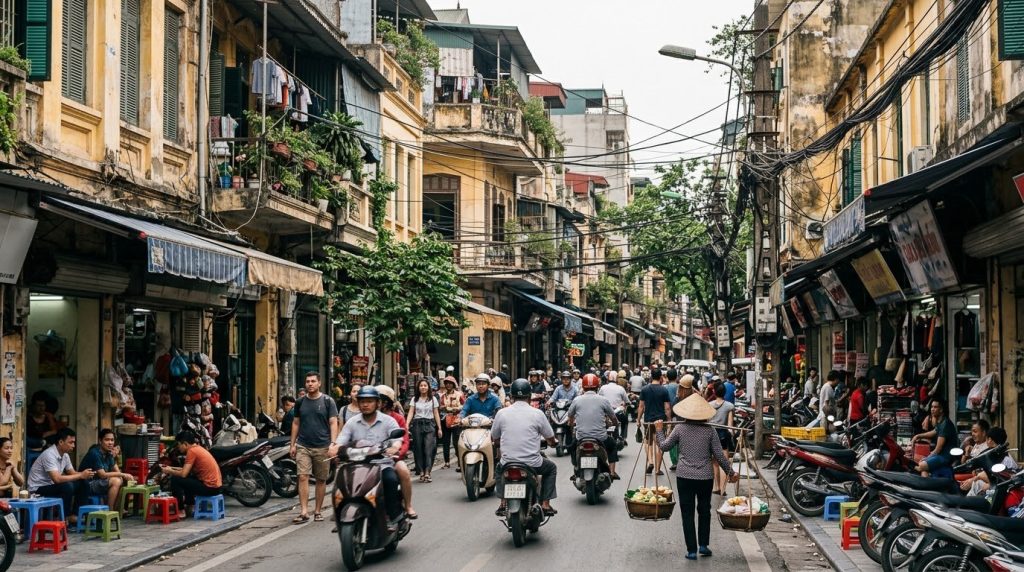
Grab (Ride-Hailing) — The default option for any journey over 1.5km. Download the Grab app before you leave home, link a card (it accepts Visa/Mastercard), and fares are fixed before you confirm the booking. Standard Old Quarter-to-Tay Ho ride: $3-4 USD.
Old Quarter to Noi Bai Airport: $7-10 USD. Grab also offers GrabBike (motorbike taxi) at about 40% less than a GrabCar — faster in traffic, obviously less sheltered, but perfectly safe and used by millions of locals daily.
Xe Om (Informal Motorbike Taxi) — Available on virtually every corner in the Old Quarter. Fares should be agreed verbally before you ride: 20,000-50,000 VND ($0.80-2.00 USD) for short trips within the central area. Use xe om for spontaneous short hops rather than as your primary transport — the absence of price transparency gets frustrating over time.
City Buses — Hanoi’s bus network is surprisingly functional. The flat fare is 9,000 VND ($0.36 USD) regardless of distance. Route 09 connects Noi Bai Airport directly to the city center. Route 36 runs along the lakeside Dinh Tien Hoang Street. Google Maps shows real-time bus routes and stop locations across the city — reliable enough to use without local knowledge.
Walking — The Old Quarter’s central area between Hoan Kiem Lake, St. Joseph’s Cathedral, and Dong Xuan Market covers roughly 1.5km x 1.5km — very walkable if you’re comfortable navigating sidewalks shared with parked motorbikes. Early mornings (5:30-8am) and evenings after 7pm are the most pleasant times to walk.
Renting a Bicycle or Electric Bicycle — Tay Ho and Ba Dinh are the best cycling districts, with wider roads and the West Lake perimeter path. Hotels rent standard bicycles for 80,000-120,000 VND ($3.20-4.80 USD) per day. Electric bicycles (xe dap dien) rent for 150,000-200,000 VND ($6-8 USD) per day and let you cover significantly more ground with less sweat — worth it in the hot season.
How Much Does a Trip to Hanoi Cost in 2026?
Hanoi is genuinely affordable by any global benchmark, but costs vary significantly depending on your accommodation choices and whether you’re doing day trips. According to Numbeo’s Cost of Living Index 2026, a mid-range meal for two in a sit-down Hanoi restaurant costs roughly $10-15 USD — compared to $40-60 USD for an equivalent meal in Sydney or London. Here’s how we break down the daily budget across three realistic travel styles.
Budget Traveler ($25-40/day): Hostel dorm at $8-12/night, street food across three meals at $6-9/day, public transport or Grab rides at $3-5/day, and one paid attraction at $1.50-3. At this budget you’ll eat extremely well, cover all the major sights, and have cash left over. It doesn’t require any real deprivation.
Mid-Range Traveler ($50-90/day): Boutique hotel with breakfast at $40-65/night, a mix of street food and sit-down restaurant meals at $12-20/day, daily transport at $5-10, and tour or activity costs at $10-20. This is the budget sweet spot where you’re comfortable without spending unnecessarily.
Comfortable Traveler ($120-200/day): Boutique or small luxury hotel at $80-140/night, full sit-down restaurant meals at $25-40/day, private drivers and organized tours at $30-50/day. At this level you’re accessing genuinely excellent accommodation at what you’d pay for a European hostel.
| Budget Level | Accommodation/Night | Food/Day | Transport/Day | Total/Day (USD) |
|---|---|---|---|---|
| Budget | $8-15 | $6-10 | $3-5 | $25-40 |
| Mid-Range | $40-65 | $12-20 | $5-10 | $60-95 |
| Comfortable | $80-140 | $25-40 | $15-25 | $130-205 |
The single biggest variable in any Hanoi trip budget is day trips. An overnight Ha Long Bay cruise adds $89-180 USD to your trip total; a Sapa guided trek adds $50-100 USD; a Ninh Binh day trip by bus runs $15-25 USD total including entrance fees. Budget for these separately from your daily spend.
GetYourGuide offers price guarantees on most day tours — pricing does vary, so check before booking.
Related guide: 5-Day Hanoi Itinerary 2026: The Complete District-by-District Guide
Frequently Asked Questions
How many days do you need in Hanoi?
Three to four days covers the Old Quarter walking, major museums, Hoan Kiem Lake, the Ho Chi Minh complex, and time for proper meals without rushing. Five to six days lets you add a Ninh Binh day trip, explore Tay Ho at a slower pace, and take an evening cyclo ride without feeling like you’re ticking boxes.
Is Hanoi safe for solo travelers?
Hanoi is broadly safe including for solo women travelers. The main practical risks are traffic adjustment (crossing roads takes 1-2 days to feel comfortable with), bag snatching from motorbikes on busier Old Quarter streets — keep bags on the shoulder away from the road — and tourist-targeted taxi scams at the train station and airport. Using Grab for all transport and booking through reputable platforms eliminates most of these risks.
What currency should you use in Hanoi?
Vietnamese Dong (VND) is the only currency accepted at street stalls, local markets, and most small restaurants. USD is accepted at some hotels and tour operators but usually at an unfavorable exchange rate. Withdraw VND from ATMs on arrival — Vietcombank and Techcombank ATMs consistently offer the best rates and lowest foreign transaction fees. Bring some USD cash as an emergency backup.
Do you need travel insurance for Vietnam?
Yes, and not just in principle. Vietnam’s public hospitals handle minor issues adequately, but for anything requiring surgery, serious medication, or medical evacuation, you’ll need private hospital coverage. A 2-week Southeast Asia travel insurance policy from providers like World Nomads or SafetyWing runs $40-80 USD. Medical evacuation from Hanoi to Bangkok or Singapore costs $8,000-15,000 USD without coverage. It’s not worth skipping.
Is street food safe to eat in Hanoi?
Street food safety in Hanoi is generally very good — high turnover means food doesn’t sit around, and millions of locals eat at these stalls daily without issue. Standard precautions apply: eat where there’s a crowd (busy stall = fresh food), avoid anything sitting in direct sun for extended periods, and drink bottled or filtered water rather than tap. Most travelers eat street food throughout their entire stay without problems.
What’s the best SIM or eSIM option for Vietnam?
For stays up to two weeks, an Airalo Vietnam eSIM is the cleanest option — buy and activate it before your flight from home, no physical SIM swap at the airport needed. Plans start at $4.50 USD for 1GB over 7 days.
For longer stays, buy a local Viettel or Vietnamobile SIM at the airport arrivals hall for $5-8 USD including 10-30GB of data — both networks deliver reliable 4G across Hanoi and 5G in most of the city center.
How do you get from Hanoi to Ha Long Bay?
Most Ha Long Bay overnight cruises include return transport from Hanoi in the package price — confirm this before booking. If arranging your own transport, direct limousine vans depart from Hanoi’s Old Quarter to Ha Long City in approximately 3.5 hours and cost 250,000-350,000 VND ($10-14 USD) per seat.
Standard buses from My Dinh station take 3.5-4 hours and cost 120,000-180,000 VND ($4.80-7.20 USD). For cruise bookings, GetYourGuide lists options from $89 USD with flexible cancellation policies.
Conclusion: Is Hanoi Worth Your Time?
Hanoi earns its place on any serious Southeast Asia itinerary. It’s not always comfortable — the traffic takes nerve, the heat in summer is genuinely challenging, and parts of the Old Quarter feel overwhelmingly commercial — but the city’s density of history, food culture, and street-level energy per square kilometer is extraordinary.
We’d call it the most intellectually rewarding city in Southeast Asia for travelers willing to pay genuine attention rather than just move from landmark to landmark.
Start with three nights in the Old Quarter to get your bearings, add a day trip to Ninh Binh for a completely different pace, and consider extending to Tay Ho if you find yourself not wanting to leave — which happens more often than most travelers expect before they arrive.
Book accommodation early if you’re traveling October-December, sort your Airalo eSIM before departure, and use GetYourGuide for any guided day trips rather than booking through hotel desks where the commission markup is significant.
The food alone is worth the trip. Go hungry.