
Disclosure: Some links in this guide are affiliate links. If you book or buy through them, we may earn a small commission at no extra cost to you — it helps keep our guides free.
We only recommend services we’ve researched and trust.
Perfect Hallstatt Itinerary 2026: 1 Day, 2 Days + Day Trip Plan
Your Hallstatt itinerary needs precise timing. Over 10,000 visitors arrive on peak summer days (Austria Tourism / OAW, 2025), flooding a village just 1.5 km2 in area. Get the timing wrong and you spend your morning wedged between tour bus crowds instead of watching the Alps reflect off the lake. This guide gives you three tested plans — a full day trip, one overnight, and two nights — so you can pick the format that fits your schedule.
Key Takeaways
– Arrive before 09:00 or after 16:30 to avoid the worst crowds (10,000+ visitors/day in peak season)
– Day-trippers from Salzburg can cover the core highlights in 9 hours
– Pre-book the salt mine online; walk-up queues at peak times run 45-60 minutes
– Malerwinkel viewpoint is free and takes only 20 minutes from the village — go at sunrise
– Two nights adds Gosausee lake and the Echerntal Valley hike at no extra cost Stay connected: grab a travel eSIM from Airalo before you go so you have data the moment you land.
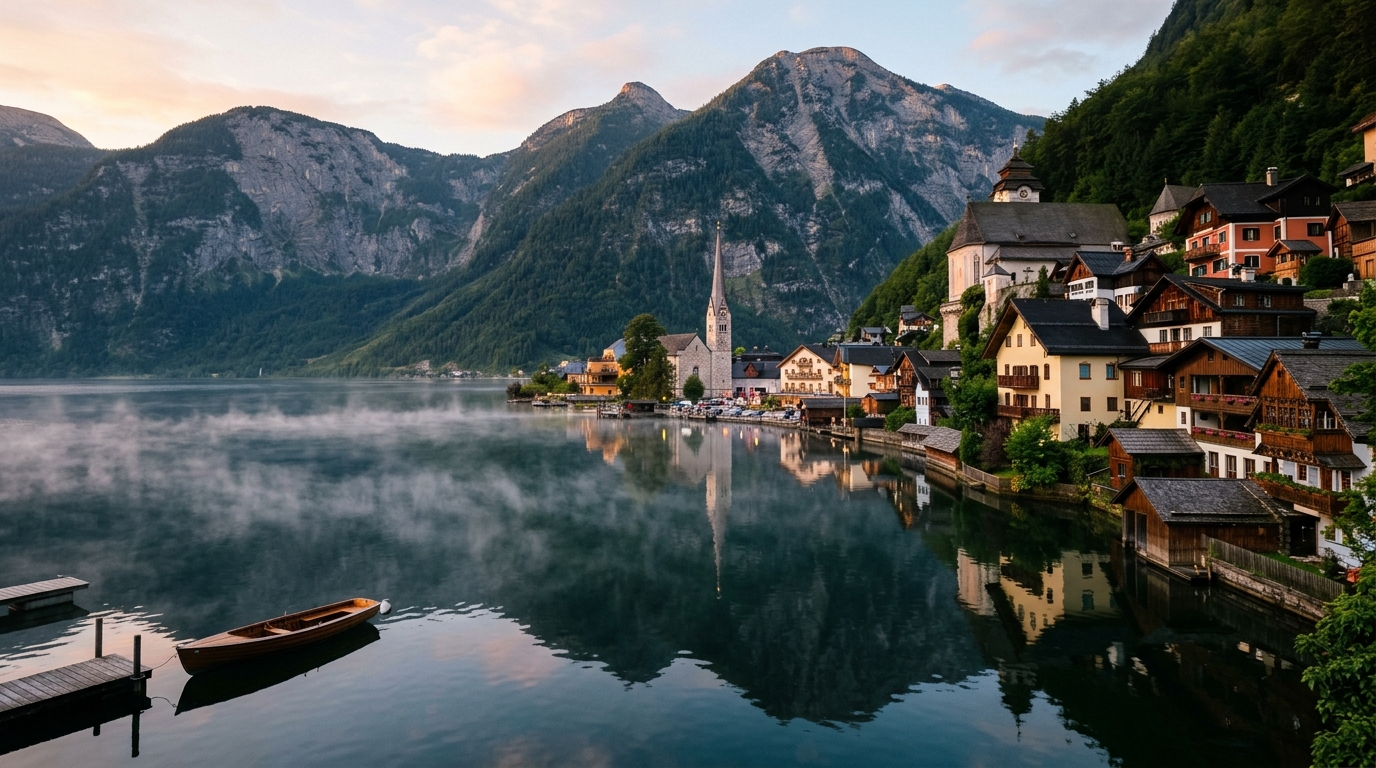
Why Does a Hallstatt Itinerary Need Such Precise Timing?
Hallstatt attracts over one million visitors per year (Austria Tourism / OAW, 2025), yet the entire walkable village fits inside 1.5 km2. Tour buses from Salzburg, Vienna, and even day trips from Prague all converge between 10:00 and 16:00. Before 09:00 and after 16:30, the narrow lakeside promenade is genuinely peaceful. That two-hour morning window changes the entire character of the visit.
Most itinerary guides recommend arriving “early” without defining early. In our research across visitor forums and Austrian tourism reports, the critical threshold is 09:00. Buses from Salzburg complete the journey in roughly 90 minutes, meaning any group departing after 07:45 arrives after 09:15 — past the quiet window. If you’re coming from Bad Ischl by bus, the 07:10 connection reaches Hallstatt by 07:50, giving you a full 60-90 minutes of near-empty streets.
The village layout is simple: the Marktplatz (market square) anchors the center, the Protestant church and Ossuary sit at the northern end, and the salt mine cable car station is a five-minute walk south. The lakeside promenade connects everything. You will not get lost; you will get crowded if you’re not early.
best things to do in Hallstatt
Option A: Hallstatt Day Trip from Salzburg (9 Hours)

The first Postbus 150 from Salzburg Hauptbahnhof departs around 07:30, reaching Hallstatt via Bad Ischl or Obertraun by approximately 09:00 (Postbus Austria, 2026). That timing gives you the full morning window before the village fills. This is the most common format and, if structured correctly, covers every major highlight.
| Time | Activity | Cost |
|---|---|---|
| 07:30 | Postbus 150 departs Salzburg Hauptbahnhof | ~€14 return |
| 09:00 | Arrive Hallstatt; walk to Malerwinkel viewpoint | Free |
| 09:30 | Marktplatz, Protestant Church, Ossuary | €1.50 (Ossuary) |
| 10:30 | Salzwelten salt mine (pre-booked) | €32 |
| 13:00 | Lunch at Gasthof Simony or Marktplatz cafe | €14-22 |
| 14:00 | Dachstein 5 Fingers cable car + viewpoint | €27 |
| 16:30 | Return to village; boat or pedalo rental | €8-12/h |
| 18:00 | Bus back to Bad Ischl / Salzburg | ~€14 |
Source: Postbus Austria schedules + Salzwelten official pricing, 2026
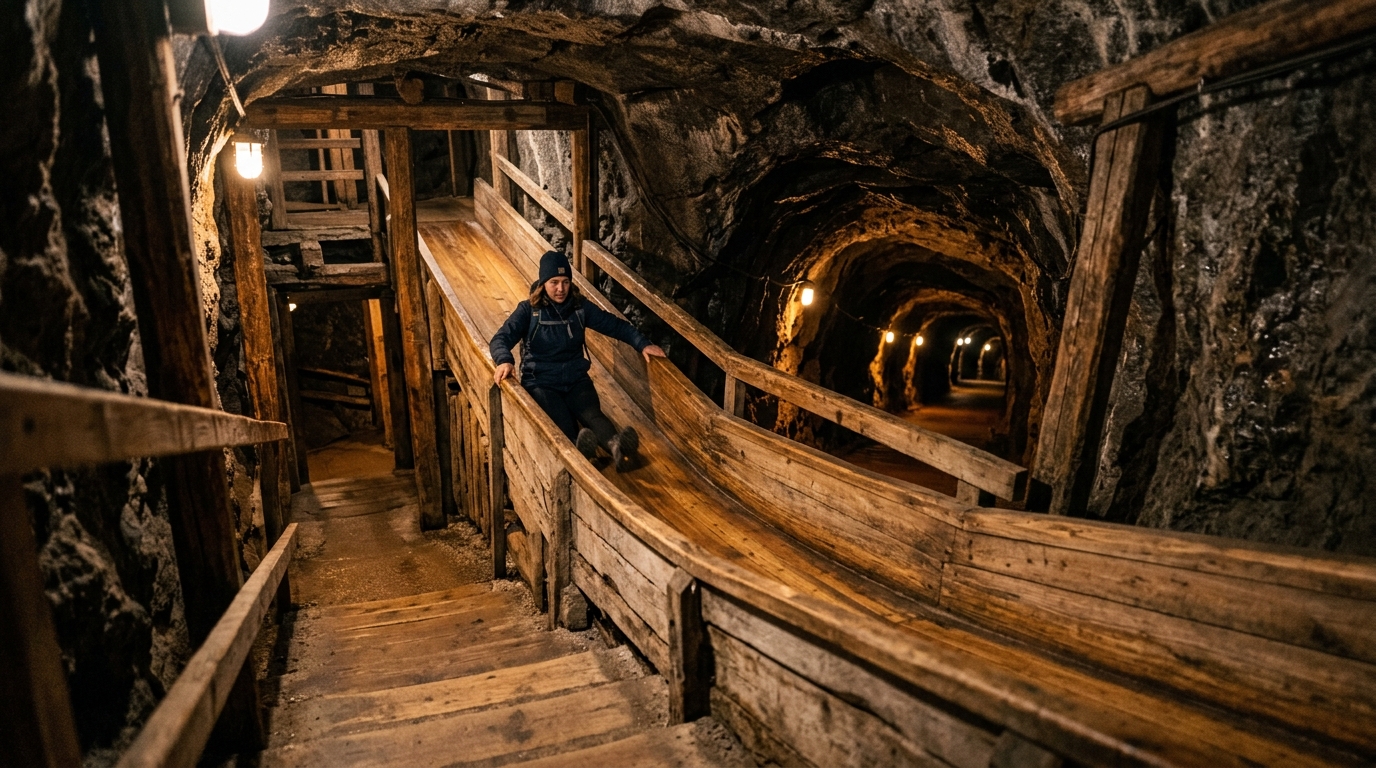
Salzwelten salt mine (€32): The tour runs about 2 hours and includes the cable car ride up, the miners’ slide inside, and a guided walk through the underground passages. Pre-book online — the Salzwelten website lists timed entry slots (Salzwelten official, 2026). Walk-up queues at peak summer times can stretch to 45-60 minutes.
5 Fingers viewpoint (€27): Take the Dachstein Krippenstein cable car from Obertraun, which runs in 7 minutes to 2,000m elevation (Dachstein Krippenstein, 2026). The 5 Fingers platform — five steel viewing platforms extending over the cliff edge — is a 10-minute walk from the upper cable car station. On clear days you see the entire Salzkammergut lake district.
Budget note: The full day trip costs roughly €85-100 per person (transport + salt mine + cable car + lunch), excluding accommodation.
Option B: 1 Night in Hallstatt — The Recommended Minimum
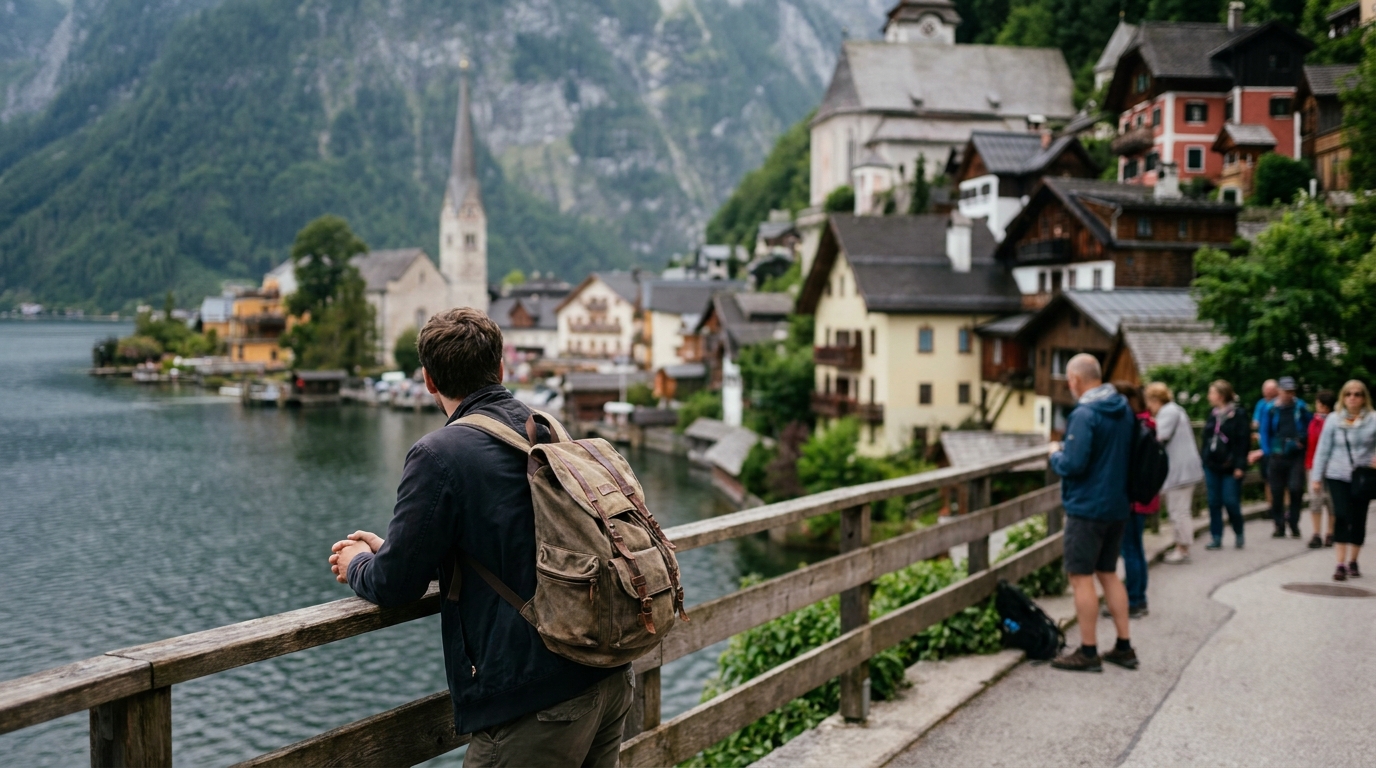
Staying one night transforms the experience. By 17:00, the last tour buses depart, and the Marktplatz belongs to the handful of guests staying in the village. Dinner at a lakeside restaurant, a post-sunset walk along the promenade, and a 07:00 breakfast before the next wave arrives — that’s the Hallstatt most visitors never see.
where to stay in Hallstatt hotels
Day 1 — Afternoon arrival:
Arrive by 14:00-15:00. Drop luggage at your hotel and walk directly to the Malerwinkel viewpoint (10 minutes from P2 parking, 20 minutes from Marktplatz). This raised lakeside path gives the classic Hallstatt photograph — church spire, colored houses, lake, and Dachstein peaks behind. The afternoon light on the western side of the lake is good from 14:00 onward; blue hour starts around 20:30 in summer.
After Malerwinkel, wander the Marktplatz without rushing. Visit the Hallstatt Museum (€10, open 10:00-18:00) if you want context on the Celtic salt-mining history that gave this region its UNESCO World Heritage status. The evening is yours — dinner, a short pedalo rental, and a lakeside walk after sunset.
Day 2 — Morning efficiency:
The salt mine opens its first tour at 09:00. Book the 09:00 slot online and arrive 10 minutes early. You’ll be inside the mine before day-trippers finish their breakfast in Salzburg. After the 2-hour tour (out by ~11:00), take the Dachstein Krippenstein cable car from Obertraun (15 minutes by bus or taxi from Hallstatt). The 5 Fingers platform and the Dachstein Ice Cave (Dachstein Krippenstein, 2026) can be combined in a 3-hour block. Return to Hallstatt by 15:00 for a lakeside lunch, then head to Gosausee (20-minute drive) before departure.
Option C: 2 Nights in Hallstatt — Add Gosausee and Echerntal
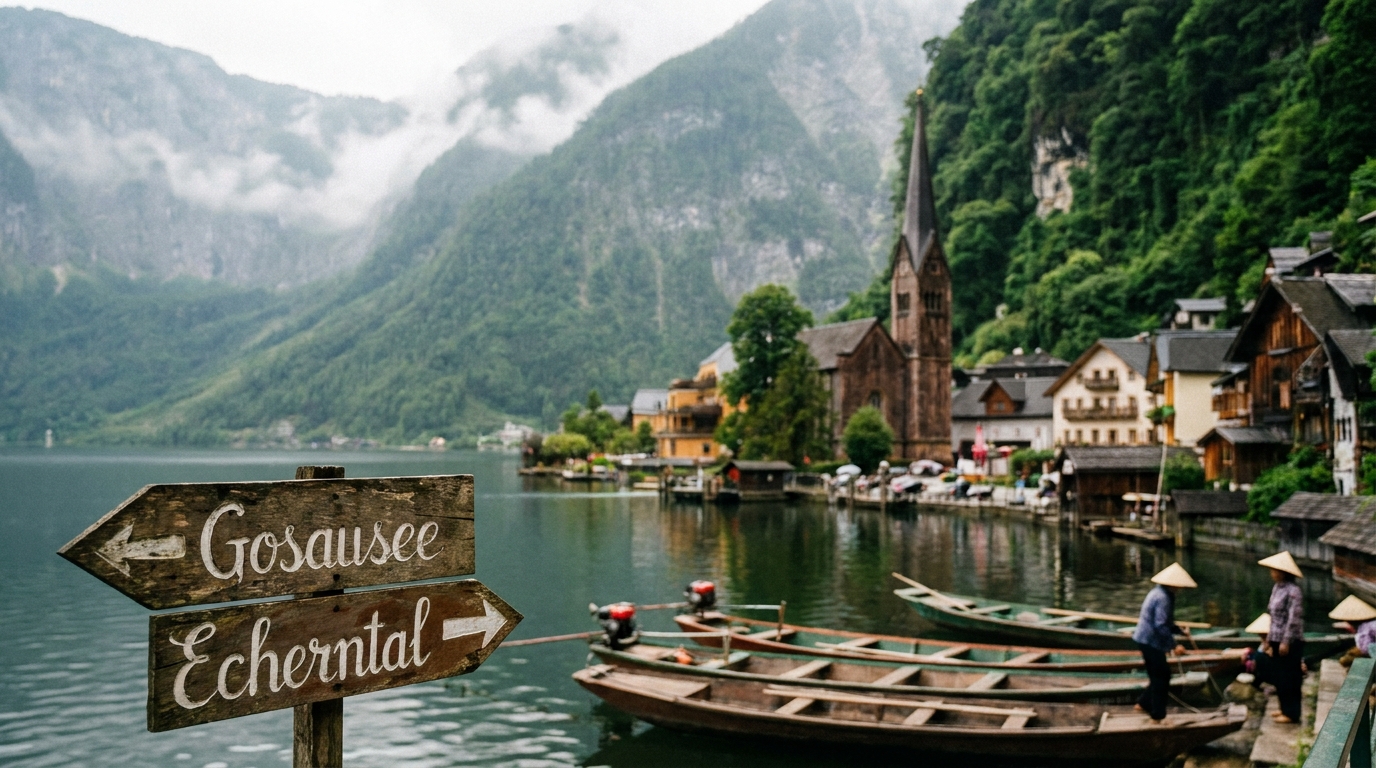
Two nights removes any time pressure. You cover the salt mine, both Dachstein cable cars, Gosausee lake, and the Echerntal Valley hike — and still have time for a day trip to Bad Ischl. This is the right format for photographers, families, and anyone who prefers unhurried travel.
Day 1: Same as Option B Day 1. Arrive early afternoon, Malerwinkel walk, Marktplatz, museum, evening in the village.
Day 2: Salt mine at 09:00 (pre-booked). After the tour, drive or take a taxi to Gosausee, a turquoise glacial lake 20 minutes from Hallstatt. The lake circuit trail (about 3.5 km, flat, free) takes 45-60 minutes. Pack a picnic. Return to Hallstatt for the Dachstein cable car in the afternoon.
Day 3: The Echerntal Valley hike starts from the village edge. The trail follows a stream through a narrow gorge, passing the Waldbachstrub waterfall (30 minutes in), then opens into the alpine meadows above. The full loop runs about 3 hours at a moderate pace and is free. Return to the village by noon for lunch and checkout.
Bad Ischl add-on: If you have a fourth day or want to swap Gosausee, Bad Ischl sits 30 minutes away by bus. The Habsburg Emperor Franz Joseph used it as his summer residence; the Kaiservilla (€16) and the adjacent Empress Sisi Museum make it a half-day cultural stop.
best food in Hallstatt — meal planning
What Time Should You Visit Malerwinkel Viewpoint?
Malerwinkel is free, takes 20 minutes to reach from the Marktplatz, and provides the most photographed view in the Austrian Alps. It sits on the northern lakeside path, elevated about 15 meters above the water, looking south toward the village and the Dachstein range. The name means “painters’ corner” in German — landscape painters worked from this spot in the 19th century.
The crowd math at Malerwinkel is different from the village center. Because it requires a 20-minute walk, groups arriving by tour bus rarely make the detour. In practice, the viewpoint stays relatively uncrowded until 10:30-11:00 even on busy days. Sunrise visits (around 05:30-06:00 in summer) are possible for photographers willing to walk in dim light. A head torch and 20 minutes from the village edge gets you there before anyone else.
How to reach it: From P2 parking (where most day-trippers park), it’s about 10 minutes north along the lake path. From the Marktplatz, allow 20 minutes. There are no entrance fees, no operating hours, and no ticket queue — just a walking path.
The best light: sunrise (05:30-06:30 summer), overcast mornings for even color on the water, and blue hour (20:00-21:00 in summer). Midday sun creates harsh shadows on the mountain face behind the village.
How Do You Get to Hallstatt from Salzburg and Vienna?
Getting the transport right determines how much of your itinerary you can actually fit in.
From Salzburg (2h, recommended): Take Postbus 150 from Salzburg Hauptbahnhof. The first departure is around 07:30, reaching Hallstatt via Bad Ischl by 09:00-09:15 (Postbus Austria, 2026). Some services route via Obertraun, requiring a short ferry across the lake to Hallstatt village (€3, takes 5 minutes). This is the most scenic arrival. Return buses run until about 18:00 from Hallstatt.
From Vienna (4h, via train + ferry): Take the 08:30 Westbahn or OBB train from Wien Hauptbahnhof toward Attnang-Puchheim, then connect to the Salzkammergutbahn regional train to Hallstatt Bahnhof. The train station sits on the opposite shore; a 5-minute ferry (included in some rail passes, otherwise €3) crosses to the village. You arrive around 12:00 — past the best morning window, which is why an overnight stay is worth it from Vienna.
By car: Drive to the P1 or P2 parking lots south of the village. Note that the village center itself is car-free. In summer, parking fills by 09:30; arriving before 09:00 is strongly recommended. From Salzburg, the drive is about 75 minutes; from Vienna, about 3.5 hours.
Within the Salzkammergut: The Hallstatt-Dachstein-Salzkammergut region has a well-connected bus network. Buses to Obertraun (for the Dachstein cable car), Bad Ischl, and Gosausee run frequently in summer.
Find your Hallstatt hotel on the map
Live prices from Booking & Airbnb — tap a pin to compare stays around Hallstatt village and beyond.
What Are the Must-See Stops in Any Hallstatt Itinerary?
Even the tightest day-trip schedule has room for five core stops. Each has a different admission structure, so budget and time planning matters.
1. Malerwinkel viewpoint — Free, 20 min walk, open always. The essential photograph.
2. Marktplatz (Market Square) — Free, at the village center. The square is lined with pastel-painted houses and overlooks the lake. The Protestant church at the northern end is open for visitors; step inside for the carved altarpiece.
3. Ossuary (Beinhaus) — €1.50, open 10:00-18:00 (shorter hours October-April). The small charnel house behind the church holds around 1,200 painted skulls, a centuries-old practice born from the village’s shortage of burial ground. It takes about 10-15 minutes and is genuinely unlike anything else in Europe.
4. Salzwelten salt mine — €32, tours run approximately 09:00-16:00 with timed entry slots (Salzwelten official, 2026). Book online. The salt mine has been worked continuously for over 7,000 years — it’s the oldest salt mine in the world still operating.
5. Dachstein 5 Fingers + optional Ice Cave — €27 cable car, plus €14 for the Ice Cave if you add it. Cable car runs from Obertraun, 15 minutes from Hallstatt by bus. The round trip with viewpoint walk takes about 2 hours; add the Ice Cave for 3.5 hours total.
Hallstatt Museum — €10, open 10:00-18:00. Covers 7,000 years of Celtic and prehistoric history. Worth it if you stay more than one day; skippable on a tight day trip.
When Is Hallstatt Least Crowded?
July and August bring 10,000+ visitors on peak days, with the Marktplatz becoming genuinely difficult to walk through between 10:00 and 15:00 (Austria Tourism / OAW, 2025). The crowd pattern follows the buses: they arrive at 10:00-11:00 and leave by 16:00-16:30.
The shoulder months — May, June, and September — are meaningfully quieter. June combines the low-crowd advantage with the best weather: alpine wildflowers, long daylight hours (light until 21:00), and temperatures around 18-22°C. October sees some autumn color on the slopes, but some boat services and minor attractions reduce hours. November through March, the village is genuinely quiet — many cafes close, the ice cave shuts until May, but the snow scenery is spectacular.
Weekday vs weekend: Weekends in July-August are noticeably busier than weekdays, especially Saturday when tour groups from Vienna and Munich overlap with independent travelers.
Best months for photography: May-June (wildflowers, clear air, low crowds) and September-October (autumn color, mist on the lake in the mornings).
Budget per person (day trip, peak season):
| Item | Cost |
|---|---|
| Salzburg-Hallstatt bus return | ~€14 |
| Salt mine (Salzwelten) | €32 |
| 5 Fingers cable car | €27 |
| Ossuary | €1.50 |
| Lunch (mid-range cafe) | €14-18 |
| Boat/pedalo rental (1h) | €8-12 |
| Total estimate | ~€97-105 |
Source: Salzwelten, Dachstein Krippenstein, Postbus Austria, 2026
Frequently Asked Questions About the Hallstatt Itinerary
Is one day enough for Hallstatt?
One day is enough to cover the main highlights — Malerwinkel, the salt mine, and the 5 Fingers viewpoint — if you arrive before 09:00 and plan your order carefully. The village itself takes under 30 minutes to walk end to end. Day-trippers from Salzburg consistently manage all three major paid attractions in a 9-hour window, though it’s a full day with minimal flexibility.
complete Hallstatt travel guide
Do you need to book the salt mine in advance?
Yes. Walk-up queues at the Salzwelten salt mine in peak season (July-August) can exceed 45-60 minutes, sometimes selling out specific time slots entirely. Book timed entry online at salzwelten.at at least 3-5 days ahead in summer. The online booking takes under 5 minutes and is significantly cheaper than last-minute options at the door.
Can you visit Hallstatt without a car?
Easily. Postbus 150 from Salzburg and regional trains from Vienna connect directly to Hallstatt (or Hallstatt Bahnhof on the opposite shore, with a short ferry). Within the region, buses run to Obertraun (for the Dachstein cable car) and Bad Ischl. A car adds flexibility for Gosausee and early parking, but it is not required.
Where is the best photo spot in Hallstatt?
Malerwinkel viewpoint, 20 minutes north of the Marktplatz on the lake path, gives the classic perspective: church spire, colored houses, the Hallstatter See, and the Dachstein peaks. The spot is free and open at all hours. Go at sunrise or blue hour for the best light and the fewest people in the frame.
How much does a day trip to Hallstatt cost?
A full day trip from Salzburg — including bus return, salt mine (€32), 5 Fingers cable car (€27), the Ossuary (€1.50), and lunch — runs approximately €97-105 per person (Salzwelten official, 2026; Dachstein Krippenstein, 2026). Skipping the cable car drops the total to around €70-75.
Final Thoughts: Choosing the Right Hallstatt Itinerary
A Hallstatt itinerary built around the crowd pattern gives you a completely different experience from one built around convenience. The village receives over one million visitors per year inside 1.5 km2, which means timing — not just attractions — determines the quality of your visit. Arrive before 09:00, pre-book the salt mine, and walk to Malerwinkel before the buses reach the Marktplatz.
If you have only one day, Option A from Salzburg covers everything that matters. If you have two days, Option B with one overnight unlocks the quiet evening and early-morning version of Hallstatt that most visitors simply never see. Two nights adds Gosausee and the Echerntal hike — both free, both beautiful, and both emptier than anything in the village center.
where to stay in Hallstatt — hotel guide
For your next planning step, read our best things to do in Hallstatt guide for detailed activity breakdowns, and our best food in Hallstatt guide for restaurant recommendations at every budget.
Citation Capsule: Hallstatt Visitor Volume
Hallstatt receives over one million visitors per year in a village measuring just 1.5 km2, with peak days in July and August recording more than 10,000 arrivals — a figure that prompted local authorities to study visitor management measures. The critical quiet windows are before 09:00 and after 16:30, when tour buses from Salzburg, Vienna, and Munich have not yet arrived or have already departed. (Austria Tourism / OAW, 2025)
Citation Capsule: Salt Mine Pricing and History
The Salzwelten Hallstatt salt mine charges €32 for the standard tour, which includes a cable car ascent, the famous miners’ wooden slide, and a guided underground walk. The mine has operated continuously for over 7,000 years, making it the oldest operating salt mine in the world. Timed entry slots sell out in peak season; online booking at least 3-5 days ahead is strongly recommended. (Salzwelten official, 2026)
Prices correct as of May 2026. Transport schedules change seasonally — verify current timetables on postbus.at before travel.
Pingback: Hallstatt on a Budget 2026: Complete Cost + Money-Saving Guide