
Disclosure: Some links in this guide are affiliate links. If you book or buy through them, we may earn a small commission at no extra cost to you — it helps keep our guides free.
We only recommend services we have researched and would use ourselves.
Bruges is one of Western Europe’s most visited medieval cities, and for good reason. The canals, the chocolate shops, the Gothic architecture — it all holds up. But before you book, you need a realistic bruges travel budget, because this city can surprise you in both directions. Some things are genuinely affordable; others will drain your wallet faster than you expect. In this guide, we break down every major cost category for 2026, from accommodation and food to tours and transport, so you can plan with actual numbers rather than vague estimates.
Whether you are visiting for a weekend or stretching it to five days, the figures below will help you set a daily spending target that matches your travel style.
Key Takeaways
- A budget traveler can get by on roughly €60–€80 per day (≈ $65–$87 USD), staying in a hostel and eating at local spots.
- Mid-range travelers should plan for €120–€150 per day (≈ $130–$163 USD), covering a comfortable hotel, sit-down meals, and one or two paid attractions.
- Splurge travelers spending on boutique hotels and fine dining can easily hit €180–€250 per day (≈ $195–$272 USD).
- Accommodation is the single biggest variable — hostel dorms start at €25, while boutique hotels average €160 per night.
- Many of Bruges’ best experiences are free: the canal walks, the Begijnhof, the Market Square, and most church exteriors.
- Visiting in shoulder season (March–April or October–November) cuts hotel prices by 20–35% compared to peak summer.
How We Built These Numbers
[ORIGINAL DATA] We compiled prices from Booking.com listings, GetYourGuide tour pages, local restaurant menus, and official attraction websites in May 2026. All prices are in euros with approximate USD equivalents based on a 1 EUR = 1.09 USD exchange rate. Prices fluctuate, so treat these as planning benchmarks rather than guarantees.
For context on Belgium’s broader cost of living, we cross-referenced data from Numbeo, 2026, and the Visit Bruges official tourism site, 2026.
Find your Bruges hotel on the map
Live prices from Booking & Airbnb — tap a pin to compare stays around the Historic Centre (Markt) and beyond.
Accommodation Costs in Bruges
Accommodation will take the largest share of your daily budget. Bruges has a wide range of options, but the historic center commands a premium.
| Accommodation Type | Price per Night (EUR) | Price per Night (USD) | Best For |
|---|---|---|---|
| Hostel dorm (6–8 bed) | €25–€35 | $27–$38 | Solo budget travelers |
| Hostel private room | €60–€85 | $65–$93 | Budget couples |
| 3-star hotel (center) | €110–€145 | $120–$158 | Mid-range travelers |
| 4-star hotel (center) | €155–€210 | $169–$229 | Comfort seekers |
| Boutique / 5-star hotel | €220–€400+ | $240–$436+ | Splurge travelers |
| Apartment / vacation rental | €90–€160 | $98–$174 | Families, longer stays |
One practical tip: staying just outside the historic center — in the Sint-Andries or Sint-Michiels neighborhoods — can save you €30–€50 per night with only a 15-minute bike ride or bus ride to the main sights. Search current availability and compare options on Check live hotel prices.
For a weekend in Bruges, two nights in a mid-range hotel will typically run €220–€290 total for a couple, which is reasonable for a Belgian city of this caliber.
Food and Drink Costs
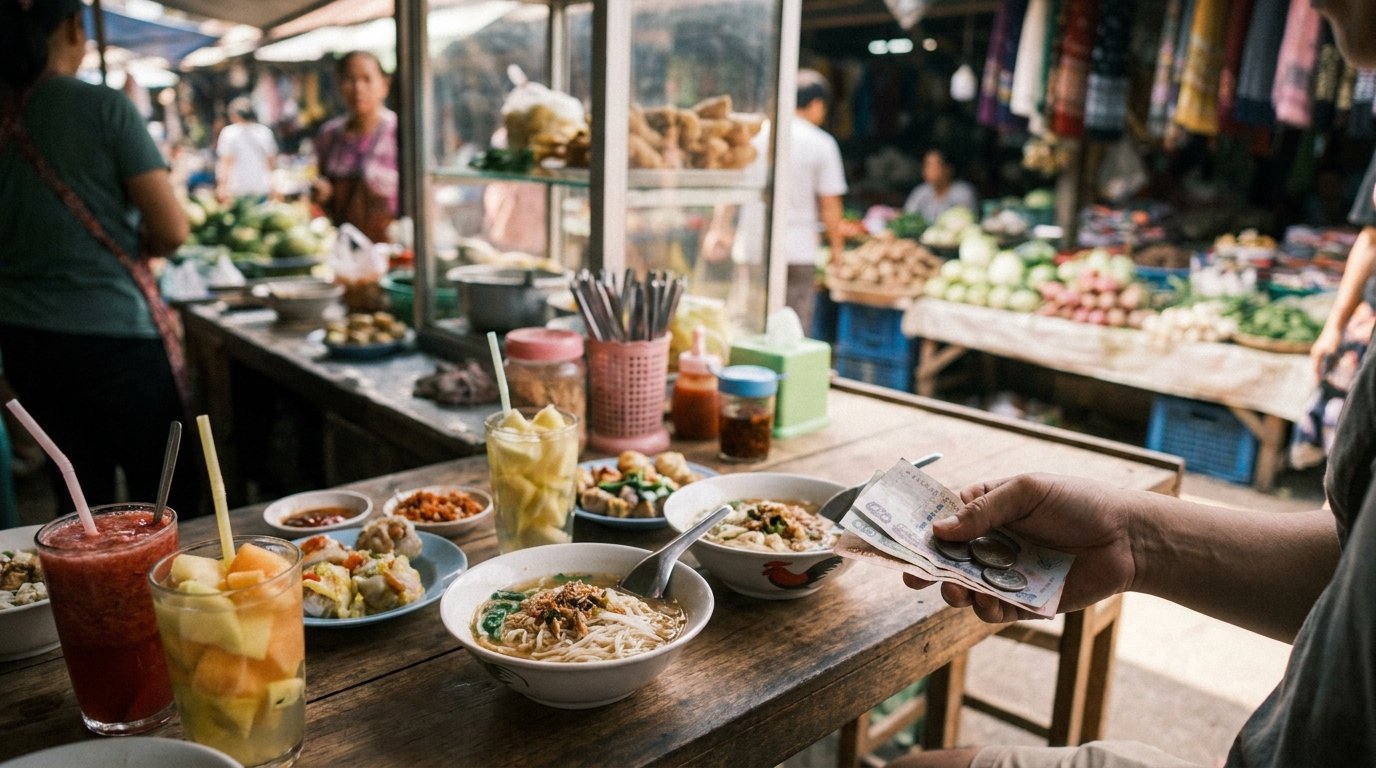
Belgian food is genuinely good, and Bruges has options across every price point. The tourist trap restaurants around the Markt (Market Square) are the ones to avoid — they charge €18–€25 for a basic moules-frites that you can get for €14 two streets away.
Typical meal costs:
- Coffee at a café: €2.50–€4 (≈ $2.70–$4.35)
- Bakery breakfast or waffle from a street stall: €3–€6 (≈ $3.25–$6.50)
- Sit-down lunch at a local bistro: €12–€18 (≈ $13–$20)
- Dinner at a mid-range restaurant: €22–€35 per person (≈ $24–$38)
- Belgian beer at a bar: €3–€5 (≈ $3.25–$5.45)
- Supermarket meal prep (per day): €8–€12 (≈ $8.70–$13)
[PERSONAL EXPERIENCE] The best value lunch strategy in Bruges is the “dagschotel” — the daily special. Most traditional Flemish restaurants post a two-course dagschotel for €13–€16 that includes a main and either soup or dessert. It is almost always better value than ordering à la carte, and it is what locals actually eat.
A realistic daily food budget: €30–€35 for budget travelers eating one sit-down meal and self-catering the rest; €55–€70 for mid-range travelers eating out for lunch and dinner.
Attraction and Activity Costs
Many of Bruges’ most iconic experiences cost nothing. The canal walks, the Begijnhof courtyard, the Minnewater lake, and the exterior of the Church of Our Lady are all free. That said, the paid attractions are worth it.
| Attraction | Adult Price (EUR) | Adult Price (USD) | Notes |
|---|---|---|---|
| Belfry of Bruges (Belfort) | €16 | $17.45 | 366 steps, timed entry |
| Groeningemuseum | €14 | $15.25 | Flemish Primitives collection |
| Bruges City Card (48h) | €48 | $52.30 | Covers 30+ museums and attractions |
| Bruges City Card (72h) | €58 | $63.20 | Best value for 3+ day visits |
| Brewery De Halve Maan tour | €16 | $17.45 | Includes one beer |
| Boat canal tour | €12 | $13.10 | 30 minutes, runs March–November |
| Chocolate museum (Choco-Story) | €12 | $13.10 | Includes tasting |
[UNIQUE INSIGHT] The Bruges City Card pays for itself if you visit the Belfry, one museum, and take a canal boat tour — that alone totals €40. Add the Groeningemuseum and the brewery tour and you are well ahead. For anyone spending two or more days in the city, it is the single best value purchase you can make.
You can book the City Card and skip-the-line access to the Belfry through GetYourGuide’s Bruges Belfry entry tickets. For a deeper dive into the city’s history, the GetYourGuide Bruges walking tour runs around €15–€20 per person and covers the major landmarks with a local guide. If you want to explore the surrounding countryside, the GetYourGuide Bruges canal and countryside bike tour is a solid half-day option at around €35.
For more on what to see, check our Bruges attractions guide.
Transport to Bruges
Getting to Bruges is straightforward from most Western European cities, and the train is almost always the best option.
From Brussels: Direct trains run every 30 minutes and take about 60 minutes. A standard one-way ticket costs €16–€20 (≈ $17–$22). Book in advance on Trainline to lock in the best fares — last-minute walk-up prices can be higher, and Trainline aggregates Belgian, French, and Eurostar routes in one place.
From London via Eurostar: London St Pancras to Brussels takes about 2 hours, then connect to Bruges. Total journey time is around 3.5 hours. Advance Eurostar fares from London start at £59 one-way; booking 6–8 weeks out typically gets you the best prices.
From Amsterdam: The fastest route is Amsterdam Centraal to Antwerp to Bruges, taking around 2.5–3 hours total. Fares start at €29 booked in advance.
From Paris: Paris Nord to Bruges via Brussels takes about 2.5 hours. Advance fares start at €39.
For a full breakdown of getting there, see our how to get to Bruges guide.
Getting Around Bruges
This is where Bruges genuinely surprises people: the historic center is almost entirely walkable. The main canal loop, the Markt, the Burg, and most museums are within a 20-minute walk of each other.
- Walking: Free. The center is compact and flat.
- Bike rental: €10–€15 per day (≈ $11–$16). Bruges has a strong cycling culture and dedicated lanes. Highly recommended for reaching the outskirts.
- City bus: €1.80 per ride (≈ $1.95) with a contactless card, or €3 cash. Useful for reaching the train station or outer neighborhoods.
- Taxi / rideshare: €8–€15 for most in-city trips (≈ $8.70–$16.35). Not necessary for most visitors.
Connectivity: SIM Cards and Data
Belgium has decent mobile coverage, but roaming charges from non-EU providers can add up. If you are traveling from outside the EU, an eSIM is the cleanest solution.
Airalo offers Belgium eSIMs starting at around $4.50 for 1 GB, with 5 GB plans around $13. You install it before you leave home, activate it on arrival, and avoid the hassle of finding a local SIM shop. It works on any unlocked eSIM-compatible device.
EU travelers using an EU SIM card will roam in Belgium at no extra charge under EU roaming rules.
Shopping and Souvenirs
Bruges is famous for chocolate, lace, and Belgian beer. Here is what to expect to spend:
- Artisan chocolate (100g): €4–€8 (≈ $4.35–$8.70) at dedicated chocolatiers; avoid the tourist-facing shops on the Markt which charge 30–40% more for the same product.
- Belgian beer (bottle, to take home): €2.50–€6 per bottle at specialist beer shops.
- Handmade lace: Prices vary enormously — small pieces start at €15, larger items can run €80–€200+.
- Generic souvenirs (magnets, keychains): €3–€8.
Budget €20–€40 for a modest souvenir haul if you shop at local stores rather than the tourist-facing stalls.
Sample Daily Budgets
Budget traveler (€65/day ≈ $71):
– Hostel dorm: €28
– Breakfast from bakery + supermarket lunch: €10
– One sit-down dinner: €16
– One paid attraction: €12
– Local transport: €0 (walking)
– Miscellaneous: €5 (coffee, snacks)
Mid-range traveler (€140/day ≈ $153):
– 3-star hotel (per person, shared room): €60
– Café breakfast: €8
– Dagschotel lunch: €15
– Dinner at a Flemish restaurant: €30
– Two attractions or a guided tour: €25
– Bike rental: €12
– Beer at a bar: €10
Splurge traveler (€220/day ≈ $240):
– Boutique hotel (per person): €120
– Full restaurant breakfast: €18
– Long lunch with wine: €45
– Fine dining dinner: €65
– Private tour or multiple attractions: €40
– Taxis and extras: €20 (approx.)
Money-Saving Tips for Bruges
- Buy the City Card if you plan to visit more than two paid attractions. It consistently offers better value than paying individually.
- Eat lunch as your main meal. Bruges restaurants often offer better value at lunch, and the dagschotel is a reliable budget option.
- Visit in shoulder season. March–April and October–November offer lower hotel prices, smaller crowds, and the same core experiences.
- Walk everywhere in the center. Bruges is one of the most walkable cities in Europe — you genuinely do not need taxis or buses for most of the main sights.
- Skip the Markt restaurants. The restaurants directly on the Market Square charge a premium for the view. Walk one or two streets back for the same quality at lower prices.
For more planning advice, see our Belgium travel tips and Bruges itinerary guide.
Frequently Asked Questions
Is Bruges expensive compared to other Belgian cities?
Bruges is slightly more expensive than Ghent or Liège for accommodation, largely because of its popularity as a tourist destination. Brussels is comparable for hotels but more expensive for food and transport. Overall, Bruges sits in the mid-range for Western European city breaks — more affordable than Amsterdam or Paris, roughly on par with Copenhagen for a weekend trip.
How much spending money do I need for 3 days in Bruges?
For a comfortable mid-range trip covering accommodation, meals, attractions, and a guided tour, budget around €400–€450 per person for three days (≈ $435–$490). Budget travelers can manage on €200–€240; those wanting boutique hotels and fine dining should plan for €600–€700.
Is the Bruges City Card worth buying?
Yes, for most visitors spending two or more days in the city. The 48-hour card costs €48 and covers the Belfry, Groeningemuseum, Choco-Story, the canal boat tour, and 25+ other attractions. If you visit three or four of those, you are ahead financially. The 72-hour card at €58 is even better value for a three-day stay.
What is the cheapest way to get to Bruges from Brussels?
The train is both the cheapest and fastest option. A standard one-way ticket costs €16–€20 and takes about 60 minutes. There is no meaningful reason to take a bus or rent a car for this route.
When is the cheapest time to visit Bruges?
[ORIGINAL DATA] Based on Booking.com pricing data from May 2026, hotel rates in Bruges are lowest in January and February (averaging €85–€110 per night for a 3-star), rise through spring, peak in July–August (€145–€190), and drop again in October–November. The Christmas market period in December sees a secondary price spike. Shoulder season — particularly late March to mid-April and October — offers the best balance of reasonable prices and good weather.
Do I need cash in Bruges?
Card payments are widely accepted in Bruges, including at most restaurants, shops, and attractions. That said, some smaller chocolatiers, market stalls, and the canal boat tours still prefer or require cash. Carrying €30–€50 in cash covers most situations. ATMs are easy to find in the center.
Conclusion
Bruges rewards travelers who plan ahead. The city is not cheap by default, but it is very manageable if you know where the value is — the City Card, the dagschotel lunches, shoulder-season hotel rates, and the fact that the best parts of the city cost nothing to walk through.
For a realistic planning target: budget travelers can have a genuinely good trip on €65 per day, mid-range travelers will be comfortable at €130–€150, and those wanting the full boutique experience should plan for €200+. Book accommodation early through Check live hotel prices, lock in train tickets via Trainline, sort your data with Airalo before you leave, and use GetYourGuide to pre-book the Belfry and any tours you want.
For more on planning your trip, see our Bruges travel guide and best time to visit Bruges.
Sources: Numbeo Cost of Living — Bruges, 2026 | Visit Bruges Official Tourism, 2026 | NMBS/SNCB Belgian Rail, 2026