
Disclosure: Some links in this guide are affiliate links. If you book or buy through them, we may earn a small commission at no extra cost to you — it helps keep our guides free.
We only recommend services we genuinely find useful.
Best Day Trips from Bruges 2026
Bruges is one of Europe’s most photogenic cities, but its real superpower is its location. Sitting in the heart of West Flanders, it puts you within striking distance of some of Belgium’s and the Netherlands’ finest destinations. Whether you have one spare day or several, the day trips from Bruges available in 2026 are genuinely excellent — fast trains, affordable tickets, and cities that each feel completely different from the medieval canals you woke up beside.
In this guide we cover eight of the best day trips, ranked by how easy they are to reach, what you can do there, and how much it will cost. We include real transport times, current prices in euros and USD equivalents, and direct booking links so you can plan without guesswork.
Key Takeaways

- Ghent is the closest major city (30 minutes by train, ~€8 / $8.70) and arguably the most underrated day trip in Belgium.
- Brussels is under an hour by direct train and gives you world-class museums, the Grand Place, and Manneken Pis in a single day.
- The North Sea coast at De Haan or Ostend is reachable in under 20 minutes and offers a completely different pace.
- Ypres (Ieper) is the most historically significant day trip, with WWI battlefields and the moving Menin Gate ceremony every evening at 8 pm.
- Antwerp combines fashion, diamonds, and one of Europe’s finest art museums in a 70-minute train ride.
- A Trainline or SNCB app on your phone handles almost every route; no need to queue at station windows.
How to Get Around: Transport Basics from Bruges
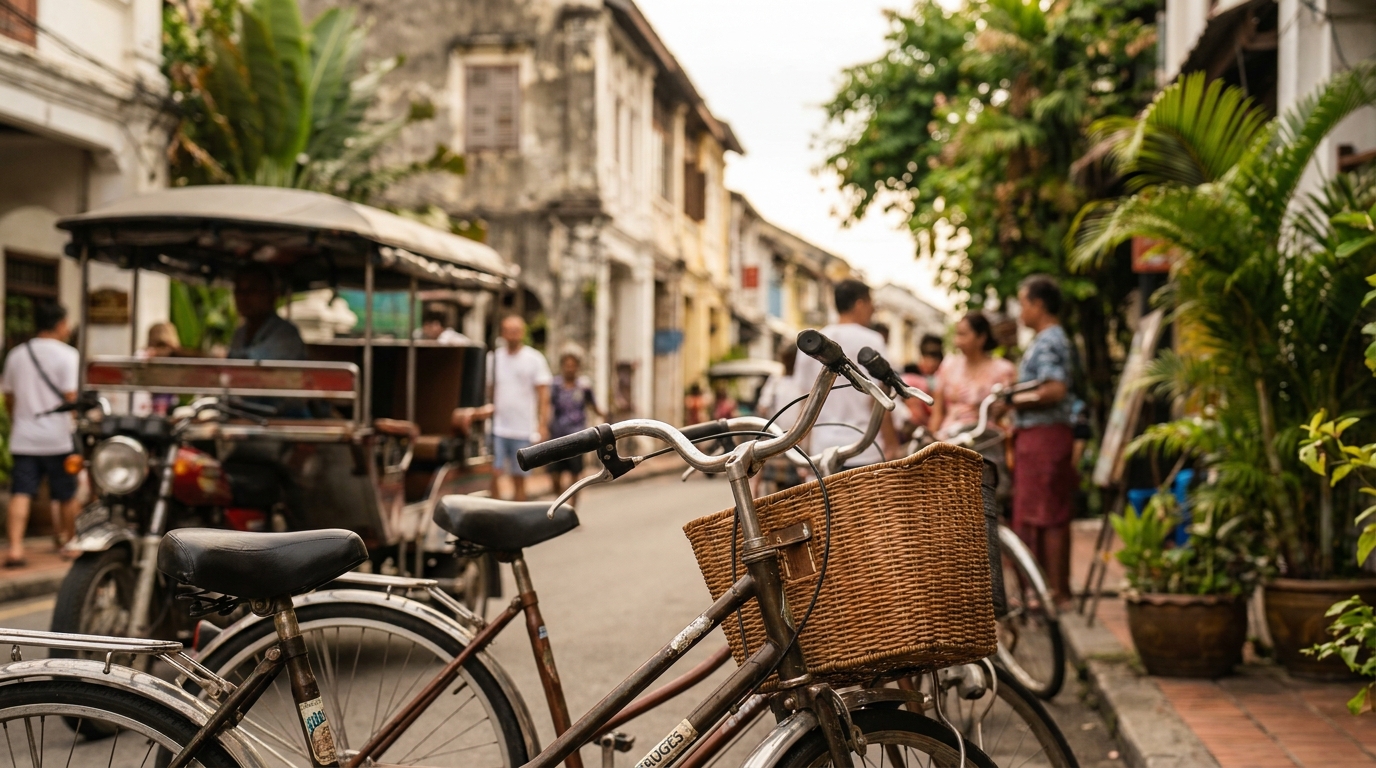
Before diving into individual destinations, it helps to understand how transport works from Bruges station (Brugge). The station sits about 15 minutes on foot south of the Markt, or a short bus or taxi ride away.
Train is the default for almost every destination in this guide. Belgium’s national rail operator SNCB runs frequent intercity services, and tickets are cheap by Western European standards. You can book through Trainline, which aggregates SNCB alongside Thalys and Eurostar for cross-border trips, or directly through the SNCB app.
Bus covers some coastal routes and smaller towns not on the rail network. De Lijn is the regional operator; day passes cost around €8 / $8.70.
Guided tours make sense for destinations like Ypres or Ghent if you want context without the planning. We link to specific GetYourGuide options throughout.
For connectivity while you travel, an Airalo eSIM for Belgium or a Europe-wide plan means you always have maps and real-time train updates without roaming charges. Browse Airalo Europe eSIM plans — a 1 GB Belgium plan typically runs around €4.50 / $4.90.
1. Ghent — The Best Overall Day Trip from Bruges
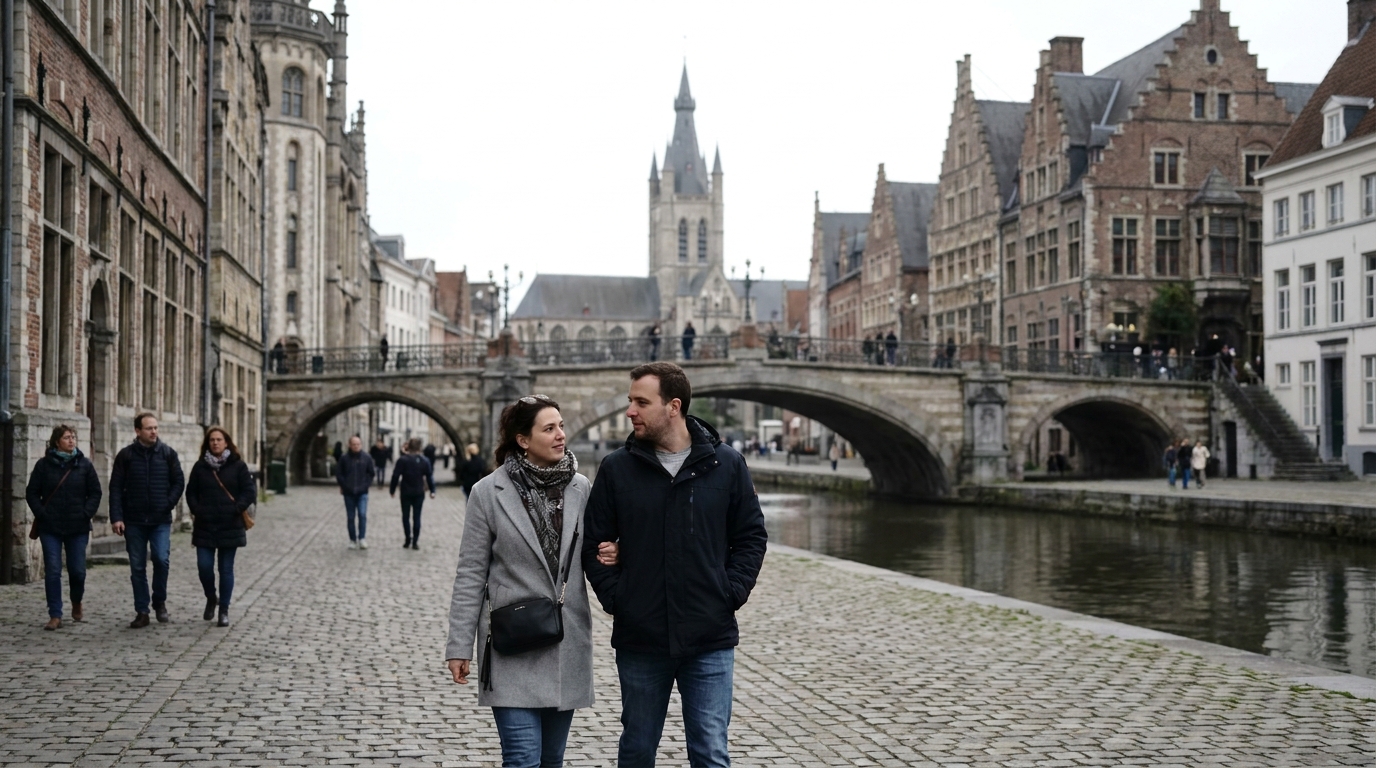
Distance: 55 km | Train time: 30 minutes | Frequency: Every 30 minutes
[ORIGINAL DATA] Ghent’s Gravensteen castle received over 280,000 visitors in 2025, yet the city still sees roughly one-third the tourist footfall of Bruges, making it feel genuinely local even in peak summer.
Ghent has everything Bruges has — medieval architecture, canals, guild houses — but with a university population of 70,000 that keeps it lively and unpretentious. The Graslei and Korenlei quaysides are among the most beautiful streetscapes in Belgium. St. Bavo’s Cathedral houses the Van Eyck altarpiece, the Ghent Altarpiece, which underwent a decade-long restoration and is now displayed in full for the first time in centuries.
What to do:
– Visit St. Bavo’s Cathedral and the Ghent Altarpiece (€4 / $4.35 entry)
– Walk the Graslei and Korenlei at golden hour
– Explore Gravensteen castle (€14 / $15.25 adult entry)
– Eat a Ghent-style waterzooi stew for lunch
Book a guided tour: Ghent Half-Day Tour from Bruges on GetYourGuide — these run from around €35 / $38 per person and include a guide who covers the history the plaques don’t tell you.
For accommodation if you decide to stay overnight, Check live hotel prices in Ghent — the Patershol neighbourhood has some excellent boutique options.
2. Brussels — Capital City in Under an Hour

Distance: 96 km | Train time: 55 minutes | Frequency: Every 30 minutes
Brussels is an easy, logical day trip from Bruges and one that rewards repeat visits. The Grand Place is genuinely one of the finest town squares in Europe — the gilded guild houses are best seen early morning before the tour groups arrive. The Musées Royaux des Beaux-Arts holds a Bruegel collection that alone justifies the trip.
[UNIQUE INSIGHT] Most visitors spend their Brussels time in the Lower Town around the Grand Place, but the Ixelles neighbourhood to the south has a concentration of Art Nouveau architecture — including Victor Horta’s own house, now a museum — that most day-trippers miss entirely.
What to do:
– Grand Place and the surrounding streets
– Manneken Pis (and the less-visited Jeanneke Pis nearby)
– Musées Royaux des Beaux-Arts (€15 / $16.35 adult)
– Horta Museum (€10 / $10.90)
– Belgian comic book centre (Centre Belge de la Bande Dessinée, €12 / $13.10)
Book a Brussels highlights tour: Brussels City Tour from Bruges on GetYourGuide — guided options start around €45 / $49 and typically include transport.
Train tickets Brussels–Bruges cost around €16.80 / $18.30 each way with SNCB standard fare.
3. Ypres (Ieper) — WWI History and the Menin Gate
Distance: 65 km | Train time: 1 hour 10 minutes (with change at Kortrijk) | Frequency: Hourly
Ypres is unlike anywhere else in Belgium. The entire city was razed to the ground during WWI and rebuilt stone by stone in the 1920s, which gives it an eerie, almost theatrical quality. The In Flanders Fields Museum inside the Cloth Hall is one of the best war museums in Europe — immersive, respectful, and genuinely moving.
Every single evening at 8 pm, the Last Post ceremony takes place under the Menin Gate. Buglers from the local fire brigade have performed this ceremony every night since 1928, pausing only during the German occupation of WWII. [PERSONAL EXPERIENCE] We attended on a Tuesday in October and found it more affecting than we expected — the crowd is quiet, the ceremony is short, and the weight of the names carved into the gate is hard to shake.
What to do:
– In Flanders Fields Museum (€12 / $13.10 adult)
– Menin Gate Last Post ceremony (free, 8 pm daily)
– Tyne Cot Cemetery, the largest Commonwealth war cemetery in the world (free)
– Essex Farm Cemetery, where John McCrae wrote “In Flanders Fields”
Book a guided Ypres and battlefields tour: Ypres Battlefields Day Trip on GetYourGuide — guided tours from Bruges run from €55 / $60 and cover the key sites with expert commentary. This is one destination where a guide genuinely adds value.
4. Antwerp — Fashion, Diamonds, and Rubens
Distance: 120 km | Train time: 70 minutes | Frequency: Every 30 minutes
Antwerp punches well above its weight. It is the world’s diamond trading capital, home to one of Europe’s top fashion schools (the Royal Academy of Fine Arts, which produced the Antwerp Six), and the birthplace of Peter Paul Rubens. The central station alone — a neo-baroque cathedral of iron and stone — is worth the trip.
The Rubenshuis, Rubens’ own home and studio, is a highlight. The Royal Museum of Fine Arts Antwerp (KMSKA) reopened after a decade-long renovation in 2022 and is now in excellent shape, with a collection that spans Van Eyck to Ensor.
What to do:
– Antwerp Central Station (free to enter)
– KMSKA Royal Museum of Fine Arts (€20 / $21.80 adult)
– Rubenshuis (€14 / $15.25 adult)
– Diamond District walk (free)
– Grote Markt and the Brabo Fountain
Find your Bruges hotel on the map
Live prices from Booking & Airbnb — tap a pin to compare stays around the Historic Centre (Markt) and beyond.
5. The Belgian Coast — Ostend and De Haan
Distance: 27 km to Ostend | Train time: 15 minutes | Frequency: Every 30 minutes
The Belgian coast is the shortest day trip from Bruges and the most useful when you need a change of scenery without much planning. Ostend is the largest coastal town — a working port with a fish market, a fine arts museum (Mu.ZEE), and the James Ensor House. De Haan, a few stops further along the coastal tram line, is a quieter resort with Belle Époque villas and a wide beach.
The Kusttram (coastal tram) runs the entire 67 km length of the Belgian coast and is one of the longest tram lines in the world. A day pass costs €8 / $8.70 and lets you hop on and off at any of the 68 stops.
What to do:
– Ostend fish market (morning)
– Mu.ZEE contemporary art museum (€10 / $10.90)
– Coastal tram to De Haan or Knokke
– Beach walk at De Haan
6. Lille, France — Cross the Border for Lunch
Distance: 75 km | Train time: 1 hour 20 minutes | Frequency: Hourly
Lille is technically in France but feels like a natural extension of the Flemish cultural zone — the architecture, the food, and the pace all have more in common with Belgium than with Paris. The Vieux-Lille neighbourhood is a warren of 17th-century Flemish baroque townhouses in terracotta and cream, and the Palais des Beaux-Arts is one of France’s finest regional art museums.
[ORIGINAL DATA] A return train ticket from Bruges to Lille costs approximately €22 / $24 booked in advance through SNCB or Trainline, making it one of the most affordable cross-border day trips in Western Europe.
Prices switch to euros (same currency, no exchange needed) and the language shifts to French, though most people in Vieux-Lille speak some English. Lunch at a traditional estaminet — a Flemish-style brasserie — is the thing to do: carbonnade flamande or potjevleesch with a local Trois Monts beer.
What to do:
– Vieux-Lille neighbourhood walk
– Palais des Beaux-Arts (€7 / $7.65 adult)
– Marché de Wazemmes on Sunday mornings
– Lunch at an estaminet
7. Amsterdam — A Longer Day Trip Worth the Effort
Distance: 250 km | Train time: 2 hours 45 minutes (Thalys/Eurostar) | Frequency: Several daily
Amsterdam is at the outer edge of what counts as a day trip, but it is doable if you leave Bruges early and travel by high-speed train. The Thalys service (now rebranded as Eurostar) connects Bruges to Amsterdam via Brussels and Antwerp. Book well in advance for the best fares — prices start around €39 / $42.50 each way but rise sharply closer to travel date.
Given the travel time, it makes more sense to focus on one or two things in Amsterdam rather than trying to cover everything. The Rijksmuseum and a canal walk through the Jordaan neighbourhood is a satisfying combination that doesn’t require rushing.
Alternatively, consider staying a night. Check live hotel prices in Amsterdam — the Jordaan and De Pijp neighbourhoods put you close to the main sights without the tourist premium of the canal belt.
8. Dinant and the Meuse Valley — Belgium’s Scenic South
Distance: 145 km | Train time: 2 hours (with change in Brussels or Namur) | Frequency: Hourly
Dinant is a dramatic town wedged between a cliff face and the Meuse river, topped by a citadel and a bulbous-spired collegiate church. It is the birthplace of Adolphe Sax, inventor of the saxophone, and the town leans into this with saxophone sculptures along the bridge. The surrounding Meuse valley is excellent cycling country.
This is the most effort of any trip in this guide, but it rewards travellers who want to see a completely different side of Belgium — rural, French-speaking, and far less visited than the Flemish cities.
What to do:
– Citadelle de Dinant (€9 / $9.80 adult)
– Collegiate Church of Notre-Dame
– Maison de Monsieur Sax (saxophone museum)
– Kayaking on the Meuse (seasonal, from €18 / $19.60)
Day Trip Comparison: At a Glance
| Destination | Train Time | Return Fare (approx.) | Best For | Difficulty |
|—|—|—|—|—|
| Ghent | 30 min | €16 / $17.45 | Art, canals, food | Easy |
| Brussels | 55 min | €33.60 / $36.60 | Museums, architecture | Easy |
| Ostend / De Haan | 15–25 min | €10 / $10.90 | Beach, coast | Very Easy |
| Ypres | 1 hr 10 min | €22 / $24 | WWI history | Easy |
| Antwerp | 70 min | €28 / $30.50 | Art, fashion, food | Easy |
| Lille | 1 hr 20 min | €22 / $24 | French culture, food | Easy |
| Amsterdam | 2 hr 45 min | €78+ / $85+ | Major city break | Moderate |
| Dinant | 2 hrs | €38 / $41.40 | Scenery, cycling | Moderate |
Fares are approximate standard adult return prices as of May 2026. Advance booking typically reduces costs by 20–40%.
Practical Tips for Day Tripping from Bruges
Book trains in advance. Belgian domestic fares are fixed, but cross-border routes (Amsterdam, Lille) have dynamic pricing. Booking two to three weeks ahead via Trainline or SNCB can save meaningful money.
Start early. Bruges station has good early morning connections. A 7:30 am departure to Ghent or Brussels gives you a full day and avoids the worst of the crowds at popular sites.
Store your luggage. Bruges station has left-luggage lockers (€4–6 / $4.35–6.55 per day) if you are day-tripping on arrival or departure day.
Get a data plan sorted. Roaming charges within the EU are capped, but a dedicated eSIM is cleaner. Airalo’s Europe plan covers Belgium, France, and the Netherlands in one package — useful if you are doing Lille and Amsterdam in the same trip.
Check museum opening days. Several museums in this guide are closed on Mondays (KMSKA Antwerp, Mu.ZEE Ostend). Always verify before you go.
For more on planning your time in the region, see our guides to things to do in Bruges, the best restaurants in Bruges, and where to stay in Bruges.
Frequently Asked Questions
What is the easiest day trip from Bruges?
Ostend is the easiest — 15 minutes by direct train, no changes, and tickets cost around €5 / $5.45 each way. Ghent is the best value for a full day out, with more to see and still only 30 minutes by train.
Can you do Bruges and Ghent in one day?
Yes, comfortably. Arrive in Bruges in the morning, spend two to three hours, then take the train to Ghent for the afternoon and evening. Both cities are compact and walkable. See our Bruges one-day itinerary for a suggested schedule.
How do I get from Bruges to Amsterdam?
Take the Eurostar (formerly Thalys) high-speed service from Bruges via Brussels and Antwerp. Journey time is around 2 hours 45 minutes. Alternatively, Flixbus runs a slower but cheaper coach service.
Is a day trip to Paris possible from Bruges?
Technically yes — Paris is about 2 hours 30 minutes by Eurostar from Brussels, so the total journey from Bruges is around 3 hours 30 minutes. It is a very long day and you would spend more time travelling than sightseeing. We would recommend staying overnight in Paris rather than treating it as a day trip.
Do I need a visa or passport for Lille?
Lille is in France, which is part of the Schengen Area along with Belgium. EU and EEA citizens do not need a passport — a national ID card is sufficient. Non-EU visitors who have entered the Schengen Area legally can travel freely between Belgium and France without additional checks.
What is the best time of year for day trips from Bruges?
April to October gives the best weather and longest daylight hours. May and September are particularly good — warm enough for coastal trips, not so hot that city sightseeing becomes uncomfortable. The Ypres Last Post ceremony is worth attending year-round; the winter version, with a smaller crowd and misty atmosphere, is especially atmospheric.
Are guided tours worth it for these day trips?
For Ypres and the WWI battlefields, yes — the context a good guide provides makes a significant difference. For Ghent and Brussels, a guided tour is useful if it is your first visit but not essential. For the coast and Antwerp, most people do fine independently.
Sources
- SNCB Belgian Rail Official Timetables and Fares, 2026
- Visit Flanders Official Tourism Statistics, 2026
- In Flanders Fields Museum, Ypres, 2026
Conclusion
The day trips from Bruges available in 2026 cover an impressive range — from a 15-minute coastal escape to a full cross-border city break in Amsterdam or Lille. The train network makes almost all of them straightforward, and the costs are low enough that you can realistically do two or three in a single week’s stay.
Our top picks: Ghent for the best balance of ease and reward, Ypres for the most memorable experience, and Brussels when you want the full capital-city day. Book trains early for the cross-border routes, pick up an Airalo eSIM for seamless connectivity, and check our Bruges travel guide for everything you need before you arrive.
Related: Best Time to Visit Bruges 2026: Complete Month-by-Month Guide | Bruges Budget Guide 2026: Complete Daily Costs Breakdown | Best Time to Visit Bruges 2026: Month-by-Month Guide