Best Hotels in Hakone (2026)
Disclosure: Some links in this guide are affiliate links. If you book or buy through them, we may earn a small commission at no extra cost to you — it helps keep our guides free.
| Property | Area | Tier | Price/night (USD · JPY) | Best for |
|---|---|---|---|---|
| Gora Kadan | Gora | Luxury | USD 453–2,296 (JPY 70,700–358,200) | Classic kaiseki ryokan with garden-view baths |
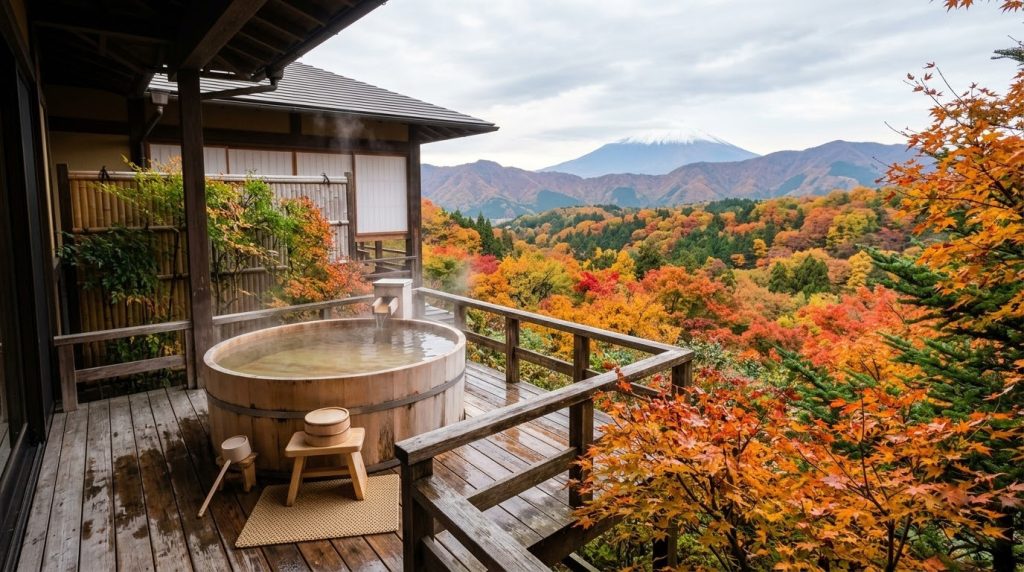
| Hakone Ginyu | Miyanoshita | Luxury | USD 545–769 (JPY 85,000–120,000), incl. dinner & breakfast | Every room has a private open-air onsen |
| Hakone Kowakien Ten-Yu | Ninotaira | Luxury | USD 318–811 (JPY 49,600–126,500) | Private terrace onsen at a lower luxury entry point |
| Hyatt Regency Hakone Resort and Spa | Gora | Mid-range | USD 186–422 (JPY 29,000–65,800) | Western-style rooms with communal onsen and spa |
| Hotel Indigo Hakone Gora | Gora | Mid-range | USD 255–457 (JPY 39,800–71,300) | Boutique design with an open-air hot-spring bath |
| Hotel Green Plaza Hakone | Sengokuhara | Mid-range | USD 180–424 (JPY 28,100–66,100) | Families wanting an onsen water park on site |
| K’s House Hakone (Onsen Hostel) | Near Hakone-Yumoto | Budget | USD 20–100 (JPY 3,100–15,600) | Dorm bunks or private rooms with a shared onsen |
| Hakone Yumoto Hotel | Hakone-Yumoto | Budget | USD 87–208 (JPY 13,600–32,400) | A simple base steps from the gateway station |
The best hotels in Hakone split into private-terrace ryokan like Hakone Kowakien Ten-Yu, from USD 318 (JPY 49,600) a night, and simple station-side stays like Hakone Yumoto Hotel, from USD 87 (JPY 13,600).
Book a luxury ryokan for a soaking-focused weekend, a mid-range hotel for families or first-time visitors who want Western-style comfort, and a budget stay when Hakone is only a one- or two-night stop between Tokyo and the rest of Japan.
Quick answer: This guide breaks down the best areas and stays in Hakone. See live prices and availability now:
Where to book, at a glance
Hakone’s best hotel pockets cluster around Gora’s funicular line, the Sengokuhara highlands, and Hakone-Yumoto’s gateway station, all plotted on the live map below.
Find your Hakone hotel on the map
Live prices from Booking, Airbnb and more — move the map or change dates to compare stays around Hakone.
Zoom into Miyanoshita and Ninotaira for ryokan with private terrace baths, or filter around Hakone-Yumoto Station for the shortest transfer back to Tokyo.
Best luxury ryokan in Hakone
Rates below are converted at USD 1 = JPY 156, verified in September 2026.
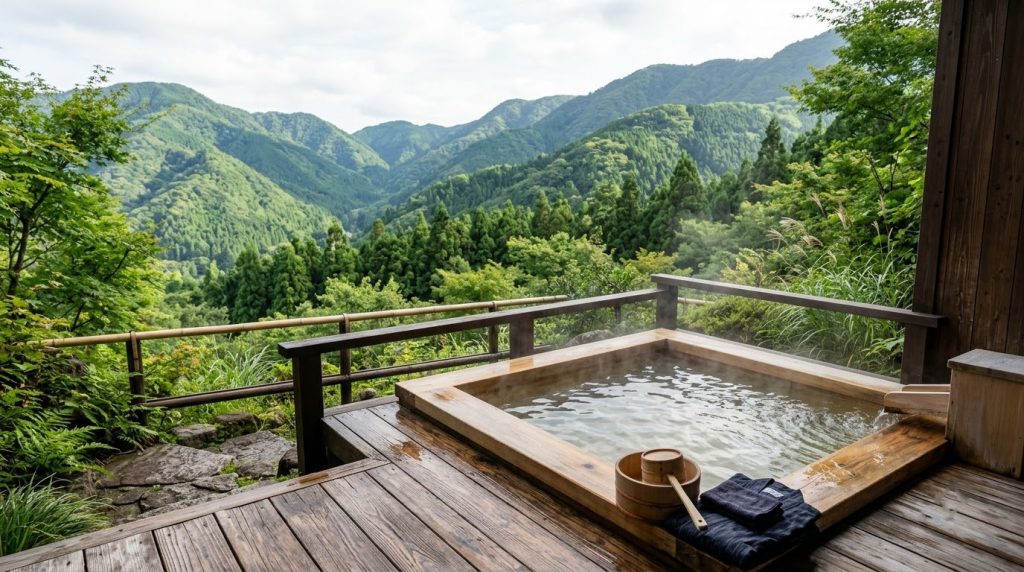
Gora Kadan is Hakone’s benchmark kaiseki ryokan, built around a former imperial family retreat with stone-walled garden baths and multi-course dinners served in-room.
Standard rooms start near JPY 76,000 per person a night on a twin-share, dinner-and-breakfast plan, and posted nightly rates across the property’s room categories span USD 453 to USD 2,296 (JPY 70,700 to 358,200), climbing highest during the November foliage and April cherry-blossom peaks. Book this property for the classic ryokan experience with a garden view from the tub.
Hakone Ginyu sits above Miyanoshita at 420 meters elevation, and all 20 rooms include a private open-air onsen bath looking onto forested mountainside, some with a jacuzzi function. Per-person twin-share rates with kaiseki dinner and Japanese breakfast run JPY 42,500 to 60,000, or roughly USD 545 to 769 (JPY 85,000 to 120,000) total for two guests.
Choose this property when a private soak with a forest view matters more than proximity to the funicular line.
Hakone Kowakien Ten-Yu stands in Ninotaira near Kowakidani Station, a five-minute walk from the Okada Museum of Art, and every room includes a private open-air onsen bath on its own terrace fed directly from the local hot springs. Nightly rates run USD 318 to USD 811 (JPY 49,600 to 126,500) depending on room category and season. This is the entry point into private-onsen luxury without Gora Kadan’s top-tier pricing.
Best mid-range hotels and ryokan in Hakone
Hyatt Regency Hakone Resort and Spa sits in Gora at 1320 Gora, and pairs Western-style rooms with a communal indoor-outdoor onsen and a full spa menu. Nightly rates run USD 186 to USD 422 (JPY 29,000 to 65,800), with the lowest averages on weeknights. Book this property for hotel-standard service and a bilingual front desk without a ryokan’s fixed dinner seating.
Hotel Indigo Hakone Gora is a newer boutique property in Gora with a hot-spring bath, sauna, fitness center, and a landscaped garden. Nightly rates run USD 255 to USD 457 (JPY 39,800 to 71,300). Choose this property for design-forward rooms and flexible check-in over a traditional ryokan schedule.
Hotel Green Plaza Hakone sits in the Sengokuhara highlands and includes an indoor-outdoor onsen water park alongside standard hotel rooms. Nightly rates run USD 180 to USD 424 (JPY 28,100 to 66,100), plus a city tax of JPY 150 per person per night. This is the pick for families who want a pool-style onsen the kids can actually swim in.
Best budget stays in Hakone
K’s House Hakone (Onsen Hostel) occupies a former onsen ryokan along the old Hakone highway, about a 15-minute walk from Hakone-Yumoto Station, and keeps the original hot-spring bath as a shared open-air soak. Dorm bunks run roughly USD 20 to 30 per person a night, and private rooms run USD 29 to 100 (JPY 4,500 to 15,600). Book this property for a real onsen soak on a hostel budget.
Hakone Yumoto Hotel sits in Hakone-Yumoto, the gateway station where the Odakyu Romancecar from Shinjuku terminates. Nightly rates run USD 87 to 208 (JPY 13,600 to 32,400), cheapest midweek. This is the simplest base for travelers who want to drop luggage fast and start sightseeing.
How much does a Hakone hotel cost in 2026
Hakone hotel rates swing more by calendar date than by neighborhood. Nightly prices climb at both of the year’s foliage and blossom peaks, mid-to-late November for the maples around Gora and Lake Ashi, and late March into April for cherry blossoms, when even mid-range hotels can price close to their luxury-season ceiling.
Rates also move with the day of the week, since weekend and Japanese holiday-period stays, including Golden Week in late April and early May, Obon in mid-August, and the New Year holidays, tend to book up faster and price higher than a weeknight stay in the same room category.
On top of the quoted room rate, many onsen hotels and ryokan in the Hakone area add a hot-spring bathing tax, commonly about JPY 150 per adult per night, collected on site rather than folded into the price shown when booking.
Ryokan rates are usually quoted per person on a twin-share, half-board basis that bundles a multi-course kaiseki dinner and a Japanese breakfast into the nightly figure, which is why ryokan prices can look higher than a Western-style hotel room at first glance despite covering two meals rather than none.
A Western-style hotel or mid-range property, by contrast, is typically priced per room rather than per person, so a quick like-for-like comparison between a ryokan and a hotel rate needs to account for whether meals and a second guest are already built into the number.
Booking directly through a property’s own website sometimes unlocks a best-rate guarantee or an early-booking discount that does not show up on a third-party aggregator, which is worth a quick check before paying an aggregator’s price for the identical room and dates.
Many of the ryokan listed above release their booking calendar months ahead, and the rooms with a private in-room onsen tend to sell out first for peak weekends, so locking in a stay during the November foliage or April blossom window well in advance improves the odds of getting a preferred room category rather than whatever is left.
Paying by credit card is standard at the mid-range and luxury properties above; smaller guesthouses and family-run ryokan occasionally prefer cash or a bank transfer deposit instead, so it is worth confirming the accepted payment method when booking directly rather than through an aggregator.
Top things to do in Hakone
Most Hakone itineraries build around four stops: the Hakone Ropeway up to Owakudani, the Lake Ashi sightseeing cruise, Hakone Shrine, and the Hakone Open-Air Museum, and all but the museum are covered by the Hakone Freepass.
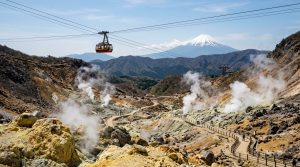
The ropeway climbs from Sounzan to Owakudani, an active volcanic valley where sulfur vents still steam beside the walking trails, and the area is known for kuro-tamago, eggs boiled in the hot spring water until the shells turn black; a standalone round-trip ropeway ticket runs about JPY 2,500 for an adult, or JPY 1,500 for a one-way ride.
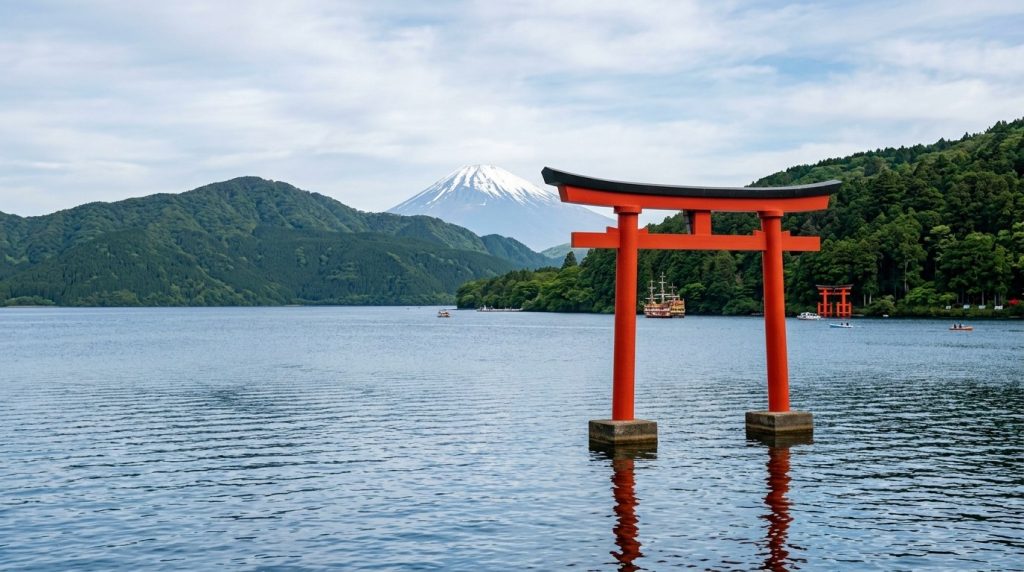
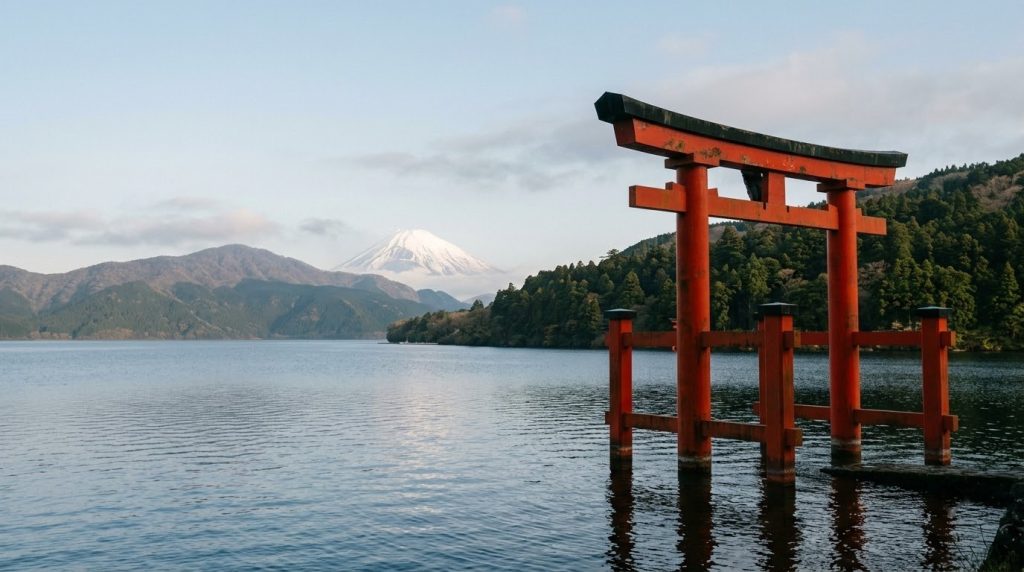
Hakone Shrine sits on the shore of Lake Ashi and is best known for its red torii gate standing in the water a short walk from the main shrine buildings, a stop that pairs naturally with the Lake Ashi sightseeing cruise, which runs as a replica pirate ship between Hakone-machi, Togendai and Moto-Hakone.
The Hakone Open-Air Museum, in Chokoku-no-Mori near Gora, is a sculpture park with large-scale outdoor works and a dedicated Picasso pavilion, close enough to the Gora hotel cluster to fit into the same day as check-in.
The Hakone Freepass, priced at about JPY 7,100 for a 2-day adult pass starting from Shinjuku, bundles a round trip on the Odakyu Line with unlimited use of the Hakone Tozan Train, Tozan buses, the cable car, the ropeway and the Lake Ashi cruise, plus small discounts at some attractions, which makes it the standard way to cover these stops without buying a separate ticket for each one.
Anyone staying two nights or more generally gets more use out of the pass than a one-night stop with a single sightseeing day squeezed in.
Early-morning sailings on the Lake Ashi cruise or an early ropeway ride tend to offer the better odds of catching Mount Fuji in frame, since cloud cover typically builds over the mountain through the day regardless of season, and this is on top of the broader seasonal visibility already noted for Hakone generally.
The Open-Air Museum works well as a half-day add-on with children, since the grounds are built for walking between large outdoor sculptures rather than a traditional gallery pace, and it sits close enough to the Gora hotel cluster listed above that a museum morning and a hotel check-in can both happen without a long transfer in between.
Onsen etiquette for first-time visitors
A Hakone stay is built around the onsen, and the etiquette is the same whether the bath is a shared communal pool or a private room terrace. Guests wash and rinse off fully at the shower stalls lining the bathing area before stepping into the water, since the onsen itself is for soaking rather than washing.
Traditional communal baths do not allow swimwear, and most separate bathing areas by gender rather than offering mixed-gender soaking, though a private in-room or reservable bath removes that split entirely since it is booked by one party at a time.
A small hand towel is standard for modesty while walking between the shower area and the bath, but it should not be dipped into the water itself; most guests fold it and set it on the edge of the pool or rest it on their head while soaking.
Hotels that run on a half-board ryokan plan typically schedule bathing around the fixed dinner seating, so guests often soak once before the evening meal and again afterward or the next morning, rather than treating the bath as available at every hour of the stay. Those mapping out a day-by-day plan will find a ready-made outline in our Hakone itinerary.
Guests who prefer not to share a communal bath, whether for a tattoo, a medical reason or simple preference, should book a property with an in-room or reservable private onsen rather than assume a communal bath will be flexible on arrival.
Families traveling with young children generally fare better at a property with a private or family-sized bath option, since most communal baths are adults-focused rather than built around splashing kids.
Ryokan without an in-room private bath often offer a reservable time slot on the shared bath instead, booked exclusively for one room or family for a fixed window, which is the usual workaround for couples or families who want to bathe together without upgrading to a room that has its own terrace onsen.
Most ryokan also provide a yukata robe and a set of towels in the room, meant to be worn around the property including to and from the bath, and this doubles as the only dress code most properties expect at the communal kaiseki dinner.
Which Hakone area to book
Gora suits travelers prioritizing ryokan density and the cable car up to Owakudani, since most luxury and mid-range picks above sit within a few funicular stops of each other. Sengokuhara suits families and anyone wanting quieter highland scenery, though it sits a 40 to 50 minute bus ride from Hakone-Yumoto Station.
Hakone-Yumoto suits first-timers and anyone changing trains, since it is the only stop reachable directly from Shinjuku without a transfer. Motohakone and the Lake Ashi shoreline suit travelers chasing a Mount Fuji view over the water, at the cost of a longer bus transfer to reach Gora’s ryokan cluster.
When these hotels are the wrong choice
Ryokan half-board plans lock the evening to a set kaiseki dinner seating, usually between 6 and 7:30 p.m., so anyone who wants a late arrival or a spontaneous dinner elsewhere should book a Western-style hotel instead.
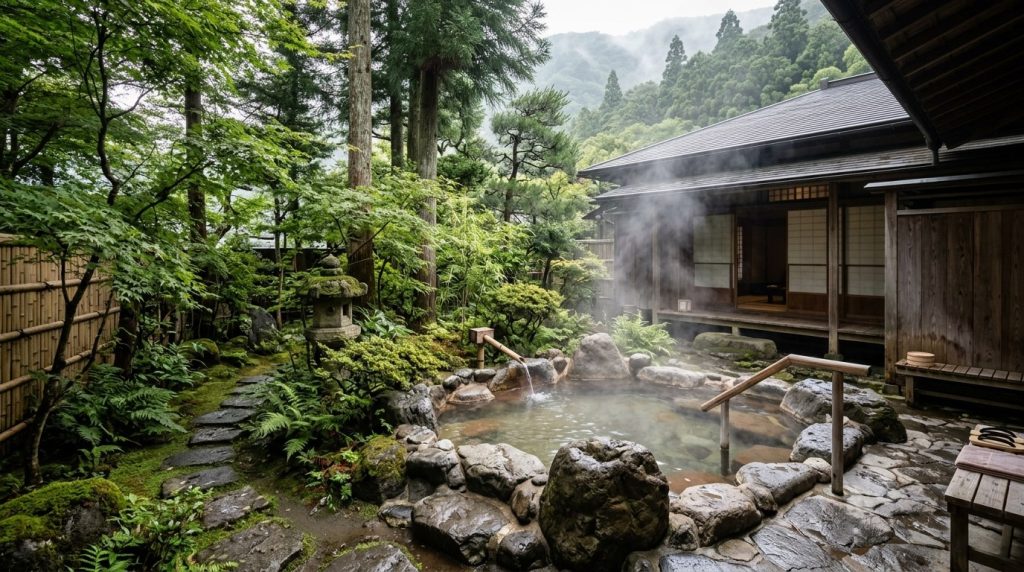
Traditional onsen at properties like Gora Kadan and Hakone Ginyu generally ask guests to cover visible tattoos or book a private bath session, while Hakone Kowakien Yunessun’s water-park pools are more tattoo-friendly; check each property’s policy before booking if this applies.
Day-trippers from Tokyo do not need a Hakone hotel at all, since the Odakyu Romancecar covers Shinjuku to Hakone-Yumoto in about 85 minutes each way, and the Hakone Free Pass covers local transport for a single-day loop.
Mount Fuji views from any Hakone property, including the ryokan terraces above, depend entirely on the weather, and the mountain is visible on a minority of days even in the clearer winter months, so booking a room specifically for the view is a gamble.
Pairing Hakone with Tokyo and the rest of Japan
Most visitors treat Hakone as a one- or two-night detour from Tokyo rather than a standalone destination, and travelers with only a single free day should follow the Mount Fuji day trip from Tokyo guide instead of booking a Hakone hotel at all.
Anyone building a longer loop can fold a Hakone stay into a 4-day Tokyo itinerary, using one of the mid-range picks above as the overnight break between Tokyo neighborhoods. Travelers watching spend should cross-check Hakone’s mid-range and budget tiers against the Tokyo budget guide before locking a ryokan splurge.
For a wider view of where else to chase Fuji sightlines beyond Hakone’s ryokan terraces, see the Mount Fuji travel guide.