Is Hakone Worth Visiting? (2026)
Disclosure: Some links in this guide are affiliate links. If you book or buy through them, we may earn a small commission at no extra cost to you — it helps keep our guides free.
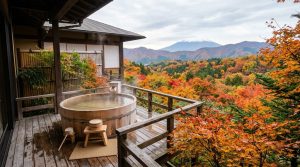
Hakone is worth visiting for one night in a ryokan with a private onsen, where the Hakone Free Pass at JPY 7,100 (USD 46) covers the entire loop of trains, cable car, ropeway and pirate ship boat.
It is not worth visiting as a rushed day trip chasing a guaranteed Mount Fuji photo, because the mountain shows itself on well under half of all mornings and the loop clogs with tour groups by midday.
| Traveller type | Worth it? | Nights to give it | Why |
|---|---|---|---|
| Ryokan and onsen seekers | Yes | 1-2 nights | The private open-air bath and kaiseki dinner are the actual product, not the sightseeing |
| First-timers in Tokyo with one spare day | Yes, as a day trip | 0 (day trip) | The Loop still delivers scenery and hot-spring smells even without Fuji |
| Travellers who need a guaranteed Fuji photo | No, go to Kawaguchiko instead | 0 | Fuji is visible from Hakone less than half the time |
| Budget backpackers | No | 0 | The Free Pass plus a ryokan night pushes the day past a backpacker budget |
| Couples and honeymooners | Yes | 1-2 nights | A private onsen and a slow ryokan pace suit a short romantic stop |
| Families with toddlers | Maybe | Day trip only | The Loop is stroller-rough and ryokan formality is a poor match for young kids |
Every dollar figure below uses a USD/JPY rate of 153.6, checked today.
What Hakone is actually for
Hakone’s actual product is the ryokan night, not the museums or the shrine gate. Most travelers who come away disappointed booked a business hotel and tried to sightsee their way through a town that is built around soaking, not walking.
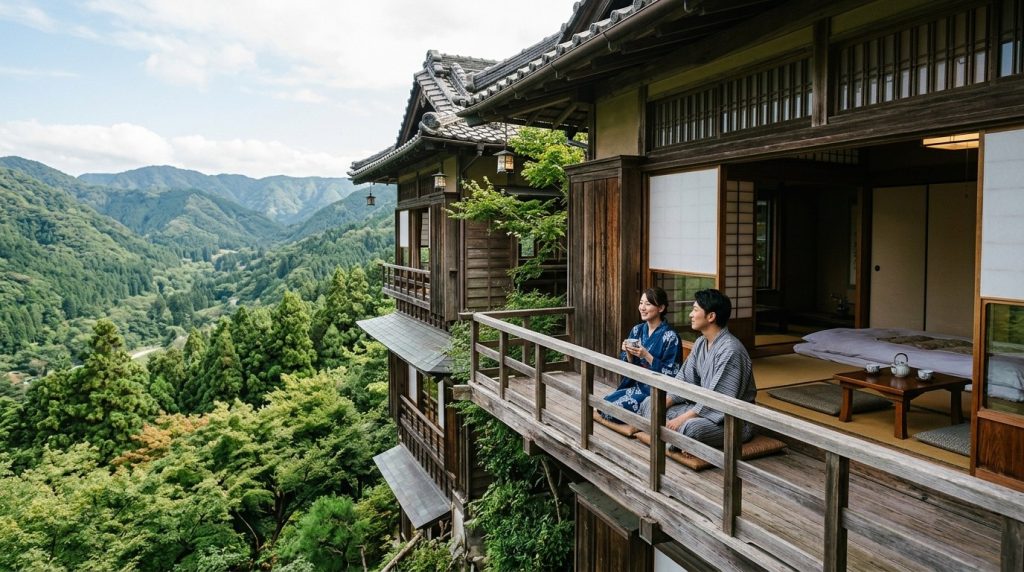
The better version of a Hakone trip is a room with its own outdoor onsen, a multi-course kaiseki dinner, and a slow morning before checkout. Gora and the hills above Lake Ashi hold most of the ryokan-style properties, and paying for a private bath rather than a shared one is what actually changes the experience.
Hakone Yumoto, the first stop off the train, is the convenient but least atmospheric base, with more chain hotels than ryokans, plus a short shopping street of onsen manju and pickle shops that fills up fast on weekends.
Gora and the hills further up the mountain railway are quieter, and that is where most of the ryokans with a private outdoor bath actually sit.
If a ryokan night is not on the itinerary at all, the rest of Hakone is a pleasant but replaceable half-day of hot-spring air and lake views, and that half-day alone rarely justifies the return trip from Tokyo.
The Mount Fuji view, honestly
Mount Fuji shows itself from Hakone on well under half of all mornings, so treat any glimpse as a bonus rather than the plan. Tracking sites that log daily visibility put Fuji visible from the Hakone side at roughly 45 to 50 percent of days across a full year, rising into the winter months and dropping hard in summer haze. Those mapping out a day-by-day plan will find a ready-made outline in our Hakone itinerary.
Even on a clear-looking day, the mountain can be blocked by low cloud sitting directly over its own peak while the rest of the sky is blue.
Odds improve in the first hour after sunrise, before daytime heat builds haze over the Kanto plain, and they drop hard through the humid summer months, so a winter morning is the single best window for a Hakone-side view.
Travelers who want a near-guaranteed photograph are better served by a Mount Fuji day trip from Tokyo built around Kawaguchiko, which sits closer to the mountain and posts better visibility odds. Anyone deciding between the two approaches first should read a broader Mount Fuji travel guide before locking in a route, since the right base changes with the season.
Getting to Hakone from Tokyo
Most trips to Hakone start at Shinjuku Station, where the Odakyu Romancecar limited express covers the roughly 80-minute run to Hakone-Yumoto for a reserved-seat surcharge of around USD 8 (JPY 1,200) for adults and about USD 4 (JPY 600) for children, on top of the base fare.
Every seat on the Romancecar is reserved, and the operator opens bookings one month before departure, so reserving ahead matters on weekends and during the autumn and New Year rush.
Travelers who skip the surcharge can ride a standard Odakyu Rapid Express train on the same line for a similar journey time without a reservation, which is the cheaper option for anyone not fussed about guaranteed seating.
The Hakone Free Pass does not include the Romancecar surcharge, so riding the limited express on top of the pass pushes the one-way cost to roughly USD 54 (JPY 8,300) for the 2-day pass plus one Romancecar leg.
Skip the surcharge and the base 2-day pass alone still covers the return journey on regular trains plus the full loop of cable car, ropeway and sightseeing boat once in Hakone.
Buying every ride separately instead of a pass is the expensive option: the same round course of train, cable car, ropeway, boat and bus adds up to more than USD 52 (JPY 8,000 and up) in individual tickets, which is why nearly every Hakone itinerary runs on the Free Pass rather than single fares.
Travelers using a Japan Rail Pass can also reach the area on JR trains to Odawara Station and pick up the Hakone Tozan line from there, which avoids the Odakyu line entirely for the inbound leg.
Once inside Hakone, the Free Pass is also the way to get around: it covers unlimited rides on the Hakone Tozan Railway, the cable car, the ropeway, the Lake Ashi sightseeing boat and the local Hakone Tozan buses that connect ryokan areas like Gora and the Lake Ashi shore to the main train line.
Local taxis exist for lodgings set back from the loop route, but most ryokan and hotels run their own shuttle from the nearest station, so check pickup details when booking rather than planning on a taxi.
The Hakone Loop and its crowds
The Hakone Loop is worth riding once and not worth fighting through twice in one day.
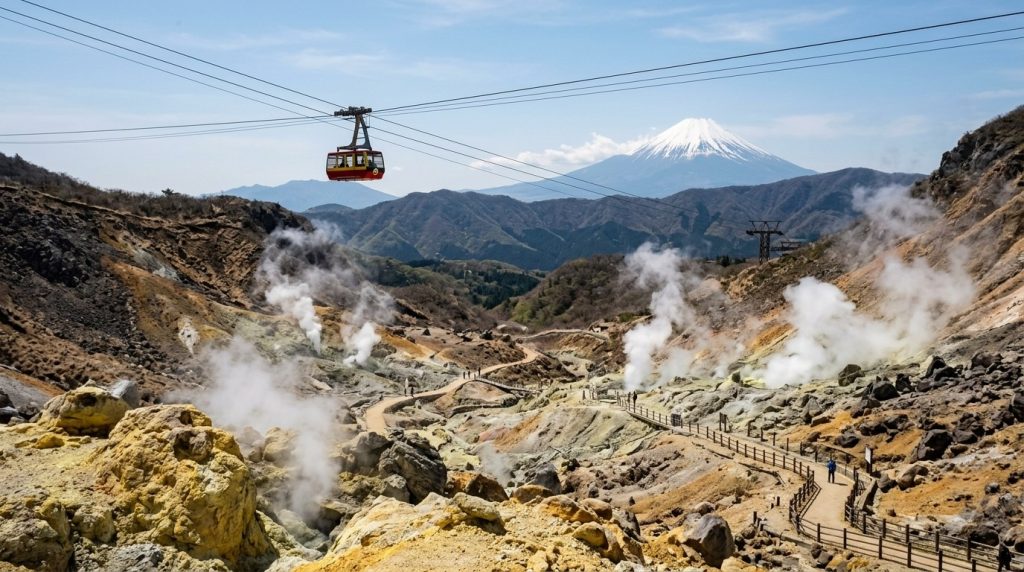
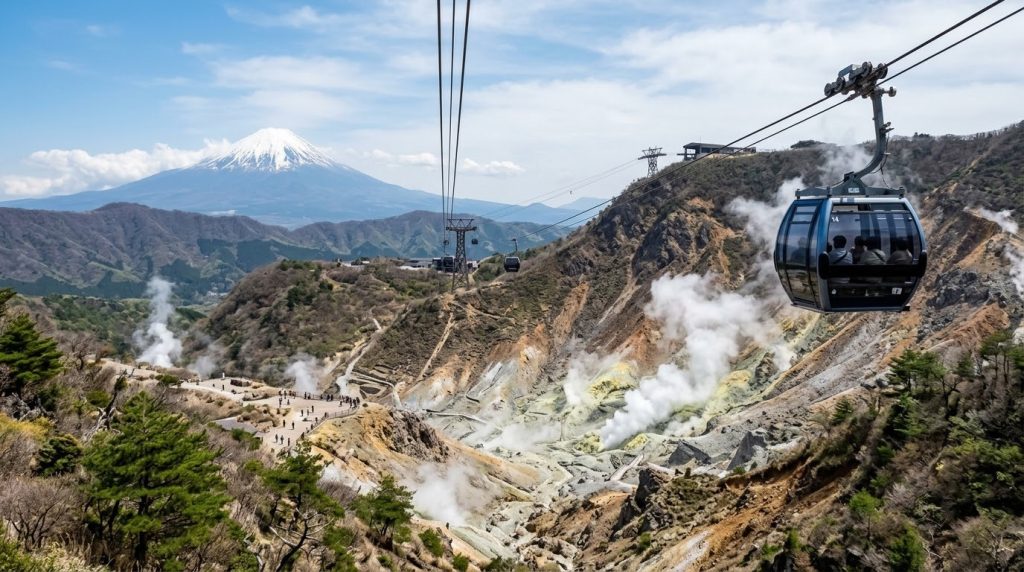
The route strings together a mountain railway, a cable car, the Hakone Ropeway over Owakudani, and the Lake Ashi sightseeing boat, and the 2-day Hakone Free Pass from Shinjuku covers the whole circuit plus the return Odakyu train for JPY 7,100 (USD 46) per adult.
By late morning, the ropeway stations and the boat pier fill with tour groups moving in the same direction, and the smartest way to see the same scenery is to ride the loop counter-clockwise, starting with the boat before the buses arrive.
Owakudani, the volcanic valley stop on the ropeway, is currently open at the lowest alert level, but it has closed before. The site shut for six months in 2024 after gas readings rose, and it can close again on short notice when sulfur levels spike.
Check the ropeway operator’s live status page the morning of the trip rather than assuming the full loop will run, since a closure usually swaps the ropeway leg for a replacement bus without warning.
Things to do in Hakone beyond the Loop
The Loop covers transport, not sightseeing, and a few specific stops are worth planning around rather than leaving to chance.
The Hakone Open-Air Museum, a short walk from Chokoku-no-Mori Station on the Tozan line, is open daily from 9am to 5pm with last admission at 4:30pm, and charges around USD 10 (JPY 1,600) for adults, dropping to about USD 9 (JPY 1,400) with the Free Pass.
The grounds spread across roughly 70,000 square meters of hillside and hold around 120 sculptures by Japanese and international artists, alongside a dedicated Picasso Pavilion and a children’s play structure called Woods of Net, which charges its own separate ticket on top of general admission.
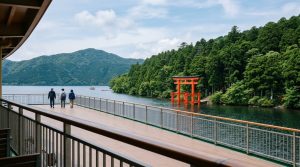
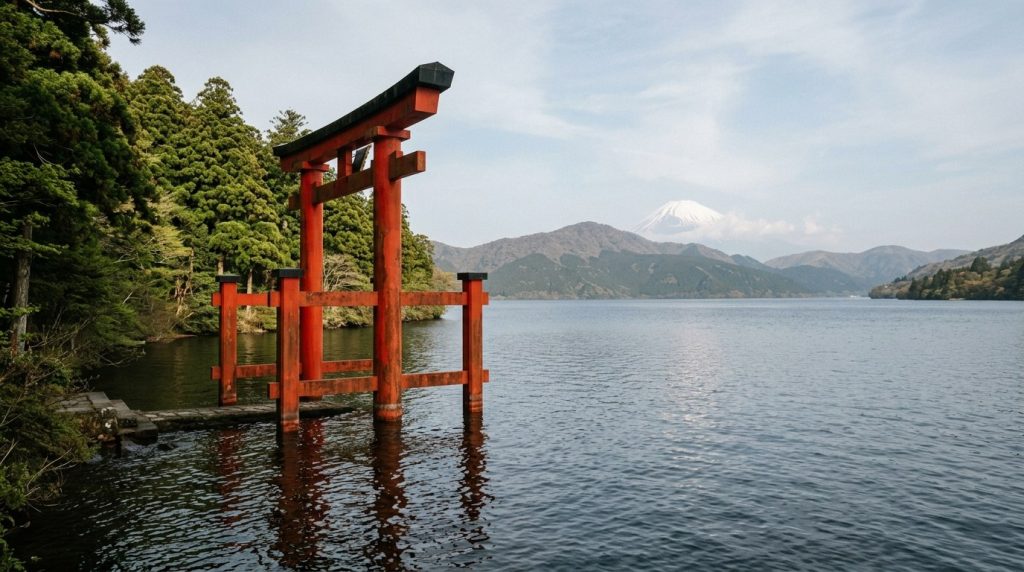
Hakone Shrine, on the edge of Lake Ashi, is free to enter and open around the clock, built around a red torii gate that appears to float on the lake itself.
The sightseeing boat on the Lake Ashi leg of the Loop passes close enough for a photo without stopping, but seeing the torii gate up close means getting off at the shrine’s own pier or walking in through the cedar-lined approach from the road.
A cluster of smaller art museums, including the Narukawa Art Museum with its lake- and Fuji-facing gallery window, sit around the lake too, with admission typically running about USD 8 to 10 (JPY 1,300 to 1,500) depending on the museum.
One museum stop is enough for most itineraries that already include the Loop and a ryokan night; trying to fit two or three turns a relaxed day into a rushed one. The Open-Air Museum pairs most naturally with the mountain railway leg of the Loop, since it sits directly on that line, while Hakone Shrine fits best right after the Lake Ashi boat crossing.
Day trip or overnight
An overnight ryokan stay is worth the extra cost, and a bare day trip from Tokyo is worth skipping unless the itinerary needs a flexible rain-day option.
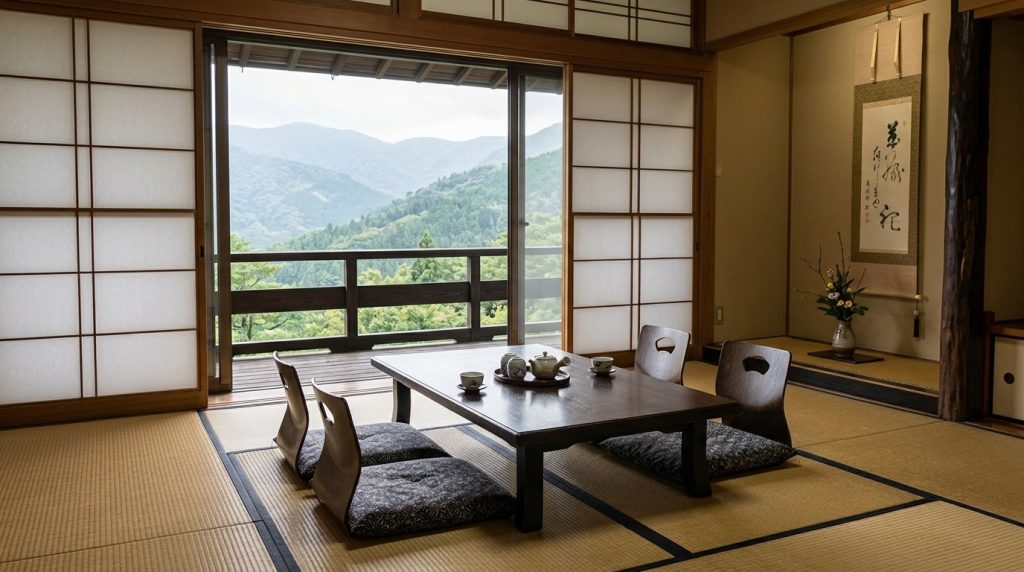
A day trip means roughly ninety minutes each way on the Odakyu line, several hours moving through the loop, and no time in an actual onsen beyond a quick foot bath, which is the part of Hakone most people came for.
An overnight turns the same route into a relaxed half-day of sightseeing followed by a proper soak and a kaiseki dinner, for one added hotel cost.
Travelers running a 4-day Tokyo itinerary who only have a single spare day are the group most likely to end up doing Hakone as a rushed day trip, and for them it is a reasonable fallback on a day when rain rules out Kawaguchiko or Nikko, not a first-choice highlight.
How long to stay and what it costs
A Hakone day trip and a Hakone overnight land in very different price brackets, and most of the gap comes from the ryokan room rather than transport or sightseeing. The table below breaks down what each layer typically costs in 2026, on top of the 2-day Hakone Free Pass covered earlier.
| Cost item | Typical range (2026) | Notes |
|---|---|---|
| 2-day Hakone Free Pass | USD 46 (JPY 7,100) | Covers trains, cable car, ropeway, boat and local buses |
| Romancecar reserved seat, one way (optional) | USD 8 (JPY 1,200) | Added on top of the Free Pass or a regular ticket |
| Museum admission | USD 8 to 10 (JPY 1,300 to 1,600) | Per museum; some offer a small discount with the Free Pass |
| Budget ryokan, per person | from about USD 33 (JPY 5,000) | Shared bath, simple room, no kaiseki dinner |
| Private-onsen ryokan suite | USD 650 and up (JPY 100,000 and up) | Private outdoor bath, multi-course kaiseki dinner included |
A day trip that sticks to the Free Pass, one museum and lunch stays well under USD 100 per person, which is why it is the realistic budget option.
An overnight adds the ryokan cost on top, and that single line item is what separates a thrifty Hakone visit from the private-onsen version most people picture when they imagine the trip, since mid-tier ryokan with any private bath tend to sit closer to the upper end of that range than the budget end.
Who should skip Hakone
Skip Hakone entirely on a first Japan trip that is short on days and heavy on must-see cities, since a half-day loop with a coin-flip Fuji view competes poorly against Kyoto or Nara for the same 24 hours. Skip it too if the goal is a guaranteed mountain photograph, since Kawaguchiko simply posts better odds for the same effort.
Solo budget travelers chasing hostel prices should also pass, because the Free Pass plus any onsen-style room erases most of the savings a backpacker itinerary is built around. Hakone rewards a slower, slightly more expensive trip, and it punishes anyone trying to squeeze it into a tight, cheap, checklist-style route.
FAQ about visiting Hakone
Do you need a car in Hakone?
No. The Hakone Free Pass covers the Tozan railway, cable car, ropeway, Lake Ashi sightseeing boat and local buses, and buying the same set of rides individually costs more than USD 52 (JPY 8,000 and up), above the price of the pass itself. A car adds parking costs without adding access to anything the pass does not already cover.
Can you bring tattoos into a Hakone onsen?
Most traditional ryokan baths and public onsen facilities in Hakone still turn away visible tattoos, following the standard rule across most of Japan. The workaround is a private in-room bath, which is unaffected by this policy, or one of the smaller number of ryokan in the area that market themselves as tattoo-friendly; check this detail before booking rather than on arrival.
Is the Free Pass worth it for a one-day visit?
Yes. Even for a single day, buying the train, cable car, ropeway, boat and bus fares one by one adds up to more than the 2-day pass price, so the pass pays for itself inside one day of sightseeing even if the second day goes unused.
How much should a Hakone trip cost in total?
A day trip on the Free Pass with one museum stop and lunch typically stays under USD 100 per person. An overnight adds a ryokan room on top of that, and the final figure depends almost entirely on the room tier, from a shared-bath budget ryokan to a suite with a private outdoor onsen.
Where to stay if you decide to go
Gora and the area around Lake Ashi hold most of the ryokan-style stays with private onsen, while Hakone Yumoto is the convenient, more affordable base for a shorter or lower-budget visit. A full room-by-room breakdown sits in the best hotels in Hakone guide, worth checking before booking since prices and availability shift fast around weekends.
Find your Hakone hotel on the map
Live prices from Booking, Airbnb and more — move the map or change dates to compare stays across Hakone.