
Disclosure: Some links in this guide are affiliate links. If you book or buy through them, we may earn a small commission at no extra cost to you — it helps keep our guides free.
Barcelona Itinerary: The Perfect 3 Days in 2026
Three days is enough to see the best of Barcelona if you group sights by neighborhood and book the big-ticket attractions in advance. This Barcelona itinerary spends Day 1 on Gaudi and the Eixample, Day 2 in the medieval Gothic Quarter and along Las Ramblas, and Day 3 up at Park Guell, through village-like Gracia, and down to the beach. It is built to keep walking distances short and ticket lines shorter.
Barcelona pulled in more than 27 million visitors in 2025 (Barcelona Turisme, 2026), and that crush is exactly why timing matters. The two attractions people skip because they “forgot to book,” Sagrada Familia and Park Guell, are the two most likely to sell out days ahead. We planned this route so you hit each headline sight at its calmest hour and never double back across the city.
Key Takeaways
– Book Sagrada Familia and Park Guell online before you fly. Basic Sagrada Familia entry costs 26 EUR and Park Guell’s Monumental Zone is 18 EUR in 2026 (sagradafamilia.org; Park Guell official, 2026). Both use timed entry and sell out in peak season.
– Buy one T-casual card for 13 EUR. It holds 10 metro or bus rides and covers most of a 3-day stay on foot-plus-metro (TMB, 2026).
– Group by district, not by “must-see” list. Day 1 Eixample, Day 2 old town, Day 3 north-and-beach cuts backtracking and saves roughly a full hour of transit a day.
– Best months for this walking-heavy route are May and late September, with May highs near 20.5 C and September running 19 to 24.5 C (Weather Atlas; Weather Spark, 2026).
– A realistic mid-range budget is 90 to 130 EUR per person per day including one paid attraction, metro, lunch, and dinner, excluding your hotel.[PERSONAL EXPERIENCE] We have run this exact three-day loop twice, once in early May and once in the last week of September. On both trips the 9:00 AM Sagrada Familia slot let us stand under the east stained glass almost alone before the tour groups arrived around 10:30. Our biggest lesson: we wasted an afternoon on our first visit zig-zagging between the Gothic Quarter and Park Guell, which sit at opposite ends of the metro, so we rebuilt the route to keep each day inside one zone.
How Should You Structure a 3-Day Barcelona Itinerary?
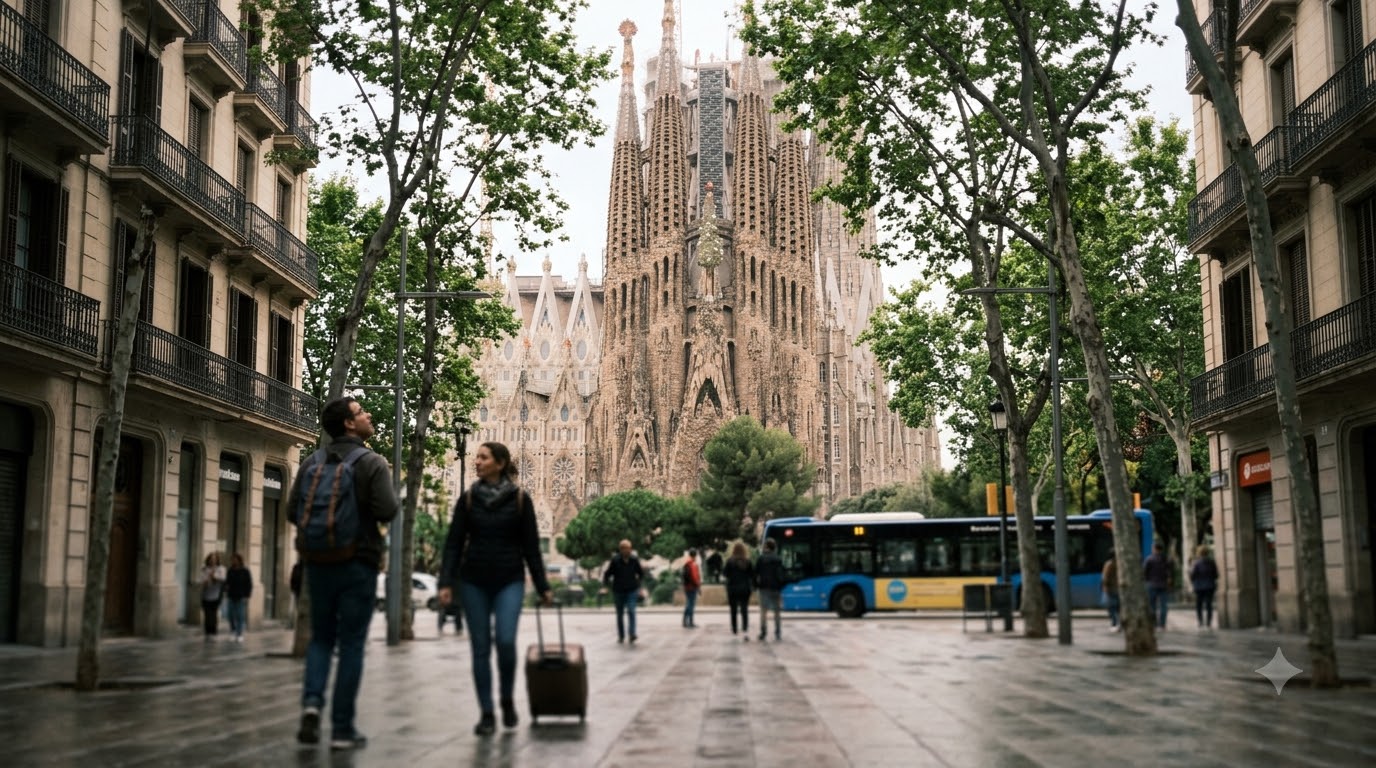
Structure each day around one district so you walk between sights instead of riding the metro across town. Barcelona’s headline attractions cluster into three natural zones, and this itinerary gives each its own day. Below is the shape of the three days before we break each one down hour by hour.
- Day 1 (Eixample and Gaudi): Sagrada Familia at opening, then Casa Batllo and Casa Mila along Passeig de Gracia, ending with tapas in the neighborhood.
- Day 2 (Old town): Barcelona Cathedral, the Gothic Quarter’s stone alleys, Las Ramblas and La Boqueria market, then El Born and the Picasso Museum.
- Day 3 (North and beach): Park Guell first thing, brunch in Gracia’s plazas, and an afternoon at Barceloneta beach.
- Pace: Each day mixes one paid indoor attraction with free outdoor walking so you are never queuing twice before lunch.
- Reverse it if needed: If your Park Guell slot is only available on Day 1, run the days in any order; the zones are self-contained.
For deeper background before you arrive, our complete Barcelona travel guide covers neighborhoods, food, and first-timer logistics in more detail than an itinerary can.
The 3-Day Barcelona Itinerary
The plan we use ourselves — sent straight to your inbox.
- Day-by-day route
- Where to stay
- Real 2026 costs
Free · No spam · Unsubscribe anytime
Day 1: Sagrada Familia and Gaudi’s Eixample
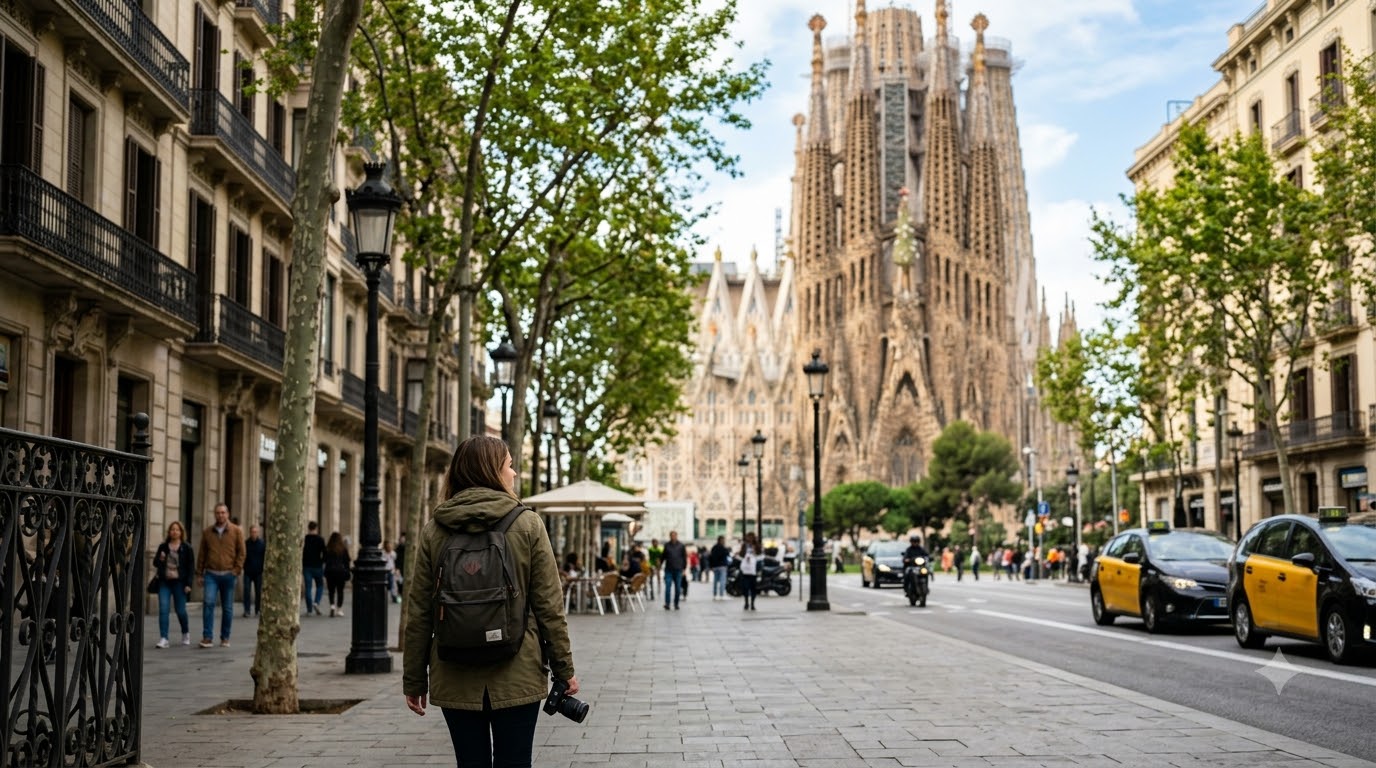
Start Day 1 at Sagrada Familia’s first entry slot, because the basilica is both the city’s top sight and its fastest to sell out. Antoni Gaudi’s unfinished basilica anchors the morning, and the rest of the day follows his work north along the elegant Eixample grid, a district of wide blocks and Modernista facades.
Morning: Sagrada Familia
Book the 9:00 AM slot and give yourself at least 90 minutes inside. Standard admission is 26 EUR and includes the audioguide app; a guided tour runs 30 EUR, and adding tower access costs 36 EUR (sagradafamilia.org, 2026). Note that a centenary surcharge of 2 to 5 EUR applies from June through December 2026 to mark the basilica’s completion milestone.
- Sagrada Familia basic entry: 26 EUR adult, 24 EUR under-30 and students, 21 EUR seniors over 65, free for children under 11 (sagradafamilia.org, 2026).
- Best light: Morning slots catch the east-facing Nativity windows in blues and greens; late afternoon lights the Passion side in reds and oranges.
- Tower access (36 EUR): Books separately and requires an elevator up, stairs down; skip it if you dislike tight spiral staircases.
- Metro: Sagrada Familia station sits directly outside on lines L2 and L5.
Afternoon: Passeig de Gracia
Walk or ride two stops to Passeig de Gracia to see Gaudi’s two apartment buildings, Casa Batllo and Casa Mila (La Pedrera). Casa Batllo’s general “Blue” ticket starts at 29 EUR online and includes an audio guide (Casa Batllo official, 2026). We usually tour just one of the two houses to avoid Gaudi fatigue, then window-shop the boulevard’s Modernista storefronts.
Evening: Tapas in Eixample or Gracia
End the day with vermouth and tapas rather than a sit-down dinner, which is how locals eat. For a fuller list of neighborhood sights and experiences to slot into any spare hours, see our roundup of the best things to do in Barcelona.
Day 2: Gothic Quarter, Las Ramblas, and El Born
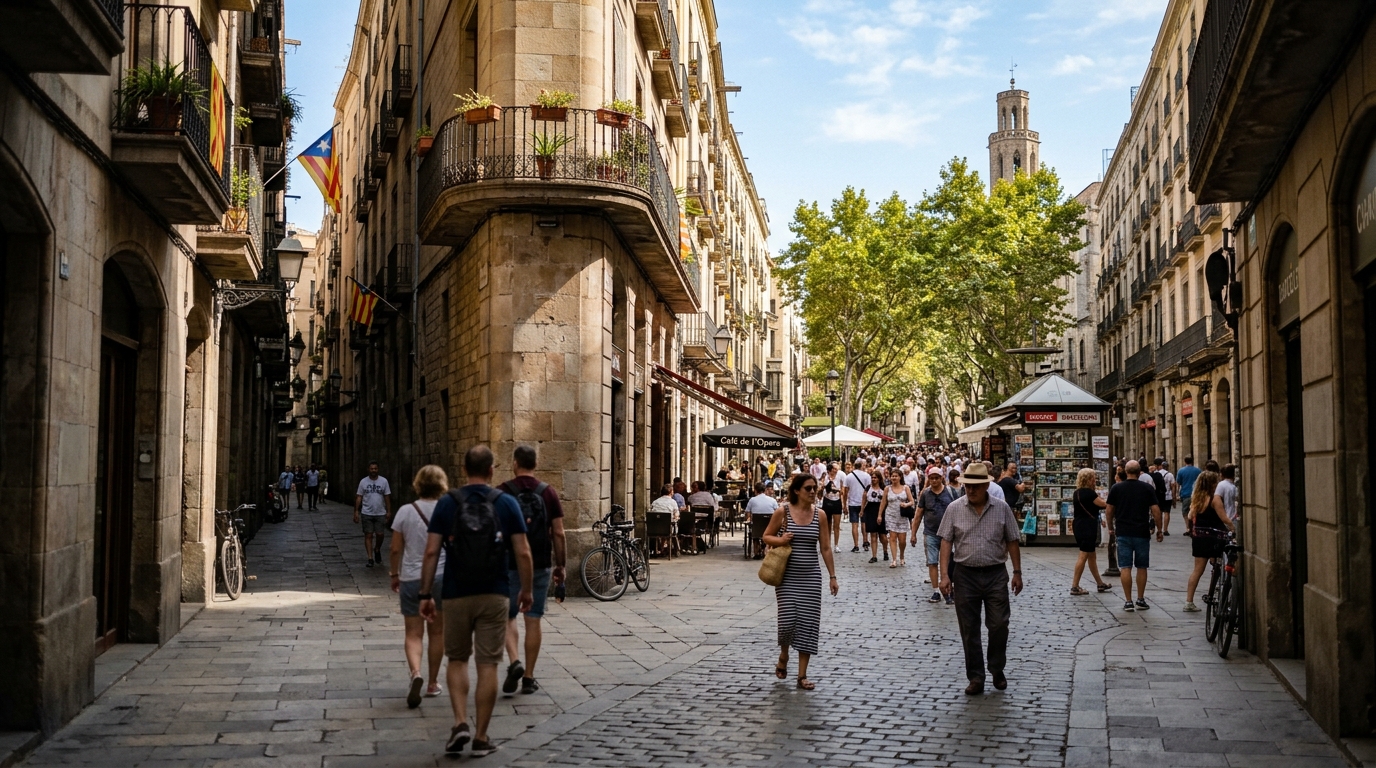
Spend Day 2 entirely in the old town on foot, since the Gothic Quarter, Las Ramblas, and El Born sit within a 15-minute walk of one another. This is the medieval heart of the city, a warren of stone alleys, hidden plazas, and Roman wall fragments that rewards wandering without a strict schedule.
Morning: Barcelona Cathedral and the Gothic Quarter
Begin at Barcelona Cathedral and let the lanes pull you in. The Gothic Quarter (Barri Gotic) is free to walk, and its best moments are unplanned turns.
- Barcelona Cathedral: A tourist admission covers the nave, cloister, and rooftop; the cloister’s 13 resident geese are a local quirk worth the detour.
- Placa Reial: A palm-lined arcaded square just off Las Ramblas, with lampposts designed by a young Gaudi.
- Placa Sant Felip Neri: A quiet, shrapnel-scarred plaza that most tour groups miss; go early before it fills.
- Roman wall remains: Fragments of Barcino’s fourth-century wall are built into buildings near Placa Nova.
Midday: Las Ramblas and La Boqueria
Walk the length of Las Ramblas, but treat it as a stroll, not a meal stop. Duck into La Boqueria market for a fresh juice and a look at the stalls, then eat one street over where prices halve. Keep valuables in a front pocket here; the UK Foreign Office continues to flag central Barcelona for pickpocketing (UK FCDO, 2026).
Afternoon: El Born and the Picasso Museum
Cross into El Born for the Picasso Museum, which holds one of the world’s largest collections of the artist’s early work. Standard entry is 14 EUR online or 15 EUR at the door, and admission is free on the first Sunday of every month and on winter Thursday evenings from 4 to 7 PM (Picasso Museum Barcelona, 2026). The nearby Basilica of Santa Maria del Mar is free to enter outside guided-visit hours and is the finest Catalan Gothic interior in the city.
The 3-Day Barcelona Itinerary
Hour-by-hour plan, where to stay and what it really costs — free PDF.
Free · No spam · Unsubscribe anytime
Find your Barcelona hotel on the map
Live prices from Booking & Airbnb — tap a pin to compare stays around Eixample and the Gothic Quarter and beyond.
Day 3: Park Guell, Gracia, and the Beach
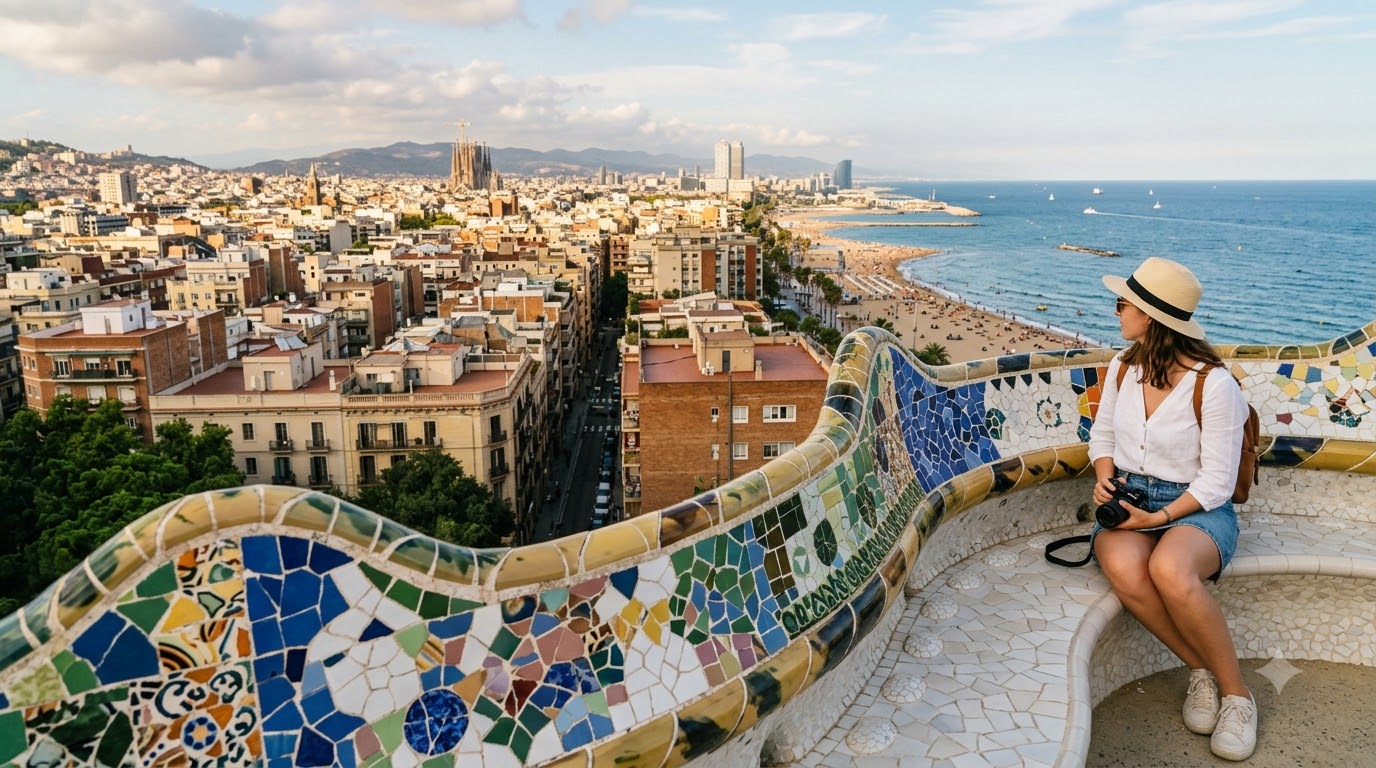
Reserve Day 3 for Park Guell at opening, then work downhill through Gracia to the sea. Park Guell sits on Carmel Hill in the north, so this day flows geographically from the heights down to Barceloneta beach, ending your trip with sand and seafood.
Morning: Park Guell
Book the earliest Monumental Zone slot you can. Entry to the ticketed core is 18 EUR for adults in 2026, up from 10 EUR in prior years, with a timed 30-minute entry window and an hourly cap of 1,400 visitors (Park Guell official, 2026).
- Monumental Zone ticket: 18 EUR adult, 13.50 EUR for children 7 to 12 and over-65s, free under 7 (still requires a ticket).
- The mosaic terrace: The serpentine tiled bench and city panorama sit inside the paid zone; the 9:00 or 9:30 slot is calmest.
- Free park areas: Roughly the wider park outside the Monumental Zone is free and offers viewpoints like Turo del Carmel above the ticketed area.
- Getting there: Metro to Lesseps or Vallcarca, then a steep uphill walk or the outdoor escalators; allow 15 to 20 minutes from the station.
Midday: Gracia’s Plazas
Walk downhill into Gracia, a former village absorbed by the city that still feels like its own town. Its small plazas, Placa del Sol and Placa de la Vila de Gracia, fill with locals over vermouth around 1:00 PM on weekends. We spent one whole Sunday lunch here doing nothing but people-watching, and it was the highlight of the trip.
Afternoon: Barceloneta Beach
Finish at the beach. Take the metro (yellow line L4) to Barceloneta and walk 10 minutes to the sand. Even outside summer, the promenade is pleasant for a seafood lunch of paella or fideua. If you would rather bank the beach time and stay central, our guide to where to stay in Barcelona breaks down which neighborhoods put you closest to each day’s route.
What Does 3 Days in Barcelona Cost?
Budget roughly 90 to 130 EUR per person per day for a mid-range trip, excluding your hotel. The single biggest variable is how many paid Gaudi attractions you enter, since each runs 18 to 36 EUR. The table below shows a realistic per-person daily spend for this itinerary at a mid-range pace, based on 2026 prices we verified with each attraction and transport operator.
| Expense | Budget day | Mid-range day | Notes |
|---|---|---|---|
| One paid attraction | 14 EUR (Picasso Museum) | 26 to 36 EUR (Sagrada Familia) | Skip on a free-museum Sunday |
| Local transport | 2.60 EUR (T-casual ride) | 5 EUR (2 to 3 rides) | 13 EUR card lasts most of the trip |
| Lunch | 12 EUR (menu del dia) | 20 EUR (sit-down) | Weekday set menus are best value |
| Dinner (tapas) | 18 EUR | 30 EUR | Vermouth-and-tapas beats a fixed menu |
| Coffee, water, snacks | 6 EUR | 10 EUR | |
| Daily total | ~53 EUR | ~95 EUR | Hotel not included |
Prices reflect 2026 published rates from sagradafamilia.org, Park Guell official, Picasso Museum Barcelona, and TMB. A dedicated Barcelona budget breakdown can help you trim further if you are traveling on less.
How Do You Get Around Barcelona in 3 Days?
Buy one T-casual card and walk everything else, because this itinerary is built around short hops. Barcelona’s metro is fast, clean, and reaches every stop on this route, but many days you will only use it twice. The T-casual holds 10 single journeys, which comfortably covers most of a three-day stay.
- T-casual (13 EUR): 10 single journeys, one zone, allowing up to 3 transfers within 75 minutes per journey (TMB, 2026).
- Hola Barcelona travel card: Unlimited transport including airport metro; 2 days 18.70 EUR, 3 days 27.30 EUR, 4 days 35.60 EUR, 5 days 43.60 EUR (TMB, 2026).
- Airport to center: The L9 Sud metro connects both terminals to the city; the Aerobus express bus is the faster door-to-Placa-Catalunya option.
- Walking: Days 2 and 3’s midday portions are nearly all on foot; wear real shoes for the Park Guell and Gracia hills.
- Taxis: Metered black-and-yellow cabs are reliable; a cross-city ride runs roughly 10 to 15 EUR.
For a 3-day stay, we find the T-casual cheaper than the Hola card unless you are riding four or more times a day, which this route rarely requires.
Booking Tips for This Barcelona Itinerary
Book the two timed-entry sights, Sagrada Familia and Park Guell, first, then build the rest of the trip around those two slots. Almost every itinerary problem we see comes from leaving those bookings until arrival, when the good morning times are gone.
- Reserve Sagrada Familia 2 to 4 weeks ahead for a specific morning slot; day-of tickets often sell out entirely in peak months (sagradafamilia.org, 2026).
- Book Park Guell’s Monumental Zone the same day you book the basilica so the two morning slots do not clash.
- Aim for opening slots at both to beat both crowds and midday heat.
- Check free-entry days: The Picasso Museum is free the first Sunday monthly and winter Thursday evenings, which can save 14 EUR.
- Skip combo passes for a 3-day trip unless you plan five-plus paid attractions; individual tickets usually cost less.
- Match your dates to the calm shoulder season using our guide to the best time to visit Barcelona.
When Should You Visit for This Itinerary?
Late spring and early autumn suit this walking-heavy itinerary best, when temperatures are warm but not sweltering and the summer crowds thin out. Barcelona’s July and August heat and peak crowds make the Gothic Quarter alleys and Park Guell hills a slog, while winter brings short days and cooler beach weather. The table below shows average highs and lows across the shoulder months we recommend.
| Month | Avg high | Avg low | Verdict for this itinerary |
|---|---|---|---|
| March | 15.2 C | 8.9 C | Cool but quiet; pack a light jacket |
| May | 20.5 C | 14.6 C | Ideal; warm days, manageable crowds |
| September | 24.5 C | 19.2 C | Warm, sea still swimmable, fewer tourists |
| November | 16.3 C | 11.3 C | Mild but wetter, up to 94 mm rain |
Averages from Weather Atlas and Weather Spark, 2026. We ran this loop in both May and late September and preferred September for warmer beach afternoons on Day 3.
Frequently Asked Questions
Is 3 days enough for Barcelona?
Three days is enough to see Barcelona’s headline sights without rushing if you group them by neighborhood, as this itinerary does. You will cover Sagrada Familia, the Gothic Quarter, Park Guell, Gracia, and the beach. A fourth or fifth day would let you add Montjuic, a Montserrat day trip, or simply slow the pace, but three days delivers the essentials.
How much does a 3-day Barcelona trip cost?
Budget roughly 90 to 130 EUR per person per day at a mid-range pace, excluding your hotel, or about 270 to 390 EUR for three days. That covers one paid attraction daily, local transport on a 13 EUR T-casual card, and meals. A budget traveler using free-entry days and set-menu lunches can bring the daily figure closer to 55 EUR.
Do I need to book Sagrada Familia and Park Guell in advance?
Yes, both use timed entry and regularly sell out, so book them online before you arrive. Sagrada Familia basic entry is 26 EUR and Park Guell’s Monumental Zone is 18 EUR in 2026. Reserve the earliest morning slots for both to avoid crowds and to fit them into the same day if needed.
What is the best area to stay for a 3-day itinerary?
The Eixample and the old town (Gothic Quarter or El Born) put you within walking distance of Days 1 and 2, which cuts transit time. The Eixample offers wider, quieter streets and easy metro links, while the old town keeps you inside the medieval maze. Either works for this route; the beach and Park Guell are a short metro ride from both.
Can you do Barcelona in 3 days without a car?
Yes, and a car is a liability rather than a help in Barcelona. Every stop on this itinerary is reachable on foot or by metro, and parking in the center is expensive and scarce. A single T-casual card plus walking covers the entire three days comfortably.
Final Thoughts
Barcelona packs a full trip’s worth of Gaudi, Gothic streets, and Mediterranean coast into three days when you stop fighting the map and let each neighborhood have its own morning. Book your two timed slots, lace up walking shoes, and give yourself permission to linger in a Gracia plaza when the vermouth comes out. That balance of planned mornings and unhurried afternoons is what turns a checklist into a trip you actually remember.