Is Portugal Safe? (2026)
Disclosure: Some links in this guide are affiliate links. If you book or buy through them, we may earn a small commission at no extra cost to you — it helps keep our guides free.
- Portugal is Level 1 of 4 on the US State Department scale, the lowest and safest rating; Spain is one tier higher at Level 2.
- Real risks: pickpocketing in Lisbon and Porto tourist spots, a non-violent street scam and Atlantic rip currents.
- Skip violent crime worries; swim only at lifeguarded, flagged beaches.
Yes — Portugal sits at Level 1 of the US State Department’s 4-tier advisory scale, “Exercise Normal Precautions,” the lowest and safest rating a country can hold, last reissued on March 3, 2025. Neighboring Spain sits one tier higher, at Level 2, “Exercise Increased Caution,” last updated May 12, 2025.
The real risks on a Portugal trip are pickpocketing in a handful of Lisbon and Porto tourist choke points, a persistent but non-violent street scam, and rip currents on the Atlantic coast — not violent crime or terrorism.
| Risk | How likely | How serious | What actually prevents it |
|---|---|---|---|
| Pickpocketing on Tram 28, Porto’s tourist core | Common in crowded, slow-moving spots | Financial, rarely violent | Crossbody bag worn in front, phone zipped away, not in a back pocket |
| ATM and taxi overcharging | Occasional, mostly at airports | Financial | Bank-branded ATMs only, metered taxi or Uber/Bolt |
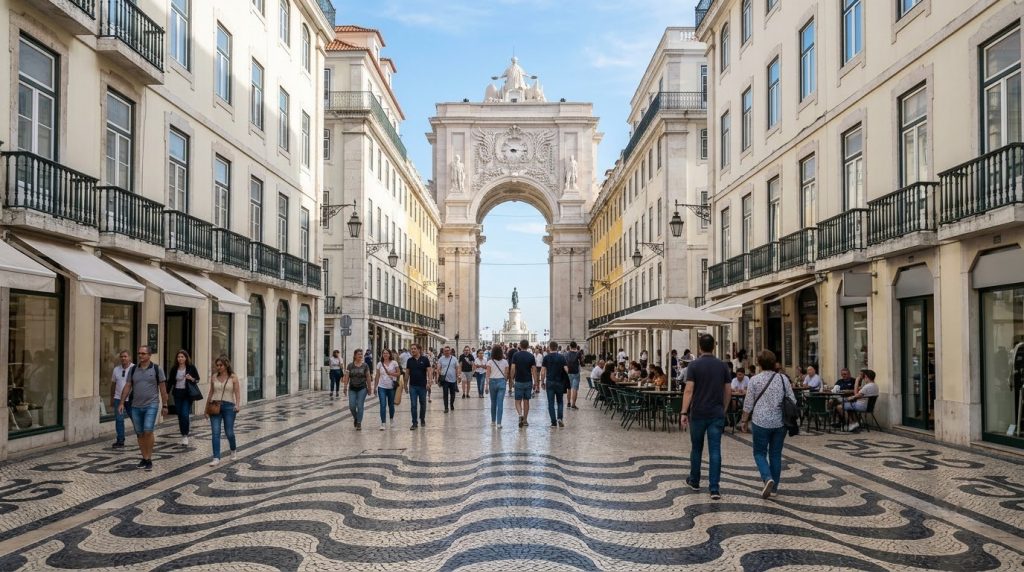
| Fake “drug” touts in Baixa, Bairro Alto | Persistent in central Lisbon at night | Financial, non-violent | A firm no and keep walking, never hand over cash |
| Rip currents on Atlantic beaches | Underestimated by visitors | Can be fatal | Swim only at lifeguarded, flagged beaches |
| Wildfires in the interior | Seasonal, June through October | Travel disruption, rarely tourist injury | Check the IPMA fire-risk map before rural day trips |
| Violent crime or terrorism | Rare | Low | Reflected directly in the Level 1 rating |
Portugal’s Level 1 rating, and how it compares with Spain
A Level 1 rating means exactly what it says: normal precautions, no country-specific security concern flagged. Portugal has held that tier through 2026, and the Global Peace Index, which ranks 160-plus countries on crime, conflict and societal stability, places Portugal 7th safest in the world, a spot it has held consistently since first cracking the top 10 in 2015.
Spain, by contrast, carries a Level 2 advisory, “Exercise Increased Caution,” last updated May 12, 2025 — not a sign mainland Spanish cities like Madrid or Barcelona are unsafe, just that Portugal currently holds the calmer official rating of the two.

Many US travelers build a two-country itinerary, flying into Lisbon and out of Barcelona or the reverse. If that’s your plan, our Barcelona travel guide and best things to do in Barcelona guide cover the Spanish leg in the same practical, safety-first style as this page, so you can plan both halves of the trip against one baseline.
Pickpocketing on Tram 28 and in Porto’s tourist core
Petty theft, not crime against the person, is the single most common problem visitors actually report.
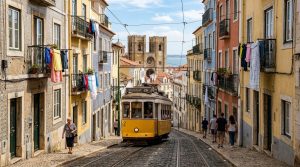
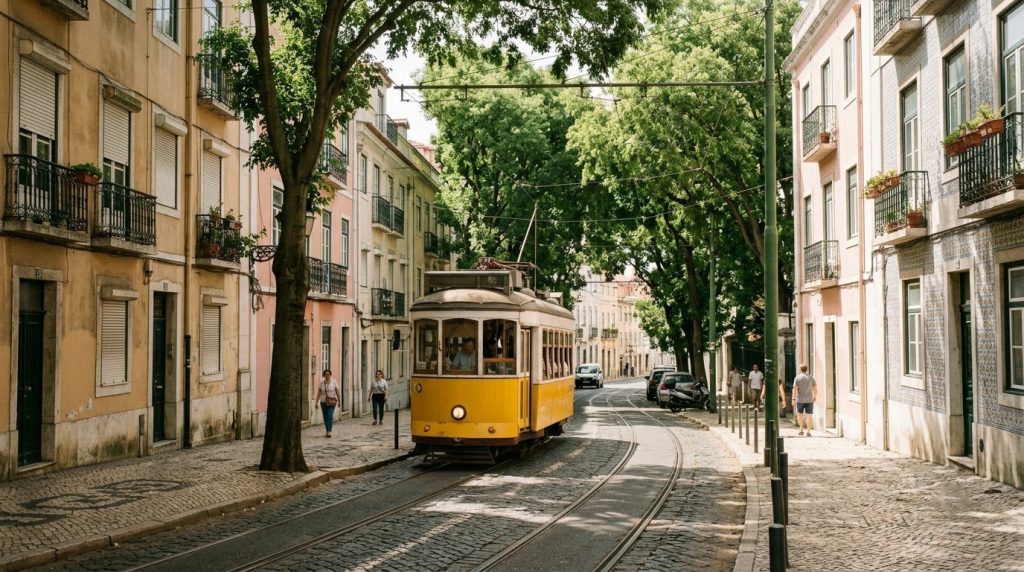
Lisbon’s Tram 28, the historic route through Alfama and Graça, is the sharpest example: police in the capital logged a 22% rise in tourist-area theft complaints in 2024, concentrated on the stretch between Martim Moniz and Estrela, worst at Largo das Portas do Sol and the Sé Cathedral stop, where the tram slows and crowds bunch at the doors.
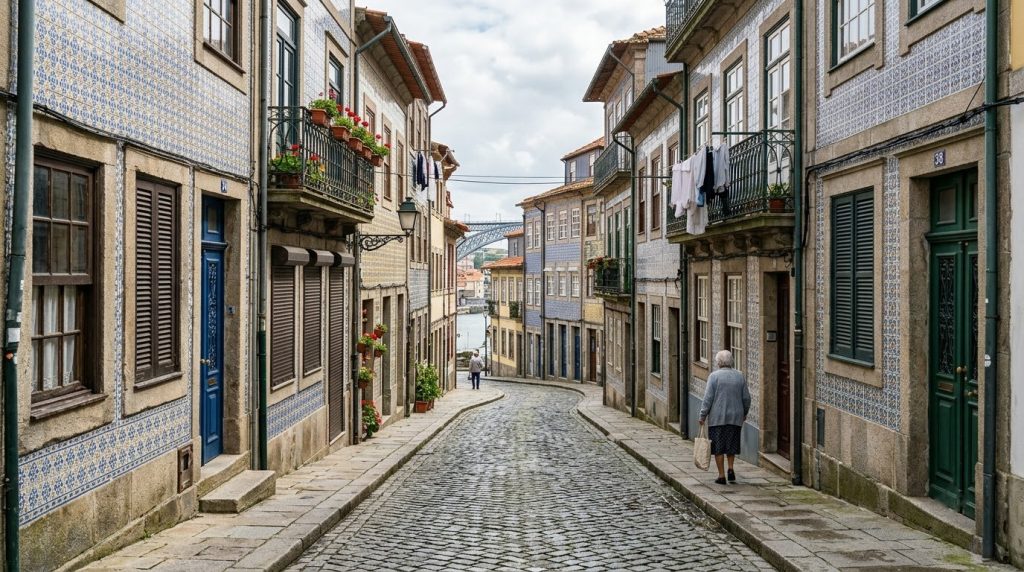
Porto’s tourist core around Ribeira and the metro carries a milder version of the same pattern — busy platforms, slow-moving crowds, and an open bag or back pocket doing the rest of the work for a thief. Neither city’s theft problem is organized or violent; it’s opportunistic, and thrives on crowded, distracted moments.
A crossbody bag worn in front and a phone zipped away, not pocketed, close off most of the opportunity. If Porto is on your route, our Porto travel guide has neighborhood-by-neighborhood detail on where that crowding is worst and where it isn’t.
ATM and taxi overcharging
The second most common complaint isn’t theft at all, it’s getting overcharged, usually right after landing. Independent currency-exchange ATMs at airports and tourist strips often default to “dynamic currency conversion,” letting the machine, not your bank, set the exchange rate, which typically costs an extra USD 6 (EUR 5) or more per withdrawal versus a bank-branded ATM.
Unmetered taxis waiting outside arrivals are the other classic squeeze: a ride from Lisbon airport into the center should run about USD 17 (EUR 15) on the meter or via Uber/Bolt, but an unmetered “flat rate” pitched to an obviously jet-lagged tourist can run USD 35 (EUR 30) or more.
Always decline the DCC prompt at an ATM (choose to be charged in euros, not dollars) and book through an app or a marked taxi rank instead of accepting an offer inside the terminal.
The Baixa and Bairro Alto drug-tout scam
Around Lisbon’s Baixa, Cais do Sodré and Bairro Alto after dark, men quietly offering “hashish, cocaine” to tourists are a fixture, worth knowing before it happens to you.
Local reporting is consistent: what changes hands is usually bay leaves, flour or ground paracetamol, sold for USD 58 (EUR 50) or more, and often the approach is really a distraction setup for a second person to lift a wallet or phone. It’s a nuisance, not a violent-crime threat, and it resolves with a flat “não, obrigado” and walking on. Engaging or reaching for cash is what turns it into a loss.
Rip currents and Atlantic beach safety
This is the risk most first-time visitors underrate, and it’s the one that actually causes fatalities.
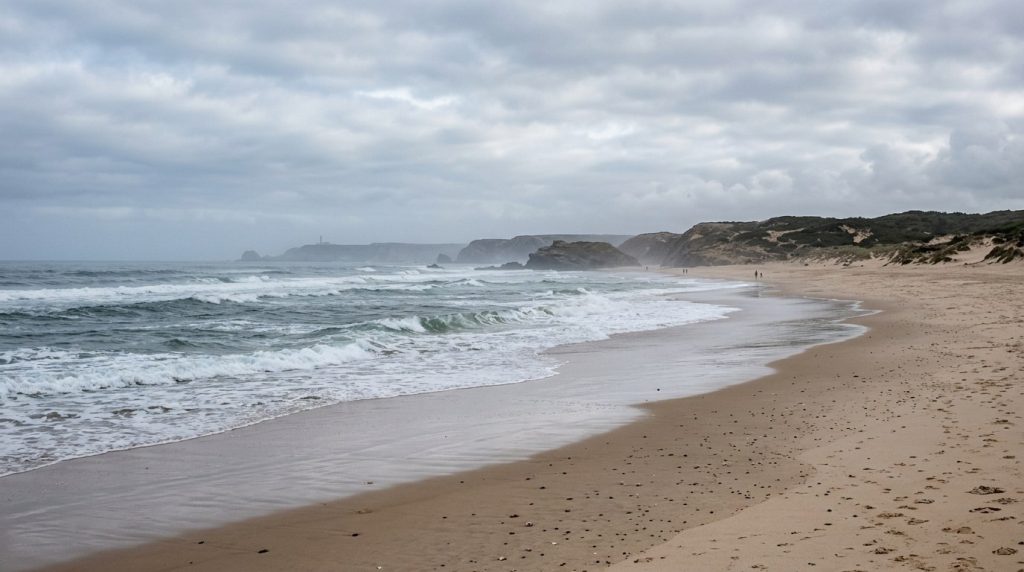
Portugal’s Atlantic coast behaves nothing like the calm Mediterranean beaches many Americans picture in southern Europe: strong surf, cold water and powerful undertows are normal even on a clear, sunny day, and rip currents have driven roughly 80% of open-beach drowning deaths recorded nationally in recent years.
Winter storms in early 2026 reshaped sand banks and current patterns along stretches of the coast, and Portugal’s national lifeguard federation flagged the start of the 2026 bathing season as an especially dangerous window, when warm air draws swimmers to beaches that don’t yet have lifeguard coverage in place.
Swim only at beaches with a staffed lifeguard tower and a green or yellow flag, never red, and if a current pulls you out, swim parallel to shore rather than fighting straight back in.
Wildfire season in the interior
Portugal’s wildfire season runs roughly June through October, and 2026 has been an active year: more than 53,700 hectares had burned nationwide by July 31, around 58% above the ten-year average, making it the country’s third-worst fire year since 2016.
The risk is concentrated inland, in districts like Viseu, Guarda and Castelo Branco and parts of the Algarve’s interior, not on the coast — Lisbon, Porto and the Algarve beach towns have continued operating normally through the season.
If your itinerary includes rural inland driving or hiking in summer, check Portugal’s IPMA fire-risk map before you go and skip forest or scrubland areas on maximum-risk days.
Timing a trip outside peak fire months is the simplest fix — our best time to visit Portugal guide breaks down shoulder-season windows that dodge both the fire risk and the summer crowds.
Road safety
Driving is on the right, and Portugal’s motorways are modern and well maintained, but secondary N-roads through the interior are narrower, poorly lit and share space with slow agricultural traffic. Rental-car drivers unfamiliar with roundabout etiquette in small towns cause most minor collisions reported by visitors, not high-speed highway accidents.
Stick to motorways after dark, and budget extra time for interior routes rather than trusting a GPS estimate built for locals.
Who should think twice about Portugal
Portugal is a poor fit for very few travelers, and none of the reasons involve crime or terrorism. Anyone planning to swim at an unpatrolled Atlantic beach outside lifeguard hours, especially with children, should reconsider that specific plan rather than the trip itself; the coast rewards caution over confidence.
Travelers building a rural interior itinerary for peak wildfire months, July through September, without checking daily fire-risk advisories are taking on avoidable exposure. And anyone tempted to engage with a street tout in Baixa or Bairro Alto out of curiosity, rather than walking past, is choosing to test a scam that’s already well documented. Outside those situations, Portugal’s Level 1 rating and 7th-place global peace ranking hold up.
Entry requirements for US travelers
US citizens need only a valid passport, no visa, for stays of up to 90 days within any 180-day period, the Schengen rule that groups Portugal with most of the European Union.
That passport should carry at least three to six months of validity beyond the planned departure date, since Portuguese border agents can refuse entry over an expiring passport even when the stay itself falls well inside the legal window.
Travelers who have already used part of their 90-day allowance elsewhere in the Schengen area this year should check the remaining balance before booking, since the limit counts across all Schengen countries combined, not per country visited.
The EU’s planned ETIAS pre-travel authorization, a short online registration required of visa-exempt travelers including Americans, has been delayed multiple times and had still not gone into effect as of late 2026, so no extra authorization was needed for US travelers at the time of writing.
Confirm current status on the official US State Department Portugal page before departure, since the EU’s own implementation dates have shifted before and could move again.
Border agents can also ask for proof of onward or return travel and evidence of sufficient funds for the stay, a standard check rarely enforced in practice for US travelers but worth having printed or saved for offline access rather than relying only on an email confirmation.
Duty-free allowances follow standard EU rules for anyone connecting onward within the bloc, and travelers flying directly in and out of Portugal should expect the same security and liquids restrictions common at any European airport, with Lisbon’s Humberto Delgado Airport and Porto’s Francisco Sá Carneiro Airport both handling the bulk of US arrivals.
Minors travelling with only one parent occasionally face extra questioning at the border, a general EU child-trafficking precaution rather than a Portugal-specific rule, and carrying a notarized letter from the non-travelling parent, while not legally mandatory for US citizens, resolves the question faster than explaining the situation verbally at the counter.
Health and medical care for visitors
Portugal’s public healthcare system treats emergencies for everyone, including tourists, but it bills non-residents directly rather than offering the reciprocal free care that applies between EU member states, so travel insurance covering medical treatment and emergency evacuation is the safer default for a US visitor rather than assuming any coverage applies automatically.
Standard US health insurance and Medicare generally do not cover treatment abroad at all, which makes a short-term travel policy a practical add-on rather than an optional extra.
The national emergency number is 112, covering police, fire, and ambulance services from a single call, and operators in the main tourist areas generally handle calls in English.
Tap water is safe to drink nationwide, and pharmacies, marked by a green cross sign, handle minor ailments without requiring a doctor’s appointment first; a pharmacist can recommend an over-the-counter treatment for common travel issues such as sunburn or an upset stomach, and most tourist-area pharmacies have at least some English-speaking staff.
Hospitals in Lisbon and Porto maintain English-speaking staff in emergency departments, though smaller towns and rural clinics are less consistent on that front.
Travelers on prescription medication should carry it in original packaging with a copy of the prescription, since Portuguese customs can ask for documentation on controlled substances even when the medication itself is legal, and checked-only luggage is a risk for anything time-sensitive given the usual chance of a delayed or misrouted bag on a connecting flight.
Mosquito-borne illness is not a significant concern in mainland Portugal the way it can be in parts of southern Europe during late summer, and no special vaccinations are required or routinely recommended for a standard tourist trip beyond being current on the same vaccines recommended at home.
Sun exposure is a more practical everyday risk on the Algarve and Lisbon coastlines than any infectious concern, given the strength of the Atlantic coast sun even on a mild-feeling day.
Local laws travelers should know
Portugal decriminalized personal possession of small quantities of drugs in 2001, meaning a tourist caught with a small personal amount typically faces an administrative hearing rather than criminal prosecution.
That is not a legal green light to buy from a street tout, who, as described above, is far more likely selling bay leaves or flour than any real drug, and engaging at all is how the approach turns into a theft. Dealing or trafficking any quantity remains a serious criminal offence regardless of the decriminalization of personal use.
Public nudity is confined to a small number of designated beaches, and while toplessness is common on many beaches, it is not universally accepted outside the busiest tourist stretches, so following the lead of other beachgoers at a given spot is the safer default.
Smoking is banned inside enclosed public spaces and most restaurant interiors, though outdoor seating is generally exempt, and drinking alcohol on the street is legal in most areas but drunk and disorderly conduct draws police attention quickly in nightlife districts such as Bairro Alto.
Driving rules follow standard continental European norms: right-hand traffic, seatbelts mandatory in every seat, and a strict drink-driving limit well below the US standard, enforced with roadside breath tests that are common rather than exceptional, particularly on weekend nights in Lisbon and Porto.
Jaywalking enforcement is inconsistent in practice but crossing away from a marked crossing in heavy traffic areas such as central Lisbon is genuinely risky given local driving habits around pedestrians, more a practical safety issue than a legal one.
Cafes and restaurants do not require a minimum purchase to use a table, but lingering for hours over a single coffee at a busy tourist-area spot can draw a polite but clear hint to free up the seat.
Choosing a safer base in Lisbon or Porto
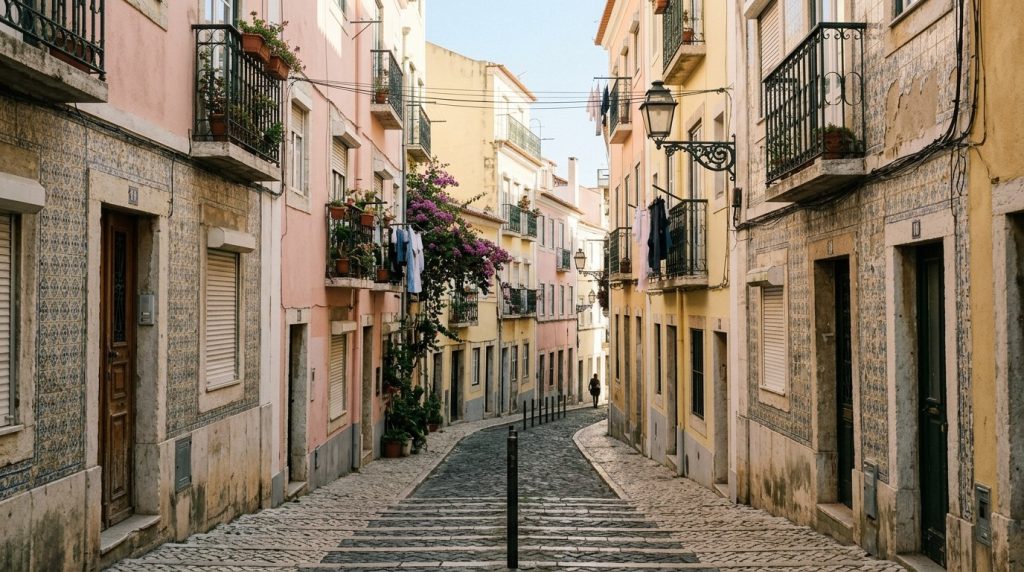
Where you stay changes your daily exposure to pickpocketing more than any other decision. A base near Chiado, Príncipe Real or Porto’s Foz do Douro keeps you close to well-lit streets and off Tram 28’s most crowded stretch, while a budget stay deep in Alfama’s steepest lanes puts you inside the theft hotspot daily. Compare neighborhoods and live rates below.
Find your Lisbon hotel on the map
Live prices from Booking, Airbnb and more — move the map or change dates to compare stays across Lisbon.