
Disclosure: Some links in this guide are affiliate links. If you book or buy through them, we may earn a small commission at no extra cost to you — it helps keep our guides free.
Ultimate Porto Travel Guide 2026: Wine, Tiles + Costs
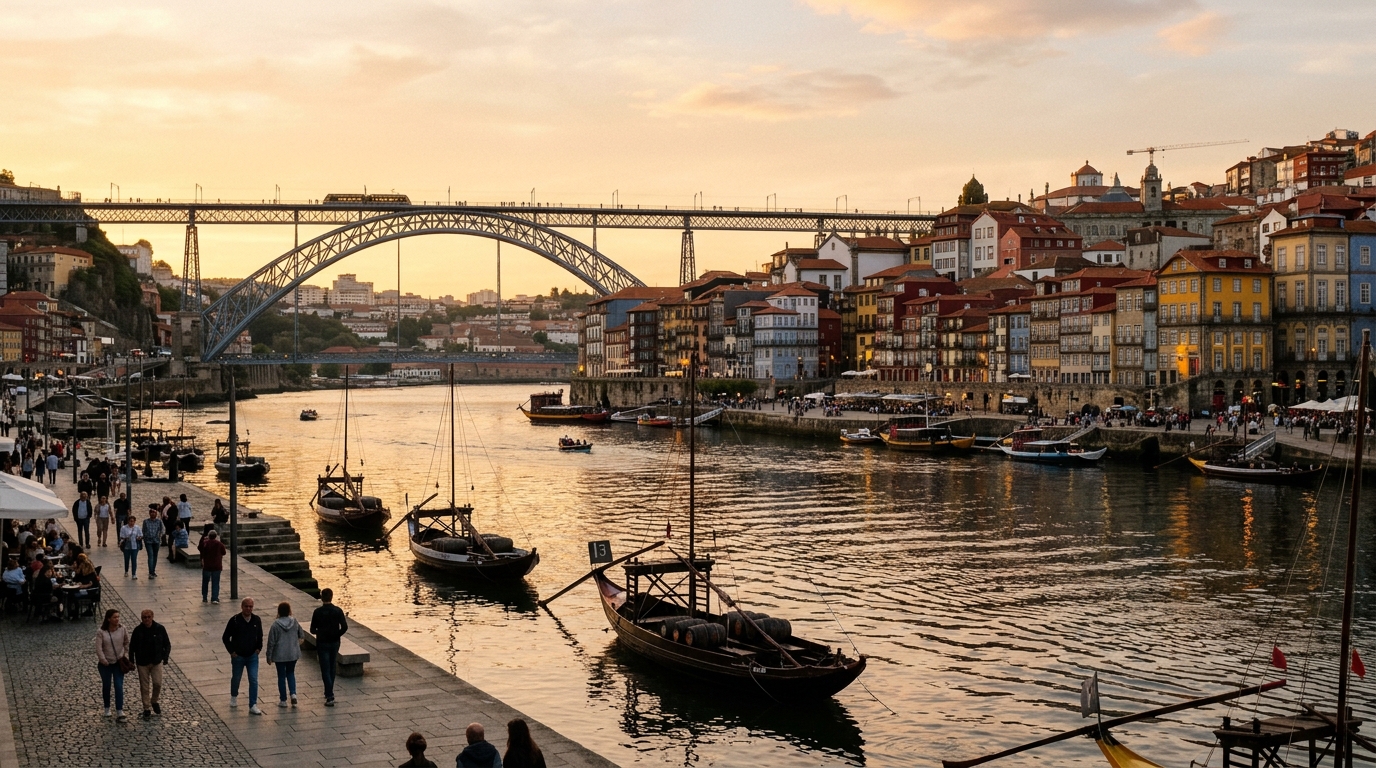
Porto is one of Europe’s best-value cities, and the evidence is everywhere. UNESCO inscribed its historic Ribeira district in 1996, port wine cellars line the riverbank for tasting sessions from €10, and the entire walkable old town sits above a river wide enough to feel like the sea. This porto travel guide covers everything you need: top sights, where to stay, how to get there, and a realistic daily budget.
Key Takeaways
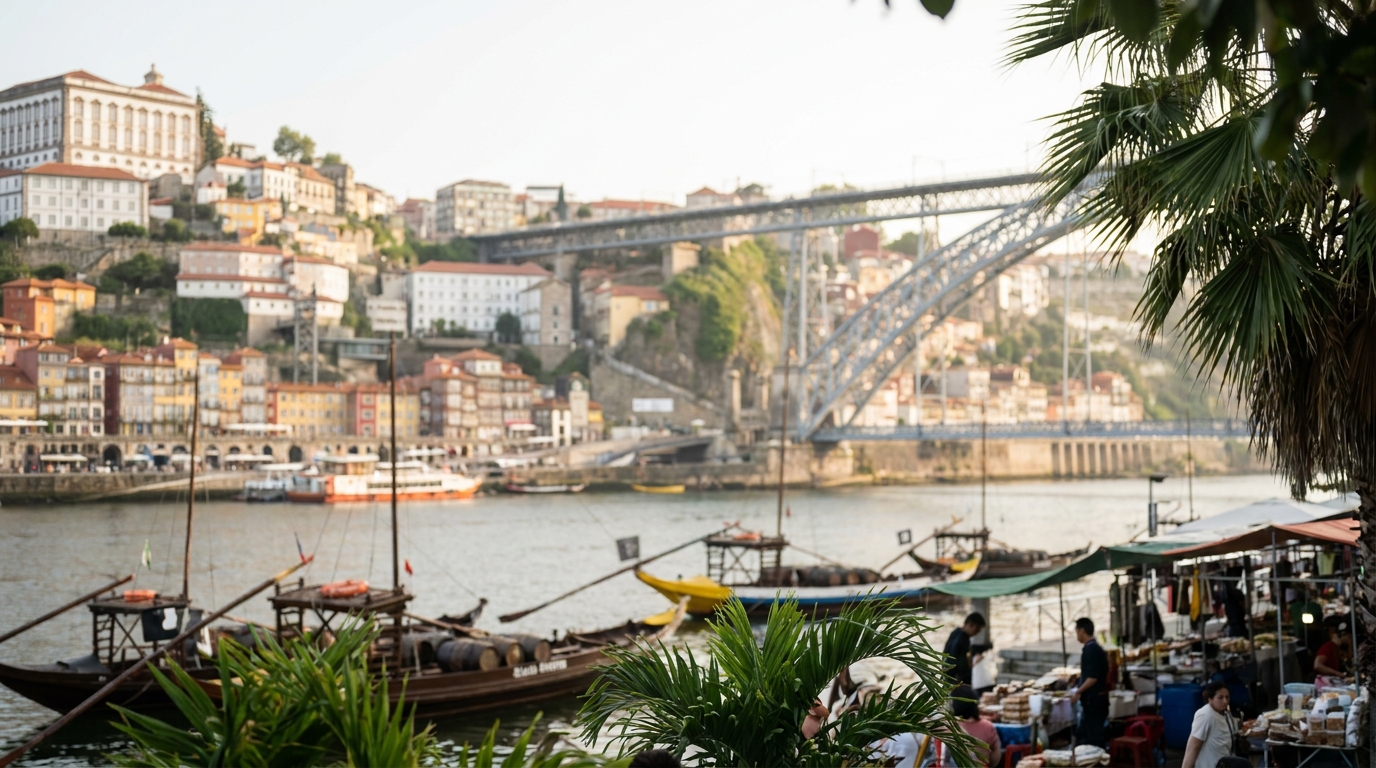
– Porto’s Ribeira district is a UNESCO World Heritage Site (inscribed 1996) with colorful tiled buildings and rabelo boats along the Douro River
– Port wine cellar tours in Vila Nova de Gaia start from €10-18 including tasting — 60+ cellars to choose from
– Budget range: €70-120/day mid-range; €40-60/day budget; one of Western Europe’s most affordable cities
– Best months: March-October; June has the free São João festival (23-24 June), the biggest street party in Portugal
– Metro line E from the airport to city center costs €2 and takes 25 minutes — no taxi needed
We only recommend services we genuinely rate.
Porto Travel Guide: Why This City Keeps Outperforming Expectations
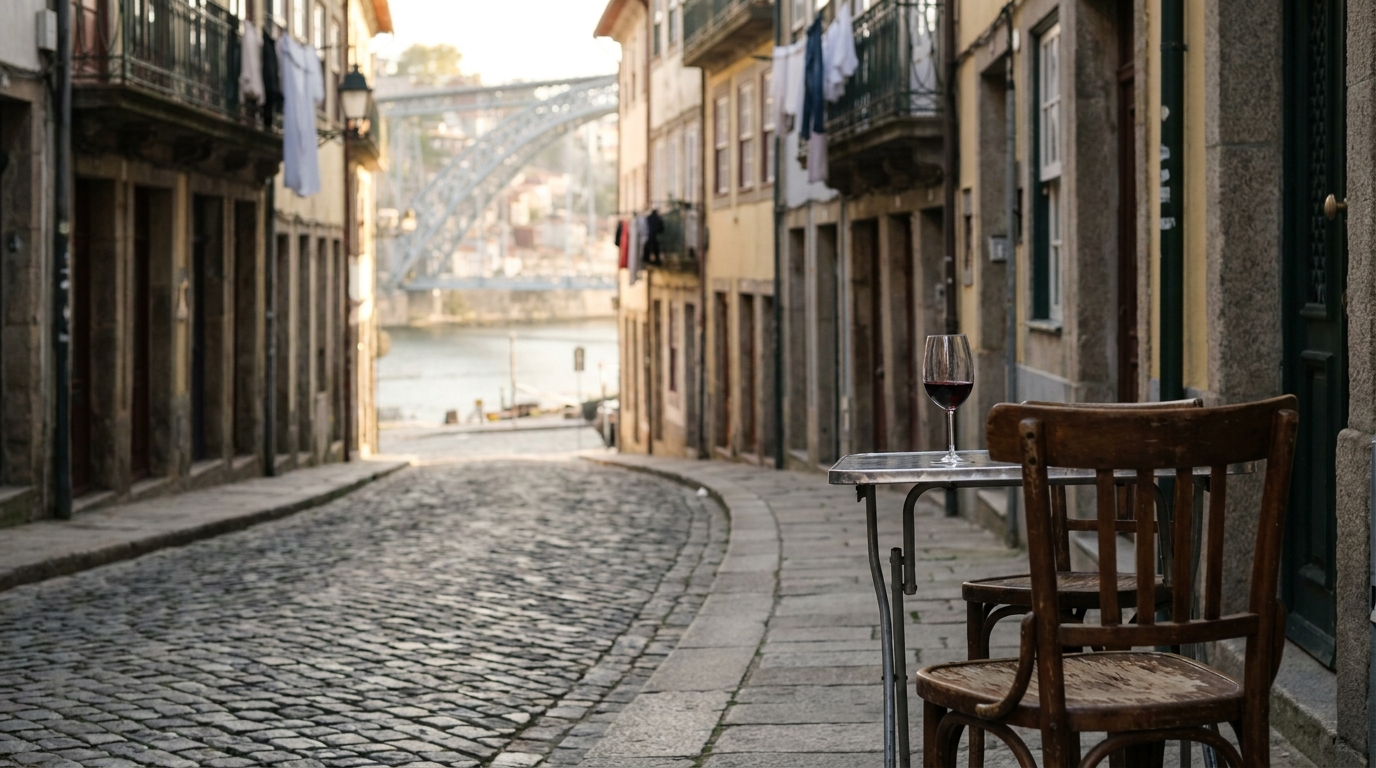
Porto draws roughly 3 million visitors a year (Turismo de Portugal, 2024), yet it still feels lived-in rather than tourist-managed. The old town climbs steeply from the river in layers of azulejo-tiled facades, baroque churches, and narrow lanes where locals actually shop. That authenticity is increasingly rare in Western European cities of this profile.
Most visitors expect port wine and pretty views, and they get both. What surprises people is the range. Within one afternoon you can tour a 19th-century iron market, photograph 20,000 hand-painted tiles at a train station, browse one of the world’s most beautiful bookshops, and cross an iron bridge designed by a student of Gustave Eiffel. The density of worthwhile sights per square kilometre is remarkable.
Here’s what most Porto articles skip: the city’s gritty industrial identity is a feature, not a flaw. Porto built its wealth on trade and commerce, not royal patronage, and it shows in the architecture. The bourgeois merchant houses, the ribeira warehouses, the working port across the river in Vila Nova de Gaia — none of this was designed for tourism. That’s exactly why it photographs so well and feels so honest.
Porto also rewards travellers who stay longer. Most day-trippers see the Ribeira and the wine cellars. Spend three nights and you reach the Art Nouveau cafes of Avenida dos Aliados, the coastal suburb of Matosinhos for the best grilled fish in Portugal, and the vast contemporary art collection at Serralves.
For a detailed look at the best experiences, read best things to do in Porto
What Are the Top Attractions in Porto?
Porto’s top attractions span architecture, wine, and literary history — and several of the best are free or nearly free. The table below gives a quick cost reference before you plan your days.
| Attraction | Price (Adult) | Time Needed | Notes |
|---|---|---|---|
| São Bento Railway Station | Free | 20-30 min | Arrive early morning |
| Livraria Lello bookshop | €8 (redeemable) | 30-45 min | Pre-book online |
| Port wine cellar tour (Gaia) | €10-18 | 1-1.5 hrs | Tour + tasting included |
| Dom Luís I Bridge | Free | 20-30 min | Both decks walkable |
| Ribeira waterfront | Free | 1-2 hrs | UNESCO district |
| Mercado do Bolhão | Free entry | 45-60 min | Reopened 2022 |
| Clérigos Tower | €8 | 30-45 min | Best city panorama |
| Serralves Museum of Contemporary Art | €20 | 2-3 hrs | Free on 1st Sunday |
Source: Official venue websites and TravelTipNow research, 2026
São Bento Railway Station is Porto’s most photogenic free sight. The entrance hall is covered in 20,000 hand-painted azulejo tiles completed in 1930, depicting scenes from Portuguese history and rural life. Arrive before 9am to photograph the tiles without crowds. Even if you’re not catching a train, walking in costs nothing and takes 20 minutes.
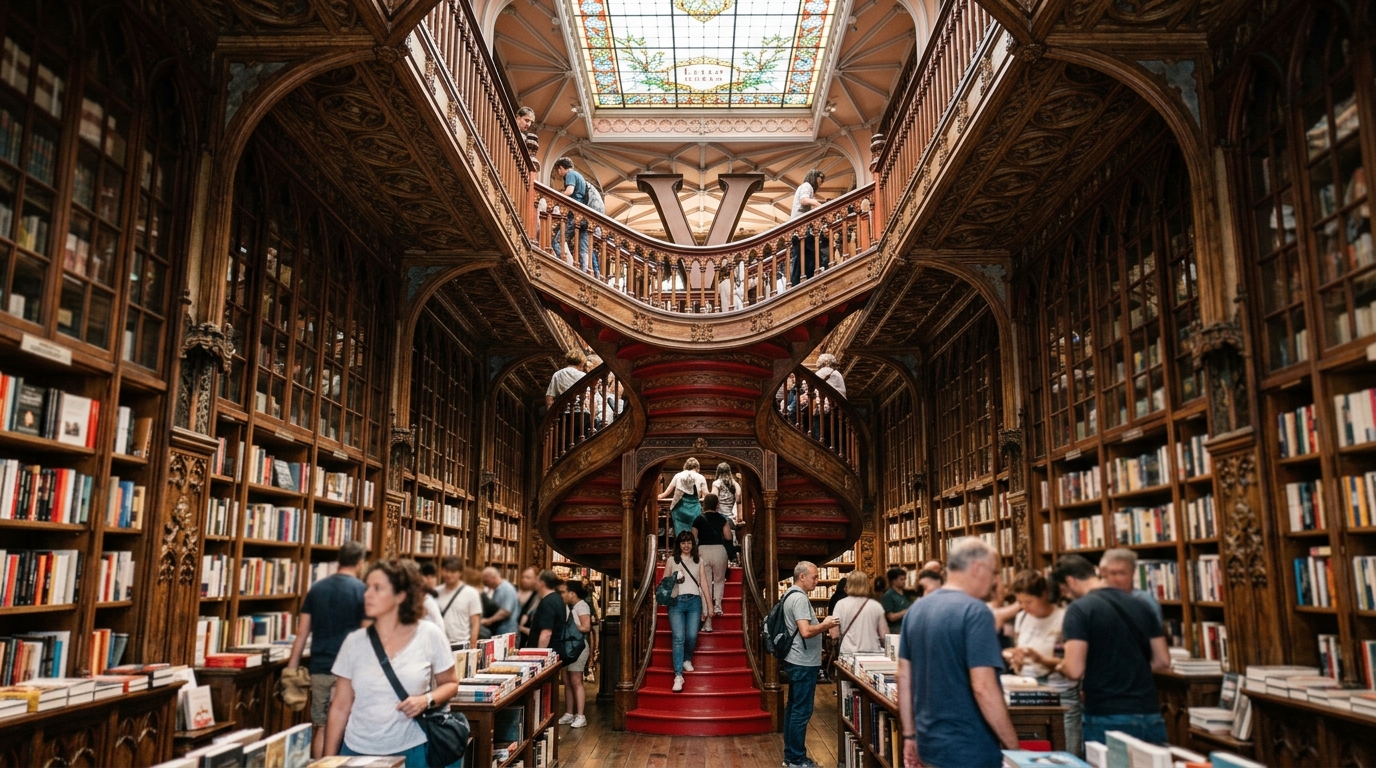
Livraria Lello opened in 1906 and is consistently ranked among the world’s most beautiful bookshops. The ornate red staircase, carved wood ceiling, and Art Nouveau facade draw comparisons to Hogwarts — the shop reportedly inspired J.K. Rowling, who lived in Porto in the early 1990s. Entry costs €8, which is fully redeemable against any book purchase. Pre-booking online is essential; queues without a reservation stretch around the block by mid-morning.
Port wine cellar tours in Vila Nova de Gaia (across the Dom Luís I Bridge on the south bank) are a Porto essential. Sandeman, Graham’s, and Taylor’s all offer guided tours with tastings for €10-18. The best cellar tours go underground into 200-year-old barrel rooms and explain the difference between tawny, ruby, and vintage port.
Dom Luís I Bridge is a double-deck iron bridge designed by Théophile Seyrig, a student of Gustave Eiffel, and completed in 1886. The upper deck carries the Metro line and a pedestrian walkway 45 metres above the Douro. The lower deck is a wider walkway at river level. Walk across both decks for dramatically different views of the Ribeira and Gaia waterfront.
Mercado do Bolhão is a 19th-century iron market that reopened in 2022 after a full renovation. It sells fresh produce, regional cheese, presunto (dry-cured ham), flowers, and local specialties. Entry is free and the ground floor food stalls are excellent for a cheap lunch.
For a curated day-by-day plan, see Porto itinerary.
Find your Porto hotel on the map
Live prices from Booking, Airbnb and more — move the map or change dates to compare stays around Porto.
Which Neighbourhoods Are Best for Staying in Porto?
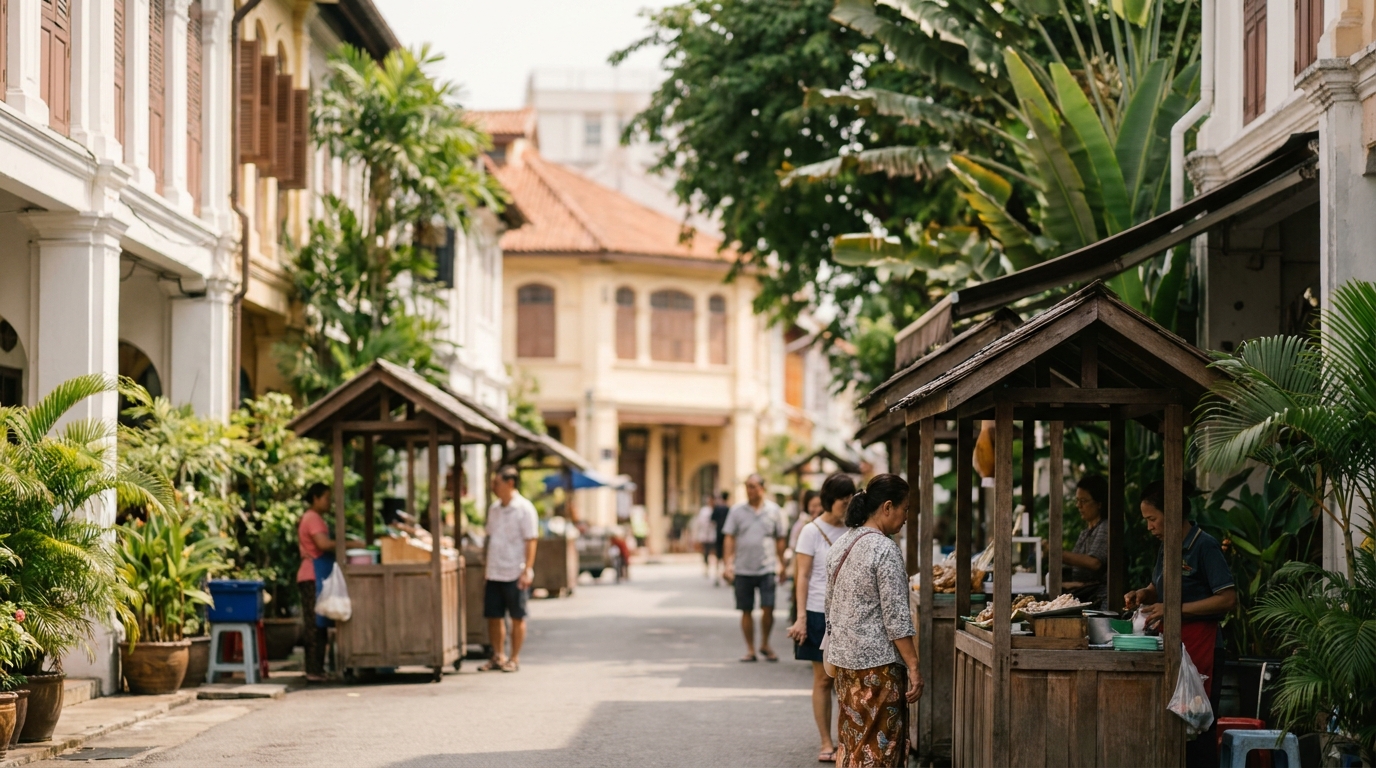
Porto’s neighbourhoods differ significantly in atmosphere and price. First-time visitors usually default to the Ribeira, but the right choice depends on your budget and travel style.
Ribeira is the UNESCO waterfront district and the most atmospheric base. You’re steps from the river, the Dom Luís I Bridge, and the best restaurants. Expect to pay €100-200/night for a boutique guesthouse or hotel. The narrow medieval lanes feel genuinely old, and evenings here — with fado drifting from a nearby restaurant — are hard to beat. Book via [Booking.com [BOOKING_LINK]] for flexible cancellation and the widest selection of local guesthouses.
Porto City Center (Aliados/Clérigos) is the mid-range sweet spot. You’re within 10 minutes of Livraria Lello, São Bento Station, and the Ribeira on foot. Accommodation runs €70-120/night for solid 3-star hotels. The Avenida dos Aliados has grand early 20th-century architecture and good transport links in every direction.
Matosinhos sits 5km northwest of the centre near the coast and Porto’s main beach. It’s Porto’s seafood neighbourhood — the cluster of restaurants along Rua Heróis de França is where locals go for grilled fish and percebes (barnacles). Accommodation is cheaper at €50-80/night, and it’s one Metro stop from the airport. Less convenient for the main sights, but quieter and more local-feeling.
Budget option: Hostel Tattva near the city center offers boutique hostel rooms from €25/night and is regularly rated one of the best hostels in Portugal. For solo travellers or budget pairs, it’s excellent value in a central location.
For detailed picks across all budgets, the Porto hotels guide has current rates and area maps.
How Do You Get to Porto?
Porto Francisco Sá Carneiro Airport (OPO) sits 11km northwest of the city center and handles direct flights from across Europe. Getting into town is straightforward and cheap.
From the Airport: Metro line E (Violet line) runs direct from the airport to Trindade station in the city center. The journey takes 25 minutes and costs €2 (including a rechargeable Andante card). This is by far the best option — fast, cheap, and direct. Taxis cost €20-25 and take longer in traffic.
From London: Ryanair and EasyJet fly direct from London Stansted and London Gatwick to Porto in around 2 hours. Fares start from €30-60 booked in advance, making Porto one of the most accessible European city-break destinations from the UK.
From Lisbon by Train: The Alfa Pendular high-speed train connects Lisbon Oriente to Porto Campanhã in 2h45-3h. Fares run €20-35 booked in advance. It’s one of Portugal’s best-value intercity routes and more relaxing than the bus.
Douro Valley Train from Porto: For the Douro Valley day trip, trains depart from Campanhã station to Pinhão (the heart of port wine country) in 1h45 for around €13 each way. The scenic line hugs the river gorge for most of the journey and is one of Europe’s great train rides.
By Car: Porto’s old town is difficult to drive in and parking is expensive. If arriving by car, use a Park & Ride on the city outskirts and take the Metro in.
How Do You Get Around Porto?
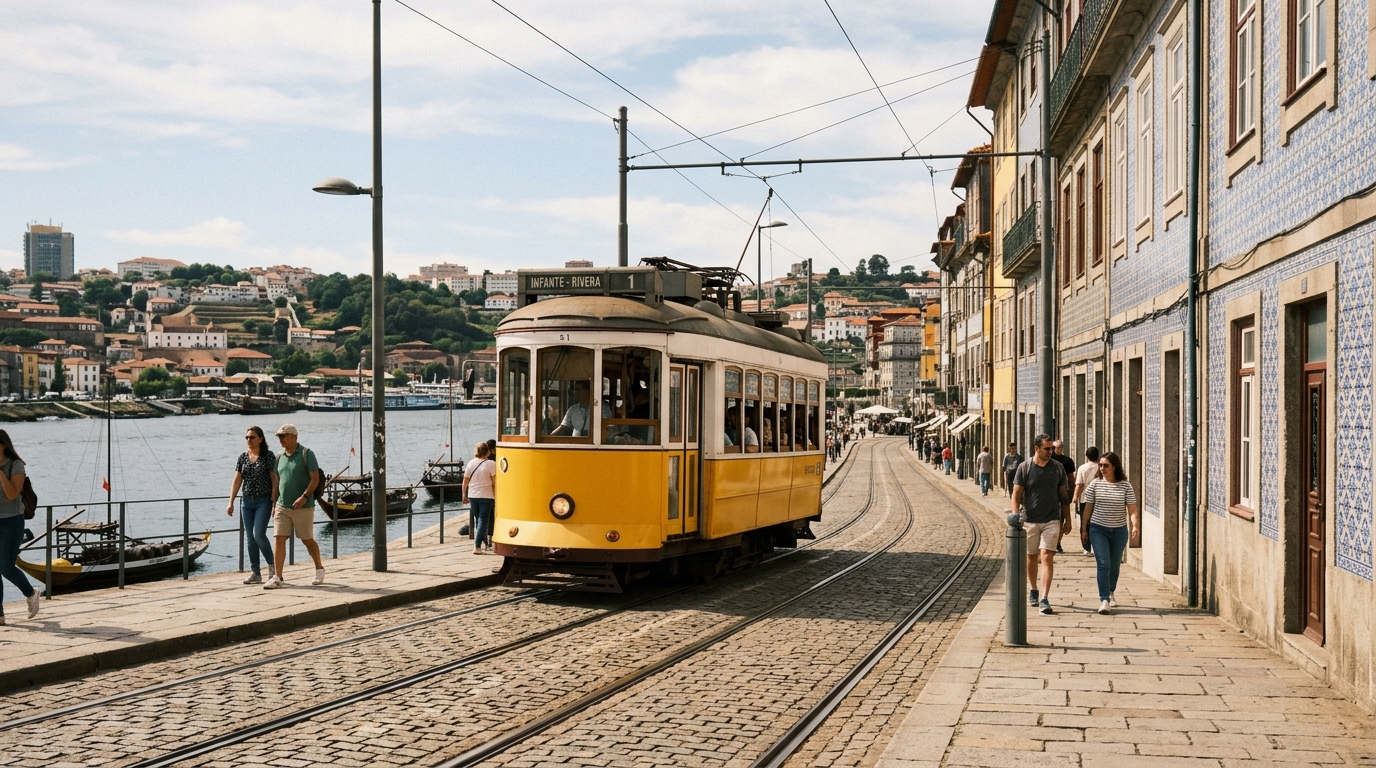
Porto is compact but hilly. The Ribeira and old town are fully walkable, but the steep granite steps connecting the river to the upper city are genuinely exhausting. Knowing the options saves you significant energy.
Walking covers the Ribeira, Dom Luís I Bridge, Batalha, and the main shopping streets. The old town is not large — it measures roughly 1.5 km across the main sightseeing core. The challenge is vertical: the city drops sharply to the river, so “flat” routes often don’t exist between two nearby points on the map.
Metro is clean, modern, and the fastest way to cover longer distances. A single trip costs €1.40 with an Andante card (rechargeable, €0.60 deposit). The network covers the airport, Matosinhos beach, Trindade (city center hub), and the main football stadium. For day-trippers doing the Ribeira plus Gaia wine cellars, you don’t need it at all.
Most visitors don’t use the Funicular dos Guindais, a short cliff railway that runs between the Ribeira waterfront and the upper city near Batalha. It costs €2.50 one way and saves a brutal 10-minute stair climb. It’s small, old, and runs on a single track — far more charming than taking a cab up the hill.
Historic Tram Line 1 runs along the Douro riverfront west toward the coast. It costs €4 one way and is operated mostly for tourists at this point. Worth doing once for the experience, but the route is limited and the tram moves slowly. Don’t rely on it for actual transport.
Taxis and Uber are both available and reasonably priced. An Uber across the city center runs €5-8. Useful for getting up steep hills quickly or reaching Serralves museum without a long walk.
Where Should You Eat and Drink in Porto?
Porto’s food scene is deeply regional. The city has a nickname — “tripeiros” (tripe-eaters) — that dates to the 15th century, when Porto’s residents reportedly donated all the city’s best meat to a military expedition and survived on tripe themselves. That spirit of honest, working-class cooking still runs through the restaurants.
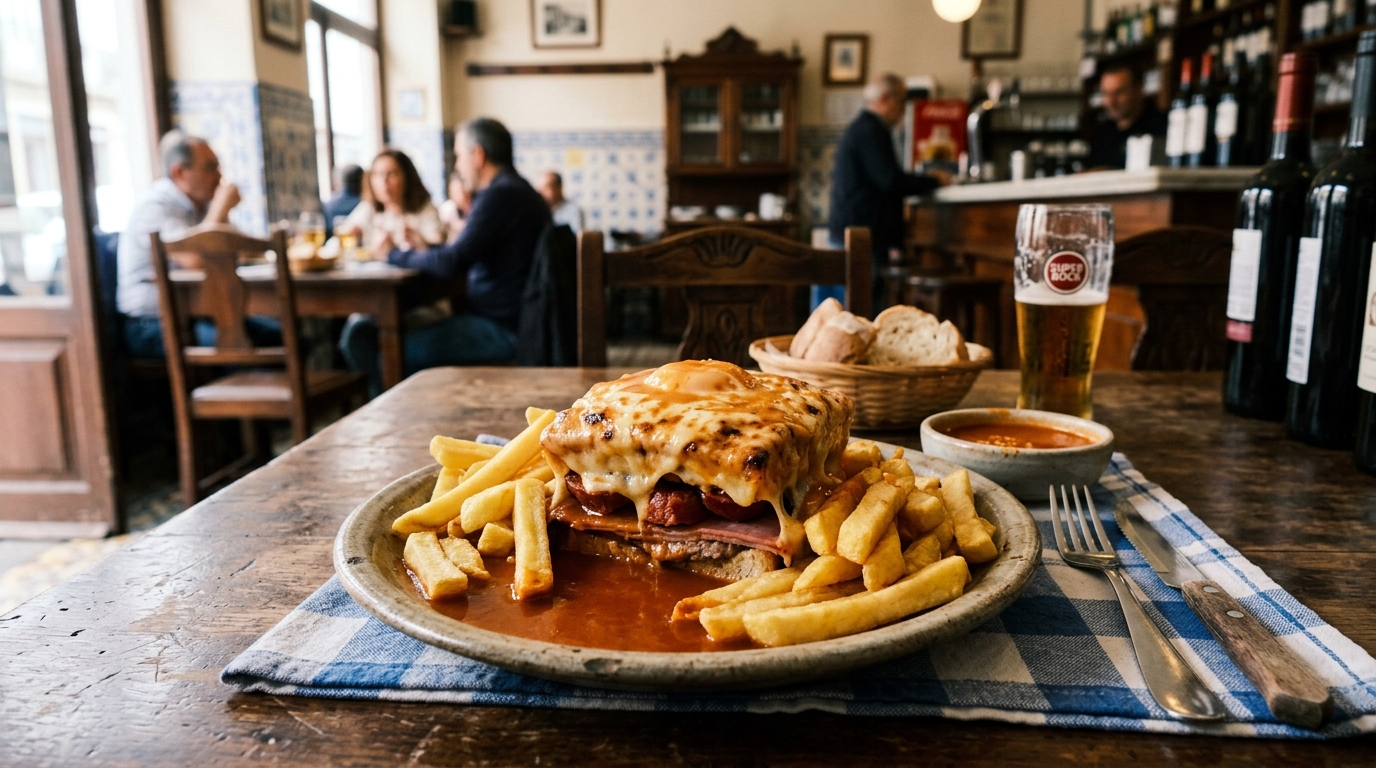
Francesinha is the Porto sandwich and one of Europe’s most unapologetic dishes. Layers of wet-cured ham, linguiça sausage, and steak are sandwiched between bread, covered in melted cheese, topped with a fried egg, and flooded with a beer-and-tomato spicy sauce. It costs €8-12 at most restaurants and represents a full meal. Cafe Santiago near Trindade is considered the benchmark.
Pastel de nata in Porto costs around €1.20 and is as good as in Lisbon. Grab them at any local pastelaria with a coffee (€0.80-1) for a breakfast that costs under €2.50.
Fresh seafood is best eaten in Matosinhos. The restaurants on Rua Heróis de França serve whole grilled fish (sea bass, bream, turbot) sold by weight. Budget €15-25 per person for a full meal with wine. This is where Porto locals go, not a tourist circuit.
Live fado in Porto is a different animal from Lisbon’s polished fado houses. Porto fado is rawer, more emotional, and more working-class in its roots. A Cantina do Vira and Mal Cozinhado both host live performances in informal settings. Admission is usually free or included in a drink minimum.
Wine: Beyond port, Portugal produces some of Europe’s best-value table wines. A bottle of Douro red wine in a restaurant runs €12-20. By the glass, you’re looking at €2.50-4.
What Does a Porto Trip Actually Cost?
Porto is one of Western Europe’s best-value cities. It’s cheaper than Lisbon, significantly cheaper than Barcelona or Amsterdam, and offers a quality of food, wine, and accommodation that punches well above its price point.
| Category | Budget | Mid-Range | Luxury |
|---|---|---|---|
| Accommodation (per night) | €25-60 (hostel/guesthouse) | €70-120 (boutique/3-star) | €150-250+ (design hotel) |
| Meals (per day) | €15-25 (cafes/tascas) | €35-55 (restaurants) | €70+ (fine dining) |
| Attractions (per day) | €0-10 (free sites + 1 paid) | €20-35 (wine tour + 1-2 sites) | €40+ (multiple tours) |
| Transport in city | €0-2 (walk/Metro) | €5-10 (Metro + Uber) | €15-20 (taxi/private) |
| Total per day (approx) | €40-60 | €70-120 | €200+ |
Source: TravelTipNow research, 2026
A three-night trip for a couple on a mid-range budget realistically costs €500-700 all-in, excluding flights. That covers a good guesthouse in the Ribeira, three dinners with wine, port wine cellar tours in Gaia, Livraria Lello entry, a Douro Valley day trip, and daily coffees and pastéis.
Where to save: São Bento Station, the Ribeira waterfront, Dom Luís I Bridge, and Mercado do Bolhão are all free. The Serralves Museum of Contemporary Art waives admission on the first Sunday of every month. A francesinha and a glass of local wine at a neighbourhood tasca runs €10-12 total.
Where to spend: The Douro Valley deserves a full day and a proper wine tour. A guided tour including transport from Porto, vineyard visits, and lunch runs €50-80 via [GetYourGuide [GETYOURGUIDE_LINK]] and is worth every cent. The scenery alone — UNESCO-listed terraced vineyards dropping to the river — justifies the trip.
Portugal data plans start around €5 for 1GB, covering Porto, Douro day trips, and onward travel without roaming charges.
When Is the Best Time to Visit Porto?
Timing shapes your experience significantly. Porto’s climate is mild by Atlantic European standards, but crowds, costs, and events vary considerably across the year.
March-May is excellent. Spring temperatures reach 15-20°C, the Douro Valley turns green, and crowds are manageable. Accommodation prices sit 15-25% below summer peaks. It’s the best window for photography — clear light, fewer people in frame, and the occasional dramatic Atlantic rainstorm rolling in over the city.
June earns a special mention. The São João festival on 23-24 June is the biggest street party in Portugal, and Porto throws it better than anywhere else in the country. Residents gather on bridges and hilltops to watch fireworks, release paper lanterns on the river, and hit each other with plastic hammers (a tradition that makes more sense once you’re there). It’s entirely free and genuinely unforgettable. Book accommodation at least two months ahead for São João weekend.
July-August is peak season. Temperatures reach 25-30°C, the Ribeira is at full capacity, and Livraria Lello queues stretch 30+ minutes even with pre-booked tickets. The city handles crowds better than most European hotspots, but it does feel full. Douro Valley tours sell out weeks ahead in August.
September-October is the harvest season in the Douro and arguably the best combination of good weather, lower crowds, and dramatic vineyard colours. October grape harvests (vindimas) are a reason to visit in their own right.
November-February is quiet and cheap. Rain is frequent from the Atlantic, but Porto’s covered markets, port wine cellars, and cafes make it very liveable. Accommodation prices drop 20-30% below summer rates.
Porto Travel Guide: Practical Tips + FAQ
eSIM: Portugal uses standard European 4G/5G. An Airalo eSIM is the cheapest way to stay connected without swapping physical SIMs. Activate before you land.
Money: Portugal uses the Euro. ATMs are widely available throughout Porto. Cards are accepted almost everywhere, though small tascas and market stalls often prefer cash. Keep €20-30 in cash for cafes, trams, and funiculars.
Language: Portuguese. English is spoken confidently in tourist-facing businesses, hotels, and restaurants throughout Porto. Basic Portuguese phrases (obrigado/obrigada for thank you, por favor for please) are appreciated and universally welcomed.
Accessibility: Porto’s steep hills and cobbled lanes present genuine challenges for wheelchair users. The Metro system is accessible. The Funicular dos Guindais is the easiest way to connect river level to the upper city without stairs. The tourist office on Rua Clube dos Fenianos publishes an accessibility map.
Opening hours: Most Porto museums close on Mondays. Livraria Lello is open daily but requires pre-booked timed entry. Port wine cellars in Gaia open daily year-round, typically 10am-6pm (7pm in summer). Mercado do Bolhão opens Monday-Saturday, closed Sundays.
Porto Card: The Porto Card (€13 for 24h, €20 for 48h, €25 for 72h) covers unlimited Metro and bus travel plus free or discounted entry to 90+ museums and attractions. It pays off quickly if you plan to use Metro daily and visit three or more paid sites.
Frequently Asked Questions
How many days do you need in Porto?
Three days is ideal. Two days covers the Ribeira, Dom Luís I Bridge, São Bento Station, Livraria Lello, and a port wine cellar tour in Gaia. A third day adds a Douro Valley excursion — the UNESCO-listed vineyard scenery accessible by train from Campanhã station for €13 each way. (Turismo de Portugal, 2024)
Is Porto cheap to visit?
Porto is one of Western Europe’s most affordable cities. Budget travellers can manage €40-60/day with a hostel bed, local tascas, and free sights. A comfortable mid-range trip runs €70-120/day including a boutique guesthouse, restaurant dinners, and a port wine tour. Even the paid attractions — Livraria Lello at €8, cellar tours at €10-18 — are modest by European standards.
What is Porto famous for?
Porto is famous for port wine (which takes its name from the city), the UNESCO Ribeira waterfront, the azulejo tile tradition showcased at São Bento Station, Livraria Lello bookshop, the Dom Luís I Bridge, and the francesinha sandwich. The Douro Valley wine region, 90 minutes east by train, is a UNESCO World Heritage Site in its own right.
Can you do a Douro Valley day trip from Porto?
Yes. The scenic train from Campanhã station to Pinhão takes 1h45 and costs around €13 each way. Alternatively, a guided wine tour from Porto costs €50-80 and includes transport, vineyard visits, and lunch. The guided option is worth it for first-timers who want context on the port wine production process.
When is the São João festival in Porto?
São João takes place on 23-24 June each year and is the largest free street festival in Portugal. Porto celebrates more intensely than any other city, with fireworks over the Douro, floating paper lanterns, live music across every neighbourhood, and crowds gathering on the Dom Luís I Bridge at midnight. Accommodation books out weeks in advance for this weekend — plan early.
Final Thoughts on Planning Your Porto Visit
Porto rewards travellers who stay long enough to move past the obvious. The first afternoon you walk the Ribeira and cross the Dom Luís I Bridge. The second day you go underground into a port wine cellar and climb to a cafe above the rooftiles with a glass of tawny. By day three you’re on a train watching the Douro gorge unfold and understanding why this corner of Portugal produces some of the world’s most distinctive wine.
Three nights is the minimum to feel the city’s pace. March through October is the viable window, with June’s São João festival and September’s Douro harvest season as the two peaks worth planning around specifically.
For your next planning step, the Porto itinerary has a full three-day schedule with timing, advance booking notes for Livraria Lello and the Douro Valley, and neighbourhood restaurant picks.
Last updated: May 2026. Prices are accurate as of the date of publication but may change. Always verify current entry fees at official venue websites before your visit.