Lisbon or Porto: Which Portuguese City Should You Pick? (2026)
Disclosure: Some links in this guide are affiliate links. If you book or buy through them, we may earn a small commission at no extra cost to you — it helps keep our guides free.
You have four or more days and want big monuments and beaches.
See hotels in Lisbon →
Pick Lisbon if you have 4 or more days and want big monuments, beaches and late nights; pick Porto if you have 2 to 3 days and want a cheaper, more compact city built around port wine and the Douro River. Lisbon is the stronger first trip to Portugal, with nonstop flights from far more US cities.
Porto is the better short break and the better value. If you can spare a week, you do not have to choose: the train between them takes about 3 hours.
| Factor | Lisbon | Porto |
|---|---|---|
| Best trip length | 4–5 days | 2–3 days |
| Nonstop US flights | 9 US airports, 4 airlines | Newark and Boston |
| Mid-range hotels | 3-star avg USD 172 (EUR 153) | Roughly 20–30% cheaper |
| Tourist tax | USD 4.50 (EUR 4) per person/night | USD 3.40 (EUR 3) per person/night |
| July average high | 82°F | 75°F |
| Annual rain | About 31 inches | About 49 inches |
| Signature experience | Belém monuments, Alfama viewpoints | Port lodges in Gaia, Ribeira riverfront |
| Best for | First-timers, nightlife, beach days | Couples, wine lovers, budget trips |
The short verdict by traveler type
First-timers: Lisbon. It has the headline sights, the most day-trip options and the easiest flights from the US.
Couples and wine lovers: Porto. It is smaller, cheaper and at its best at dusk, watching the Dom Luís I Bridge from the Gaia side with a glass of tawny.
Families: Lisbon, narrowly. There is more to keep kids busy (the Oceanário, the Belém riverside, beach trains to Cascais), and summer is more reliably dry.
Budget travelers: Porto. Hotels run roughly 20–30% cheaper for the same quality, and the city is walkable enough that you can skip most transit.
Getting there from the US
This is where Lisbon wins on logistics. TAP Air Portugal flies nonstop to Lisbon from Boston, Chicago, Miami, New York JFK, Newark, San Francisco and Washington Dulles, and adds Orlando from October 29, 2026. Delta, United and American cover Boston, JFK, Newark, Dulles and Philadelphia. Porto’s nonstop options are thinner: TAP and United from Newark, plus TAP from Boston, at about 6.5 hours in the air.
From Chicago, Miami or San Francisco, fly into Lisbon and book an open-jaw ticket home from Porto to avoid backtracking.
US passport holders currently enter Portugal visa-free for up to 90 days. The EU’s ETIAS travel authorization is scheduled to start in the last quarter of 2026, so check the official ETIAS page before you book a trip late this year or in 2027.
What you actually do in each city
Lisbon is a capital with capital-sized sights. You will spend half a day in Belém at the Jerónimos Monastery (adult cloister ticket USD 20, or EUR 18), an evening in the Alfama listening to fado, and an afternoon hopping between miradouros (viewpoints). The bigger draw for longer stays is what sits outside town: Sintra’s palaces, Cascais beaches and the Arrábida coast.
Our guide to the best day trips from Lisbon ranks them by time and payoff.
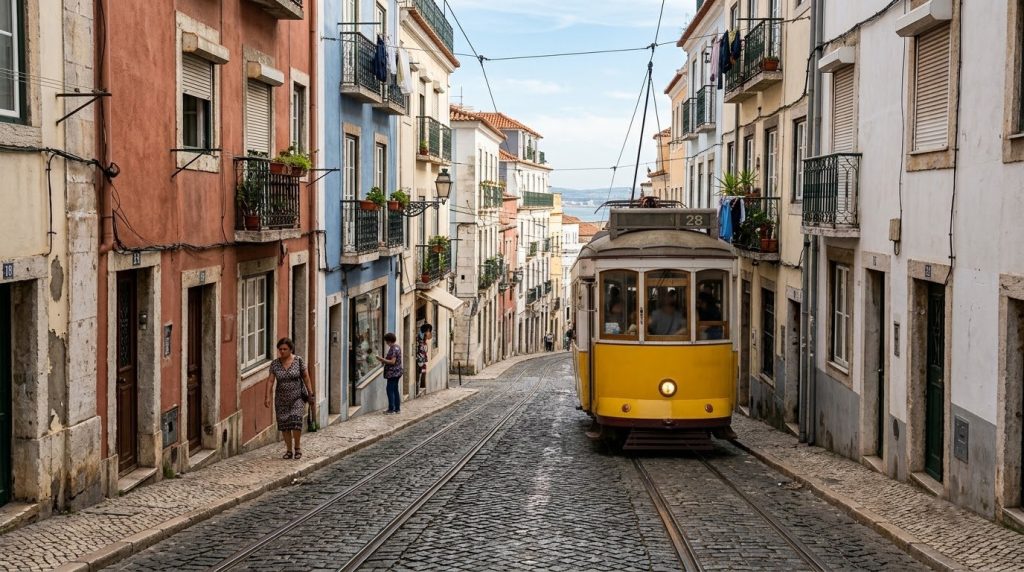
Porto is about atmosphere more than checklist sights. Walk down from São Bento station’s tiled hall to the Ribeira waterfront, cross the upper deck of the Dom Luís I Bridge, and spend an afternoon at the port lodges in Vila Nova de Gaia, where tastings run about USD 13–39 (EUR 12–35) depending on the cellar and the wines poured.
Livraria Lello charges USD 11 (EUR 10) for entry, deductible from a book purchase. Our Porto travel guide covers the neighborhoods and food in more depth.
What you actually eat in each city
Lisbon’s food identity runs through custard tarts and salt cod. The original pastel de nata comes from Pasteis de Belem, near the monastery, though every pastelaria in the city sells its own version; eat it warm with a dusting of cinnamon rather than cold from a display case.
Bacalhau (dried, salted cod) shows up in dozens of preparations, bacalhau a bras, shredded with egg and potato, being the easiest entry point. For something cheaper and faster, a bifana (a thin pork sandwich, usually with mustard) from a standing-room cafe costs a few euros and is a legitimate lunch, not just a snack.
Porto’s signature dish is the francesinha, a sandwich stacked with several meats, covered in melted cheese and a thick beer-and-tomato sauce, usually with a fried egg on top and fries on the side.
A good one away from the riverside tourist strip typically runs about USD 11 to USD 18 (EUR 10 to EUR 16); prices climb fast at restaurants directly on the Ribeira waterfront for the same dish.
Porto’s other claim to fame is less flattering but locally proud: tripas a moda do Porto, a tripe stew, is the dish behind the nickname tripeiros for people from the city. Between meals, the port lodges across the river in Gaia are the obvious tasting stop, already covered elsewhere in this guide.
Neither city’s food costs much by US standards. A sit-down lunch with a drink typically runs well under what the same meal would cost in a major US city, in both Lisbon and Porto alike.
Costs, converted at USD 1 = EUR 0.89
Hotels drive the gap. Average Lisbon rates for 2026 sit around USD 172 (EUR 153) for a 3-star and USD 247 (EUR 220) for a 4-star, with summer weekends higher. Porto runs roughly 20–30% cheaper for comparable rooms.
Both cities charge a tourist tax for up to 7 nights: a couple staying a week pays USD 63 (EUR 56) in Lisbon versus USD 47 (EUR 42) in Porto, usually at check-in. Food, coffee and wine are cheap in both by US standards.
Weather and the best months
The climate gap matters more than most comparison posts admit. Porto gets about 49 inches of rain a year against roughly 31 in Lisbon, and Porto’s winters are noticeably wetter. In summer the gap flips in Porto’s favor: July highs average about 75°F in Porto and 82°F in Lisbon, and Lisbon can push well past that during heat waves.
November to March, Lisbon is the safer bet for blue skies; in July and August, Porto is easier to walk all day. For month-by-month detail, see our breakdown of the best time to visit Portugal.
Getting around once you’re there
Lisbon runs on a mix of metro, trams, funiculars and hills. A single Carris/Metro ticket is EUR 1.90 (about USD 2.15), loaded onto a reusable Navegante card that itself costs EUR 0.50 (about USD 0.55); a 24-hour pass covering metro, trams and buses is EUR 7.25 (about USD 8.15) and is worth it on any day you are moving between neighborhoods rather than staying in one.
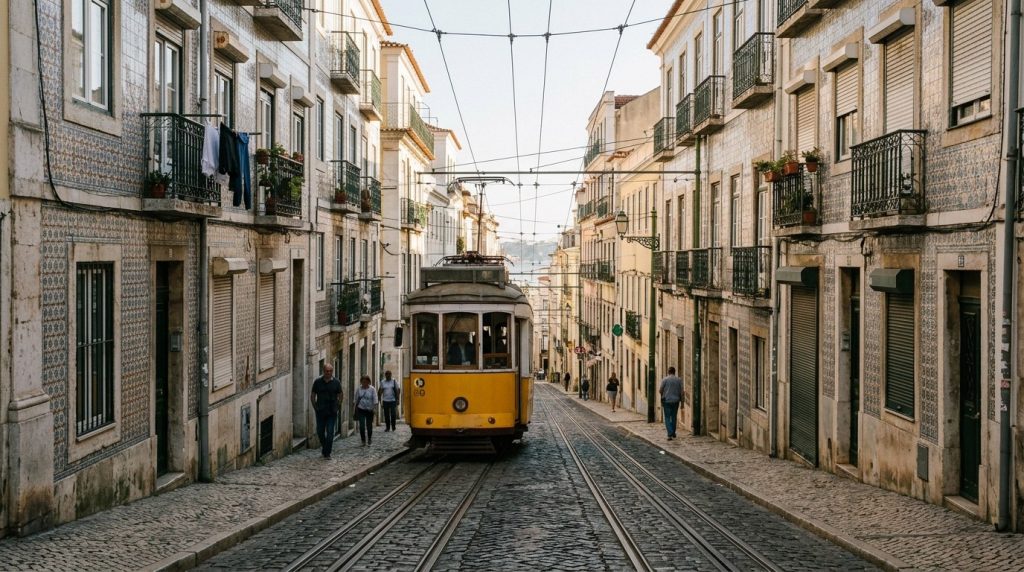
Tram 28 covers the hilliest, most scenic stretch through Alfama and is also the route most associated with pickpockets, covered in the safety section above, so treat it as a sightseeing ride rather than your main way to get around.
Porto is more compact and more walkable, which is also the problem: the center is built on a steep river gorge, and the walk back up from Ribeira to Aliados or the Sao Bento area is a real climb.
The Andante card (about EUR 0.60, USD 0.65) works across the metro and buses, with a single urban ticket running roughly EUR 2.00 to EUR 2.50 (about USD 2.25 to USD 2.80) and a 24-hour pass priced at around EUR 7.00 to EUR 7.75 (about USD 7.85 to USD 8.70) depending on when you check.
Most visitors on a 2 to 3 day trip use the metro only for the airport run and do the rest on foot, which works as long as you are comfortable with hills.
Safety and day-to-day hassles
Both cities are safe by US big-city standards. The real issues are pickpockets on crowded trams (Lisbon’s Tram 28 above all) and street sellers offering fake “hashish” in Baixa and Bairro Alto. Our Lisbon safety guide covers the specific areas and scams. Porto’s main hazard is physical: the hills are steep, the granite gets slick in rain, and you will want shoes with real grip.
Day trips compared: Sintra and Cascais versus the Douro and Guimaraes
From Lisbon, Sintra is the obvious choice: trains leave Rossio station regularly, take about 40 minutes and cost around EUR 2.40 (about USD 2.70) each way, landing you at the palaces with no onward connection needed. Cascais is a similar distance from Cais do Sodre station and suits a beach-focused half day rather than a full palace circuit. Both are easy enough to do without a car or a booked tour.
From Porto, Guimaraes is the equivalent easy win: hourly trains from Sao Bento take about 1 hour 14 minutes and cost roughly EUR 6 to EUR 12 (about USD 7 to USD 13) each way, reaching a compact old town and castle with no transfer.
The Douro Valley is the bigger payoff but the longer day: the scenic regional line to Pinhao runs only a handful of services a day, with journey times reported anywhere from about 2.5 to 3.5 hours each way depending on the train, and a one-way fare around EUR 10 (about USD 11).
Given the distance, many visitors book a guided tour or a river cruise instead of the DIY train, especially if a wine tasting and lunch are part of the plan.
Can you do both in one trip?
Yes, and for a first visit of 6–8 days it is the best answer. Alfa Pendular trains cover the 209 miles between Lisbon and Porto in about 2 hours 58 minutes, with departures every hour or two. Standard second-class fares run about USD 38 (EUR 34), and advance promo fares start at USD 10.70 (EUR 9.50), per Seat61’s route guide.
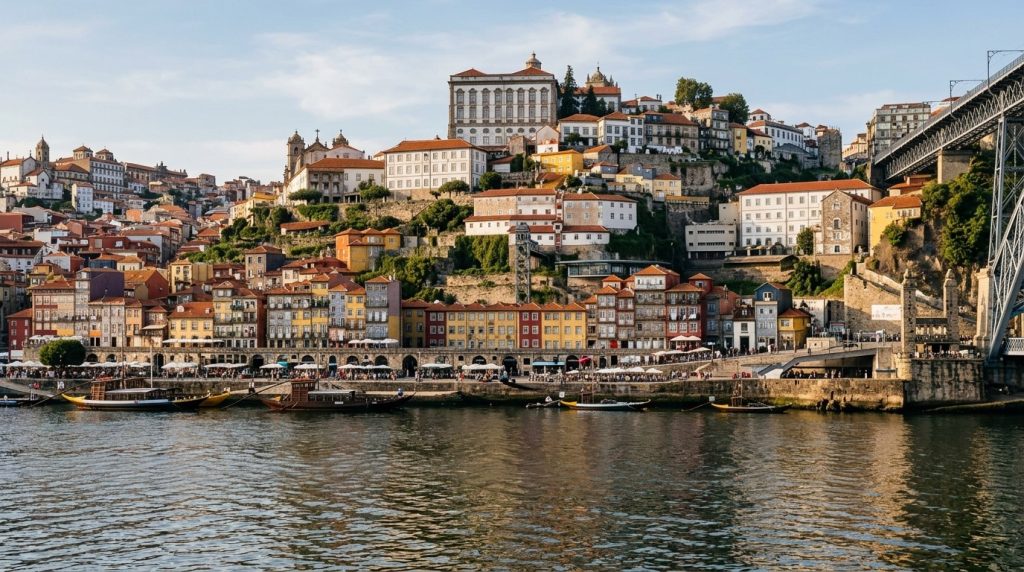
A practical split: 4 nights in Lisbon, 3 in Porto. From Porto, add a Douro Valley vineyard day or a run to Guimarães and Braga; our list of day trips from Porto has the logistics.
Practical money matters: cards, cash and tipping
Cards are accepted almost everywhere in both cities, from hotels down to most cafes, through Portugal’s Multibanco network, and contactless payment is standard. The main place you will still want some cash on hand is smaller family-run tascas, a few market stalls, and occasionally the tourist tax at check-in, which some smaller guesthouses in both cities still prefer in cash even though hotels generally add it to the card payment.
Tipping is not expected in either city the way it is in the US. If service was good, 10 percent at a sit-down restaurant is the usual ceiling, and many locals simply round the bill up instead; bars and cafes do not expect a tip at all.
If “servico incluido” appears on the bill, a service charge is already built in and anything extra is entirely optional. This applies equally in Lisbon and Porto, so you do not need to budget differently for tipping between the two.
Withdraw cash from a bank-branded ATM (Multibanco machines are everywhere) rather than the standalone currency-exchange-style machines sometimes found near tourist strips in both cities, which tend to add their own fee or a poor exchange rate on top of whatever your home bank charges.
Where to stay
Lisbon, Baixa and Chiado: the flattest, most central base, with the easiest metro and train access. Best for first-timers and families.
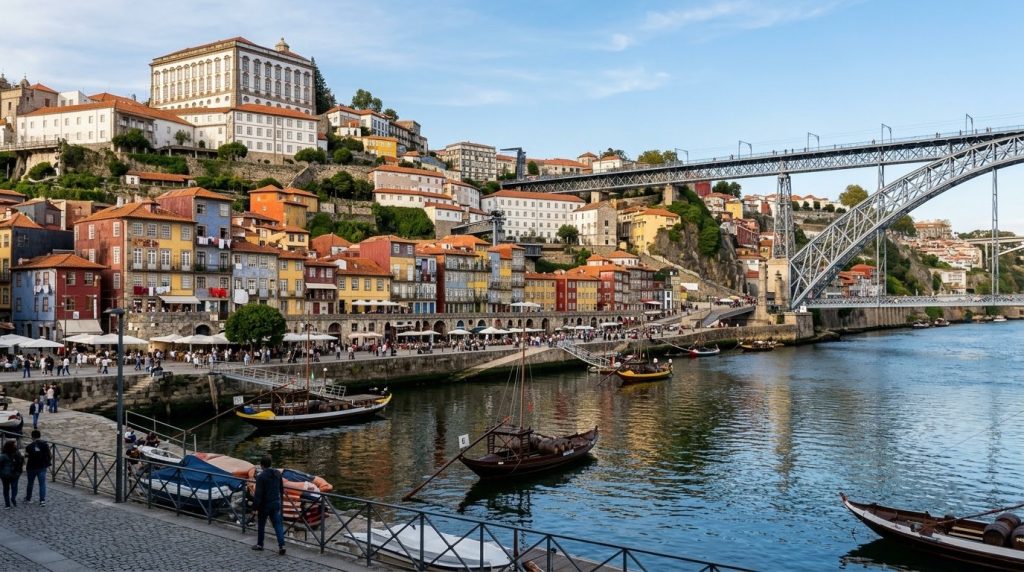
Lisbon, Príncipe Real: quieter and leafier, a short walk from Bairro Alto without the noise. Best for couples.
Porto, Ribeira and Baixa: Ribeira puts you on the river; Baixa, around Aliados and São Bento, is a little cheaper and less hilly. Best for short stays.
Find your Lisbon hotel on the map
Live prices from Booking, Airbnb and more — move the map or change dates to compare stays across Lisbon.
Frequently Asked Questions
Is Porto cheaper than Lisbon?
Yes. Hotels in Porto typically cost about 20–30% less than comparable rooms in Lisbon, and the tourist tax is lower at EUR 3 per person per night versus EUR 4 in Lisbon. Restaurant and transport prices are similar in both cities, so the savings come mostly from accommodation, which is the biggest line in most travel budgets.
How many days do you need in Lisbon and Porto?
Plan 4–5 days for Lisbon, including one day trip to Sintra or Cascais, and 2–3 days for Porto, so 7 days covers both comfortably. On a long weekend, pick one city: the 3-hour train ride eats too much of a short stay.
Which city is better in winter?
Lisbon. Porto receives roughly 49 inches of rain a year compared with about 31 in Lisbon, and much of it falls between November and March. Lisbon winters are mild with more sunny days, which makes walking between viewpoints far more pleasant. Porto in winter still works for the port lodges; pack a rain jacket.
Is Lisbon or Porto better for nightlife?
Lisbon by a wide margin. Bairro Alto fills its streets with bar crowds late into the night, Cais do Sodré has clubs and the Pink Street bars, and Alfama’s fado houses run late. Porto has a bar scene around Galerias de Paris street, but it is smaller and winds down earlier.
Do Americans need a visa for Portugal?
No. US passport holders can visit Portugal visa-free for up to 90 days within any 180-day period. The EU’s ETIAS online travel authorization is scheduled to launch in the last quarter of 2026, after which US travelers will need to apply before departure. Use only the official EU website, not third-party sites charging extra fees.