Best Time to Visit Sapporo (2026)
Disclosure: Some links in this guide are affiliate links. If you book or buy through them, we may earn a small commission at no extra cost to you — it helps keep our guides free.
- The best time to visit Sapporo is early February for the Snow Festival, or June through August.
- Sapporo's summer highs near 27C beat Tokyo's 30C to 32C heat and heavy humidity.
- The right month depends on snow sports, one festival week, or an escape from mainland Japan's summer.
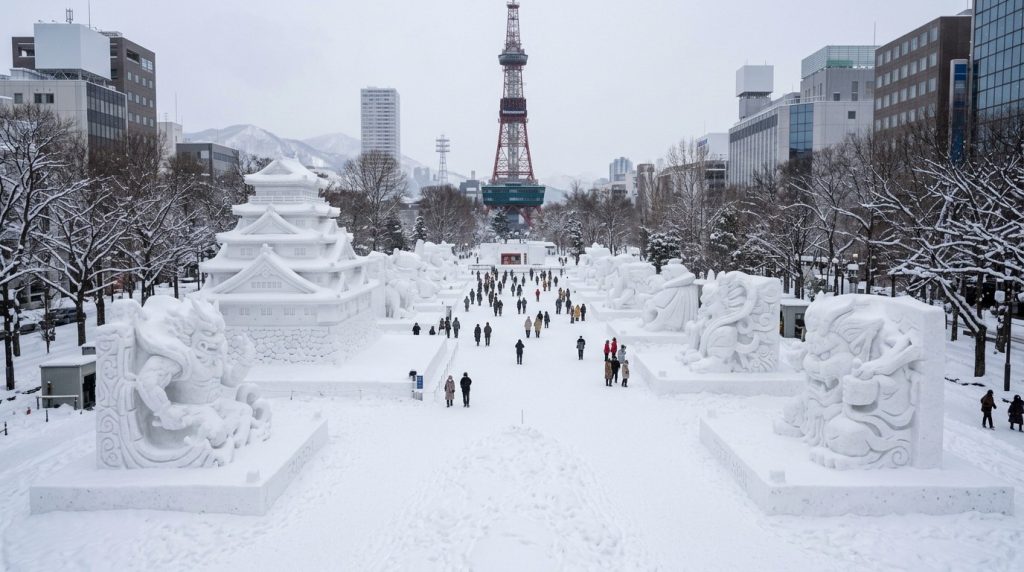
The best time to visit Sapporo is early February, when the Sapporo Snow Festival draws record crowds under average highs near -4C, or June through August, when Sapporo’s summer highs near 27C beat Tokyo’s 30C to 32C heat and heavy humidity.
That answer flips hard depending on whether the trip is built around snow sports, one festival week, or an escape from mainland Japan’s summer, so the right month depends entirely on which of those three trips this actually is.
| Month | Temp | Snow/conditions | Crowds and prices | Verdict |
|---|---|---|---|---|
| December | Highs drop below freezing | Snow builds, ski resorts open | Rising into New Year | Early ski season |
| January | Coldest month, average -4C | Peak powder at nearby Niseko | High, climbing toward festival week | Ski season core |
| February | Still deep winter cold | Heaviest snow cover of the year | Snow Festival week sells out | Peak of the entire year |
| March | Milder, snow starts melting | Icy patches, less reliable powder | Quiet once the festival ends | Good value shoulder |
| April | Mild, sakura season | Last snow gone | Small crowd for cherry blossoms | Optional, skip without sakura interest |
| May | Mild and dry | Green, snow-free | Low crowds and rates | Underrated shoulder |
| June | Average 17C, no true rainy season | Mild, scattered rain only | Rising with the Sapporo Lilac Festival | Strong pick |
| July | Warm | Occasional rain, dry compared to mainland | Busy with domestic travelers | Comfortable summer |
| August | Hottest month, average 22C, highs near 27C | Warm but nowhere near mainland heat | Peak summer crowds and prices | Best summer escape |
| September | Cooling | Early autumn color begins | Moderate | Good value |
| October | Cool | Peak autumn foliage | Rising for leaf viewing | Popular, less crowded than the festival |
| November | Cold, first snow | Transitional slush | Low crowds, cheap rooms | Skip, transitional month |
Winter (December to March) – snow, skiing and the festival
Winter is Sapporo’s headline season, and it rewards travelers who come specifically for snow rather than for sightseeing in the cold. January is the coldest month, with an average temperature of -4C, and nights drop further below that mark.
Snow piles up fast: Sapporo receives roughly 4.8 meters, more than 15 feet, of snow across a typical winter, one of the heaviest seasonal snowfall totals of any major city on earth.
That depth is why skiers fly into Sapporo and then drive about two hours to Niseko, Hokkaido’s best-known powder resort, where the ski season runs from late November to April and peak snow conditions land in January.
Anyone booking this stretch should read where to stay in Sapporo for the Snow Festival and ski season before picking a neighborhood, because location matters more in waist-deep snow than it does in any other season.
The Snow Festival spikes everything
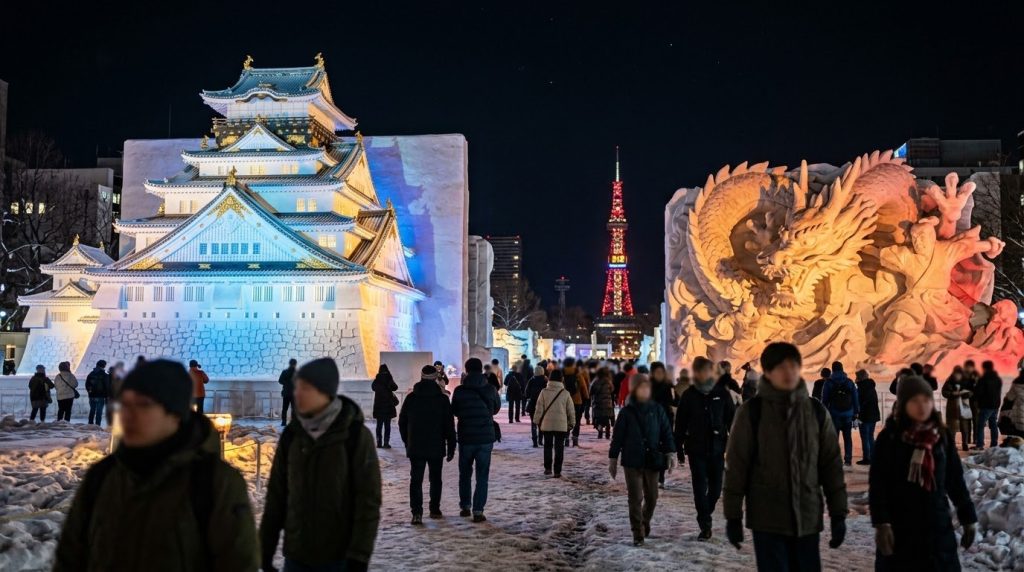
The Sapporo Snow Festival is the single biggest reason to choose early February over any other week of the year, and it distorts prices harder than anything on Japan’s main island.
The 2027 edition runs February 4 to 11, spread across three sites, Odori Park, the Tsudome dome venue, and the Susukino entertainment district, where teams carve city-block-sized snow and ice sculptures.
Hotel rates near those sites normally run about USD 34 to USD 44 (JPY 5,200 to JPY 6,800) a night outside the festival, at today’s verified rate of roughly JPY 153.4 to the USD. During festival week, travel-pricing trackers have reported the same rooms climbing toward USD 95 (JPY 14,500), and central hotels selling out months ahead.
Multiple Sapporo booking guides recommend reserving 8 to 10 months in advance, and warn that good rooms near the venues are typically gone by October for a February date.
That gap between an ordinary Tuesday in Sapporo and the second week of February is larger than the seasonal price swing in most other Japanese cities, and it is the detail most generic season guides skip past.
Summer (June to August) – the escape from mainland humidity
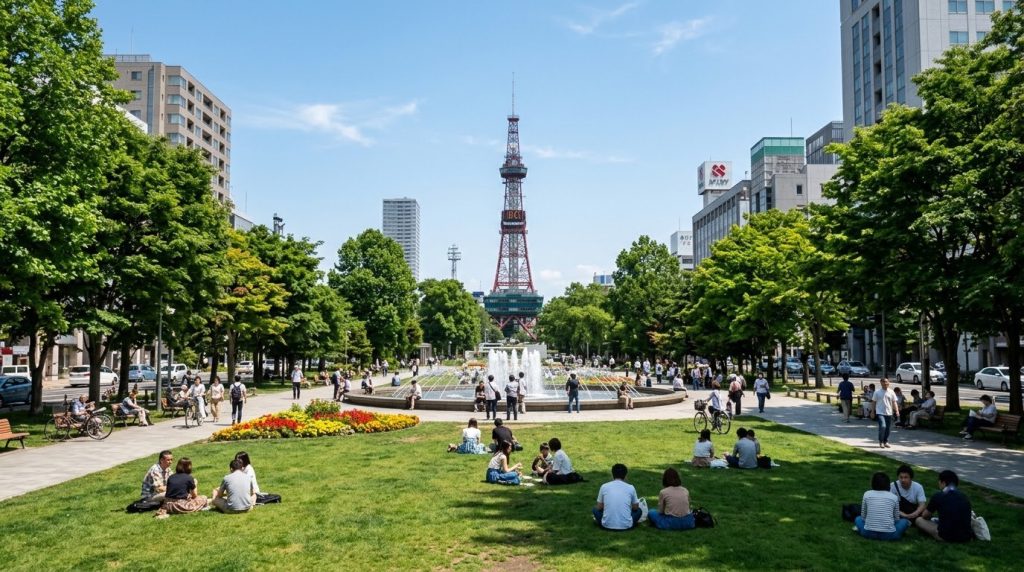
Summer is Sapporo’s most comfortable season, and it works as direct counter-programming against Tokyo’s heat. Hokkaido is the one region of Japan barely touched by the tsuyu rainy season that soaks most of the country from June onward, so Sapporo’s June rain falls in scattered bursts rather than for weeks straight, with an average temperature of about 17C that month. Summer is also the only time we suggest Furano and Biei, which appear in our Sapporo day trips with train times for the lavender fields and the Blue Pond.
August is Sapporo’s hottest month, averaging 22C with highs closer to 27C, and summer humidity typically sits around 65 to 70 percent. Tokyo, by comparison, sees July highs near 30C and August highs near 32C, with humidity closer to 80 to 85 percent, and that gap is exactly why Hokkaido markets itself as Japan’s summer escape.
Anyone weighing Sapporo against a mainland stop should check Tokyo’s own best-time breakdown before fixing dates, since the two cities run on nearly opposite comfort calendars for the same three months.
Autumn and spring – the quiet shoulders
Autumn and spring are Sapporo’s best value windows, trading festival crowds and ski traffic for lower prices and easier bookings. September and October bring cooling air and peak autumn foliage without the crowd size that piles into Tokyo’s fall color spots, and hotel rooms are far easier to secure than during any winter month.
May offers the mirror image in spring, with snow gone, mild dry air, and both crowds and rates staying low. April sits between the two, mild enough for cherry blossoms but without the crowd size that Tokyo’s sakura season pulls in every year.
None of these months carry one dominant event the way February does, which is exactly why they suit travelers who want Sapporo on its own terms instead of around a single festival.
What to pack for Sapporo by season
Winter packing in Sapporo means layering for temperatures that sit well below freezing for weeks at a stretch: a windproof, waterproof outer shell, an insulated mid-layer, thermal base layers, wool socks, and boots with deep, grippy tread for icy sidewalks matter more than a single heavy coat.
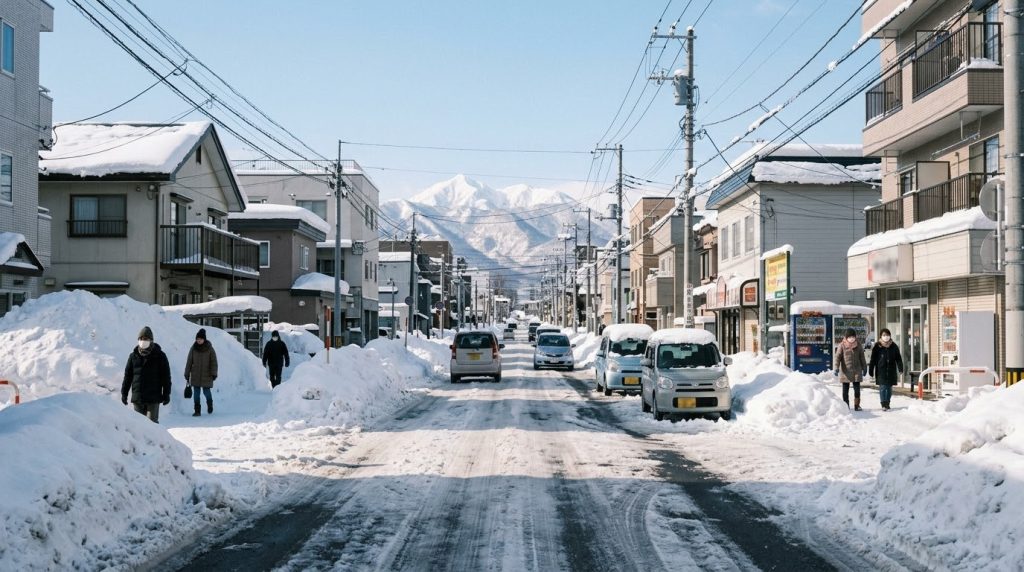
Gloves and a hat that covers the ears are not optional once the average temperature drops to around -4C in January, and nights run colder still, so a scarf or neck gaiter that can be pulled up over the lower face on a windy walk between Odori Park and Susukino is worth the extra bag space.
Most shops, trains, and hotel lobbies run warm indoor heating, so a layering system that can be shed quickly in seconds avoids overheating the moment a visitor steps inside, and a compact packable bag for the removed layers beats carrying them loose.
Travelers heading to Niseko or another ski resort near Sapporo rarely need to pack skis, poles, or boots, since every major resort rents full gear on site, and checking winter sports equipment through two flights usually costs more than a day’s rental plus a modest size-fitting fee.
Summer packing flips the list entirely: light, breathable layers for daytime highs near 27C, a compact rain jacket for the scattered showers that fall even though Hokkaido avoids the mainland’s rainy season, and comfortable walking shoes rather than boots.
A refillable water bottle and sunscreen matter more in July and August than any specialist gear, since the heat, while mild by mainland standards, still adds up over a full day outdoors.
Spring and autumn sit in between, needing a mid-weight jacket and waterproof footwear, since melting snow in March and the first slush of November both turn sidewalks wet and uneven well before or after the clean powder of deep winter arrives.
Getting to Sapporo and getting around the city
New Chitose Airport (CTS) is Sapporo’s main gateway, and JR Hokkaido’s rapid airport train is the default way in: departures run roughly every 15 minutes, the ride takes about 40 minutes, and a one-way ticket costs about USD 6.50 to USD 8.50 (JPY 1,000 to JPY 1,300).
A taxi covers the same distance for several times that fare and takes longer once winter traffic or snow clearing slows the expressway, so the train is the practical choice for nearly every visitor landing at CTS, luggage and all, and most trains have a dedicated luggage rack near the doors rather than overhead bins built for carry-on bags only.
Inside the city, a compact subway network of three lines plus a historic streetcar loop covers the Snow Festival sites, Susukino, and most hotel districts, and a rechargeable IC card such as Suica or Kitaca removes the need to buy a paper ticket for every ride, working across subways, buses, and most convenience stores for small purchases as well.
Winter adds real friction to walking: sidewalks ice over outside the cleared main streets, so a short walk that looks easy on a map can take noticeably longer at a careful, flat-footed pace, and many visitors switch to short taxi hops once snowbanks pile up in January and February rather than risk a fall on an unfamiliar icy corner.
During Snow Festival week, expect heavier subway crowds at Odori and Susukino stations and some street closures around the sculpture sites, so building extra time into any plan that week matters more than in any other season.
Buses fan out from Sapporo Station toward Niseko and other day-trip destinations, but a reserved seat on a direct bus or a rental car is the more reliable option once a day trip stretches beyond the subway network’s reach.
When NOT to visit Sapporo
Skip Sapporo in November and late March if flexibility matters more than seeing snow on the ground. November sits in an awkward gap: the first snow has started falling, but ski resorts have not opened full terrain, and the city looks gray and transitional rather than festive or scenic.
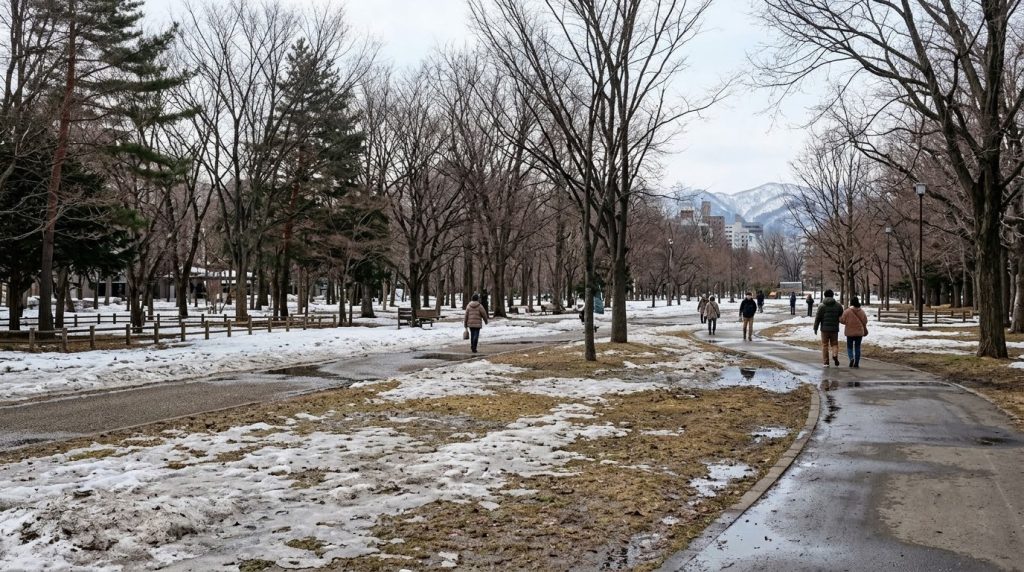
Late March carries the same problem in reverse, with dirty melting snow, icy sidewalks, and none of the festival energy that justified the cold two months earlier.
Travelers chasing cherry blossoms should also treat Sapporo as a bonus stop rather than the anchor of a trip, since Hokkaido’s bloom lands well after Tokyo’s, so a single-window Japan trip built around blossoms should default to mainland dates first.
Staying connected: SIM cards and pocket wifi
An eSIM installed before departure is the simplest option for a phone that supports it: data-only plans from providers such as Airalo, Saily, or Ubigi run roughly USD 8 to USD 18 for about 10GB of data valid for 30 days, activated the moment the plane lands without a trip to a counter or a queue at arrivals. Those mapping out a day-by-day plan will find a ready-made outline in our Sapporo itinerary.
Travelers without an eSIM-capable phone, or those traveling as a group who want to share one connection across several devices, can rent a pocket wifi device at New Chitose Airport’s arrivals hall, typically running about USD 26 to USD 29.50 (JPY 4,000 to JPY 4,500) for three days, plus a small device handover fee of about USD 3.60 (JPY 550); longer rentals generally bring the daily rate down further.
Hotel wifi is standard across every price tier in Sapporo, and convenience stores and train stations offer scattered free wifi hotspots, but neither is reliable enough to depend on for maps or translation apps once outside, particularly in the dense crowds around the Snow Festival sites where signal congestion is common.
Most visitors find a personal data connection worth arranging before arrival rather than hunting for a signal between sights, and a working connection also matters for translation apps at restaurants that post menus only in Japanese, a common situation away from the main tourist strips in Susukino.
Travelers who would rather skip a local SIM entirely can check an existing US or Australian carrier’s international day-pass roaming option before departure, though per-day roaming fees usually cost more over a full week than a prepaid eSIM bought in advance.
Whichever option is chosen, downloading an offline map of central Sapporo and the route to New Chitose Airport before leaving the hotel wifi is a simple backup for the handful of moments a connection drops entirely, particularly on the subway between stations.
What a Sapporo trip costs by season
Daily costs swing harder with the season in Sapporo than in most Japanese cities. Outside festival week, a mid-range daily budget covering a hotel, meals, and local transport runs roughly USD 90 to USD 130 (JPY 13,800 to JPY 19,900) in both winter’s ski season and summer, with broadly similar hotel rates across the two since each draws its own strong seasonal demand.
Snow Festival week breaks that pattern entirely: the same mid-range budget climbs to roughly USD 150 to USD 220 (JPY 23,000 to JPY 33,800) a day as hotel rates spike hardest of anywhere in the city and restaurants near Odori Park and Susukino fill every table for the full ten days.
Spring and autumn, by contrast, typically run 20 to 30 percent below the winter and summer figures above, since neither shoulder season carries a single event large enough to push demand the way the festival or a Niseko powder week does.
Flights into New Chitose follow a similar pattern, generally costing more in the weeks bracketing the Snow Festival and the New Year holiday than in quieter months such as May or September, so locking in travel dates before comparing flight prices is the more useful order of operations for a budget-conscious trip, and watching fares for a few weeks before booking tends to reveal the same seasonal pattern on most routes into Sapporo.
Food and activity costs move less with the season than hotels do. A casual ramen or soup-curry meal generally costs about the same whether it is eaten in January or July, and Odori Park, most shrine visits, and the walk through the Snow Festival sculpture sites themselves carry no admission fee, so a tight budget is better trimmed by cutting hotel nights than by skipping sightseeing.
A Niseko day-trip ski pass is the one activity cost that swings with the calendar, priced at its full winter rate only while lifts are running, roughly late November through April, and unavailable the rest of the year regardless of budget.
Plan your Sapporo trip
Planning a Sapporo trip means picking a lane first, either winter sports and the festival or a summer escape from mainland heat, then booking hotels around that choice months out rather than weeks out.
Sapporo pairs naturally with a wider Japan itinerary since most international flights route through Tokyo first, so travelers stacking both cities can lean on a Tokyo budget planning guide to control costs before the Hokkaido leg gets pricier around festival dates, and a four-day Tokyo itinerary covers the mainland stop efficiently before flying north.
Whatever season this trip lands in, use the map below to compare live rates across Sapporo before committing to a neighborhood.
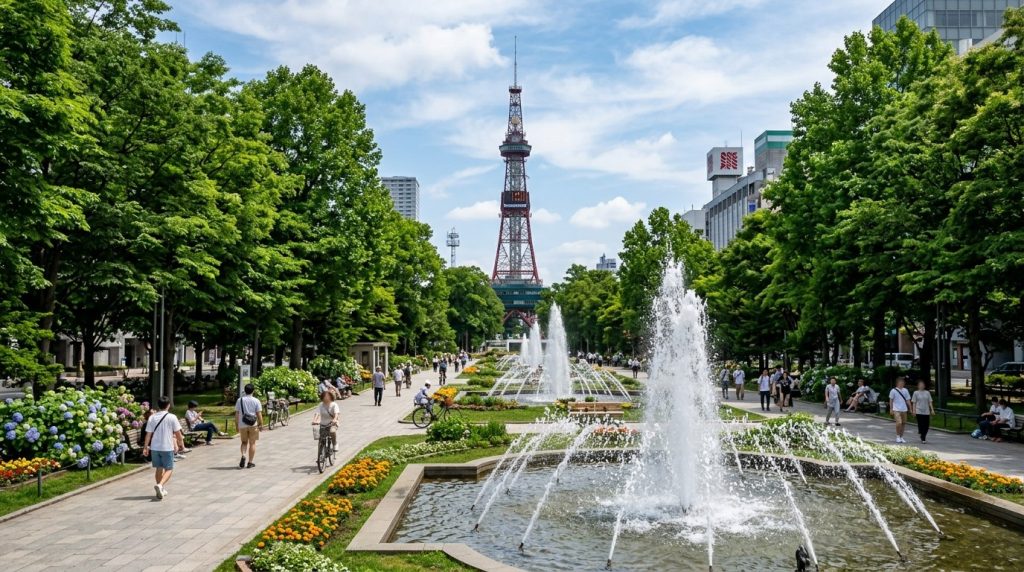
Find your Sapporo hotel on the map
Live prices from Booking, Airbnb and more — move the map or change dates to compare stays across Sapporo.