Is Sicily Worth Visiting? (2026)
Disclosure: Some links in this guide are affiliate links. If you book or buy through them, we may earn a small commission at no extra cost to you — it helps keep our guides free.
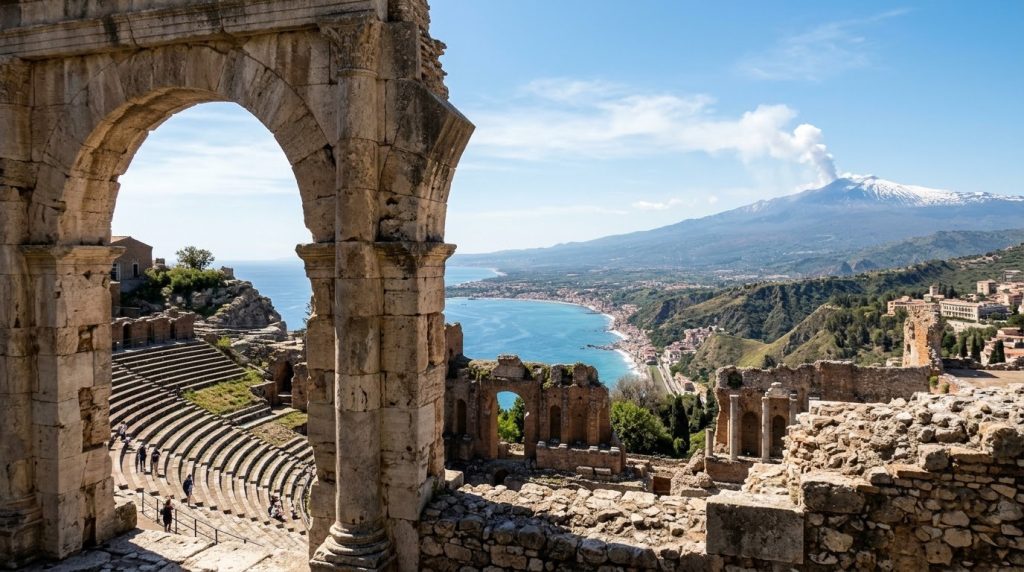
Sicily is worth visiting, and the numbers make the case: the island covers 25,708 square kilometers, about four-fifths the size of Belgium, and a one-way drive from Palermo to Agrigento alone takes roughly 2 hours, distances large enough to reward a dedicated trip rather than a rushed detour from Rome or Naples.
It is not worth visiting if you have fewer than 5 nights and refuse to rent a car, because the sights that justify the trip sit hours apart on routes no train reaches.
| Traveller type | Worth it? | Nights to give it | Why |
|---|---|---|---|
| First-time Italy visitor with 10+ days total | Yes | 4-5 nights | Temples, coastline and food unlike the mainland, enough time to cover the east coast properly |
| Adding Sicily onto a 2-3 day mainland Italy trip | No | Skip, or 2 nights near one base | The driving alone eats the trip; you will see one town, not Sicily |
| Road-trip or slow traveller | Yes | 6-8 nights | Built for a driving loop between Palermo, Taormina, Syracuse and Agrigento |
| Traveller who will not rent a car | Maybe | 3-4 nights, coastal only | The Palermo-Messina-Catania-Syracuse train line works; Agrigento and the interior mostly do not |
| Beach traveller visiting July or August | Maybe | 4-5 nights, coastal with air conditioning | Heat is a genuine planning constraint, not a minor annoyance |
| Budget backpacker chasing fast connections | No | Skip | Sicily rewards time, not speed; slow links between interior towns waste days |
What Sicily has that mainland Italy does not
Sicily packs an active volcano, one of the best-preserved ancient temple complexes outside Greece, and a street-food culture built on centuries of trade into one island the mainland cannot match in the same radius.
Mount Etna has required a certified guide above 2,900 meters since 2013, and access narrows further after fresh eruptive activity, so check current conditions before planning a summit hike rather than assuming the trail is open.
The Valley of the Temples outside Agrigento is a working archaeological park you can walk through in a single visit, not a museum piece behind glass, and it sits nowhere on a typical Rome-Florence-Venice itinerary.
Add arancini, cannoli and sfincione sold from street stalls rather than tasting menus, and Sicily reads as a food and landscape trip with mainland Italy’s polish deliberately stripped out.
If what you actually want is that polish, a coastline photographed into cliche and boutique hotels stacked on a cliff, the Amalfi Coast already delivers it; Sicily trades that finish for scale and archaeology Amalfi does not have.
The distances nobody warns you about
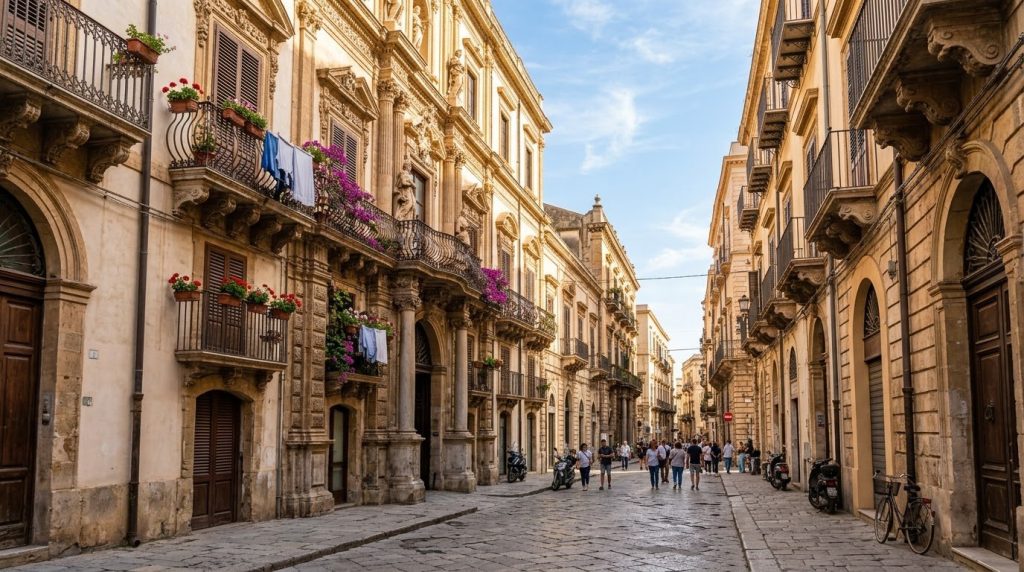
The single fact that decides whether Sicily works for you is that it takes roughly 2 hours to drive between any two of its four anchor cities, and closer to 3 hours between the two farthest apart.
Palermo to Taormina runs about 3 hours 15 minutes on the direct autostrada route, Taormina to Syracuse is closer to 1 hour 30 minutes down the Ionian coast, Syracuse to Agrigento takes roughly 2 hours 30 minutes cutting across the south, and Agrigento back to Palermo is about 2 hours on the SS189.
A full loop through all four cities is a minimum of 9 hours behind the wheel before you add a single stop, which is why competitors telling you to “just see Sicily” in three or four days are describing one corner of it, not the island.
You do not strictly need a car if you stay on the coastal spine: the Palermo-Messina-Catania-Syracuse train line runs regularly and gets you to three of the four anchor cities.
Agrigento and the interior are the exception, served by slow, infrequent buses that turn a 2-hour drive into a half-day commitment, so renting a car is the practical choice for anyone planning to see the Valley of the Temples. The Sicily itinerary breaks a full week-long loop into a day-by-day route if you decide the driving is worth it.
The heat, and why it is a real planning constraint
Sicily’s heat is not a minor annoyance, it is a scheduling problem, and the island holds continental Europe’s hottest recorded temperature to prove it. Floridia, near Syracuse, hit 48.8C on 11 August 2021, a reading the World Meteorological Organization certified as continental Europe’s record in 2024.
That is an extreme, not a daily summer average, but it signals what mid-afternoon in July and August actually feels like away from the coast, and it is the reason locals shut shops and move slowly between roughly 1pm and 4pm.
Plan outdoor sightseeing, especially anything at Agrigento or Etna with no shade, for early morning or early evening, and confirm air conditioning before booking any summer stay rather than assuming it is standard.
The best time to visit Sicily guide covers the month-by-month breakdown of when that heat eases; the point here is simpler, that a summer trip needs a slow middle of the day built into the plan or the heat will build it for you anyway. Travelers piecing together a broader trip can start with our travel guide to Valletta for an overview of the destination.
Where the safety reputation is outdated
Sicily’s mafia reputation is decades out of date for anyone visiting as a tourist, because organized crime on the island operates around business and rarely intersects with visitors at all. Our Sicily safety guide for Americans covers the risks that do matter, from pickpockets in Palermo and Catania markets to rental-car break-ins.
Sicily does not rank among Italy’s higher-crime provinces, and the practical risk for travellers is the same as in any popular European destination: pickpocketing in crowded tourist zones and markets, not violent crime tied to the mob.
Palermo’s Ballarò and Vucciria markets are worth visiting and worth watching your bag in, in that order, and the same street sense that applies in Naples or Barcelona applies here.
The one place caution is still warranted is late at night in poorly lit residential streets away from the tourist core, which is ordinary city advice rather than anything specific to Sicily’s history.
Who should skip Sicily
Skip Sicily if you are bolting it onto a 3-day mainland itinerary and expect to “see” Palermo, Taormina and Agrigento in that window, because you will spend more hours driving than sightseeing and leave having experienced none of them properly.
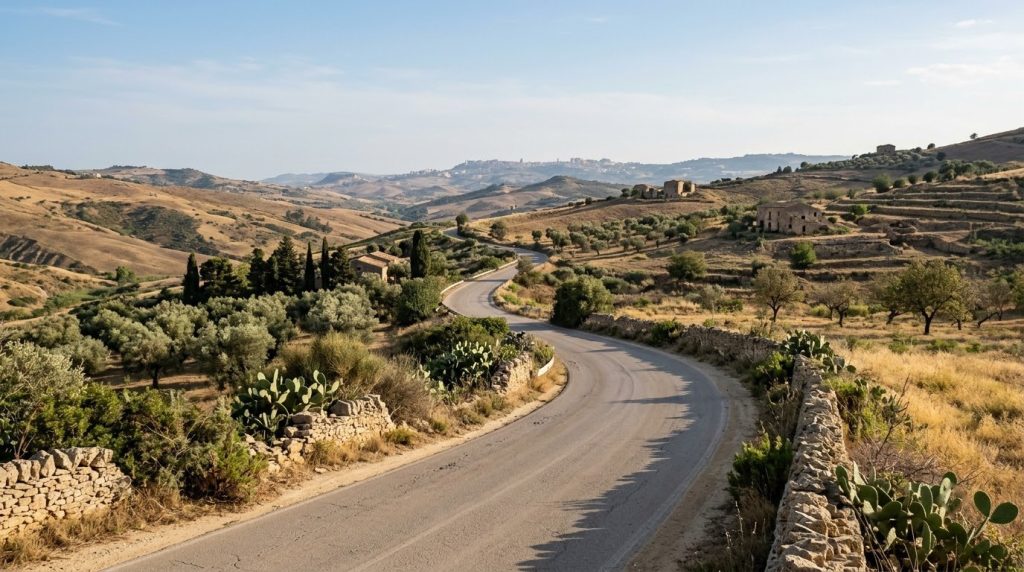
Skip it if you refuse to drive and specifically want to reach Agrigento or the interior towns, since the bus and train options there are slow enough to eat a full day for a single stop.
Skip it if you are chasing the curated, cliffside polish described above rather than an island that trades that finish for scale, because Sicily’s infrastructure is rougher and less styled than its mainland counterparts.
Skip it in July or August if you cannot tolerate real heat and are not willing to restructure your day around it, since no itinerary fixes a traveller who insists on sightseeing at 2pm in August.
Best time to visit Sicily, month by month
Sicily runs hottest in July and August, when Palermo’s coastal highs average around 27-30C and inland towns run several degrees warmer still, the stretch that makes the midday shutdown described above a real planning issue rather than a minor inconvenience.
April, May, September, and October bring daytime temperatures in the low-to-mid 20s C, comfortable enough for walking through the Valley of the Temples or climbing toward Etna without the afternoon heat forcing a break, and sea temperatures in late September and October remain warm enough for swimming while the air cools.
Winter, December through February, is mild by northern-European standards, with Palermo’s coldest months averaging a daytime high of roughly 12-13C, but it is also the wettest stretch of the year, and several smaller coastal towns scale back restaurant and ferry schedules through the quietest weeks.
The shoulder months, April into May and again from late September through October, deliver the best trade-off between comfortable sightseeing weather and manageable crowds, without the summer heat spike or winter’s thinner transport and business hours that shape travel at either extreme of the calendar.
Mount Etna’s own microclimate complicates a simple island-wide forecast: snow can sit on the upper slopes into spring even while the coast runs warm, and sudden cloud cover around the summit can close cable car and guided access with little notice regardless of the season below, which is part of why the certified-guide requirement noted above exists in the first place.
Food to try across the island
Beyond the arancini and street food already noted, pasta alla Norma, fried eggplant with tomato and salted ricotta named for Bellini’s opera, is Catania’s signature dish and appears on menus across the east coast. Caponata, a sweet-and-sour eggplant stew, and granita served with brioche for breakfast, a Catania-area habit rather than a dessert-only treat, round out the island’s everyday cooking.
Around Trapani on the west coast, couscous al pesce, a fish couscous reflecting centuries of trade across the Mediterranean, shows a side of Sicilian food that looks nothing like the Italy-wide shorthand of pizza and pasta, a legacy of Trapani’s historic ties to North Africa.
Coastal menus lean on swordfish and sardines prepared simply, while inland towns lean harder on lamb, ricotta, and pistachio, with Bronte’s pistachio crop feeding both savory dishes and the island’s pistachio gelato.
Most of this is sold from market stalls, counters, and family-run trattorias rather than tasting menus, at a fraction of what the same dishes cost styled for tourists elsewhere in Italy, and markets such as Palermo’s Ballarò mentioned above are as good a place to sample it as any sit-down restaurant.
Wine is a quieter part of Sicily’s food case: Etna’s volcanic-soil vineyards produce reds and whites increasingly sought by wine writers outside Italy, and Marsala, the fortified wine from the island’s west coast, is sold at far more varied quality levels locally than the cooking-wine reputation it carries in some export markets suggests.
Market visits are worth timing around breakfast or lunch rather than dinner, since stalls at Palermo’s Ballarò and Catania’s Pescheria sell their freshest catch and produce early, with the afternoon slowdown across Sicily, already covered above, closing many of the same stalls well before a typical dinner hour begins.
Where to stay if you decide to go
If Sicily earns a place on your list, the next decision is where to base yourself, and the best hotels in Sicily guide ranks options by city and traveller type. The map below shows live pricing across the island so you can compare a Palermo base against a Taormina or Syracuse one before you commit.
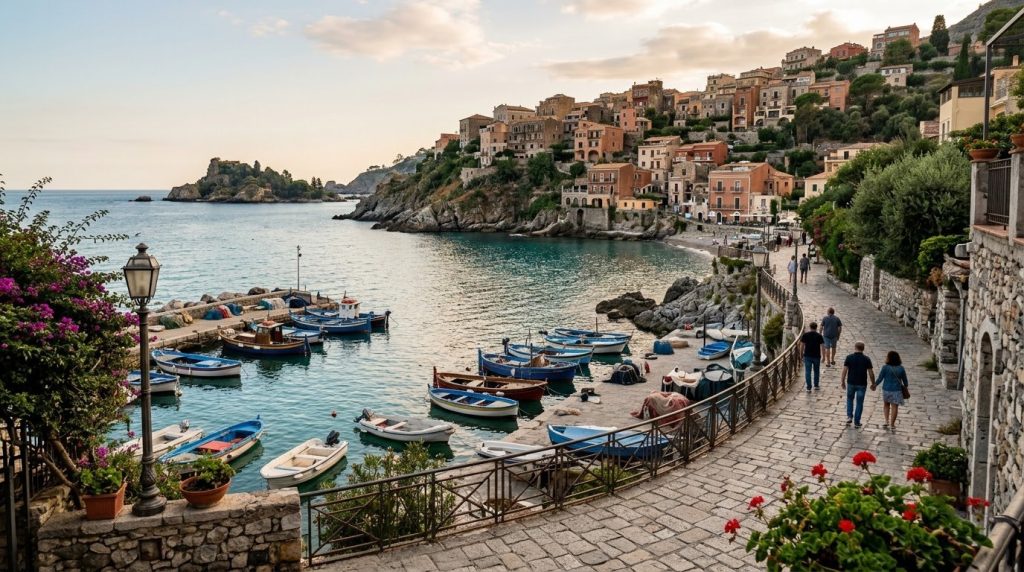
Find your Sicily hotel on the map
Live prices from Booking, Airbnb and more — move the map or change dates to compare stays across Sicily.