Disclosure: Some links in this guide are affiliate links. If you book or buy through them, we may earn a small commission at no extra cost to you — it helps keep our guides free.
Ultimate Valletta Travel Guide 2026: Malta’s Capital, Costs + Top Sights
This Valletta travel guide covers everything you need to plan a trip to Europe’s smallest — and arguably most concentrated — capital city. Valletta packs over 320 monuments into just 0.8 square kilometers (UNESCO World Heritage List, 1980), earning UNESCO World Heritage status for its entire city grid, not just select sites. No other European capital offers this density of baroque architecture, Caravaggio paintings, and harbourside drama in such a compact space. Read this before you arrive.
Key Takeaways
Valletta is Europe’s smallest capital city at 0.8 km², with over 320 monuments packed inside its walls
St John’s Co-Cathedral entry costs €15 and contains Caravaggio’s largest painting, “The Beheading of Saint John” (1608)
Budget €60-100/day mid-range; Malta is affordable compared with Western Europe
Best time to visit is October to May — June to September reaches 35°C and gets very crowded
We only recommend services we have researched thoroughly.
Valletta Travel Guide 2026: Why the World’s Smallest Capital Punches Far Above Its Weight
Valletta became a UNESCO World Heritage Site in 1980, with the listing covering its entire city boundary — a designation granted because every street block qualifies as a monument (UNESCO World Heritage List, 1980). The city was also named European Capital of Culture in 2018. Built by the Knights of St John after the Great Siege of 1565, Valletta was Europe’s first planned city, laid out on a strict grid by military engineer Francesco Laparelli. That origin explains everything about its character: tight, purposeful, and drenched in history at every corner.
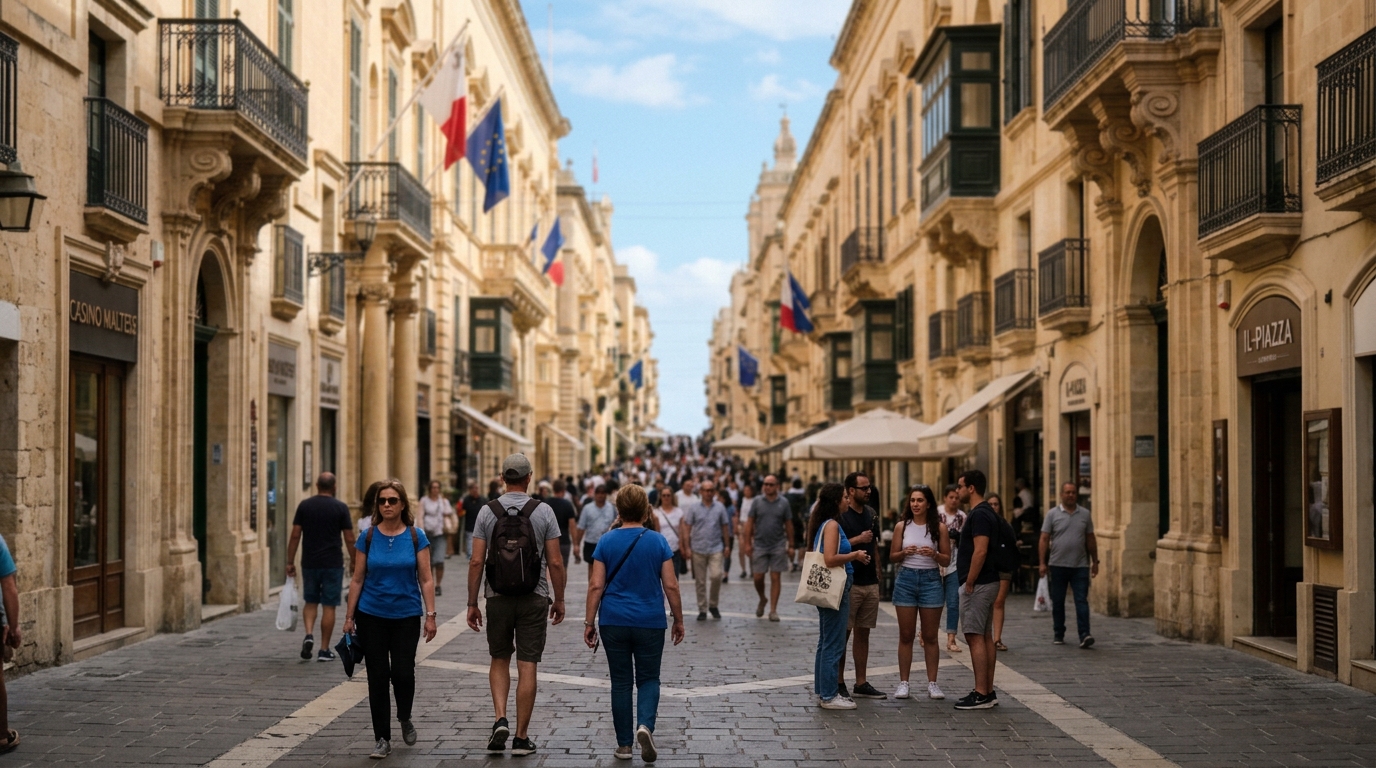
The density here is unlike any other European capital. In Rome or Paris, you walk between monuments. In Valletta, you are always inside one. The city’s 6,000 permanent residents live inside a fully intact 16th-century fortification, commute past baroque palaces, and eat lunch in sight of a harbour that hosted the Knights of St John from 1530 onward. That everyday collision of living city and living museum is what makes a visit so memorable. It is not a theme park reconstruction — it is a working city that happens to be 450 years old in almost every building.
The city’s small size works in your favor as a visitor. You can walk the full length of the main Street of the Republic (Triq Ir-Republika) — from City Gate to Fort St Elmo — in about 15 minutes. That means even a single full day covers the core sights without rush. Two days allow you to slow down, explore side streets, and catch day trips to Mdina or the Blue Grotto.
best things to do in valletta
How to Get to Valletta (Airport, Bus, Taxi)
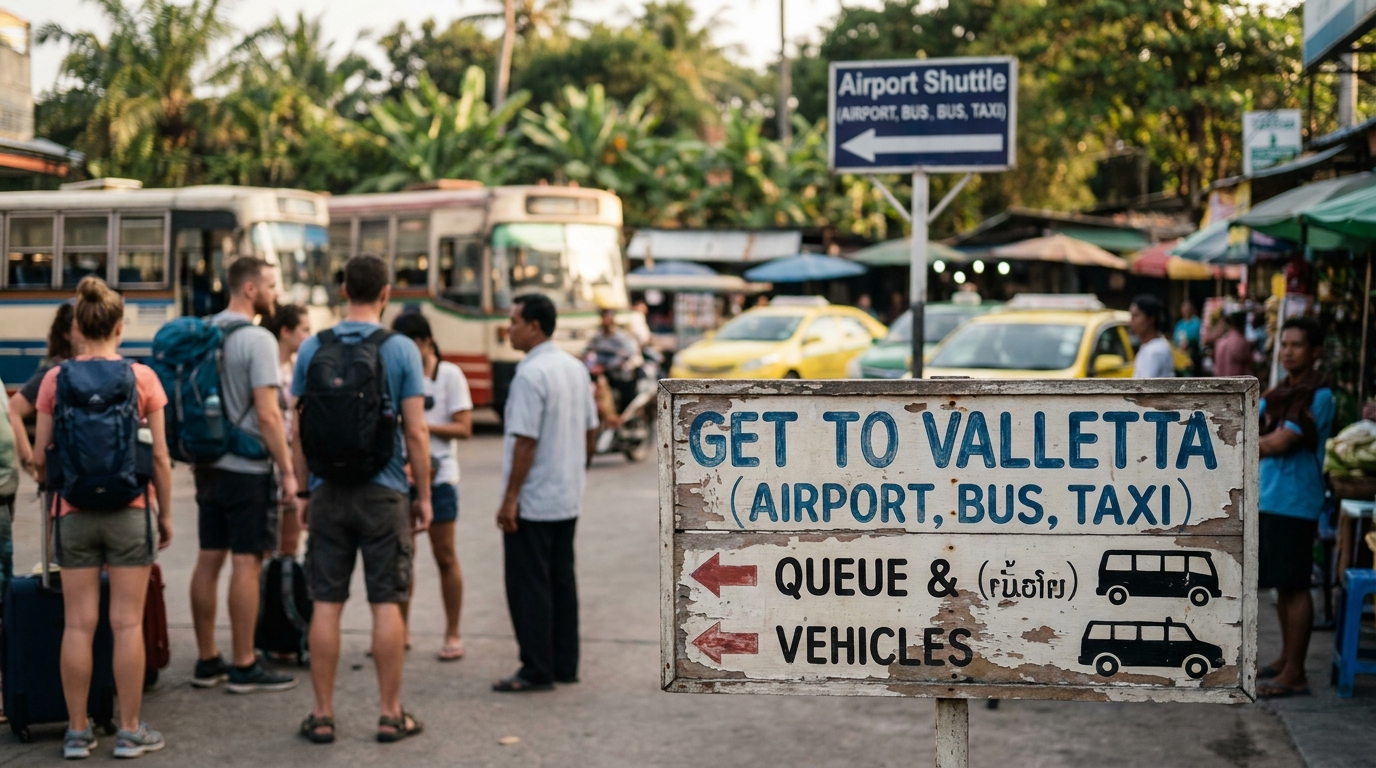
Malta International Airport sits 6 kilometers from Valletta, making it one of the shortest airport-to-capital transfers in Europe. The X4 Express Bus runs direct from the airport to Valletta for €2, takes about 25 minutes, and operates regularly throughout the day (Malta Public Transport, 2026). A taxi or ride-share covers the same route in 15 to 20 minutes for €15-20. There is no rail connection — Malta has no train network at all.
Flying into Malta
Direct flights reach Malta from across Europe. London (Gatwick and Heathrow) connects in roughly 3 hours. Rome Fiumicino is about 1 hour 15 minutes. Amsterdam is around 3 hours. Ryanair, Air Malta, easyJet, and Wizz Air all serve Malta from multiple European hubs. The airport is modern, compact, and rarely congested. Pre-purchase a Malta eSIM before landing to stay connected from the moment you arrive.
getting around malta
For Europe eSIM coverage: Airalo Europe eSIM covers Malta and 35+ European countries from around €5 for 1GB. Buy before your flight and activate on arrival.
Ferry Connections
Valletta operates a passenger ferry service to the Three Cities (Vittoriosa, Senglea, Cospicua) across the Grand Harbour. The crossing costs €1.50 each way and takes about 5 minutes. It is one of the best-value experiences in the city. A high-speed ferry also links Valletta to Gozo island (45 minutes, operated by Virtu Ferries) for day-trip access.
Getting Around Valletta (Walking, Bus, Ferry)
Valletta is almost entirely walkable. The city measures just 0.8 km² and the Street of the Republic runs its full length in under 20 minutes on foot. Most visitors cover all major sights without needing transport within the walled city. The key movement options are on foot within the walls, the Grand Harbour ferry for the Three Cities, and Malta’s bus network for island-wide day trips.
The City Gate Area
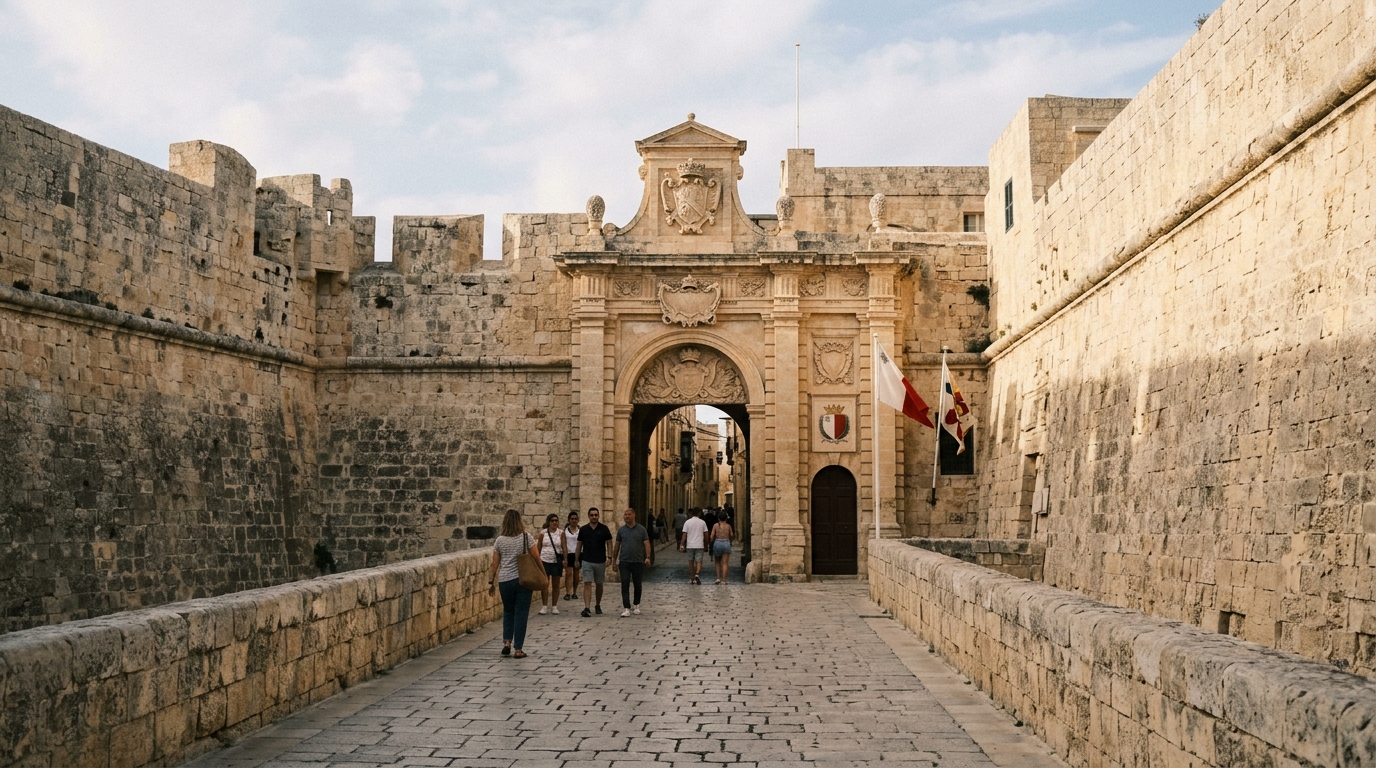
The rebuilt City Gate (designed by Renzo Piano, opened 2015) is the main pedestrian entry point. From here, the Street of the Republic runs straight to Fort St Elmo at the peninsula tip. Side streets drop steeply toward the Grand Harbour on one side and Marsamxett Harbour on the other. The grade is manageable, but the bastioned city sits on a ridge — some streets toward the waterfront are steep stairways rather than roads.
Malta’s Bus Network
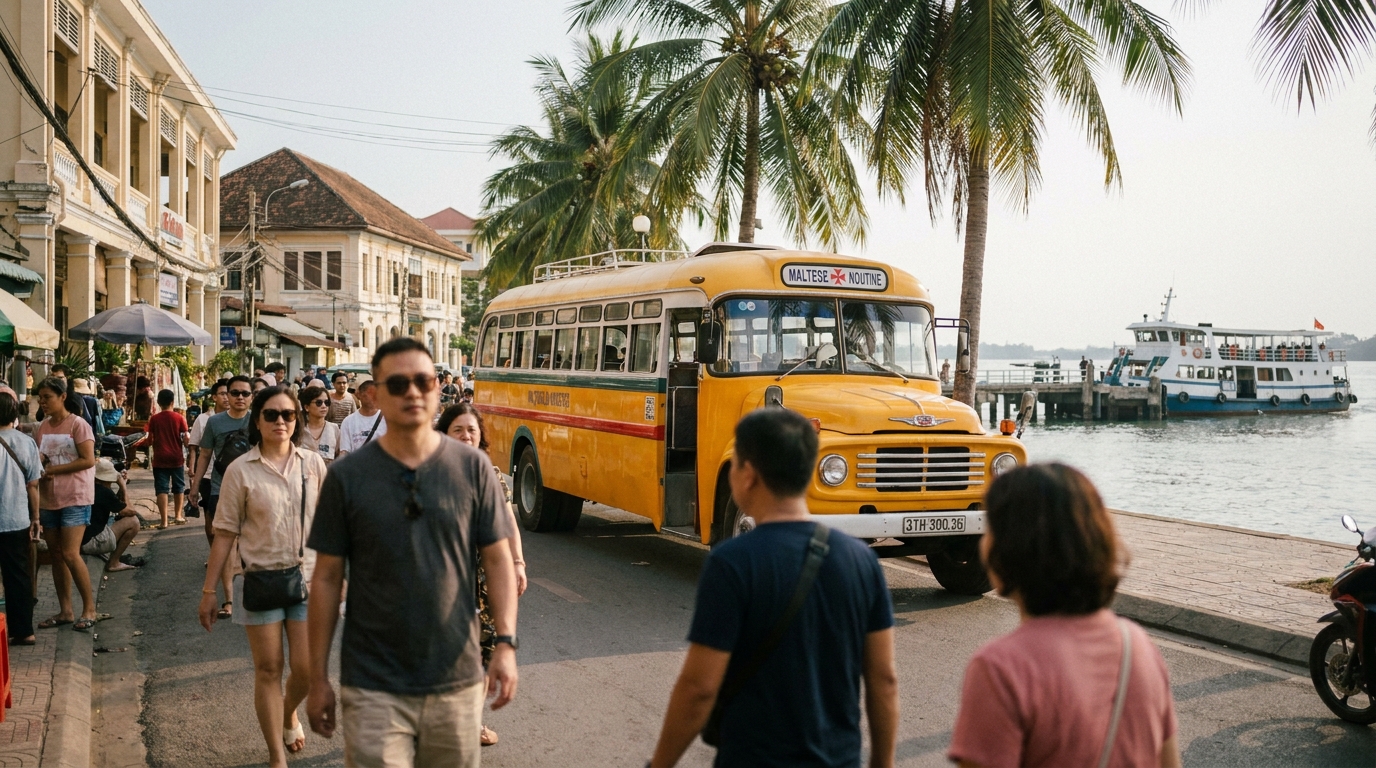
Malta’s green buses radiate from the Valletta Bus Terminus just outside City Gate. A single journey costs €2 (summer) or €1.50 (winter) (Malta Public Transport, 2026). A 24-hour unlimited pass costs €5 and makes sense on any day involving day trips. The bus system covers the entire island including Mdina, Marsaxlokk, and Blue Grotto access points.
Destination
Journey Time
Bus Route
Cost
Malta Airport
25 min
X4 Express
€2
Mdina (Silent City)
20 min
52 / 53
€2
Blue Grotto
30 min
74 / 201
€2
Marsaxlokk (fish market)
45 min
81 / 82
€2
Three Cities ferry point
10 min walk + 5 min boat
Grand Harbour Ferry
€1.50
Source: Malta Public Transport, 2026
Best Time to Visit Valletta 2026
October through May is the optimal window. Temperatures run a comfortable 18-25°C, crowds are manageable, and the light on Valletta’s honey-coloured limestone is softer and more photogenic. June through September brings intense heat — July and August regularly hit 35°C — combined with peak tourist volumes and higher accommodation prices (Malta Tourism Authority, 2025).
Month
Crowd Level
Avg High (C)
Notes
Jan-Feb
Low
15-17
Quietest period; mild; some rain; cruise ships reduced
Mar-Apr
Low-Medium
17-21
Spring flowers; excellent light; Easter festivities in April
May-Jun
Medium
24-30
Warm and busy; June starts heating sharply
Jul-Aug
Very High
32-35
Peak summer; hottest; most expensive; cruise ship surge
Sep-Oct
Medium
27-29
Sea still warm; crowds easing; October is excellent
Nov-Dec
Low-Medium
17-20
Quiet shoulder; Christmas lights in December
Source: Malta Tourism Authority and Meteorological Office Malta, 2026
Malta’s Carnival (February) and the village festas (June-September) are worth noting. The Valletta International Baroque Festival runs each January, drawing classical music audiences to the city’s cathedral and historic halls. If you visit in summer, aim for early morning sightseeing (before 10am) and rest during the 1pm-4pm heat before heading out again in the evening.
Valletta Travel Costs: Daily Budget by Tier
Malta is one of Southern Europe’s better-value destinations. Mid-range accommodation in Valletta runs €90-180 per night — lower than comparable cities in Italy, France, or Spain — and food costs are reasonable if you eat where locals eat (compare current rates on our live hotel map). The main cost variables are accommodation (limited supply in the walled city) and your choice of day trips. Budget €60-100/day for a solid mid-range experience.
Budget Tier
Daily Spend
Accommodation
Meals
Budget
€40-60/day
Hostel dorm €25-40 (Sliema/St Julian’s)
Pastizzi + local cafes + 1 sit-down
Mid-Range
€60-100/day
Guesthouse/boutique €90-140
2 restaurant meals; main sights included
Comfort
€100-180/day
Boutique hotel €140-200
All meals out; all main attractions
Luxury
€180+/day
Palazzo hotel €200-350+
Fine dining; private tours; no compromises
Source: Booking.com rate averages, May 2026
Key Activity Costs
St John’s Co-Cathedral: €15 adult, includes audio guide; pre-book online to skip queues
Lascaris War Rooms (WWII tunnels): €15 adult, guided tour approximately 1 hour
Grand Harbour ferry to Three Cities: €1.50 each way
Gozo ferry (Virtu Ferries, Valletta to Mgarr): €20-25 return (Virtu Ferries, 2026)
A sit-down lunch at a Valletta restaurant runs €10-18 per person for pasta or fresh fish. A pastizzi (the iconic Maltese ricotta or pea pastry) costs €0.30 at any local kiosk. A Kinnie (Malta’s local soft drink) or local Cisk beer at a bar terrace is €2-3.
Top Attractions in Valletta (Cathedral, Gardens, War Rooms)
Valletta’s attractions fall into three layers: free open-access sights (Upper Barrakka Gardens, the fortifications, Fort St Elmo exterior), paid heritage sites (St John’s Co-Cathedral, Lascaris War Rooms, National Museum of Archaeology), and guided tour experiences that add depth to both. Allow at least two full days to cover the core without rushing. best things to do in valletta
St John’s Co-Cathedral
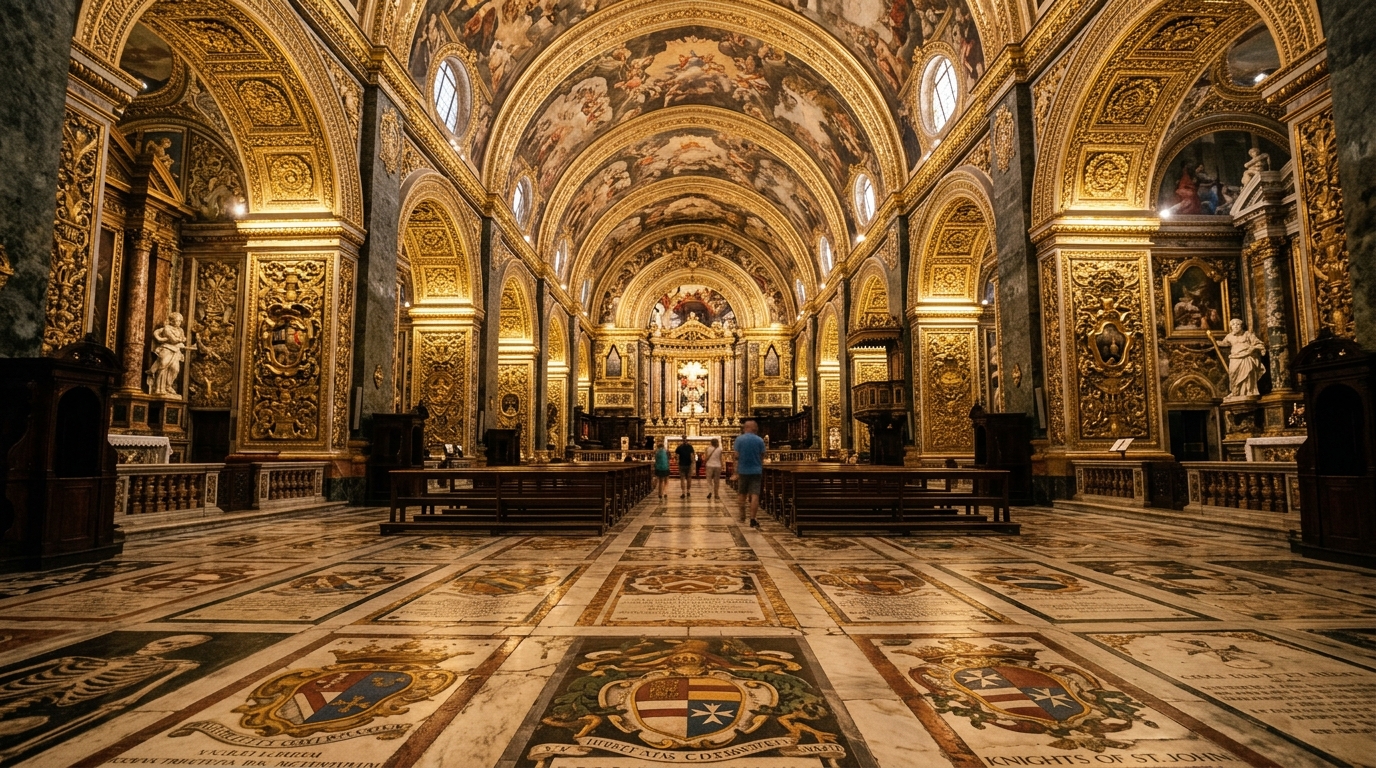
This is Valletta’s single unmissable sight. Built by the Knights of St John between 1573 and 1578, the exterior appears fortress-plain — deliberately so, for a military order. Step inside and the effect is overwhelming: every inch of the nave is covered in gilded baroque carving, and the floor is paved with 400 marble tombstones of Knights, each elaborately inlaid. Entry costs €15 and includes an audio guide (Heritage Malta, 2026).
The cathedral holds two Caravaggio paintings commissioned in 1608 — “The Beheading of Saint John the Baptist” and “Saint Jerome Writing.” The Beheading is the largest canvas Caravaggio ever painted (3.61 x 5.2 meters) and the only work he signed, reportedly in the blood of the beheaded saint at lower left. Standing in front of it without glass barriers or reproductions, in the oratory where it was painted, is one of Europe’s most extraordinary art experiences. No ticket is expensive enough to feel overpriced.
Book your St John’s Co-Cathedral tickets online in advance, especially between March and October. Walk-up queues form by 10am on busy days.
Upper Barrakka Gardens
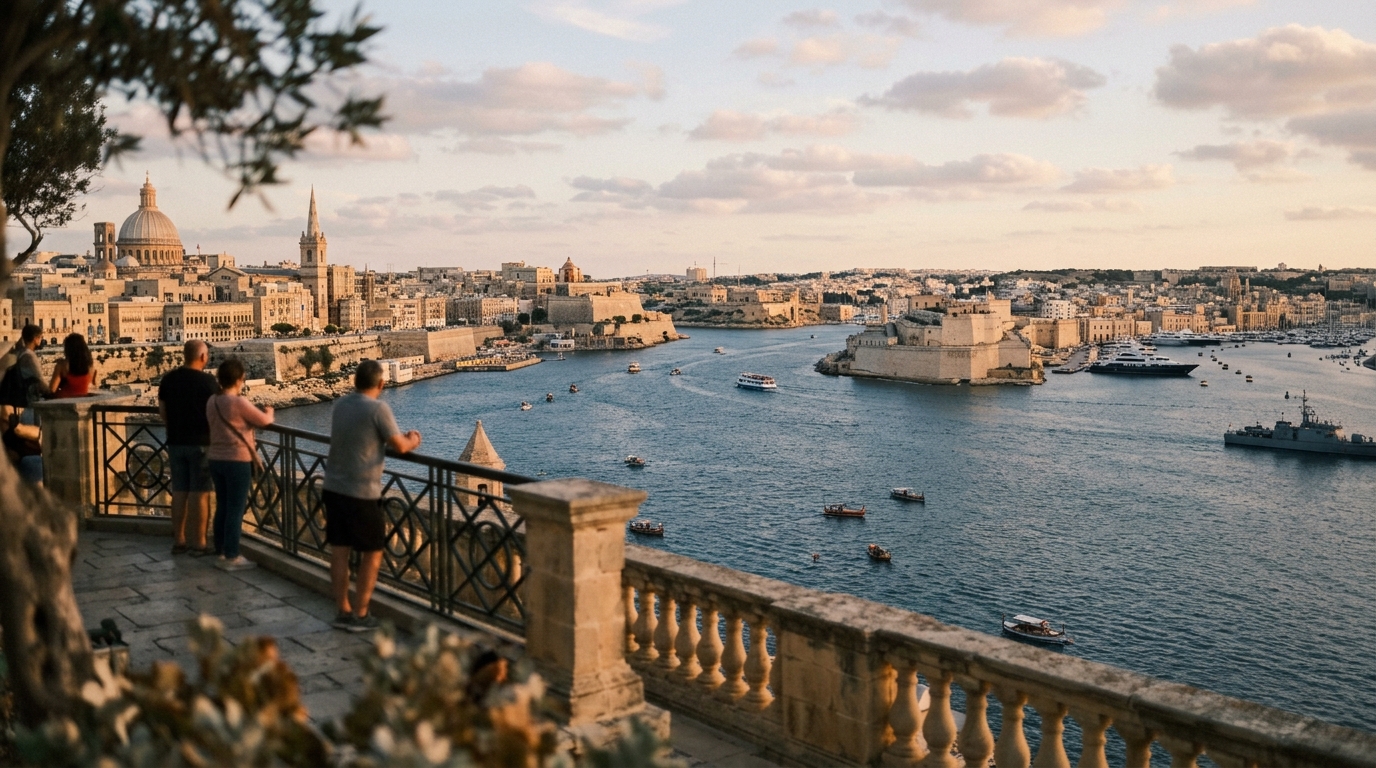
Entry to the Upper Barrakka Gardens is free, and the view from the bastion terrace is the best in Valletta — a panorama across the Grand Harbour to the Three Cities, with the dome of the Addolorata Cemetery and the Cottonera fortifications in the middle distance. The Saluting Battery below the terrace fires a cannon at noon daily; the close-up viewing experience costs €3 (Heritage Malta, 2026). Arrive early to get terrace space before the cruise ship crowds.
Lascaris War Rooms
These underground tunnels beneath the Upper Barrakka bastion served as the Allied Forces’ Mediterranean headquarters during World War II. From here, British commanders coordinated the defense of Malta during the island’s sustained bombing campaign from 1940 to 1942. Malta was awarded the George Cross by King George VI in 1942 for its collective resistance — the only time a whole island has received the honor. The guided tour costs €15 and lasts about an hour. The rooms are preserved with original maps, communications equipment, and period documents (Lascaris War Rooms, 2026).
Find your Valletta hotel on the map
Live prices from Booking, Airbnb and more — move the map or change dates to compare stays around Valletta.
Where to Stay in Valletta
Valletta has a limited accommodation supply — the walled city is compact and most buildings are historic residences or palaces undergoing slow conversion. Mid-range boutique hotels and converted palazzo guesthouses dominate. Budget travelers often base themselves in nearby Sliema (10-minute ferry or 20-minute bus from Valletta), where more hostel and hotel options exist at lower prices. valletta hotels
Property Type
Price Range/Night
Location
Best For
Hostel dorm (Sliema base)
€20-40
Sliema, 20 min to Valletta
Budget solo travelers
Palazzo Prince d’Orange (mid)
€90-140
Valletta walled city
Couples, mid-range
Ursulino Hotel (boutique)
€120-180
Valletta walled city
Design-conscious travelers
Rosselli AX Privilege (luxury)
€200-350
Valletta walled city
Luxury, palazzo atmosphere
Sliema hotel (mid-range)
€70-110
Sliema, seafront
Families, longer stays
Source: Booking.com rate averages, May 2026
Staying Outside the Walled City
Sliema (across Marsamxett Harbour, connected by ferry or bus) offers broader accommodation choice, a seafront promenade, and the Tigne Point shopping area. St Julian’s, a 10-minute walk north of Sliema, adds nightlife options. Both work well as a base — Valletta’s compact size means the day trip from Sliema takes under 20 minutes.
Staying inside the walled city itself changes the experience. Valletta’s narrow streets empty out by 8pm — day visitors and cruise passengers leave, and the city reverts to its 6,000 residents. The evening light on the limestone alleys, with the harbour glittering below the bastions, is entirely different from the daytime tourist circuit. If your budget allows one night inside the walls, it is worth prioritizing over a cheaper external option.
Malta is a small island — 27 kilometers long by 14 wide — which means every major site is within 45 minutes of Valletta by bus or car. The island rewards a multi-day base in or near Valletta, with day trips radiating outward across distinctly different landscapes and atmospheres.
Mdina (20 min, Bus 52/53): the “Silent City,” a fortified medieval hilltop town of about 300 residents. No cars allowed inside. Walk the tight limestone alleys and look out over the island from the bastion cafe. Free to enter the town; Cathedral Museum €5.
Blue Grotto (30 min, Bus 74/201): limestone coastal arches with boat trips into the azure caves. Boat tour €8-10 per person, best light in the morning.
Marsaxlokk fish market (45 min, Bus 81/82): traditional fishing village with Sunday morning market. The harbour is lined with painted luzzu boats. The market is at its best before 11am.
Gozo island (45 min high-speed ferry from Valletta, Virtu Ferries): a separate island with a quieter pace, the Azure Window site (collapsed 2017, but the coastline remains dramatic), and excellent diving.
Three Cities (5 min Grand Harbour ferry, €1.50): Vittoriosa, Senglea, and Cospicua — the three fortified cities facing Valletta across the harbour. Vittoriosa’s waterfront and the Inquisitor’s Palace (€5) are the highlights.
Practical Tips for First-Timers
These cover the planning details that first-time visitors to Valletta most commonly miss. valletta itinerary
1. Pre-book St John’s Co-Cathedral. Walk-up queues form early. Book online the night before at minimum; book weeks ahead in peak season (April-October).
2. Visit Upper Barrakka Gardens at sunset, not noon. The light across the harbour is far better at 6pm-7pm than midday. The noon cannon firing is worth attending once, but sunset is when the terrace is truly spectacular.
3. Catch the Saluting Battery at noon. The cannon fires daily at noon from the Saluting Battery below the Upper Barrakka Gardens. The close-up experience costs €3 from Heritage Malta and lasts about 15 minutes.
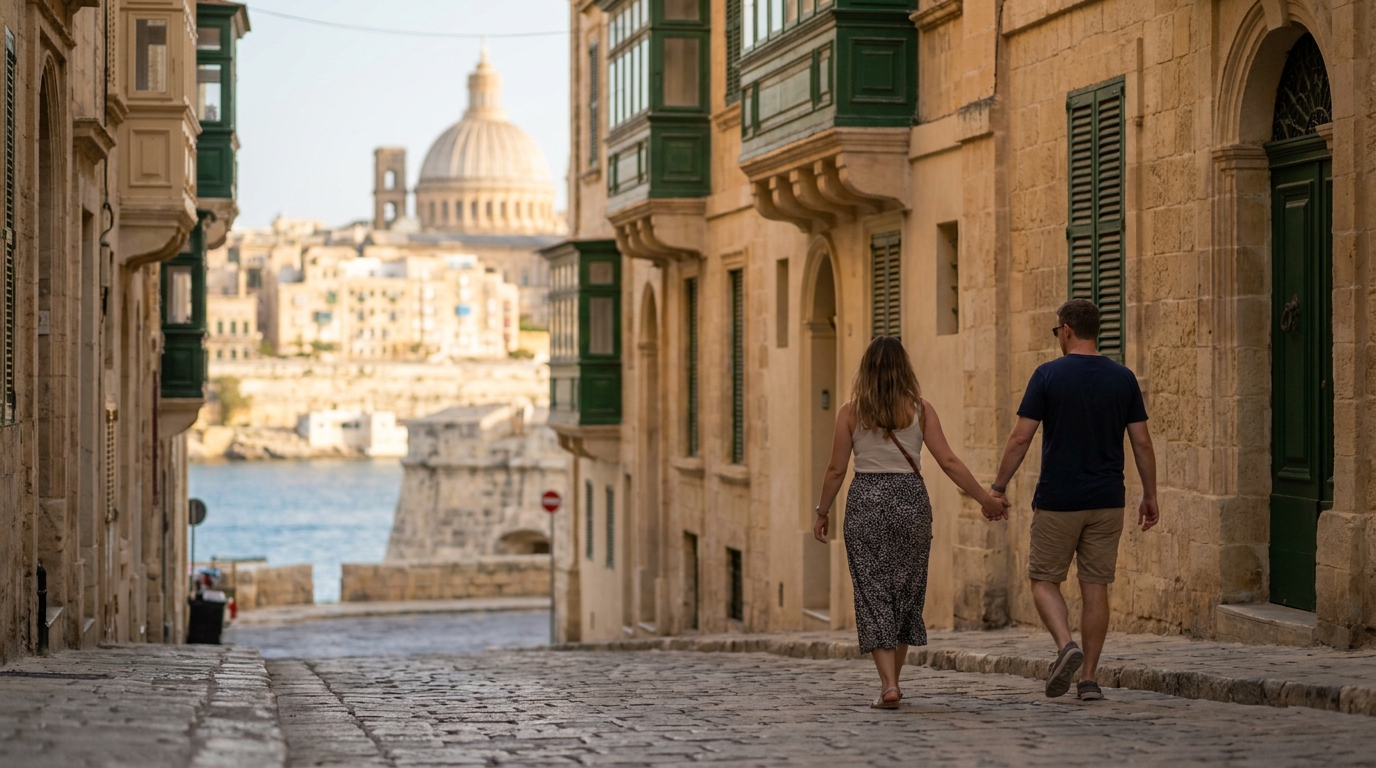
4. Wear comfortable shoes. Valletta’s side streets are cobbled and slope steeply toward both harbours. Sandals manage fine; heels do not.
5. Use the Grand Harbour ferry. The €1.50 ferry to the Three Cities is one of the best-value activity options in Malta. The view of Valletta’s fortifications from the water is better than any view from land.
6. Marsaxlokk market is Sunday only. The main Sunday fish market at Marsaxlokk runs until about 12:30pm. Leave Valletta by 8:30am on Bus 81 to arrive for peak market activity.
7. Carry cash for small vendors. Pastizzi kiosks, market stalls, and some small cafes are cash-only. ATMs are available near City Gate and along the Street of the Republic.
8. Book Gozo as a half-day or full day. The high-speed ferry from Valletta (Virtu Ferries, not the car ferry from Cirkewwa) makes Gozo feasible in half a day, but a full day is better.
9. The sun is intense even in April. Malta’s latitude (35 degrees north) means UV levels are high. Sunscreen, a hat, and water are essentials from late March onward.
Valletta Travel Guide: Final Verdict
Valletta is exceptional for a capital city visit. It combines genuine world-class art (the Caravaggio paintings alone justify the flight), military heritage of real weight, a walkable scale that removes all transport friction, and a harbour view that ranks among Southern Europe’s finest. The small city means you cannot miss anything — and unlike Rome or Athens, you do not need a week to feel you have done it properly.
Go between October and May. Stay at least two nights inside the walled city if budget allows. Book St John’s Co-Cathedral in advance. Take the Grand Harbour ferry. Done well, Valletta delivers two of Europe’s most memorable travel days in a city small enough to hold in your palm.
For current accommodation pricing and property reviews, see the Valletta hotels guide. For a structured day-by-day plan covering the cathedral, gardens, and day trips, see the Valletta itinerary.
Frequently Asked Questions
How many days do you need in Valletta?
Two full days covers all major sites inside the walled city, plus the Grand Harbour ferry to the Three Cities. Add a third day for the Mdina and Marsaxlokk day trips. Budget travelers doing a day trip from Sliema can cover the core sights in 5-6 hours, but miss the calm of the evening city after 7pm.
Is Valletta expensive compared to other European capitals?
Malta is affordable by Western European standards. Mid-range accommodation runs €90-180/night in Valletta — lower than Rome, Barcelona, or Amsterdam. A daily budget of €60-100 covers accommodation, two restaurant meals, and two or three paid attractions (compare current rates on our live hotel map). Food is especially reasonable; a full pastizzi breakfast and coffee costs under €3.
What is the best way to get from Malta Airport to Valletta?
The X4 Express Bus runs direct from Malta International Airport to the Valletta Bus Terminus for €2 and takes about 25 minutes (Malta Public Transport, 2026). A licensed taxi or Bolt ride-share covers the same route in 15-20 minutes for €15-20. There is no rail link. The bus is the clear value choice; the taxi is the convenience choice.
Can you visit Valletta as a day trip from Sicily or southern Italy?
Yes, but only by air — there is no ferry from Sicily to Malta. With budget carriers offering flights from Catania or Palermo for under €50 return, a Malta day trip is technically feasible, though a 2-3 night visit is strongly preferable. Most visitors combine Malta with other Mediterranean destinations rather than treating it as a single-day add-on. You can compare flights on Aviasales to find the cheapest dates and routes.
What is there to do in Valletta beyond the main sights?
Beyond St John’s Co-Cathedral, Upper Barrakka Gardens, and Lascaris War Rooms, Valletta has the National Museum of Archaeology (Neolithic Maltese temple artifacts, €10), the Manoel Theatre (one of Europe’s oldest working theatres, 1731), the Malta Experience audio-visual history show (€16), excellent baroque-facade street photography on Merchant Street, and a concentrated cafe and restaurant scene in the lower city streets. The city genuinely rewards slow walking and exploratory side-street wandering.
This Valletta travel guide was researched and written in May 2026. Prices and schedules are subject to change; verify with official sources before booking.