
Disclosure: Some links in this guide are affiliate links. If you book or buy through them, we may earn a small commission at no extra cost to you — it helps keep our guides free.
15 Best Things to Do in Kyoto 2026: Temples & Geisha
The best things to do in Kyoto in 2026 center on its temples, torii-gate trails, bamboo groves, and the old geisha quarter of Gion, and most of the headline sights cost either nothing or under ¥600 to enter. Kyoto pulled in a record 12.68 million international visitors in 2025, up 17 percent on the year before (Kyoto City tourism figures, via Living Kyo, 2026), so the city is busier than it has ever been. That single fact should shape your whole plan: the difference between a magical morning and a shoulder-to-shoulder scrum usually comes down to what hour you arrive. These sit across separate districts, so trip length matters more than it looks — see how many days you need in Kyoto.
This guide ranks the sights we keep sending friends to, with 2026 entry fees, opening hours, and the exact timing tricks that dodge the worst crowds. We cover Fushimi Inari, Kinkaku-ji, the Arashiyama bamboo grove, Kiyomizu-dera, Gion, Nishiki Market, and a proper tea ceremony, plus how to string them together without wasting a day on buses. For the wider trip, our full Kyoto travel guide handles logistics, budgets, and district maps.
Key Takeaways
– Fushimi Inari Taisha is free and open 24 hours a day, with roughly 10,000 vermilion torii gates and a 4-kilometer summit loop that takes 2-3 hours round trip.
– Kinkaku-ji costs ¥500 and closes at 17:00, and your ticket is a printed calligraphy charm (ofuda) rather than a paper stub.
– The Arashiyama bamboo grove is free but only peaceful before 8:00 am — by 11:00 the 400-meter path is packed.
– A Subway & Bus One-Day Pass costs ¥1,100 in 2026, while single bus rides are a flat ¥230 and the old ¥700 bus-only pass has been scrapped.
– Spring blossoms peak around April 2 and autumn foliage around late November, the two most beautiful and most crowded windows of the year.[PERSONAL EXPERIENCE] We spent five days in Kyoto over two trips and learned the hard way that the city runs on early starts. On our last visit we walked into Fushimi Inari at 6:40 am and had the lower gates almost to ourselves; by the time we left at 8:15 the entrance was a wall of tour groups. Every sight below is arranged around that lesson.
What Are the Best Things to Do in Kyoto?
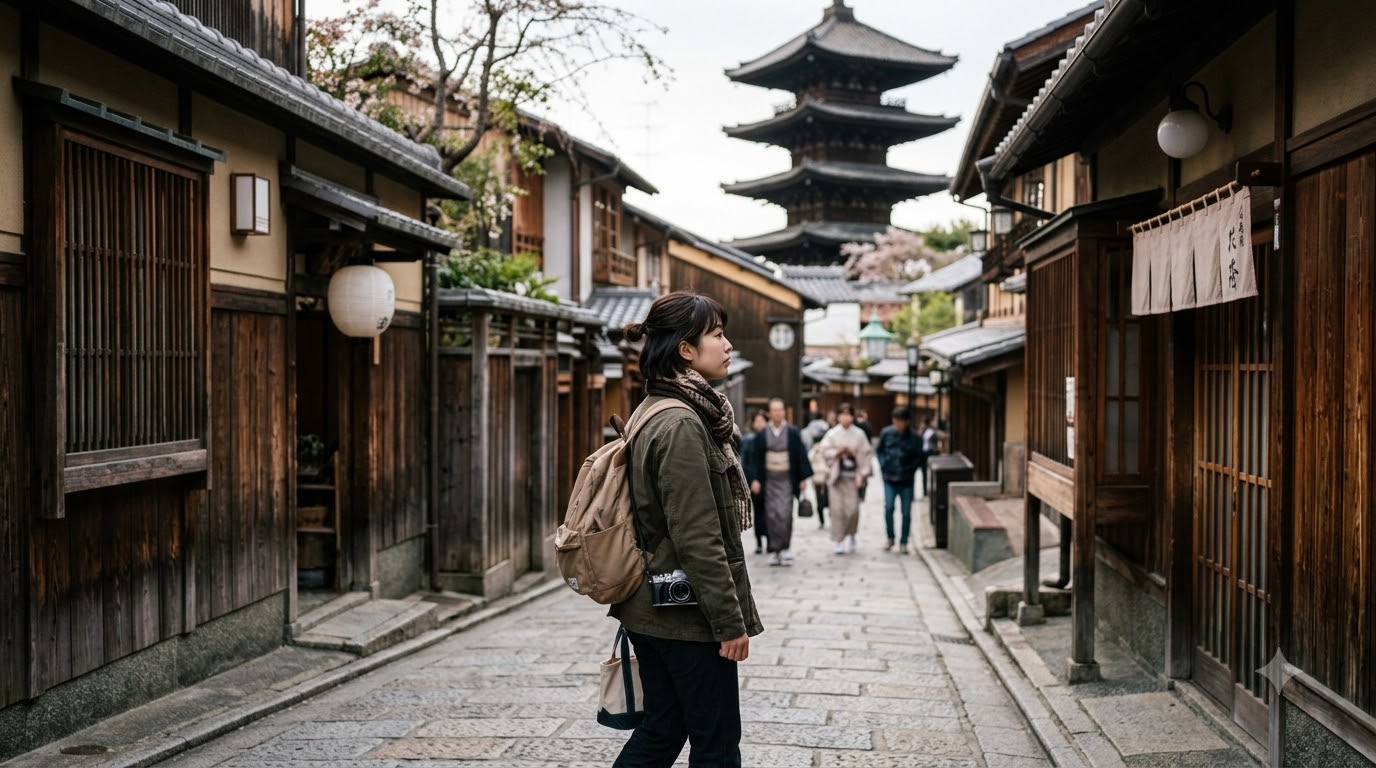
The best things to do in Kyoto split into three buckets: temples and shrines, the geisha and food districts, and hands-on culture like tea ceremony. You can see the essential list in three full days if you group sights by area, since Kyoto’s attractions cluster in the east (Higashiyama), north (Kinkaku-ji), and west (Arashiyama). Here is the shortlist we would not skip:
- Fushimi Inari Taisha — free, open 24 hours, the torii-gate hike (southern Kyoto).
- Kinkaku-ji (Golden Pavilion) — ¥500, the gold-leaf temple over a reflecting pond (north).
- Kiyomizu-dera — ¥500, the wooden hillside terrace with city views (Higashiyama).
- Arashiyama Bamboo Grove — free, the towering bamboo path (west).
- Gion — free to wander, Kyoto’s historic geisha district (central-east).
- Nishiki Market — free entry, a 400-meter covered food street (downtown).
- Tea ceremony — from ¥3,000, a guided matcha ritual (citywide).
Higashiyama alone saw foreign visitor numbers rise 66 percent in a recent year (Kyoto tourism analysis, 2024), which is exactly why we push people toward dawn visits. If you are deciding when to come, our best time to visit Kyoto breakdown goes month by month.

The 3-Day Kyoto Itinerary
The plan we use ourselves — sent straight to your inbox.
- Day-by-day route
- Where to stay
- Real 2026 costs
Free · No spam · Unsubscribe anytime
Hike the Torii Gates at Fushimi Inari Taisha
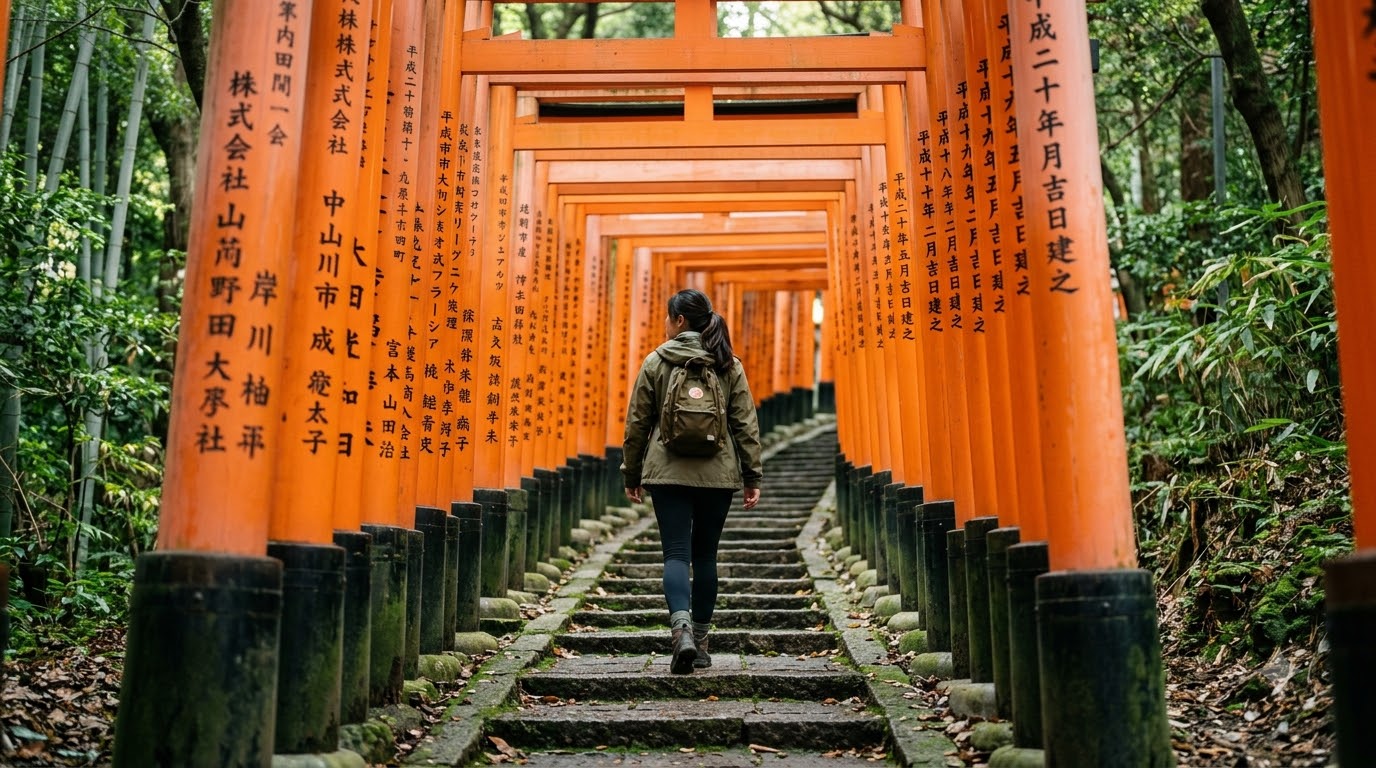
Fushimi Inari Taisha is the one Kyoto sight we tell everyone to do first, because it is free, never closes, and is at its best before the crowds arrive. Around 10,000 vermilion torii gates line the trails up sacred Mount Inari, donated over centuries by businesses and worshippers. From the JR Inari Station (five minutes from Kyoto Station on the JR Nara Line, ¥150), the main gate sits directly across the street.
You do not have to climb the whole mountain. Here is how the trail breaks down:
- Main shrine to the Senbon Torii (dense gate tunnel): about 10 minutes, mostly flat.
- Up to the Yotsutsuji intersection (halfway, city viewpoint): 30-45 minutes of steady stairs.
- Full summit loop back to the base: 2-3 hours, roughly 4 kilometers with real elevation.
We hiked to Yotsutsuji, caught the view over southern Kyoto, and turned back — a good 90-minute visit that most people can manage. Peak congestion runs 9:00 am to 4:00 pm, so aim for before 7:00 am or after sunset when the lantern-lit gates feel genuinely eerie.
See the Golden Pavilion at Kinkaku-ji
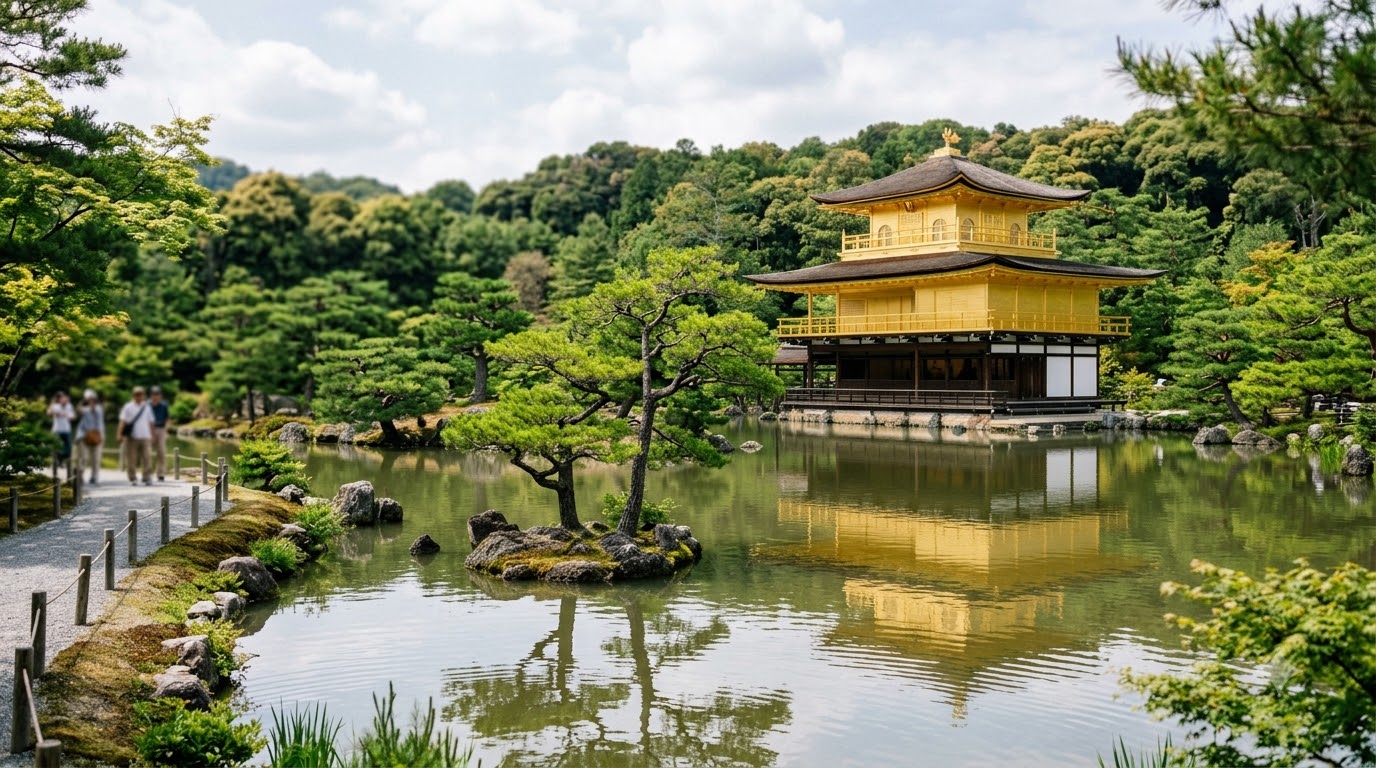
Kinkaku-ji, the Golden Pavilion, is Kyoto’s most photographed temple and a quick but essential stop. The top two floors are covered in gold leaf, and the building mirrors perfectly in the pond in front of it. Entry is ¥500 for adults and ¥300 for school students, and it is open 09:00 to 17:00 every day, including holidays. A nice touch: your admission ticket is a paper ofuda charm you can keep.
Plan on 45 to 60 minutes here. The viewing path is one-way and can bottleneck at the main photo spot, so we arrived at opening and were back at the gate before the first coaches unloaded. Kinkaku-ji sits in northern Kyoto, away from the eastern temple cluster, so pair it with nearby Ryoan-ji’s rock garden rather than backtracking across the city.
| Attraction | Entry fee (2026) | Hours | Time needed |
|---|---|---|---|
| Fushimi Inari Taisha | Free | 24 hours | 1-3 hrs |
| Kinkaku-ji | ¥500 | 09:00-17:00 | 45-60 min |
| Kiyomizu-dera | ¥500 | 06:00-18:00 | 1-1.5 hrs |
| Arashiyama Bamboo Grove | Free | 24 hours | 30-45 min |
| Tenryu-ji (garden) | ¥500 | 08:30-17:00 | 1 hr |
| Nishiki Market | Free | ~09:00-18:00 | 1 hr |
The 3-Day Kyoto Itinerary
Hour-by-hour plan, where to stay and what it really costs — free PDF.
Free · No spam · Unsubscribe anytime
Walk the Arashiyama Bamboo Grove Before 8 am
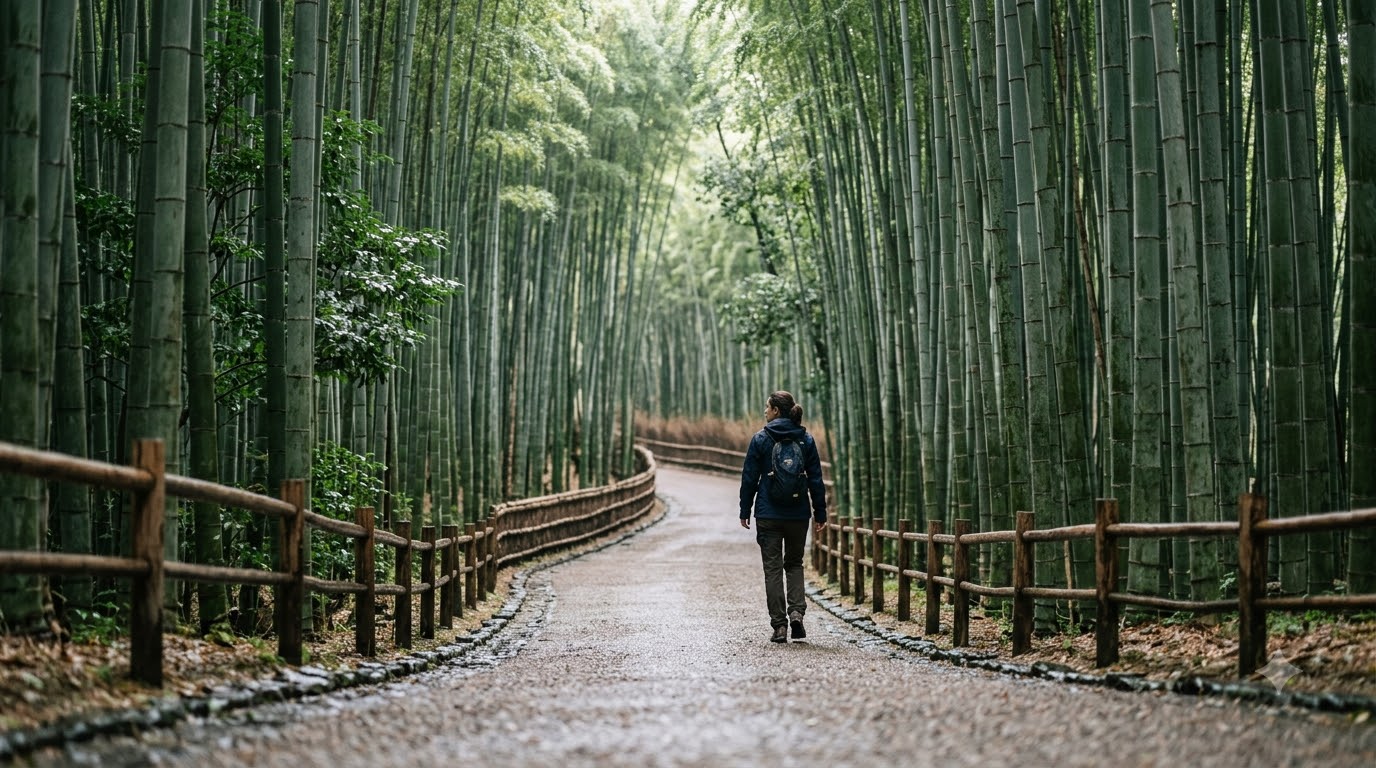
The Arashiyama bamboo grove is free and open around the clock, but timing is everything: the towering 400-meter path only delivers that quiet, rustling-cane feeling before the mid-morning rush. We reached the entrance at 7:10 am, and for 20 minutes the light filtering through the stalks was ours alone. By the time we left near 8:30 the path had filled. Peak hours run 11:00 am to 3:00 pm, when it can feel claustrophobic.
Getting there is easy: the JR Sagano Line runs from Kyoto Station to Saga-Arashiyama in about 15 minutes for ¥240, then it is a 10-minute walk. While you are in the west of the city, add these:
- Tenryu-ji Temple: a UNESCO Zen temple beside the grove, ¥500 for the garden, open from 08:30.
- Togetsukyo Bridge: the photogenic bridge over the Katsura River, free.
- Okochi Sanso Villa: a hillside garden with tea included, a peaceful escape from the grove crowds.
Arashiyama works well as a half-day; we like it as a morning paired with a central-Kyoto afternoon.
Take in the Views at Kiyomizu-dera
Kiyomizu-dera earns its spot for the giant wooden veranda that juts over the hillside, giving you one of the best free-feeling panoramas of Kyoto. Admission is ¥500 for adults, and the temple opens early at 6:00 am, with last entry around 6:00 pm in summer and 5:00 pm in winter. Those early hours are a gift — we walked up at 6:30 one morning and the terrace was nearly empty, with mist still sitting in the valley.
The approach is half the fun. The sloping lanes of Sannenzaka and Ninenzaka leading up to the temple are lined with wooden machiya shops selling matcha ice cream, yatsuhashi sweets, and ceramics. A few pointers:
- Go at opening (6:00 am) or during autumn night illuminations, when the temple stays open late into the evening.
- Wear shoes you can slip off — some halls require it.
- Budget an hour to 90 minutes including the shopping streets on the walk up.
This whole Higashiyama district is walkable, which is why we suggest basing yourself nearby; our where to stay in Kyoto guide covers the best neighborhoods for temple-hopping on foot.
Find your Kyoto hotel on the map
Live prices from Booking & Airbnb — tap a pin to compare stays around Gion and Kyoto Station and beyond.
Wander Gion, Kyoto’s Geisha District
Gion is the historic entertainment quarter where you might glimpse a geiko or maiko (Kyoto’s term for geisha and apprentices) hurrying to an evening appointment. Wandering the streets is free, and the best stretch is Hanamikoji, a lane of wooden teahouses and restaurants, plus the willow-lined Shirakawa canal nearby. Dusk is the moment to come, when lanterns flick on and the old machiya glow.
Please treat it as a living neighborhood, not a set. The city has closed some private alleys to tourists and posted fines for trespassing after years of harassment complaints. Simple rules keep it respectful:
- Do not chase, touch, or block geiko and maiko for photos — it is prohibited on private streets.
- Stay on the main public lanes like Hanamikoji and Shirakawa.
- Come in the early evening (around 17:30-18:30) for the atmosphere without the daytime tour crush.
If you want a guaranteed cultural encounter rather than a chance sighting, book a tea ceremony or a maiko dinner in advance instead.
Eat Your Way Through Nishiki Market
Nishiki Market is the best place in Kyoto to eat like a local, a 400-meter covered arcade nicknamed “Kyoto’s Kitchen.” More than 100 stalls sell everything from grilled skewers and tako-tamago (baby octopus with a quail egg) to fresh tofu, pickles, and matcha sweets. Entry is free; you simply pay per bite. We grazed our way through in about an hour and spent under ¥2,000 each.
A few practical notes for 2026:
- Most stalls run roughly 09:00 to 18:00, though some close earlier or on Wednesdays.
- Eat where you buy — walking and eating is discouraged, and many stalls have a small standing spot.
- Go before noon for the freshest stock and fewer elbows.
The market is a three-minute walk from many downtown tea-ceremony venues, so it pairs naturally with the culture stop below.
Join a Traditional Tea Ceremony
A tea ceremony is the most rewarding hands-on thing to do in Kyoto, and it is easier to book than most people expect. A guided matcha ceremony runs roughly ¥3,000 to ¥15,000 per person and lasts 45 to 120 minutes; add a kimono rental and the combined experience climbs to about ¥10,000 to ¥25,000 for a half day. Sessions in Gion, near Nishiki Market, and around Kennin-ji (Kyoto’s oldest Zen temple) are all easy to reach.
Here is roughly what you get at each price point:
- ¥3,000-5,000: a short 45-minute group ceremony, matcha and a wagashi sweet, English explanation.
- ¥6,000-10,000: a longer private or small-group session, often with a garden setting.
- ¥10,000-25,000: full kimono dressing plus the ceremony, usually 4-5 hours with photos.
We did a mid-range morning ceremony near Nishiki and found the quiet, deliberate pace a real reset between temple visits. Book a day or two ahead in spring and autumn, when slots fill fast.
When Should You Visit, and How Do You Get Around?
The two best times to visit Kyoto are spring and autumn, but they are also the most crowded and expensive. For 2026, cherry blossoms are forecast to open around March 25 and hit full bloom near April 2, while autumn foliage should peak roughly November 25 to December 7. If you want the scenery with lighter crowds, late April to early May or October give you the best balance — our guide to the best time to visit Kyoto has the full monthly rundown.
| Season | Months | Typical weather | Highlight |
|---|---|---|---|
| Spring | Late Mar-mid Apr | 10-20°C | Cherry blossoms (peak ~Apr 2, 2026) |
| Early summer | May-Jun | 20-28°C | Green maples, thinner crowds |
| Summer | Jul-Aug | 28-35°C, humid | Gion Matsuri festival |
| Autumn | Nov 20-early Dec | 10-18°C | Foliage peak (~Nov 25-Dec 7, 2026) |
| Winter | Dec-Feb | 2-10°C | Quiet temples, occasional snow |
Getting around is straightforward once you know the fares. Single city bus rides are a flat ¥230 in 2026, subway rides run ¥220 to ¥360 by distance, and the Subway & Bus One-Day Pass costs ¥1,100 (the old ¥700 bus-only pass has been discontinued). We usually walk Higashiyama, take the JR lines to Fushimi Inari and Arashiyama, and grab the subway across town. Choosing between Japan’s two headline cities? Our Tokyo vs Kyoto comparison lays out which suits your trip.
Frequently Asked Questions
What is the number one thing to do in Kyoto?
Fushimi Inari Taisha is the single best thing to do in Kyoto for most visitors: it is free, open 24 hours, and its roughly 10,000 torii gates are unlike anything else in Japan. Arrive before 7:00 am and the lower gate tunnels are quiet enough to photograph without crowds. If you only have time for one paid temple, make it Kinkaku-ji (¥500) for the gold-leaf pavilion.
How many days do you need in Kyoto?
Three full days cover Kyoto’s essential things to do if you group sights by area — one day for eastern Higashiyama (Kiyomizu-dera, Gion), one for the north (Kinkaku-ji), and one for western Arashiyama plus Fushimi Inari. Four or five days let you slow down, add a tea ceremony, and take a day trip to Nara or Uji. We found three days doable but tight.
Are Kyoto’s temples free to enter?
Some are, some are not. Fushimi Inari Taisha and the Arashiyama Bamboo Grove are completely free, while Kinkaku-ji and Kiyomizu-dera each cost ¥500 for adults in 2026. Most paid temples charge between ¥300 and ¥600, and a few charge extra for special halls or gardens. Budget around ¥2,000-3,000 per day for temple entries if you visit several.
Can you see a geisha in Gion?
You can sometimes spot a geiko or maiko in Gion around early evening, especially near Hanamikoji, but sightings are down to chance and you must not chase or photograph them on private streets, where fines now apply. For a guaranteed encounter, book a maiko dinner or a cultural experience in advance rather than waiting on the street.
What is the best time of day to visit Kyoto’s popular sights?
Early morning, ideally before 8:00 am, is the best time to visit Kyoto’s popular sights. Fushimi Inari, Arashiyama, and Kiyomizu-dera all open early or never close, and arriving at dawn means smaller crowds, cooler temperatures, and better light. Peak congestion runs from about 9:00 am to 4:00 pm, so we front-load the famous spots and save markets and shopping streets for the afternoon.
Final Thoughts
Kyoto rewards a little planning more than almost any city we have visited. The sights themselves are cheap or free, but the experience swings entirely on timing: the same bamboo grove or torii tunnel is either serene or shoulder-to-shoulder depending on the hour you show up. Start early, group your days by district, and leave room for one slow cultural stop like a tea ceremony. Do that, and even in a record-breaking tourist year, Kyoto still feels like the quiet old capital it has always been. When you are ready to book flights and lodging, our complete Kyoto travel guide ties the whole itinerary together.