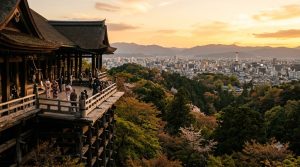
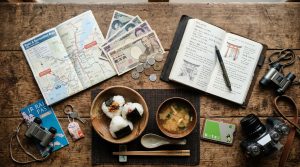
Is Kyoto Worth Visiting? (2026)
Disclosure: Some links in this guide are affiliate links. If you book or buy through them, we may earn a small commission at no extra cost to you — it helps keep our guides free.
Kyoto is worth visiting even with a 2026 lodging tax hike of up to 900% on luxury rooms and a JPY 10,000 (USD 64) fine for wandering into Gion’s roped-off private alleys, because no other Japanese city packs this much temple, craft, and food culture into a single afternoon’s walk.
It is not worth a dedicated overnight stay if you have fewer than 3 total nights in the Kansai region, since Kyoto’s headline sites work fine as a day trip from Osaka.
All USD figures below use USD/JPY 156, the rate verified on 8 September 2026.
| Traveller type | Worth it? | Nights to give it | Why |
|---|---|---|---|
| First-time Japan visitor | Yes | 2-3 nights | Only city with this density of temples, geisha culture, and craft workshops |
| Repeat visitor (3rd+ Japan trip) | Maybe | 1 night or day trip | Main sites already seen; go only for a specific interest |
| Budget backpacker | Base in Osaka instead | 0 nights, day trips | Kyoto hotel rates and the lodging tax add up fast |
| Family with young kids | Skip or 1 night max | 1 night | Long temple walks and packed buses wear kids out quickly |
| Photography or culture trip | Yes | 3+ nights | Early light at temples and deeper access reward extra time |
| Under 24 hours in Kansai | No | 0 nights | Not enough time to clear the transit and crowds |
What Kyoto has that nowhere else in Japan does
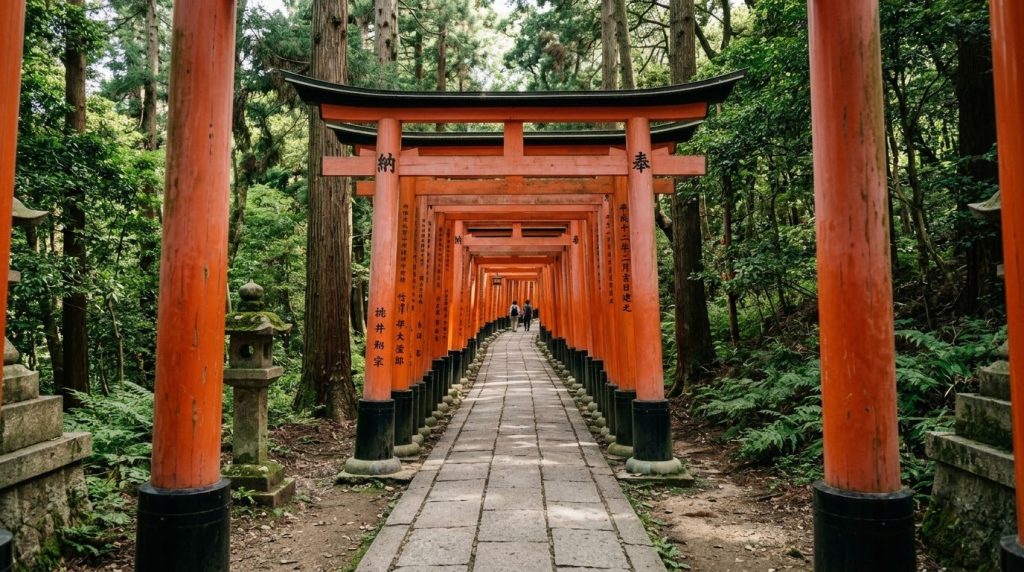
Kyoto is the only city in Japan where UNESCO-listed temples, a working geisha district, and centuries-old craft workshops sit inside the same walkable radius.
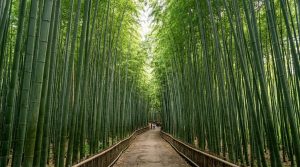
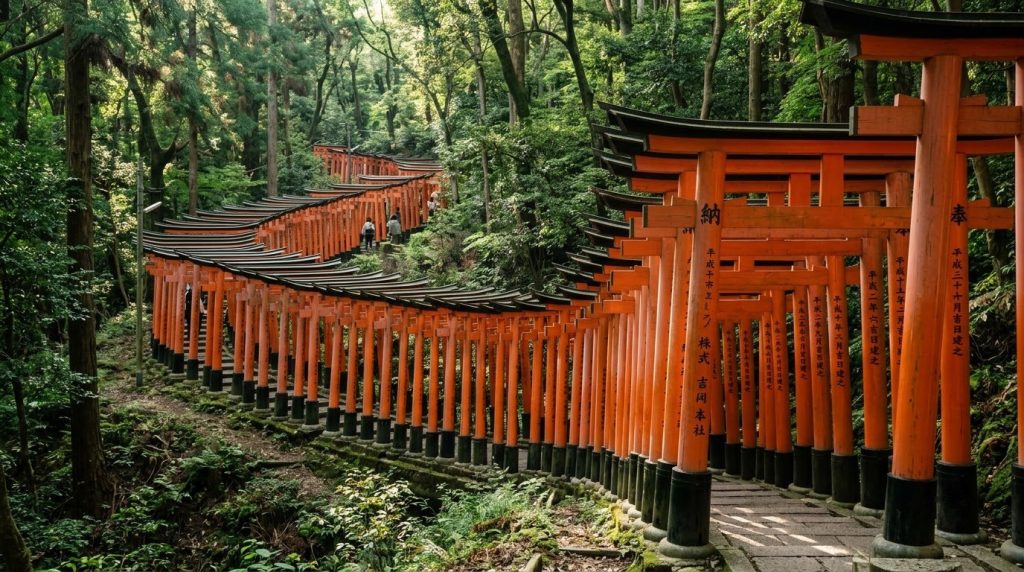
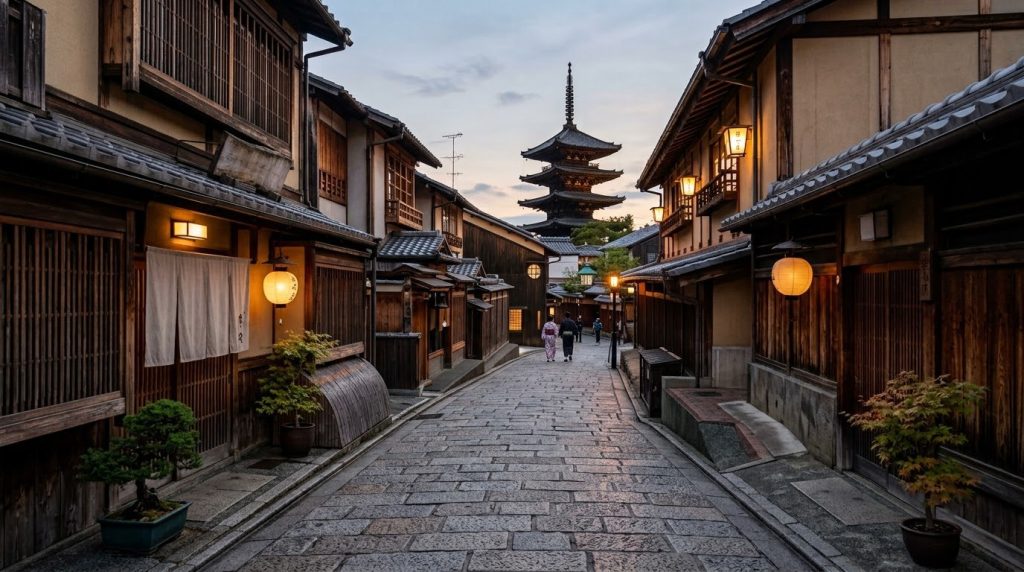
Fushimi Inari Taisha’s thousands of vermilion torii gates, the Arashiyama bamboo grove, and Nishiki Market’s food stalls are each individually impressive, but the concentration is the real draw: nowhere else can you move from a Zen rock garden to a kaiseki dinner to a lantern-lit street in under an hour.
That density also supports a working craft economy that Tokyo and Osaka do not have room for, from Nishijin textile weavers to small kiyomizu-yaki pottery studios still selling out of the same workshop their grandparents used. Tokyo has scale and modern energy; Kyoto has depth and continuity, a distinction we cover in full in our Tokyo versus Kyoto comparison.
If this is a first Japan trip, that depth is worth building an itinerary around rather than squeezing into a single day.
The crowds, and which sites are genuinely ruined
A handful of Kyoto’s most-photographed spots are functionally unusable at peak hours, but most of the city is not.
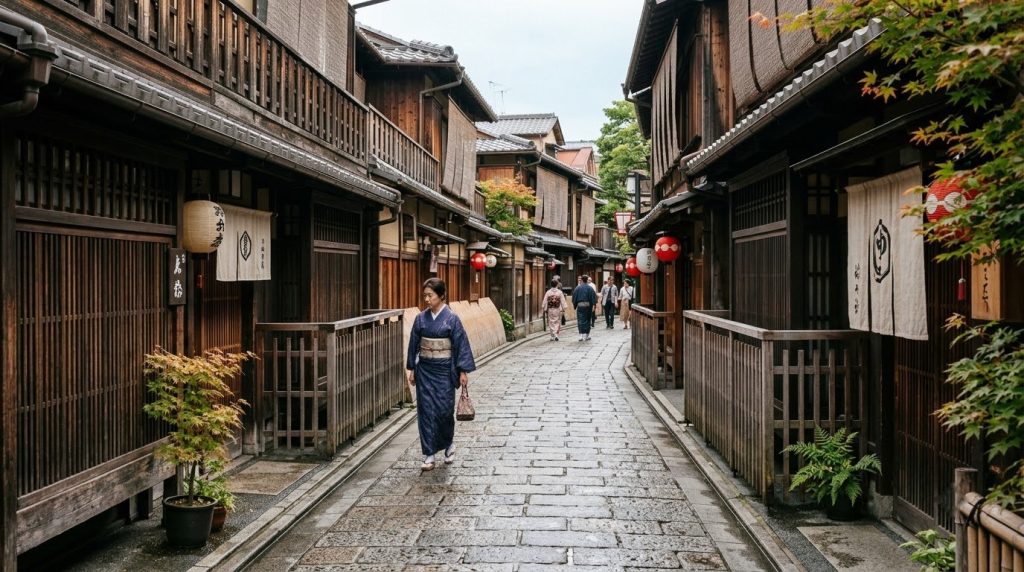
The first 200 meters of Fushimi Inari’s torii tunnel and the short stretch of the Arashiyama bamboo grove nearest the entrance are both shoulder-to-shoulder from roughly 9 a.m. to 5 p.m., and Gion’s Hanamikoji Street fills with camera-phones every evening as maiko head to appointments.
Move an hour earlier or later, or a few streets over, and the crowding drops off fast: the upper switchbacks of Fushimi Inari past Yotsutsuji intersection are quiet even at midday, and the Philosopher’s Path is rarely packed outside cherry blossom weekends.
As of 2026, neither Fushimi Inari Taisha nor Kinkaku-ji uses timed-entry reservations or a visitor cap, so access is still first-come, walk-up, and the crowding is entirely a function of the hour rather than a hard capacity limit.
Nijo Castle and the Philosopher’s Path, by contrast, rarely feel crowded even at midday because their scale absorbs visitors better than a single narrow gate or grove path can.
Visiting outside the two most extreme windows on the calendar, detailed in our guide to the best time to visit Kyoto, does more to fix the crowd problem than any itinerary trick.
What the 2026 lodging tax and Gion rules actually change
The 2026 changes cost more in principle than in practice for most travelers. Kyoto’s lodging tax, charged per person per night, rose in tiers this year: it holds at JPY 200 (USD 1.30) under JPY 6,000, climbs to JPY 400 (USD 2.60) for rooms between JPY 6,000 and JPY 19,999, JPY 1,000 (USD 6.40) between JPY 20,000 and JPY 49,999, JPY 4,000 (USD 25.60) between JPY 50,000 and JPY 99,999, and JPY 10,000 (USD 64) at JPY 100,000 and above.
A typical mid-range hotel booking in that second or third tier now adds roughly USD 2.60 to USD 6.40 per night, not the sort of number that should decide a trip.
The Gion rule is narrower than headlines suggest: since April 2024, entering the private, residential alleys marked with warning signs carries a JPY 10,000 (USD 64) fine, but public streets, including Hanamikoji itself, plus Yasaka Shrine and Tatsumi Bridge, remain fully open.
Kyoto has also proposed a two-tier bus fare that would charge non-residents JPY 350 to 400 against JPY 200 for verified locals, but that plan still needs municipal and national approval and is not scheduled before April 2027, so every traveler pays the current flat fare through 2026.
Kyoto nights versus staying in Osaka
Staying in Osaka and day-tripping into Kyoto is the better call for anyone tight on time or budget, and a worse one for anyone who wants Kyoto after dark.
The ordinary JR line between Kyoto Station and Osaka Station takes under 30 minutes, and the Tokaido Shinkansen covers Kyoto to Shin-Osaka in about 15 minutes, so the commute itself is not the deciding factor covered in our breakdown of how many days to give Kyoto.
What changes with a day trip is everything Kyoto does after the tour buses leave: quiet temple grounds at opening time, izakaya dinners without a queue, and Gion’s lanterns lit with half the daytime foot traffic.
Osaka is consistently cheaper on hotels, food, and nightlife, and it has its own case for extra nights, but no amount of Osaka time recreates a quiet Kyoto temple courtyard at 8 a.m. before the first tour bus arrives.
Anyone building a longer route should work from our full 3-day Kyoto itinerary rather than bolting a rushed day trip onto an Osaka base.
Who should skip Kyoto
Skip a Kyoto stay if the trip is a short Kansai layover, a family trip with toddlers, or a repeat visit with the major sites already checked off.
Travelers with under 24 hours in the Kansai region will spend more of that time on transit and ticket lines than at anything memorable, and are better off picking one or two Osaka highlights instead. Families with strollers or kids under about 6 will find Kyoto’s gravel temple paths, stairs, and packed buses genuinely exhausting rather than charming.
Travelers on their third or later Japan trip who have already done Kinkaku-ji, Fushimi Inari, and Gion have diminishing returns here; that time is better spent in a city Kyoto’s fame has not already spoiled, such as Kanazawa or Nara.
None of this makes Kyoto not worth visiting in general, it just means the case is weaker for these specific trips.
Is Kyoto expensive: what a day actually costs beyond the room
The lodging tax covered above adds only a few dollars a night; the bigger budget question is what a day of eating, moving and sightseeing costs once the room is booked.
Food runs from roughly USD 16-26 (JPY 2,500-4,000) a day for convenience-store meals, casual ramen counters and standing-bar lunches, up to USD 32-51 (JPY 5,000-8,000) for sit-down restaurants and a proper dinner rather than a quick bowl of noodles.
A kaiseki multi-course dinner, the high end of Kyoto dining, runs well beyond either range and is worth budgeting as a separate splurge rather than folding into a daily average.
Temple and museum entry fees stay modest individually but add up across a packed day. Kinkaku-ji charges USD 3.20 (JPY 500), Nijo Castle runs USD 5-8 (JPY 800-1,300) depending on which areas the ticket covers, and Fushimi Inari Taisha and the Arashiyama bamboo grove, both outdoor and free to enter, cost nothing beyond getting there.
A day mixing two paid sites with a free one, plus a mid-range lunch, lands most travelers around USD 50-70 (JPY 7,800-10,900) per person before the hotel room, which is a reasonable planning figure for a first-time, culture-focused visit.
Getting around Kyoto: bus, subway, and walking
Kyoto’s bus network, not its subway, covers most of the sites that matter to a first-time visitor, since the two subway lines run in an X shape through downtown while routes to Fushimi Inari, Arashiyama and Kinkaku-ji depend on surface buses.
A single bus or subway ride costs a flat USD 1.50 (JPY 230) within the city zone, and the Subway & Bus One-Day Pass, sold at USD 7 (JPY 1,100) for an adult, covers unlimited rides on both and pays for itself after four or five trips in a single day, which most sightseeing days easily clear.
Buses get crowded and slow in exactly the windows covered earlier in this guide, roughly 9 a.m. to 5 p.m. around the headline sites, and a packed bus with a full day’s luggage or a stroller is worse than the walk itself for short hops.
Central Kyoto, including Gion, Higashiyama and the area around Kyoto Station, is dense enough that walking between nearby sites often beats waiting for a bus, especially since buses board from the rear and pay on exit, which slows every stop during peak hours.
An IC card such as Icoca works on buses, subways and most trains throughout the Kansai region, and it is worth loading one on arrival at the airport or station rather than buying individual tickets for each ride.
Day tripping to Nara
Nara works as a half-day extension from a Kyoto base rather than a reason to add a separate overnight stay. The fastest Kintetsu limited express covers Kyoto Station to Nara in about 35 minutes for roughly USD 8 (JPY 1,280), while slower rapid or local trains take closer to 45 minutes for as little as USD 4-5 (JPY 620-760), so the time-versus-cost trade-off is small either way.
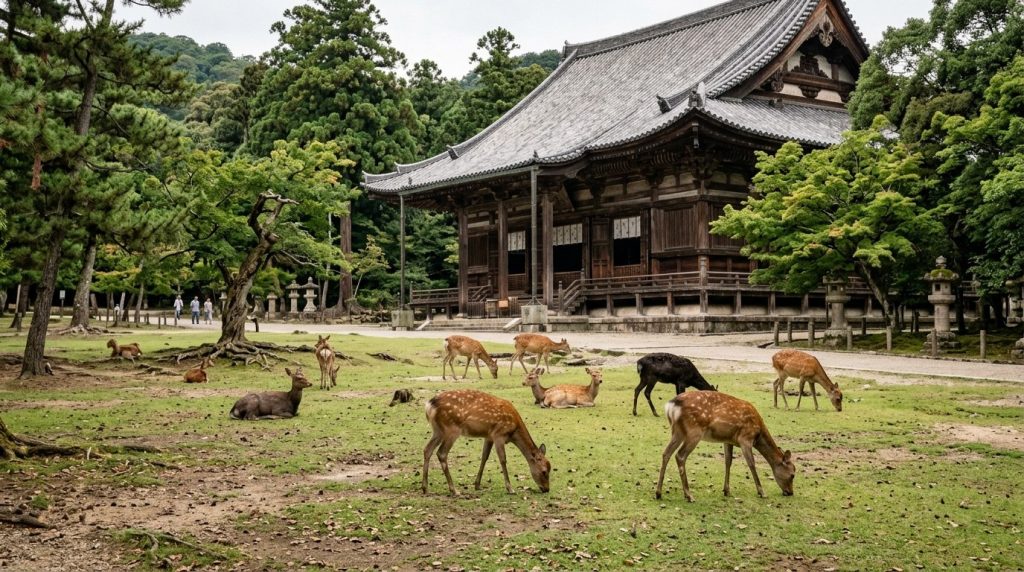
Nara Park itself, home to the free-roaming deer that wander up to visitors for the shika senbei crackers sold at stalls nearby, costs nothing to enter, and Todai-ji’s Great Buddha Hall next door runs roughly USD 5 (JPY 800) for an adult, USD 2.50-2.60 (JPY 400) for a child.
Between the train, the park and the temple, a Nara half-day adds relatively little to a Kyoto trip’s budget while covering a genuinely different sight, a 15-meter bronze Buddha, than anything in central Kyoto.
Travelers who already feel Kyoto-ed out by the crowds covered earlier in this guide often find Nara’s deer park a welcome change of pace rather than more of the same.
Is Kyoto safe for travelers
Yes. The U.S. State Department rates Japan as a Level 1 “Exercise Normal Precautions” destination, as of 15 May 2025, the lowest risk tier the department assigns, and Kyoto carries no city-specific warning above that baseline.
The practical safety issues a visitor actually runs into are the ones already covered in this guide: the JPY 10,000 fine for entering Gion’s private alleys, and ordinary pickpocket risk in dense crowds at Fushimi Inari and Kinkaku-ji during peak hours, the same precaution worth taking in any crowded tourist site worldwide.
Solo travelers, including women traveling alone, commonly rate Kyoto among the more comfortable Japanese cities to navigate at night, since the areas tourists use most, such as Gion-Higashiyama and around Kyoto Station, stay well lit and busy with other visitors into the evening.
The main practical risk is less about crime and more about overheating or dehydration on long temple walks in summer, or slipping on wet stone paths during the rainy season, both worth planning around rather than treating as a safety afterthought.
Emergency numbers are worth saving before arrival rather than looking up mid-trip: 110 for police and 119 for fire or ambulance, both free to call and both staffed with English-language support lines in major cities.
Kyoto’s tourist information centers near Kyoto Station and at the Kyoto Tower building also keep multilingual staff on hand for anything short of an emergency, from a lost item to directions back to a hotel after dark.
Where to stay if you decide to go
Base near Kyoto Station or Gion-Higashiyama for the shortest walks to the sites that reward an early start.
Find your Kyoto hotel on the map
Live prices from Booking, Airbnb and more — move the map or change dates to compare stays across Kyoto.