
Disclosure: Some links in this guide are affiliate links. If you book or buy through them, we may earn a small commission at no extra cost to you — it helps keep our guides free.
9 Best Day Trips from Kyoto 2026: Train Times, Costs & Tips
The best day trips from Kyoto reach a free-roaming deer park, a National Treasure castle, Japan’s street food capital, and a UNESCO peace memorial, all within a single train ride. Kyoto sits at the heart of the Kansai region, where the JR network and private lines fan out in every direction, so a trip that takes 20 minutes and one that takes two hours leave from the same station. This guide ranks nine day trips by travel time and transit cost, with an honest read on whether each is a half-day or a full-day commitment. Anyone flipping it around and basing in Osaka can compare the best hotels in Osaka.
Key Takeaways
– Uji, Osaka, and Nara are the easiest picks: all under 50 minutes from Kyoto Station, all under ¥720 one way
– Himeji Castle and Hiroshima deliver the biggest “wow,” but each eats a full day of travel and sightseeing
– The JR Pass covers the Shinkansen to Himeji, Osaka, Kobe, and Hiroshima, plus the JR Nara and Biwako lines
– The JR Pass does NOT cover the Eizan Railway to Kurama and Kibune, or the Keihan and Kintetsu private lines
– Spring (late March to April) and autumn (November) are peak; start early to beat crowds at Nara Park and FushimiAffiliate Disclosure: Some links on this page are affiliate links. If you book through them, we earn a small commission at no extra cost to you. We only recommend services we’d use ourselves.
Best Day Trips from Kyoto: Quick Comparison
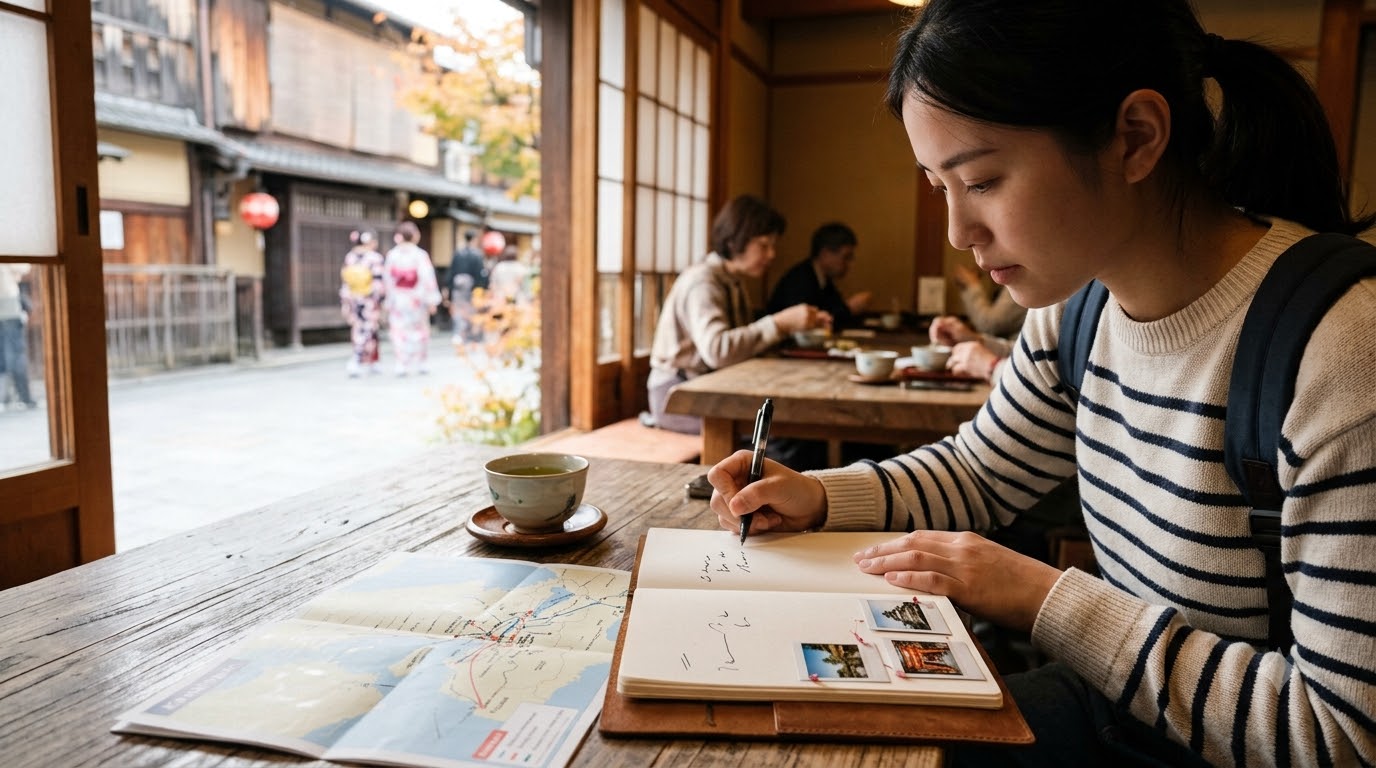
Kyoto’s central position in Kansai means almost every direction rewards a day-tripper. The table below ranks all nine options by one-way travel time so you can match a trip to the window you have, whether that’s a spare afternoon or a full 12-hour day.
| Destination | Travel Time (one way) | Transit Cost (one way) | Main Line | Half or Full Day |
|---|---|---|---|---|
| Uji | 20-30 min | ¥240 (JR) | JR Nara Line | Half |
| Osaka | 23-30 min | ¥580 (JR) | JR Kyoto Line | Full |
| Nara | 45 min | ¥720 (JR) | JR Nara Line | Half/Full |
| Kobe | 50 min | ¥1,110 (JR) | JR Kyoto Line | Full |
| Lake Biwa (Otsu/Hikone) | 10-50 min | ¥200-1,170 (JR) | JR Biwako Line | Half/Full |
| Kurama & Kibune | 30 min | ~¥430 (Eizan) | Eizan Railway | Half |
| Himeji Castle | 45-95 min | ¥2,210 (rapid) | JR Kyoto Line | Full |
| Amanohashidate | ~2 hr | ~¥4,000 (limited exp) | JR Hashidate | Full |
| Hiroshima & Miyajima | 1h40-2h | ~¥11,000 (Shinkansen) | Sanyo Shinkansen | Full (long) |
Uji: Matcha, the Ten-Yen Temple, and an Easy Half-Day
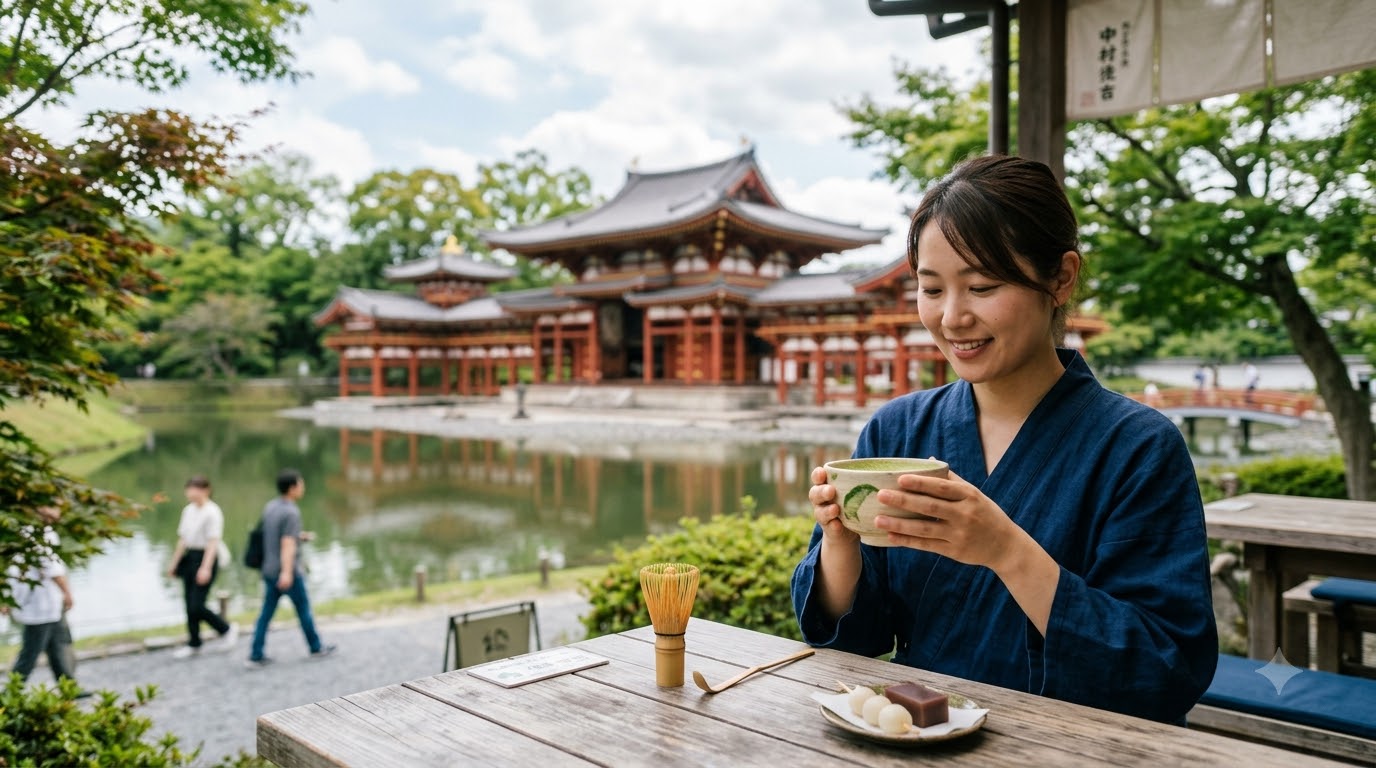
Uji is the closest worthwhile escape from Kyoto, just 20 minutes south on the JR Nara Line rapid (30 minutes on the local) for only ¥240 one way. It sits between Kyoto and Nara, so it also pairs neatly with a longer southbound day.
Why go: Uji is the birthplace of Japanese green tea culture and home to Byodo-in Temple, whose Phoenix Hall is so iconic it appears on the ¥10 coin and the ¥10,000 note. The riverside tea houses along the Uji River serve some of the country’s most respected matcha, and the walk between the station, the temple, and Ujigami Shrine (a UNESCO World Heritage Site) is flat and gentle.
How to get there: JR Nara Line from Kyoto Station to Uji Station, 20-30 minutes, ¥240. The Keihan Uji Line is an alternative from central Kyoto.
How long: Half day, 3-4 hours. Best for: Tea lovers and travelers wanting a low-effort first trip.
more temples and shrines around Kyoto
Osaka: Street Food, Castle, and Big-City Energy
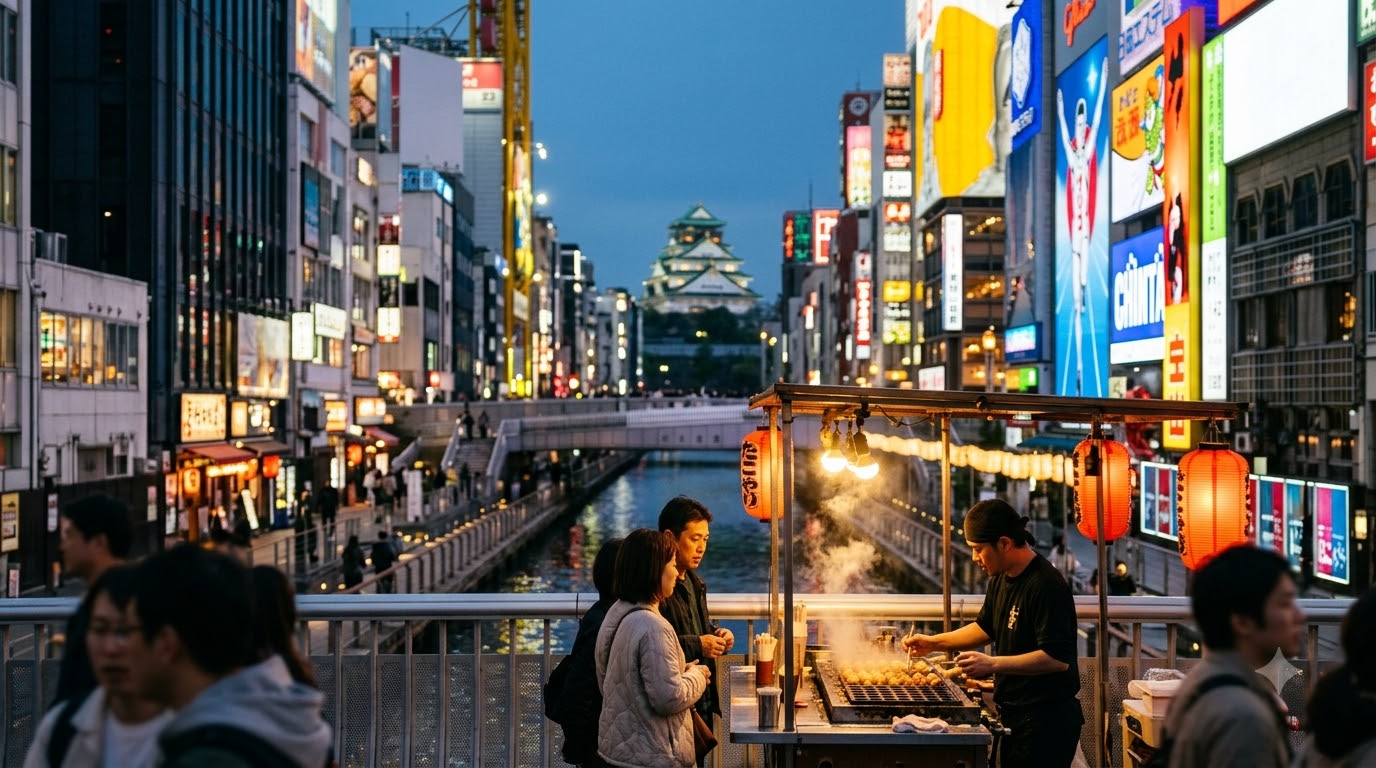
Osaka is just 23 minutes from Kyoto on the JR Special Rapid for ¥580, making it one of the fastest and cheapest big-city day trips in Japan. The Shinkansen shaves it to around 15 minutes but costs far more and is only worth it for JR Pass holders.
Why go: Osaka is Japan’s street food capital. The Dotonbori canal district is free to wander and packs the country’s most concentrated run of takoyaki, okonomiyaki, and kushikatsu stalls. Osaka Castle (around ¥600) has a genuinely good museum inside, and Kuromon Ichiba is a working market open to visitors. The mood is louder, brasher, and more casual than refined Kyoto, a deliberate contrast that makes it a fun day out.
How to get there: JR Kyoto Line Special Rapid to Osaka Station, 23-30 minutes, ¥580.
How long: Full day. Best for: Food-focused travelers and anyone craving urban buzz after temple fatigue.
how Kyoto compares to Japan’s other big city
Nara: Free-Roaming Deer and the World’s Largest Bronze Buddha
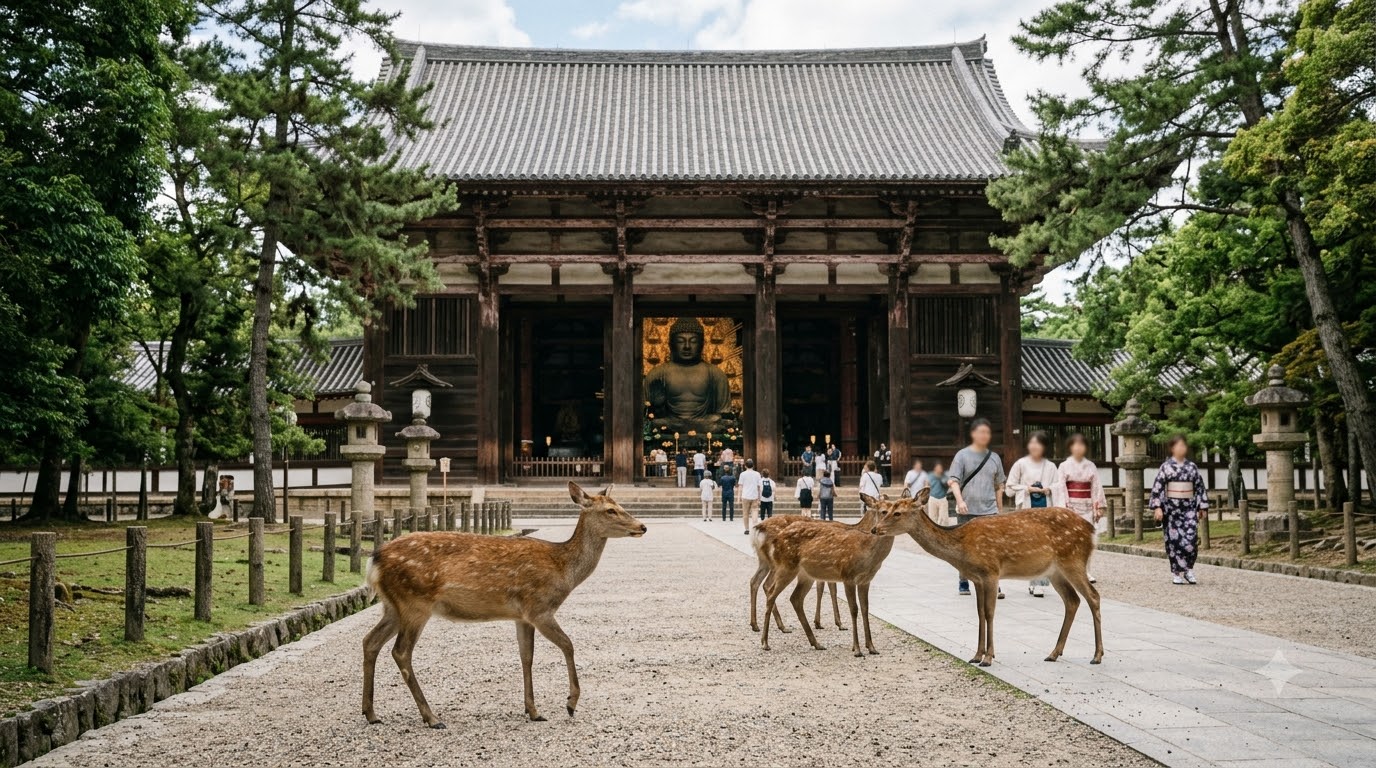
Nara was Japan’s capital before Kyoto and sits about 45 minutes away on the JR Nara Line (Miyakoji Rapid) for ¥720, stopping at Uji and Inari on the way. The Kintetsu Nara Line offers a similar time from central Kyoto and drops you closer to the park.
Why go: Nara Park is home to more than 1,000 free-roaming sika deer that bow for crackers sold on-site (around ¥200 a bundle). Todai-ji’s Great Buddha Hall houses the world’s largest bronze Buddha at nearly 15 meters, and Kasuga Taisha shrine is lined with hundreds of stone and bronze lanterns. Because Nara stops on the same line as Uji and Fushimi Inari, you can chain several highlights into one southbound day.
How to get there: JR Nara Line Miyakoji Rapid to Nara Station, about 45 minutes, ¥720.
How long: Half to full day. Best for: First-timers and families. Arrive before 10am to beat the deer-park crowds.
Kobe: Harbor Views, Sake, and the Famous Beef
Kobe is under an hour from Kyoto, roughly 51 minutes on the JR Special Rapid for ¥1,110. The city hugs the water between the mountains and the sea, giving it a relaxed, cosmopolitan feel unlike anywhere else in Kansai.
Why go: Kobe is world-famous for its marbled beef, and this is one of the more affordable places in Japan to try a certified Kobe steak at lunch. Beyond the beef, the Nada district is Japan’s largest sake-brewing area, with several breweries open for tasting and free museum tours. The Kitano-cho neighborhood preserves Western merchant houses from the port’s 19th-century opening, and the harbor promenade around Meriken Park is a pleasant free stroll.
How to get there: JR Kyoto Line Special Rapid to Sannomiya or Kobe Station, about 51 minutes, ¥1,110.
How long: Full day. Best for: Foodies and anyone who wants a port-city change of pace with sake tasting built in.
Lake Biwa: Cycling, Castles, and Japan’s Largest Lake
Lake Biwa is the quickest nature escape from Kyoto. Otsu, on the lake’s southern shore, is barely 10 minutes away on the JR Biwako Line for around ¥200, while Hikone and its castle sit about 50 minutes north for roughly ¥1,170.
Why go: Biwa is Japan’s largest freshwater lake and offers boat cruises, lakeside cycling, and easy hiking with far fewer tourists than the temple trail. Hikone Castle is one of only a handful of original wooden castles left in Japan, and its garden and moat make a satisfying half-day on their own. Closer in, Otsu has the sprawling Mii-dera temple complex and lake-view walks.
How to get there: JR Biwako Line from Kyoto Station; Otsu about 10 minutes (¥200), Hikone about 50 minutes (¥1,170).
How long: Half day for Otsu, full day if you push north to Hikone. Best for: Travelers wanting nature, water, and space to breathe.
best time of year to plan your Kyoto trip
Kurama and Kibune: Mountain Temples and Riverside Dining
For a green half-day without leaving the Kyoto area, Kurama and Kibune sit in the forested mountains just north of the city, about 30 minutes from Demachiyanagi on the Eizan Railway (around ¥430). Note the Eizan Railway is a private line and is not covered by the JR Pass.
Why go: A well-marked mountain trail links the two villages over Kurama’s temple-topped ridge, making this the area’s best short hike. Kurama-dera temple clings to the wooded slope, and Kibune is famous for kawadoko, riverside dining platforms built over the stream where restaurants serve meals above the rushing water in summer. Autumn colors peak here earlier than in the city, and the Eizan line’s panorama KIRARA cars are built for leaf-viewing.
How to get there: Keihan Line to Demachiyanagi, then Eizan Railway to Kibune-guchi or Kurama, about 30 minutes total, around ¥430.
How long: Half day. Best for: Hikers and anyone wanting cool mountain air in summer.
Find your Kyoto hotel on the map
Live prices from Booking & Airbnb — tap a pin to compare stays around Gion and Kyoto Station and beyond.
Himeji Castle: Japan’s Finest Original Fortress
Himeji is home to Japan’s most spectacular castle, and it is faster to reach than most people expect. The JR Special Rapid takes about 95 minutes for ¥2,210, while the Shinkansen cuts it to 45-58 minutes and is effectively free with a JR Pass.
Why go: Himeji Castle is a UNESCO World Heritage Site and a National Treasure, the finest surviving example of Japanese castle architecture. Nicknamed the “White Heron” for its brilliant white plaster exterior, it survived WWII bombing and centuries of earthquakes intact, so you climb the original wooden keep rather than a concrete reconstruction. The adjacent Koko-en garden makes an easy add-on, and the castle is a straight 15-minute walk from Himeji Station.
How to get there: JR Kyoto Line Special Rapid to Himeji, about 95 minutes, ¥2,210; or Shinkansen, 45-58 minutes.
How long: Full day. Best for: History buffs and photographers. Cherry blossom season frames the white keep beautifully but draws heavy crowds.
Amanohashidate: One of Japan’s Three Great Views
Amanohashidate, on the Sea of Japan coast in northern Kyoto Prefecture, is the most scenic long-haul trip on this list. The JR Hashidate limited express runs direct from Kyoto Station in about two hours for roughly ¥4,000 one way.
Why go: Amanohashidate is a pine-covered sandbar stretching across Miyazu Bay, counted among the “Three Views of Japan” alongside Matsushima and Miyajima. The classic ritual is to view it from the hillside park while bending over and looking between your legs, which makes the sandbar appear to float like a bridge to heaven. You can walk or cycle the 3.6-kilometer bar itself, and the nearby fishing village of Ine, with its wooden funaya boathouses built over the water, pairs well if you rent a car or catch a local bus.
How to get there: JR Hashidate limited express from Kyoto Station, about 2 hours, around ¥4,000.
How long: Full day. Best for: Scenery seekers wanting coast and countryside away from the crowds.
Hiroshima and Miyajima: History and the Floating Torii
Hiroshima is the most emotionally significant day trip from Kyoto, reachable in 1h40 to 2 hours on the Sanyo Shinkansen for around ¥11,000 one way, a cost the JR Pass absorbs completely. It is a long day, so an early start is essential.
Why go: The Peace Memorial Park and Museum are a sobering, essential experience built around the preserved A-Bomb Dome. A short train and ferry hop away, the island of Miyajima holds Itsukushima Shrine and its famous vermilion torii gate that appears to float at high tide, another of Japan’s Three Views. Doing both in a day is tight but achievable if you catch the first Shinkansen out and save the museum for the return window.
How to get there: Sanyo Shinkansen to Hiroshima (1h40-2h), then JR Sanyo Line and ferry to Miyajima; around ¥11,000 one way by Shinkansen.
How long: Full day, long. Best for: History-minded travelers with a JR Pass. Best done as a single big excursion rather than combined with anything else.
How to Choose: JR Pass Math and Picking the Right Trip
The single most useful planning tool for Kyoto day trips is understanding what the JR Pass covers. The pass is a foreign-visitor rail pass that includes most JR lines, the Shinkansen (except the fastest Nozomi and Mizuho services), and the JR Nara and Biwako lines. For day-trippers, it makes the pricier trips, Himeji, Hiroshima, Kobe, and Osaka, effectively free once the pass is paid for.
What the JR Pass does NOT cover:
- The Eizan Railway to Kurama and Kibune (private line)
- The Keihan and Kintetsu private lines (useful alternates for Uji and Nara)
- The Nozomi and Mizuho Shinkansen (take the Sakura or Hikari instead)
A 7-day JR Pass costs roughly ¥50,000 in 2026 and needs two or three long-distance return trips to break even. If your day trips are only the cheap local ones, Uji, Osaka, Nara, an IC card (Suica or ICOCA) with point-to-point tickets is far cheaper. If Hiroshima and Himeji are both on your list, the pass usually wins.
To match a trip to your day: pick Uji or Nara for a half-day with minimal effort, Osaka or Kobe for city energy and food, Lake Biwa or Kurama for nature, and save Himeji, Amanohashidate, or Hiroshima for a full, early-start excursion.
For destinations with tricky connections, such as pairing Amanohashidate with the Ine boathouses or combining Hiroshima with Miyajima, a guided day tour on GetYourGuide or Viator can remove the logistics for a fixed price. For the easy JR-line trips like Uji, Osaka, and Nara, independent travel is cheaper and just as simple.
where to base yourself in Kyoto for easy day trips
Frequently Asked Questions
What is the best day trip from Kyoto for first-timers?
Nara is the best first day trip from Kyoto. It’s about 45 minutes on the direct JR Nara Line for ¥720, and it delivers three iconic experiences in one compact area: free-roaming deer in Nara Park, the world’s largest bronze Buddha at Todai-ji, and the lantern-lined Kasuga Taisha shrine. No transfers or Japanese language skills are required.
Can you do Osaka as a day trip from Kyoto?
Yes, Osaka is one of the easiest day trips from Kyoto. The JR Special Rapid takes just 23 minutes and costs ¥580 one way, so you can be in the Dotonbori food district well within half an hour. Because it’s so quick and cheap, many travelers visit Osaka in the evening for dinner and return to Kyoto the same night.
Which day trip from Kyoto is best for nature?
Lake Biwa and the Kurama-Kibune mountain villages are the top nature choices. Otsu on Lake Biwa is only 10 minutes away by JR Biwako Line for around ¥200, offering lake cruises and cycling. Kurama and Kibune, 30 minutes north on the Eizan Railway, deliver a forest hike and riverside dining, with autumn colors that peak earlier than in the city.
Is Hiroshima too far for a day trip from Kyoto?
Hiroshima is doable as a day trip but demands a full, early day. The Sanyo Shinkansen covers the distance in 1h40 to 2 hours each way (around ¥11,000 one way, free with a JR Pass). Catch the first train out to have enough time for both the Peace Memorial Park and Miyajima’s floating torii before heading back.
Do I need a JR Pass for day trips from Kyoto?
Not always. For cheap local trips like Uji (¥240), Osaka (¥580), and Nara (¥720), an IC card with point-to-point tickets is cheaper than a pass. A 7-day JR Pass (around ¥50,000 in 2026) only pays off if you also take longer Shinkansen trips such as Himeji, Kobe, or Hiroshima, or you’re combining Kyoto day trips with intercity travel elsewhere in Japan.
Which Day Trip Should You Book First?
The best day trips from Kyoto match your time, budget, and mood. Uji and Nara reward short windows and small budgets; Osaka and Kobe bring food and city energy; Lake Biwa and Kurama offer nature and space; and Himeji, Amanohashidate, and Hiroshima justify a full early-start day.
Start with Nara if it’s your first excursion: the deer park, the Great Buddha, and the shrine are all within reach for under ¥1,500 round trip, with no transfers. Add Osaka for a food-focused evening, then save your Shinkansen budget for one big day at Himeji or Hiroshima.
Kyoto’s rail network makes every trip on this list achievable. The only real mistake is cramming too many into one day. Pick two from the comparison table that fit your travel style, start early, and let the trains handle the rest.
plan your full Kyoto base and itinerary
top things to do in the city between day trips