Where to Stay in San Francisco 2026: Best Areas & Hotels
Disclosure: Some links in this guide are affiliate links. If you book or buy through them, we may earn a small commission at no extra cost to you — it helps keep our guides free.
- Average daily hotel rates run roughly $230-$280 in 2026, among the priciest in the US (STR/CoStar, 2025).
- Union Square and the Embarcadero are the most transit-connected bases, with cable cars, BART, and Muni within a few blocks.
- The city is just 7×7 miles, so you can stay central and reach most sights in under 30 minutes.
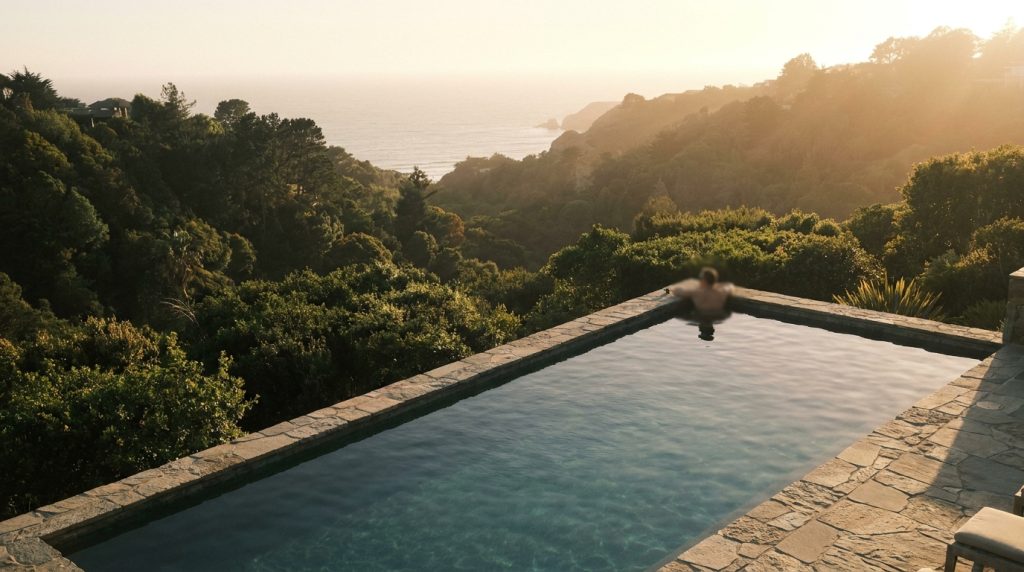
For most first-time visitors, Union Square is the best place to stay in San Francisco because it’s central, walkable, and sits on every cable car and Muni line. Below, each neighborhood is matched to your budget, trip style, and how much hill-climbing you can stomach.
Quick answer: Most first-time visitors should stay in Union Square, which is central, walkable and on the cable car and Muni lines; couples may prefer Nob Hill or the Marina District.
Find your San Francisco hotel on the map
Live prices from Booking & Airbnb — tap a pin to compare stays around Union Square and Fisherman’s Wharf and beyond.
Which Neighborhood Is Best for First-Timers?
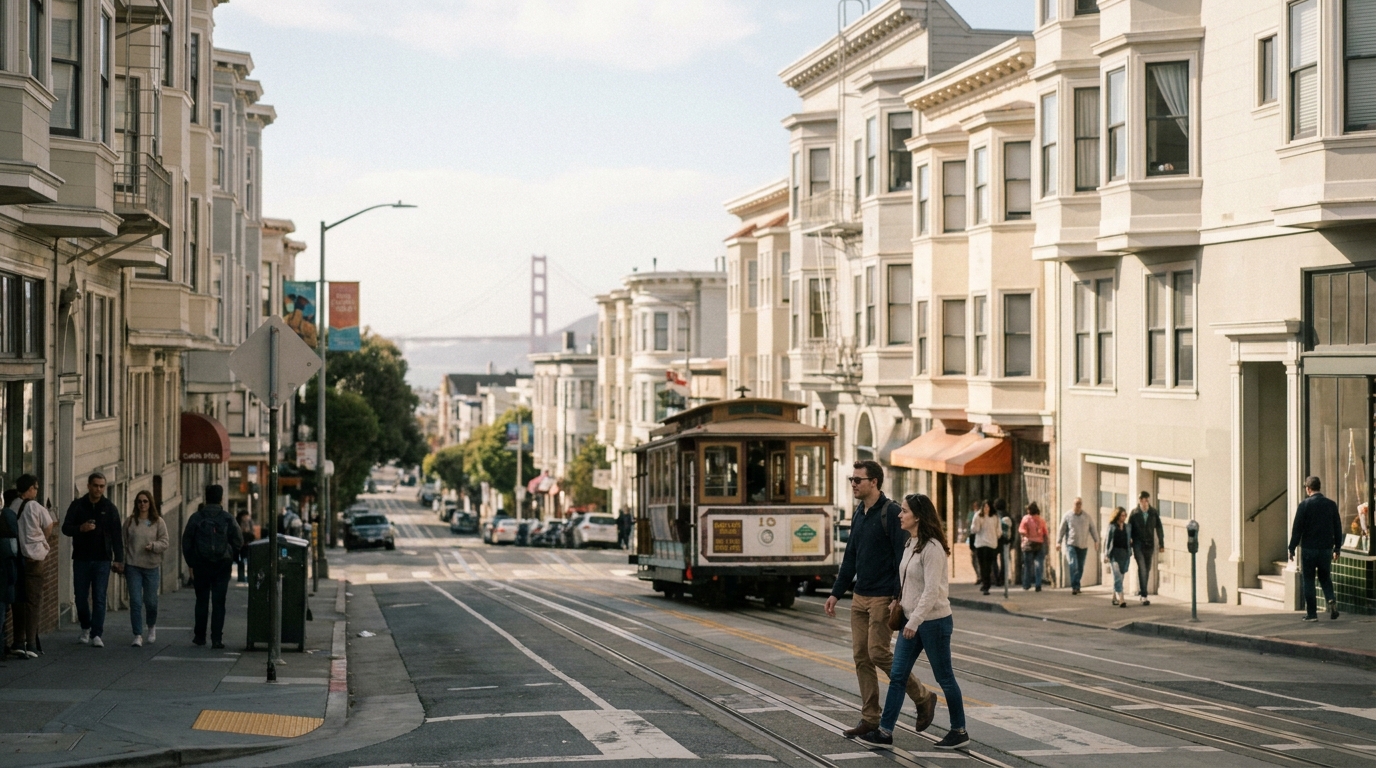
Union Square wins for first-timers. It’s the retail and theater heart of the city, sits on the Powell-Hyde and Powell-Mason cable car lines, and puts you within walking distance of Chinatown, the Financial District, and the Ferry Building. You’ll trade some charm for convenience, but you won’t waste hours in transit.
Hotels here span every budget. Expect $180-$260 a night for solid 3-star rooms and $350+ for landmark properties like the Westin St. Francis. We like Union Square because you can drop your bags, grab a cable car, and be at Fisherman’s Wharf in 20 minutes. Compare live rates on Booking.com before you lock anything in.
Where Should Couples and Honeymooners Stay?
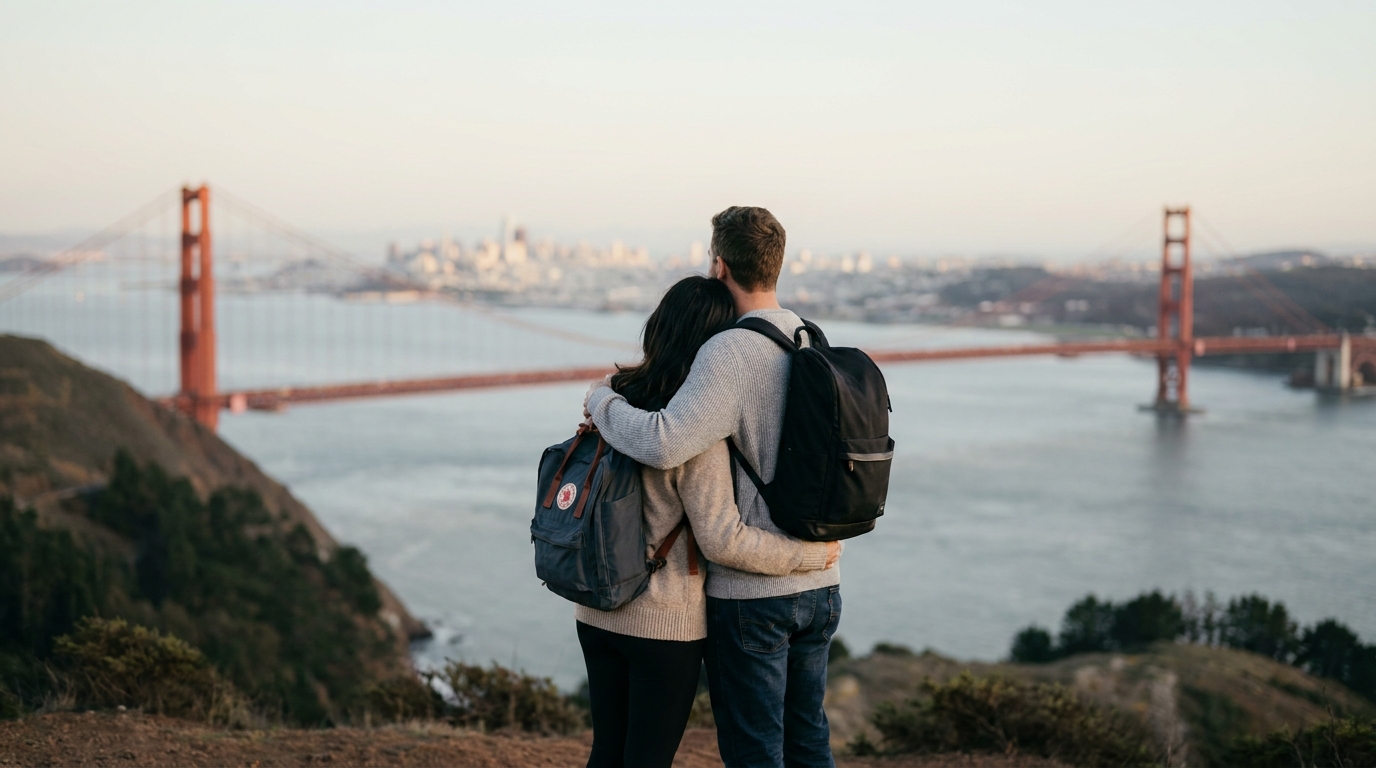
Couples should look at Nob Hill or the Marina District. Nob Hill delivers old-money glamour, quiet streets, and skyline views from the top of the cable car line. The Marina trades grandeur for a relaxed, low-rise vibe near the bay, with easy strolls to the Palace of Fine Arts and Crissy Field.
Nob Hill’s grand dames — the Fairmont and the Mark Hopkins — run $400-$700 a night in peak season, but boutique options nearby start near $250. The Marina skews to smaller inns and motor lodges at $200-$320. For a romantic walk-everywhere base, we’d pick the Marina; for a special-occasion splurge, Nob Hill. See our full San Francisco itinerary to pair your stay with day plans. It is worth pairing this page with this San Francisco travel guide before mapping out transport, neighborhoods, and a rough daily schedule.
What’s the Best Area for Families?
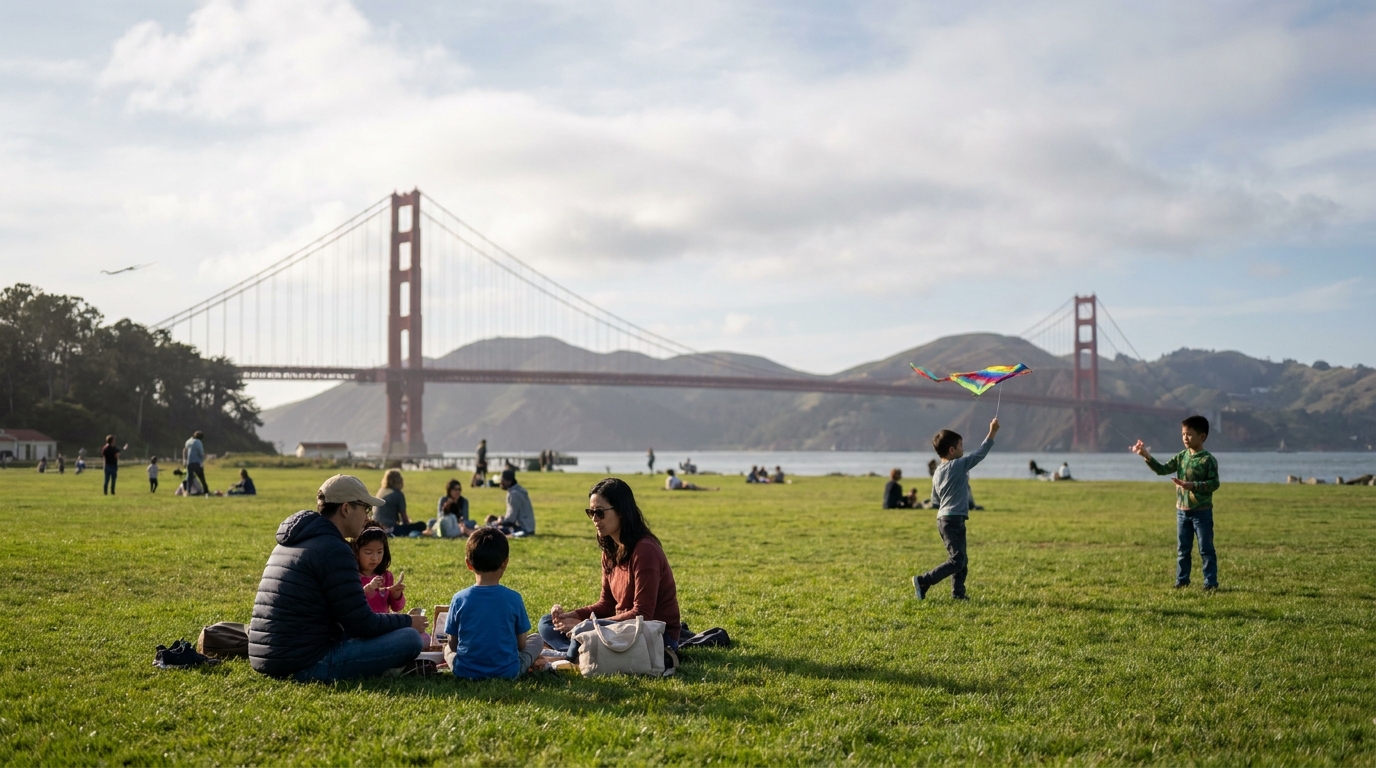
Fisherman’s Wharf is the easiest base for families. It’s flat (a rarity here), packed with kid-friendly attractions, and steps from PIER 39, the sea lions, and the Aquarium of the Bay. You’ll skip the steepest hills and stay near the Ghirardelli Square ice cream that buys you parental goodwill. Travelers budgeting the trip often check this things to do in San Francisco before deciding which attractions are worth the time on a short visit.
| Area | Best For | Avg Nightly Rate (2026) | Walkability |
|---|---|---|---|
| Union Square | First-timers | $200-$280 | Excellent |
| Fisherman’s Wharf | Families | $220-$330 | Very good (flat) |
| Nob Hill | Couples / luxury | $300-$700 | Good (steep) |
| The Mission | Foodies / budget | $150-$240 | Very good |
| SoMa | Business / nightlife | $180-$300 | Good |
Family rooms at the Wharf run $220-$330. Book a place with parking included — overnight garage fees here can top $60. We always reserve family-friendly hotels months ahead for summer, since the Wharf sells out fast.
Where Should Budget Travelers Stay?
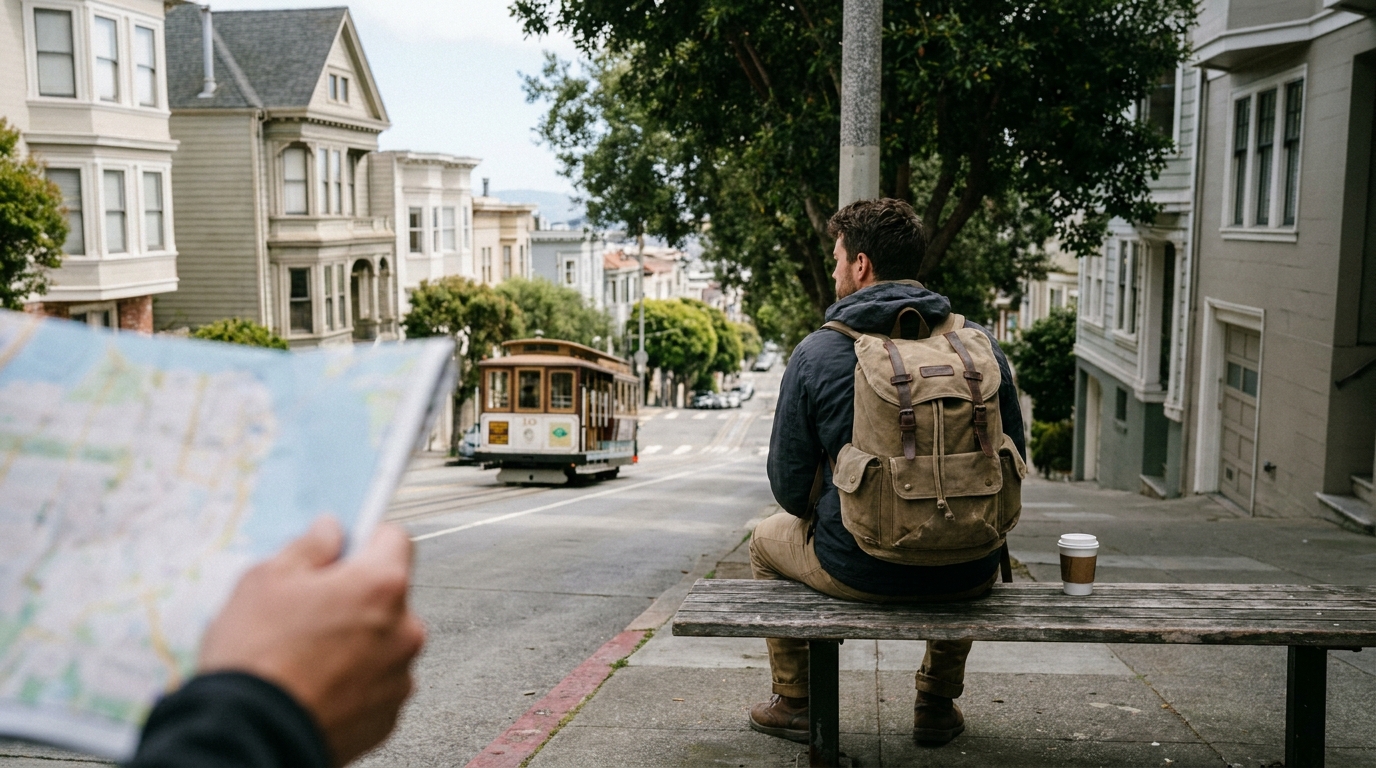
The Mission District offers the best value without stranding you far from the action. It’s sunnier than the foggy west side, loaded with cheap taquerias and coffee shops, and well-served by two BART stations. Hostels and budget inns here start around $45 for dorm beds and $150 for private rooms.
The Mission won’t give you postcard views, but it’ll give you the city’s best burritos and a real neighborhood feel. SoMa is another budget-friendly option midweek, when business hotels drop rates. If you want walkable nightlife and food on a tight budget, the Mission is our pick. Browse budget stays in San Francisco to see current deals.
Is Fisherman’s Wharf or Union Square Better?
It depends on your priorities. Union Square wins for transit, shopping, and central access; Fisherman’s Wharf wins for flat terrain, waterfront views, and family attractions. Union Square sits roughly two miles south of the Wharf, and the cable car links them in about 20 minutes.
We recommend Union Square for transit-dependent travelers and the Wharf for families or anyone who hates hills. Both are tourist-heavy and pricier than residential neighborhoods, so weigh whether you want convenience or a quieter local base. Either way, you’re never far from the bay.
How Do You Get From SFO to Your San Francisco Hotel?
San Francisco International sits south of the city, and BART is the most predictable way into downtown. The train runs from the airport to the Powell Street and Embarcadero stations, which sit close to Union Square and the Financial District. Expect roughly 30 minutes, and check the BART fare chart for the current price, which includes an airport surcharge.
Powell Street station is a few blocks from Union Square, so travelers staying there can walk to the hotel. For Fisherman’s Wharf, ride to Embarcadero or Powell and finish by Muni, a cable car or a rideshare.
- Union Square and SoMa: BART to Powell or Montgomery, then walk.
- Nob Hill: BART to Powell, then a short uphill walk or a cable car.
- Fisherman’s Wharf: BART plus a rideshare or the F-line streetcar.
- The Marina: BART to downtown, then a bus or rideshare, since no train serves the area.
- The Mission: BART to 16th Street or 24th Street, directly in the neighborhood.
Late arrivals can use a taxi or rideshare, which often costs several times the BART fare but removes the transfer. Pack light if you plan to take BART with stairs and hills at the other end.
How Do I Get Around From My Hotel?
San Francisco’s transit makes a central hotel pay off. Muni buses and the Metro cover most neighborhoods, BART links you to the airport and the East Bay, and the historic cable cars connect Union Square to the Wharf. A single Muni ride is about $2.75, and a Clipper card or the MuniMobile app saves you fumbling for coins.
SFO sits 13 miles south; BART reaches downtown in about 30 minutes for roughly $11. If you’re road-tripping the coast afterward, reserve a vehicle early through Discover Cars — downtown rental rates spike in summer.
Which Other Neighborhoods Are Worth Considering?
Union Square, Nob Hill, the Marina and the Wharf get most of the attention, but San Francisco’s official tourism site describes several other districts that work as a base. Each has a different character, so match it to your plans before you search hotels.
- North Beach: Old Italian character, Beat Generation history, popular bars and notable restaurants, plus thrift and vintage shopping. It suits travelers who plan to spend evenings out.
- Chinatown: The first and oldest Chinatown in North America, with dim sum, Chinese restaurants, local history and tours.
- Hayes Valley: A relaxed, stylish district for fashion, art and food.
- Pacific Heights: An upscale area of grand homes, dramatic views, independent shops and cafes. It is residential, so expect fewer nightlife options.
- Castro: One of the country’s first gay neighborhoods, known for its bars and happy hours, with views of fog rolling over Twin Peaks on many days.
- SoMa and Yerba Buena: A former industrial district that now holds major museums such as SFMOMA, large clubs and venues, and the city’s ballpark.
The tourism site also notes that the Mission is known for murals in Clarion and Balmy alleys and for the Mission-style burrito, which supports the budget case made above.
A simple rule: choose a district whose evening scene matches your energy level, then confirm the nearest Muni or BART stop. Hills make the same distance feel much longer here, so check the street grade on a map before committing to a “walkable” listing.
North Beach, Hayes Valley and Pacific Heights in Detail
The list of other neighborhoods above gives a one-line taste of each. Three of them deserve a closer look because they suit very different travelers.
North Beach: food and walking, with late-night noise
North Beach scores well for walkability and food. Cafes, Italian restaurants and bars sit within a few blocks of each other, and Chinatown is next door.
The trade-off is nightlife. Its bars and clubs draw crowds from across the city, so light sleepers should ask for a room facing away from the main streets. It is also not a budget pick, so compare rates carefully.
Hayes Valley: central, stylish and busy on restaurant streets
Hayes Valley is described as one of the more fashionable parts of town, with boutiques and many restaurants. It sits in the middle of the city, so you can reach several districts by bus or a short ride.
Hotel choice is more limited and mostly mid-range. Expect noise on the busiest restaurant blocks in the evening, and check the pin before you book.
Pacific Heights: quiet, upscale and steep
Pacific Heights is the most residential option, with grand houses, views and independent shops. Guides call it the best area for quiet and views, and often the most expensive.
The cost is convenience. It is less walkable to restaurants and transit, and the hills make short distances feel long. Rideshare is often the easiest way in and out.
Which one to pick
- North Beach for a food-first trip and easy evenings on foot.
- Hayes Valley for a central, design-minded base.
- Pacific Heights for a calm, scenic stay when you do not mind a ride.
Which Areas Should I Avoid?
The Tenderloin and parts of mid-Market see the most visible street issues and petty crime, so we’d skip booking there despite the low rates. Pockets of SoMa near 6th Street can feel rough after dark too. Stick to Union Square, Nob Hill, the Marina, the Wharf, or the Mission’s commercial corridors and you’ll be fine.
San Francisco is generally safe for tourists in the areas above, but car break-ins are a real, well-documented problem citywide. Never leave anything visible in a parked car. Use hotel parking or garages, and you’ll dodge the most common headache. Our San Francisco safety guide covers the details.
Embarcadero and the Financial District: Weekday Energy, Quiet Weekends
The Embarcadero and Financial District are a strong base that many leisure travelers skip because the neighborhood reads as corporate. Understanding its rhythm helps you decide.
What you get
The waterfront offers scenic walking and the Ferry Building marketplace sits along its edge. BART and Muni are close, so you reach the airport and most sights without a car.
Hotels here often cater to business travelers, with solid amenities and a polished lobby feel.
The weekday-weekend swing
The district is busiest on weekdays and quieter on evenings and weekends. That can be a plus if you want calm after sightseeing, and a minus if you expect a lively street scene at 9 p.m.
Because the area leans business-oriented, weekend rates can soften while midweek rates rise, which is the reverse of most vacation spots. Test both a Friday and a Sunday arrival before you book.
Who it suits
- Travelers who will walk the waterfront and take ferries or day trips.
- Visitors who want quick access to the airport by BART.
- Couples who prefer a quiet evening to a nightlife block.
Skip it if you want street energy after dark or a cluster of independent shops outside your door.
What Do Muni, Cable Cars and Visitor Passports Cost?
The city’s transit agency (SFMTA) publishes the current fares, and they are worth knowing before you pick a hotel near a particular line.
| Ticket | Adult fare |
|---|---|
| Muni single ride (MuniMobile, Clipper or card) | USD 2.85, good for 120 minutes |
| Muni single ride (cash or Metro ticket machine) | USD 3.00 |
| Cable car single ride (no transfers) | USD 9.00 |
| Visitor Passport, 1 day | USD 15.00 |
| Visitor Passport, 3 days | USD 35.00 |
| Visitor Passport, 7 days | USD 47.00 |
Passports cover Muni buses, Muni Metro, historic streetcars and cable cars, so two cable car rides in a day already cost more than a one-day pass. Youth 18 and under ride Muni free, except on cable cars. These are 2026 listings and can change.
Cable car basics
The Powell-Hyde and Powell-Mason lines both start at Powell and Market and end near Fisherman’s Wharf. The California line runs from California and Market to Van Ness Avenue.
SFMTA advises prepaying with the MuniMobile app or a Clipper card to shorten waits, and cash requires exact change. At Powell and Market, Bay and Taylor, and Hyde and Beach, fares are sold in advance from 8 a.m. to 8 p.m. daily.
Cable cars have no accessible boarding, and bikes are not allowed. Wait for the car to stop completely before stepping off.
A hotel near Powell and Market therefore lets you board at the start of the line, which is the best chance of a seat.
What Taxes and Fees Are Added to a San Francisco Hotel Bill?
The nightly rate rarely matches the final price. San Francisco levies a 14 percent transient occupancy tax on stays under 30 days, according to published hotel-tax guides.
Many hotels also collect a tourism improvement district assessment, which sources put at roughly 1 to 2 percent depending on the zone. Treat the combined total as an estimate and confirm it at checkout.
Beyond tax, check for these lines before you pay:
- Resort or destination fees: some downtown hotels add a daily charge for Wi-Fi, fitness access or amenities.
- Parking: garage parking is billed per night and can approach the cost of a mid-range room in some neighborhoods. City parking is also taxed.
- Luggage storage and early check-in: small extras, but they add up on short stays.
Compare the all-in price across hotels, not the headline rate. A cheaper room with a mandatory daily fee can cost more than a pricier one that includes everything. Booking sites usually show a total before the final step, so read it twice.
Hotel or Short-Term Rental in San Francisco?
San Francisco regulates short-term rentals more strictly than many US cities, which affects what you see on booking sites and how safe the booking is.
What the rules say
A stay under 30 nights counts as short term. The city requires hosts to hold a business registration certificate from the Treasurer and Tax Collector and a registration with the Office of Short-Term Rentals. Hosts report stays to the city every quarter, and unregistered operators face fines.
Since March 2022, hosts register directly with the city instead of through platforms, so a legitimate listing should show a valid registration number.
What this means for you
- Ask the host for the registration number before you pay. A missing number is a red flag.
- Private agreements still apply. Lease or building rules are not enforced by the city, so a host who breaks them can cancel on you.
- Expect a smaller supply of whole-unit rentals than in other cities, and plan more time for hotels.
Hotel advantages
Hotels handle luggage storage, early check-in requests and front-desk help with transit questions. In a city with steep streets and no parking, those services have real value.
For stays of a week or more, an apartment with a kitchen can work, but verify the registration and read cancellation terms first.
Do You Need a Car When Staying in San Francisco?
For most visitors the answer is no. Hills, one-way streets and expensive garages make driving the hardest way to see the city, and BART, Muni, cable cars and rideshares cover almost every popular stop. Add a rental car only for a day trip, such as Muir Woods or wine country, and pick it up as you leave.
Car break-ins are the main reason to be careful. Reports have long identified Fisherman’s Wharf and Chinatown as hotspots for thefts from vehicles, and local guidance is consistent: never leave anything visible in a parked car, including bags, chargers and coats.
If you do bring a car
- Remove all belongings, and leave the glove box and trunk empty.
- Use a staffed hotel garage over a remote or poorly lit lot, even if it costs more.
- If you park on the street, choose a busy block with foot traffic.
- Read curb colors and street-cleaning signs carefully before you walk away.
Hotels with parking tend to charge a nightly fee, so ask before booking. In central areas, skipping the car usually saves more than the price of a few rideshares.
Late Arrival, Early Flight and Luggage Storage
Airport timing shapes your best base more than most visitors expect.
Late arrivals
BART runs from the airport to downtown, but service has set hours. Check the schedule for your arrival time and have a fallback rideshare. If you land late, choose a hotel that is a short ride from the Powell Street or Embarcadero stations, with a front desk that operates overnight.
Send your flight number to the hotel in advance. Smaller inns and motor lodges may close their desks early.
Early departures
For a morning flight, stay close to a BART station on your last night, since trains start early but not instantly. Union Square, Embarcadero and the Mission all have stations in or near the neighborhood. In areas without a train, such as the Marina, plan a pre-booked ride.
Bags between check-out and flight
Ask your hotel to store luggage after check-out. Most do, often at no charge, which lets you use your last day without dragging a suitcase up a hill.
If your hotel cannot hold bags, check the terms at a staffed luggage service before you hand anything over.
Hills and heavy bags
Some districts, including Nob Hill and Pacific Heights, involve steep climbs. If you travel with large cases, a flat area such as Union Square or Fisherman’s Wharf is easier at both ends.
How Does San Francisco’s Weather Affect Where You Stay?
Summer in San Francisco is cooler than many visitors expect. Local guides describe June as often the foggiest month, with highs in the mid-60s F, and July and August still bring fog, especially on the western side of the city. October is commonly called the best month, with low-70s F highs and little fog.
This matters for your base because the fog does not hit every neighborhood equally. The Mission and parts of SoMa tend to be sunnier, while areas near the ocean and the Golden Gate often stay cooler and gray. Waterfront bases such as Fisherman’s Wharf feel breezy on summer afternoons.
- Summer visitors: pack layers and consider a sunnier inland base like the Mission or Union Square.
- Fall visitors: any area works, and outdoor spots like the Marina and Crissy Field are at their best.
- Winter and spring: expect occasional rain, so a hotel near BART or Muni helps.
Monthly numbers vary by source, so check a forecast from NOAA or the National Weather Service shortly before you pack.
Why Do Convention Dates Change San Francisco Hotel Prices?
The Moscone Center is the biggest swing factor in downtown rates. Industry reports say it hosted 25 events in 2024 and 34 in 2025, with 38 scheduled for 2026, bringing hundreds of thousands of room nights. Large conferences fill hotels in SoMa, Union Square and the Financial District, and nightly rates rise sharply on those dates.
Weekday business travel also shapes the market. Midweek rates at downtown business hotels can climb, while weekends sometimes soften, which is the reverse of most vacation destinations.
How to avoid the spikes
- Check the Moscone Center event calendar before you pick dates.
- If a large conference overlaps your trip, move to a neighborhood outside the convention core, such as the Marina or the Mission.
- Test rates for a Sunday arrival against a Friday arrival.
- Book a refundable room early, then re-check prices a few weeks out.
The same logic applies to other big events and long weekends. If prices look unusually high on certain nights, look for a conference rather than assuming the hotel is overpriced.
When Should I Book for the Best Rates?
Book 2-3 months ahead for summer and major conventions, when rates and occupancy peak.
Shoulder months — April-May and October-November — bring lower rates and the city’s clearest weather, since summer fog can blanket the coast. Midweek stays in SoMa drop sharply when conventions aren’t in town. Set a price alert on Booking.com and pounce when free-cancellation rates dip.
Best Area by Traveler: Solo, Nightlife, Accessibility and Repeat Visitors
The earlier sections focus on first-timers, couples, families and budget travelers. Four other groups choose differently.
Solo travelers
Choose a staffed hotel in Union Square, Embarcadero or North Beach. Foot traffic, late food and transit make it easy to come home alone. The Mission works too if you stay close to a BART station and take a ride after dark.
Nightlife seekers
North Beach, the Castro and parts of SoMa are the main options. North Beach has a mix of bars and restaurants. The Castro is known for LGBTQ+ bars and happy hours, and SoMa has larger clubs and venues. Pick a room away from the street if you also want sleep.
Accessibility needs
Hills and older buildings make San Francisco hard for some travelers. Cable cars have no accessible boarding, so use Muni buses or Metro lines and rideshare instead.
Look for flatter areas such as Fisherman’s Wharf, Union Square and the Embarcadero. Ask the hotel about elevator access, step-free entrances and roll-in showers before you book.
Repeat visitors
If you have seen the headline sights, try Hayes Valley, the Mission or Pacific Heights for a more local feel. You give up some convenience, but the trade is worth it for a second or third trip.
A Sample Three-Night San Francisco Stay Plan
This plan assumes a Union Square base for the first nights, which keeps transit simple.
Day 1: Union Square, Chinatown and the waterfront
Arrive by BART, walk the Union Square area, and continue to Chinatown and the Ferry Building. Eat dinner near the Embarcadero, then return by Muni or on foot.
Day 2: cable cars, Fisherman’s Wharf and the Marina
Take a cable car toward the Wharf early, before lines grow. The cable car single fare is USD 9 in 2026, so a Visitor Passport can be better value if you plan several rides. Continue along the waterfront to the Marina and Palace of Fine Arts for sunset.
Day 3: the Mission and a quiet evening
Spend the morning in the Mission for murals and burritos, then take BART or a rideshare back. If you want a different base for your last night, move to the Marina or Nob Hill for a quieter finish.
Visitor Passports in 2026 are listed at USD 15 for one day, USD 35 for three days and USD 47 for seven days, according to the city transit agency. Check the current fare chart before you buy.
Frequently Asked Questions
What is the safest area to stay in San Francisco?
Nob Hill, the Marina District, and Pacific Heights are among the safest, quietest areas for visitors. They’re residential, well-lit, and low on street issues. Union Square is also fine and far more central, though busier. Avoid booking in the Tenderloin or near mid-Market.
Is Union Square a good area to stay in?
Yes. Union Square is the most convenient base in the city, sitting on cable car, Muni, and BART lines within a few blocks. You can walk to Chinatown, the Ferry Building, and shopping. It’s tourist-heavy and pricier, but it saves you serious transit time.
How much does a hotel in San Francisco cost in 2026?
Average daily rates run roughly $230-$280 in 2026, among the highest in the US (STR/CoStar, 2025). Budget rooms in the Mission start near $150, while landmark hotels on Nob Hill can exceed $500 a night in peak summer season.
Do I need a car in San Francisco?
No. The city is just 7×7 miles with strong Muni, BART, and cable car coverage, plus easy rideshares. Parking is expensive and car break-ins are common. We only recommend renting a car if you’re heading to wine country or down the coast afterward.
Is Fisherman’s Wharf too touristy to stay in?
It’s touristy, but it’s also flat, scenic, and ideal for families. You’ll pay a premium and dodge crowds in peak hours, yet you’re steps from PIER 39, the bay, and ferry departures. For a quieter, more local feel, choose the Marina or Nob Hill instead.
How many days do I need in San Francisco?
Three to four days covers the headline sights — Golden Gate Bridge, Alcatraz, the Wharf, and a neighborhood or two. A central hotel lets you see more with less transit. Add a day if you want a wine country or Muir Woods day trip.
When is the cheapest time to visit San Francisco?
January through March and the fall shoulder season bring the lowest rates outside major conventions. Summer is peak demand and peak fog. April-May and October offer the best mix of clear weather and softer hotel prices.
Final Thoughts
There’s no single best place to stay in San Francisco — it depends on whether you want central transit (Union Square), family-friendly flats (Fisherman’s Wharf), romance (Nob Hill or the Marina), or value (the Mission). Pick your priority, stay central, and the 7×7 city opens up fast.
Ready to lock in your base? Compare live, free-cancellation rates on Booking.com now, then build out your trip with our San Francisco itinerary. Book early for summer — the best rooms go first.