Ultimate Kuala Lumpur Travel Guide 2026
Disclosure: Some links in this guide are affiliate links. If you book or buy through them, we may earn a small commission at no extra cost to you — it helps keep our guides free.
- Malaysia welcomed 27.4 million international tourists in 2024 and is targeting 35 million by end of 2026 (Tourism Malaysia, 2025)
- A mid-range hotel in Bukit Bintang averages MYR 250-380/night (~USD 53-81) in 2026 (Booking.com data)
- The KLIA Ekspres airport train covers 57 km in 28 minutes for MYR 55 (~USD 12) one way
- KL’s average daily food budget for a budget traveler sits at MYR 40-60/day (~USD 9-13) eating at hawker centres and kopitiams
- Airalo eSIM for Malaysia costs USD 4.50 for 1 GB / 7 days — the cheapest way to stay connected (Airalo, 2026)
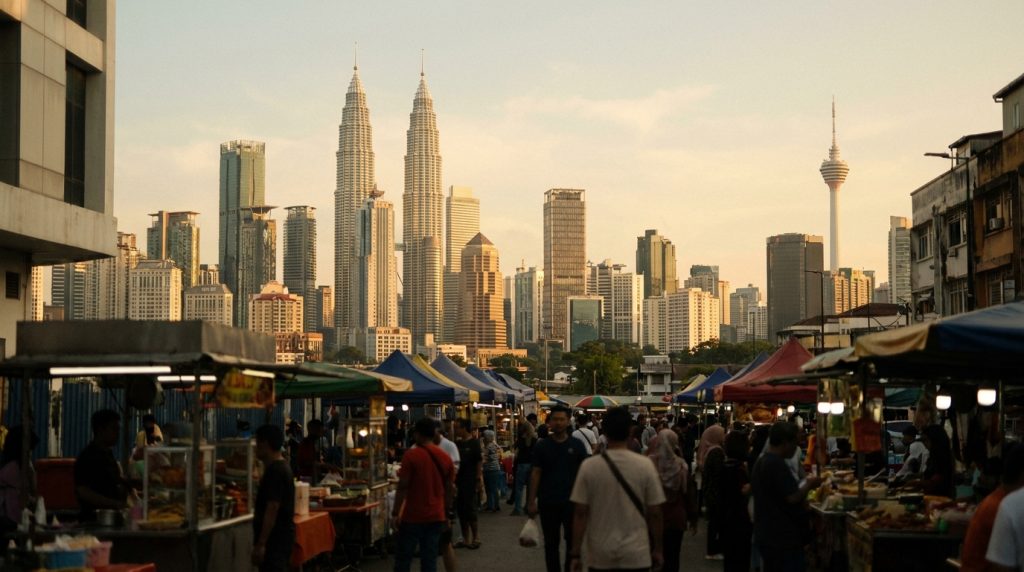
Kuala Lumpur rewards visitors fast — within an hour you can eat hawker noodles for under $2, ride the best urban rail network in Southeast Asia, and stand at the base of the world’s tallest twin towers. This guide covers everything you need to plan a real KL trip in 2026, from first-timer basics to under-the-radar eating streets. Many visitors planning transport and lodging turn to this things to do in Kuala Lumpur before deciding which attractions are worth the time on a short visit.
When to Visit Kuala Lumpur: Climate, Crowds, and Costs
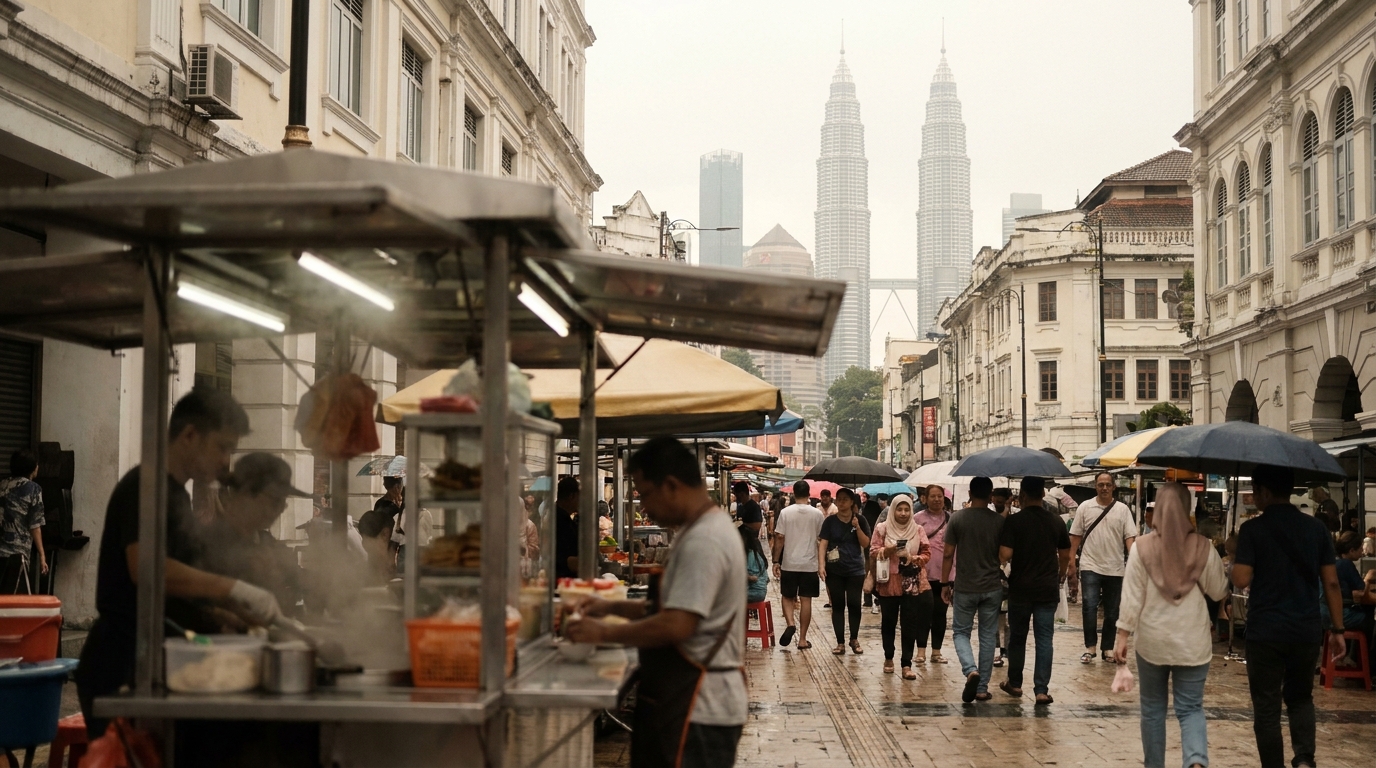
The best months to visit KL are April-May and July-August when rainfall is lower and school holiday surges haven’t hit yet. KL sits 3 degrees north of the equator, which means it’s hot and humid year-round — temperatures stay between 23-33C (73-91F) with no true dry season. That said, visiting in the “drier” windows means afternoon downpours happen a few times a week rather than daily.
Rainfall patterns by quarter:
| Period | Avg Monthly Rain (mm) | Avg Days Rain/Month | Hotel Price Index (vs. annual avg) |
|---|---|---|---|
| Jan-Feb | 160 | 12 | -10% |
| Mar-Apr | 210 | 14 | Baseline |
| May-Jun | 130 | 10 | +5% |
| Jul-Aug | 120 | 9 | +15% (EU summer peak) |
| Sep-Oct | 195 | 13 | -5% |
| Nov-Dec | 240 | 16 | +20% (year-end holidays) |
December is the most expensive and wettest month due to year-end holiday demand from Gulf and East Asian travelers. We’d prioritize June-August for first-timers — it overlaps with European summer vacations so international flights are easy to find, and the weather cooperates reasonably well.
For [southeast asia budget travel guide] comparisons: KL is consistently cheaper than Bangkok for accommodation and roughly the same on food.
Getting to Kuala Lumpur: Airports, Airlines, and Airport Transfers
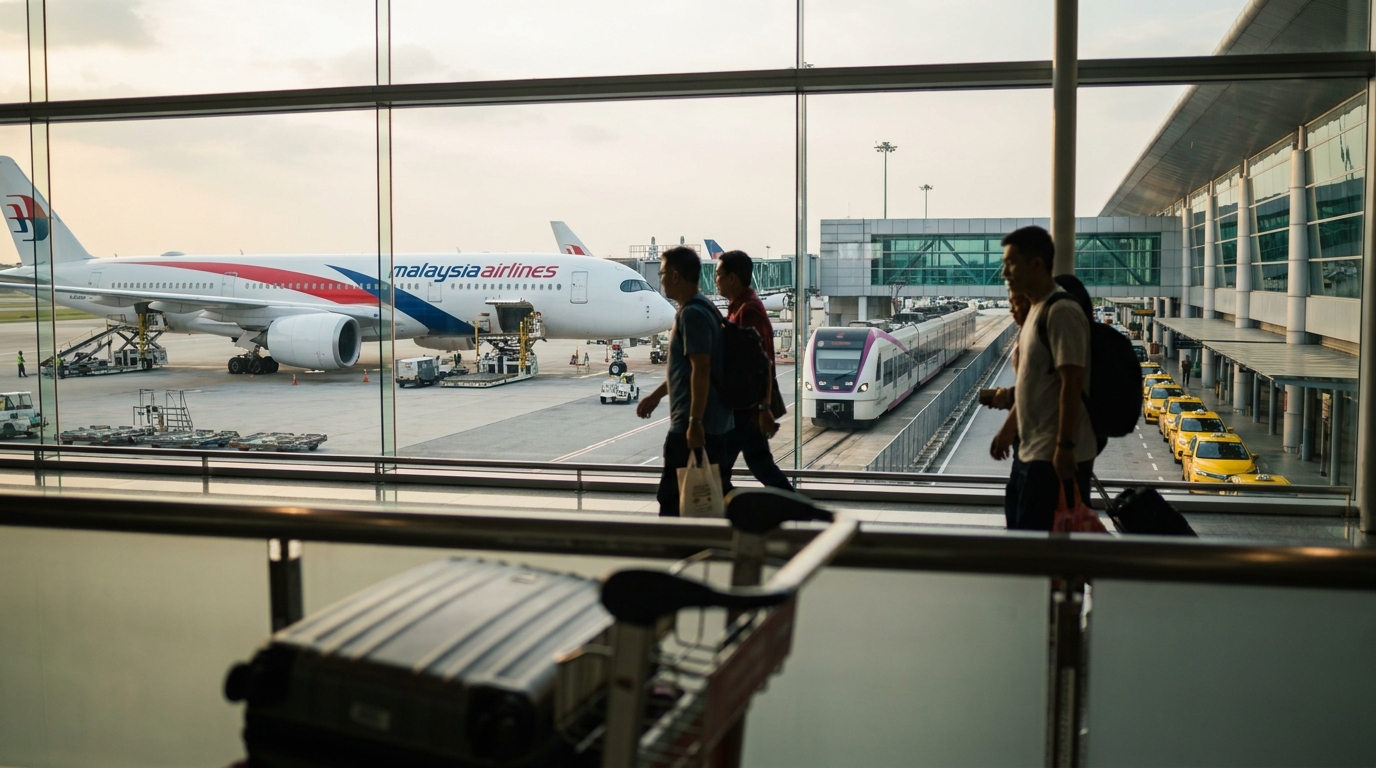
KLIA (Kuala Lumpur International Airport) handles the majority of international arrivals, while KLIA2 serves AirAsia and other budget carriers — they’re in the same complex but connected by a free shuttle. Most travelers from Europe, North America, and Australia transit through a hub (Doha, Dubai, Singapore, or Hong Kong) to reach KL.
Typical 2026 return airfare benchmarks:
| Route | Budget Carrier (USD) | Full-Service (USD) | Best Booking Window |
|---|---|---|---|
| London-KL | 480-620 | 780-1,100 | 8-12 weeks ahead |
| Sydney-KL | 310-450 | 680-900 | 6-10 weeks ahead |
| New York-KL | 650-850 | 1,100-1,500 | 10-14 weeks ahead |
| Los Angeles-KL | 580-780 | 980-1,400 | 10-14 weeks ahead |
Airport to city transfers:
The KLIA Ekspres is the gold standard: MYR 55 (~USD 12) one-way, 28 minutes to KL Sentral, trains every 15-30 minutes from 05:00-00:00. A round-trip ticket bought online saves 10%. Standard taxis via the fixed-fare kiosk cost MYR 80-110 (~USD 17-24) to central KL and take 45-75 minutes depending on traffic. Grab (Southeast Asia’s Uber) is typically MYR 60-90 from KLIA and runs 24/7.
Before landing, grab an Airalo eSIM for Malaysia — a 5 GB / 30-day plan costs around USD 9 and activates in under 5 minutes. It beats paying hotel Wi-Fi fees or hunting for a local SIM counter at the airport.
Find your Kuala Lumpur hotel on the map
Live prices from Booking & Airbnb — tap a pin to compare stays around Bukit Bintang and KLCC and beyond.
Where to Stay in Kuala Lumpur: Neighborhoods and Hotels
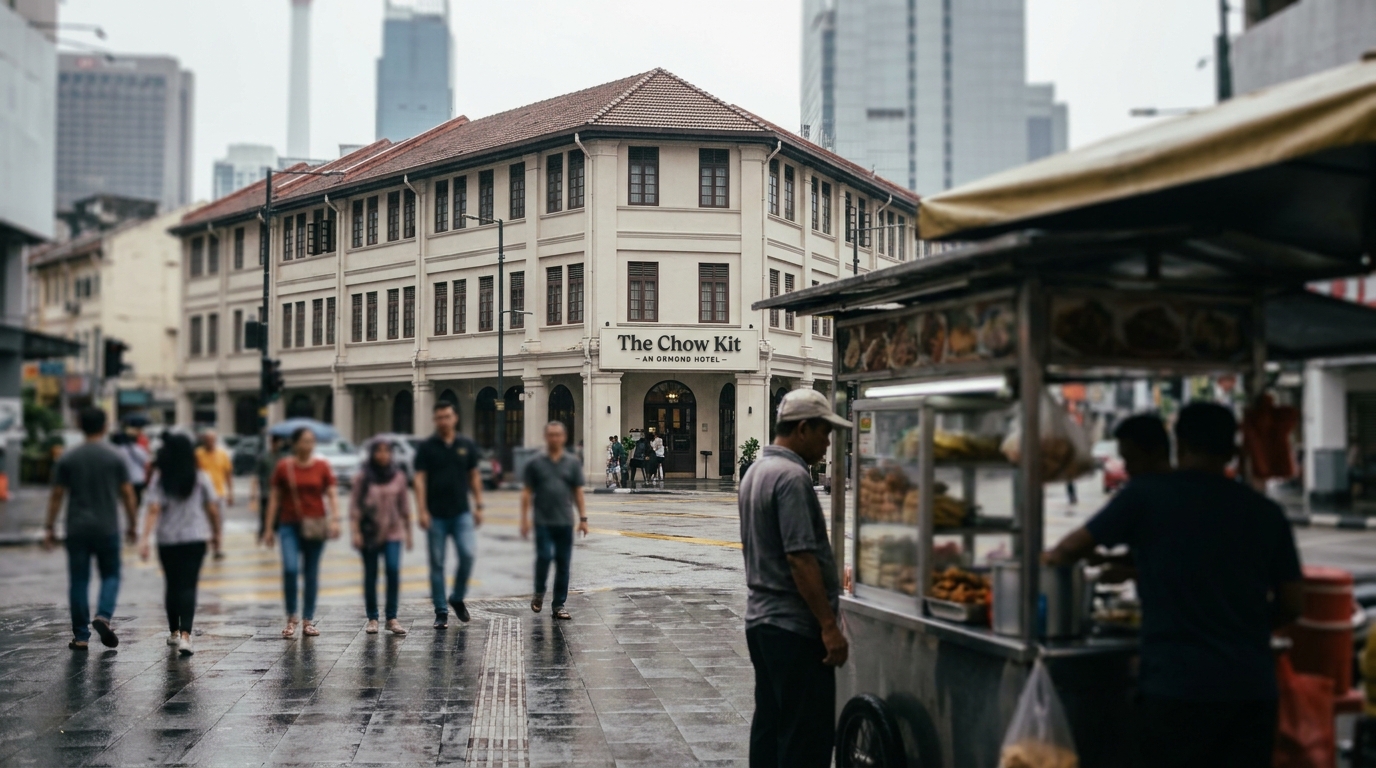
Bukit Bintang is where most first-time visitors end up, and for good reason: it’s the most walkable neighborhood in KL, connecting the Pavilion Mall food courts, Jalan Alor hawker street, and quick access to the Petronas Towers via the monorail. Budget guesthouses here start at MYR 80 (~USD 17) and four-star hotels at MYR 250 (~USD 53). Anyone mapping out the trip usually consults this where to stay in Kuala Lumpur before picking a neighborhood that matches the planned pace of the trip.
Neighborhood comparison:
| Neighborhood | Best For | Mid-Range Hotel (MYR/night) | Nearest Rail |
|---|---|---|---|
| Bukit Bintang | First-timers, nightlife, food | 250-380 | Monorail Bukit Bintang |
| KLCC | Petronas Towers, luxury shopping | 380-700 | LRT KLCC |
| Chow Kit / Masjid India | Budget, local markets, culture | 100-180 | LRT Masjid Jamek |
| Bangsar | Expat bars, brunch cafes, families | 200-320 | LRT Bangsar |
| KL Sentral | Transit hub, airport connections | 220-400 | KTM/LRT/MRT KL Sentral |
We recommend Bukit Bintang for stays under 5 nights and Bangsar or Chow Kit for longer stays when you want a more lived-in feel. Search Check live hotel prices in KL and filter by “Free Cancellation” — most properties offer it up to 24-48 hours before check-in.
For a fully local experience, short-term apartments in Bukit Bintang or Mont Kiara via Booking.com apartment listings average MYR 180-280/night and include kitchen access, which cuts food costs significantly.
Getting Around Kuala Lumpur: Rail, Grab, and Walking
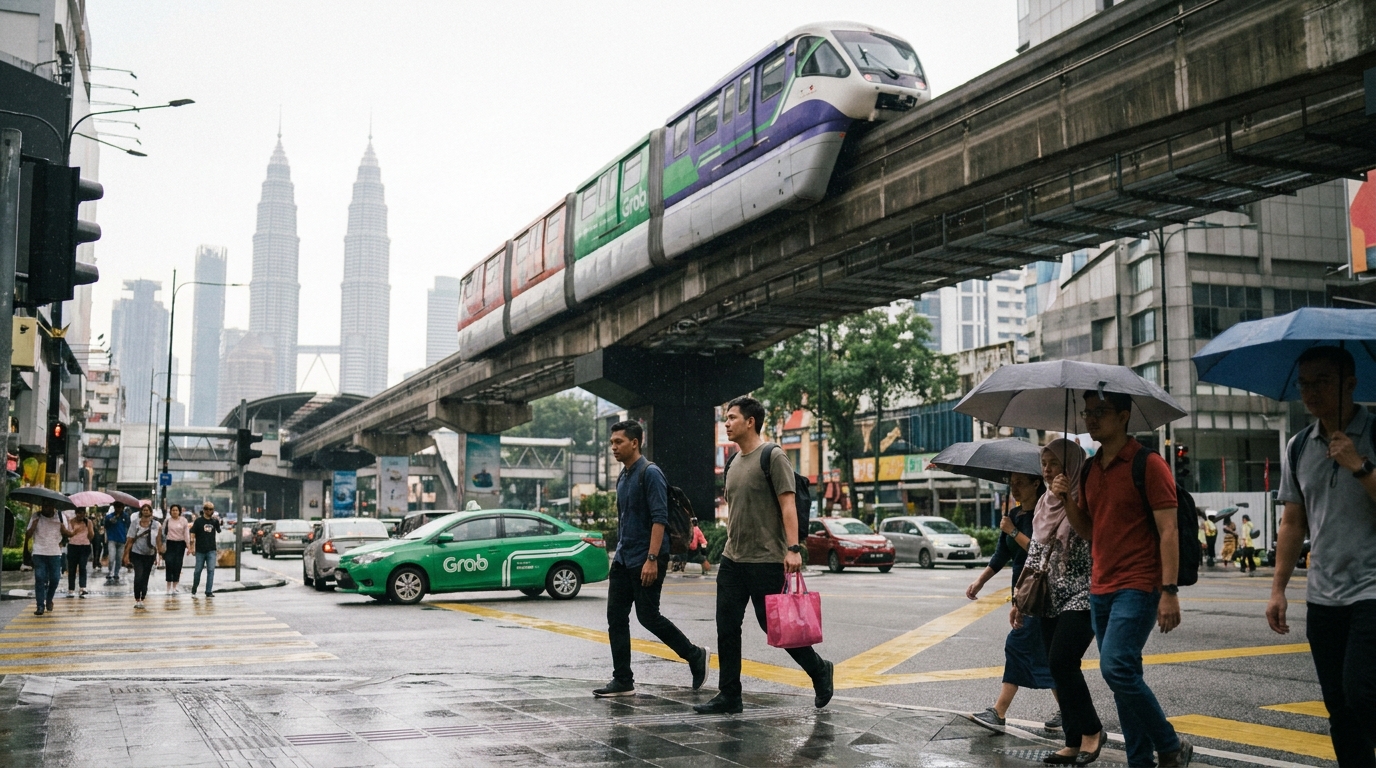
KL’s Rapid Transit network is the most developed in Southeast Asia and covers most tourist areas. The system runs from around 06:00-23:30 and a single journey within the city costs MYR 1.20-4.00 (~USD 0.25-0.85). A Touch ‘n Go card (picked up at any station for MYR 10 + MYR 10 deposit) earns you 10-15% off rail fares and works on buses too.
Rapid Transit lines visitors use most:
| Line | Key Stops for Visitors | Single Fare (MYR) |
|---|---|---|
| KLIA Ekspres | KLIA, KL Sentral | 55 |
| LRT Kelana Jaya | KLCC, Masjid Jamek, Bangsar | 1.20-3.40 |
| MRT Putrajaya Line | Bukit Bintang, Pasar Seni, Kampung Baru | 1.40-3.80 |
| KL Monorail | Bukit Bintang, KL Sentral, Chow Kit | 1.20-2.50 |
| MRT Kajang Line | KL Sentral, Pasar Seni, Chan Sow Lin | 1.40-3.60 |
Grab is reliable for trips the rail doesn’t cover well — fares within the city center run MYR 8-18 (~USD 2-4). KL traffic is brutal during 07:30-09:30 and 17:30-19:30; we always switch to rail during those windows.
Walking is practical only within neighborhoods, not between them. Bukit Bintang to KLCC is a 25-minute walk through covered walkways and shopping malls — air-conditioned the whole way once you know the route through Pavilion and Suria KLCC.
Things to Do in Kuala Lumpur: Attractions, Experiences, and Day Trips
KL’s top experiences split into the iconic (Petronas Towers, Batu Caves) and the genuinely great (Jalan Alor after dark, the National Museum, Little India on a Sunday morning). Budget at least 4 days to do both categories justice.
Top attractions with 2026 pricing:
| Attraction | Entry Fee (MYR) | USD Approx. | Booking |
|---|---|---|---|
| Petronas Towers Sky Bridge + Observation Deck | 85 (adult) | 18 | Book online minimum 2 days ahead |
| Batu Caves (temple) | Free (cave); MYR 5 Dark Cave tour | 0 / 1 | Walk-in |
| KL Tower Observation Deck | 105 (adult) | 22 | Walk-in or online |
| Islamic Arts Museum | 20 (adult) | 4.25 | Walk-in |
| National Museum (Muzium Negara) | 10 (adult) | 2.12 | Walk-in |
| Forest Research Institute Malaysia (FRIM) canopy walk | 20 + 5 MYR/entry | 5.30 | Weekday only; book ahead |
Petronas Towers tickets sell out 3-7 days ahead during school holidays. Book directly on the KLCC website or via GetYourGuide, which sometimes bundles the Sky Bridge + Observation Deck with a free shuttle from Bukit Bintang for a flat USD 20. The best free view of the towers: the park fountain area at KLCC at 20:30 when the light show runs.
Batu Caves is 13 km north of the city center and reachable by KTM Komuter train (MYR 2.60 from KL Sentral, 30 min) or by Grab (MYR 20-28). The 272 rainbow steps leading up to the main temple cave are free; the whole visit takes 1.5-2 hours. Go before 09:00 to beat the heat and crowds.
Day trips worth the time:
Book any GetYourGuide experience — KL food tours, Petronas bundle tours, Batu Caves sunrise tours — at least 24 hours ahead. Most have free cancellation up to the day before.
Where to Eat in Kuala Lumpur: Hawker Food, Kopitiams, and Restaurants
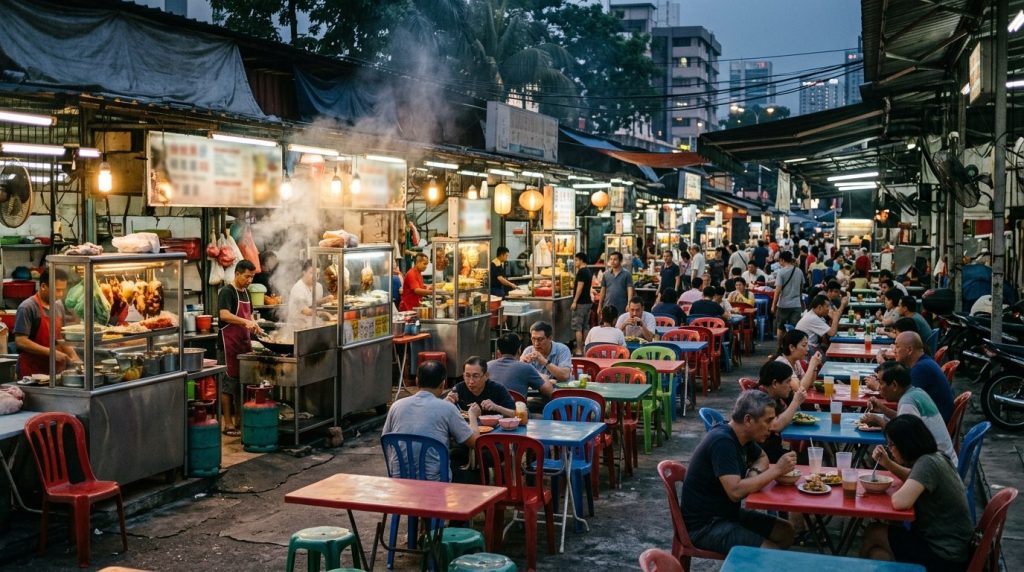
KL’s food scene is one of the best in the world by value-to-quality ratio. Malay, Chinese, Indian, and Nyonya cuisines sit within 50 metres of each other in most neighborhoods, and eating well for under MYR 15 (~USD 3.20) per meal is genuinely easy at hawker centres and kopitiams.
Essential dishes and where to find them:
| Dish | Description | Price Range (MYR) | Best Areas |
|---|---|---|---|
| Nasi Lemak | Coconut rice, sambal, anchovies, egg | 4-8 | Chow Kit, Kampung Baru |
| Char Kway Teow | Stir-fried flat rice noodles, dark soy, prawns | 8-14 | Jalan Imbi, Petaling Street |
| Roti Canai | Flaky flatbread + dhal or curry | 1.50-4 | Any mamak (24-hour Indian-Muslim) |
| Laksa | Spiced coconut milk noodle soup | 8-15 | Brickfields, Bangsar |
| Hokkien Mee | Thick yellow noodles in dark prawn broth | 8-12 | Petaling Street night market |
| Teh Tarik | Pulled milk tea, frothy, sweet | 1.50-2.50 | Any kopitiam or mamak |
Jalan Alor (off Jalan Bukit Bintang) is the most tourist-friendly hawker street. It fires up from about 17:30 and runs until midnight. Expect slightly higher prices (MYR 12-18 per dish vs. MYR 6-10 at local markets) but the variety is impressive and the atmosphere is genuinely fun. Avoid the overly aggressive touts at restaurant entrances — just walk past and sit wherever feels right.
Petaling Street (Chinatown) is better for lunch: Hokkien Mee, char siu, and herbal soups at local prices. The surrounding streets also have solid pork-free halal options if you need them.
Kampung Baru is a Malay village enclave right next to KLCC. Nasi Lemak Antarabangsa here is our top breakfast pick in the city — open from 04:00, portions are huge, prices are MYR 5-8.
Budget food calculation: MYR 50-70/day covers three solid meals + drinks eating locally. Bump to MYR 120-180/day if you’re mixing in one mid-range restaurant per day.
For a curated evening food walk, [kuala lumpur food tour guide] compares self-guided vs. guided options. GetYourGuide’s KL street food night tour (USD 42/person, 3 hours, 7-8 tastings) consistently rates 4.7/5 across 2,000+ reviews.
Kuala Lumpur Travel Budget: Daily Costs Broken Down
KL is one of the most affordable major cities in Asia for Western travelers — a couple traveling together can live well on USD 80-100/day including accommodation. Costs break down differently depending on whether you’re using the rail network or Grab and eating local vs. tourist restaurants.
Daily budget by travel style (per person, USD):
| Category | Budget (USD) | Mid-Range (USD) | Comfort (USD) |
|---|---|---|---|
| Accommodation (per night, 2-share) | 9-15 | 26-45 | 60-120 |
| Food (3 meals) | 8-12 | 20-35 | 40-80 |
| Transport (rail + occasional Grab) | 2-4 | 5-10 | 10-20 |
| Attractions | 5-10 | 15-25 | 30-60 |
| Miscellaneous | 3-5 | 8-15 | 15-30 |
| Total Per Person/Day | 27-46 | 74-130 | 155-310 |
Money-saving tips that actually work in 2026:
The Malaysian Ringgit has traded in the 4.60-4.80 range per USD through early 2026. Set rate alerts on Wise or Revolut — both work in Malaysia for card payments with no foreign transaction fees. Withdraw cash from CIMB or Maybank ATMs to avoid third-party fees.
Kuala Lumpur Travel Tips: Practical Logistics
Visa: Citizens of the US, UK, Australia, Canada, EU, and most ASEAN countries get 30-90 days visa-free. Always confirm on the official Malaysian Immigration Department site before travel, as rules updated in 2025 for several nationalities. A 30-day extension is available at the immigration office in Putrajaya (MYR 100 fee, no appointment needed for short extensions).
Health: No mandatory vaccinations for entry. Recommended: hepatitis A, typhoid (especially if you’re eating extensively at street stalls), and routine vaccines up to date. Tap water in KL is technically treated but most locals and long-stay expats drink bottled or filtered water — MYR 1.50 for a 1.5L bottle at any convenience store.
Safety: KL is generally safe for solo travelers including solo women. Petty theft (bag snatching on motorcycles, pickpocketing in Petaling Street night market) is the primary risk. Keep bags zipped and wear a crossbody bag with the strap across your body rather than over one shoulder. The Masjid India / Chow Kit area can feel chaotic at night but is not dangerous.
Connectivity: Three carriers dominate — Maxis, Celcom (now CelcomDigi), and U Mobile. Prepaid SIMs from the airport kiosk run MYR 30-50 for 25-50 GB valid 30 days. Airalo eSIM is faster to set up if your phone supports eSIM (MYR 22 / ~USD 4.50 for 1 GB / 7 days; MYR 42 / ~USD 9 for 5 GB / 30 days). Most cafes, malls, and hotels have free Wi-Fi.
Language: Bahasa Malaysia is the official language but English is widely spoken in hotels, restaurants, and tourist areas. Chinese (Mandarin and various dialects) and Tamil are common in Chinese and Indian neighborhoods respectively. The vast majority of signs in tourist areas are bilingual.
Tipping: Not customary at hawker centres and kopitiams. At mid-range and upscale restaurants, a 10% service charge is usually added automatically; additional tipping is appreciated but not expected. Round up for taxi and Grab drivers if the service was good.
Currency: Malaysian Ringgit (MYR). Widespread ATM access throughout the city. Most mid-range and above restaurants, hotels, and shops accept Visa/Mastercard. Hawker centres and kopitiams are cash-only.
See our [malaysia travel tips] article for more country-wide logistics including Penang, Langkawi, and Borneo.
Kuala Lumpur Itinerary: 3, 5, and 7-Day Plans
A 3-day KL trip can cover the highlights without feeling rushed if you’re strategic about transit. A 5-day trip allows one day trip out of the city. A 7-day trip suits people who want to slow down, eat properly, and add Malacca or Penang.
3-Day KL Highlights Itinerary:
5-Day Extension:
7-Day Extension:
For a structured 7-day Malaysia itinerary including both KL and beach options, see [malaysia 7 day itinerary].
Related guide: 5-Day Kuala Lumpur Itinerary 2026: The Complete Planning Guide
Frequently Asked Questions
How many days do I need in Kuala Lumpur?
Three days covers the key sights — Petronas Towers, Batu Caves, Chinatown, and good hawker eating. Five days is the sweet spot: it gives you breathing room to explore neighborhoods at a slower pace and squeeze in one day trip to Malacca or Putrajaya without rushing.
Is Kuala Lumpur safe for solo female travelers?
KL is one of the safer major cities in Southeast Asia for solo women. Grab is safer than hailing taxis on the street, the rail network is busy and well-lit, and most public areas feel comfortable. Exercise the same bag-awareness you would in any busy city, particularly at Petaling Street night market.
What’s the best neighborhood to stay in for first-time visitors?
Bukit Bintang is the easiest choice: it’s walkable, well-connected by monorail and MRT, and has the highest density of food options at every price point. KLCC is quieter and more upscale but noticeably more expensive for equivalent hotel quality. Budget travelers often prefer Chow Kit for prices and local atmosphere.
Can I visit Kuala Lumpur on a budget of USD 50/day?
Yes, comfortably. At USD 50/day you can afford a clean guesthouse or hostel private room (USD 15-20), three hawker or kopitiam meals (USD 8-12 total), rail transport (USD 2-3), and one paid attraction per day (USD 4-18). It’s a genuinely great city for budget travel by global-city standards.
Do I need to dress modestly when visiting Kuala Lumpur?
KL is a moderate Muslim-majority city. In malls and tourist areas, standard Western clothing is fine. At mosques and Batu Caves, cover your shoulders and knees — lightweight scarves are sold for MYR 5-10 at the entrance if you forget. Swimwear belongs only at the pool.
Is Kuala Lumpur worth it as a stopover vs. a dedicated destination?
Both work. As a 2-night stopover, it’s an excellent choice — the airport’s direct rail link and the compact Bukit Bintang hub mean you can eat well and see the towers without wasted transit time. As a 5-7 night base, it’s one of the best value city-break destinations in Asia, with better infrastructure than most Southeast Asian capitals.
When should I book Petronas Towers tickets?
Book at least 2-3 days in advance during normal season and 5-7 days ahead during Malaysian public holidays and EU/AU summer holidays (July-August). The 09:00 slot offers the best sky visibility before haze builds. Tickets sell through the official KLCC website and through GetYourGuide, which sometimes offers combo packages.
Conclusion: Is Kuala Lumpur Worth It in 2026?
KL earns its place as one of the best-value city destinations in the world. The food alone — a Michelin-recognized hawker scene, 24-hour mamak diners, and one of the most diverse urban food cultures anywhere — justifies the flight.
Add infrastructure that puts most Southeast Asian cities to shame, genuine affordability even by regional standards, and easy access to day trips and onward Southeast Asia routing, and it’s hard to argue against spending at least five days here.
Start your trip planning by checking current hotel availability on Check live hotel prices — filter by Free Cancellation and sort by Guest Rating to shortlist Bukit Bintang properties in the MYR 200-350 range. Pick up an Airalo eSIM before you board. Then just show up, get a bowl of noodles at arrivals, and let KL do the rest.
For more Southeast Asia planning, read our [southeast asia first trip guide] and [malaysia vs thailand which to visit] comparison.