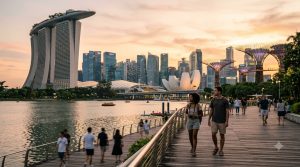
Kuala Lumpur vs Singapore 2026: Which Is Better?
Disclosure: Some links in this guide are affiliate links. If you book or buy through them, we may earn a small commission at no extra cost to you — it helps keep our guides free.
You want cultural immersion, cheap street food and lower costs.
See hotels in Kuala Lumpur →You want ease, cleanliness and polished world class attractions.
See hotels in Singapore →- In 2026, a mid-range daily budget in Kuala Lumpur runs roughly USD 50-70, compared to USD 130-180 in Singapore — KL costs around 60% less (Numbeo Cost of Living Index, 2026).
- Singapore scores 88/100 on the EIU Safe Cities Index 2025; KL scores 62/100 — both are safe, but Singapore is notably more controlled.
- KL wins for street food, budget accommodation, and Petronas Twin Towers views; Singapore wins for efficiency, cleanliness, and world-class attractions.
- You can easily do both cities in one trip: a 45-minute flight costs as little as USD 25 one-way on AirAsia (2026 fares).
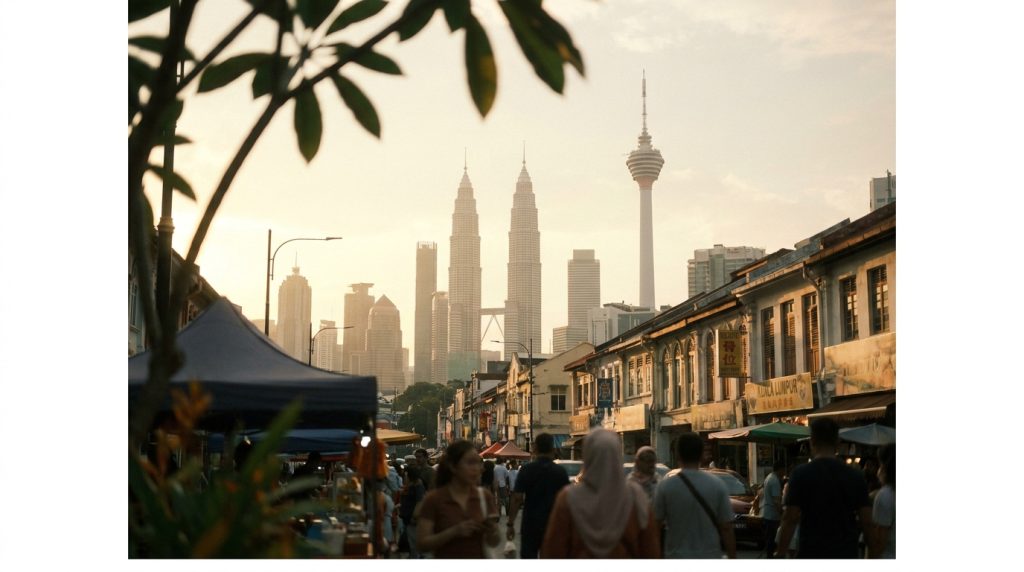
We get this question every week: Kuala Lumpur or Singapore? Both cities sit within an hour of each other by air yet deliver completely different travel experiences at radically different price points. This guide breaks down cost, food, transport, safety, and atmosphere so you can decide which city deserves your time in 2026.
Quick answer: Comparing Kuala Lumpur and Singapore? Open live hotel prices in each to weigh cost against location:
How Do Kuala Lumpur and Singapore Compare on Daily Cost?
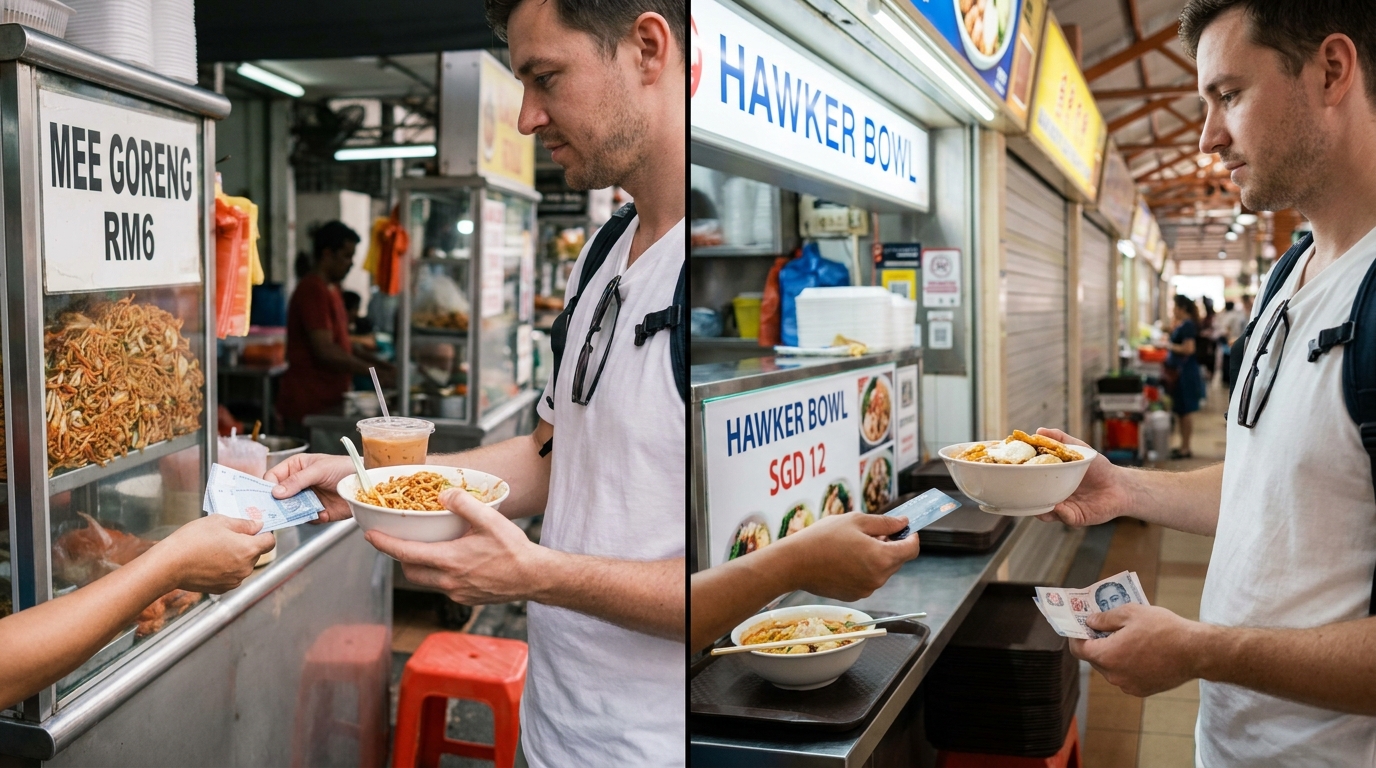
In 2026, Kuala Lumpur is dramatically cheaper than Singapore for almost every spending category. According to the Numbeo Cost of Living Index (2026), a mid-range traveler in KL spends roughly USD 50-70 per day including accommodation, meals, and local transport, versus USD 130-180 in Singapore. That gap compounds fast over a week-long trip.
Here’s a side-by-side breakdown of typical 2026 prices:
| Category | Kuala Lumpur (USD) | Singapore (USD) |
|---|---|---|
| Budget hostel dorm | 8-14/night | 28-40/night |
| 3-star hotel (mid-range) | 35-60/night | 110-160/night |
| Hawker/street meal | 2-4 | 5-8 |
| Mid-range restaurant (2 people) | 15-25 | 45-70 |
| Local metro ride | 0.50-1.20 | 1.10-2.60 |
| Grab ride (15 min) | 2-4 | 8-14 |
| Beer at a bar | 4-6 | 10-16 |
If budget is your primary concern, KL wins by a wide margin. Singapore is worth the premium if you prioritize infrastructure, air-conditioned efficiency, and marquee attractions like Gardens by the Bay. You can search and compare hotels on Booking.com for Kuala Lumpur and Singapore side by side to see live rate differences.
Which City Has Better Food?
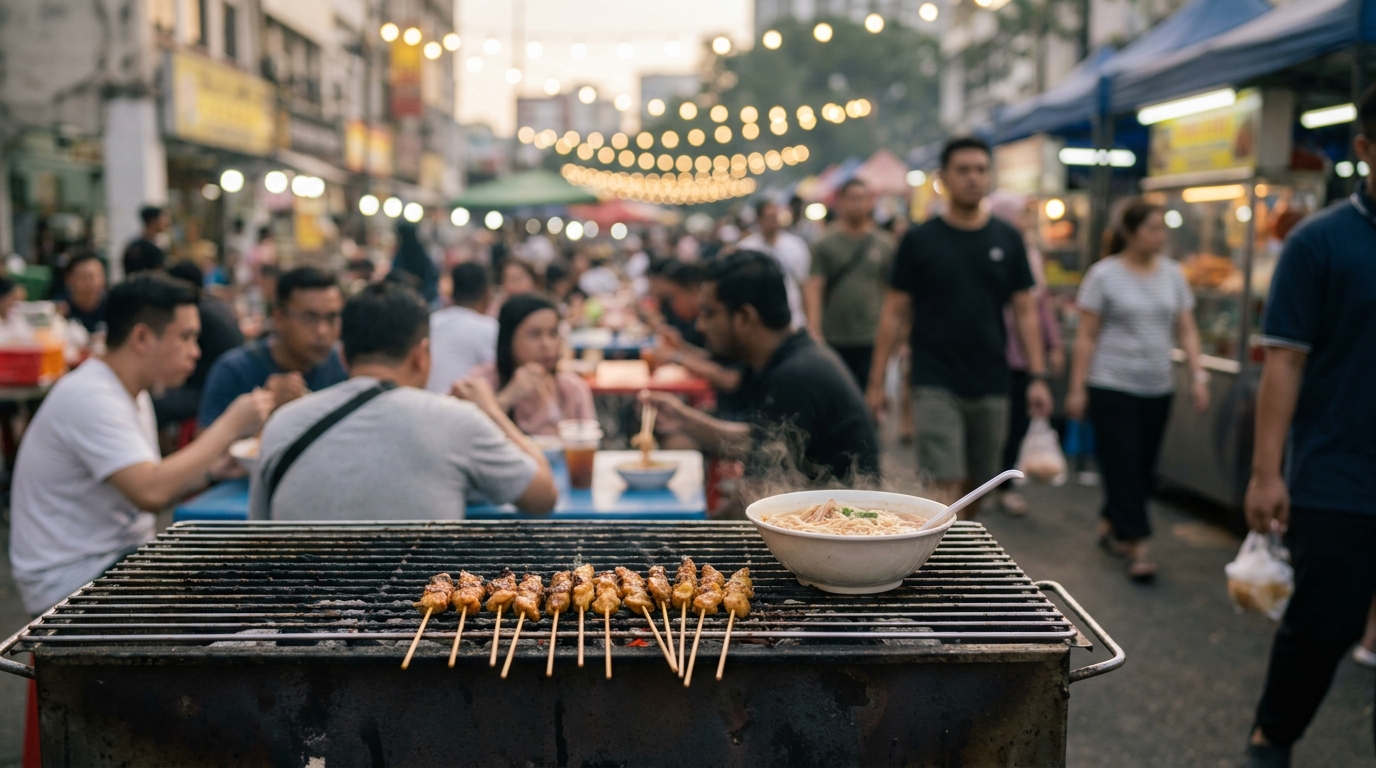
Kuala Lumpur’s food scene is one of the best in the world for value, variety, and authenticity. In 2026, KL’s hawker stalls and kopitiam coffee shops serve nasi lemak for MYR 4-6 (roughly USD 0.90-1.30), char kway teow for MYR 7-10, and roti canai for MYR 2-3. The city’s multiethnic makeup — Malay, Chinese, Indian — means three distinct culinary traditions operating at street-food prices on every block.
Singapore’s hawker culture is equally celebrated and earned UNESCO Intangible Cultural Heritage status in 2020. Dishes at hawker centres like Maxwell Food Centre and Lau Pa Sat remain affordable by Singapore standards — SGD 4-8 (USD 3-6) per plate — but the city’s restaurant scene has been Michelin-starred to the point where dining out can get expensive fast.
Our verdict on food: KL wins on price-to-quality ratio. Singapore wins on hygiene consistency, international variety, and the prestige of its Michelin-starred hawker stalls. Both cities will make you genuinely excited to eat.
For guided food tours in both cities, GetYourGuide offers well-reviewed options — KL food tours start around USD 35 per person, Singapore tours from USD 55.
According to a 2025 TasteAtlas World’s Best Cuisines ranking, Malaysian cuisine placed 5th globally (TasteAtlas, 2025). Singapore’s cuisine, while technically a fusion subset, consistently ranks in the top 15. Both cities’ street food cultures are genuinely world-class; the difference is what you pay for access.
How Do KL and Singapore Compare for Attractions?
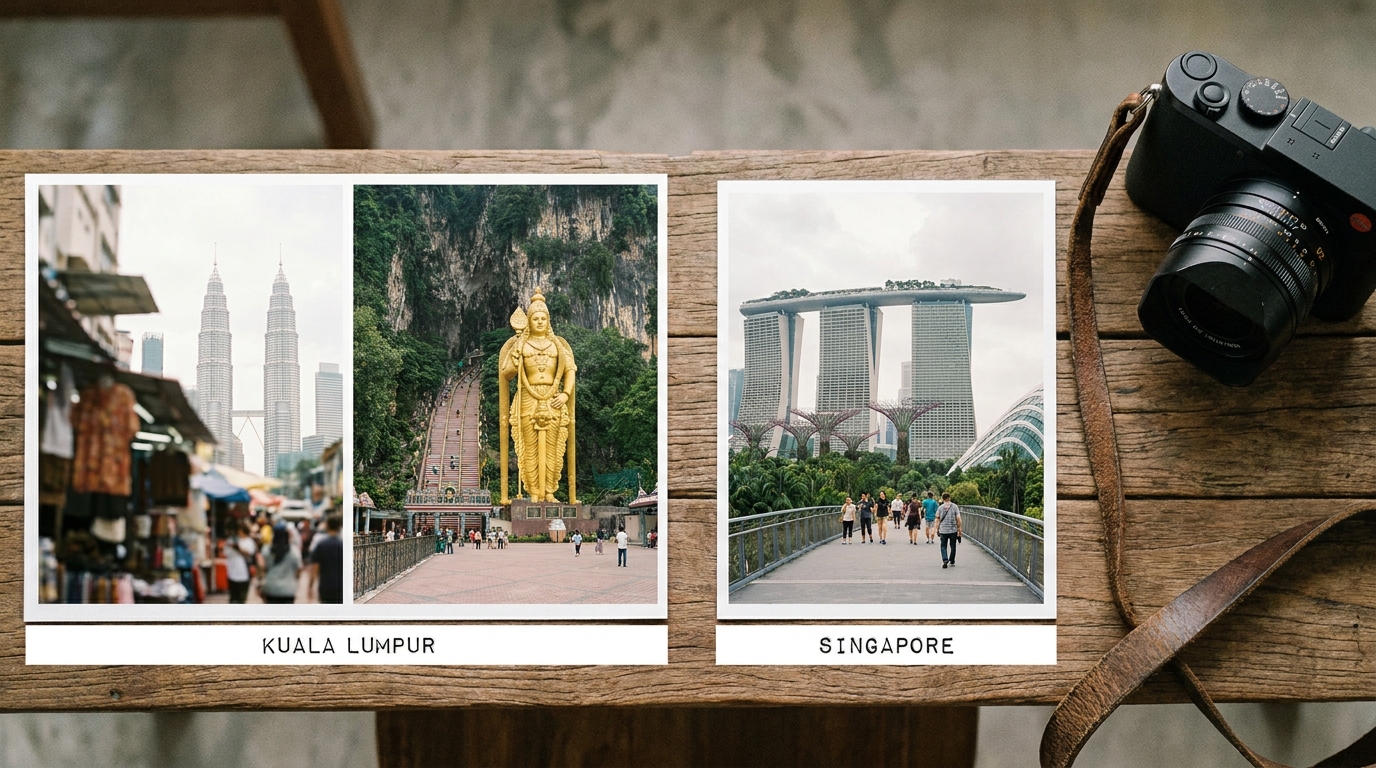
Kuala Lumpur’s headline attraction is the Petronas Twin Towers, which remain the world’s tallest twin towers at 452 metres. Tickets to the Skybridge (Level 41) and Observation Deck (Level 86) cost MYR 80 (USD 17) in 2026 — book via GetYourGuide to skip the queues. Other KL highlights include Batu Caves (free entry to the cave temple), the Bukit Bintang shopping corridor, and the KLCC park.
Singapore’s attractions are denser and more polished. Gardens by the Bay alone — with its Supertree Grove and conservatories — draws 6 million visitors annually (Gardens by the Bay Annual Report, 2025). Tickets to the two cooled conservatories cost SGD 28 (USD 21) in 2026. The Singapore Zoo, Universal Studios Singapore on Sentosa Island, and the ArtScience Museum round out a lineup that could fill five full days.
| Attraction | City | 2026 Entry Price (USD) |
|---|---|---|
| Petronas Twin Towers Skybridge | KL | ~17 |
| Batu Caves | KL | Free |
| KL Tower Observation Deck | KL | ~12 |
| Gardens by the Bay (conservatories) | Singapore | ~21 |
| Universal Studios Singapore | Singapore | ~65 |
| Singapore Zoo | Singapore | ~38 |
| Sentosa Island (cable car + beach) | Singapore | ~18 |
Singapore’s attraction lineup costs more but delivers a more curated, world-standard experience. KL’s landmarks are fewer in number but deeply photogenic and far less crowded on weekdays. For day tours and attraction bundles from both cities, browse options on GetYourGuide.
Find your Singapore hotel on the map
Live prices from Booking & Airbnb — tap a pin to compare stays around Marina Bay and Bugis and beyond.
Which City Is Easier to Get Around?
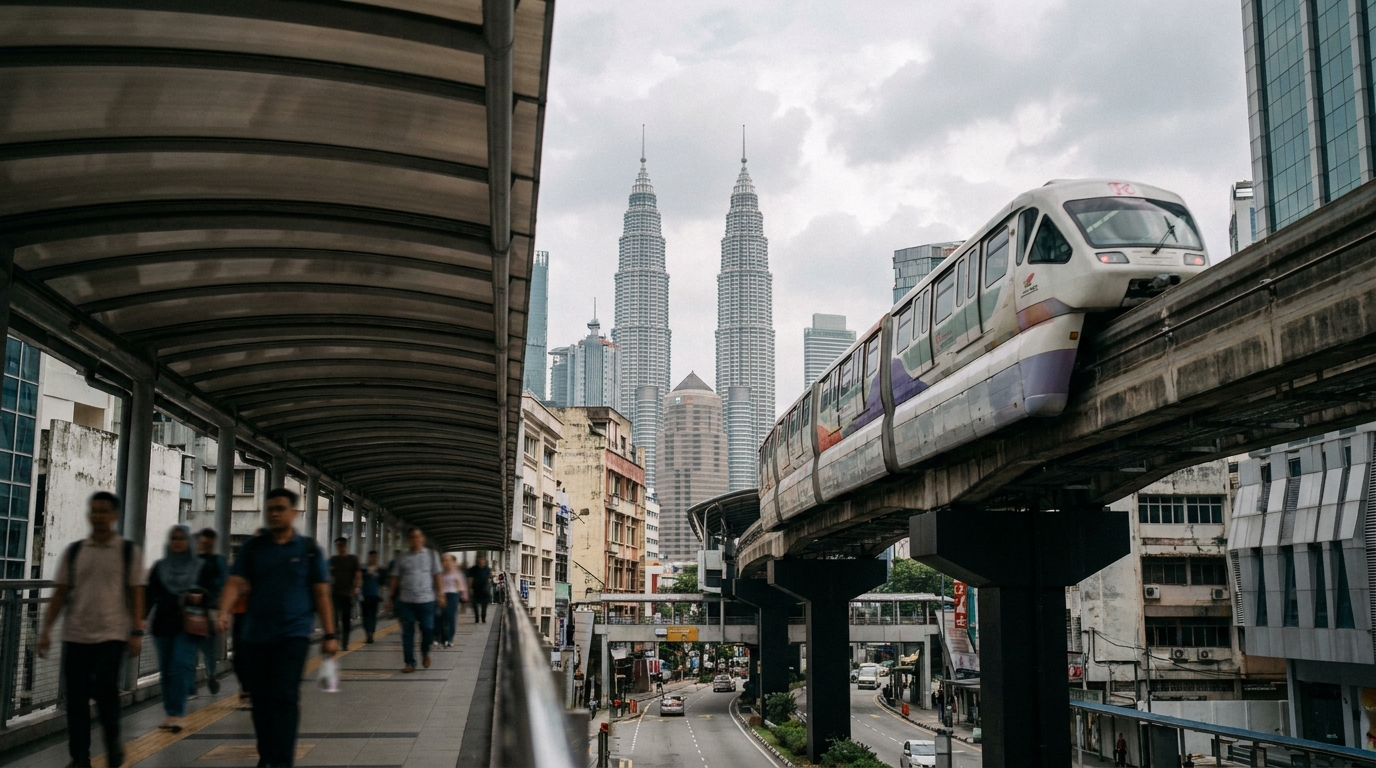
Singapore’s MRT is one of the most reliable metro systems in Asia. In 2026, trains run every 2-4 minutes during peak hours with 99.7% on-time performance (Land Transport Authority Singapore, Annual Report 2025). The EZ-Link card covers buses and trains with a single tap. You can reach almost any attraction without a taxi.
Kuala Lumpur’s public transport has improved significantly but remains patchier. The Rapid KL network covers the city center well — the Kelana Jaya LRT and MRT Putrajaya lines reach most tourist zones. However, connections between lines still require above-ground walks in the heat, and coverage in suburban areas thins out.
Grab (ride-hailing) fills the gaps cheaply: a 20-minute Grab in KL costs USD 3-5 versus USD 12-18 for the same distance in Singapore.
If you’re visiting both, consider picking up an Airalo eSIM before you fly — a regional Southeast Asia data plan covers both Malaysia and Singapore from around USD 9 for 7 days, saving you from buying two local SIMs.
How Safe Are Kuala Lumpur and Singapore?
Singapore is one of the safest cities on earth. The Economist Intelligence Unit Safe Cities Index 2025 ranks Singapore 2nd globally with an overall score of 88.6/100, excelling in personal security (92.4) and digital security (90.1). Petty crime is rare, drug laws are strictly enforced, and the city runs on rule of law in a visible, consistent way.
Kuala Lumpur is safe for tourists with common-sense precautions. The EIU ranks KL at 62/100 in the same 2025 index. Bag snatching in crowded areas like Chow Kit and Petaling Street does occur, and solo travelers should be alert at night around Bukit Bintang and Masjid India.
That said, millions of tourists visit KL each year without incident. Use Grab instead of street taxis, keep your phone off the table at outdoor restaurants, and you’ll be fine.
According to OSAC’s Malaysia 2025 Crime and Safety Report, the overall crime threat in KL is rated “medium” — comparable to many European capitals (OSAC, 2025). Singapore’s threat is “low.” Both cities are far safer than most travelers expect from Southeast Asia.
Which City Is Better for a First-Time Visitor to Southeast Asia?
Singapore is the easier entry point for first-timers. Everything is in English, signs are clear, taxis and food hygiene are regulated, and the city works exactly as advertised. If you’ve never been to Asia and you’re anxious about logistics, Singapore removes nearly all friction. The flip side: Singapore can feel almost too Western, too sterile — some travelers leave feeling they haven’t really experienced Southeast Asia.
Kuala Lumpur offers more cultural texture at lower cost. The call to prayer from mosques, the temples on Jalan Ipoh, the Indian spice shops in Brickfields — KL’s layered ethnic identity gives a genuine Southeast Asian sensibility that Singapore’s managed efficiency can paper over. For travelers who want immersion rather than a gliding, air-conditioned overview, KL is more rewarding.
Our recommendation for first-timers: Start with Singapore (3 nights), then fly or take the bus to KL (4 nights). You ease into the region and end on a higher-energy, more budget-friendly note. Check current cheap flights on Airalo’s partner pages or search AirAsia directly — fares as low as USD 25 one-way in 2026.
How Do You Travel Between Kuala Lumpur and Singapore?
The KL-Singapore route is served by four main options in 2026, each with different trade-offs on time, cost, and comfort.
| Option | Duration | 2026 Price (USD, one-way) | Notes |
|---|---|---|---|
| Budget flight (AirAsia/Scoot) | ~1 hr (+ airport time) | 25-80 | Book 4-6 weeks ahead for lowest fares |
| Express bus (e.g. Aeroline, First Coach) | 4-5 hrs | 18-35 | Door-to-door from Puduraya or KL Sentral |
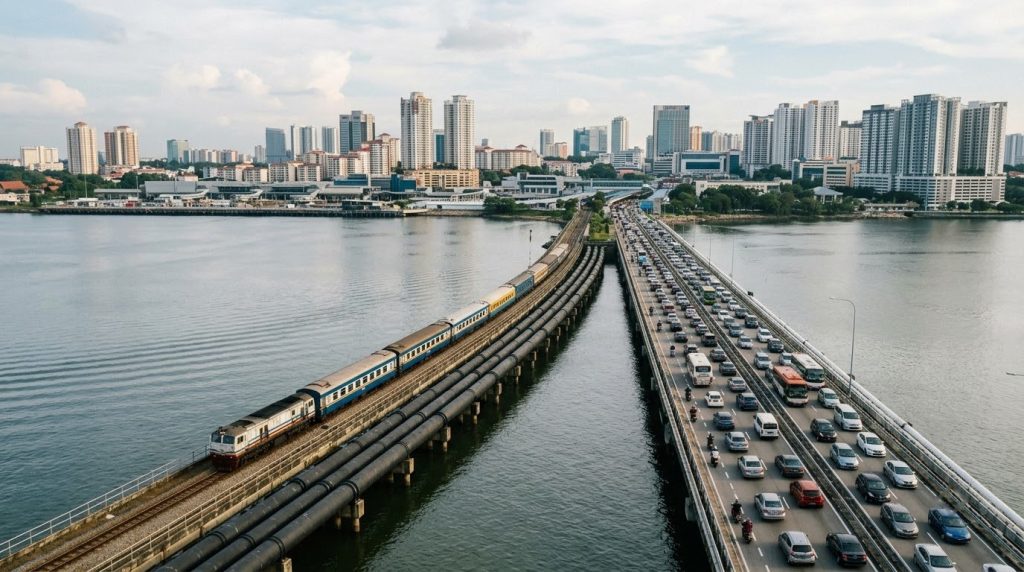
| KTM ETS train (Johor Bahru then taxi) | 5-6 hrs total | 20-40 | Requires border crossing at JB + Causeway |
| Private car/taxi | 4-5 hrs | 80-140 | Best for groups of 4+ |
The budget flight wins on time if you book ahead. The express bus is the best budget-comfort balance — coaches are air-conditioned, reclining, and Wi-Fi equipped on most operators. The KTM train route is being upgraded: the Malaysia-Singapore High Speed Rail (HSR) project, if approved in its current iteration, could reduce travel time to 90 minutes by the late 2020s (Bernama, 2025).
For your eSIM when crossing the border, grab an Airalo regional ASEAN plan — it activates in both countries automatically without SIM swapping.
Frequently Asked Questions
Is Kuala Lumpur cheaper than Singapore?
Yes, significantly. In 2026, a mid-range daily budget in KL runs USD 50-70 compared to USD 130-180 in Singapore, according to the Numbeo Cost of Living Index (2026). Accommodation, food, and transport all cost 50-65% less in KL than in Singapore.
Do I need a visa for Kuala Lumpur and Singapore?
Most Western passport holders (US, UK, AU, EU) get visa-free entry to both Malaysia and Singapore for up to 30-90 days (IATA Travel Centre, 2026). Always check current entry requirements before travel as rules can change. Malaysia introduced a reciprocal visa-on-arrival for some nationalities in 2025, so verify your specific passport status.
Can I visit both KL and Singapore on one trip?
Absolutely — and we’d recommend it. The cities are 45-60 minutes apart by plane (USD 25-80) or 4-5 hours by bus (USD 18-35). A 7-10 day itinerary covering both is one of the most popular Southeast Asia routes in 2026. See our KL travel guide for a suggested itinerary. Those comparing neighborhoods and activities tend to open this Kuala Lumpur travel guide before mapping out transport, neighborhoods, and a rough daily schedule. Readers piecing together a schedule frequently reference this where to stay in Kuala Lumpur before picking a neighborhood that matches the planned pace of the trip.
Which city has better nightlife?
Singapore has a more developed nightlife scene with Clarke Quay, Ann Siang Hill bars, and rooftop venues like 1-Altitude. KL’s Bukit Bintang and Changkat area offer a grittier, more affordable bar scene. KL wins on price; Singapore wins on polish and variety. Both cities have active nightlife that runs until 3-4am on weekends.
Which city is better for shopping?
Both cities are excellent. Singapore has ION Orchard, Bugis Street, and Little India for everything from luxury to local. KL has Pavilion, KLCC, and the Petaling Street market. KL is cheaper for everyday goods and counterfeit-free local products; Singapore for luxury brands, electronics, and tax-free shopping as a transit passenger.
Is it safe to drink tap water in KL and Singapore?
Singapore’s tap water is fully potable and among the cleanest in Asia (PUB Singapore, 2025). Kuala Lumpur’s tap water is technically treated but most travelers and locals drink bottled or filtered water as a precaution. Budget USD 1-2/day for bottled water in KL.
Which city should I visit if I only have 3 days?
With 3 days, pick one city and go deep rather than rushing both. Singapore in 3 days can cover Marina Bay, Sentosa, Chinatown, and Little India comfortably. KL in 3 days covers the Twin Towers, Batu Caves, Bukit Bintang, and the Golden Triangle. Best things to do in KL has a full 3-day itinerary.
Conclusion
There’s no single winner in the Kuala Lumpur vs Singapore debate — the right answer depends on your budget, travel style, and what you want from a city. KL gives you more culture per dollar, a messier and more authentic Southeast Asian energy, and some of the world’s best street food at prices that feel almost unreal.
Singapore gives you frictionless logistics, world-class attractions, and a level of cleanliness and safety that makes it one of the easiest cities on earth to navigate.
Our honest take: do both. The route is cheap, fast, and the contrast between the two cities makes each one richer. Start in Singapore to ease into the region, end in KL to stretch your budget and eat everything in sight.
Ready to plan? Compare hotel prices for both cities on Check live hotel prices, book attraction tickets through GetYourGuide, and grab an Airalo regional eSIM so you’re connected the moment you land. See our Kuala Lumpur travel guide for everything else you need before you go.
Sources: Numbeo Cost of Living Index 2026, retrieved 2026-06-10, https://www.numbeo.com/cost-of-living/; EIU Safe Cities Index 2025, retrieved 2026-01-15, https://safecities.eiu.com/; OSAC Malaysia Crime and Safety Report 2025, retrieved 2026-02-01, https://www.osac.gov/Country/Malaysia/Content/Detail/Report/; TasteAtlas World’s Best Cuisines 2025, retrieved 2026-03-01, https://www.tasteatlas.com/best/cuisines; Gardens by the Bay Annual Report 2025, retrieved 2026-04-01, https://www.gardensbythebay.com.sg/; Land Transport Authority Singapore Annual Report 2025, retrieved 2026-04-10, https://www.lta.gov.sg/; Bernama HSR Update 2025, retrieved 2026-05-01, https://www.bernama.com/; IATA Travel Centre 2026, retrieved 2026-06-01, https://www.iata.org/en/services/travel/; PUB Singapore Water Quality 2025, retrieved 2026-03-15, https://www.pub.gov.sg/