Disclosure: Some links in this guide are affiliate links. If you book or buy through them, we may earn a small commission at no extra cost to you — it helps keep our guides free.
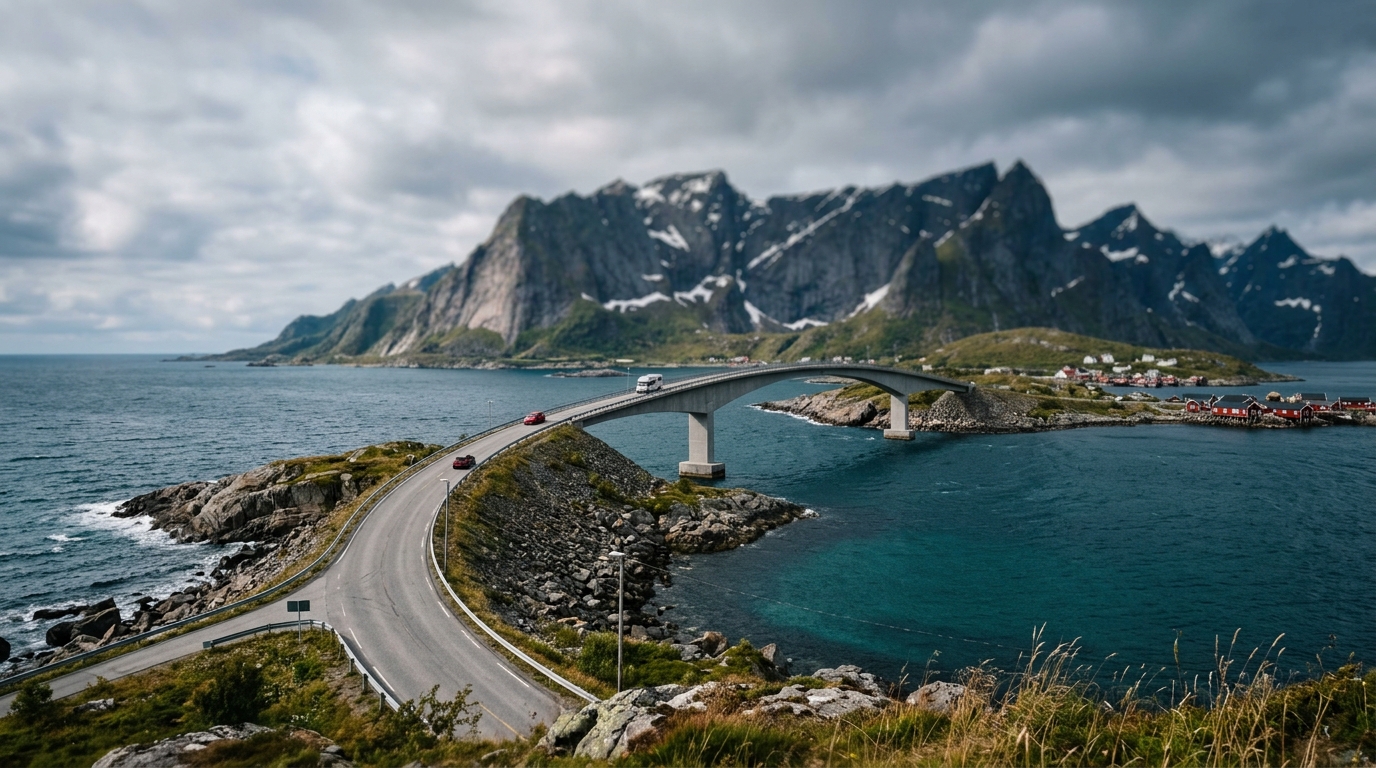
This Lofoten Islands travel guide covers everything you need to plan a visit to Norway’s most dramatic Arctic archipelago. The islands sit above the Arctic Circle at 68 degrees north, yet the Gulf Stream keeps temperatures surprisingly mild — average July highs reach 18 degrees C, far warmer than the latitude suggests (Norwegian Meteorological Institute, 2025). About 24,000 people live across the main islands. The scenery — jagged peaks dropping straight into the sea, red rorbu cabins on stilts, glassy fjords — is as extraordinary as any landscape in Europe.
Stay connected: grab a travel eSIM from Airalo before you go so you have data the moment you land.
Key Takeaways
Lofoten Islands sit above the Arctic Circle; the Gulf Stream keeps July highs around 18C despite the latitude
Midnight sun runs late May to mid-July; northern lights season is October to March
Ferry from Bodo to Moskenes costs NOK 340 (car + driver); foot passenger NOK 130; crossing takes 3.5 hours (Torghatten Nord, 2026)
Rorbu cabins (traditional red fishing huts on stilts) cost NOK 600-2,000/night for 2-4 people
Reinebringen hike (448m, 2-3h) gives the most iconic view in all of Lofoten — and it’s free
We only recommend services we have researched thoroughly.
What Makes the Lofoten Islands Worth Visiting?
The Lofoten Islands deliver one of Europe’s most visually concentrated landscapes: mountains that rise almost vertically from sea level, mirror-flat fjords, and fishing villages that look unchanged for a century. The archipelago covers 1,227 square kilometers and recorded approximately 800,000 annual tourist visits in 2023 — a number that continues to grow around 8-10% yearly (Visit Norway, 2024). Unlike many Norwegian fjord destinations, Lofoten feels genuinely remote even during peak season.
What separates Lofoten from mainland Norwegian fjord towns is the physical drama of the terrain. The peaks here are not gently sloped hills — they are shark-fin ridges of ancient Precambrian rock, some over 1,000 meters, rising within a kilometer of sea level. Geologists classify this as one of the oldest exposed rock formations in Europe, dating back 3 billion years (Norwegian Geological Survey / NGU, 2025). The contrast between vertical stone and flat Arctic sea creates a visual intensity that photographs cannot fully capture.
The islands also carry real cultural weight. Cod fishing has driven the local economy for over 1,000 years. The annual winter skrei (migrating cod) season from January to April still brings working fishing fleets to the same harbors where the Vikings traded dried fish with mainland Europe. The tørrfisk (dried cod) racks — wooden frames hung with split fish drying in the Arctic wind — remain a working sight in every village, not a heritage exhibit.
best things to do in lofoten islands
How to Get to the Lofoten Islands
The most practical route for international visitors combines a flight to Oslo, an overnight train or connecting flight to Bodo, and the Hurtigruten ferry or express boat from Bodo to the islands. The ferry from Bodo to Moskenes costs NOK 340 for a car plus driver and NOK 130 for a foot passenger, crossing in 3.5 hours (Torghatten Nord ferry operator, 2026). That crossing is itself a scenic event, passing open sea and smaller island chains.
By Ferry from Bodo (Recommended)
Bodo is the gateway city on the Norwegian mainland. The car ferry from Bodo to Moskenes (the southern tip of Lofoten) runs daily year-round, with additional sailings in summer. Booking the ferry in advance during June, July, and August is strongly recommended — the car deck fills up, particularly on Friday and Sunday departures. Foot passengers can generally board without reservations even in peak season, but don’t count on it for the busiest summer sailings.
By Train: Oslo to Bodo
The Nordland Line from Oslo to Bodo is one of Norway’s most scenic rail journeys, running 1,230 kilometers and taking approximately 17 hours. An overnight sleeper makes the most efficient use of the time. The train passes through the Arctic Circle — marked by a small monument — and delivers you directly to the Bodo ferry terminal. Second-class sleeper fares start around NOK 600-800 booked in advance (Vy Norwegian Railways, 2026).
By Air
Svolvær (SVJ) has a small airport with seasonal connections to Oslo and Bergen, operated primarily by Wideroe. Evenes airport (EVE), shared with Harstad/Narvik and roughly 2.5 hours from Svolvær by bus, has more frequent connections. Flying in and taking the ferry out — or vice versa — is a popular approach that avoids backtracking through Bodo. You can compare flights on Aviasales to find the cheapest dates and routes.
Driving the E10
The E10 highway connects all the main Lofoten islands via bridges and runs approximately 180 kilometers from Fiskebøl in the north to Å in the south. The drive between the two endpoints takes about 3 hours without stops. Most visitors rent a car or bring one on the ferry; public bus service (Nordland county routes) exists but schedules are infrequent outside summer.
Best Things to Do in the Lofoten Islands
The core Lofoten experience combines free hiking, village exploration, and optional guided boat and kayak tours. The most iconic single activity is the Reinebringen hike above Reine — a free 2-3 hour climb to 448 meters with a panoramic view that appears on essentially every piece of Lofoten photography (Visit Lofoten, 2026). No entry fee. No booking required. Boots recommended.
Reinebringen Hike (Free, 448m, 2-3h)
The trailhead starts from the village of Reine, roughly 90 kilometers southwest of Svolvær on the E10. The path climbs steeply through rocky terrain to a ridge with an unobstructed view over Reinefjord, the surrounding peaks, and the open sea beyond. The ascent takes 1 to 1.5 hours for most hikers; the descent another hour. Start early in summer — the peak is frequently crowded by 9am in July and August. The trail was reinforced with stone steps in 2019 after erosion concerns.
Henningsvær: The Art Village
Henningsvær sits on a cluster of small islands connected by narrow bridges, roughly 20 kilometers from Svolvær. It has a legitimate claim to being Norway’s most charming fishing village: a working harbor where boats unload alongside galleries selling serious contemporary Norwegian art. The village has attracted artists since the 1970s and now hosts Kaviar Factory, one of northern Norway’s most respected contemporary art spaces (Kaviar Factory, 2026). The combination of active cod fishery and high-end contemporary art in a village of about 500 people is unusual, to say the least.
Ryten Hike and Kvalvika Beach (543m, 4h Return)
The Ryten trail on Moskenesøy island climbs 543 meters to a viewpoint overlooking Kvalvika beach — a remote white-sand beach accessible only on foot or by sea. The round trip takes approximately 4 hours. Kvalvika itself sits in a valley flanked by steep ridges; many hikers camp there overnight. The beach is genuinely wild Arctic scenery: no facilities, no roads, no crowds outside of July and August.
Reine Village
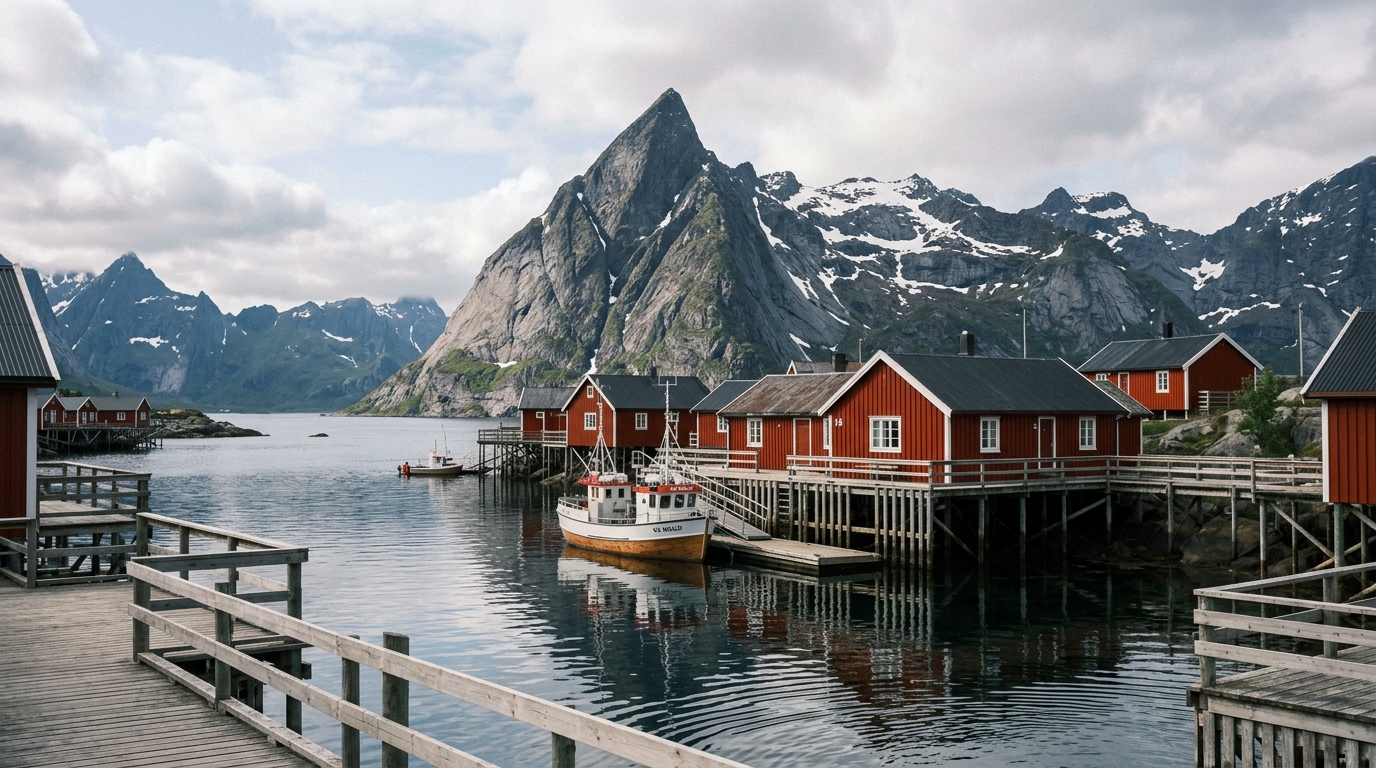
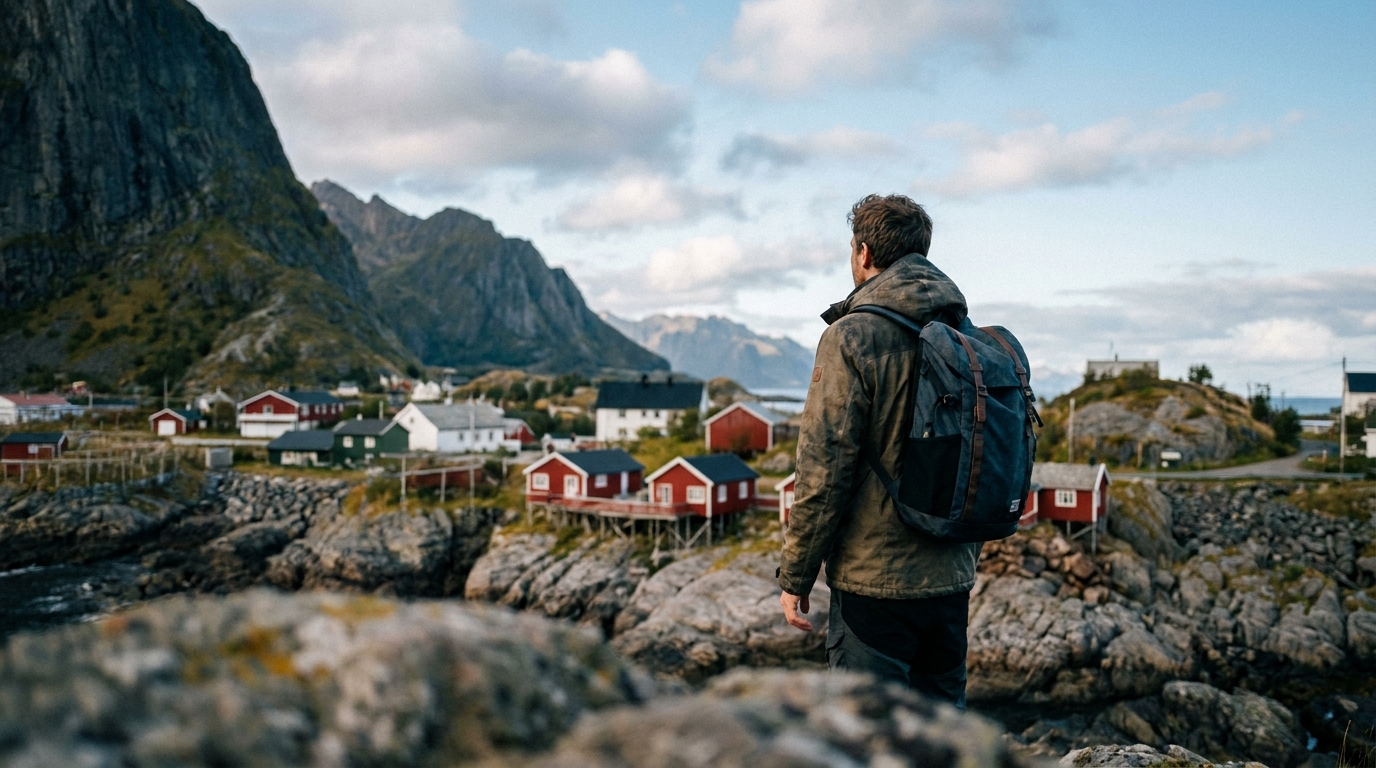
Reine is consistently cited as one of the most beautiful villages in Norway, and the view from the water — red rorbu cabins reflected in the fjord, peaks behind — is the image that defines Lofoten internationally. The village is tiny, with a population around 300. Walk the harbor, rent a kayak, or join a fishing trip from the dock. The RorbuerResort Reine complex operates traditional rorbu accommodations here.
Guided Boat Tours and Sea Kayaking
Several operators in Svolvær, Reine, and Henningsvær run guided RIB boat tours through the Trollfjord — a narrow, cliff-walled channel 2 kilometers long that cuts into the mountains above Raftsundet strait. The tours typically take 2 to 3 hours and cost NOK 700-1,200 per person.
The Village of Å
Å (pronounced “Aw”) sits at the southernmost end of the E10 — quite literally the end of the road. It is one of Norway’s best-preserved 19th-century fishing villages, now partially maintained as an open-air museum. The Norwegian Fishing Village Museum here charges a small entry fee (around NOK 90) and documents the cod-drying and boat-building history that shaped the islands for ten centuries.
Find your Lofoten Islands hotel on the map
Live prices from Booking, Airbnb and more — move the map or change dates to compare stays around Lofoten Islands.
Where to Stay in the Lofoten Islands
Rorbu cabins are the defining accommodation type: traditional red wooden fishing huts, originally built on stilts over the water so fishermen could sleep close to the boats during cod season. Modern rorbu cabins are fully renovated with heating, kitchens, and bathrooms, sleeping 2 to 4 people, and costing NOK 600 to 2,000 per night depending on the property and season (compare current rates on our live hotel map). Check live hotel prices in Lofoten Islands.
Accommodation Type
Price Range/Night
Best Village
Best For
Budget hostel / guesthouse dorm
NOK 300-500
Svolvær, Leknes
Solo travelers, backpackers
Rorbu cabin (2-4 person)
NOK 600-1,200
Reine, Nusfjord, Sakrisøy
Couples, small groups
Premium rorbu / waterfront cabin
NOK 1,200-2,000
Reine, Henningsvær
Bucket-list stays, anniversaries
Standard hotel
NOK 900-1,600
Svolvær, Leknes
Convenience, services
Camping (municipal sites)
NOK 150-250
Various along E10
Van life, budget travelers
Source: Booking.com rate averages, May 2026
Which Village to Base Yourself In
Svolvær is the main hub, with the airport, most services, the largest selection of restaurants, and easy access to Trollfjord boat tours. It suits visitors who want the most logistical convenience. Reine is the most scenic village but small, with limited dining options. Staying in Reine gives direct access to Reinebringen and the best fjord photography. Henningsvær works well for those interested in the art scene and a slightly more social atmosphere. Å suits travelers who want to experience the end-of-the-road isolation of traditional Lofoten.
Best Time to Visit the Lofoten Islands
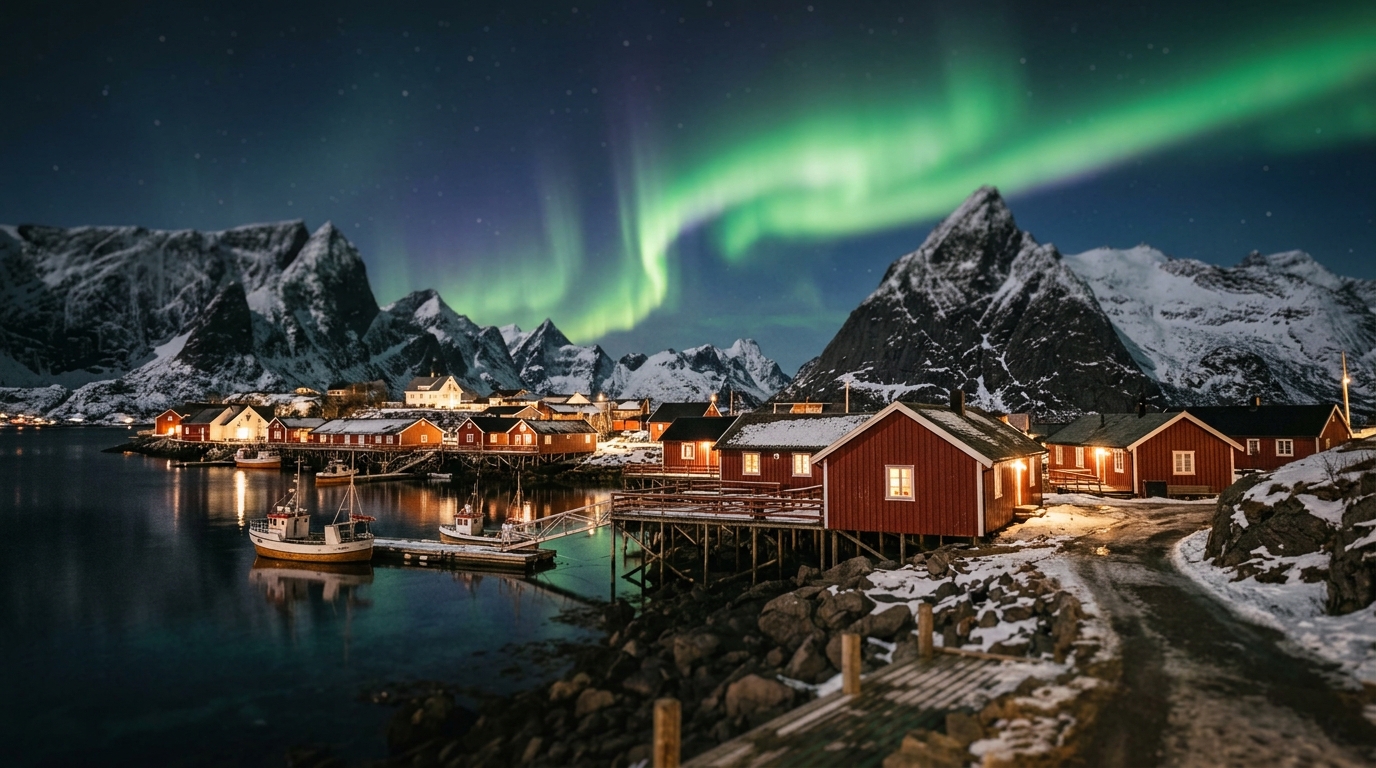
Lofoten offers two completely different experiences depending on season. Summer (June to August) brings the midnight sun, open hiking trails, all rorbu cabins operating, and the majority of tour operators running. Winter (October to March) brings the northern lights, snow-covered peaks, dramatic dark skies, and a stark Arctic atmosphere that summer cannot replicate. Both are valid depending on what you’re after (Visit Norway seasonal guide, 2025).
Month
Crowd Level
Avg High (C)
Highlight
Jan-Mar
Low
-1 to 3
Northern lights peak; skrei cod season (Jan-Apr); snow scenery
Apr-May
Low-Medium
5-12
Snow on peaks; fewer crowds; some huts not yet open
Jun
Medium
14-17
Midnight sun starts late May; best balance of light and crowd level
Jul-Aug
High
16-18
Peak season; all attractions open; book rorbu cabins 3-4 months ahead
Dark season; aurora hunting; dramatic storms; limited services
Source: Norwegian Meteorological Institute and Visit Norway, 2026
February and March sit in a sweet spot that many visitors miss. The northern lights are still active, but the days have lengthened enough for blue-hour photography that lasts 3 to 4 hours around midday — long enough to hike and see the mountains without complete darkness. Cod fishing is at its annual peak, so the harbors are alive with working boats and the fish-drying racks are fully loaded. Accommodation prices drop 30 to 40% compared to July. We’ve found this window consistently underrated relative to the summer peak.
Lofoten Islands on a Budget: Costs Breakdown
Norway is one of Europe’s most expensive countries, and Lofoten adds the rorbu premium on top of that baseline. Realistic planning requires accepting higher costs than comparable experiences in southern Europe, while noting that hiking — the primary activity — is entirely free. A budget traveler sharing a rorbu cabin can manage NOK 800-1,200 per day all-in; mid-range visitors typically spend NOK 1,500-2,500 per day.
Budget Tier
Daily Spend (NOK)
Accommodation
Notes
Budget (shared)
NOK 800-1,200
Hostel dorm or split rorbu cabin
Self-catered groceries; free hikes only
Mid-Range
NOK 1,500-2,500
Rorbu cabin (2 sharing)
1-2 restaurant meals; 1 guided tour
Comfort
NOK 2,500-4,000
Premium rorbu / waterfront room
All meals out; boat tour + kayaking
Luxury
NOK 4,000+
Top-tier rorbu or hotel
Private tours, fine dining, no compromises
Source: Visit Norway cost estimates and Booking.com rate averages, May 2026
Key Costs at a Glance
Ferry Bodo to Moskenes: NOK 130 (foot passenger), NOK 340 (car + driver)
Reinebringen hike: free
Ryten hike: free
Norwegian Fishing Village Museum, Å: approximately NOK 90 adult
Guided RIB boat tour (Trollfjord): NOK 700-1,200 per person
Sea kayak rental: approximately NOK 400-600 per half-day
Supermarket meal (Rema 1000, Kiwi): NOK 80-150
Restaurant main course: NOK 250-400
Coffee: NOK 50-80
Groceries represent the single biggest savings opportunity. Rema 1000 and Kiwi supermarkets operate in Svolvær and Leknes. Stock up there before heading to smaller villages — shops in Reine and Å carry limited selection at higher prices.
lofoten islands budget guide
Lofoten Islands Travel Guide: Final Verdict
The Lofoten Islands deliver on their reputation. The landscape is genuinely world-class, the rorbu cabin experience is unique to this corner of Norway, and the combination of free hiking and midnight sun (or northern lights, depending on season) gives visitors enormous value relative to other Norwegian destinations. Norway’s costs are real, but the core experiences here — the hikes, the villages, the light — cost almost nothing beyond getting there.
Visit in June for the best balance of midnight sun and manageable crowds. Visit in February or March for the northern lights, quiet rorbu cabins at lower rates, and the working cod season atmosphere. Book rorbu cabins 3 to 4 months ahead for July and August — the best properties in Reine and Nusfjord fill early.
For current rorbu cabin availability and pricing, Check live hotel prices in Lofoten Islands. For guided hikes, boat tours, and sea kayaking options, Browse Lofoten Islands tours on GetYourGuide.
Frequently Asked Questions
How many days do you need in the Lofoten Islands?
Four to five days covers the islands well. Day one: Svolvær arrival + Trollfjord boat tour. Day two: drive to Henningsvær and Nusfjord. Day three: Reinebringen hike from Reine. Day four: Ryten hike and Kvalvika beach. Day five: explore Å village and drive back. Three days works for a focused trip covering Reine and Henningsvær only. One week allows slow travel and repeat hikes in good weather (Visit Lofoten recommended itineraries, 2026).
When is the midnight sun in the Lofoten Islands?
The midnight sun — 24-hour daylight with the sun above the horizon — runs from approximately late May to mid-July in Lofoten. The precise dates shift slightly year to year, but the sun does not set at all from around May 28 to July 14 at the latitude of Reine. The extended twilight period, where it never gets fully dark, extends from early May through early August (Norwegian Meteorological Institute, 2025).
What are rorbu cabins and are they worth it?
Rorbu cabins are traditional Norwegian fishermen’s cabins, originally built on stilts over the water so crews could live close to the fishing grounds during the cod season. Modern rorbu cabins are fully renovated but retain the red wooden exterior and waterfront position. They cost NOK 600-2,000 per night for 2 to 4 people. Splitting the cost between two people makes them comparable to a mid-range hotel room, and the experience — waking above the fjord with peaks outside the window — is unlike any other accommodation in Europe. Yes, they are worth it.
Is the Lofoten Islands suitable for beginners in hiking?
Yes, for the easier trails. Reinebringen (2-3 hours, 448m) is steep in sections but on a well-marked stone path and suitable for most reasonably fit adults. Ryten (4 hours, 543m) is similar in difficulty. Neither requires technical equipment — sturdy walking shoes or light hiking boots are enough. The more demanding routes such as Svolværgeita (the “Goat” summit above Svolvær) involve exposed scrambling and require climbing experience and proper gear. Most visitors stick to the accessible trails and find them more than sufficient.
How expensive is traveling in the Lofoten Islands?
Lofoten reflects Norway’s broader cost level, which is among the highest in Europe. A budget traveler sharing a rorbu cabin and cooking their own meals can manage NOK 800-1,200 per day (roughly EUR 70-110). A mid-range traveler — private rorbu cabin, one restaurant meal daily, one guided tour — typically spends NOK 1,500-2,500 per day (roughly EUR 130-220). The ferry from Bodo costs NOK 340 per car. Hikes are free. The biggest cost variable is accommodation: book early for the best rates (Visit Norway cost guide, 2025).
This Lofoten Islands travel guide was researched and written in May 2026. Prices and schedules are subject to change; verify with official sources before booking.