Tuscany Itinerary: 5 and 7 Days (2026)
Disclosure: Some links in this guide are affiliate links. If you book or buy through them, we may earn a small commission at no extra cost to you — it helps keep our guides free.
A five-day Tuscany itinerary covers Florence, Siena and Chianti for about USD 950 per person, while a seven-day Tuscany itinerary adds Val d’Orcia for closer to USD 1,350 per person. Choose five days if you have one work week free, and choose seven days if you want unhurried mornings in the hill towns instead of a fast loop.
| Days | Route | Bases | Approx cost/person (USD) |
|---|---|---|---|
| 5 | Florence, Chianti loop, Siena, San Gimignano | Florence, Siena | USD 950 |
| 7 | Florence, Chianti, Siena, San Gimignano, Val d’Orcia | Florence, Siena, Pienza or Montepulciano | USD 1,350 |
5-day Tuscany itinerary: Florence, Siena and Chianti
Five days works when Florence and Siena anchor a short Chianti loop rather than a full regional circuit. Spend the first two nights in Florence without a car, since the historic center is walkable and a rental only adds parking cost and Zona a Traffico Limitato (ZTL) risk.
On day three, collect the car from a location outside the ZTL and drive to Siena. The fast route on the SR2 “superstrada” takes about 75 to 90 minutes, while the scenic SR222 through Chianti takes roughly 1.5 to 2 hours because it runs through Greve in Chianti and Castellina in Chianti instead of bypassing them.
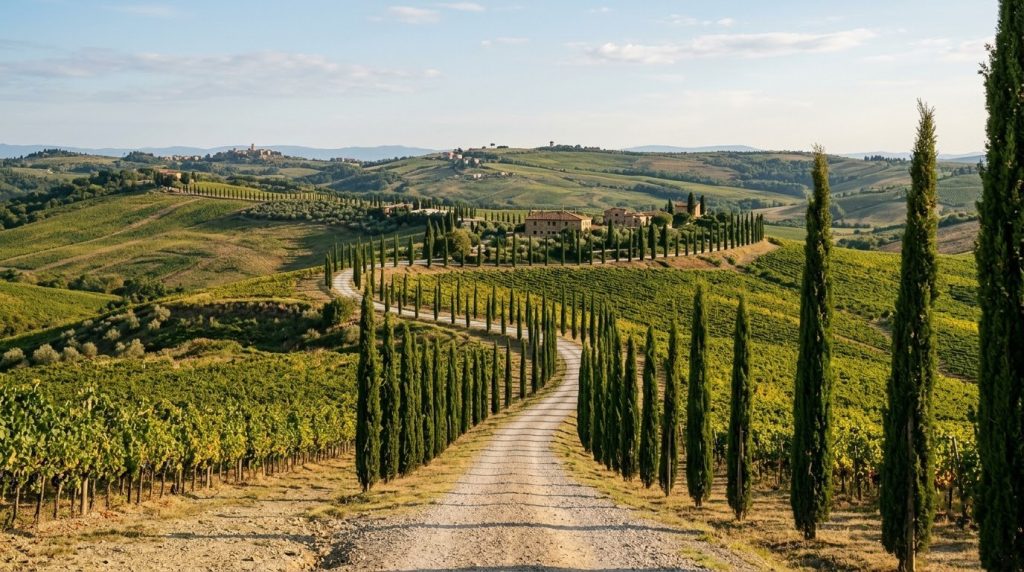
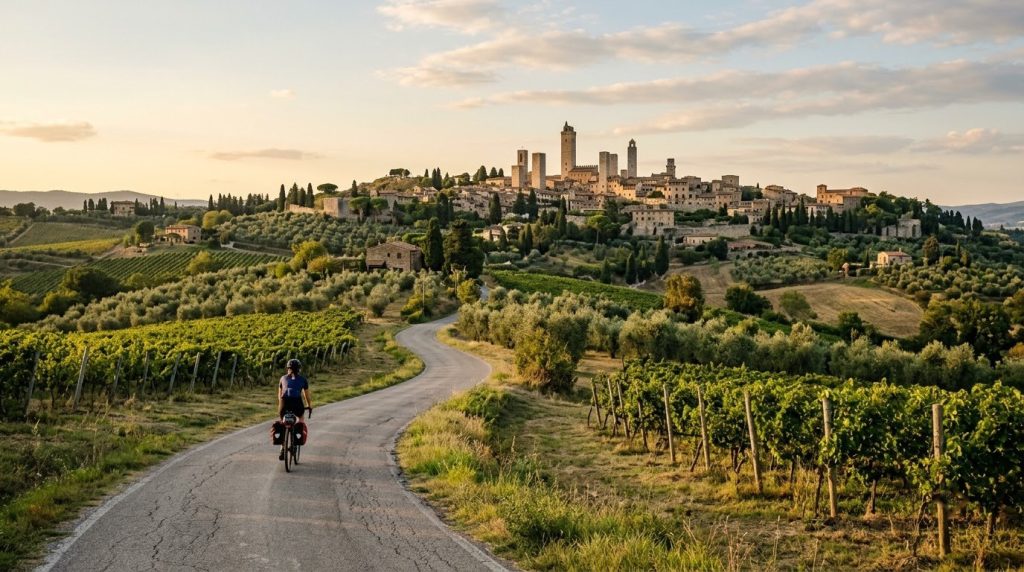
Base in Siena for two nights. Use day four for the city itself, including the Piazza del Campo and the Duomo, then drive out to San Gimignano, about 43 to 48 minutes away, for its towers and an early dinner before the day-trip crowds thin out.
On day five, either return to Florence via the Chianti back roads for a final wine-tasting stop, or drop the car near the Florence train station and use the afternoon for last-minute shopping. This structure keeps driving under two hours on any single day, which matters because Tuscany’s back roads are narrower and slower than the distances suggest.
7-day Tuscany itinerary: adding Val d’Orcia and the coast
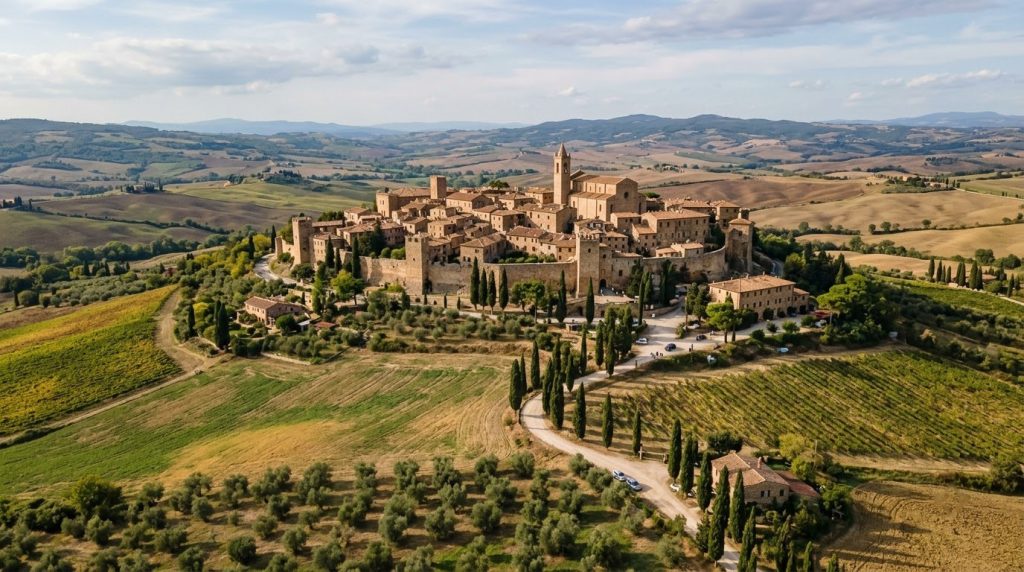
Seven days earns its extra time by pushing south into Val d’Orcia, not by adding more nights in Florence. Follow the five-day plan through day five, then add two nights in or near Pienza or Montepulciano.
The drive from Siena into Val d’Orcia takes about 1 hour to 1 hour 15 minutes to Pienza, and roughly 55 to 60 minutes to Montepulciano, but treat those as minimums.
Several stretches south of Buonconvento run on strade bianche, the region’s unpaved white gravel roads, and online route calculators do not account for the lower speeds those surfaces force, so budget extra time rather than cutting it close before a same-day flight.
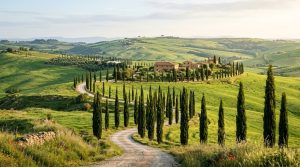
Use days six and seven to walk Pienza’s historic center, drive the cypress-lined roads near San Quirico d’Orcia, and detour into Montepulciano for a Vino Nobile tasting. A full Tuscan coast add-on, toward the Maremma region, is a separate trip rather than a day trip from Val d’Orcia.
Driving estimates from Florence to the Maremma coast run from about 2 hours to well over 3 hours depending on the exact destination, so travelers who genuinely want beach time on this trip should look at a dedicated Amalfi Coast travel guide rather than squeezing a coastal detour into day seven.
Why the ZTL decides where you park and sleep
The ZTL is the single detail that determines where a Tuscany itinerary should book a hotel, more than any sight on a list. Florence and Siena both restrict the historic center to residents and permit holders, and both zones are enforced by automatic number-plate recognition cameras rather than police checkpoints, so a wrong turn is not a warning, it is a mailed fine.
In Florence, the ZTL runs roughly Monday to Friday from 7:30 a.m. to 8 p.m. and Saturday mornings, with an added summer night restriction on weekend late nights. There is no day pass for a private rental car; the only legal way in is a hotel inside the zone registering the license plate in advance, which is normally free.
Unauthorized entries are fined under Article 7 of the Italian traffic code, and penalties commonly cited range from about USD 96 (EUR 83) up to USD 386 (EUR 332) per camera crossing, converted at the September 2026 rate of EUR 0.86 to the dollar. Crossing two separate camera sectors on the same trip can generate two separate fines.
Siena’s ZTL is stricter in one way: it runs continuously, 24 hours a day, every day of the year, covering the Il Campo area and the Terzo di Camollia district. As in Florence, a hotel reception inside the zone can register a guest’s plate at check-in, usually at no charge.
Fine amounts are not officially published by the city, but sources tracking Italian traffic-code enforcement cite a similar range to Florence’s.
The practical takeaway is the same in both cities: book a hotel that either sits outside the ZTL with nearby parking, or sits inside it and explicitly offers plate registration, and confirm which before arrival rather than after a fine shows up months later.
When a shorter Tuscany trip is the right answer
A shorter Tuscany trip is the right answer for travelers who don’t want to drive at all.
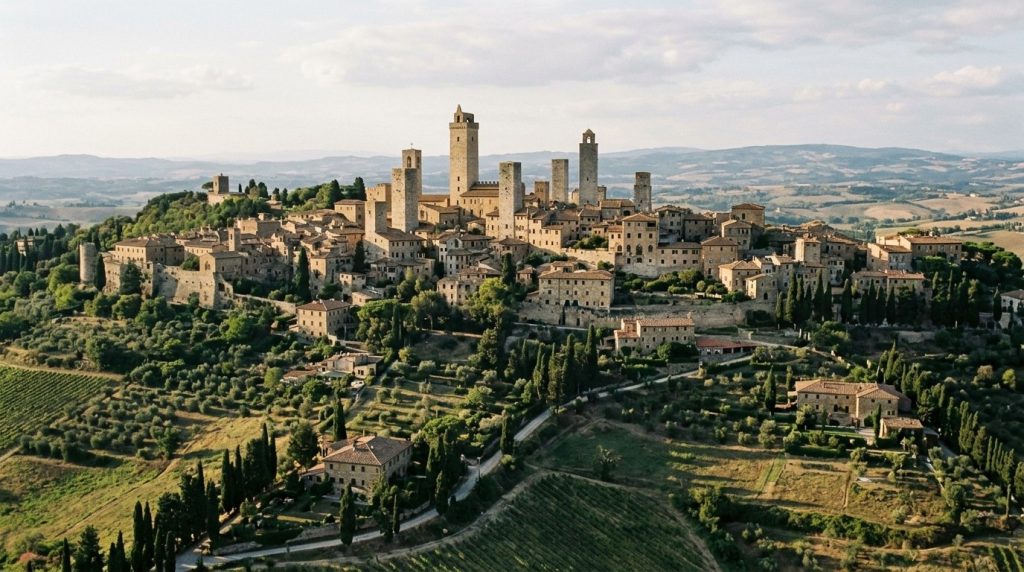
Florence, Siena and San Gimignano are all connected by direct trains or regional buses, so a traveler with three or four days can base entirely in Florence, sidestep the ZTL and the strade bianche altogether, and day-trip to Siena and San Gimignano by public transport.
This suits anyone nervous about narrow Tuscan roads, anyone without an International Driving Permit, or anyone who wants Florence’s museums to be the main event rather than a driving loop.
Val d’Orcia is the exception: Pienza and Montepulciano have limited public transport, so travelers without a car who still want that landscape usually book a single guided day tour from Siena or Florence instead of self-driving.
Travelers combining Tuscany with the capital often bolt on a Rome itinerary for 3 days before or after, since Florence to Rome is a fast train connection rather than a drive. Others compare inland Tuscany against the coast first: if narrow hill-town roads sound stressful, a Cinque Terre itinerary covers a similarly scenic region by train instead of by car.
How to decide – quick cheat sheet
The right length comes down to available days, driving comfort, and how much of Val d’Orcia matters to the trip.
– Have 5 days and want one loop: Florence, Chianti, Siena, San Gimignano, no coast. – Have 7 days and want a slower pace: add two nights in Val d’Orcia, skip the coast. – Don’t want to drive at all: base in Florence, day-trip by train and bus, book a guided tour for Val d’Orcia. – Booking a hotel in Florence or Siena: confirm in writing whether the property is inside the ZTL and will register your plate. – Renting a car: collect it on the day you leave Florence, not on arrival, to avoid paying for parking you can’t use inside the ZTL. – Extending toward the coast or Rome: treat it as an extra 2 to 3 days, not a detour squeezed into an existing day. Honest trade-offs and highlights are weighed in our piece on whether Bologna is worth visiting.
Best time to visit Tuscany
Late April through early June and mid-September into October are Tuscany’s two best windows, since both sit between the region’s hottest, most crowded stretch and its cold, wet winter.
Daytime highs in those shoulder months typically run 20°C to 29°C (68°F to 84°F), warm enough for long days outdoors in Chianti and Val d’Orcia without the heat that makes a midday walk through Siena or Florence in July or August genuinely uncomfortable.
Summer brings Florence’s hottest stretch, with highs regularly pushing past 30°C (86°F) in July and August and city-centre streets holding heat long after sunset, on top of the year’s biggest crowds at the Uffizi, the Duomo and San Gimignano’s towers.
September keeps much of summer’s reliable weather while trading away a share of the crowds, and it is also grape harvest season across Chianti and the Val d’Orcia wine towns, when cellar doors are at their busiest and most interesting for a visitor rather than simply open.
Winter is Tuscany’s quiet season: fewer crowds and lower hotel rates, but shorter days, a real chance of cold rain, and some rural agriturismi and smaller sights reducing hours or closing outright between roughly November and March.
A winter trip still works for Florence’s museums and Siena’s indoor sights, but anyone planning on the Chianti back roads or a Val d’Orcia landscape drive should treat spring through autumn as the realistic window instead.
Renting a car in Tuscany: licence, insurance and parking outside the towns
Non-EU drivers, including those travelling on a US, Australian, UK or Canadian licence, need an International Driving Permit (IDP) alongside their home licence to rent and legally drive in Italy, and rental counters can refuse a pickup without one even if the reservation itself went through without issue.
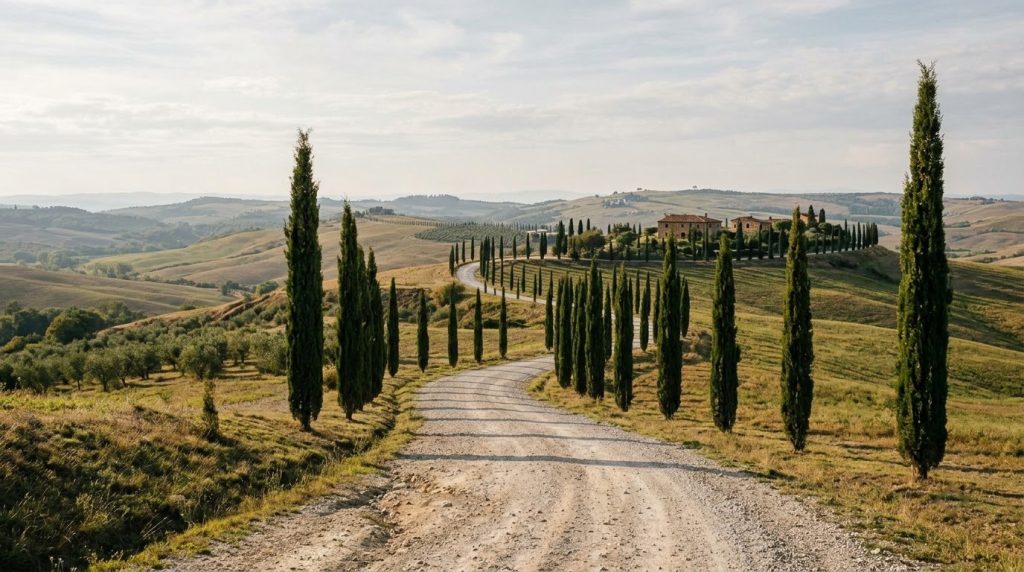
An IDP is inexpensive and quick to obtain at home before departure through a motoring association, and it is worth carrying both documents together rather than packing the IDP separately from the licence it is meant to accompany.
Collision damage waiver and theft protection are worth adding on top of a rental’s basic insurance given how often minor scrapes happen on Tuscany’s narrow lanes and tight village parking, and a credit-card excess-reduction policy bought in advance is usually cheaper than the counter upsell offered at pickup.
Fuel in Italy is sold by the litre and typically costs more than drivers from the US or Australia are used to, so budget accordingly for a multi-day loop through Chianti and Val d’Orcia rather than assuming home-country fuel costs.
Parking is the detail that trips up the most first-time Tuscany drivers. Hill towns including Siena, San Gimignano and Montepulciano route cars into paid lots outside their historic gates rather than allowing general parking inside, on top of the ZTL restrictions covered above, so a hotel’s own parking arrangement, or the nearest paid lot’s walk-in distance, matters as much as the hotel’s address once a trip includes a rental car.
Pisa and Lucca: easy add-ons if an extra day is free
Pisa and Lucca both sit close enough to Florence to add as a single extra day without restructuring the itinerary above, and both are easier by train than by car given Pisa’s centre has its own restricted traffic zone and Lucca’s old town sits entirely inside walls built for pedestrians, not parking.
Direct regional trains from Florence to Pisa take about an hour, run frequently through the day, and cost roughly USD 9 to USD 14 (EUR 8 to EUR 12) one-way, cheaper and simpler than adding a rental-car day to see one tower.
A combined ticket covering the Leaning Tower climb and the Duomo runs roughly USD 21 to USD 23 (EUR 18 to EUR 20), and booking a timed slot online in advance is worth doing in peak season, since walk-up tower climbs are capped by group size and can sell out for same-day visitors by mid-morning.
Lucca, a short add-on from Pisa or its own direct train from Florence, is built around a nearly complete Renaissance-era wall circuit that doubles as a flat, car-free path for walking or cycling the whole historic centre’s perimeter.
Bike rental near the walls runs roughly USD 5 to USD 17 (EUR 4 to EUR 15) per hour depending on the bike type and operator, and renting for an hour or two covers the full loop at an easy pace with time to stop along the way.
Tasting Brunello and Vino Nobile along the route
Montalcino and Montepulciano, both reachable as add-ons to the Val d’Orcia leg of the 7-day itinerary above, anchor two of Tuscany’s best-known red wines: Brunello di Montalcino, made entirely from Sangiovese and aged for years before release, and Vino Nobile di Montepulciano, Montepulciano’s own Sangiovese-based DOCG. Both hill towns are compact enough to walk between several cellar doors in an afternoon without needing to drive between stops.
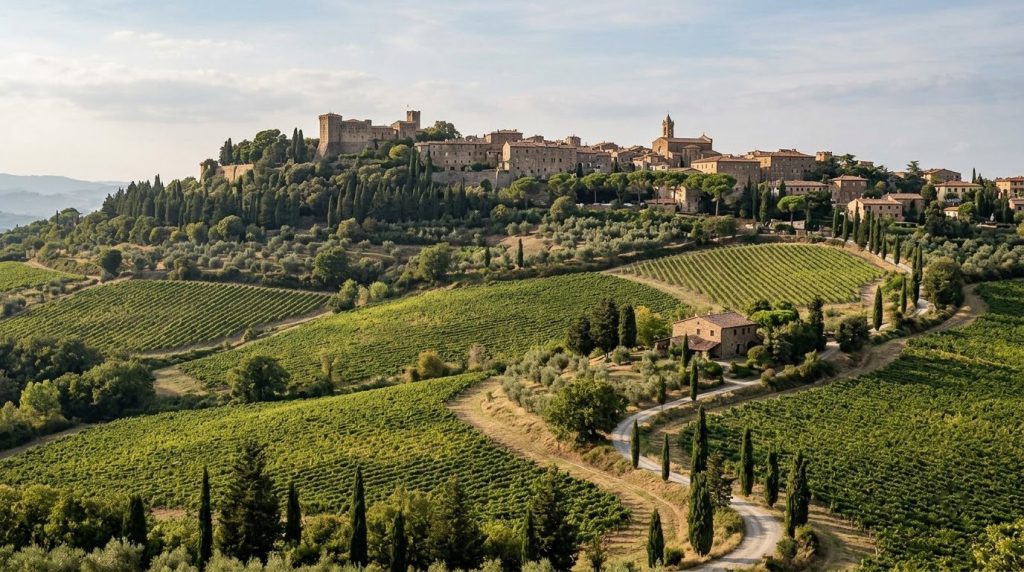
Most Montalcino and Montepulciano cellars charge a tasting fee that is often waived or credited against a bottle purchase, and many require a booking rather than accepting walk-ins, especially during the September and October harvest season when both towns are busiest.
Calling or booking online a day or two ahead is worth doing even outside peak season, since smaller family-run cellars sometimes close the tasting room if the day’s team is out in the vineyard instead.
Travellers who want a wine-focused add-on without extending the 7-day itinerary into a full 10-day trip can swap one of the two Val d’Orcia nights for a dedicated Montalcino base instead of Pienza, trading some of Pienza’s own historic-centre charm for easier access to Brunello’s home cellars.
Either version keeps driving distances inside Val d’Orcia short, since Montalcino, Pienza and Montepulciano all sit within a similar radius of each other on the region’s unpaved strade bianche and paved back roads alike, so swapping one base for another adds minimal driving time to either version of the itinerary.
Where to stay along the route
Florence and Siena both work as bases for the 5-day version, while Pienza or Montepulciano make sense as a second base for the 7-day version. Compare live listings for all of them, and confirm ZTL status with the property before booking, on the map below.
Find your Tuscany hotel on the map
Live prices from Booking, Airbnb and more — move the map or change dates to compare stays across Tuscany.
For an alternative overnight strategy, some travelers prefer to sleep in Rome and day-trip north, in which case a where to stay in Rome guide covers ZTL-free neighborhoods near the main station.