Best Time to Visit Tuscany (2026)
Disclosure: Some links in this guide are affiliate links. If you book or buy through them, we may earn a small commission at no extra cost to you — it helps keep our guides free.
The best time to visit Tuscany is late April through early June, when daytime highs run 20°C to 29°C (68°F to 84°F) and the hills are at their greenest before summer heat and crowds set in. That answer changes completely if you are chasing the wine harvest or the golden wheat fields of the postcards, because both happen at different points later in the year.
| Month | Temp | Landscape | Crowds and prices | Verdict |
|---|---|---|---|---|
| January | 11°C/2°C (52°F/36°F) | Bare vines, valley fog, some agriturismi shut for the season | Lowest prices of the year, few visitors | Cities only |
| February | 13°C/3°C (55°F/37°F) | Still dormant, first almond blossom late in the month | Low prices, quiet roads | Cities only |
| March | 16°C/5°C (61°F/41°F) | Green shoots return, early wildflowers | Prices start climbing, agriturismi reopening | Shoulder season begins |
| April | 20°C/8°C (68°F/46°F) | Green hills, poppies blooming, wheat still green | Moderate crowds, Easter week spikes | Strong pick |
| May | 25°C/12°C (76°F/53°F) | Peak green season, wildflowers, warm but not hot | Busy, prices climbing toward summer | Best overall month |
| June | 29°C/16°C (84°F/61°F) | Wheat turns gold from mid-month, first harvest cuts | Very busy, summer prices begin | Great, but warmer |
| July | 32°C/19°C (90°F/66°F) | Golden fields being cut, dry landscape, Palio on July 2 | Peak crowds, Siena hotels sell out around the Palio | Hot and crowded |
| August | 33°C/19°C (91°F/66°F) | Driest month, brown-gold hills, second Palio on August 16 | Peak prices, many Italians on holiday too | Hottest, most crowded |
| September | 27°C/15°C (81°F/59°F) | Vendemmia starts in Chianti Classico late in the month | Crowds ease, prices soften after mid-month | Excellent |
| October | 22°C/11°C (72°F/52°F) | Harvest colors, Brunello grapes still picked in Montalcino | Fewer visitors, better value | Excellent, cooler |
| November | 16°C/7°C (61°F/45°F) | Olive harvest, fog rolling into valleys, agriturismi begin closing | Low prices, quiet | Cities only |
| December | 12°C/3°C (54°F/37°F) | Bare vineyards, Christmas markets in towns | Low prices except Christmas week | Cities only |
April to June — green hills and the mildest weather
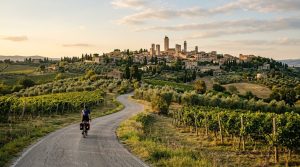
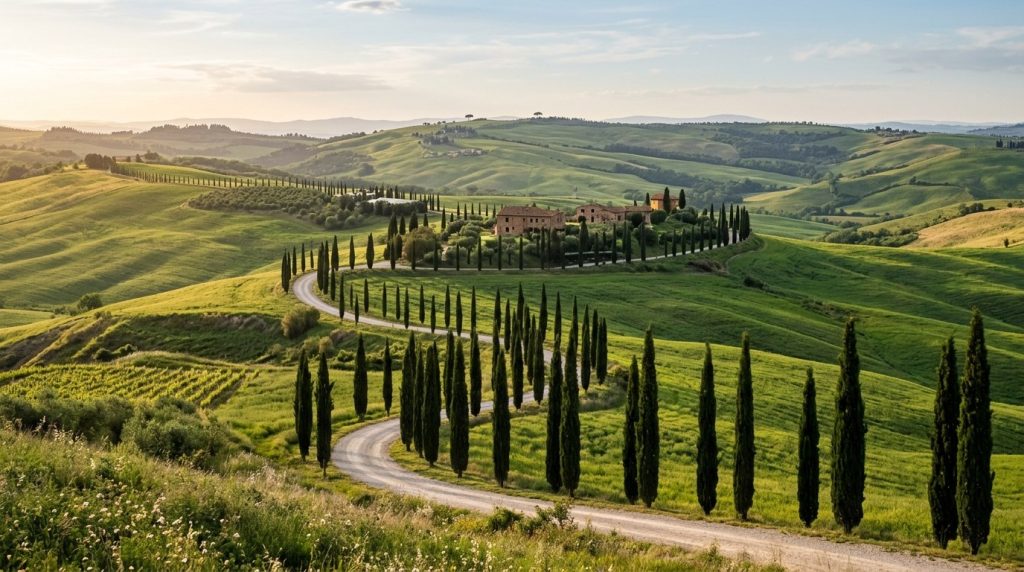
April to June is when Tuscany looks the way it does in every guidebook photograph, with rolling hills painted bright green and wild poppies lining the roadsides. Daytime highs climb steadily from 20°C in April to 29°C in June (68°F to 84°F), while nights in April still drop to 8°C (46°F), so pack a layer for evenings.
Easter week brings a short but sharp crowd spike in Florence and Siena, and May weekends fill Val d’Orcia agriturismi fast, so book accommodation at least two months ahead. By early June the wheat in the Val d’Orcia starts turning from green to gold, which is the cue that summer heat is not far behind.
Travellers building a route through the region can map the stops in this Tuscany road trip itinerary before locking in dates.
September and October — the wine harvest window
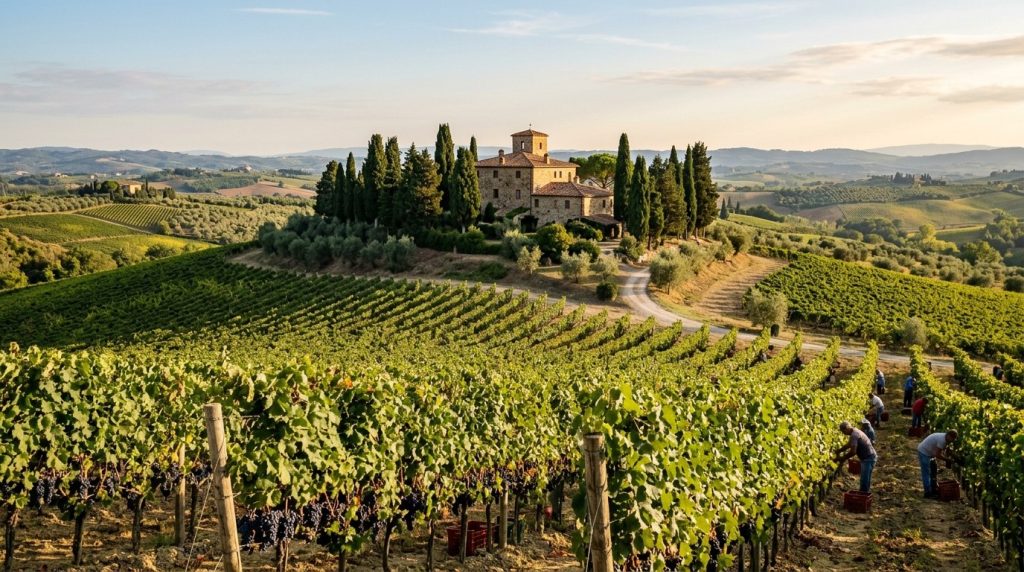
September and October are Tuscany’s harvest months, when temperatures ease to a comfortable 22°C to 27°C (72°F to 81°F) and vineyards fill with pickers instead of tour buses.
The vendemmia in Chianti Classico usually runs from the last week of September through the second week of October, with higher vineyards at 500 to 600 metres picked later than the valley floor. Montalcino’s Brunello grapes, grown from Sangiovese Grosso vines at higher altitude, ripen slower and are often still being harvested into late October.
The 2026 harvest is running roughly 7 to 10 days ahead of the historical average after an early véraison in Chianti Classico, so several growers who normally start in late September were already picking in mid-September this year. The Chianti Classico Wine Festival in Greve runs September 10 to 13, 2026, which pairs well with a harvest trip.
A hands-on vendemmia experience, grape picking plus a cellar tour and lunch, typically runs EUR 30 to EUR 50 per person, or roughly USD 35 to USD 58 at today’s EUR/USD rate of 1.16.
Crowds thin out and hotel prices soften noticeably after the middle of September, making the back half of the month one of the best value windows of the year.
The green-or-gold problem, and which one you actually want
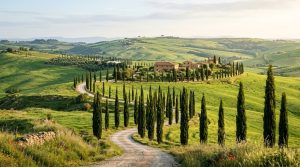
Tuscany’s two famous looks never overlap, so decide which photograph you actually want before you book. The green, rolling hills with wild poppies that dominate most Tuscany photos happen from April into the first half of May, before the wheat has grown tall enough to change color.
The golden Val d’Orcia fields of the postcards are a different season entirely, since wheat sown the previous autumn turns from green to gold and is harvested starting in mid-June. The fields hold that deep gold color for roughly three to four weeks before the cut stalks fade to a duller brown by mid-to-late July.
That means the golden Val d’Orcia moment sits inside the hottest, driest stretch of the Tuscan summer, with highs already near 29°C to 32°C (84°F to 90°F) by the time the fields turn. Travellers who want green hills more than gold fields should go in April or early May.
Travellers who came for the gold should plan for mid-June to early July and accept the higher temperatures that come with it.
July and August — heat, crowds and the Palio
July and August are Tuscany’s hottest and busiest months, with highs of 32°C in July and 33°C in August (90°F and 91°F) and very little overnight relief.
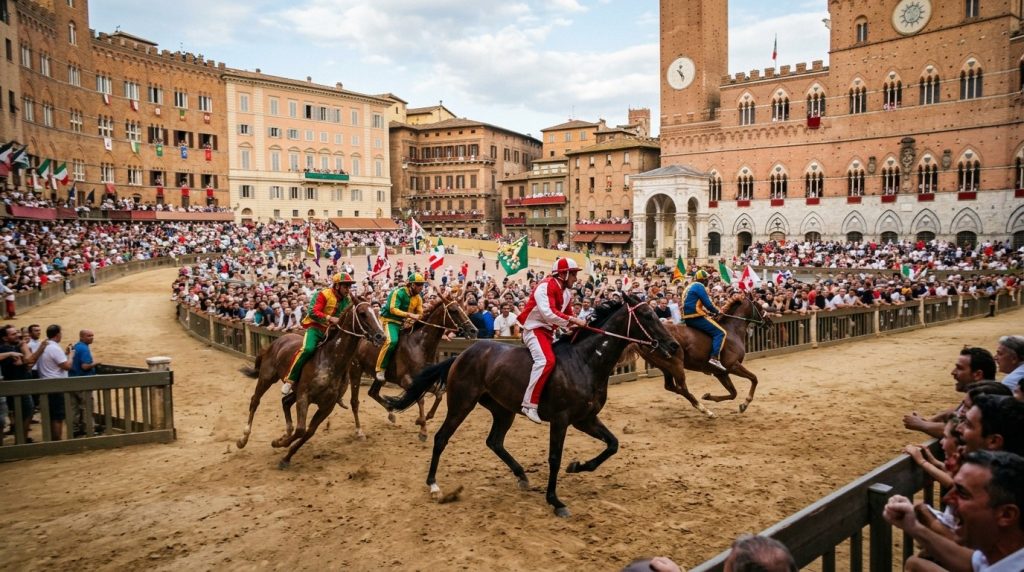
Siena runs its two Palio horse races in this window, the Palio di Provenzano on July 2 and the Palio dell’Assunta on August 16, each preceded by a four-day program of trials and processions.
Grandstand seats around Piazza del Campo run from EUR 276 to EUR 690, or roughly USD 320 to USD 800, and sell out weeks before both races. Hotel rooms in Siena itself book out fast around both dates, and prices across the wider region climb through August because many Italians take their own summer holiday that month.
Travellers who want the energy of the Palio should book Siena accommodation as early as possible and expect a premium for anything within walking distance of the piazza. Those who find the heat too much can break up a Tuscany trip with a cooler coastal stretch, such as this three-day Cinque Terre itinerary along the Ligurian coast.
When NOT to visit Tuscany
November through February is when to skip the Tuscan countryside, since many agriturismi close entirely and the landscape turns bare and foggy. Farm stays and rural wineries commonly shut down for the whole of November through January and reopen in March, often running weekends-only at first before returning to a full schedule closer to Easter. Honest trade-offs and highlights are weighed in our piece on whether Tuscany is worth visiting.
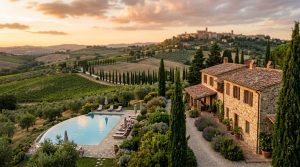
Daytime highs hover between 11°C and 16°C (52°F and 61°F), valley fog is common, and several of the pools and outdoor terraces that make a countryside stay worthwhile sit unused. Florence, Siena and Lucca stay open and workable year-round for a city-focused trip, but anyone planning to base themselves at a rural agriturismo should avoid this window.
Compare where to stay in Tuscany for properties that operate year-round before booking a winter trip. Closures vary by farm, so confirm dates directly with the property before you travel.
Plan your Tuscany trip
Most Tuscany trips start or end in Rome, since it is the closest major international airport with frequent connections to Florence and Siena. Pair this seasonal guide with a three-day Rome itinerary if you are routing through the capital before heading north. Use the map below to compare hotel and rental prices across the region for your travel dates.
Find your Tuscany hotel on the map
Live prices from Booking, Airbnb and more — move the map or change dates to compare stays across Tuscany.