Santorini vs Mykonos 2026: Which Greek Island Should You Choose?
The santorini vs mykonos debate is one of the most common planning decisions in European travel – and one of the most consistently mishandled. Santorini draws over 2 million visitors per year to a volcanic island of 15,000 residents (Greek National Tourism Organisation, 2025). Mykonos receives close to 1.8 million annually to a similarly small population of 10,000 (Mykonos Municipality, 2024). Both islands are expensive, crowded in summer, and genuinely beautiful. But they serve almost entirely different travel priorities.
Santorini is a scenery-and-romance island. Mykonos is a beach-and-nightlife island. Choose the wrong one and you’ll spend a week in a place built for someone else. Santorini’s party scene is minimal; Mykonos’s cultural depth is limited. The Oia sunset is not comparable to Cavo Paradiso. The Akrotiri ruins are not comparable to Super Paradise Beach. They are different products wearing the same Cyclades label.
This guide breaks down every real difference – costs, atmosphere, beaches, nightlife, logistics, and traveller type – so you can match the island to your trip.
Santorini Travel Guide → /santorini travel guide/
Key Takeaways
Santorini wins on scenery, romance, history, and food – mid-range hotels average €183-250/night, with Oia suites reaching €1,500/night (Booking.com, 2025)
Mykonos wins on beaches, nightlife, LGBTQ+ friendliness, and water sports – but beach club sunbeds alone cost €30-50/day and club entry €50-80
Both islands cost roughly the same for accommodation; Mykonos adds significant party and beach club costs on top
The ferry between them runs 2.5-3 hours and costs €35-55 – many travellers do both on a single trip
Santorini suits couples, honeymooners, and culture seekers; Mykonos suits groups, party-goers, and beach club fans
Affiliate Disclosure: Some links in this guide are affiliate links. If you book through them, we earn a small commission at no extra cost to you. We only recommend services we genuinely trust. Learn more.
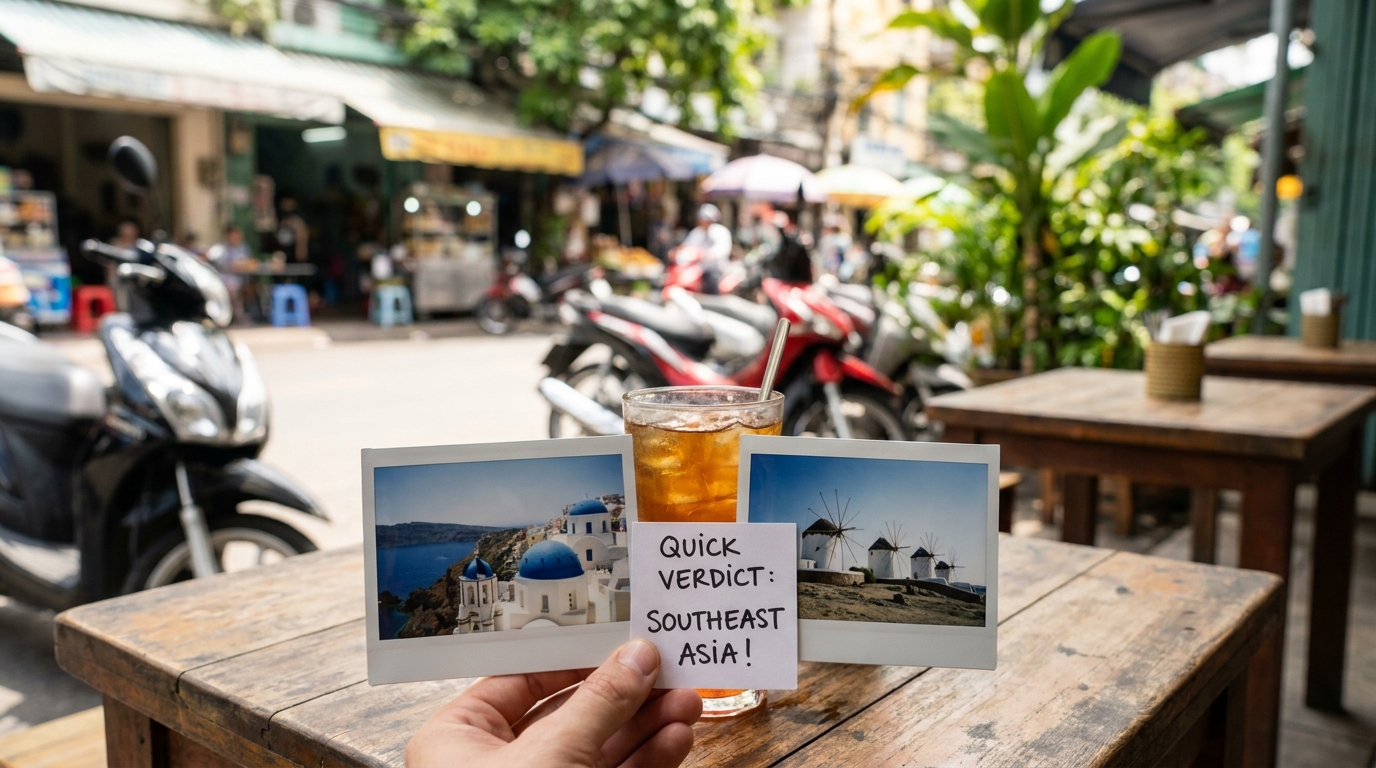
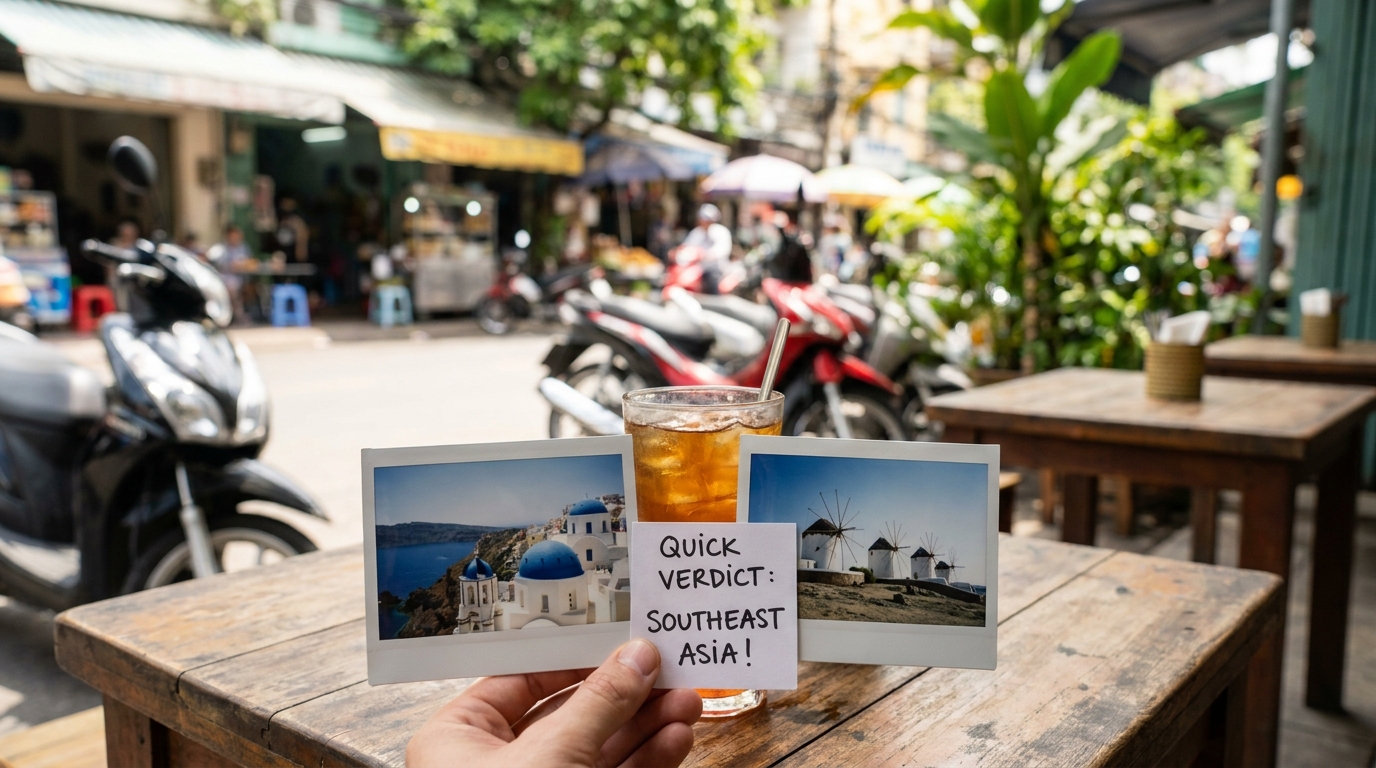
Santorini vs Mykonos: Quick Verdict
Santorini wins on scenery, romance, and culture. Mykonos wins on beaches, nightlife, and energy. Greece’s top two Cyclades islands share similar price points but almost nothing else. Santorini handles roughly 2 million tourists per year on a 76 sq km island, creating serious summer overcrowding at Oia that rivals any Mediterranean hotspot (Greek National Tourism Organisation, 2025). Mykonos is more compact, better networked for transport between beach clubs, and built around a social energy that Santorini’s caldera-and-sunset circuit simply cannot match.
Neither is better in absolute terms. The right island depends entirely on what you’re actually looking for from a Greek island trip.
Category
Santorini
Mykonos
Scenery
Caldera, Oia, volcanic drama – unmatched in Greece
Windmills, Little Venice, whitewashed Chora
Beaches
Volcanic black/red sand – dramatic, not ideal for swimming
Sandy, clear water, better for swimming and water sports
Nightlife
Low – a few bars in Fira, island quiet by midnight
Scenery and Atmosphere: Does Santorini Really Win?
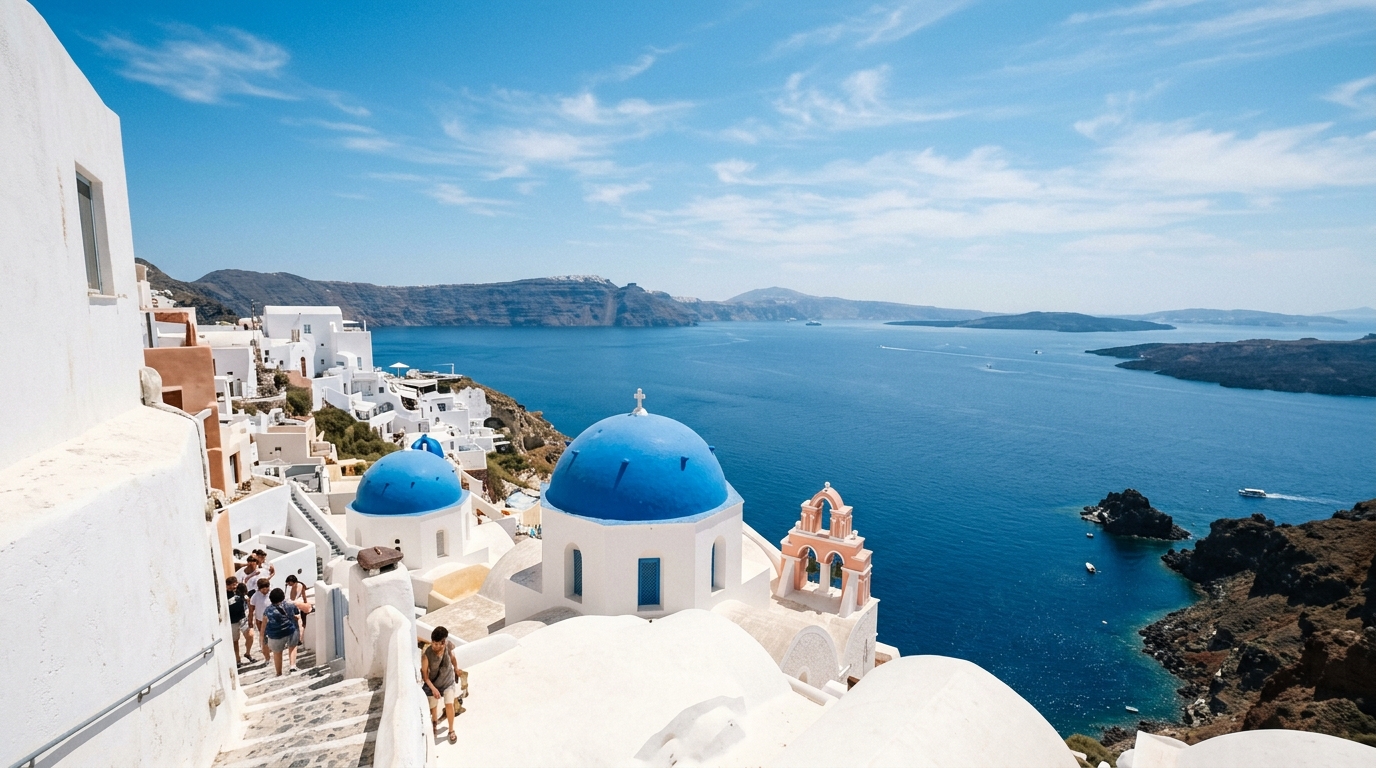
Santorini’s caldera is one of the most photographed landscapes in the world, and for good reason. The island sits atop a collapsed ancient volcano; the western cliffs drop nearly 300 metres into a sea-filled crater 12 km across (Smithsonian Institution Global Volcanism Program, 2024). No other Greek island offers this specific drama. The blue-domed churches at Oia, the whitewashed cave houses carved into the caldera rim, the sunset that turns the entire western face amber and gold: these are not marketing exaggerations. They are real.
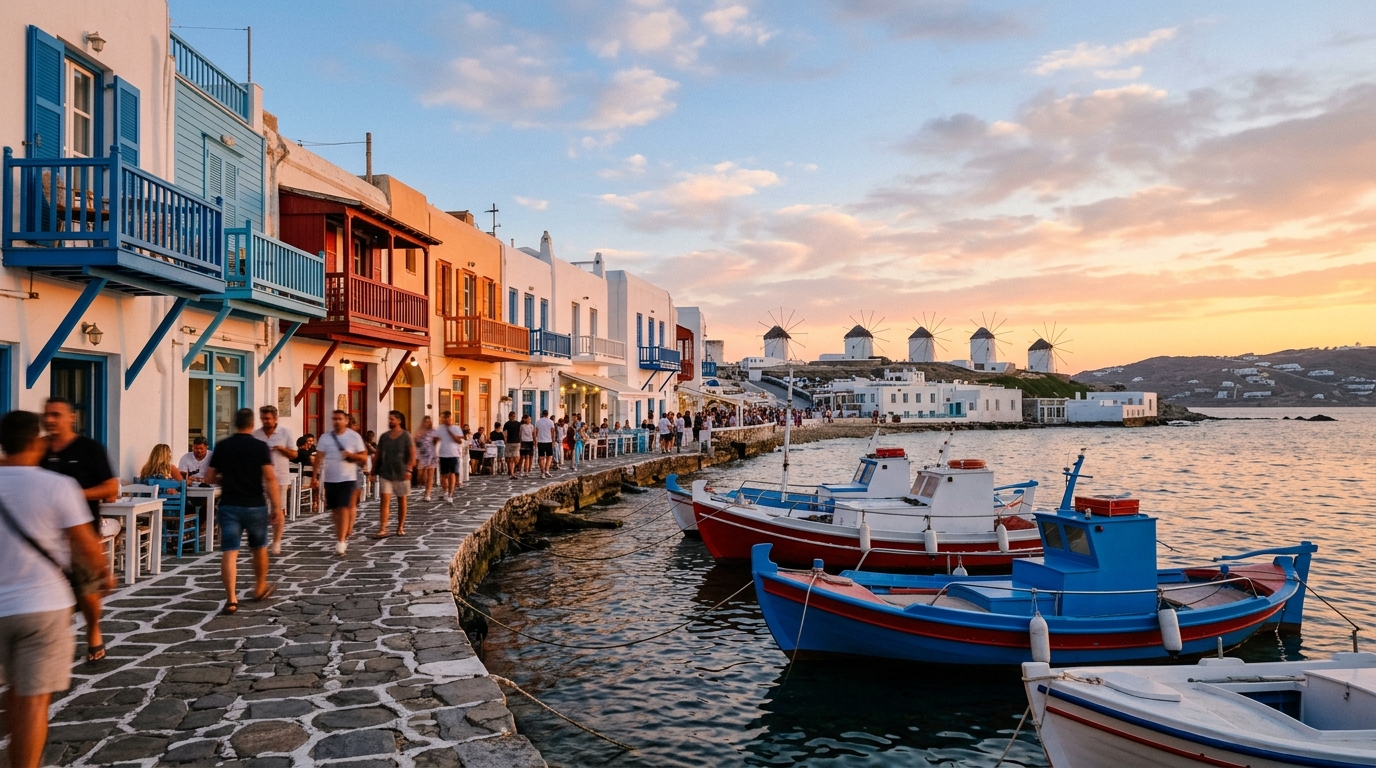
Mykonos does not compete on this terrain. Its scenery is beautiful in a different register – the Kato Mili windmills above Little Venice, the whitewashed cubic buildings of Mykonos Town (Chora), the narrow marble-paved lanes designed to confuse pirate navigation. It’s a charming, stylish, photogenic town. It’s not a geological spectacle.
[UNIQUE INSIGHT] The practical gap between Santorini’s scenery and Mykonos’s scenery is wider than most comparison articles admit. Santorini’s view from the caldera rim at 6am – before the cruise ship passengers arrive – is one of the genuinely rare travel experiences in the Mediterranean. Mykonos’s visual appeal is strongest at street level in Chora, particularly the Little Venice waterfront at sunset. Both deliver, but at very different scales of drama. If the view is why you’re going to Greece, Santorini is not close to being a tie.
The atmosphere differs equally sharply. Santorini feels unhurried during the caldera hours – morning coffee on a cliffside terrace, afternoon wine at a cave winery in Megalochori, evening dinner watching the sunset from Oia. The pace is romantic by design. Mykonos runs faster. The energy on Mykonos at noon, when the beach clubs are filling and the DJ sets are ramping up, is charged and social. Neither atmosphere is superior. They are for different people on different trips.
Are Mykonos Beaches Better Than Santorini’s?
Yes – measurably so, by most conventional beach criteria. Mykonos has 25+ accessible beaches ranging from the party-focused Paradise and Super Paradise, to quiet Agios Sostis, to the upscale Psarou where celebrities tend to anchor. The water is clear, the sand is sandy, and swimming conditions are consistently good (Tripadvisor, 2025). Beach clubs at Paradise Beach operate with full sound systems, water slides, and sunbed sections costing €30-50 per day – which is expensive, but the setup delivers what it promises.
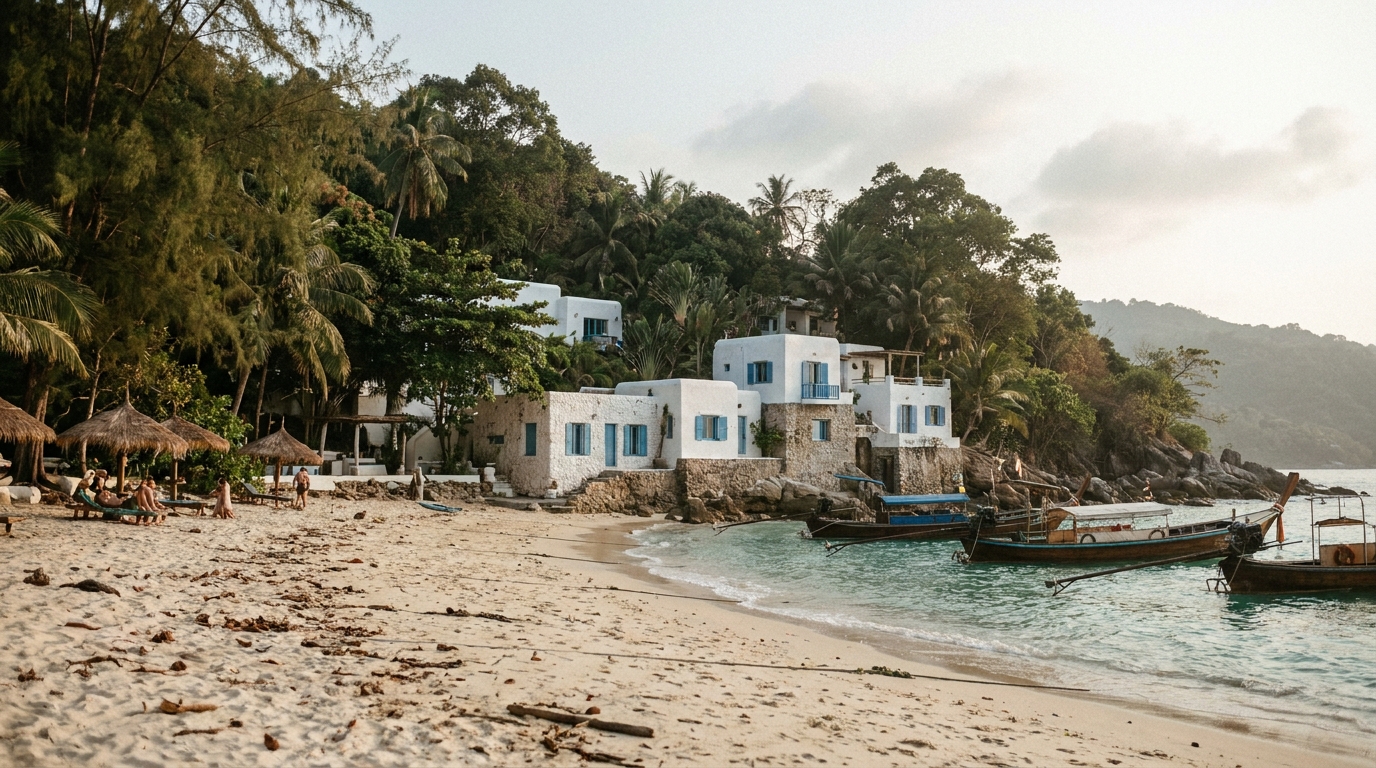
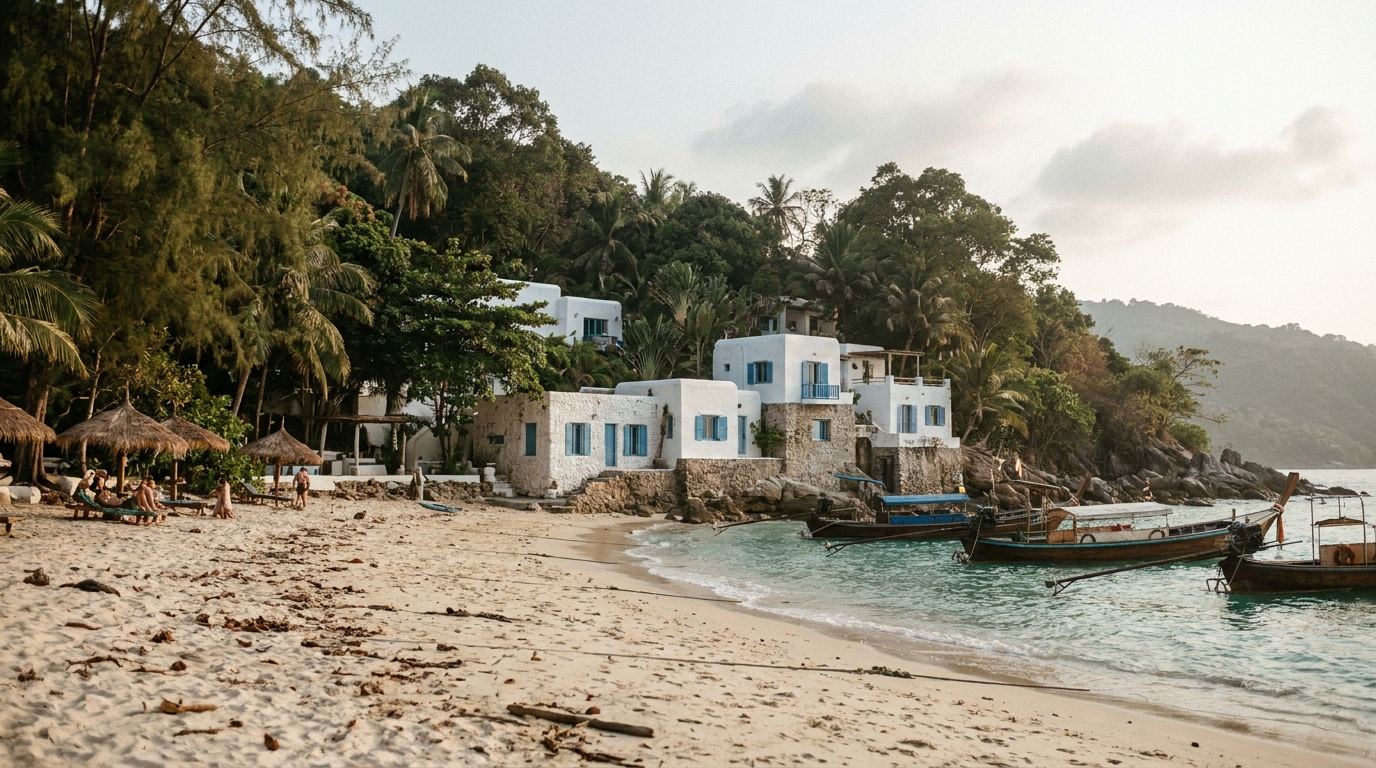
Santorini’s beaches are volcanic and unusual. Perissa and Kamari are long black-sand beaches on the island’s southeastern coast, dramatic in colour and genuinely enjoyable. The Red Beach near Akrotiri – accessible by water taxi from the small boat landing – is striking for its ochre-red cliffs against a black pebble shore. These beaches are worth visiting. But they are not ideal for the pure swimming-and-relaxing beach holiday that Mykonos delivers.
The water at Santorini’s black beaches also absorbs heat more than light-coloured sand, making the beach hotter to walk on in peak summer. The volcanic sand does not have the texture of a Greek island beach in the conventional sense. Families with young children or travellers whose primary goal is beach time will generally be more satisfied on Mykonos.
best things to do in Santorini → /best things to do in santorini/
Nightlife and Entertainment: Mykonos Is in a Different League
Mykonos has one of the most concentrated party scenes in Europe. Cavo Paradiso, the open-air club on the hill above Paradise Beach, has hosted resident DJs of international standing since the 1990s, with entry tickets running €50-80 and the venue filling after midnight (Cavo Paradiso, 2025). Space Mykonos, active since the early 1990s near Matogianni, is a more intimate venue. Scorpios, perched on a hillside above Paraga Beach, runs a sunset session that transitions into an after-dark club atmosphere with a more spiritual-bohemian identity than the high-energy venues.
Beyond the clubs, Mykonos’s beach clubs function as daytime entertainment venues: DJs, cocktail service, social energy, and people-watching of a calibre that few Mediterranean destinations match.
Santorini’s nightlife is a different proposition entirely. Fira has a strip of bars along the caldera rim that run until late, and there is a small club scene. But the island largely quiets by midnight. Oia, the most-visited village, has almost no nightlife. The rhythm of Santorini is built around sunsets, dinners, and wine – not after-midnight energy. For travellers looking for Ibiza-adjacent experiences at Greek island prices, Santorini will disappoint.
[CITATION CAPSULE: Mykonos hosts Cavo Paradiso, one of Europe’s most recognized open-air clubs, with entry fees of €50-80 in 2025. The island’s beach clubs at Paradise Beach charge €30-50/day for sunbed access. Santorini, by contrast, has limited nightlife concentrated in Fira, with the island largely quiet by midnight – a fundamental difference for travellers comparing the two islands. (Cavo Paradiso, Numbeo, 2025)]
Food and Dining: Which Island Eats Better?
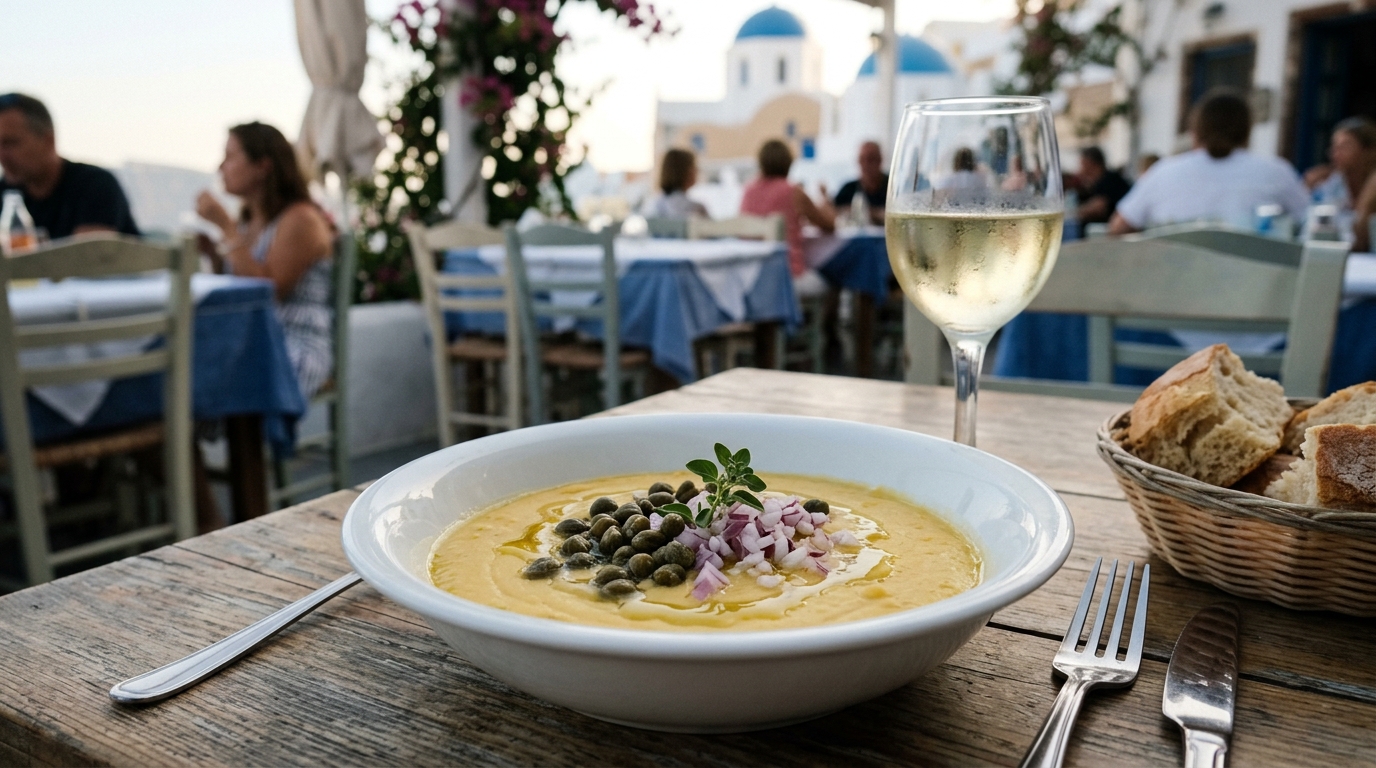
Both islands eat well, with distinct strengths and the same tourist-trap risks. Santorini benefits from a genuine food culture rooted in volcanic soil produce. The island’s cherry tomatoes, white eggplant, and fava (yellow split pea puree) grow in mineral-rich volcanic soil that produces varieties unavailable elsewhere in Greece (Santorini Wine Association, 2024). The Assyrtiko wine grape – grown in basket-shaped vines trained low to the ground against Aegean winds – produces a bone-dry white wine with a mineral freshness that pairs precisely with local seafood. Santorini’s food, at non-tourist tavernas in Pyrgos, Megalochori, or Emporio, ranks among the most distinctive in the Cyclades.
Mykonos food is excellent at the right spots and overpriced at the wrong ones. Seafood tavernas in the backstreets of Chora, away from the Matogianni main strip, serve grilled octopus, fresh sea bream, and lobster pasta at fair prices. The beach clubs, however, apply premium pricing that often detaches entirely from value: €30+ cocktails at Nammos, €200+ for a seafood sharing platter at Psarou beach clubs. The beach club economy on Mykonos is its own ecosystem.
For travellers who prioritize food quality and wine experience over social scene, Santorini edges ahead. The Assyrtiko wine trail alone, covering wineries like Santo Wines and Domaine Sigalas, is a genuine draw.
Accommodation and Cost: Which Island Is More Expensive?
Both islands sit at the expensive end of the Greek islands spectrum. The perception that one is significantly cheaper than the other is largely inaccurate at comparable quality levels. Mid-range Mykonos hotels average €150-300/night; mid-range Santorini averages €183-250/night for similar quality (Booking.com, 2025). At the luxury end, Mykonos peaks higher – Nammos Village and Katikies Mykonos reach €3,000/night – but so does Santorini’s Oia category.
The real cost difference appears in daily spending rather than accommodation. Mykonos adds substantial beach club and nightlife costs on top of accommodation. A Mykonos beach day at Paradise Beach runs €30-50 for sunbeds, plus €15-25 per cocktail, plus club entry of €50-80 if you extend into the evening. A budget-conscious Santorini day is easier: the volcanic beaches are free, the local tavernas are fairly priced in villages away from Oia, and the entertainment (caldera walking, winery visits, Akrotiri) carries modest entry fees.
What Does a Realistic Daily Budget Look Like?
[UNIQUE INSIGHT] A mid-range traveller spending 4 nights on each island will typically find Santorini the cheaper experience by €80-150 per day, not because accommodation is cheaper, but because the beach club and nightlife economy on Mykonos adds a layer of costs with no real Santorini equivalent. A couple skipping beach clubs and clubs on Mykonos can reduce this gap to near zero – but the entire point of Mykonos is the beach clubs and clubs, so that traveller has effectively chosen the wrong island.
For Santorini, realistic mid-range daily costs per person:
– Accommodation: €90-125 (sharing a room)
– Food (2 meals out, local spots): €30-45
– Activities (Akrotiri entry, winery visit): €15-25
– Transport (ATV rental or bus): €10-20
– Total: approx. €145-215/day per person
For Mykonos, realistic mid-range daily costs per person:
– Accommodation: €75-150 (sharing a room)
– Food (local tavernas, avoiding beach clubs): €30-45
– Beach club sunbed (Paradise or Psarou): €30-50
– Cocktails at beach club (2-3): €45-75
– Club entry (1 night): €50-80 (every second night, averaged: €25-40)
– Total: approx. €255-420/day per person (with nightlife)
Both islands have airports with direct summer connections from major European cities. Santorini’s Thira Airport (JTR) handles flights from London, Paris, Amsterdam, and other hubs, though runway length limits the aircraft size that can operate there – meaning fewer ultra-long-haul connections. Mykonos Airport (JMK) receives direct flights from London Heathrow, Amsterdam Schiphol, and Paris Charles de Gaulle throughout the summer season.
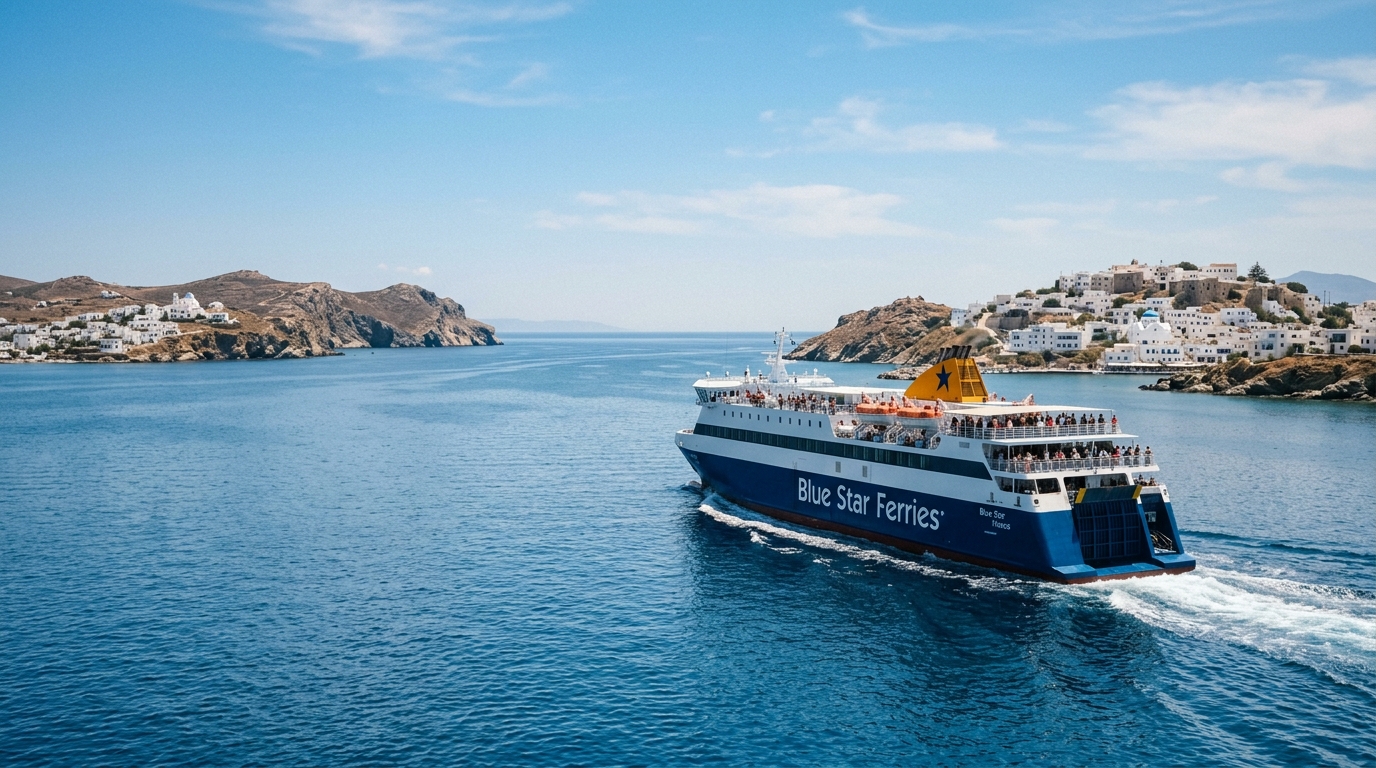
Ferry from Athens (Piraeus port) reaches Santorini in approximately 8 hours by standard ferry or 5 hours by fast ferry. Mykonos is closer: 3.5 hours by fast ferry from Piraeus. This difference matters for travellers combining the islands with an Athens leg. The ferry between the two islands takes 2.5-3 hours and costs €35-55 each way via Blue Star Ferries or SeaJets (Ferryhopper, 2026). Booking well in advance for July and August departures is non-negotiable – peak season ferries sell out weeks ahead.
Getting Around Each Island
Santorini’s public bus (KTEL) network is adequate for the main route between Fira, Oia, Kamari, and Perissa. ATV rentals are ubiquitous and cost €20-35/day – the most practical option for reaching Red Beach, Akrotiri, and the wine villages of the interior. Donkeys still serve the path between Fira port and the caldera rim (replaced largely by cable car at €6/journey), though animal welfare concerns have made the donkey route controversial.
Mykonos gets harder marks for transport. The bus network is limited, routes run infrequently to beach clubs, and taxis are notoriously scarce in peak summer. The island’s beach clubs are spread across multiple coastal locations not easily connected. Most visitors rent ATVs or small cars, but traffic and parking at popular beaches can be severe in July and August. Water taxis connect some beach clubs, which helps. Overall, getting around Mykonos independently requires more planning than Santorini.
where to stay in Santorini → /where to stay in santorini/
Best For: Which Island Suits Your Trip?
The honest answer to santorini vs mykonos is not a single winner. It’s a matching exercise. Below is a direct breakdown by traveller type.
Choose Santorini if you are:
A couple or honeymooner seeking the most romantic setting in Greece. The caldera-view dinner, the sunrise over the crater, the whitewashed cave room with a private plunge pool: Santorini was built for exactly this. No other Greek island competes on this specific combination.
A photographer or content creator for whom the visual return justifies the effort. Oia at 6am, before the cruise ship crowds arrive, produces imagery you cannot replicate anywhere else in the Cyclades.
A wine lover. The Assyrtiko wine trail is a genuinely distinctive experience – volcanic-soil wines with a mineral character specific to this island (Santorini Wine Association, 2024). Santo Wines, Domaine Sigalas, and Gaia Wines are all worth visiting.
A history buff. Akrotiri, the Minoan Bronze Age settlement preserved under volcanic ash and now accessible as an indoor archaeological site, is one of the most significant prehistoric sites in Europe. Entry costs €12. Nothing comparable exists on Mykonos.
Older travellers or those who prefer calm. The pace of Santorini – unhurried mornings, afternoon village walks, sunset dinners – suits travellers who want beauty without the volume.
Choose Mykonos if you are:
Part of a group of friends in your 20s or 30s. Mykonos is engineered for this: beach clubs with communal sunbed sections, bars that bridge afternoon and evening, clubs with crowd energy that builds progressively.
An LGBTQ+ traveller. Mykonos has one of Europe’s longest-established LGBTQ+ scenes, concentrated on Super Paradise Beach and in the bars around Matogianni. The island has welcomed LGBTQ+ visitors openly since the 1970s (Mykonos Municipality, 2024).
A beach and water sports enthusiast. Kitesurfing at Kalafatis Bay, windsurfing at Ftelia Bay, and jet skiing at multiple beach clubs – Mykonos has the infrastructure and conditions for a full water sports programme. Santorini’s volcanic geography limits equivalent activity significantly.
A shorter trip traveller. Mykonos is more compact and self-contained. Three to four nights is enough to hit the key beaches, explore Chora thoroughly, and experience the nightlife without feeling rushed.
A fashion/design shopper. Mykonos Town’s boutique scene – particularly along Matogianni Street and the surrounding lanes – offers a calibre of independent Greek fashion, jewellery, and design that Santorini’s shops do not consistently match.
best time to visit Santorini → /best time to visit santorini/
Can You Do Both? The Combined Santorini-Mykonos Itinerary
Many visitors do both islands on a single trip, and it’s one of the more satisfying Greek island combinations. The ferry connection makes it logistically simple. The contrast between the two islands – from caldera calm to beach club energy – means the pairing rarely feels repetitive.
The recommended order is Santorini first, Mykonos second. Starting with Santorini gives you the quieter, more introspective experience – caldera mornings, wine villages, Akrotiri – before you transition into Mykonos’s social energy. Arriving on Mykonos with Santorini behind you feels like a gear change in the right direction. Doing the trip in reverse tends to make Santorini feel underwhelming after Mykonos’s energy.
A Practical 8-Night Combined Itinerary
Night 1-4: Santorini (4 nights)
– Arrive Thira Airport or by ferry from Athens
– Base: Oia (romance, views) or Fira (more central, better transport)
– Day 1: Oia village, caldera walk, sunset
– Day 2: Akrotiri ruins (€12 entry), Red Beach water taxi, fava lunch at a Pyrgos taverna
– Day 3: Assyrtiko wine trail – Santo Wines, Domaine Sigalas
– Day 4: Perissa or Kamari beach day before ferry to Mykonos
Night 5-8: Mykonos (4 nights)
– Ferry from Santorini: 2.5-3h, book SeaJets or Blue Star in advance
– Base: Mykonos Town (Chora) for walking access to Little Venice and Matogianni
– Day 5: Chora exploration, windmills, Little Venice sunset drinks
– Day 6: Paradise Beach or Psarou beach club day
– Day 7: Agios Sostis (quiet beach), afternoon water sports at Kalafatis
– Day 8: Cavo Paradiso or Scorpios evening before departure
Total budget for 8 nights (mid-range couple): approximately €3,000-4,500 excluding flights, depending on beach club spending on the Mykonos days.
The ferry between the islands costs €35-55 one way. Book at least 4-6 weeks in advance for July-August travel, or use Ferryhopper for real-time availability.
is Santorini worth visiting → /is santorini worth visiting/
Final Verdict: Santorini vs Mykonos
The santorini vs mykonos decision is cleaner than most comparison articles make it. Both islands are world-class destinations. But they serve almost entirely different trip types – and booking the wrong one based on price, availability, or vague preference for “the Greek islands” is a common and costly mistake.
Choose Santorini if romance, scenery, culture, and wine experience are your priorities. Honeymooners, anniversary trips, photographer visits, and history-focused itineraries all belong here. The caldera is not just a photograph – it’s a genuinely extraordinary place to spend four to five days in the right company.
Choose Mykonos if beach clubs, nightlife, water sports, or an LGBTQ+-welcoming atmosphere are what you’re after. Groups in their 20s and 30s, party-focused trips, and beach holiday itineraries all belong here. The island delivers its specific promise with consistent quality.
Choose both if your trip is 8+ nights and you can handle the ferry. The Santorini-to-Mykonos sequence is one of the best Greek island pairings available, contrasting caldera romance with beach energy across a single trip.
The mistake to avoid: choosing Santorini expecting Mykonos-style beach clubs that don’t exist, or choosing Mykonos expecting Santorini-level scenery and cultural depth that wasn’t the point. Match the island to the trip – and both deliver on their reputation.
Positano vs Amalfi Coast → /positano vs amalfi coast/
Frequently Asked Questions
Is Santorini or Mykonos better for couples?
Santorini is the better choice for couples by a significant margin. The caldera views, cliff-terrace dinners, private plunge pool cave suites, and unhurried pace create a romantic atmosphere that is difficult to match anywhere in the Mediterranean. Mid-range Santorini hotels average €183-250/night, with Oia suites running €400-1,500 (Booking.com, 2025). Mykonos is social and energetic rather than romantic – excellent for groups, less conducive to couple-focused trips.
Which island is cheaper, Santorini or Mykonos?
Accommodation costs are comparable – both islands are expensive. The meaningful cost difference comes from daily spending. A Mykonos day with beach clubs and nightlife adds €150-250 per person over accommodation costs. Santorini’s equivalent day (winery visit, volcanic beach, local taverna dinner) adds €55-90 per person. For the same trip length, Mykonos typically runs €300-700 more expensive per person than Santorini at equivalent accommodation levels (Numbeo, 2025).
How do I get from Santorini to Mykonos?
The ferry between Santorini (Athinios Port) and Mykonos runs 2.5-3 hours and costs €35-55 each way via SeaJets or Blue Star Ferries (Ferryhopper, 2026). In peak season (July-August), book at least 4-6 weeks in advance – sailings sell out. There are no direct commercial flights between the two islands; the ferry is the standard connection.
Is Mykonos good for families?
Mykonos is family-friendly for families with older children and teenagers, particularly those interested in beaches and water sports. It’s less suitable for young children due to the late-night party culture, limited child-focused infrastructure, and beach club environments built around adult socialising. Families with young children typically find Santorini more manageable, with better dining flexibility and attractions like Akrotiri that hold broad educational interest.
When is the best time to visit Santorini and Mykonos?
Late May to mid-June or September to early October are the optimal windows for both islands – weather is warm and reliable, crowds are significantly lower, and prices drop 20-35% from August peaks (Greek National Tourism Organisation, 2025). July and August are peak season: hot, crowded, and priced at maximum. For Santorini, September is particularly good – the harvest season coincides with the last of the summer warmth. Mykonos’s beach clubs run at full capacity through August, then begin winding down in September, making late-summer timing more important if the club scene is the priority.
Schema
{
  "@context": "https://schema.org",
  "@graph": [
    {
      "@type": "BlogPosting",
      "headline": "Santorini vs Mykonos 2026: Which Greek Island Should You Choose?",
      "description": "Santorini vs Mykonos 2026: Santorini wins for romance, scenery, history. Mykonos wins for nightlife, beaches, energy. Who wins on price? Honest comparison for every traveller type.",
      "datePublished": "2026-05-10",
      "dateModified": "2026-05-10",
      "author": {
        "@type": "Organization",
        "name": "TTN Editorial"
      },
      "publisher": {
        "@type": "Organization",
        "name": "TravelTipNow",
        "url": "https://traveltipnow.com"
      },
      "mainEntityOfPage": {
        "@type": "WebPage",
        "@id": "https://traveltipnow.com/santorini-vs-mykonos/"
      },
      "image": "https://images.unsplash.com/photo-1555993539-1732b0258235?w=1200&h=630&fit=crop&q=80",
      "keywords": ["santorini vs mykonos", "santorini or mykonos", "which greek island", "santorini mykonos comparison", "cyclades travel 2026"]
    },
    {
      "@type": "FAQPage",
      "mainEntity": [
        {
          "@type": "Question",
          "name": "Is Santorini or Mykonos better for couples?",
          "acceptedAnswer": {
            "@type": "Answer",
            "text": "Santorini is the better choice for couples by a significant margin. The caldera views, cliff-terrace dinners, and private plunge pool cave suites create a romantic atmosphere difficult to match anywhere in the Mediterranean. Mid-range hotels average €183-250/night with Oia suites reaching €1,500. Mykonos is social and energetic rather than romantic - excellent for groups, less suited to couple-focused trips."
          }
        },
        {
          "@type": "Question",
          "name": "Which island is cheaper, Santorini or Mykonos?",
          "acceptedAnswer": {
            "@type": "Answer",
            "text": "Accommodation costs are comparable on both islands. The meaningful cost difference is in daily spending. A Mykonos day with beach clubs and nightlife adds €150-250 per person. A Santorini equivalent day adds €55-90. For the same trip length, Mykonos typically runs €300-700 more expensive per person than Santorini at equivalent accommodation levels."
          }
        },
        {
          "@type": "Question",
          "name": "How do I get from Santorini to Mykonos?",
          "acceptedAnswer": {
            "@type": "Answer",
            "text": "The ferry between Santorini's Athinios Port and Mykonos runs 2.5-3 hours and costs €35-55 each way via SeaJets or Blue Star Ferries. In peak season (July-August), book at least 4-6 weeks in advance. There are no direct commercial flights between the two islands."
          }
        },
        {
          "@type": "Question",
          "name": "Is Mykonos good for families?",
          "acceptedAnswer": {
            "@type": "Answer",
            "text": "Mykonos is family-friendly for families with older children and teenagers, particularly those interested in beaches and water sports. It's less suitable for young children due to the late-night party culture and beach club environments built around adult socialising. Families with young children typically find Santorini more manageable."
          }
        },
        {
          "@type": "Question",
          "name": "When is the best time to visit Santorini and Mykonos?",
          "acceptedAnswer": {
            "@type": "Answer",
            "text": "Late May to mid-June or September to early October are the optimal windows for both islands. Weather is warm, crowds are significantly lower, and prices drop 20-35% from August peaks. July and August are peak season: hot, crowded, and priced at maximum. For Santorini, September's harvest season is particularly appealing."
          }
        }
      ]
    },
    {
      "@type": "BreadcrumbList",
      "itemListElement": [
        {
          "@type": "ListItem",
          "position": 1,
          "name": "Home",
          "item": "https://traveltipnow.com/"
        },
        {
          "@type": "ListItem",
          "position": 2,
          "name": "Europe",
          "item": "https://traveltipnow.com/europe/"
        },
        {
          "@type": "ListItem",
          "position": 3,
          "name": "Santorini",
          "item": "https://traveltipnow.com/santorini/"
        },
        {
          "@type": "ListItem",
          "position": 4,
          "name": "Santorini vs Mykonos",
          "item": "https://traveltipnow.com/santorini-vs-mykonos/"
        }
      ]
    }
  ]
}