Best Time to Visit Santorini in 2026 (Honest Month-by-Month Guide)
Disclosure: Some links in this guide are affiliate links. If you book or buy through them, we may earn a small commission at no extra cost to you — it helps keep our guides free.
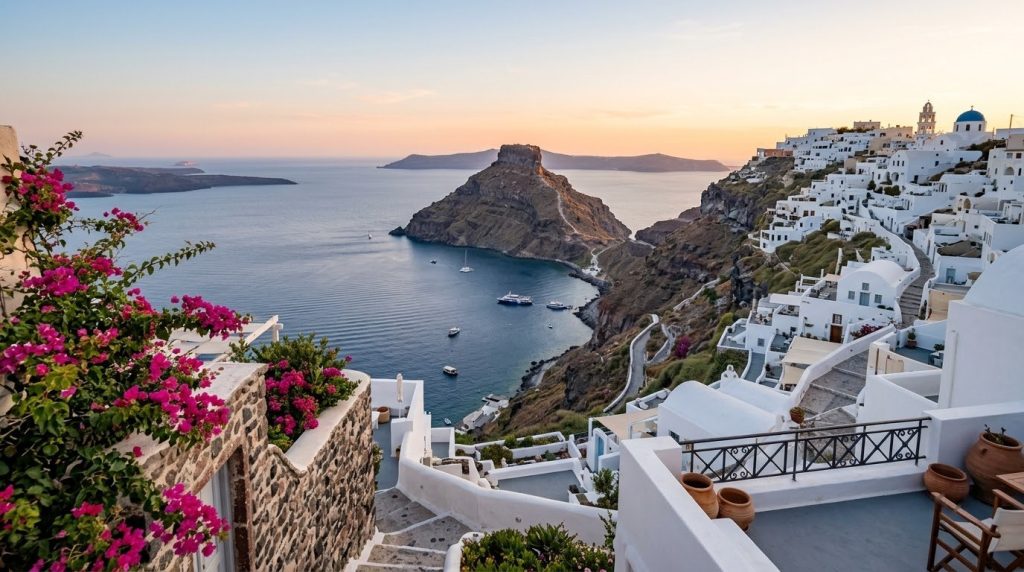
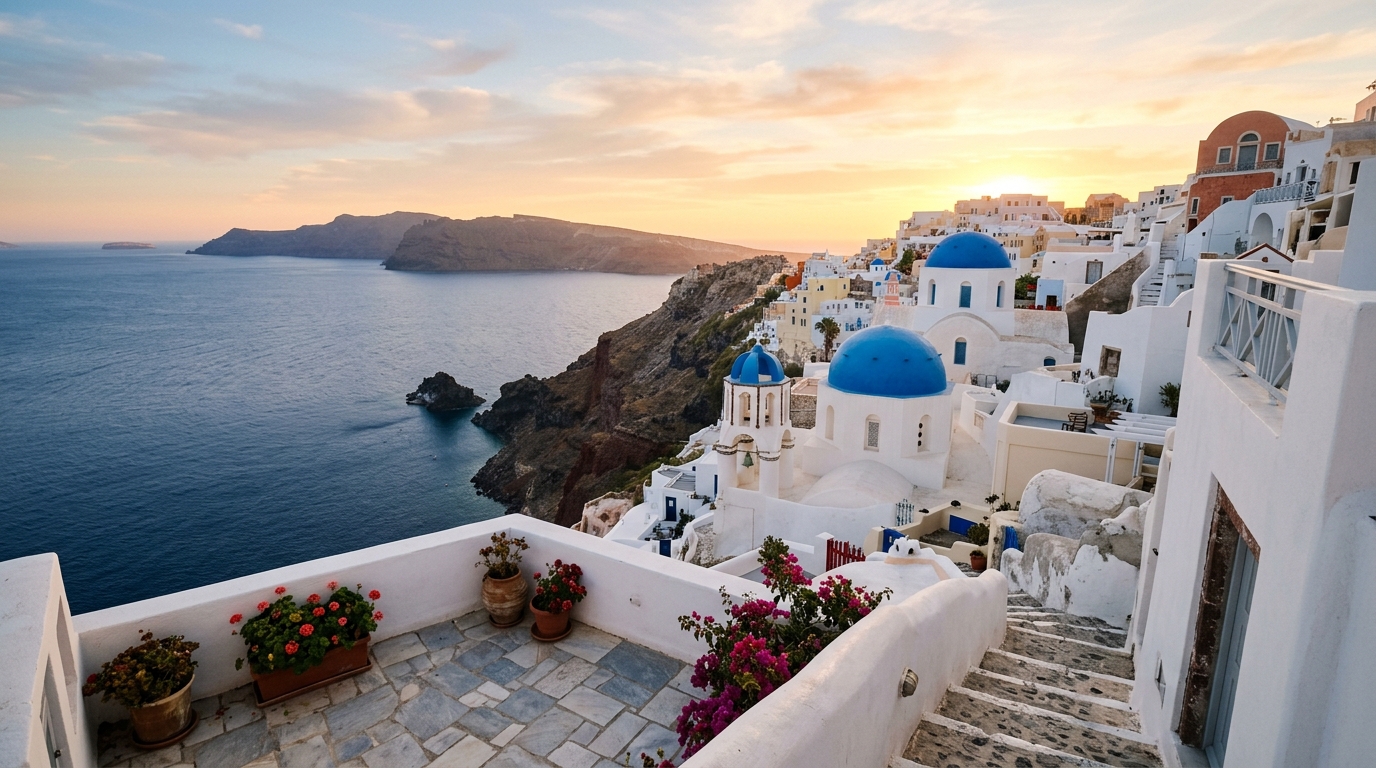
Most guides describe Santorini as a destination for all seasons. The reality is more specific than that. The island receives approximately 2 million visitors per year, and a significant portion of them arrive in a 10-week window between late June and early September (Greek Tourism Organisation, 2024).
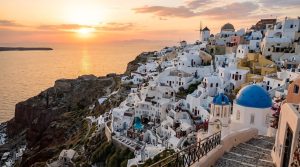
In peak summer, the famous sunset viewpoint at Oia draws more than 2,000 visitors daily, with wait times of 30 minutes or more just to secure a spot on the steps.
This guide gives you the honest picture. You will find real temperature data, crowd assessments by month, sea swimming windows, hotel price patterns, and a clear verdict for each type of traveler. Santorini is genuinely extraordinary: the caldera view, the wine, the volcanic beaches, the light in the late afternoon.
But there is a right time to be here, and the difference between April and August is not simply a matter of preference.
Best Time to Visit Santorini at a Glance
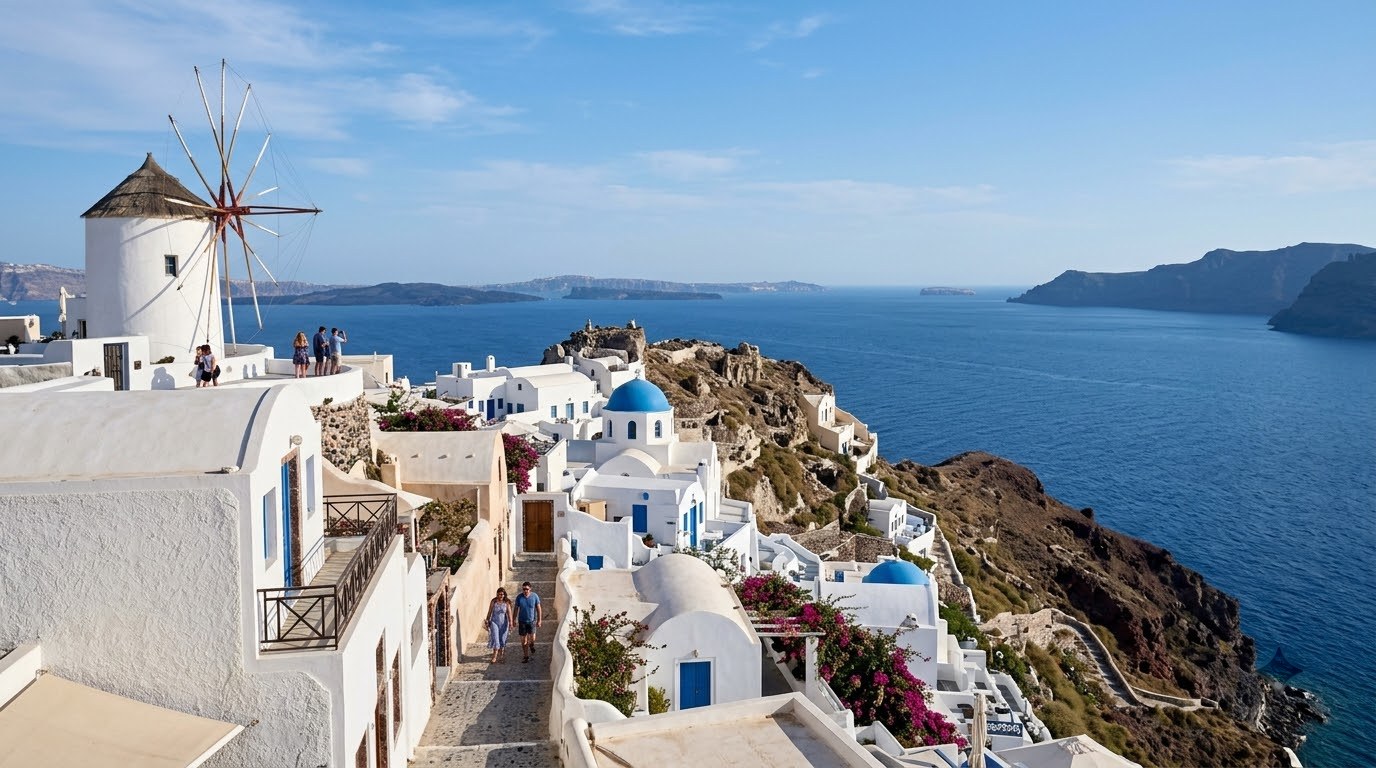
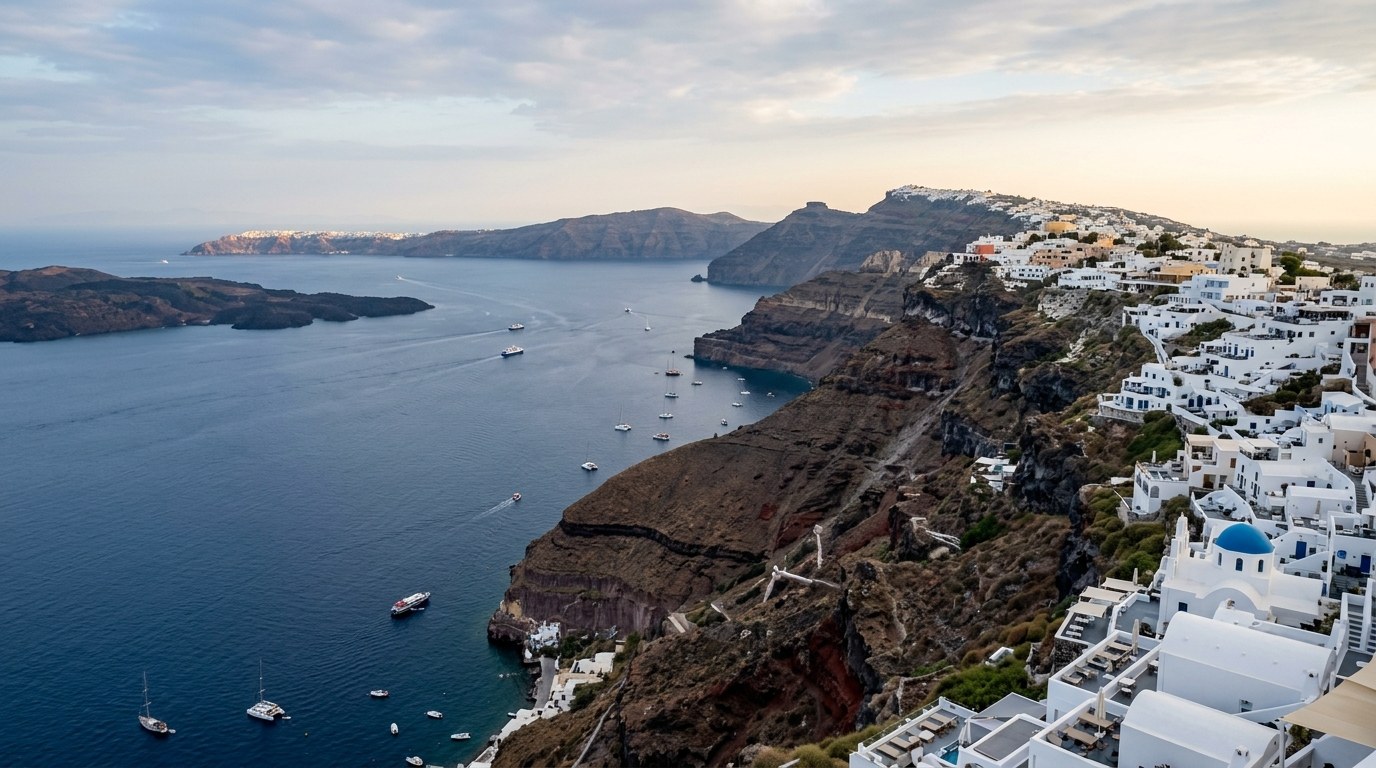
April-May and September are the best times to visit Santorini for most travelers. Shoulder season delivers temperatures of 18-26°C, the sea is approaching or at swimming temperature, crowds run 30-40% below the July-August peak, and hotel rates are 30-40% lower than summer highs (Check live hotel prices, 2025).
September is particularly compelling: the sea is at its warmest for the whole year (25°C), schools have resumed across Europe, and prices fall quickly after the first week.
If you need one month: May. Every business is open, crowds are manageable, the light is exceptional, and prices are fair.
If warm swimming water is the priority: September. The Aegean holds its heat longer than most visitors expect.
Avoid July and August if crowds or prices are concerns. Oia’s sunset point backs up 30 minutes by late afternoon, ferries run at capacity, and hotels at all tiers are priced for peak demand. You can still have an excellent trip in summer, but it requires planning and patience.
| Month | Air Temp (°C) | Sea Temp (°C) | Crowd Level | Prices vs Peak | Verdict |
|---|---|---|---|---|---|
| January | 12-14°C | 17°C | Very Low | -65% | Ghost town, limited services |
| February | 12-14°C | 16°C | Very Low | -65% | Ghost town, limited services |
| March | 14-16°C | 17°C | Low | -55% | Quiet reopening, solo explorers only |
| April | 18-20°C | 19-20°C | Low-Medium* | -40% | Excellent, spring shoulder |
| May | 21-23°C | 21-22°C | Medium | -30% | Best month overall |
| June | 25-27°C | 23°C | Medium-High | -15% | Good, crowds building |
| July | 28-30°C | 26°C | Very High | Peak | Plan ahead or avoid |
| August | 28-30°C | 26°C | Maximum | Peak | Plan ahead or avoid |
| September | 24-26°C | 25°C | Medium (drops after 10th) | -25 to -40% | Excellent, traveller’s favourite |
| October | 20-22°C | 23°C | Low-Medium | -40% | Good, late season escape |
| November | 16-17°C | 21°C | Very Low | -60% | Closures accelerating |
| December | 13-14°C | 18°C | Very Low | -65% | Christmas events in Fira only |
April crowd level spikes to High during Greek Orthodox Easter weekend.
Sources: visitsantorini.com climate data; Check live hotel prices pricing averages, 2025-2026.
Are April and May Really the Sweet Spot?
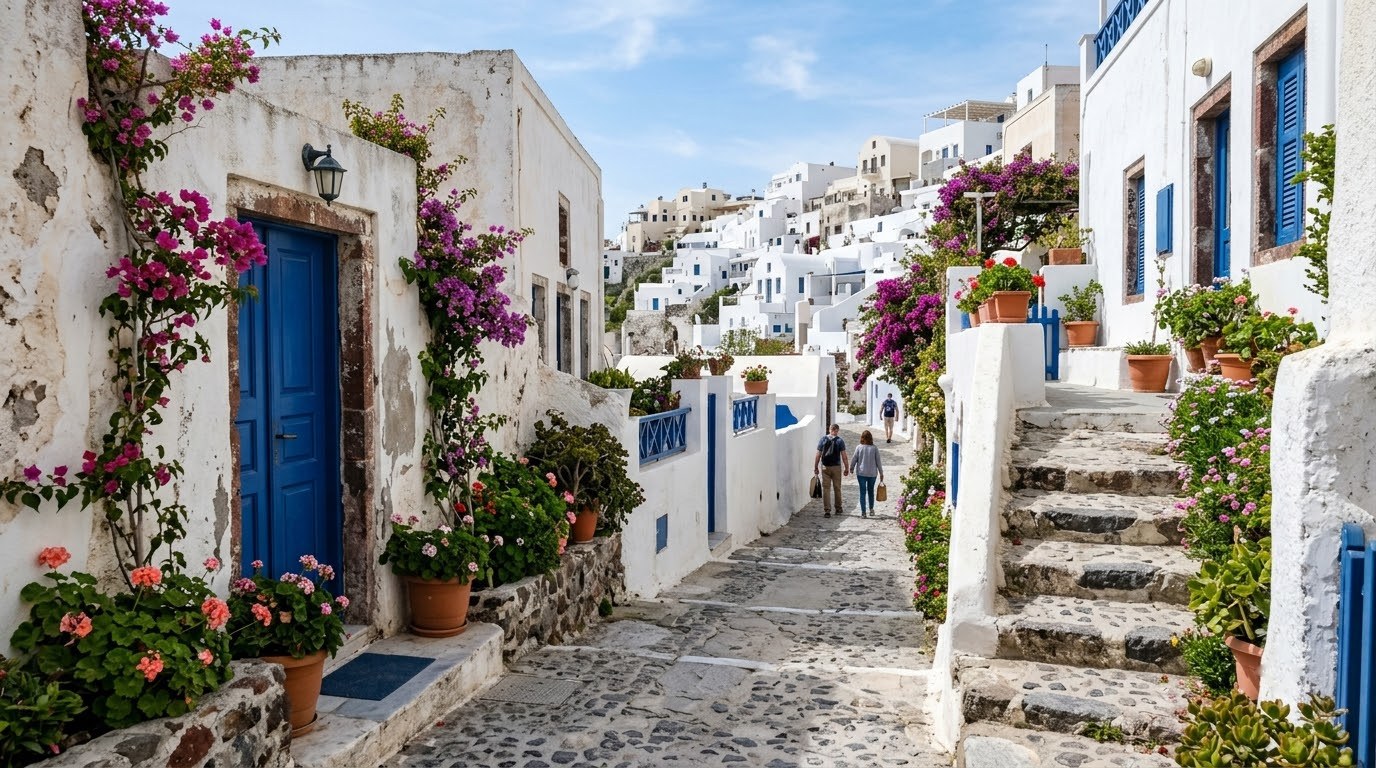
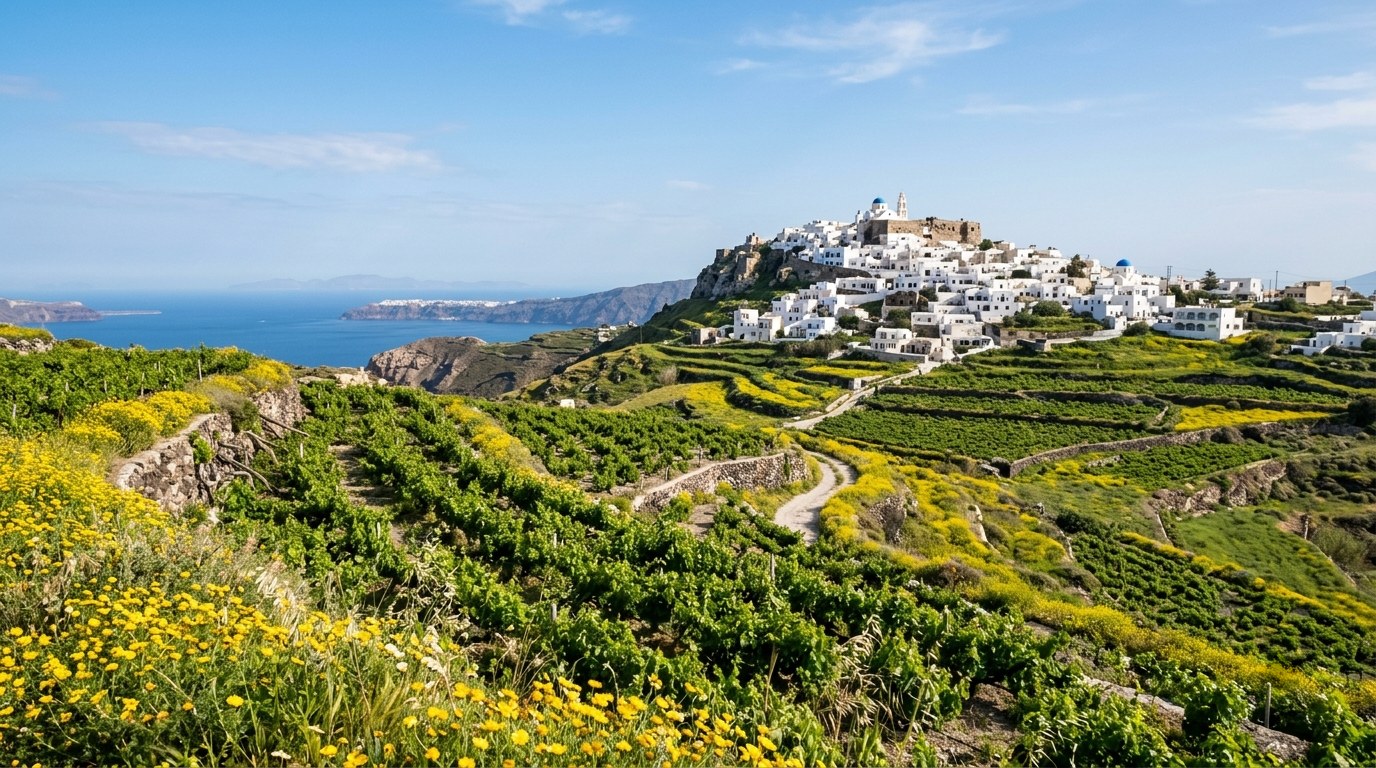
April and May are the strongest shoulder-season months in Santorini. Hotel rates run 30-40% below peak pricing, every restaurant and tour operator is open by May, and crowds at Oia’s sunset viewpoint are manageable enough to secure a good position without 30-minute queues (Greek Tourism Organisation, 2024). The Akrotiri archaeological site is far easier to explore when tour buses are not unloading simultaneously.
April brings spring wildflowers across the caldera rim trails and temperatures of 18-20°C. That is comfortable for walking and sightseeing but not yet warm enough for swimming (sea around 19-20°C). The Akrotiri site and the clifftop villages of Oia and Fira are at their most accessible.
If Greek Orthodox Easter falls in April (the date shifts each year), it brings candlelit processions through Oia and Fira that are genuinely moving and not yet overrun with tourism spectators.
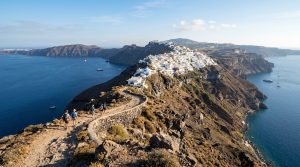
The most overlooked advantage of April in Santorini is the caldera hiking trail between Fira and Oia. This 10 km walk takes roughly 3 hours and delivers continuous caldera views. In May and June, the path gets busy enough that you are always in sight of other walkers. In April on a weekday, you can walk the full route with the caldera largely to yourself.
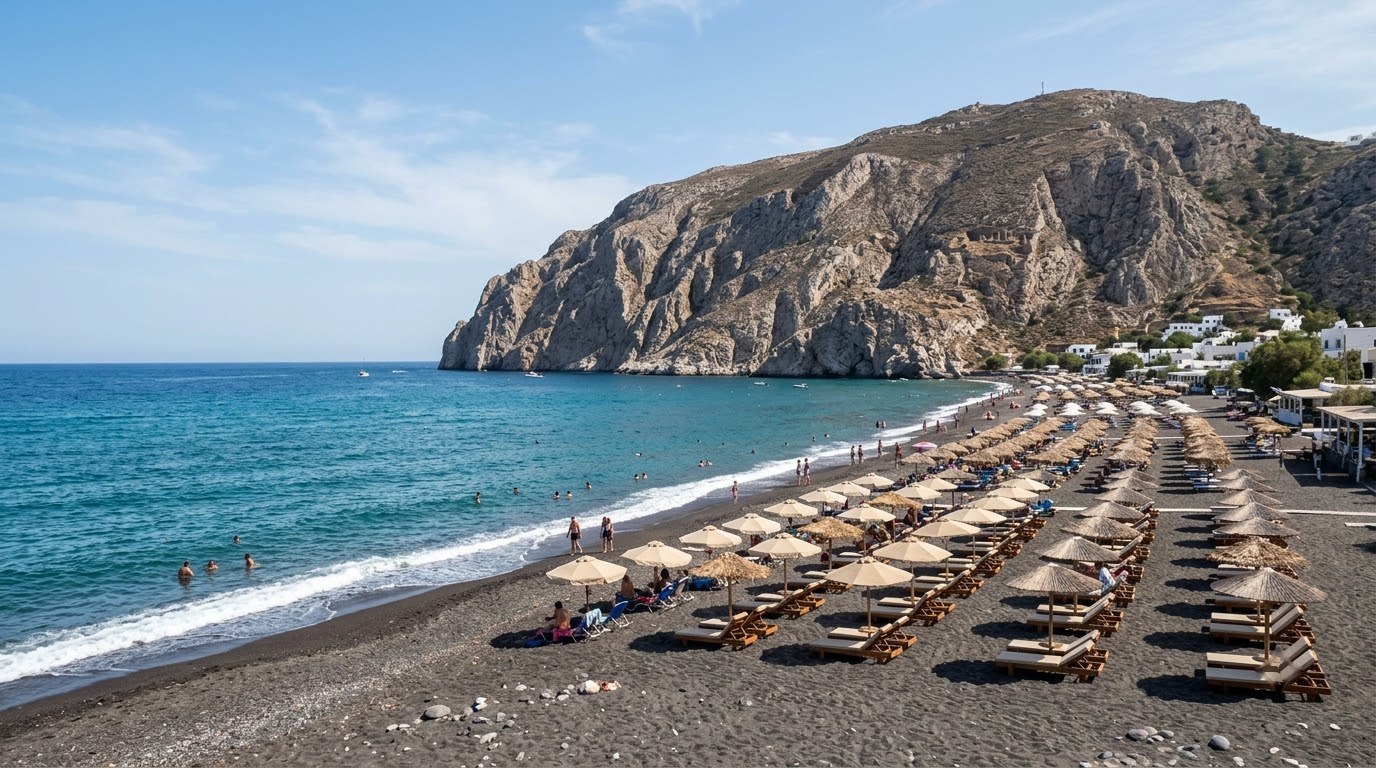
May is when Santorini fully wakes up. The sea edges toward swimmable (21-22°C), the famous red and black volcanic beaches at Perissa and Kamari are accessible without crowd pressure, and the island’s wineries have reopened after winter. Book accommodation 4-6 weeks ahead for May weekdays; 6-8 weeks for weekends, which fill faster.
Best for: First-time visitors, couples, photographers, anyone avoiding crowds.
Not for: Committed swimmers who need warm water (sea is borderline in April, reasonable by late May).
Is June Worth Considering Before Peak Crowds Arrive?
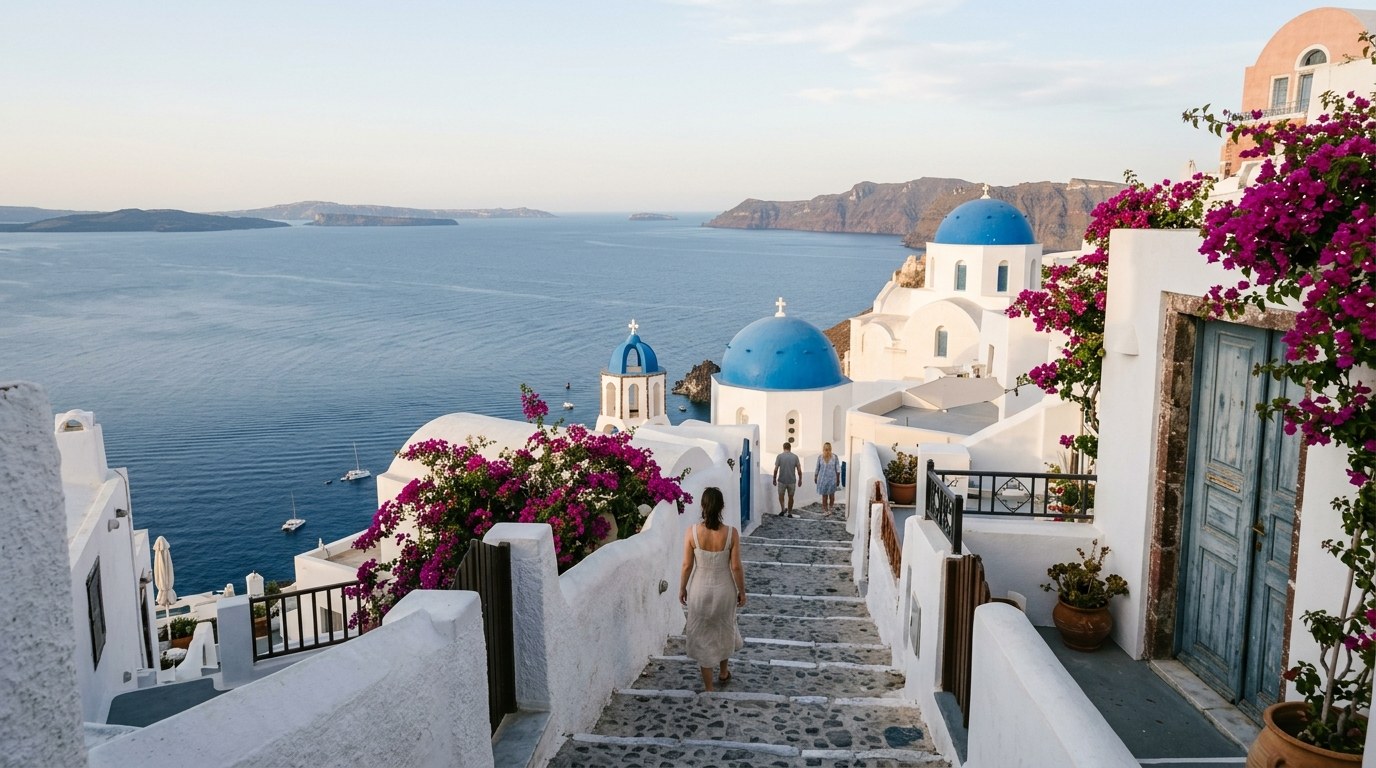
June sits at the inflection point between shoulder and peak season. Temperatures rise to 25-27°C, the Aegean sea reaches 23°C (good swimming), and the island’s full range of boat tours and excursions is running. Crowds are building but have not yet reached the July-August levels that overwhelm infrastructure.
The first two weeks of June still offer genuinely comfortable Oia evenings. The sunset crowd is real, but the viewpoint at the castle ruins is not yet the standing-room-only event it becomes by July. Arriving 45 minutes before sunset rather than 90 minutes is usually enough to find a good position.
By late June, crowd dynamics shift noticeably. Restaurants require reservations. Ferry connections from Athens book out days in advance. Beach clubs at Perissa and Perivolos fill by mid-morning. Early June is effectively still shoulder season; late June is effectively peak.
Best for: Swimmers, travelers who want full services without maximum crowds.
Booking lead time: 6-8 weeks for June accommodation. Specific boutique properties in Oia and Firostefani need 8-10 weeks.
July and August: What Peak Season Actually Looks Like
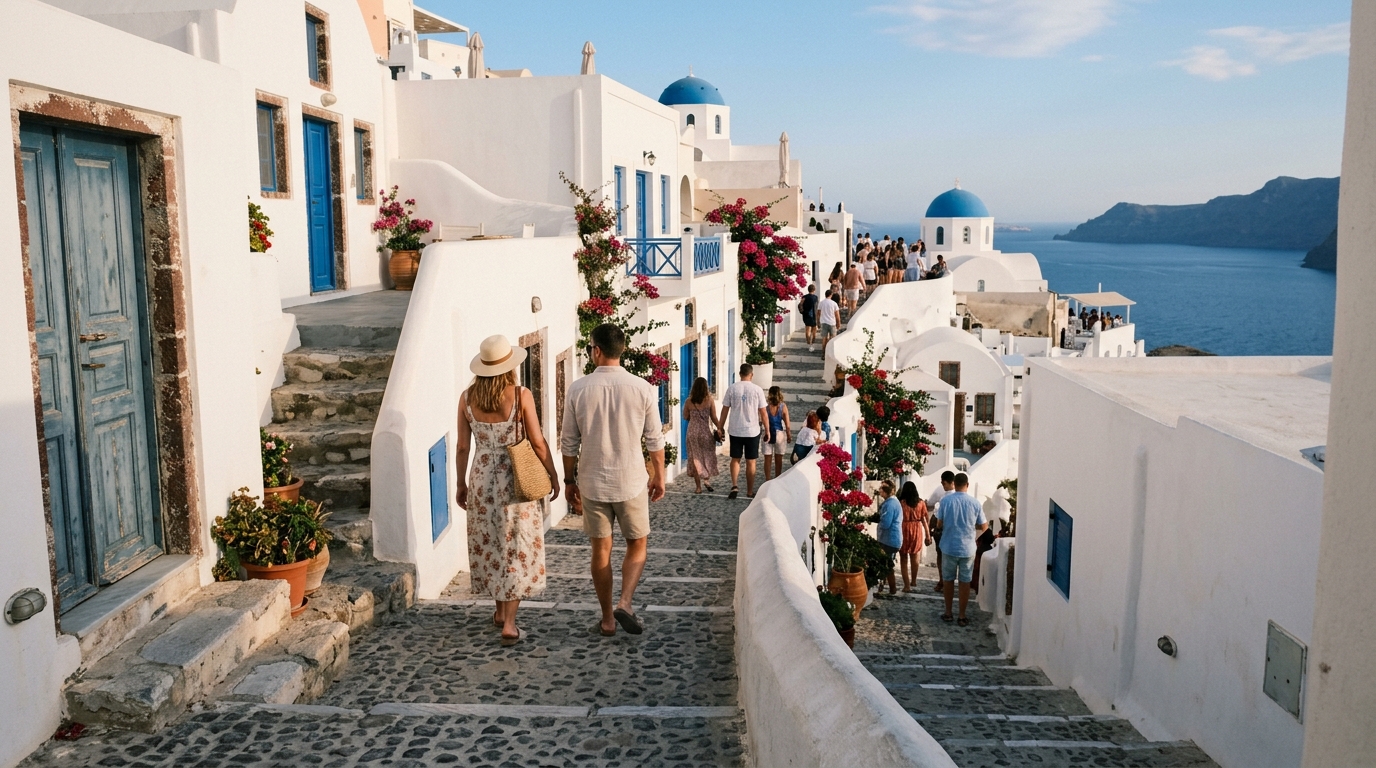
July and August are Santorini’s most popular months, and also its most demanding. The island receives approximately 2 million visitors per year, with a disproportionate share concentrated into these 8-10 weeks (Greek Tourism Organisation, 2024). Oia’s sunset viewpoint draws over 2,000 visitors daily.
The caldera-facing hotels book out 3-6 months in advance. Temperatures hold at 28-30°C, occasionally higher. The sea is 26°C and outstanding for swimming. Nights are hot.
August is additionally affected by the Greek holiday period. Domestic Greek tourists layer on top of the international visitor volume, adding to ferry pressure, restaurant bookings, and accommodation scarcity. August 15, the Feast of the Assumption, is a national holiday and one of the single busiest days on the island.
The Ifestia Festival in August is worth knowing about. It is a theatrical fireworks and light show staged on the caldera, re-enacting the ancient volcanic eruption. The production quality is genuinely impressive and unique to Santorini.
If you must visit in July or August:
- Book accommodation 3-6 months ahead. Caldera-view rooms in Oia and Imerovigli sell out earliest.
- The Oia sunset requires arriving 60-90 minutes before sunset to secure any meaningful position.
- Use the early morning for Fira and Oia exploration. Before 9am, the village lanes are walkable.
- The black beach at Perissa is marginally less crowded than Kamari; Vlychada beach is the least crowded of the accessible beaches.
- Book restaurant reservations on arrival day at the latest, ideally 2-3 days ahead for caldera-view dining.
Check live hotel prices in Santorini
Best for: Travelers with fixed summer holiday windows who plan far ahead.
Not for: Budget travelers, crowd-averse visitors, anyone unwilling to book months in advance.
Is September the Traveller’s Favourite for a Reason?
September is the month most repeat Santorini visitors choose when they have the flexibility to pick. The sea temperature reaches 25°C, the warmest of the year and warmer than July, and after the first week or two, European school schedules drive a sharp and measurable crowd drop (visitsantorini.com, 2024). Hotel prices fall 25-40% from August highs. Every ferry route, restaurant, and excursion operator is still running.
The Santorini International Music Festival takes place in September in Fira, hosting classical concerts in a cave theatre carved into the caldera wall. It is a genuine cultural event, not a tourist-trap production, and the venue is unlike anything else in Europe.
The Aegean’s thermal lag means September water is warmer than July water despite the lower air temperature. Most visitors do not expect this. The practical consequence is that September swimmers often report better conditions than those visiting during what they assumed was the hottest time of year.
After mid-September, the pace of the island shifts perceptibly. Restaurants have time for you. The caldera trail between Fira and Oia has breathing room. The Oia sunset spot is busy but no longer requires 90-minute advance positioning.
Best for: Repeat visitors, swimmers, couples, anyone who wants summer conditions without peak-season crowds.
Booking lead time: 4-6 weeks for late September; 6-8 weeks for early September, which still runs close to peak levels.
What Does October in Santorini Actually Offer?
October is an excellent and underrated month for Santorini. Air temperatures of 20-22°C are comfortable for walking and sightseeing. The sea holds at 23°C through most of the month, which is genuinely warm for swimming (visitsantorini.com, 2024). Hotel rates run 40% below peak. The caldera villages have space in them again.
The practical consideration is closures. Some restaurants and tour operators begin shutting down in late October. Toward October 25 and beyond, the range of available services narrows noticeably. Verify before you book that your specific hotel and key restaurants are operating in the dates you want.
What October gives you that no other month does: Santorini’s visual drama at its most atmospheric, without crowds. The caldera light in October has a quality that summer visitors simply do not see. The angle is lower, the shadows are longer, and the whitewashed buildings catch the afternoon in a way that photographs differently.
Best for: Photographers, repeat visitors, budget-conscious travelers who do not need beach infrastructure.
Not for: Travelers dependent on full restaurant and tour-operator range, especially after the 25th.
November to March: Who Should Visit Off-Season?
Off-season Santorini is a destination for a very specific type of traveler. Most hotels close entirely from November through March. Most restaurants, boutiques, boat tours, and excursion operators follow the same pattern (Greek Tourism Organisation, 2024). Ferry services from Piraeus continue year-round on reduced schedules, but the fast catamaran services (SeaJets) suspend winter operations. Temperatures drop to 12-16°C with occasional rain. The sea is cold (16-18°C).
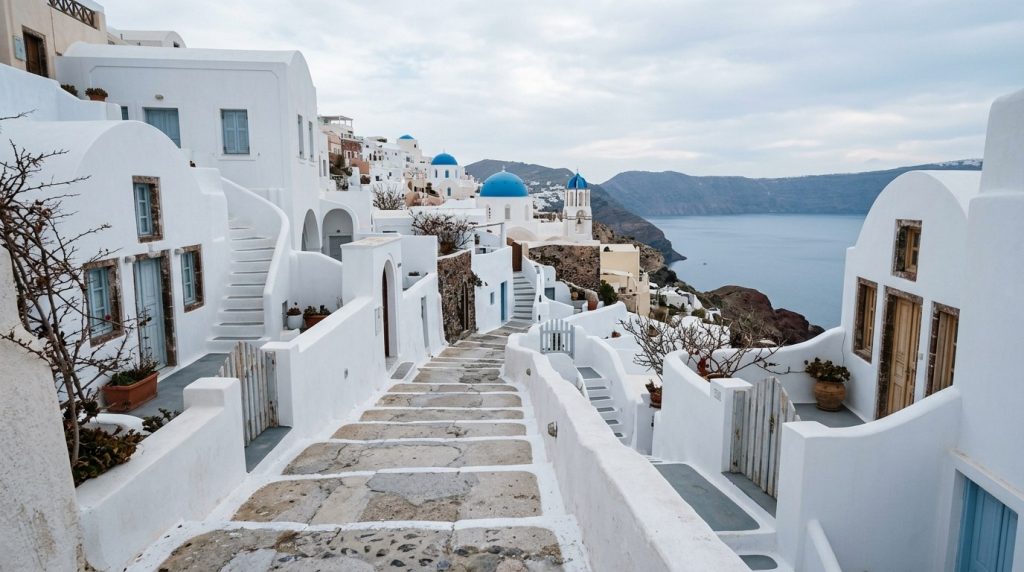
What remains is the physical landscape, which is extraordinary regardless of season. The caldera does not close. Oia’s photogenic lanes are empty. A few locally-run restaurants and cafes operate year-round. The Akrotiri archaeological site stays open. For a traveler specifically seeking solitude, minimal cost, and complete contrast to the summer version of Santorini, November through February delivers exactly that.
March is the point when the island starts reawakening. Some hotels reopen by mid-March. A few restaurants and shops follow. The light is good and the island still quiet. Solo travelers and those with an interest in Greek island culture at its most unperformed will find March genuinely rewarding.
December has a distinct appeal: Christmas celebrations in Fira, with decorations and low-season warmth from the few venues that remain open. It is a minor but real draw.
Best for: Budget travelers, photographers, off-season explorers, couples wanting total solitude.
Not for: Families with children, swimmers, anyone dependent on full hotel and restaurant range, first-time visitors.
Find your Santorini hotel on the map
Live prices from Booking & Airbnb — tap a pin to compare stays around Oia and Fira and beyond.
When to Visit Santorini for Specific Reasons
Best Time for Sunsets
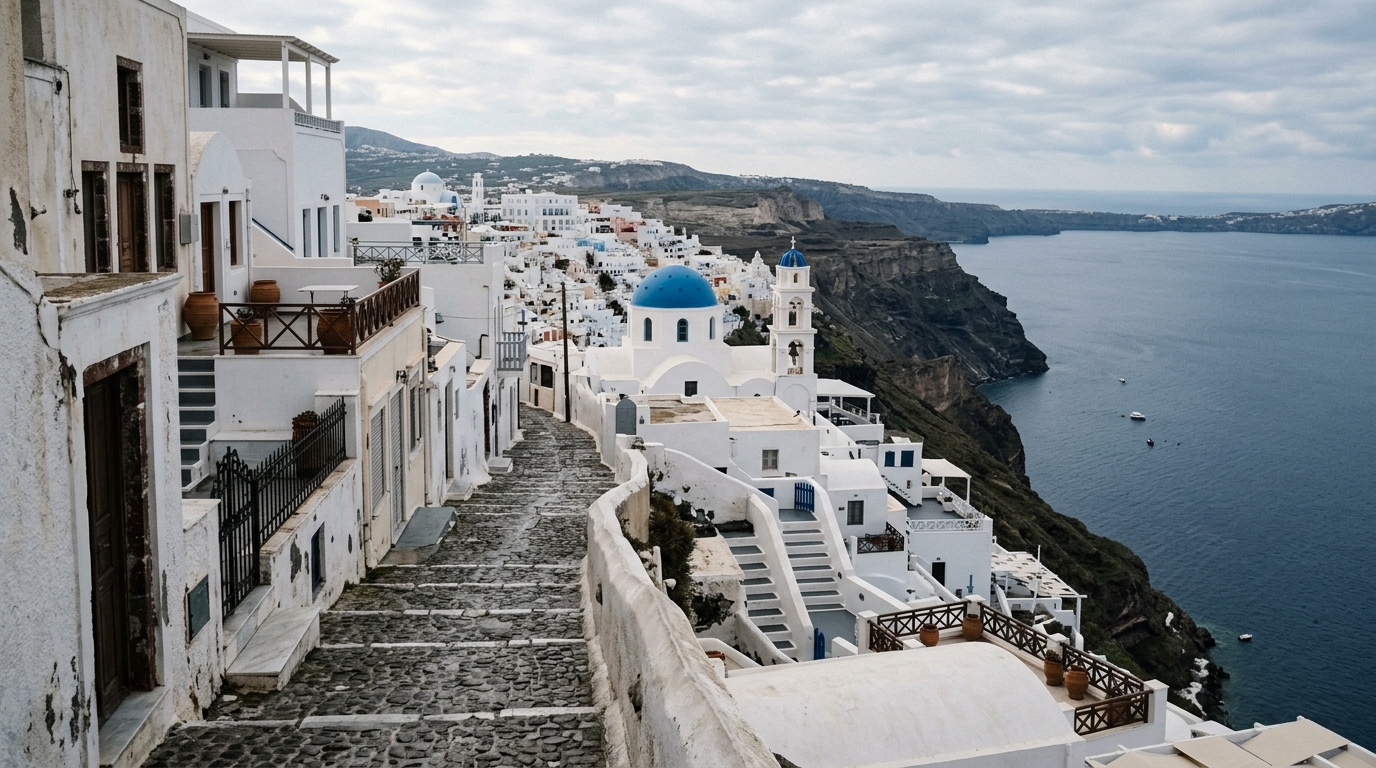
The Oia sunset is Santorini’s most-photographed moment and its most logistically challenging experience. The actual sunset quality is consistent from April through October. What changes is the crowd. For the best combination of quality and access, visit in April, May, or October, when the viewpoint is busy but not the standing-room event it becomes in summer.
In July and August, the northern end of Oia fills from 90 minutes before sunset. The castle ruin viewpoint, theoretically the best position, is inaccessible without 60+ minute advance arrival. In May, arriving 30 minutes early is usually sufficient. The sunset itself is identical; the experience is radically different.
For serious photographers: May mornings deliver exceptional light on the caldera-facing facades. The combination of low tourist volume and spring morning light between 7-9am produces images that look nothing like the crowded golden-hour postcard.
Best Time for Beaches
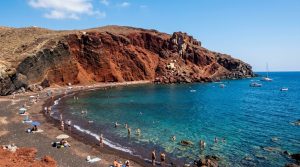
Santorini’s volcanic beaches (the black sand at Perissa and Kamari, the red sand at Red Beach near Akrotiri) are swimmable from June through October. The sea peaks at 26°C in July-August and stays at 23-25°C through September. October at 23°C is still entirely comfortable.
The least crowded beach period with warm water is late September and early October. Perissa and Kamari still have sun loungers available, the water is warm, and the crushing summer beach traffic is gone. Red Beach is best visited in morning hours regardless of season, as the path access and cliff erosion can create hazards in busy afternoon conditions.
Best Time on a Budget
May and October offer the strongest combination of accessible weather and lower prices. Hotel rates in May run 30% below peak; in October, 40% below. The Athens-to-Santorini overnight ferry (Blue Star Ferries, 8 hours from Piraeus, €35-65 economy class) costs the same year-round, making it one of the more budget-friendly access options regardless of season.
Avoiding July and August saves significantly across every cost category: accommodation, excursions, restaurant meals, and boat tours all price below their summer levels. A 4-night trip to Santorini in September costs roughly 30-40% less than the same trip in August for equivalent accommodation.
Best Time to Avoid Crowds
April and late October are the least crowded months with meaningful services still operating. For the absolute minimum crowd experience on a working island, target mid-October on a Tuesday or Wednesday. The caldera view from the Fira-to-Oia trail is entirely yours. The villages are local-paced.
For shoulder-season travelers who still want full restaurant and excursion access: early May and late September offer the best crowd-to-services ratio. Weekday visits reduce pressure by roughly 20% even in busier months.
Best Weather Window
The most consistently pleasant weather, warm without oppressive heat, with no rain risk and low wind, runs from late May through late June and again through September. July and August are technically the hottest months, but Santorini’s meltemi wind can make exposed caldera-facing areas genuinely uncomfortable on high-wind days, particularly in the afternoons.
The meltemi is a dry northerly wind that picks up across the Cyclades from July through August. It can be refreshing in extreme heat, but it also disrupts boat tours and makes caldera-edge dining unpleasant on strong-wind afternoons. May and September have lighter, more variable wind conditions.
How Far Ahead Should You Book Santorini?
Booking lead times in Santorini are longer than most European island destinations, because caldera-view accommodation at any tier books out genuinely early for peak months.
July-August: Book 3-6 months ahead for budget properties in Fira, Perissa, or Kamari. For caldera-view hotels in Oia, Imerovigli, or Firostefani, book 6-9 months ahead. August in particular: some sought-after properties fill for the following summer by December of the current year. Do not expect last-minute options at fair prices.
June and early September: 6-8 weeks ahead for most accommodation. Specific boutique properties in Oia need 10-12 weeks. This window is more forgiving than peak months but fills faster than most visitors expect.
May and late September: 4-6 weeks ahead is usually sufficient. May weekdays specifically can often be booked 2-3 weeks in advance for non-caldera properties. Easter week in April requires 6-8 weeks advance notice regardless.
October: 3-4 weeks is usually adequate, though late October requires verifying that your specific hotel and preferred restaurants are still operating before booking anything.
Off-season (November-March): Verify first that properties are open. Many hotels publish their seasonal closing dates on their websites. Once confirmed open, same-week booking is often possible.
Ferry access: The Athens Piraeus overnight ferry (Blue Star Ferries, 8 hours, €35-65 economy) should be booked 2-4 weeks ahead in summer. The SeaJets high-speed catamaran (5 hours, higher cost) sells out faster in July-August. From Heraklion in Crete, the 2-hour ferry connection (€35-50) is also worth booking ahead in summer months.
Check live hotel prices in Santorini
Frequently Asked Questions
Is April or September better for Santorini?
Both are excellent choices, and the decision depends on what matters most to you. April offers spring flowers, uncrowded sites, and prices 40% below peak, but the sea (19-20°C) is not yet ideal for swimming.
September offers warmer sea water (25°C, actually the warmest of the year), crowd levels that drop sharply after the first week when schools resume, and prices 25-40% below August highs (Check live hotel prices, 2025). If swimming is a priority, September wins. For photography, hiking the caldera trail, and sightseeing value, April is hard to beat.
Is Santorini too crowded in July?
Santorini in July is genuinely very busy. The Oia sunset viewpoint sees 2,000+ visitors daily, requiring 60-90 minute advance positioning (Greek Tourism Organisation, 2024). Ferries run at capacity.
Caldera-view hotels are sold out months ahead. Restaurants need reservations 2-3 days in advance. The island is still beautiful and worth visiting, but visitors who arrive expecting easy access to the postcard experience will need significant patience and planning. If summer is your only option, early July is more manageable than August.
What is the weather like in Santorini in October?
October offers air temperatures of 20-22°C and sea temperatures around 23°C, making it mild and genuinely pleasant for exploring. The caldera views in October light have a particular atmospheric quality that summer visitors do not get. Rain is possible but infrequent through mid-October.
Services begin reducing after October 25, so verify your hotel and preferred restaurants are operating before booking late-month trips. Hotel rates run 40% below August peak (Check live hotel prices, 2025).
Can you swim in Santorini in May?
The sea in May reaches 21-22°C, which is borderline swimmable for most people and entirely comfortable for confident swimmers. The volcanic beaches at Perissa and Kamari are accessible and uncrowded. The black sand heats quickly in the afternoon sun, making beach conditions pleasant.
If warm water is essential to your trip, June through October will serve you better. But May swimmers who are not cold-sensitive will find the conditions acceptable, particularly in the second half of the month.
How do I get to Santorini from Athens?
Two practical options connect Athens to Santorini. The overnight ferry from Piraeus (Blue Star Ferries) takes approximately 8 hours and costs €35-65 economy class, making it an efficient way to travel if you book a cabin and treat it as your night’s accommodation. The high-speed catamaran (SeaJets) covers the route in around 5 hours at a higher price point.
Direct flights from Athens to Thira Airport (JTR) take 45 minutes and are the fastest option, though prices vary widely by season. In summer, direct flights from London, Amsterdam, and Frankfurt operate to JTR, making Athens an unnecessary transit stop for many European visitors.
Final Verdict: The Best Time to Visit Santorini
The honest recommendation is this: visit in May or the second half of September if you have any scheduling flexibility at all.
May delivers: full services, manageable crowds, prices 30% below peak, the Fira-to-Oia caldera trail without queues, and the kind of morning quiet in Oia that photographs like nothing you have seen. It is the best value month of the year for a first-time visitor.
Late September delivers: the warmest sea of the year (25°C), crowds that thin sharply after the 10th, prices 25-40% below August, the full ferry schedule, the Santorini Music Festival, and the particular quality of Greek island light as summer steps back.
If your dates are fixed in July or August, plan precisely: book accommodation 3-6 months ahead, position yourself at the Oia viewpoint 60-90 minutes before sunset, use mornings for village exploration before the tour groups arrive, and book restaurant reservations in advance. The island is worth visiting in any season. Summer specifically rewards those who treat the logistics with the seriousness they require.
For everything you need to plan your trip, start with the Santorini Travel Guide, then map out your days with the 4-Day Santorini Itinerary.