New York City Travel Budget 2026: Daily Costs & Saving Tips
Disclosure: Some links in this guide are affiliate links. If you book or buy through them, we may earn a small commission at no extra cost to you — it helps keep our guides free.
- Budget travelers spend around $100-$150/day; mid-range visitors average $200-$300/day; luxury travelers exceed $500/day (Numbeo, 2026)
- A one-way subway ride is $2.90 in 2026, and an unlimited 7-day MetroCard costs $34 (MTA, 2026)
- Free attractions — including Central Park, the High Line, and the Staten Island Ferry — can fill 2-3 full days at zero cost
- Hotel prices in Midtown Manhattan average $280-$380/night in peak season (Booking.com data, 2026)
- Airalo eSIMs for the US start at $4.50 for 1GB, saving you expensive roaming charges before you even land

New York City doesn’t have to drain your savings — if you know where the real costs hide. We’ve broken down every expense category with current 2026 prices so you can plan a realistic NYC trip on a budget that actually works for you.
How Much Does New York City Cost Per Day in 2026?
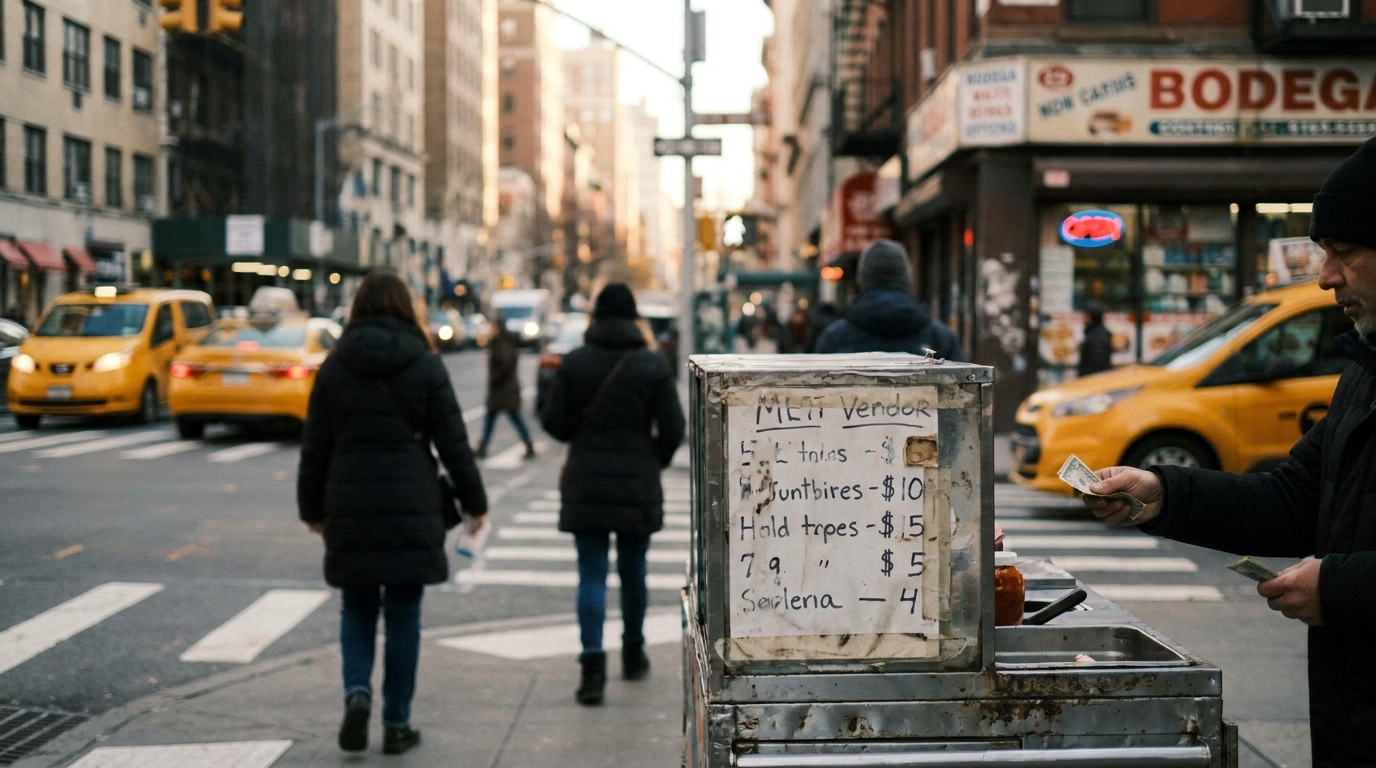
NYC runs about $150-$350/day per person depending on how you travel. Budget travelers sharing a hostel dorm and eating at delis or food courts can hold costs near $100-$130/day. Mid-range couples splitting a 3-star hotel room, eating out twice daily, and doing a handful of paid attractions typically land at $220-$280/person/day. Here’s how that breaks down across key categories.
| Travel Style | Accommodation | Food | Transport | Activities | Daily Total |
|---|---|---|---|---|---|
| Budget | $45-$70 (hostel dorm) | $25-$35 | $10-$15 | $10-$20 | $90-$140 |
| Mid-range | $130-$200 (per person, shared room) | $55-$80 | $15-$20 | $30-$50 | $230-$350 |
| Luxury | $300+ (per person) | $120-$200 | $40-$80 | $80-$150 | $540+ |
Find your New York City hotel on the map
Live prices from Booking & Airbnb — tap a pin to compare stays around Midtown Manhattan and beyond.
Accommodation Costs: What to Expect and Where to Save
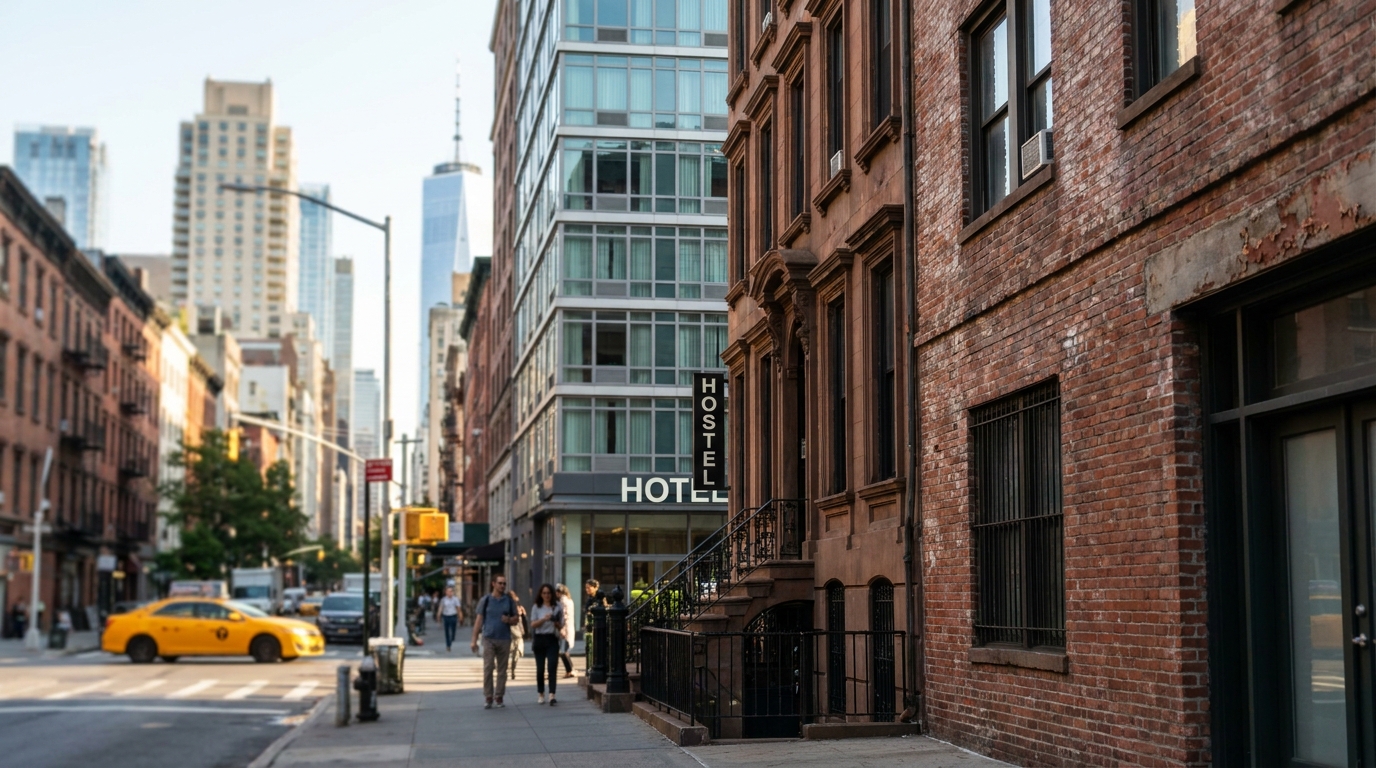
Hotels are the single biggest expense in NYC, and location drives price more than quality. Midtown Manhattan 3-star hotels average $280-$380/night in summer 2026. Staying in Brooklyn, Queens, or the Upper West Side routinely cuts accommodation costs by 25-40% with minimal extra commute time on the subway.
Budget options still exist. Hostel dorm beds in neighborhoods like Harlem or the East Village run $45-$70/night. For budget-conscious solo travelers or backpackers, that’s the clearest lever to pull. We recommend browsing Check live hotel prices for flexible-rate rooms — you’ll often find non-refundable rates 15-20% cheaper than the standard price, and the free cancellation filter is genuinely useful when plans are fluid.
Key cost-saving moves for accommodation:
- Stay in Brooklyn (Williamsburg, Bushwick) — median hotel rate ~$170/night vs. $320 in Midtown
- Book at least 3-4 weeks ahead for summer and holiday periods
- Check Sunday-Thursday rates — weekend rates jump 20-30% in Manhattan
- Consider apartment rentals for groups of 3-4; split cost often beats a hotel
For a detailed look at neighborhoods and where to stay, check out where to stay in new york city.
Transportation Costs in NYC: Subway, Taxis, and Airport Transfers
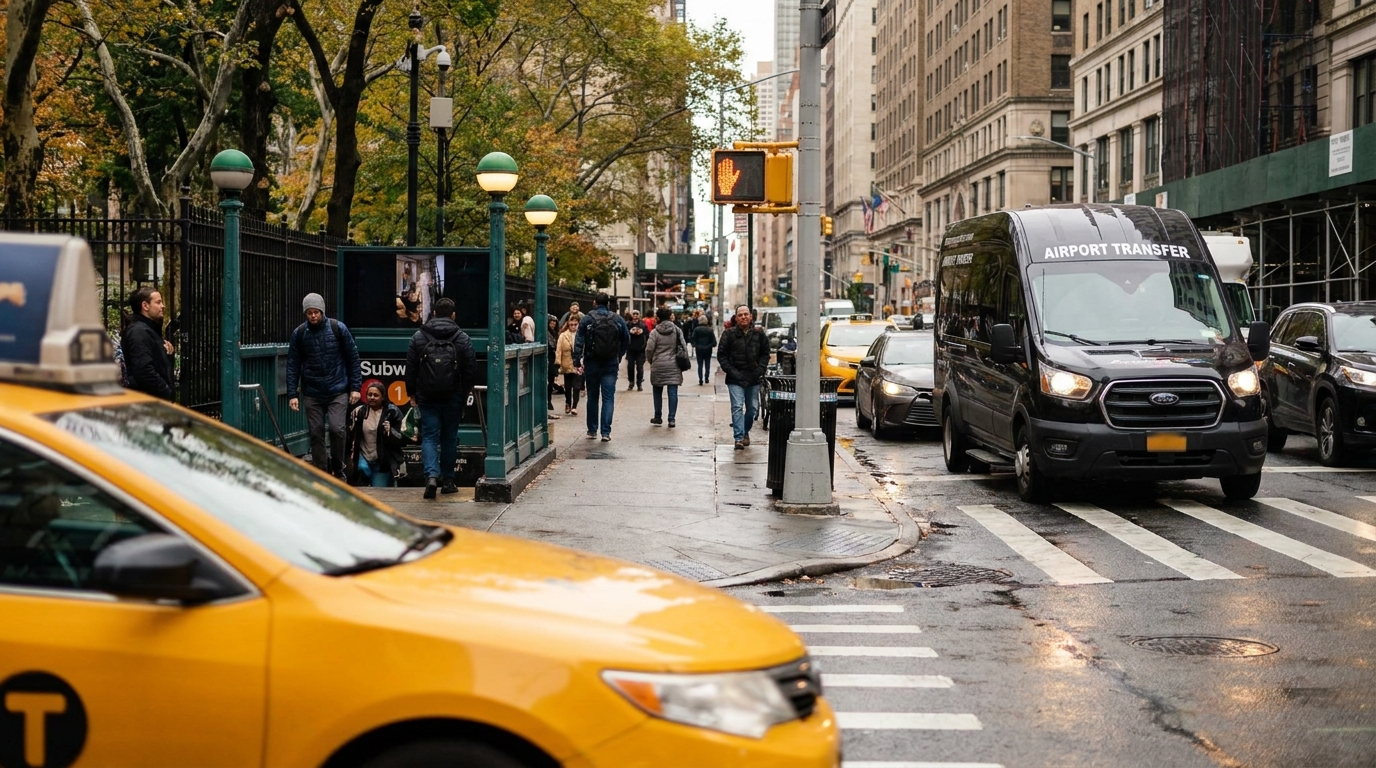
Getting around NYC is genuinely affordable if you use the subway. A single ride on the MTA costs $2.90 in 2026, and the 7-day unlimited MetroCard is $34 — covering unlimited subway and local bus rides for a week. For a 5-day trip with 6-8 rides per day, that pass pays for itself on day two.
Airport transfers are where visitors overpay. Here’s what each option actually costs:
| Transfer Option | From JFK | From LGA | From EWR |
|---|---|---|---|
| AirTrain + Subway | $9.25 total | $2.90 (subway only) | $17.50 (NJ Transit + subway) |
| NYC Yellow Cab (flat rate) | $70 + tolls + tip | Metered (~$35-$55) | Metered (~$65-$80) |
| Uber/Lyft (surge-free) | $55-$85 | $30-$50 | $55-$90 |
| NYC Express Bus | $19 | $19 | N/A |
Avoid taxis to and from JFK unless you’re splitting the flat rate among a group of three or four. The AirTrain plus a MetroCard swipe is the single best value transfer in any major US city.
For getting a US data plan sorted before you board, we use Airalo eSIMs. A 1GB US data plan starts at $4.50, and a 5GB plan runs about $13 — far cheaper than daily international roaming charges that can hit $10-$15/day with most carriers.
Food and Drink Costs: Eating Well Without Overspending

Food in NYC ranges from a $3 bagel to a $45 prix-fixe lunch, and both experiences are worth having. The city’s street food, deli, and fast-casual scene is genuinely excellent, so you don’t need to eat at sit-down restaurants for every meal to eat well.
Realistic daily food costs by approach:
- Budget eating (delis, halal carts, dollar slices, food courts): $20-$35/day
- Mid-range (one sit-down dinner, quick lunches): $55-$80/day
- Splurge dining (two restaurant meals, cocktails): $120-$180/day
Specific 2026 benchmark prices:
- Slice of pizza (classic NYC slice): $3.50-$5
- Halal cart chicken-over-rice platter: $7-$10
- Deli sandwich: $9-$14
- Casual sit-down dinner (per person, no alcohol): $22-$40
- Restaurant cocktail: $16-$22
- Brunch (Manhattan, per person): $28-$45
- Grocery store (Trader Joe’s, Whole Foods) meal prep: $10-$15/day
Chelsea Market, the Lower East Side Food Court, and Smorgasburg (weekends in Brooklyn) are the best places to eat interesting food without paying restaurant markups. We’d also point you toward Eataly’s food hall in Flatiron for lunch — cheaper than the restaurants inside.
Top Paid Attractions and How to Save on Entry Fees
NYC’s paid attractions add up quickly. The Empire State Building observation deck costs $44-$61 depending on tier; Top of the Rock runs $42; One World Observatory is $46. If you’re planning 3-4 paid attractions, a multi-attraction pass like the New York Pass or CityPASS generally saves 20-40% versus individual entry.
| Attraction | Standard Price 2026 | With CityPASS |
|---|---|---|
| Empire State Building (Top Two) | $61 | Included (~$140 for 6 attractions) |
| Metropolitan Museum of Art | $30 (suggested) | Included |
| American Museum of Natural History | $28 | Included |
| 9/11 Memorial Museum | $33 | Included |
| Statue of Liberty + Ellis Island | $24 (ferry) | Included |
| Top of the Rock | $42 | Included |
Free alternatives worth your full attention: Central Park (free, all day), the High Line (free), the Brooklyn Bridge walk (free), the Oculus at WTC (free), and the Staten Island Ferry with views of the Statue of Liberty — completely free, runs 24 hours.
For tours and day activities, we use GetYourGuide for skip-the-line entry and guided experiences. Booking in advance locks in better prices and avoids 30-90 minute queue times at peak season. See our full guide at best things to do in new york city for activity recommendations.
NYC Budget by Trip Length: 3, 5, and 7 Days
Your total trip cost depends heavily on how long you stay — longer stays dilute fixed costs like flights and sim cards. Here’s a realistic all-in estimate per person (excluding flights) for different trip lengths and styles.
| Trip Length | Budget Style | Mid-Range | Luxury |
|---|---|---|---|
| 3 Days | $320-$440 | $700-$1,000 | $1,600+ |
| 5 Days | $500-$700 | $1,100-$1,600 | $2,700+ |
| 7 Days | $680-$1,000 | $1,500-$2,200 | $3,700+ |
These estimates include accommodation, food, local transport, and a mix of free and paid attractions. They don’t include international flights, travel insurance, or shopping.
For the best use of your time, pair this budget breakdown with our recommended new york city itinerary 7 days to see exactly which days to allocate for paid versus free activities.
Practical Money-Saving Tips That Actually Work in NYC
The biggest savings come from a few structural choices, not from cutting individual coffees. Here’s what makes the real difference.
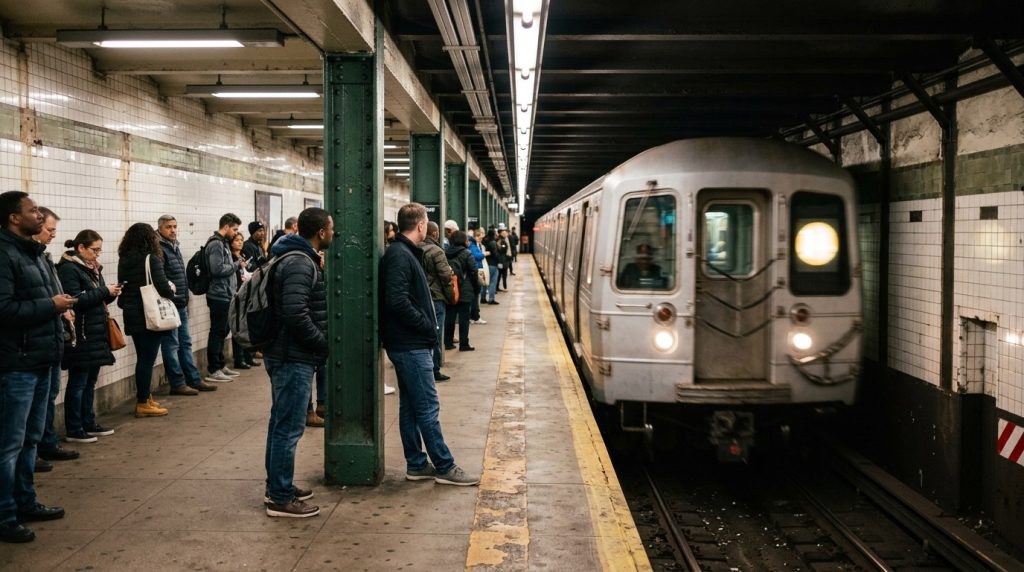
Use the subway, not Ubers. An Uber from Midtown to Brooklyn costs $22-$35. The subway costs $2.90 and takes the same time outside rush hour. Over 5 days, that difference alone saves $80-$120.
Buy a 7-day MetroCard on arrival. At $34, it breaks even at 12 rides — most visitors hit that on day 2.
Eat your biggest meal at lunch. Most NYC restaurants offer lunch prix-fixe menus at 30-40% less than the same dinner menu. A $16 lunch at a quality restaurant versus a $38 dinner is a real saving when you’re doing it every day.
Stay in Brooklyn or Queens. We’ve already flagged this on accommodation, but it bears repeating. A $170/night hotel in Williamsburg versus $320 in Midtown is $150/night difference — $750 on a 5-night trip.
Get a US eSIM before you fly. Don’t pay $10-$15/day in roaming fees. Airalo’s US plans start at $4.50 for 1GB and $13 for 5GB. For a week in NYC with Google Maps, messaging, and casual browsing, 3-5GB is plenty.
Book accommodation 3-4 weeks out. Same-week NYC hotel prices are routinely 25-40% higher than advance booking rates. Check live hotel prices‘s flexible-rate non-refundable options often undercut everything else.
Use NYC’s free attractions strategically. Central Park, the High Line, Brooklyn Bridge, DUMBO, the Staten Island Ferry, and street-level architectural exploring in neighborhoods like the West Village and SoHo can genuinely fill 2 full days at zero cost.
For more strategies on how to structure your time and money, read new york city travel guide for our full destination guide.
Frequently Asked Questions
How much money do you need per day in New York City?
Budget travelers can manage on $100-$130/day staying in hostels, eating at delis and food stalls, using the subway, and sticking to free attractions. Mid-range travelers doing a mix of paid attractions and restaurant meals should budget $220-$300/day. Luxury trips with a Midtown hotel and fine dining typically run $500+/day.
Is New York City expensive for tourists?
NYC is one of the more expensive US cities, but it’s manageable with the right strategy. The key cost drivers are accommodation and dining. Using the subway instead of taxis, staying outside Midtown, and eating at delis and food halls rather than restaurants for every meal cuts daily costs by 30-40% without sacrificing the experience.
What is the cheapest time of year to visit New York City?
January and February are the cheapest months — hotel rates drop 30-40% from summer peaks, and major attractions have minimal queues. Late November and December feel festive but get expensive fast. If you’re flexible, a late January trip can cut your total accommodation budget significantly.
How much does a 7-day New York City trip cost?
A 7-day NYC trip costs roughly $680-$1,000 per person on a budget (hostel, street food, free attractions), $1,500-$2,200 at mid-range, and $3,700+ for luxury. These figures exclude international flights, which typically add $300-$900 from the US, $700-$1,200 from the UK, and $1,000-$1,800 from Australia.
Is the New York City subway safe and easy to use?
Yes — the subway is the best way to navigate NYC. It runs 24 hours, covers every major neighborhood, and costs $2.90 per ride or $34 for a 7-day unlimited pass. It’s safe during the day and for most of the evening. We’d recommend sticking to busy carriages on late-night rides, which is standard practice for locals.
Do I need travel insurance for New York City?
US healthcare is among the world’s most expensive. A single emergency room visit without insurance can cost $3,000-$8,000. We strongly recommend purchasing comprehensive travel insurance before any US trip. This is non-negotiable for UK, EU, and Australian visitors who won’t have their home country coverage apply in the US.
How can I save money on flights to New York City?
Book flights 6-8 weeks in advance for US domestic routes and 3-4 months ahead for international. JFK, LGA, and EWR all serve NYC — compare all three, as flights to Newark are often $100-$200 cheaper from European and Asian hubs. Tuesday and Wednesday departures consistently price lower than weekend flights.
Start Planning Your NYC Trip With a Realistic Budget
NYC rewards visitors who come prepared. You don’t need to spend $400/day to have a great time in one of the world’s most interesting cities — but knowing where the real costs are lets you choose consciously where to splurge and where to save.
The essentials: lock in accommodation at least 3 weeks out on Check live hotel prices, grab an Airalo eSIM before your flight, buy a 7-day MetroCard on arrival, and build your itinerary around the city’s genuinely excellent free attractions before adding paid experiences on top.
For the full picture on planning your visit, read our new york city travel guide, explore the best best things to do in new york city, and map out your days with our new york city itinerary 7 days.