Ultimate New York City Travel Guide 2026
Disclosure: Some links in this guide are affiliate links. If you book or buy through them, we may earn a small commission at no extra cost to you — it helps keep our guides free.
- NYC welcomed 62 million visitors in 2024 and tourism spending topped $70 billion (NYC Tourism + Conventions, 2025)
- A mid-range daily budget runs $200-$320 USD per person including accommodation, food, transport, and two paid attractions
- The NYC subway covers all five boroughs; a 7-day unlimited MetroCard costs $34 as of 2026
- Over 25,000 restaurants operate across the city — the widest culinary range of any US city (NYC Department of Health, 2025)
- Average hotel rates in Midtown Manhattan sit at $265/night in high season (May-September) (STR Global, 2026)
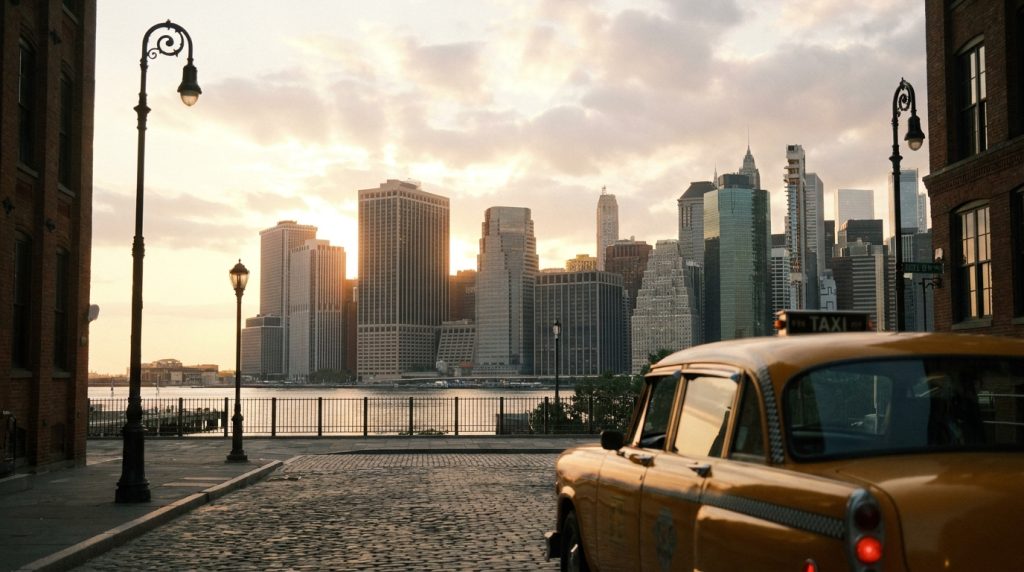
New York City packs more per square mile than almost anywhere else on earth — five boroughs, 8.3 million residents, and roughly 62 million annual visitors (NYC Tourism + Conventions, 2025).
Whether you’re landing at JFK for the first time or returning for the tenth, this guide gives you everything you need to plan a trip that actually works: real prices, practical logistics, and honest takes on where to stay, eat, and spend your time. Anyone mapping out the trip usually consults this where to stay in New York City before picking a neighborhood that matches the planned pace of the trip.
When to Visit New York City (And What Each Season Costs)
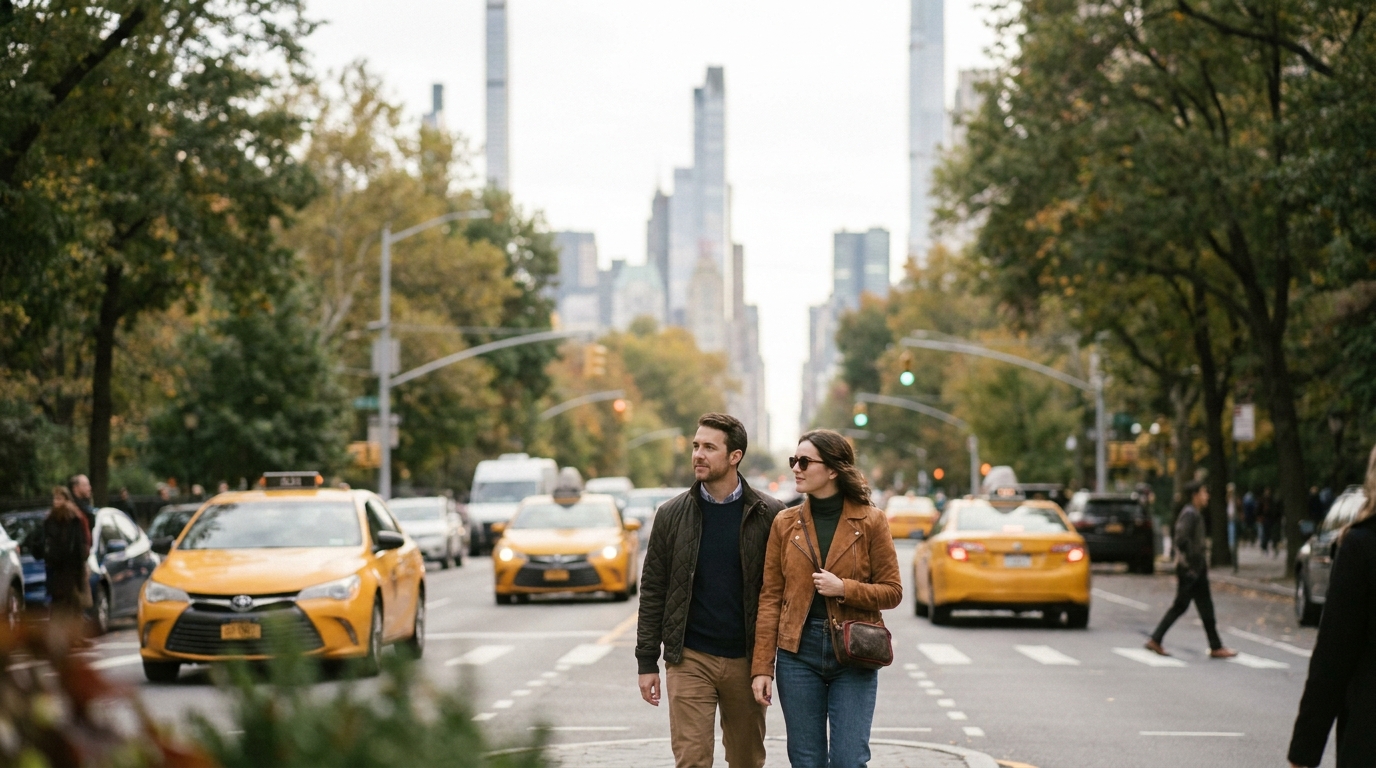
Late September through early November is our top pick for New York City: crowds thin out after the summer rush, temperatures sit between 55-70F (13-21C), and hotel rates drop 15-25% compared to the July-August peak. Spring (April-June) runs a close second with mild weather and the city’s parks in full bloom.
Summer draws the biggest crowds and the highest prices — Midtown hotels average $265/night in July — but free outdoor events, rooftop bars, and long daylight hours make it worthwhile. January and February are the cheapest months to visit, with rooms dipping to $160-$195/night, though you’ll need to budget for a proper coat.
| Season | Months | Avg Temp | Avg Hotel/Night (Midtown) | Crowd Level |
|---|---|---|---|---|
| Spring | Apr-Jun | 50-75F / 10-24C | $230-$260 | Moderate-High |
| Summer | Jul-Aug | 75-90F / 24-32C | $255-$290 | Very High |
| Fall | Sep-Nov | 45-70F / 7-21C | $200-$255 | Moderate |
| Winter | Dec-Mar | 25-45F / -4-7C | $160-$200 | Low-Moderate |
December is a special case: holiday markets, ice-skating rinks, and the Rockefeller Center tree push crowds and prices back up from around December 10 through New Year’s Day. If the Christmas atmosphere is what you’re after, book at least 10-12 weeks out.
Find your New York City hotel on the map
Live prices from Booking & Airbnb — tap a pin to compare stays around Midtown Manhattan and beyond.
Best Neighborhoods to Stay In New York City
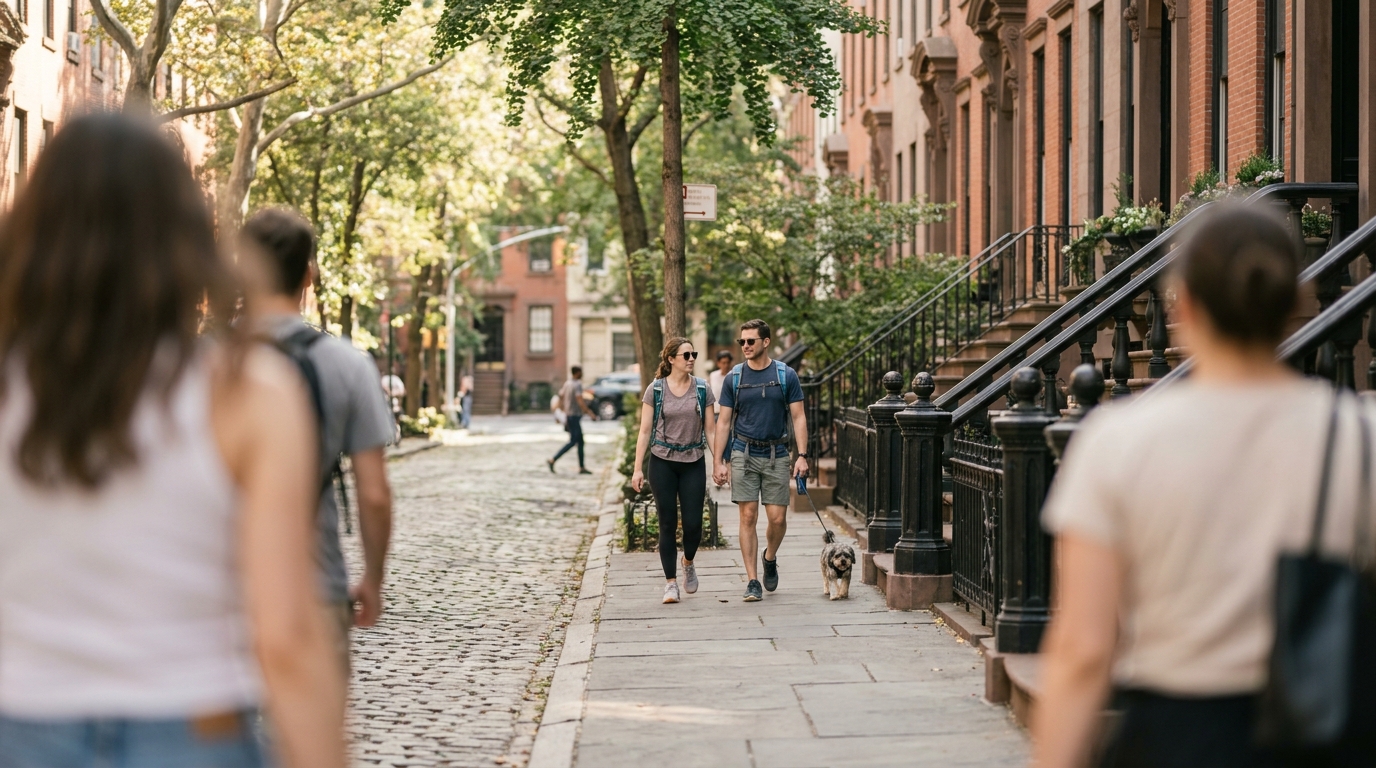
Where you base yourself shapes the entire trip, so pick based on your priorities rather than just grabbing the cheapest Midtown option. Each neighborhood below has a distinct feel, a different price point, and different proximity to major sights.
Midtown Manhattan is the tourist hub — it’s where Times Square, the Empire State Building, and the bulk of Broadway theaters sit. It’s convenient but expensive and can feel relentlessly commercial. Budget $220-$320/night for a decent mid-range hotel here.
Lower Manhattan and the Financial District offers newer hotel inventory at slightly lower rates ($190-$260/night) and easy access to the Brooklyn Bridge, One World Trade Center, and the Staten Island Ferry. Brooklyn — specifically Williamsburg and DUMBO — gives you a more local feel, excellent food, and some of the best Manhattan skyline views on earth; rates run $160-$240/night.
The Upper West Side near Central Park suits families and culture-seekers (American Museum of Natural History, Lincoln Center), with rates around $200-$280/night. Long Island City, Queens is our pick for budget-conscious travelers who still want a quick subway ride into Manhattan — you’ll find clean, modern hotels for $130-$190/night and the commute to Midtown takes under 20 minutes.
For accommodations across all these neighborhoods, we use check live hotel prices — their free cancellation filter is especially useful for NYC given how often plans change. You can search and compare here: /best-hotels-new-york-city/
Getting Around New York City
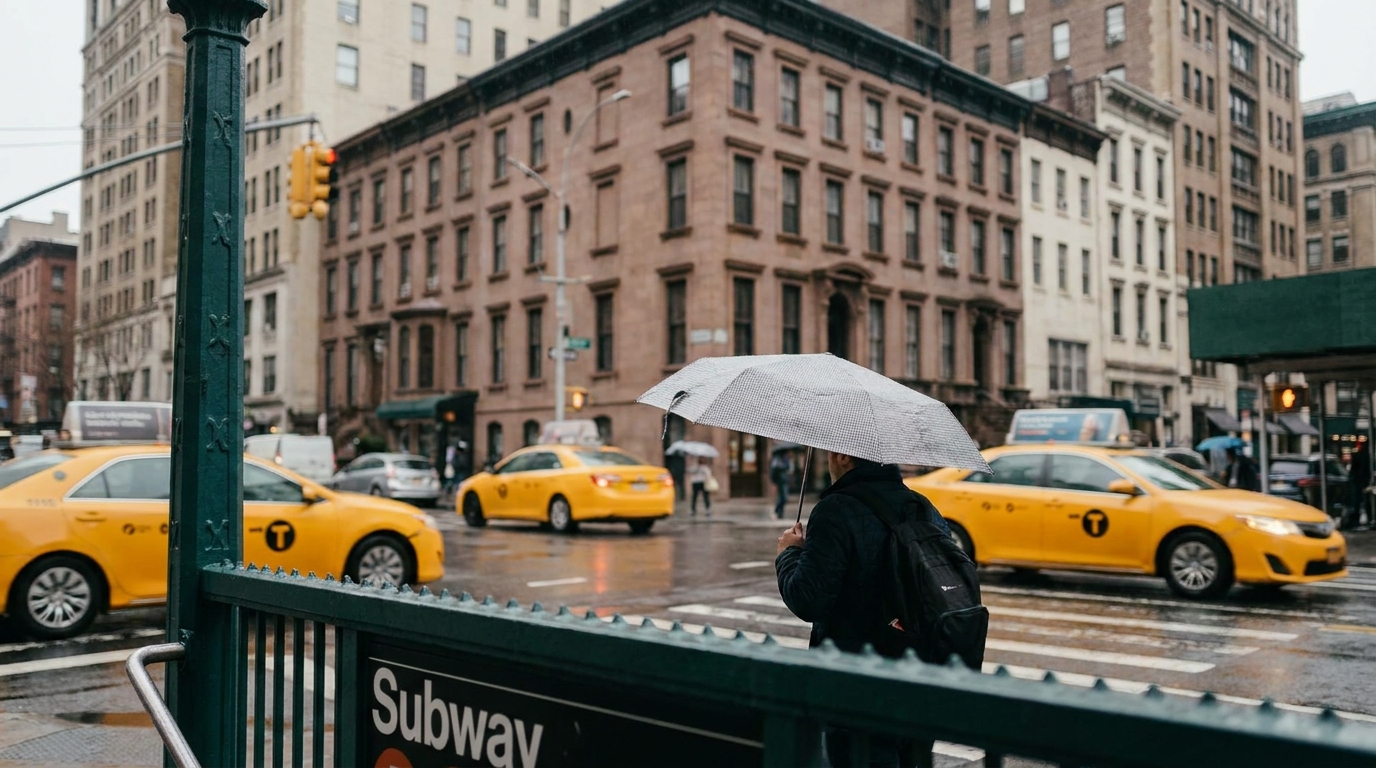
The subway is the backbone of NYC transport and it’s genuinely excellent once you understand the system. A single ride costs $2.90 in 2026; the 7-day unlimited MetroCard runs $34 and pays for itself after 12 rides.
Download the free MTA app for real-time service alerts — the system carries around 3.4 million weekday riders (MTA, 2026) and delays happen, but they’re rarely catastrophic. For airports, the AirTrain + subway combo from JFK to Midtown costs $10.50 total and takes 50-65 minutes. From Newark (EWR), the NJ Transit train to Penn Station runs $17.50 and takes 30-40 minutes.
Avoid taxis or rideshares from airports during peak hours — the flat-rate taxi from JFK to Manhattan is $52 plus tolls and tip, and with traffic it can take 90+ minutes.
Walking is underrated in Manhattan. Distances between major attractions look longer on a map than they are on foot — the walk from Times Square to the High Line is about 20 minutes and passes through Chelsea, which is worth seeing anyway.
CitiBike (the city’s bike-share) has expanded to 40,000+ bikes as of 2026; a single ride is $4.49 for up to 30 minutes, or a day pass runs $19. It’s ideal for flat stretches like the Hudson River Greenway or riding across the Brooklyn Bridge. We cover the full transport breakdown in more detail at /getting-around-new-york-city/.
Top Experiences and Attractions in New York City
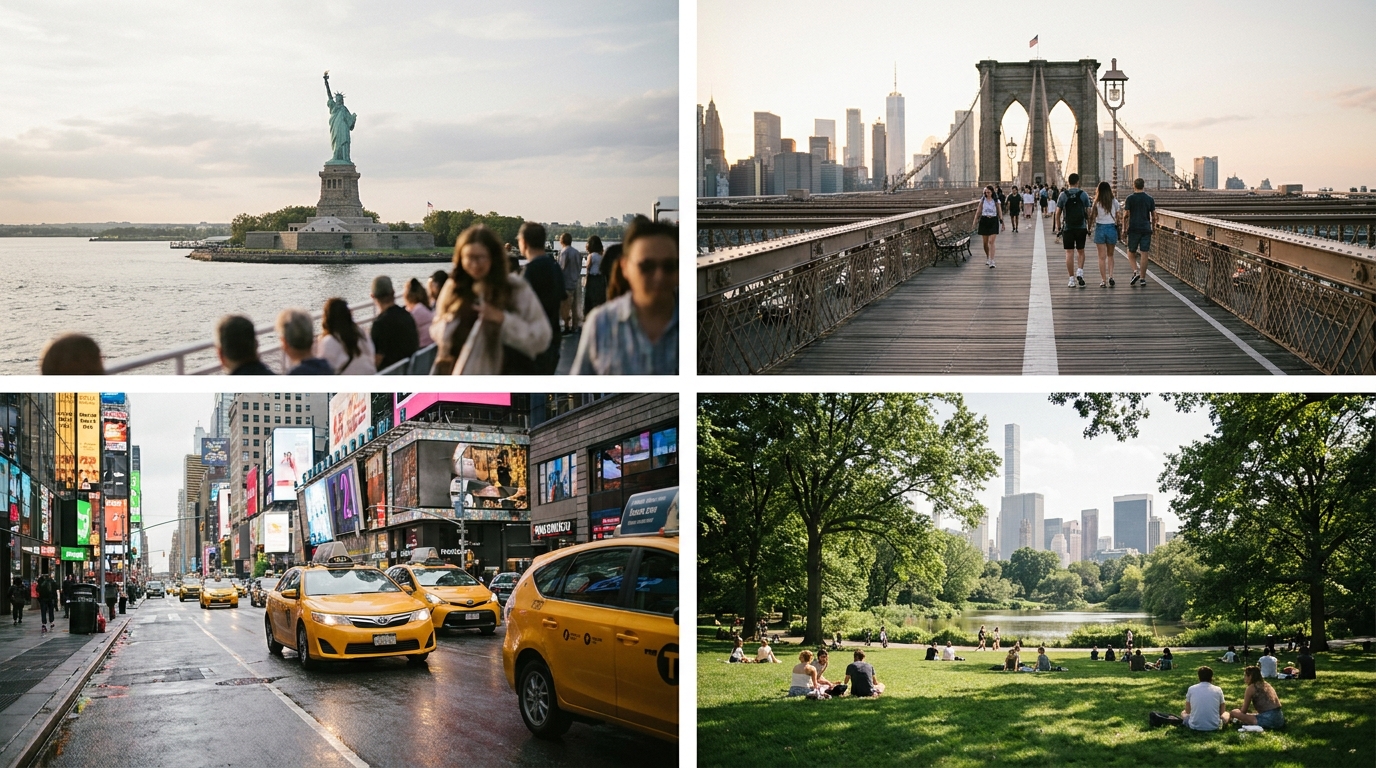
New York City’s paid attractions range from genuinely unmissable to overpriced tourist traps, so we’ll tell you which is which.
The Statue of Liberty and Ellis Island combo ferry ticket costs $25.50 for adults (2026) — book through the official NPS concessionaire at least 2-3 weeks ahead in summer because the crown access slots (an additional $3 reservation) sell out months in advance.
The Empire State Building observation deck runs $44 for the main deck or $75 for the top floor; we recommend the sunset or evening visit when the city light show is at its best.
The Top of the Rock at 30 Rockefeller Plaza costs $40 and offers a superior view of the Empire State Building itself — something the Empire State Building deck obviously can’t give you. The 9/11 Memorial Museum charges $30 for adults and is a sobering, excellently curated experience that most visitors find essential rather than optional.
Central Park is free and covers 843 acres; a guided walking tour through GetYourGuide or Viator runs $25-$35 and adds significant context to what you’re seeing. The Metropolitan Museum of Art operates on a suggested donation of $30 for adults — legally you can pay less, but the collection spanning 5,000 years of human history justifies the full amount.
We book most NYC guided experiences through GetYourGuide and our live travel map — both aggregate skip-the-line tickets and small-group tours with cancellation flexibility. /top-things-to-do-new-york-city/
| Attraction | Adult Price (2026) | Advance Booking Needed? | Best Time to Visit |
|---|---|---|---|
| Statue of Liberty (ferry + grounds) | $25.50 | Yes (2-3 weeks) | Morning |
| Empire State Building (Main Deck) | $44 | Recommended | Sunset / Evening |
| Top of the Rock | $40 | Recommended | Sunset |
| 9/11 Memorial Museum | $30 | Yes | Weekday morning |
| Metropolitan Museum of Art | $30 (suggested) | No | Weekday |
| American Museum of Natural History | $28 | No | Weekday |
| One World Observatory | $42 | Recommended | Clear day |
| Central Park Guided Tour | $25-$35 | No | Morning |
Beyond the big-ticket items, some of the best New York experiences cost nothing at all. Walk the High Line (a 1.45-mile elevated park built on a former freight rail line) from Gansevoort Street up to Hudson Yards.
Take the Staten Island Ferry — it’s completely free, runs 24 hours, and delivers unobstructed views of the Statue of Liberty and lower Manhattan skyline. Explore Brooklyn Bridge Park at sunset for some of the most photogenic skyline views in the city. Browse the stalls at Chelsea Market or the Essex Market on the Lower East Side.
Line up at Smorgasburg (open Saturdays in Prospect Park, Sundays in Williamsburg) for the city’s best outdoor food market experience — individual vendors average $10-$16 per dish.
Where to Eat and Drink in New York City
New York City’s food scene is the most diverse in the US and arguably among the top three in the world. The short version: eat where the locals eat, avoid restaurants with photos on the menus in Times Square, and don’t underestimate what a $4 New York bagel from a corner deli does to your mood at 8am. Here’s how to navigate each meal type with real price expectations.
Breakfast and coffee: A classic New York bagel with lox and cream cheese from a proper deli (Ess-a-Bagel, Murray’s, or H&H) runs $8-$12 and genuinely outperforms most hotel buffets at four times the price. Coffee from independent roasters (Stumptown, Blue Bottle, Partners Coffee in Williamsburg) costs $5-$7 for a specialty drink.
Lunch: The best lunch value in NYC is the bodega chopped cheese or an overstuffed deli sandwich — $8-$11 and completely satisfying. Dollar pizza by the slice is real (Joe’s Pizza, Di Fara, Prince St. Pizza) at $3-$5/slice. Food hall meals at Chelsea Market or Urbanspace Vanderbilt average $14-$18 per person.
Dinner: Midrange sit-down dinner with drinks runs $45-$80 per person in Manhattan. The East Village, Flushing (Queens), and Sunset Park (Brooklyn) offer exceptional meals from $20-$35. A reservation at a destination restaurant (Le Bernardin, Eleven Madison Park, Don Angie) requires 4-6 weeks of lead time and costs $85-$350 per person.
Bars: A craft beer at a Brooklyn bar costs $9-$13. Cocktails at a Manhattan bar run $18-$24. The rooftop bars at 230 Fifth, Mr. Purple, and The Press Lounge charge no cover but typically require a minimum spend; views justify the price.
/best-restaurants-new-york-city/
New York City on a Budget: What It Actually Costs
NYC has a reputation for being expensive, and it is — but the range is wider than most travelers realize. You can eat an excellent $10 lunch in Flushing, walk the High Line for free, and spend a full day without a paid attraction. The key is understanding which costs are fixed versus flexible.
Fixed costs you can’t avoid: A 7-day MetroCard at $34 is mandatory. Airport transport both ways adds $21-$35 using public transit. If you’re doing the major sights, budget $80-$120 for two or three paid attractions.
Where costs spiral: Midtown hotel rooms, Uber/Lyft in traffic, sit-down meals in tourist zones, and buying bottled water (tap water in NYC is excellent — bring a reusable bottle). A cocktail at a hotel rooftop bar can run $25-$30. A ride from Lower Manhattan to JFK via rideshare can hit $70-$90 with surge pricing.
| Budget Type | Daily Budget/Person | What It Gets You |
|---|---|---|
| Budget | $100-$140 | Hostel or budget Queens hotel, deli/bodega meals, subway, 1 paid attraction |
| Mid-Range | $200-$320 | 3-star Manhattan or Brooklyn hotel, mix of restaurants, subway, 2 paid sights |
| Comfortable | $380-$550 | 4-star hotel, nice dinners, taxis, multiple attractions, Broadway show |
| Luxury | $700+ | 5-star hotel, fine dining, private tours, premium experiences |
The New York CityPASS ($142 for adults) bundles tickets to the Empire State Building, American Museum of Natural History, the Intrepid Sea, Air and Space Museum, Top of the Rock, and the Guggenheim — it saves about 40% if you plan to visit all five.
The Explorer Pass from GetYourGuide lets you pick 2, 3, or 5 attractions from a larger selection and makes more sense if your sightseeing list doesn’t perfectly match CityPASS’s lineup. /new-york-city-budget-travel-tips/
Getting to New York City: Flights, Airports, and Ground Transport
New York City is served by three airports: John F. Kennedy (JFK), LaGuardia (LGA), and Newark Liberty (EWR) in New Jersey. JFK handles most international flights and has the best public transit connection.
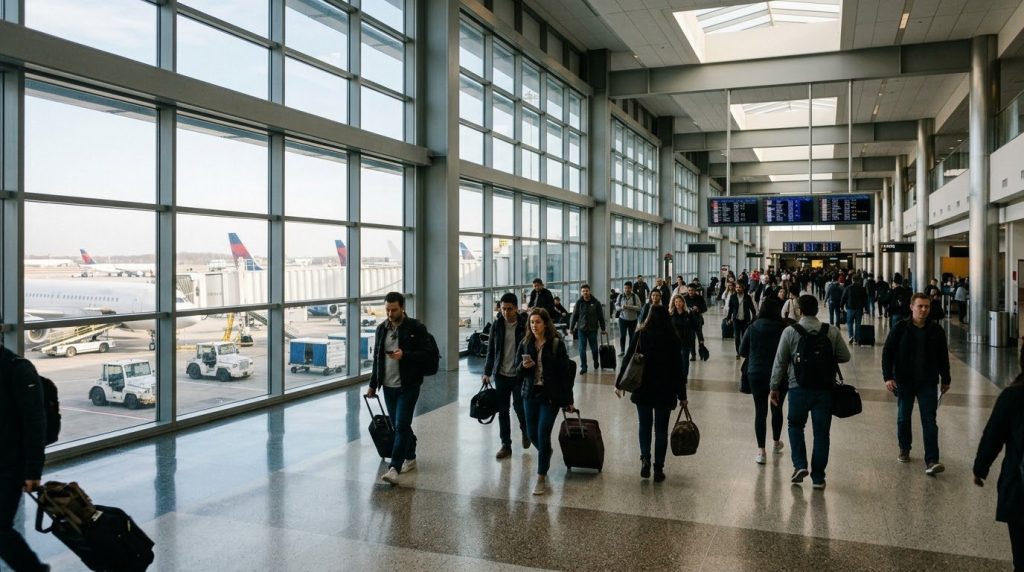
LaGuardia is undergoing a major renovation (Terminal B was completed in 2022; the rest continues through 2027) — it’s closer to Midtown but lacks a direct rail link, making rideshares or the M60 bus your options.
Newark is technically in New Jersey but well connected via NJ Transit and functions as the third major gateway, often with cheaper fares on transatlantic routes.
Flight costs: As of 2026, transatlantic fares from London Heathrow to JFK on carriers like British Airways, Virgin Atlantic, and Norwegian range from $420-$850 roundtrip in economy depending on season. Domestic fares from Los Angeles average $180-$340 roundtrip; from Chicago, $120-$250 roundtrip. Booking 6-10 weeks out typically hits the lowest pricing window. We check fares using Google Flights and Skyscanner before booking directly with airlines.
From JFK: The AirTrain to Jamaica Station connects to the LIRR or E/J/Z subway lines. Total cost to Midtown: $10.50, travel time 50-65 minutes. Taxi flat rate: $52 + tolls + tip. Rideshare: $45-$75 depending on surge.
From EWR: NJ Transit’s AirTrain connects to Newark Airport station, then trains run to Penn Station Manhattan. Cost: $17.50, travel time 30-40 minutes. Rideshare from EWR to Midtown: $55-$90 with tolls.
From LGA: No rail link. M60 bus to 125th Street subway station: $2.90, 45-60 minutes. Rideshare: $28-$55 depending on traffic and surge.
If you’re driving into the city or renting a car for day trips (Hudson Valley, the Hamptons, or New Jersey’s outlet shopping), our live travel map aggregates rental rates across all major agencies. Keep in mind that parking in Manhattan averages $35-$65/day in a garage — renting a car makes sense for excursions outside the city, not for getting around within it. /new-york-city-day-trips/
New York City Itinerary: 3, 5, and 7 Days
A three-day trip lets you hit the highest-impact experiences across Manhattan without feeling rushed; five days adds Brooklyn and a couple of deeper neighborhood dives; seven days gets you out to Queens, the Bronx, and perhaps a day trip up the Hudson Valley.
3 Days — Manhattan Essentials
Day 1: Lower Manhattan and Brooklyn Bridge. Start at One World Trade Center and the 9/11 Memorial. Walk across the Brooklyn Bridge (30-40 minutes). Explore DUMBO for the Manhattan Bridge framing shot. Take the subway to the High Line for the afternoon. End in Chelsea or the Meatpacking District for dinner.
Day 2: Midtown and Central Park. Morning at the Empire State Building or Top of the Rock. Walk up Fifth Avenue past St. Patrick’s Cathedral and Rockefeller Center.
Enter Central Park at 59th Street and walk north toward the Reservoir. Afternoon at the Metropolitan Museum of Art. Evening back in Midtown for a Broadway show ($75-$200 for mid-tier seats via TodayTix or TKTS discount booth, which sells same-day tickets at 20-50% off).
Day 3: Statue of Liberty and the West Village. Morning ferry to Liberty Island and Ellis Island (book ahead). Afternoon in the West Village — some of the city’s most charming streets and best independent restaurants. Evening in SoHo or Nolita.
5 Days — Add Brooklyn and Williamsburg
Add Day 4 for a full Brooklyn experience: Williamsburg brunch, a walk through Prospect Park, the Brooklyn Museum (free on the first Saturday evening of the month), and Smorgasburg if it’s a weekend. Day 5 in the East Village for the best concentration of low-to-mid priced restaurants in Manhattan, then the Tenement Museum ($30, book ahead) and a walk through the Lower East Side.
7 Days — Queens, the Bronx, and Beyond
Day 6 in Flushing, Queens: the best Chinese, Korean, and Taiwanese food in the city at a fraction of Manhattan prices. Day 7 in the South Bronx for the Bronx Zoo ($28 adult, includes most exhibits) or Yankee Stadium for a game (tickets from $20 on the secondary market via SeatGeek).
For a fully structured day-by-day itinerary with walking routes and restaurant picks by neighborhood, see /new-york-city-itinerary-7-days/.
Frequently Asked Questions
How many days do you need in New York City?
We recommend a minimum of four full days to cover Manhattan’s major sights without rushing. Three days is enough for a highlights-only visit. Five to seven days lets you explore Brooklyn, Queens, and day trips. NYC rewards longer stays — the city reveals itself in neighborhood-level detail rather than landmark-to-landmark itineraries.
Is New York City safe for tourists in 2026?
NYC is considerably safer than its 1980s-1990s reputation suggests. The NYPD reported a 4.7% drop in overall crime in 2025 compared to 2024. The main risks are opportunistic pickpocketing in crowded areas (Times Square, subway platforms) and phone snatching. Keep phones pocketed on the subway platform and stay aware in busy tourist zones. The subway is generally safe, though we’d recommend staying in well-lit cars during late-night travel.
What is the best way to get from JFK to Manhattan?
The AirTrain to Jamaica Station then the E or A subway train to Midtown is the cheapest option at $10.50 total and takes 50-65 minutes. The LIRR from Jamaica to Penn Station is faster (20-25 minutes from Jamaica) but costs about $10-$15 more.
The flat-rate taxi from JFK to Manhattan is $52 plus tolls and tip, and takes 45-90 minutes depending on traffic — worth it when you’re arriving late at night with heavy luggage.
What should I budget per day in New York City?
A realistic mid-range daily budget is $200-$320 per person, covering a 3-star hotel ($130-$160 per person sharing a double), three meals ($50-$70), subway transport ($10), and one or two paid attractions ($30-$60). Budget travelers can get by on $100-$140 by staying in a hostel in Queens, eating delis and street food, and focusing on free attractions. Luxury travelers spending $700+/day will find the city accommodates them easily. Many visitors planning transport and lodging turn to this things to do in New York City before deciding which attractions are worth the time on a.
Do you need to tip in New York City?
Yes — tipping is essential and expected. Restaurant servers receive 18-20% on the pre-tax total; the easiest calculation is to double the NYC sales tax (8.875%) to get roughly 18%. Bartenders get $1-$2 per drink or 15-20% of the tab. Hotel housekeeping gets $3-$5 per night left in an envelope. Taxi and rideshare drivers get 15-20%. Skipping tips in NYC is considered genuinely rude in service contexts, not just optional.
What is the best neighborhood to stay in for first-time visitors?
For first-time visitors who want walkability to major sights and easy orientation, Midtown Manhattan is the practical choice despite its tourist density. For those comfortable navigating the subway, the Financial District offers better value and a less congested feel. Brooklyn’s Williamsburg neighborhood is excellent for travelers who want a more local experience and don’t mind a 20-25 minute subway commute to Midtown.
Is the New York City subway easy to use?
Yes, once you get the basic logic. Download the free MTA app or use Citymapper for real-time routing. Buy an OMNY card (tap-to-pay) or load a MetroCard at any station.
The key confusion for newcomers is that express trains (marked A, C, E; 2, 3; 4, 5, 6) skip certain stops — always check if your stop is on the express or local route. Weekend service frequently changes with track work, so check the MTA website or app before heading out.
Plan Your New York City Trip With Confidence
New York City is genuinely one of the most rewarding trips you can take — not despite its scale and intensity but because of it.
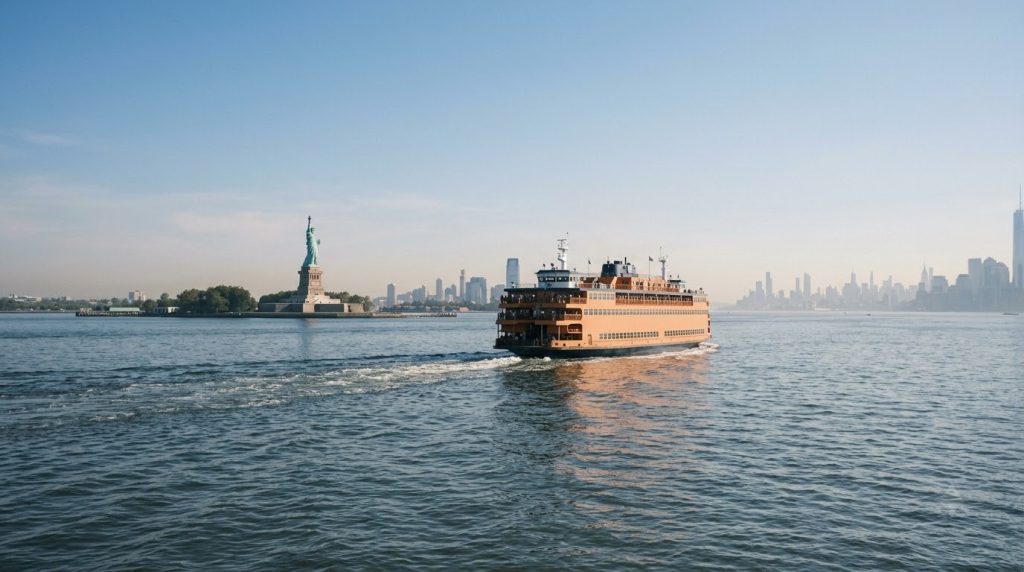
The planning work you put in before you arrive pays back immediately: knowing which neighborhoods suit your style, booking the Statue of Liberty ferry before the slots fill up, loading a MetroCard the moment you clear customs. None of it is complicated, and every hour in the city rewards preparation with something you’d have otherwise missed.
For accommodations, search check live hotel prices for real-time availability and rates with free cancellation. If you’re adding a car for day trips outside the city, compare rates on our live travel map.
And if you want to skip the airport SIM card line and connect the moment your plane lands, an Airalo eSIM for the US starts at around $4.50 for 1GB — worth it for the immediate Google Maps access alone.
Start with the free things: the High Line, the Staten Island Ferry, a walk over the Brooklyn Bridge at dawn before the crowds arrive. Let the rest build from there. NYC gives back in proportion to how you engage with it.
/new-york-city-travel-tips/ /usa-travel-guide/