Maldives vs Bali 2026: Which Destination Is Better for You?
Disclosure: Some links in this guide are affiliate links. If you book or buy through them, we may earn a small commission at no extra cost to you — it helps keep our guides free.
You want world-class snorkeling and an overwater bungalow and don't mind the price.
See hotels in Maldives →You want culture, nightlife and a two-week holiday under $2,500.
See hotels in Bali →- The average overwater bungalow in the Maldives costs $450–$900/night in 2026, vs $80–$250/night for a villa in Bali (Booking.com, 2026)
- Bali welcomed 6.3 million international visitors in 2025, while the Maldives received 1.89 million — half the crowds (Bali Tourism Board; Maldives Tourism Ministry, 2025)
- The Maldives has 99% coral reef coverage in its top dive sites; Bali’s Liberty Wreck in Tulamben ranks among Southeast Asia’s top 10 dives (PADI, 2025)
- A 7-night Bali trip costs an average of $1,800–$2,600 per person all-in vs $3,500–$7,000 for the Maldives (Travelperk Cost Index, 2025)
- Bali has 1,000+ temples and a UNESCO-listed cultural landscape; the Maldives has none — it’s pure ocean (UNESCO, 2012)

Choose Bali if you want culture, nightlife, and a full two-week holiday under $2,500 per person. Choose the Maldives if you want world-class snorkeling, an overwater bungalow, and don’t mind spending $400–$800 per night to get it. We’ve broken down both destinations across cost, beaches, activities, food, and logistics so you can stop debating and start booking. Those comparing neighborhoods and activities tend to open this where to stay in the Maldives before picking a neighborhood that matches the planned pace of the trip.
Quick answer: Comparing Maldives and Bali? Open live hotel prices in each to weigh cost against location:
Cost Comparison: Maldives vs Bali in 2026
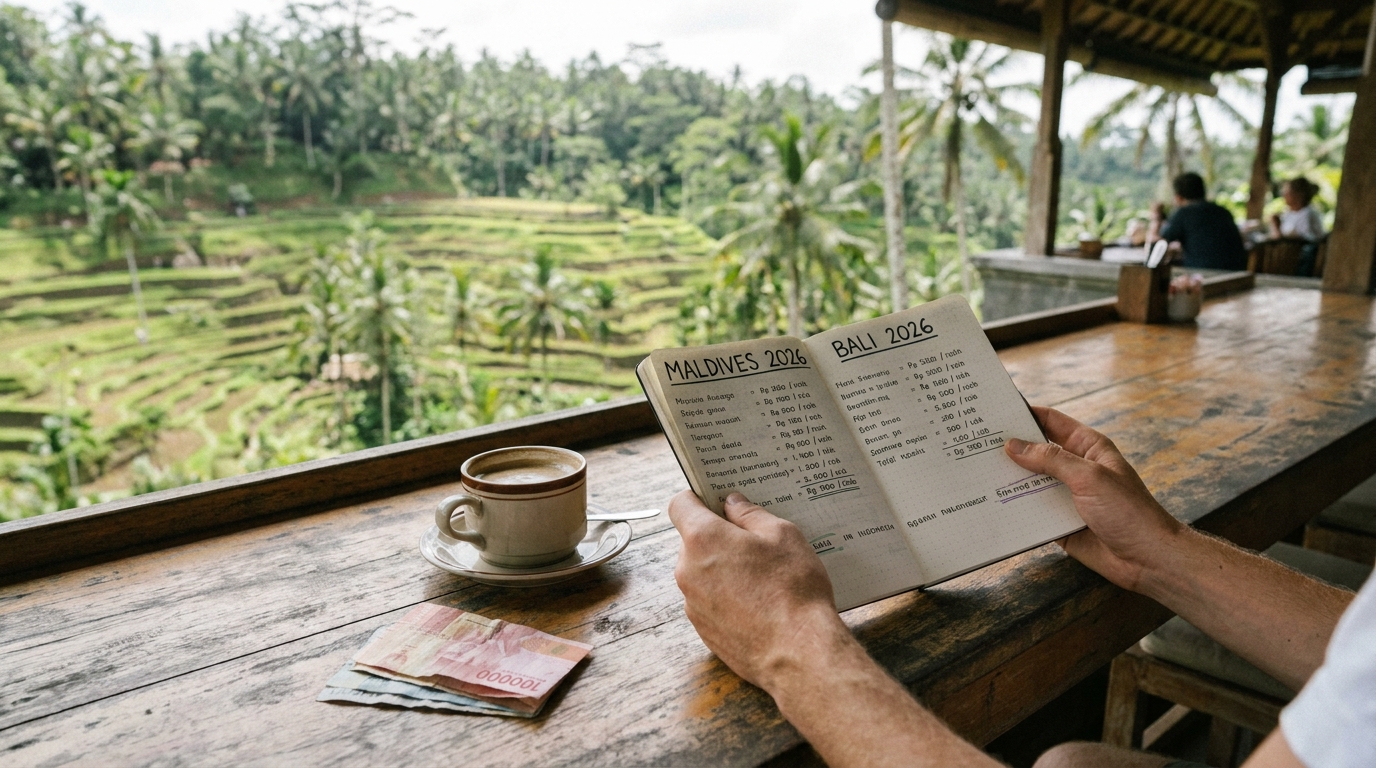
Bali wins on price by a wide margin, and the gap has widened since 2024. A comfortable mid-range week in Bali — flights from the US included — lands at $2,000–$3,500 per person. The Maldives routinely doubles that figure before you factor in the seaplane transfer from Male, which alone costs $300–$600 round-trip per person.
| Expense | Bali (7 nights) | Maldives (7 nights) |
|---|---|---|
| Mid-range hotel/villa | $560–$1,750 | $3,150–$6,300 |
| Flights from New York | $700–$1,100 | $900–$1,400 |
| Seaplane/speedboat transfer | N/A | $300–$600 |
| Daily food (per person) | $20–$60 | $80–$200 (resort-only) |
| Activities (7 days) | $150–$400 | $200–$600 |
| Total estimate (per person) | $1,800–$2,600 | $3,500–$7,000+ |
Bali’s local warungs serve full meals for $3–$6. The Maldives requires you to eat almost entirely at your resort, where a dinner for two averages $120–$180. Use check live hotel prices to compare all-inclusive Maldives packages against Bali villa rates — you’ll immediately see where the value gap sits.
Beaches: Which Destination Has Better Shores?
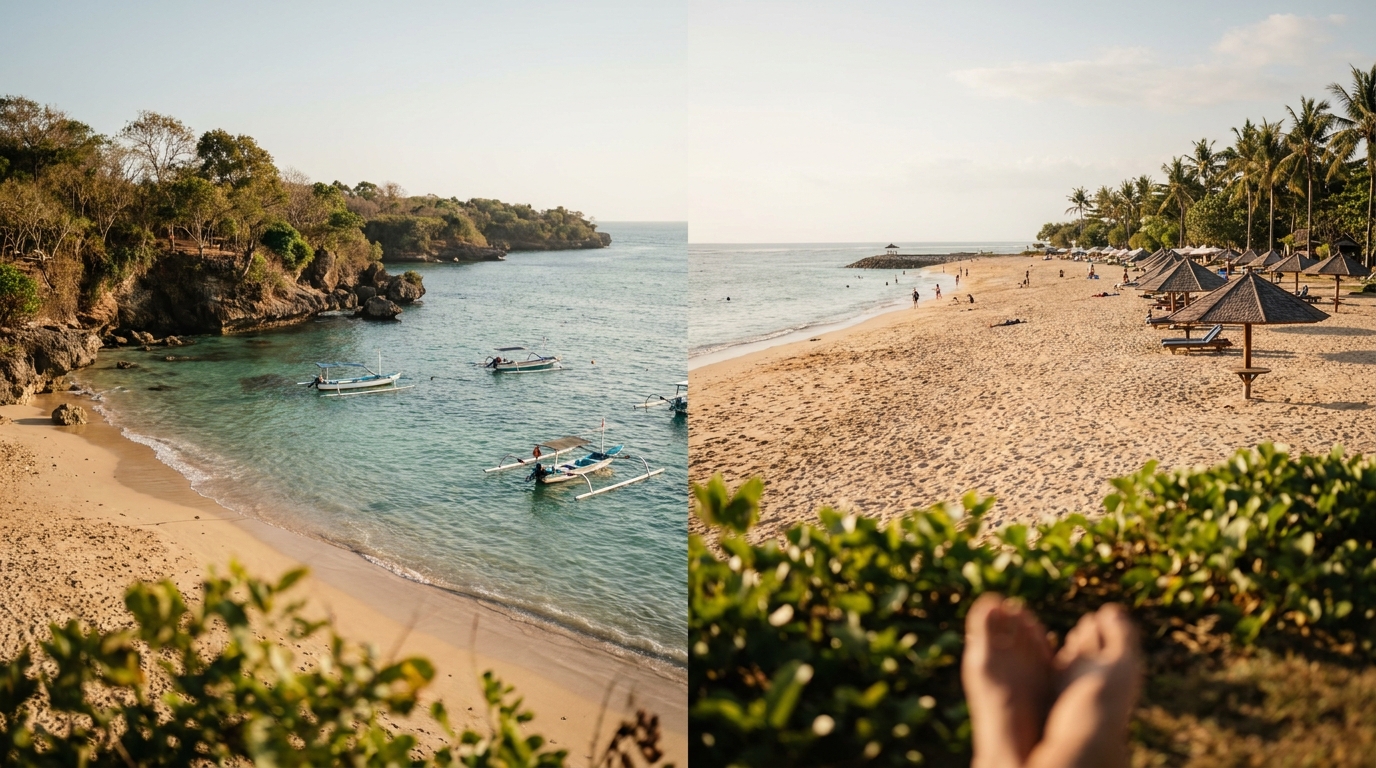
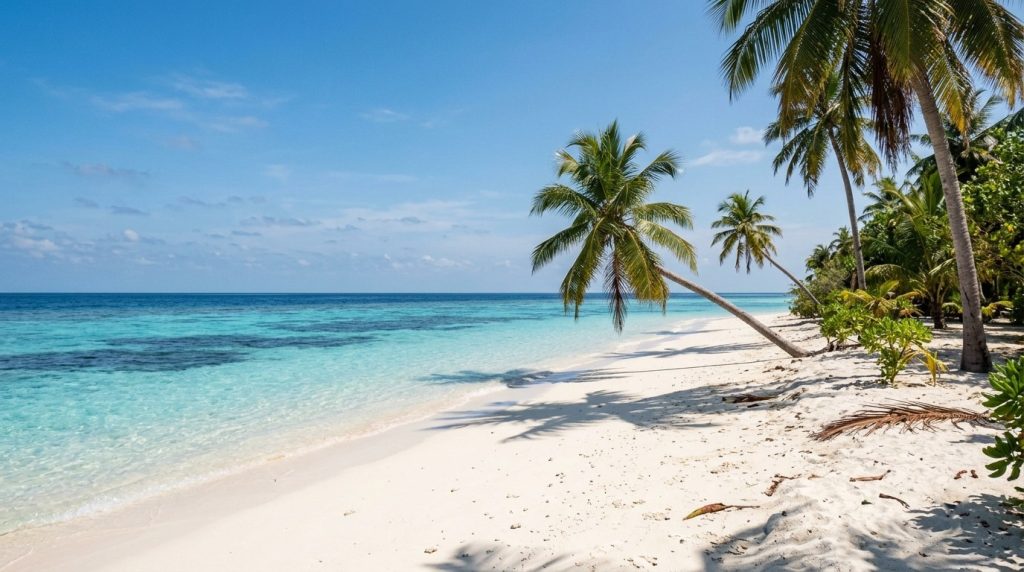
The Maldives delivers the cleaner beach experience — powder-white sand, zero seaweed, and water visibility exceeding 30 meters. Bali’s beaches are more varied: Seminyak and Kuta have surf and sunset bars, Nusa Dua is groomed and calm, but the southwest coast can see strong currents and occasional rubbish wash-up during wet season.
For pure beach aesthetics, the Maldives is unmatched. Every resort sits on its own private sandbank; you rarely share it with more than 20 other guests. Bali’s Nusa Penida (accessible via GetYourGuide fast-boat day trips at $35–$50 round-trip) rivals Maldivian scenery at a fraction of the cost — Kelingking Beach in particular stops most photographers cold.
If you’re after surfing, Bali wins outright. Uluwatu and Padang Padang host world-class breaks from April to October; the Maldives has surf, but it’s scattered across outer atolls that require liveaboard access. For family swimming, the Maldives’ lagoons are safer and calmer than Bali’s west-coast beaches.
Snorkeling and Diving: A Clear Winner
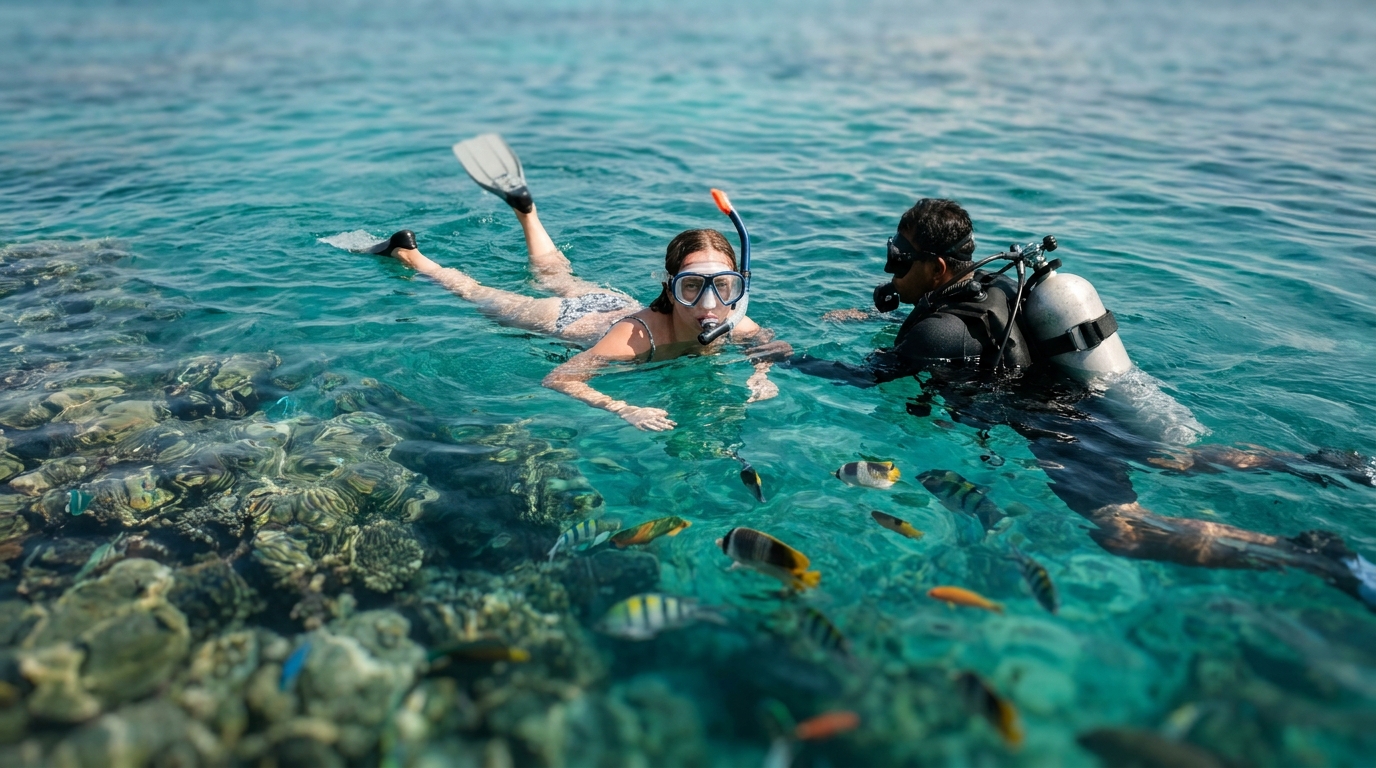
The Maldives edges ahead for snorkeling and diving, but Bali competes harder than most travelers expect. Maldivian house reefs are steps from your bungalow; manta ray, whale shark, and nurse shark encounters are routine at sites like Hanifaru Bay (UNESCO Biosphere Reserve) and Maaya Thila. Visibility runs 20–40 meters year-round.
Bali’s Liberty Wreck at Tulamben is one of Asia’s most-photographed dive sites — a 120-meter WWII cargo ship at 3–29 meters depth, accessible from shore. Menjangan Island in northwest Bali offers walls dropping 60 meters with soft coral that rivals anything in the Coral Triangle. A PADI Open Water course in Bali runs $350–$450; the same course at a Maldivian resort costs $550–$700.
For snorkelers who don’t dive, the Maldives wins: you can see reef sharks and sea turtles from your overwater bungalow steps. In Bali, you’ll need to travel to Nusa Lembongan or Amed for comparable encounters. Book Bali dive day trips through GetYourGuide — Liberty Wreck packages from $65 including gear.
Culture and Activities Beyond the Beach

Bali wins this category comprehensively — the Maldives has almost no cultural tourism. Bali’s Hindu-Balinese culture is living, visible, and accessible: 20,000 temples, daily offerings, traditional dance performances at Uluwatu (tickets ~$15 via GetYourGuide), cooking classes from $35, rice terrace treks in Tegallalang, and a sophisticated arts scene in Ubud. The island genuinely rewards two weeks of exploration.
The Maldives is, by design, a resort-island destination. Most guests leave their island once — for a dolphin cruise or a snorkeling excursion. The capital Male is accessible from some northern atolls and worth a half-day for the Friday Mosque and local market, but it’s not a cultural draw.
Adventure travelers should note Bali’s range: Mount Batur sunrise trek ($40–$65), white-water rafting the Ayung River ($35–$50), cycling tours through rice paddies, and surfing lessons at Kuta ($25/session). The Maldives offers water sports — jet skis, parasailing, kayaking — but they’re all resort-priced. For land-based adventure and cultural depth, Bali offers significantly more.
Food and Dining
Bali’s food scene is one of Southeast Asia’s most diverse, and it’s cheap. Nasi goreng, babi guling (suckling pig), and fresh seafood at Jimbaran Bay ($15–$25 for a full grilled seafood spread) compete with genuinely excellent international restaurants in Seminyak and Canggu. Budget travelers eat extremely well on $25–$40/day.
The Maldives is a full-board destination. Most overwater resorts are private islands with no outside dining options; you eat where you stay. The quality is high — Japanese, Mediterranean, and Maldivian seafood restaurants are common at five-star properties — but a dinner for two rarely comes in under $100.
Some budget guesthouses on local islands (Maafushi, Dhigurah) have restaurants where a meal runs $15–$25, but this experience is a world apart from the overwater-resort Maldives most travelers picture.
If food matters to your trip, Bali delivers more variety, more value, and more local authenticity.
Find your Bali hotel on the map
Live prices from Booking & Airbnb — tap a pin to compare stays around Seminyak and Ubud and beyond.
Connectivity, Internet, and Staying Connected
Both destinations are serviceable for remote workers in 2026, but Bali is significantly better set up for it. Canggu and Seminyak have 100+ co-working cafes with fiber connections. An Airalo Bali eSIM gives you 10 GB for $9.50 — fast enough for video calls throughout the island. Bali’s 4G/5G coverage is reliable across Seminyak, Ubud, and Kuta; more patchy in the north.
The Maldives varies by resort. Budget local-island guesthouses on Maafushi have decent 4G coverage. Luxury overwater resorts often charge $15–$30/day for satellite Wi-Fi that performs like 2015 broadband. If you need reliable internet, specify in your resort search. An Airalo Maldives eSIM costs $13 for 3 GB — useful for Male and local islands but redundant on most private resort islands where resort Wi-Fi is the only option.
For working while traveling, Bali wins. For fully disconnecting, the Maldives is unbeatable.
When to Go: Best Time to Visit Each Destination
Timing matters differently for each destination. The Maldives has two seasons: the dry northeast monsoon (November–April) with calm seas, blue skies, and peak prices, and the wet southwest monsoon (May–October) with cheaper rates, occasional rain, and still-excellent diving. March and April are ideal for whale shark encounters at South Ari Atoll; June–September are prime for manta rays at Hanifaru Bay.
Bali’s dry season runs May–October — this is peak tourist season, especially July–August when prices jump 30–50% and Ubud fills up. April, May, and September offer the best balance: dry weather, fewer crowds, and better hotel rates. November–March is Bali’s wet season — heavy afternoon rains are common, but mornings are often clear and surf is excellent on the east coast.
Avoid Bali’s Nyepi (Hindu New Year, usually March) unless you want to experience a genuine “Day of Silence” where the entire island shuts down for 24 hours — flights are cancelled, streets are empty, and resorts enforce blackouts.
For 2026, the Maldives dry season runs through April; May–October prices drop 20–35% with comparable conditions for most activities. Book via Booking.com for rate alerts.
Who Should Choose the Maldives vs Bali?
The right choice depends almost entirely on what you want from a trip. Couples celebrating a honeymoon or anniversary who want maximum privacy and the overwater-bungalow experience should choose the Maldives — it delivers that fantasy better than anywhere on earth. If budget is a concern, a Maldives trip on local islands (Maafushi base, day-trip excursions) achieves 60% of the experience at 30% of the resort price.
Families with children do better in Bali: more activities, lower food costs, kid-friendly cultural experiences, and flexible accommodation from private villas with pools. Solo travelers overwhelmingly prefer Bali for its social scene, affordable accommodation, and the ease of meeting other travelers in Canggu and Seminyak. Readers piecing together a schedule frequently reference this things to do in the Maldives before deciding which attractions are worth the time on a short visit.
First-time Asia visitors who want beach plus culture should go to Bali — you’ll leave with a richer experience and a fuller passport stamp. Return travelers who’ve done Southeast Asia and want something categorically different should book the Maldives.
| Traveler Type | Best Choice | Reason |
|---|---|---|
| Honeymooners | Maldives | Unmatched privacy + overwater bungalows |
| Budget travelers | Bali | Full week under $2,000 all-in |
| Families | Bali | More activities, lower food costs |
| Solo travelers | Bali | Social scene, co-working, flexibility |
| Divers | Maldives (slight edge) | Whale sharks, mantas, house reefs |
| Culture seekers | Bali | Temples, dance, cooking classes |
| Digital nomads | Bali | Co-working, fast internet, long-stay visas |
Frequently Asked Questions
Is the Maldives worth the money compared to Bali?
Yes — if an overwater bungalow, private beach, and resort-only seclusion match your vision of a perfect holiday. For most travelers wanting variety, culture, and value, Bali delivers more per dollar. The Maldives earns its price tag for couples seeking maximum luxury and privacy; Bali earns it for everyone else.
Can I do the Maldives on a budget?
Yes, with planning. Local-island guesthouses on Maafushi or Dhigurah cost $80–$150/night and are 30 minutes by speedboat from Male. Day trips to snorkeling sites, dolphin cruises, and sandbank picnics run $30–$60 each. You’ll skip the overwater villa but still access excellent reefs and Maldivian scenery for $1,800–$2,500 per person for a week, flights included.
Which has better snorkeling — Maldives or Bali?
The Maldives wins for snorkeling, particularly for beginners. House reefs are immediately accessible, warm, and packed with marine life year-round. Bali requires travel to sites like Nusa Penida or Menjangan Island for comparable experiences. Dedicated divers will find Bali surprisingly competitive, especially for wreck diving and wall diving.
How far in advance should I book the Maldives?
Book overwater bungalows 4–6 months ahead for peak season (November–April), especially for December and February dates which sell out fastest. Budget local-island accommodation is more flexible — 6–8 weeks ahead is usually sufficient. Bali can be booked 4–8 weeks ahead for most dates, though peak July–August requires 2–3 months’ notice for popular Ubud or Seminyak properties.
Do I need a visa for Bali or the Maldives?
US, UK, and Australian passport holders get a free 30-day visa on arrival in both destinations. Bali extended its visa-on-arrival to 60 days in 2023; a Social-Cultural visa allows up to 6 months for digital nomads. The Maldives offers a 30-day tourist visa on arrival with a possible 90-day extension. No vaccinations are required for either destination, though travel insurance is strongly recommended.
Which destination is better for a honeymoon?
The Maldives wins for honeymooners who want seclusion, overwater accommodation, and a dedicated romantic experience. Bali wins for couples who want romance plus activities — private villa pools, sunset at Uluwatu, cooking classes together, and Ubud spa treatments. Budget-conscious couples can have an exceptional honeymoon in Bali for $3,000–$4,000 total that would cost $10,000+ in the Maldives.
What’s the flight time from the US to each destination?
New York to Male (Maldives) runs approximately 17–20 hours with one stop (usually Dubai, Doha, or Colombo). New York to Denpasar, Bali runs 20–24 hours with one stop (usually Tokyo, Singapore, or Hong Kong). Both require long-haul flights from North America; Bali is marginally further but has more flight options and often cheaper fares. Sydney to Bali is a direct 6-hour flight; Sydney to Male is 10–12 hours.
The Verdict: Maldives vs Bali in 2026
Bali is the better destination for most travelers in 2026 — it’s more affordable, more culturally rich, more flexible, and more rewarding across a broader range of travel styles. The Maldives is better for one specific thing: the overwater-bungalow, private-island, turquoise-water fantasy that no other destination on earth replicates at the same quality level.
Our recommendation: if you’re deciding between the two and budget is any kind of consideration, go to Bali now and save the Maldives for a dedicated splurge trip — ideally a honeymoon or milestone anniversary. If money isn’t a constraint and you want the most photographed resort experience on the planet, book the Maldives before high season fills up.
Ready to book? Compare Maldives resort rates on Check live hotel prices or search Bali villas with a private pool for your dates. For Bali day trips and tours, GetYourGuide offers transparent pricing and free cancellation on most bookings. Don’t forget to grab an Airalo eSIM before you fly — it’s the cheapest way to stay connected in either destination.
See also: maldives travel guide | bali travel guide