
Disclosure: Some links in this guide are affiliate links. If you book or buy through them, we may earn a small commission at no extra cost to you — it helps keep our guides free.
Table of Contents
Check our complete Maldives travel guide for more tips.
The Maldives draws around 1.9 million visitors annually (Maldives Tourism Ministry, 2025), but not every month delivers the same experience. Arrive in December and you get crystalline skies and calm seas. Arrive in July and you might spend three days watching rain from your overwater bungalow. Getting your timing right is genuinely the difference between a dream trip and a disappointing one.
This guide breaks down every month so you can match your travel dates to your budget, interests, and tolerance for cloud cover. Whether you’re chasing whale sharks, hunting for bioluminescent beaches, or simply hunting for the lowest resort prices on the planet, there’s a Maldives window that fits.
Key Takeaways
– Dry season (November to April) brings sunshine, calm seas, and 30+ metre underwater visibility, but prices peak in December and January.
– Wet season (May to October) cuts resort rates by 20-40% and is the best window for whale shark sightings near South Ari Atoll.
– Bioluminescent plankton beaches are a wet-season phenomenon, most reliably seen June through August.
– Water temperature stays between 27-30 degrees Celsius year-round, making every month viable for snorkeling.
– January and February are the statistical sweet spot: fewest rain days, best visibility, shoulder prices compared to the Christmas peak.
What Is the Best Time to Visit Maldives?
The best time to visit the Maldives is November through April, the dry northeast monsoon season, when rainfall drops below 60 mm per month and underwater visibility regularly exceeds 30 metres (Maldives Meteorological Service, 2025). January and February are the statistical peak of this window, combining fewer than five rain days per month with water temperatures of 27-29 degrees Celsius. If your travel dates are flexible, aim for late January to mid-March for the best balance of price and conditions.
That said, “wet season” in the Maldives is nothing like monsoon season in mainland Asia. Rain typically arrives as short afternoon squalls, not all-day downpours. Many travellers visit between May and October specifically to save 20-40% on overwater bungalows, and they still get plenty of blue-sky mornings.
For broader Asia trip planning, see /category/asia/ Asia travel tips
Dry Season (November to April): Peak Conditions Explained
The dry northeast monsoon runs from November through April and delivers the Maldives that most people picture. Average rainfall across this period is 30-80 mm per month, compared to 150-250 mm during the wet months (Maldives Meteorological Service, 2025). Winds are light and consistent, seas are calm, and the sun rises without much cloud cover most days.
What to Expect Each Dry-Season Month
November: Transition month. Seas calm down quickly after October. Rain tapers off by mid-month. Prices are still moderate before Christmas rush arrives.
December: Full peak season kicks in. Christmas and New Year weeks see resort rates climb 50-100% above average. Conditions are excellent, but book six months ahead for overwater villas.
January: Statistically the driest month, averaging just 38 mm of rain and 4 rain days. Water visibility tops out at 30-40 metres in North Male Atoll. Check live hotel prices in Maldives to compare January rates before they fill.
February: Peak diving season. The northeast swell brings nutrient-rich water to the eastern atolls, attracting manta rays to cleaning stations. Humidity sits around 70-75%, which feels comfortable.
March: Last full month of ideal conditions. Prices start easing slightly as school holidays end in key markets. Visibility remains excellent.
April: End of the dry season. Some years see early southwest monsoon clouds by late April. Good deals appear as travellers assume conditions are deteriorating (they often aren’t).
Wet Season (May to October): When Budget Travellers Win
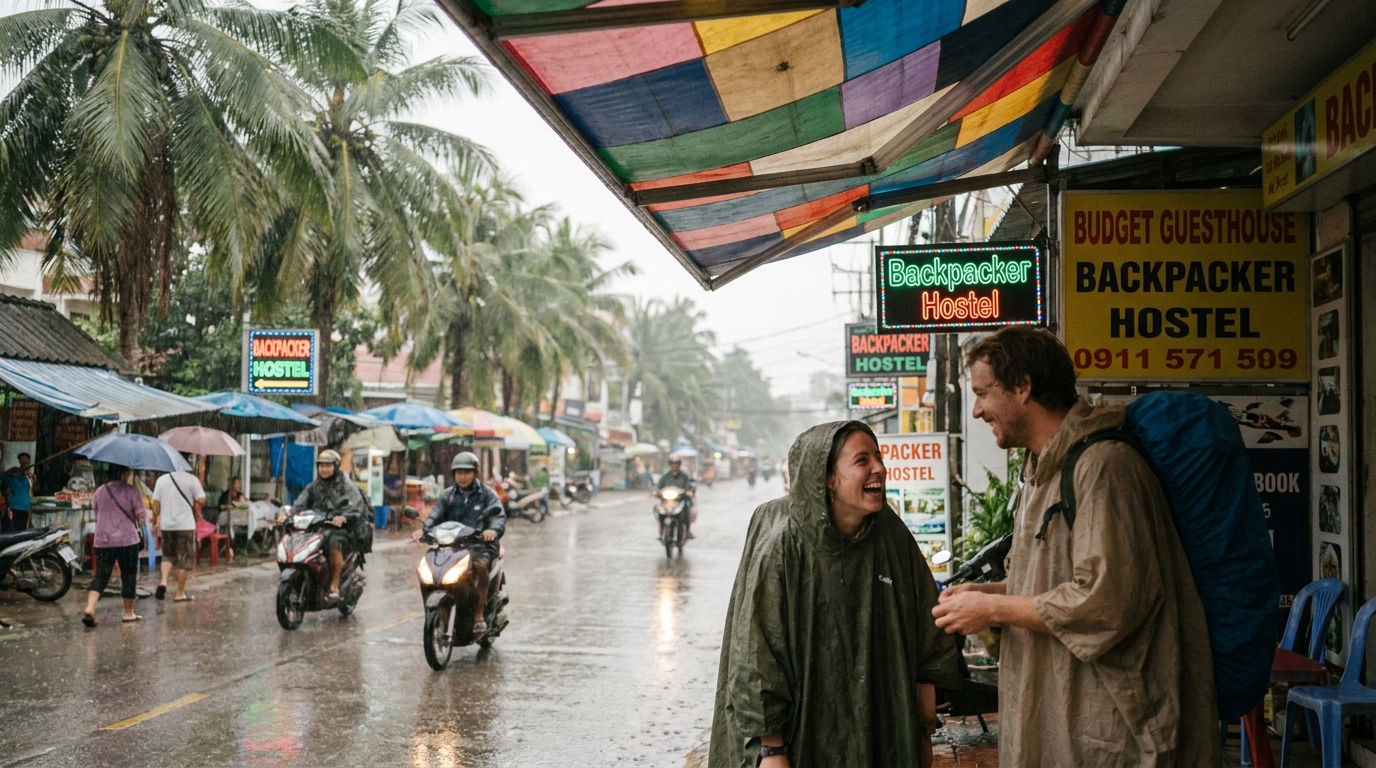
The wet southwest monsoon delivers the Maldives’s higher-rainfall months, but calling it “wet season” overstates the disruption. Average rainfall peaks at around 250 mm in June and July (Maldives Meteorological Service, 2025), but most precipitation falls as 1-3 hour afternoon squalls. Mornings are frequently sunny. Resort occupancy drops by 20-30%, and that translates directly into lower rates, sometimes dramatically so.
Check live hotel prices in Maldives and compare the same overwater bungalow in July versus January. The difference is often $150-300 per night.
What to Expect Each Wet-Season Month
May: The transition into wet season. Winds pick up on the western atolls. Surf spots on the south and west reefs start working well, making May popular with surfers.
June: Rain increases but whale shark season hits its peak near South Ari Atoll. Water temperature is 29-30 degrees Celsius, warm and comfortable.
July: Peak wet season, highest rainfall. Also the most reliable month for bioluminescent beaches (see the dedicated section below). The western ocean swell generates Maldives’s best surf.
August: Rain eases slightly compared to July. Whale sharks still present at South Ari. Fewer crowds than December-January, decent resort deals still available.
September: Late wet season. Seas start calming. Hammerhead sharks aggregate near Rasdhoo Atoll from September onward. A good under-the-radar month.
October: Transition back toward dry season. Some years October is already calm and clear. Prices remain low while conditions improve week by week. Low-risk timing for budget-conscious travellers.
Month-by-Month Quick Reference

| Month | Avg Rainfall (mm) | Avg Temp (C) | Water Visibility | Crowd Level | Best For |
|---|---|---|---|---|---|
| January | 38 | 29 | 30-40 m | High | Diving, snorkeling, dry-season beaches |
| February | 45 | 29 | 30-40 m | High | Manta rays, diving |
| March | 70 | 30 | 25-35 m | Medium-High | Value peak-season rates |
| April | 100 | 30 | 20-30 m | Medium | Early deals, still good conditions |
| May | 150 | 29 | 15-25 m | Low-Medium | Surfing, lower prices |
| June | 220 | 29 | 10-20 m | Low | Whale sharks, budget resorts |
| July | 250 | 29 | 10-15 m | Low | Bioluminescence, surfing, value |
| August | 220 | 29 | 10-20 m | Low | Whale sharks, budget overwater villas |
| September | 180 | 29 | 15-20 m | Low | Hammerheads, off-peak deals |
| October | 130 | 29 | 20-25 m | Low-Medium | Improving conditions, low prices |
| November | 75 | 29 | 25-35 m | Medium-High | Pre-Christmas value, good conditions |
| December | 55 | 29 | 30-40 m | Very High | Peak experience, Christmas/NYE |
Source: Maldives Meteorological Service, 2025. Visibility ranges are approximate and vary by atoll and depth.
When Is the Best Time for Diving and Snorkeling?
January and February offer the most reliable diving conditions in the Maldives, with visibility regularly reaching 30-40 metres and calm seas on both the eastern and western atolls (PADI Dive Guides, 2025). Water temperature holds at 27-29 degrees Celsius throughout the year, so a 3 mm wetsuit or rash guard is usually sufficient regardless of when you visit.
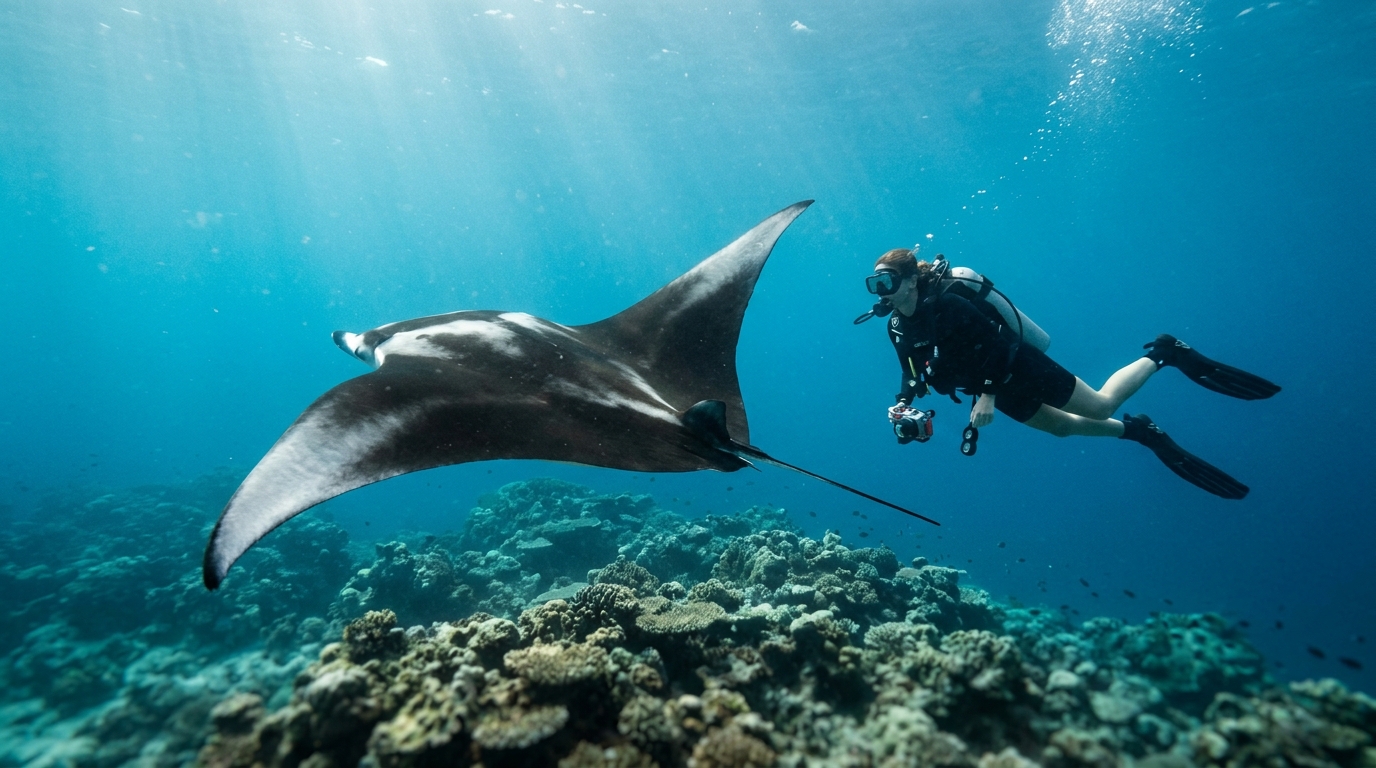
Manta ray season peaks February through April, when filter-feeding mantas gather at cleaning stations in North and South Male Atoll. Hammerhead aggregations at Rasdhoo Atoll are most reliable from September to November. Visibility does drop during the wet season to 10-20 metres in some atolls, but many house reefs remain clear because they’re sheltered from the dominant swell direction.
Find your Maldives hotel on the map
Live prices from Booking & Airbnb — tap a pin to compare stays around Male and Maafushi and beyond.
When Is the Best Time to See Whale Sharks?
South Ari Atoll is one of the few places on earth where whale sharks are present year-round, but sightings peak from May through November when plankton blooms are richest (Maldives Whale Shark Research Programme, 2025). June, July, and August deliver the highest encounter rates, with some operators reporting whale shark sightings on more than 80% of trips during peak months.
The catch: this window overlaps with the wet season. You might lose visibility (often 10-20 metres versus the dry season’s 30+ metres), but whale shark encounters make up for it. If seeing a whale shark is your primary reason for visiting, book a liveaboard or day tour from Dhigurah or Dhangethi in July or August.
The Bioluminescence Secret: Why the Wet Season Has a Hidden Advantage
[PERSONAL EXPERIENCE]
Most travel blogs push the Maldives dry season without mentioning one of its most spectacular phenomena, which peaks in the opposite window. Bioluminescent plankton (Noctiluca scintillans) lights up the shallows at night most reliably between June and September, when warmer water temperatures and higher plankton concentrations combine to produce the electric-blue shoreline effect (Marine Biological Association, 2024).
The best spots for bioluminescence are shallow, sandy beaches away from bright resort lighting. Vaadhoo Island is the most famous, but it’s become crowded. Less-visited guesthouses on Raa Atoll and Laamu Atoll offer similar conditions with fewer camera phones in the water. A wet-season trip built around a mid-range guesthouse, whale shark snorkeling, and bioluminescence walks can cost 40-50% less than a comparable dry-season overwater bungalow stay, and deliver experiences that photo-focused December visitors simply cannot have.
Check live hotel prices in Maldives
Is There a Cyclone Risk in the Maldives?
The Maldives sits outside the main cyclone belt, making it one of the safer tropical destinations in the Indian Ocean. The archipelago is positioned south of the track that most Bay of Bengal cyclones follow, and direct hits are historically rare (World Meteorological Organization, 2024). The southwest monsoon from May to October does bring stronger winds and swells, but these rarely develop into storm conditions at resort level.
The practical risk during the wet season is not cyclones but disrupted speedboat transfers and cancelled dive trips during heavy squall days. Budget an extra night’s flexibility into your itinerary during June-September, and you’ll handle weather delays without stress.
Best Time to Visit Maldives for Budget Travellers
May, September, and October are the best months for budget Maldives trips. Resort occupancy falls to its lowest during this window, and operators are motivated to fill rooms. Rates for overwater bungalows that cost $600-900 per night in January can drop to $350-550 in September at the same property, a saving of 30-40% (compare current rates on our live hotel map, 2026).
Budget-conscious travellers should also consider local guesthouses on inhabited islands like Maafushi, Rasdhoo, or Thoddoo. These offer $60-120 per night accommodation with direct beach access, and they’re viable in any month. Combine a guesthouse base with day trip snorkeling or a budget liveaboard, and the Maldives becomes far more accessible than the luxury resorts suggest.
Pair your trip with an Airalo eSIM for affordable data without airport SIM card queues. The Airalo Asia eSIM covers connectivity across the Maldives for around $5-12 for a week’s data.
Best Time to Visit Maldives for Families
December and February are the two most family-friendly months, balancing school holiday availability with reliable weather. December lines up with Christmas holidays in the US, UK, and Australia, making it the busiest family month. February half-term (UK) and Presidents’ Day (US) offer shorter but calmer windows with slightly lower prices than Christmas.
Families with young children benefit most from the dry season’s calm seas, because boat transfers between atolls are smoother and sandbanks are more accessible. Water visibility in January-March makes snorkeling a reliable activity even for beginners and older children, with no wetsuit required at 27-29 degrees Celsius year-round.
Maldives Weather by Season: A Honest Summary
The Maldives is not a destination where bad weather ruins a trip, it’s a destination where weather determines what your trip focuses on. Dry season (November-April) is best for underwater visibility, beach days, and family snorkeling. Wet season (May-October) is best for whale sharks, bioluminescence, surfing, and saving money.
[UNIQUE INSIGHT]
One pattern that surprises travellers: the Maldives’s eastern and western atolls experience different conditions simultaneously during monsoon transitions. When the southwest monsoon is active, the eastern atolls (like Laamu and Addu) often stay calmer than the western atolls (like Baa and South Male). Choosing an eastern atoll resort in June-July can mean noticeably better beach conditions than the weather averages suggest.
Frequently Asked Questions
What is the best month to visit the Maldives?
January is statistically the best single month, with an average of just 38 mm of rainfall, 4 rain days, and water visibility reaching 30-40 metres (Maldives Meteorological Service, 2025). Prices are high but below the Christmas peak. February runs a close second, adding excellent manta ray sightings to similar weather conditions.
Is the Maldives worth visiting in the rainy season?
Yes, especially for budget travellers and wildlife seekers. Wet season (May-October) delivers whale shark encounters, bioluminescent beaches, and resort rates 20-40% lower than peak season. Rain usually falls as short afternoon squalls, leaving mornings and evenings calm. Many travellers find the wet-season Maldives more memorable than the more expensive dry-season version.
When is the cheapest time to visit the Maldives?
September and October are typically the cheapest months. Resort occupancy is at its annual low, and overwater bungalows that cost $700+ per night in January can drop to $350-500. Combining a September visit with a local guesthouse base further reduces costs. Check live hotel prices to compare properties in your preferred atoll.
Can you see whale sharks in the Maldives year-round?
Whale sharks are present year-round at South Ari Atoll, but sightings peak May through November when plankton blooms are richest. June, July, and August offer the highest encounter rates (Maldives Whale Shark Research Programme, 2025).
What should I pack for the Maldives wet season?
Pack a lightweight waterproof jacket or packable rain jacket for afternoon squalls. A rash guard doubles as sun and jellyfish protection. Water shoes are useful for reef walking. A dry bag protects electronics during boat transfers. The heat and humidity stay constant (29-30 degrees Celsius) throughout the wet season, so light, quick-dry clothing works for everything else.
Final Thoughts
The best time to visit the Maldives depends entirely on what you want from the trip. Dry season (November-April) is the classic choice: brilliant visibility, calm seas, and the classic postcard experience. January and February hit the peak of these conditions without the Christmas price surge. Wet season (May-October) rewards flexible travellers with whale sharks, bioluminescence, and prices that make overwater bungalows feel achievable.
Most visitors never discover that the wet season has its own magic. The bioluminescent beaches alone are worth scheduling a June or July visit, and the 30-40% resort discount makes a week in a luxury villa feel like a reasonable splurge rather than a once-in-a-lifetime extravagance.
Plan your timing, book your accommodation early for peak months via Booking.com, and the Maldives will deliver regardless of when you arrive.
For more Asia travel tips and destination guides, explore the rest of our articles on traveltipnow.com.