Best Day Trips from Porto (2026): Where to Go by Train
Disclosure: Some links in this guide are affiliate links. If you book or buy through them, we may earn a small commission at no extra cost to you — it helps keep our guides free.
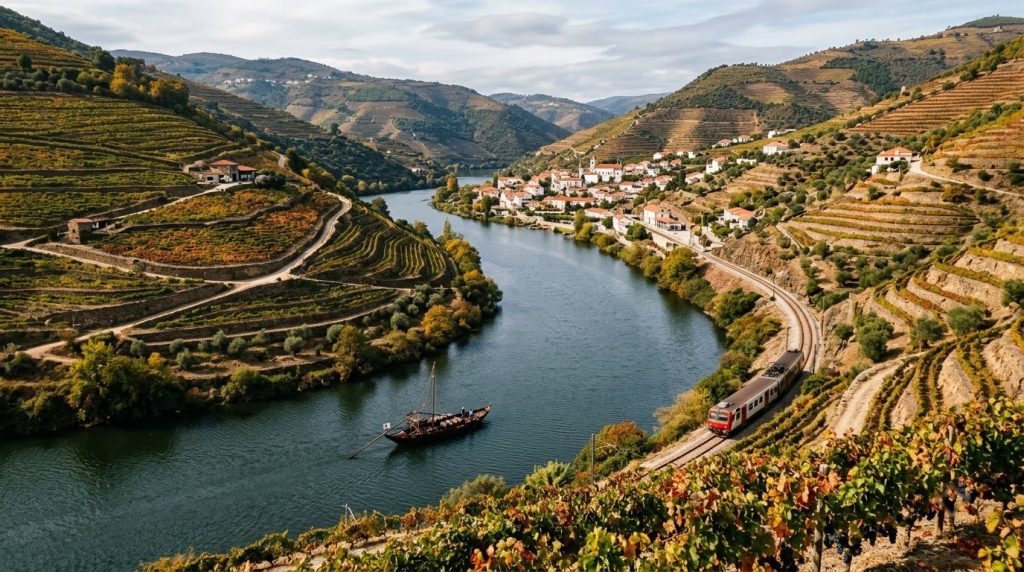
Porto sits within 90 minutes of six worthwhile train-line day trips, and the best one, the Douro Valley, is a 2-hour ride away for USD 14 (EUR 12), not a USD 128 (EUR 111) guided bus tour.
Two stations, São Bento downtown and Campanhã on the edge of town, put Braga, Guimarães, Aveiro, Coimbra, Viana do Castelo and the Douro line within reach on trains that cost less than a taxi across the city. Most guides list 8 to 12 options without saying which ones earn a full day and which work better as a two-hour detour.
This guide ranks each trip by actual cost and travel time, with the Douro Valley given the most space since it’s what most visitors mean by “day trips from Porto.” If you haven’t settled on where to stay, our porto travel guide covers neighborhoods first.
And if Porto is not locked in yet, our Porto or Lisbon breakdown shows why Porto suits 2 to 3 days built around port wine and the Douro.
| Day trip | Travel time (one-way) | Cost (one-way) | Best for |
|---|---|---|---|
| Douro Valley (Pinhão) | 2h20 by train | USD 14 (EUR 12) train / USD 90-130 (EUR 78-113) guided tour | Terraced vineyards, wine tasting |
| Peso da Régua | 1h45-2h by train | USD 11-15 (EUR 9-13) | Douro views without the full trek to Pinhão |
| Guimarães | 1h-1h15 by train | USD 4 (EUR 3.60) | Medieval old town, birthplace of Portugal |
| Braga + Bom Jesus | 38min-1h by train | USD 4-23 (EUR 3.60-20) | Baroque churches, staircase sanctuary |
| Aveiro + Costa Nova | 1h15 train + 40min bus | USD 5 (EUR 4) train + USD 3 (EUR 2.60) bus | Canals, striped beach houses |
| Coimbra | 1h-1h20 by train | USD 12-17 (EUR 10-15) | University city, river views |
| Viana do Castelo | 1h14-1h44 by train | USD 10-22 (EUR 9-19) | Coastal town, hilltop basilica |
| Amarante | 50min-1h by bus | USD 4-9 (EUR 3.50-8) | Riverside bridge, pastel shopfronts |
The Douro Valley is the day trip worth building your day around
The Douro Valley is why most people search for day trips from Porto, and it rewards the extra planning more than anything else on this list. Three ways to get there exist, and they’re not interchangeable.
The train to Pinhão on the Linha do Douro hugs the river past terraced vineyards, departs São Bento, takes about 2 hours 20 minutes, and costs around USD 14 (EUR 12) one-way on an Inter-Regional service — only two departures a day, so check the return time first.
A guided day tour, typically USD 90 to 130 (EUR 78-113) with a river cruise, two winery stops, and lunch, removes the scheduling risk and reaches vineyards a solo train trip can’t.
Driving gives the most flexibility but leaves one person unable to taste wine, and the N222 above Peso da Régua has switchbacks tight enough to be stressful rather than scenic on a first visit.
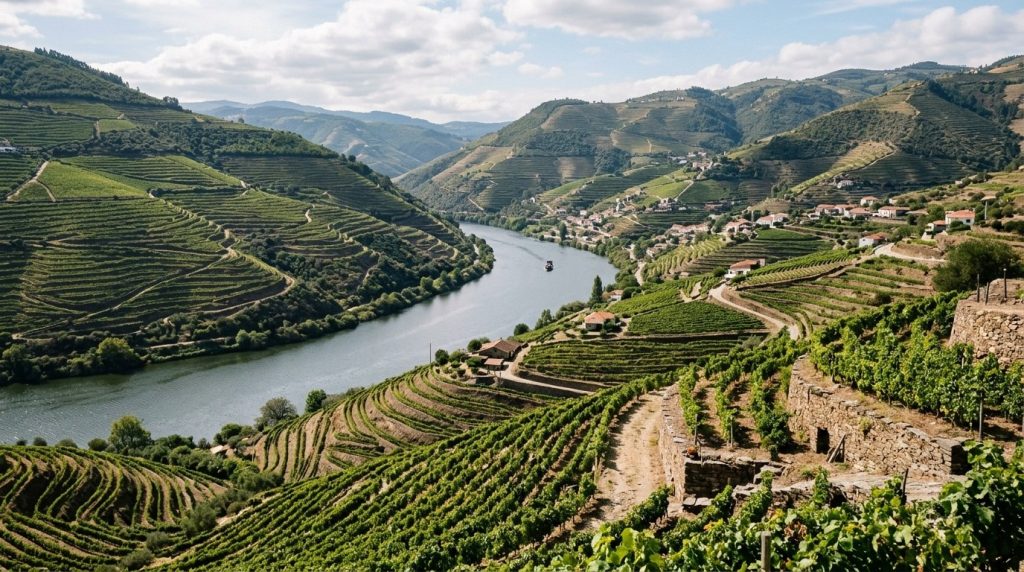
For most first-timers, the guided tour genuinely beats the train despite the cost gap: the wineries sit well outside Pinhão’s walking radius, and a train-only day mostly means admiring the valley from a platform. If you do take the train, pair it with a river cruise booked separately in Pinhão rather than trying to walk to a quinta.
Harvest season, roughly early September through early October, is when the valley looks best and tours sell out fastest; see our best time to visit Portugal guide for the fuller seasonal breakdown.
Peso da Régua: the easier alternative to Pinhão
Peso da Régua sits on the same Linha do Douro as Pinhão but about 45 minutes closer, a 1h45-2h train ride for around USD 11 to 15 (EUR 9-13). It has far more departures than the Pinhão run, so it suits a spontaneous trip, and the riverside promenade and Museu do Douro fill a legitimate half-day without booking ahead.
Vineyard views from the train nearly match Pinhão’s; what you lose is the walkable wine-tasting cluster that makes Pinhão worth the extra hour.
Lamego: baroque stairs and sparkling wine
Lamego has no train station of its own, which is why most day-trip lists quietly skip it in favor of Peso da Régua.
The nearest station is at Régua, about 12 km (7.5 miles) away, and from there a short bus or taxi covers the rest in roughly 15 to 20 minutes; a direct coach or car from Porto takes about 1 hour 20 minutes door to door on the A4 and A24, covering around 110 km (68 miles).
Driving is the easier option for pairing Lamego with a Douro Valley day rather than treating it as a standalone stop.
The main draw is the Santuário de Nossa Senhora dos Remédios, a baroque sanctuary reached by a zigzagging granite staircase of 686 steps split across nine terraced landings, each with its own fountain or statue.
Climbing it takes 20 to 30 minutes at a relaxed pace, and the view back over Lamego’s rooftops from the top justifies the effort even for visitors skipping the church itself.
Lamego is also where the Douro region’s traditional sparkling wine, espumante, is made; several cellars around town run tastings that pair naturally with a Régua or Pinhão stop earlier in the same day.
Because getting here takes more effort than the train-direct towns on this list, Lamego works best as an add-on to a Douro Valley day rather than a standalone trip from Porto.
Guimarães: the birthplace of Portugal
Guimarães is Porto’s most efficient day trip. Urban trains from Campanhã run every couple of hours, take about 1 hour to 1h15, and cost around USD 4 (EUR 3.60) one-way.
The medieval center, 10th-century Guimarães Castle, and the Palace of the Dukes of Bragança all sit within a 15-minute walk of the station, so you can see the highlights and be back for dinner. It pairs naturally with Braga if you leave before 9 a.m.; the two towns sit about 25 minutes apart by bus.
Braga and Bom Jesus do Monte
Braga is one of Portugal’s oldest cities and the fastest trip on this list: the Alfa Pendular covers it in 38 minutes for USD 18 to 23 (EUR 16-20), while the regional train takes about an hour for a flat USD 4 (EUR 3.60).
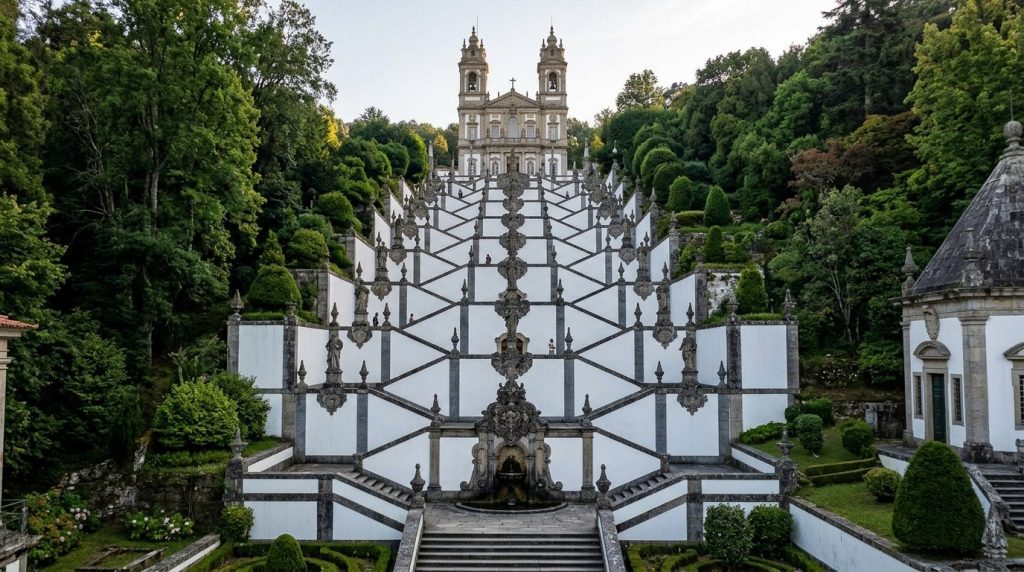
The cathedral and old town are walkable from the station, but the real draw is Bom Jesus do Monte, a Baroque sanctuary reached by a zigzagging staircase or a funicular costing about USD 3 (EUR 2.50) one-way, USD 4.60 (EUR 4) round-trip. Budget at least 3 hours total if you want to see Bom Jesus properly.
Aveiro and Costa Nova
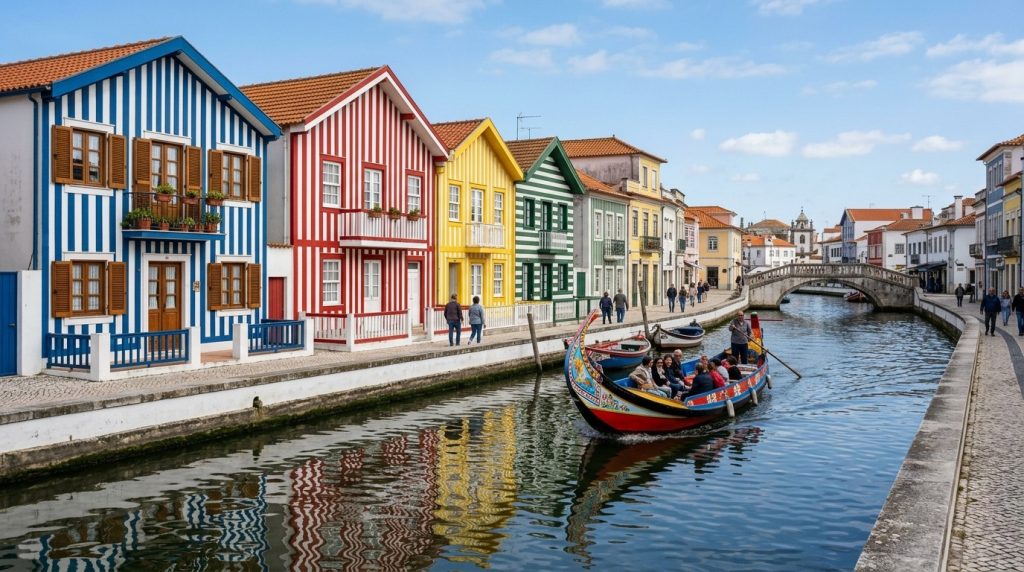
Aveiro, often called Portugal’s Venice for its canals and colorful moliceiro boats, is a 1h15 train ride from São Bento for around USD 5 (EUR 4) one-way. Most visitors extend the day with a 40-minute local bus (line 36, about USD 3 or EUR 2.60) to Costa Nova, the striped beach houses in half of Portugal’s tourism photos.
Doing both in one day is tight but doable with a morning train; just the canals gets you back by mid-afternoon.
Coimbra: worth it only if you have the full day
Coimbra, Portugal’s historic university city, sits 1 to 1h20 from Campanhã on the Intercidades line for USD 12 to 17 (EUR 10-15), or a slower regional service for closer to USD 12 (EUR 10).
It’s the furthest trip on this list that still counts as a day trip, and the UNESCO-listed University of Coimbra, the Joanina Library, and the old town stairs need 4 to 5 hours to see properly, a poor fit for a half-day itinerary.
Viana do Castelo: the coastal option
Viana do Castelo, an hour-plus north along the coast, mixes an Art Nouveau old town with a funicular up to Santuário de Santa Luzia for sweeping Atlantic views. Trains from Campanhã take 1h14 to 1h44 depending on service, fares USD 10 to 22 (EUR 9-19).
It’s a strong pick in summer for the beach at Praia do Cabedelo, less compelling the rest of the year when only the old town remains.
Amarante: charming, but thin for a full day
Amarante has no central train station, so getting there means a bus, FlixBus or Rede Expressos, from Campo 24 de Agosto, 50 minutes to an hour for USD 4 to 9 (EUR 3.50-8). The São Gonçalo bridge and riverside cafés are genuinely pretty and work well as a half-day stop, but there isn’t enough to fill a full day on its own.
The 516 Arouca bridge and Paiva Walkways: the adventure day trip
For a day trip built around effort rather than wine or old towns, the 516 Arouca pedestrian suspension bridge and the Paiva Walkways beneath it are the closest thing to an adventure option within range of Porto.
There is no direct train; getting there means driving, roughly 50 minutes to 1 hour 15 minutes from Porto depending on the route via the A32 or A1, or a long-distance coach to Arouca town followed by a local transfer, which makes this a car-friendlier trip than most others on this list.
A single ticket, priced at 12 euros for adults (10 euros for ages 10-17 and seniors), covers both the bridge and the Paiva Walkways on the same day, so there is no need to buy two separate tickets.
The bridge itself is a steel suspension crossing high above the Paiva River gorge, built to be walked rather than driven, and tickets are timed and must be booked online in advance since on-site sales are not guaranteed.
The Paiva Walkways is a linear 8 km wooden boardwalk trail along the river gorge, not a loop, and takes around 2 hours 30 minutes to walk one-way; most visitors arrange a taxi transfer back to the starting point rather than retracing the full trail on foot.
Combining both in one day is a full, legs-tired kind of day trip rather than a relaxed one, and it is the one entry on this list that rewards good shoes over a nice outfit.
Families with young children or anyone uneasy with heights should treat the bridge crossing as optional, since the walkways alone are worth the trip on their own.
Which Porto day trips to skip
Not every option on a “best day trips from Porto” list deserves a full day. Amarante is the clearest case: it’s a pleasant 2-to-3-hour stop, not a day trip, and building a whole day around it means padding with a long lunch you didn’t need.
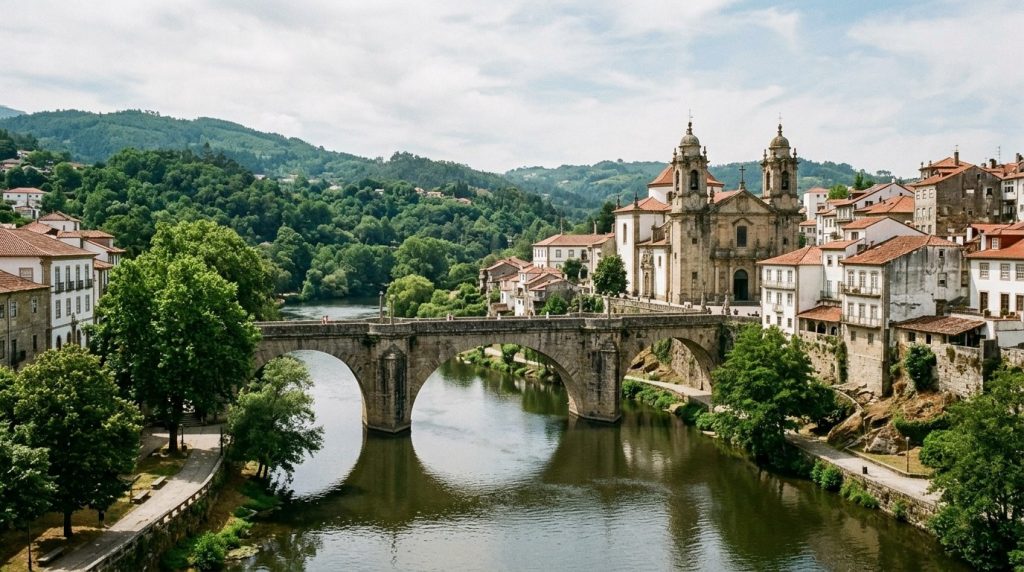
Coimbra is the opposite problem, worth skipping if you only have a half-day free, since rushing the university and library defeats the point.
And the cut-rate Douro “day tours” that spend more time on the bus than in a vineyard are the one Douro option actually worth avoiding; skip any itinerary that doesn’t include a boat or at least two winery stops, or the eight hours mostly buys a bus seat and one glass of port.
Getting there without overcomplicating it
Most of these trips run on CP (Comboios de Portugal) trains bought at the station or app, and urban-line tickets (Braga, Guimarães, Aveiro) load onto a reloadable Siga card costing about USD 0.60 (EUR 0.50) the first time.
Stations here are generally safe, though the usual crowded-platform caution applies; our is Portugal safe guide covers the basics for a first visit. Weighing a Lisbon leg too? The two cities’ day trips barely overlap — our day trips from Lisbon guide covers Sintra, Óbidos, and the south separately, so plan both before booking trains between them.
Find your Porto hotel on the map
Live prices from Booking, Airbnb and more — move the map or change dates to compare stays across Porto before you plan which day trips fit around your base.