Is New York City Safe? An Honest Visitor Guide (2026)
Disclosure: Some links in this guide are affiliate links. If you book or buy through them, we may earn a small commission at no extra cost to you — it helps keep our guides free.
- Yes, New York City is safe: 173 murders through August 31, 2026, the fewest for that stretch in recorded history.
- Major crime is down 6.2% year to date.
- Real risks are phone snatching, pickpockets, Times Square hustlers and illegal airport taxis; stay in Manhattan or brownstone Brooklyn.
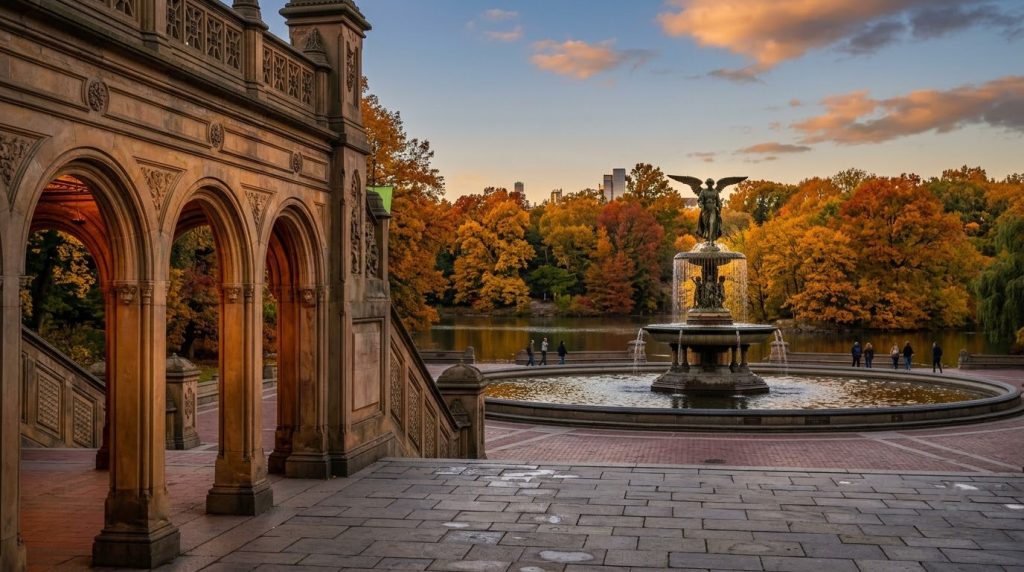
Yes, New York City is safe for most visitors: NYPD figures released on September 3, 2026 show 173 murders through August 31, the fewest for that stretch in recorded history, and major crime down 6.2% year to date.
The risks you will actually meet are phone snatching, pickpockets in crowds, pushy Times Square hustlers and illegal airport taxis, not violent crime. Stay in Manhattan or brownstone Brooklyn, ride the subway sensibly at night, and NYC is as safe as any big American city you already know.
| Risk | Reality | What to do |
|---|---|---|
| Violent crime | Record-low murders and shootings in 2026 | Stick to busy, lit streets late |
| Subway | Zero shootings, murders or rapes in August 2026 | Ride the conductor car late at night |
| Pickpockets | Most common visitor problem | Phone in a front pocket, bag zipped |
| Times Square hustlers | Photo or “free” CD, then a cash demand | Keep walking; agree a price first |
| Airport taxi hustlers | Unlicensed drivers charge up to USD 800 | Use the official taxi line only |
The honest answer: safer than its reputation
New York’s image is still shaped by 1990s movies and viral subway clips. The current numbers tell a different story. The NYPD’s August 2026 crime report counts 442 shooting incidents and 173 murders through August 31, down 9.6% and 24.1% from the same period of 2025, the lowest in recorded history.
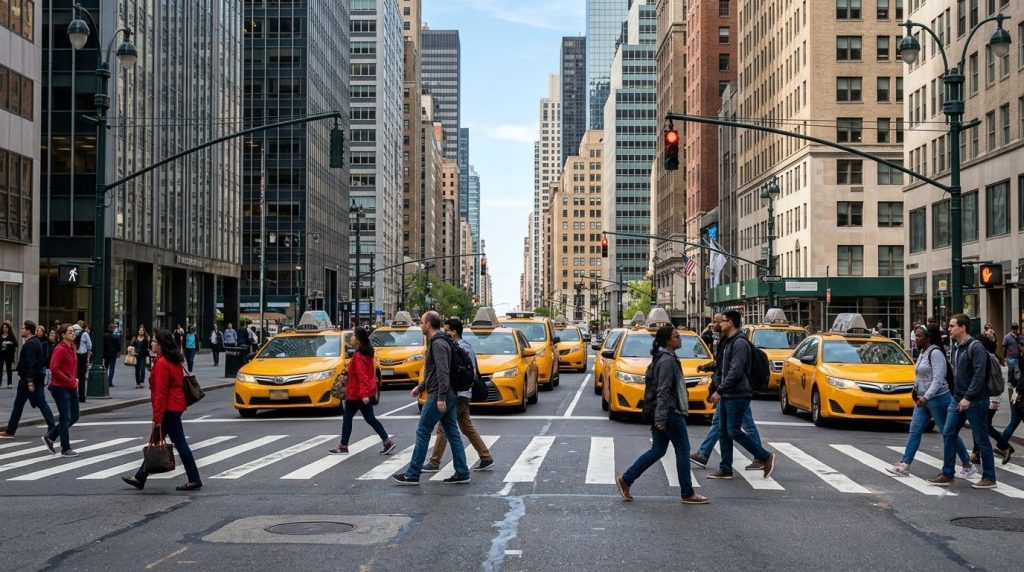
Not every category fell. NY1 reported that felony assault is up 0.7% year to date, which matches what locals notice: random, often mental-health-related incidents grab headlines even as gun violence drops. That is a reason for awareness, not for skipping the trip.
The better question is “where will I be, and when?” Almost everything on a list of the best things to do in New York City, from the Met to the High Line to the Brooklyn Bridge, sits in crowded, heavily policed areas.
Neighborhoods to stay in, and areas to avoid after dark
Comfortable bases: Midtown (convenient but noisy), the Upper West and Upper East Sides (quiet and residential), Chelsea and the West Village (walkable, lively at night), and Brooklyn’s DUMBO, Brooklyn Heights and Williamsburg.
Areas to skip at night: Mott Haven and Hunts Point in the South Bronx, Brownsville and East New York in Brooklyn. These precincts consistently post higher shooting rates than the rest of the city. None is on a normal visitor itinerary, so don’t go wandering there after dark to “see the real New York.”
Parks: Central Park is open 6am to 1am. After dark, stay on the main drives and avoid the wooded Ramble and North Woods.
The scams that actually happen in NYC
– Costumed characters in Times Square. An Elmo or Spider-Man poses with you, then demands a tip, sometimes with friends jumping in. Settle the price before the photo. – “Free” CDs and bracelet monks. Someone presses a CD or a bead bracelet on you, then asks for money.
Don’t take it; keep walking. – Airport ride solicitors. JFK’s official taxi page says soliciting rides in the terminal is illegal and many solicitors are unlicensed and uninsured; Gothamist documented hustlers charging up to USD 800. A yellow cab to Manhattan is a flat USD 70, plus tolls, tip and USD 2.75–8.50 in surcharges.
All prices here are in USD, so no conversion is needed. – Sidewalk ticket sellers. Buy Broadway, Statue of Liberty and observation-deck tickets from official sites or the TKTS booth only.
Subway and transport safety
In August 2026 the NYPD reported zero shootings, murders or rapes on the subway, and transit robberies hit a record low of 27. The base fare is USD 3, and tap-to-pay OMNY caps spending at USD 35 over seven days, so you never need cash in a station.
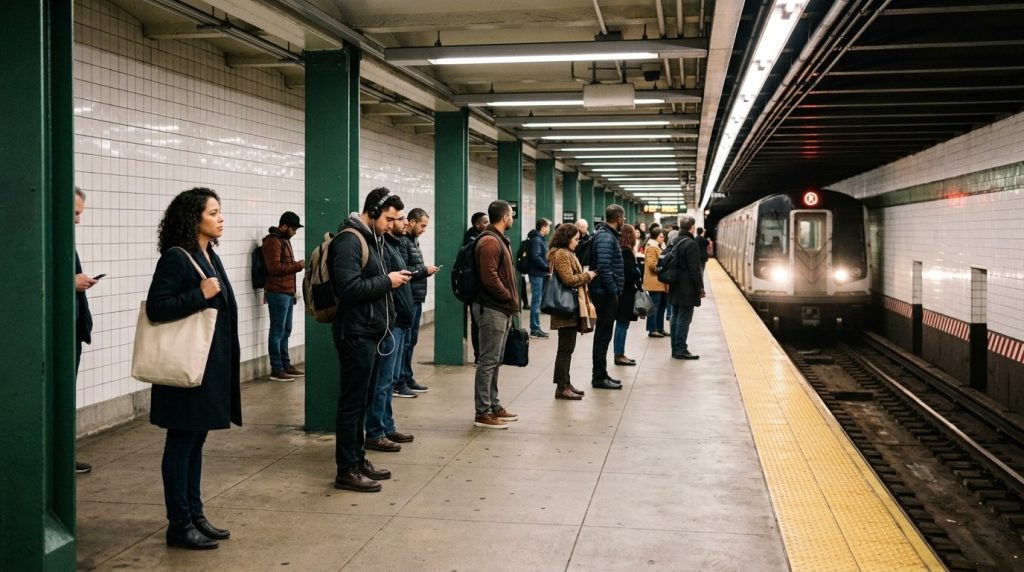
The NYPD’s late-night advice is worth following:
– Wait in the marked off-hours waiting area or in view of the booth. – Ride in the conductor’s car, in the middle of the train. – Avoid near-empty cars, and switch cars if someone is acting erratically. – Stand back from the platform edge, near the wall.
After midnight, a cab or Uber is a fair trade for peace of mind. Traffic, not crime, is the bigger daily hazard: delivery e-bikes come fast, so look both ways even on one-way streets.
Solo and female travelers
New York is one of the easiest US cities to explore alone. Eating solo at the bar is normal, and most Manhattan streets stay busy past midnight. Walk with purpose, share your live location when heading home late, keep your drink in hand at bars, and use the conductor-car rule on late trains. Catcalling happens; ignoring it is the norm.
Season matters too: long summer evenings mean more people on the street, while winter shortens your daylight hours. Our guide to the best time to visit New York City covers crowds month by month.
Weather and health: heat, cold and tap water
New York’s weather extremes are a bigger everyday risk for visitors than crime. Summer heat waves regularly push the heat index above 95 degrees for 2 or more days, the trigger the city uses to issue a heat advisory and open cooling centers across the five boroughs; dial 311 to find the nearest one if a hotel room or planned activities leave you without reliable air conditioning.
Drink water throughout the day rather than only when thirsty, and shift the most strenuous sightseeing, a long walk through Central Park or a full day of museum-hopping on foot, to the morning or evening.
Winter brings the opposite problem. Nor’easters can dump heavy snow with little warning, and wind chill regularly pushes the real feel well below freezing from December through February. Icy sidewalks outside cleared storefronts are the most common slip hazard, and subway stairs get slick fast once snow is tracked indoors.
Pack real winter boots rather than fashion footwear if a trip falls in this window, and budget extra time for transit delays after a storm.
Tap water in New York City is safe to drink straight from the faucet; the city’s Department of Environmental Protection rates it among the cleanest municipal supplies in the country, and most New Yorkers drink it without a filter. Refilling a bottle rather than buying water saves money across a multi-day trip and cuts down on the plastic waste a city this size already produces.
Pharmacies, mostly Duane Reade and CVS locations, are common across Manhattan and open late, some 24 hours, for anything from blister plasters to over-the-counter cold medicine. For a prescription refill, bring the original packaging or a copy of the prescription, since US pharmacists generally cannot dispense a controlled medication from a foreign script without it.
Air quality can turn worse quickly in summer, too. Smoke drifting down from Canadian wildfires triggered air quality advisories across New York City and the wider region in July 2026, with the sky visibly hazy and the smell of smoke noticeable at street level for several days.
When an advisory is in effect, check a local air-quality app before a full day of walking tours, and anyone with asthma or a heart condition should consider cutting outdoor time short rather than pushing through a hazy afternoon.
Who should think twice about NYC
If dense crowds, sirens and constant noise genuinely stress you, Midtown will wear you down. Families with strollers face many stairs-only subway stations. For a slower trip, base in a quieter neighborhood and use day trips from New York City to the Hudson Valley or the beaches for breathing room. Short on time? Drop outer-borough nightlife and follow the central loop in our 7-day New York City itinerary.
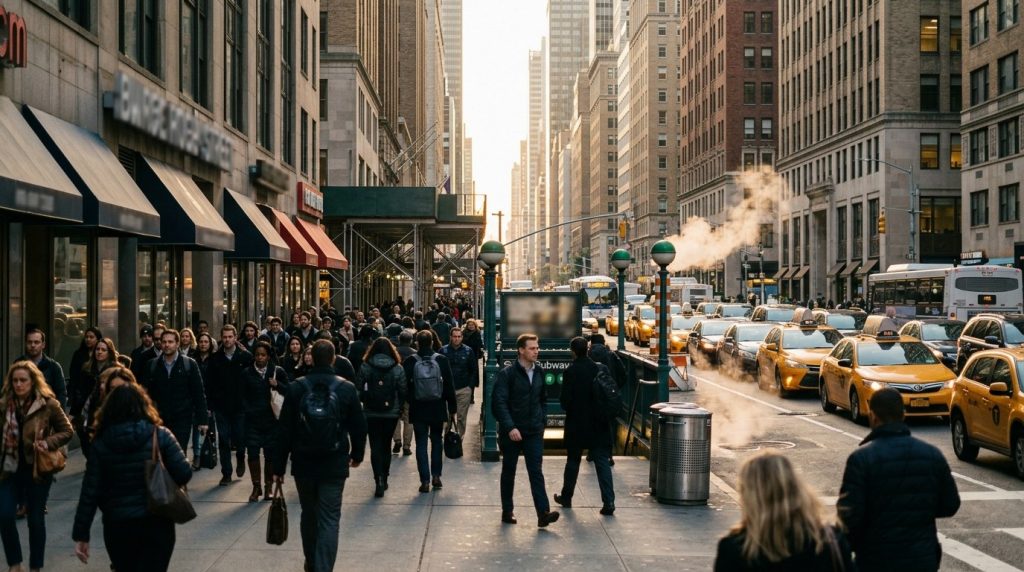
What to do in an emergency
– Call 911 for police, fire or ambulance; 311 for non-emergencies like a lost item. – On the subway, tell the conductor or a station agent if something happens. – US hospital care is excellent but expensive. Check out-of-network coverage, or buy travel insurance with medical cover if you are visiting from abroad. – Report stolen phones and cards immediately; a precinct report helps insurance claims.
Where to stay
– Midtown West: best for first-timers who want Broadway and the main subway lines on the doorstep. – Upper West Side: suits families and couples who want quiet streets next to Central Park. – Brooklyn (DUMBO, Williamsburg): suits repeat visitors and nightlife fans, with skyline views.
Compare all options in where to stay in New York City, and check realistic hotel prices in our New York City travel budget breakdown.
Find your New York City hotel on the map
Live prices from Booking, Airbnb and more — move the map or change dates to compare stays across New York City.
Frequently Asked Questions
Is New York City safe to walk at night?
Yes, in most of Manhattan and brownstone Brooklyn. The Village, Chelsea, Midtown and the Upper West Side stay busy well past midnight. Stick to lit, populated streets, keep your phone out of sight on quiet blocks, and take a cab rather than cutting through parks or industrial areas late at night.
Is the NYC subway safe for tourists?
Generally yes. The NYPD recorded zero shootings, murders or rapes on the subway in August 2026, and transit robberies hit a record low. Most problems are pickpocketing and unsettling behavior from people in crisis. Late at night, wait in the off-hours area and ride in the conductor’s car.
What parts of NYC should tourists avoid?
The areas with the highest violent crime, such as Mott Haven and Hunts Point in the South Bronx and Brownsville and East New York in Brooklyn, are not tourist areas, so avoid wandering there after dark. In Manhattan, the bigger issues are Times Square scams and phone theft in crowds.
Is Times Square safe?
Yes for violent crime; it is one of the most heavily policed spots in the city. The real hassles are costumed characters who demand tips after photos, people handing out “free” CDs, and pickpockets in the crowds. Keep moving, keep your bag zipped, and agree on any price before a photo.
Is New York City safe for solo female travelers?
Yes. Women explore NYC alone all the time, and dining solo is completely normal. Share your live location when heading home late, take a cab after midnight if your hotel is far, and choose the conductor’s car on late trains. Catcalling happens but is rarely more than a nuisance.
Planning the whole trip? Start with our New York City travel guide for the overview, then use this page for the details.