Is Interlaken Worth Visiting? (2026)
Disclosure: Some links in this guide are affiliate links. If you book or buy through them, we may earn a small commission at no extra cost to you — it helps keep our guides free.
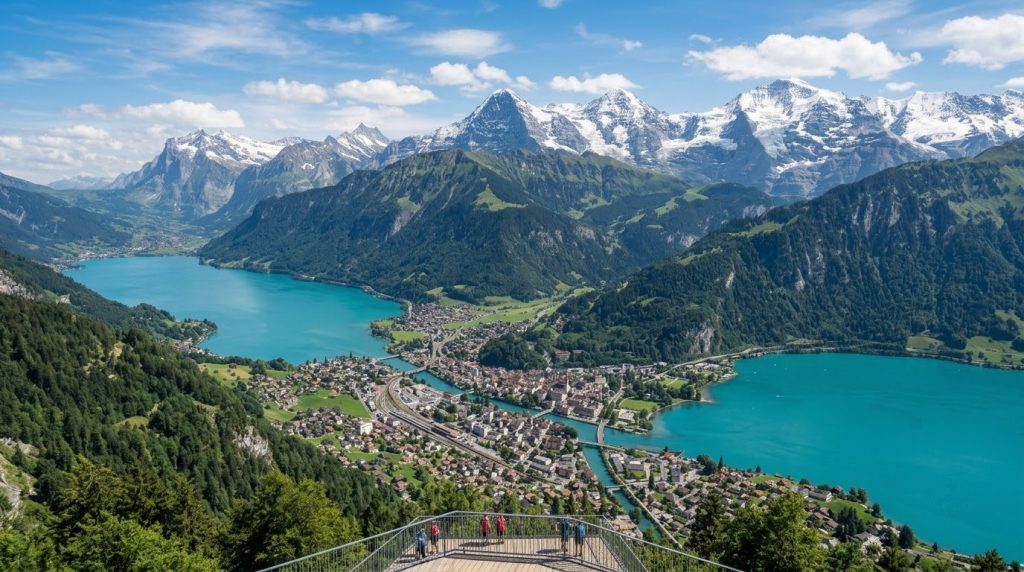
Interlaken is worth visiting if you treat it as your base for the Jungfrau region, where a Jungfraujoch round trip runs USD 322 (CHF 261) and the train to Lauterbrunnen takes about 20 minutes. It is not worth visiting if you expect a charming Alpine village, because its Höheweg strip is 1,400 meters of watch shops and souvenir stores strung between two train stations, not an old town.
| Traveller type | Worth it? | Nights to give it | Why |
|---|---|---|---|
| Base for Jungfrau day trips | Yes | 2-3 nights | Central rail hub to Grindelwald, Lauterbrunnen and the Schilthorn |
| First-timer on a tight Switzerland loop | Yes | 1-2 nights | Fast connections, no need to pack for the mountains |
| Slow traveller chasing an Alpine village | No | 0 nights, base in Lauterbrunnen or Wengen instead | Höheweg is a shopping strip, not a village |
| Adventure sports traveller | Yes | 3+ nights | Paragliding, canyoning and skydiving operators are clustered here |
| Budget backpacker | Depends | 1 night as a transfer point | Hostels cluster in town but the valley villages have the views |
| Family with young kids | Depends | 1-2 nights | Flat and walkable, but the marquee activities skew teen and adult |
What Interlaken is actually for
Interlaken earns its place on an itinerary as a rail junction, not as a sightseeing stop. The town sits on the narrow strip of land between Lake Thun and Lake Brienz, with Interlaken Ost and Interlaken West stations bookending the center, which is why every operator to the Jungfrau region routes through it.
Grindelwald is about 35 minutes away by train and Lauterbrunnen is roughly 20 minutes away, so a hotel here puts most of the Bernese Oberland within a half-hour ride.
That geography is also why the town has become the region’s hub for paragliding, canyoning and skydiving operators, since a flat valley floor next to two lakes is easier to launch and land in than a mountain village clinging to a slope. That convenience is the entire case for staying in Interlaken.
If you never plan to ride up into the valleys or onto the high peaks, that convenience buys you nothing, and you would do better basing somewhere with its own scenery, which is exactly what our Interlaken travel guide walks through in full.
The town itself, honestly
The town center will not hold your attention for more than an afternoon. Höheweg, the main promenade linking the two stations, is lined with Bucherer, Rolex and Omega boutiques alongside chocolate and souvenir shops, and it reads as a retail strip built for layover tourists rather than a historic quarter.
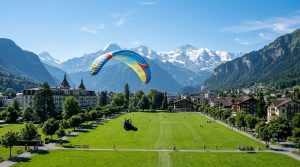
The Hohematte, the open lawn beside Höheweg, doubles as a paragliding landing field, which is the most visually interesting thing happening in town on a clear day, with parachutes drifting down between the hotels every few minutes in good weather.
Cross the river into Unterseen for a few minutes of a genuinely old wooden-bridge streetscape, then loop back for dinner, since the restaurant selection on and around Höheweg is wider than in any of the surrounding valley villages.
Ride the Harder Kulm funicular for CHF 38 (USD 47) round trip if you want a viewpoint over both lakes without leaving town. Budget half a day for the town itself. Anyone budgeting more than that is going to be bored by dinner, watching the same paragliders land twice.
What it unlocks
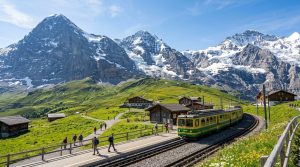
The real value in Interlaken is what sits a short train ride away, not what sits on Höheweg. A Jungfraujoch round trip from Interlaken Ost costs CHF 261 (USD 322) in peak season from May to October, drops to CHF 224 (USD 276) off-peak, and falls to CHF 177 (USD 218) if you already hold a Swiss Travel Pass.
The Schilthorn cable car round trip runs about CHF 108 (USD 133), and Grindelwald and Lauterbrunnen are each reachable in well under 40 minutes by train, which is where the region’s hiking, glacier views and waterfalls actually live.
A Swiss Travel Pass costs CHF 254 (USD 313) for three days, CHF 399 (USD 492) for six days, or CHF 439 (USD 542) for eight days, and it is worth pricing out before you book individual tickets if you plan to hit more than one of these in a single trip.
None of these tickets start in the town itself, they start at Interlaken Ost, which means the town’s only real function on the day you use them is the platform you leave from and the bed you return to.
Our 3-day Interlaken itinerary lays out a route that uses the town as a base for exactly this kind of day-trip loop.
Interlaken town, or up in the valleys
Most travellers get better views and lose little convenience by sleeping in Lauterbrunnen or Grindelwald instead of Interlaken.
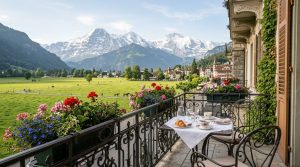
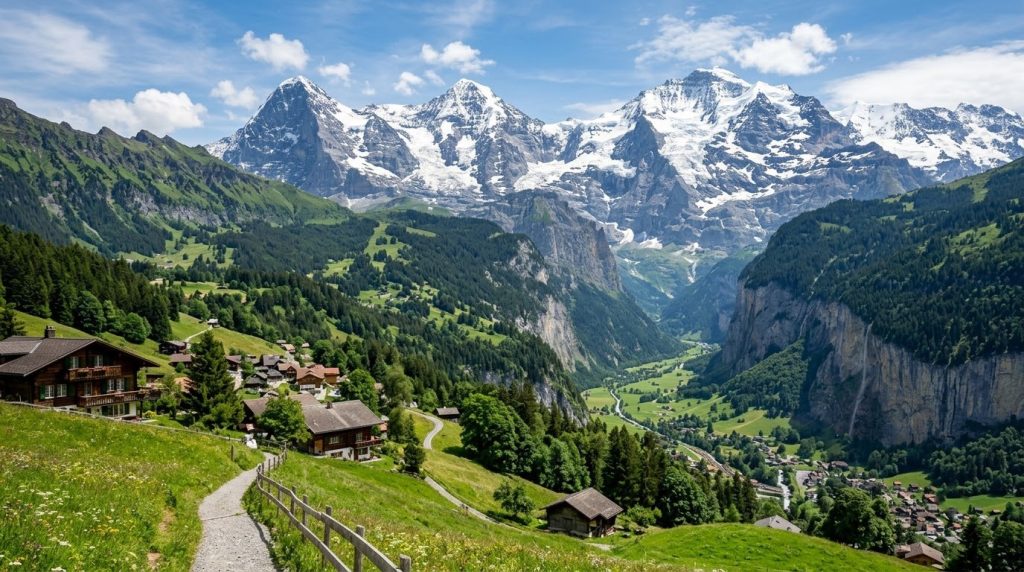
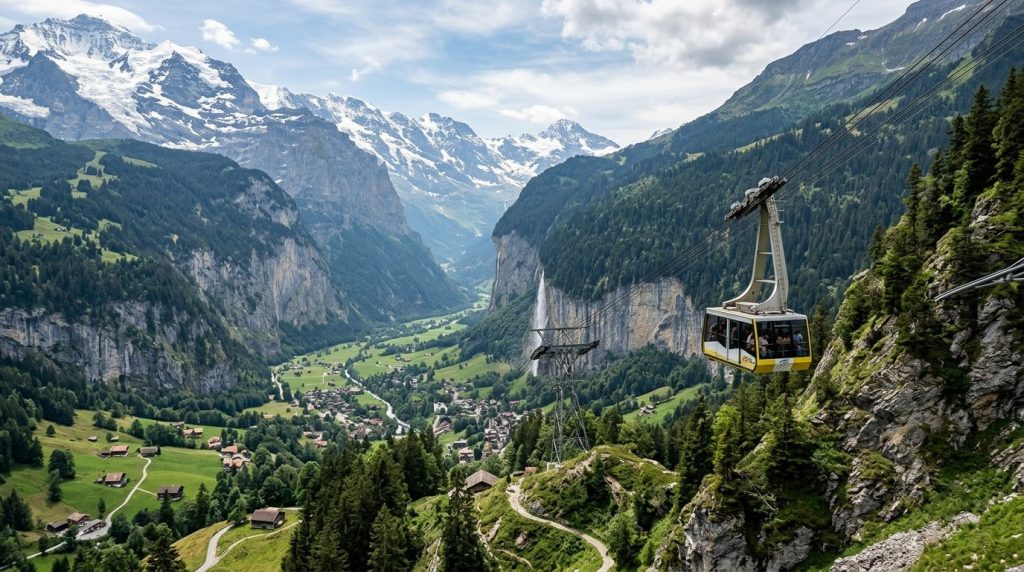
Lauterbrunnen sits inside a sheer-walled valley with waterfalls visible from the street, and Grindelwald sits closer to the Eiger and to the First and Männlichen cable cars, so either one turns your accommodation into part of the scenery rather than a logistics stop.
What you give up is Interlaken’s larger choice of restaurants, its two train stations, and a slightly flatter walk from the platform to your hotel. Lauterbrunnen and Grindelwald also have far fewer dinner options, and both go quiet after 9pm in a way Höheweg does not.
If your trip includes Zermatt, Lucerne or other stops beyond the Jungfrau region, Interlaken’s better rail connectivity can still make it the more efficient base, a trade-off our Swiss Alps travel guide breaks down village by village.
For a trip built entirely around the Jungfrau region itself, and nothing beyond it, the valley towns win on scenery without costing you much in convenience.
Who should skip Interlaken
Skip Interlaken if you came to Switzerland for a historic old town, because Höheweg’s watch shops and chocolate stores are not that, and Lucerne’s Chapel Bridge and old quarter deliver what you are actually picturing, a comparison we cover directly in Interlaken vs Lucerne.
Skip it too if postcard Alpine-village photography is the point of the stop, since Interlaken’s own streetscape is flat, modern and built around transit rather than chalets.
Skip it if you are travelling with a tight one-night Switzerland stopover and only want one iconic view, because that night is better spent in Lauterbrunnen or Grindelwald where the scenery starts outside your window instead of a train ride away.
Skip it as well if crowds bother you in high season, since the same Höheweg strip that makes the town convenient also funnels every tour bus and day-tripper heading to Jungfraujoch through the same few blocks.
None of this makes Interlaken a bad stop, it makes it the wrong stop for a traveller who wants the town itself to be the destination rather than the launchpad.
What a day in Interlaken costs beyond the sightseeing
The Jungfraujoch, Schilthorn and Swiss Travel Pass prices already covered in this guide are only part of a daily budget, since a bed and three meals still have to be paid for on top of them.
A hostel dorm bed in the Interlaken area commonly runs CHF 30 to CHF 80 (USD 37 to USD 99) a night, while a budget hotel or guesthouse room typically costs CHF 100 to CHF 150 (USD 123 to USD 185), with overall budget-traveller spending across Switzerland, lodging included, often landing in the CHF 80 to CHF 120 (USD 99 to USD 148) a day range before any cable car or pass is added.
Switzerland does not have a cheap tier the way some neighbouring countries do; even the lower end of these figures sits well above a comparable budget stay in most of Western Europe.
Food follows a similarly narrow band regardless of where a meal is eaten. A casual, sit-down meal at an ordinary restaurant costs roughly CHF 25 to CHF 30 (USD 31 to USD 37) per person, a simple weekday lunch from a café can run slightly less at CHF 18 to CHF 28 (USD 22 to USD 35), and a three-course dinner for two at a mid-range restaurant lands around CHF 100 to CHF 150 (USD 123 to USD 185) total.
Supermarket shopping for breakfast and a packed lunch is the most common way visitors trim this part of the budget, since grocery prices undercut restaurant prices by a wider margin here than in most other European destinations, which matters more in Switzerland than almost anywhere else in this guide’s coverage.
Interlaken’s wider restaurant selection, already noted elsewhere in this guide, does not translate into cheaper prices than the surrounding valley towns, so the choice between basing in Interlaken, Lauterbrunnen or Grindelwald should be made on scenery and convenience rather than any expectation of a food-cost saving in either direction.
Combining a packed lunch on cable car days with one sit-down dinner in town is the most common way visitors keep a multi-day Jungfrau region stay from running past the upper end of these ranges.
Where to stay if you decide to go
If Interlaken fits your plan as a base rather than a destination, compare live rates around both stations before you book.
Find your Interlaken hotel on the map
Live prices from Booking, Airbnb and more — move the map or change dates to compare stays around Interlaken.