Is Milan Safe? Honest Answer for American Travelers (2026)
Disclosure: Some links in this guide are affiliate links. If you book or buy through them, we may earn a small commission at no extra cost to you — it helps keep our guides free.
Yes, Milan is safe for most visitors: the US State Department rates Italy at Level 2 (exercise increased caution, due to terrorism), and the real risk is petty theft, with 225,786 crimes reported across the Milan area in 2024, mostly theft. Violent crime against tourists is rare.
What you will actually deal with is pickpockets on the metro and at Milano Centrale, plus bracelet and pigeon-seed hustlers on Piazza del Duomo. Guard your phone and wallet and Milan is easy.
| Risk | Reality | What to do |
|---|---|---|
| Pickpocketing | Common on the metro, at Centrale and around the Duomo | Front pocket or crossbody bag, zipped |
| Duomo square scams | Bracelets and pigeon seed pushed on tourists | Keep hands in pockets, say “no” and keep walking |
| Centrale area at night | Gets rougher after midnight | Arrive in daylight or take a taxi to your door |
| Violent crime | Rare for visitors | Normal big-city awareness |
| Terrorism | Reason for Italy’s Level 2 rating | Stay alert at crowded events |
The honest answer: safe, but Milan tops Italy’s crime table
Milan is a wealthy business city where you can walk Brera or the Navigli at 11 p.m. without a second thought. It is also, on paper, Italy’s crime capital. The Il Sole 24 Ore Crime Index puts the Milan area first in the country, at about 6,950 reported crimes per 100,000 residents, based on 2024 police reports.
That ranking is driven by theft: a phone lifted on the metro, not a mugging. The authorities take it seriously: on September 9, 2026, the prefect extended Milan’s “zone rosse” (reinforced-patrol red zones) to March 30, 2027, covering Stazione Centrale, Rogoredo, Porta Garibaldi, the Duomo, Colonne di San Lorenzo, Darsena-Navigli and Via Padova, according to Il Giorno.
Police there can order people with criminal records who behave aggressively to leave for 48 hours.
Italy’s US Level 2 rating is for terrorism risk; the advisory notes petty crime too. Check the current State Department advisory for Italy before you fly, because levels can change.
Still deciding whether the city deserves a spot on your route? Read our take on whether Milan is worth visiting.
Neighborhoods to avoid after dark
None of these is a no-go zone in daylight, but they are where trouble concentrates late at night:
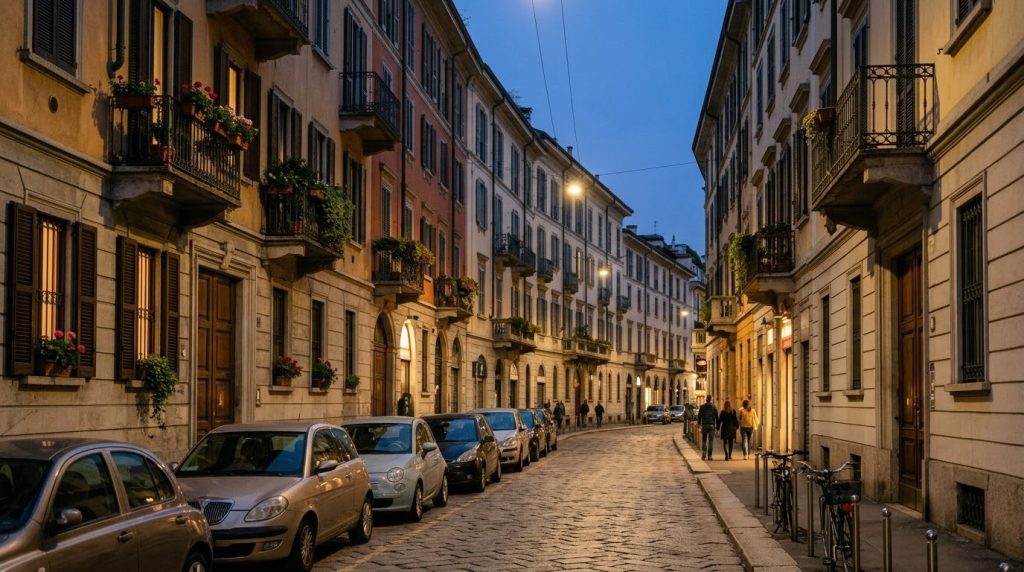
– Around Milano Centrale. The station is fine during the day and heavily patrolled, but the surrounding streets get noticeably sketchier after midnight, with drug activity. – Rogoredo. The station area has a long-running drug problem and is a designated red zone.
Change trains, don’t linger. – Corvetto, Quarto Oggiaro and parts of San Siro. Outer residential districts with higher theft rates. On San Siro match nights, stick with the crowd. – Via Padova and Viale Monza at night. Lively and multicultural by day, worth extra caution late.
The center (Duomo, Brera, Porta Romana) stays busy and safe into the night; your risk there is a pickpocket.
Scams that actually happen in Milan
– The friendship bracelet. On Piazza del Duomo and the Galleria, men walk up, tie a string bracelet on your wrist “for free,” then demand payment. Keep your hands in your pockets and don’t stop. – Pigeon seed. Someone pours birdseed into your hand so pigeons swarm you for a photo, then asks for money.
Same answer: refuse to take anything. – Ticket machine helpers. At Centrale and metro stations, a “helpful” stranger offers to work the machine.
Buy tickets yourself or tap a contactless card at the gates. – Drink spiking. The UK Foreign Office warns travelers in Italy not to accept drinks from strangers or leave drinks unattended, as victims have been robbed after spiked drinks.
Metro, trams and trains: transport safety
Milan’s ATM network is efficient, and it is where most thefts happen, in crowded cars and on escalators. Keep your phone out of your back pocket, wear backpacks on your front at rush hour, and be wary of anyone pressing close at the doors.
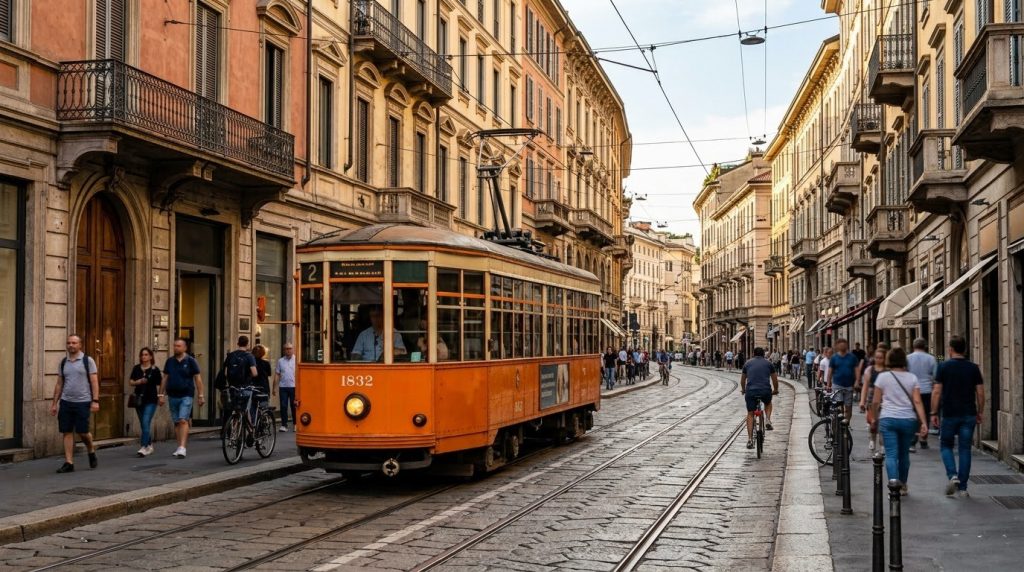
Fares, converted at USD 1 = EUR 0.89: a single urban ticket is USD 2.50 (EUR 2.20), valid 90 minutes; a 24-hour pass is USD 8.60 (EUR 7.60); a 3-day pass is USD 17.40 (EUR 15.50), per ATM. Always validate your ticket.
The metro shuts down around 12:30 a.m. most nights, after which ATM night buses run. If you are out late in an unfamiliar area, a licensed white taxi from an official rank is the safer choice.
For trips out to Lake Como or Bergamo, the same rules apply on regional trains; our list of day trips from Milan covers the routes.
Solo and female travelers
Solo women travel Milan without much trouble if they follow big-city habits, and the central districts stay busy late. Practical tips:
– Book in Brera, Porta Romana or near the Duomo rather than right by Centrale. – Use taxis, not the metro, after midnight. – In Navigli bars, watch your drink and your phone on the table.
What to do in an emergency
Dial 112, the EU-wide emergency number, for police, ambulance or fire. Report a theft at any Carabinieri or Polizia station and get a written report (denuncia), which your travel insurer will require. If your US passport is stolen, contact the US Consulate General in Milan for a replacement.
Who should think twice about Milan
Skip Milan, or keep it to a short stop, if you hate crowds and are anxious about pickpocketing: the metro and the Duomo will test your patience. If you want postcard Italy, it can feel more business city than charm. Season matters for crowds too, so check the best time to visit Milan before you book.
For most visitors, two or three days is plenty; see how many days in Milan to size your stay.
Where to stay
– Brera: the safest, prettiest base, with cobbled streets and late dinners. Best for couples and first-timers. – Porta Romana: quieter, residential, good value and well connected by the M3. Best for families and solo women. – Duomo/Centro Storico: walk to everything, busy into the night. Best for short stays.
Avoid booking right beside Centrale unless you have an early train. Once you have a base, build your days with our Milan itinerary.
Find your Milan hotel on the map
Live prices from Booking, Airbnb and more — move the map or change dates to compare stays across Milan.
Frequently Asked Questions
Is Milan safe for American tourists?
Yes. Italy is at Level 2 on the State Department scale, mainly for terrorism risk, the same tier as much of Western Europe. The everyday risk is pickpocketing on the metro and around Milano Centrale and the Duomo, so keep valuables zipped away and stay alert in crowds.
Is it safe to walk in Milan at night?
In the center, yes. Brera, the Duomo area, Porta Romana and the Navigli stay busy late and feel safe. Be more careful after midnight around Milano Centrale, Rogoredo station and Via Padova. Once the metro closes, take a licensed taxi from an official rank rather than walking long distances through quiet streets.
Which is safer, Rome or Milan?
Neither is dangerous, but on reported crime Milan ranks first in Italy and Rome second in the Il Sole 24 Ore index. For tourists the risks look similar: pickpockets at stations and landmarks. Milan has fewer tour crowds, while Rome’s packed sites attract more opportunistic thieves.
Is Milano Centrale safe?
During the day, yes. It is busy, patrolled and part of a reinforced-security red zone. Pickpockets work the ticket machines, escalators and platforms, so keep your bag in front of you and refuse help from strangers. The streets around the station feel rougher after midnight, so arrive in daylight when you can.
What is the emergency number in Milan?
Dial 112 for police, ambulance or fire, the single EU emergency number that works from any phone. For a theft, file a report (denuncia) at a Carabinieri or Polizia station so you can claim on travel insurance. US citizens who lose a passport should contact the US Consulate General in Milan.