Prague or Budapest: Which City Should You Visit First? (2026)
Disclosure: Some links in this guide are affiliate links. If you book or buy through them, we may earn a small commission at no extra cost to you — it helps keep our guides free.
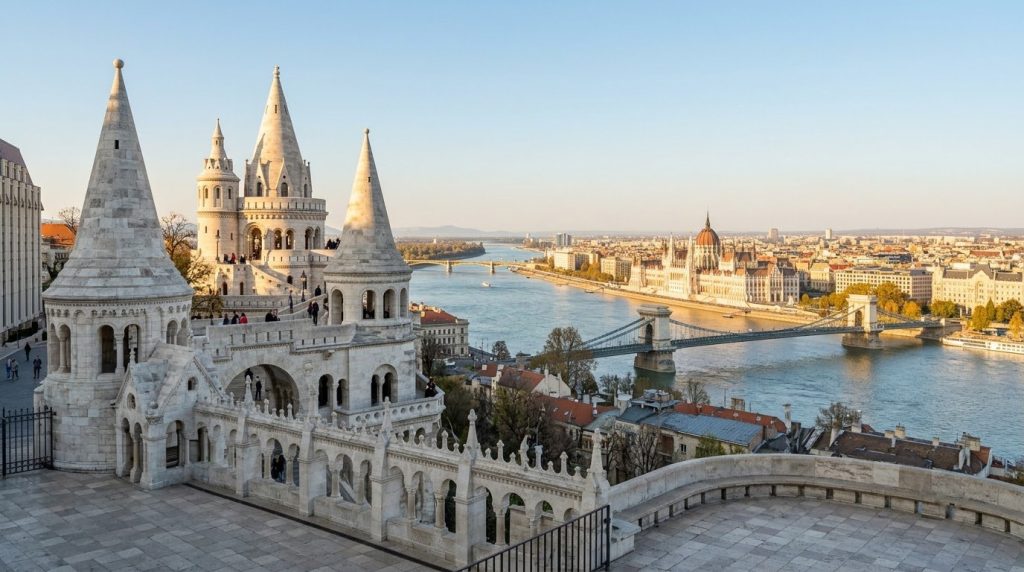
Pick Prague for a first 3-day trip and Budapest if you have 4 days or more and want thermal baths: Prague’s compact old center, a UNESCO site since 1992, packs its big sights into a short walk, while Budapest spreads across two riverbanks and rewards a slower pace. One surprise for 2026: Budapest is no longer the obvious budget pick.
Crowd-sourced data now puts its restaurant prices above Prague’s. If you can, do both. A direct train links them in about 7 hours.
| Factor | Prague | Budapest |
|---|---|---|
| Best for | First-timers, short trips, families | Couples, spa lovers, nightlife |
| Ideal stay | 3 days | 4 days |
| Layout | Compact, walkable medieval core | Two sides of the Danube, more transit |
| Signature experience | Castle, Charles Bridge, Old Town Square | Thermal baths, Parliament at night, ruin bars |
| 24-hour transit pass | USD 6.45 (CZK 140, in app) | USD 8.40 (HUF 2,750) |
| Mid-range dinner for two | About USD 51 | About USD 61 |
| Nonstop from the US | Seasonal, Philadelphia | Seasonal, Philadelphia |
| Currency | Czech koruna (CZK) | Hungarian forint (HUF) |
First-timers: Prague wins on ease
Prague is the easier city to get right on a first visit to Central Europe. The castle district, Charles Bridge, the Old Town Square astronomical clock and the Jewish Quarter are all walkable from each other. Three days covers the core without rushing, and a fourth day frees you for a trip out of town.
Our list of the best things to do in Prague ranks what deserves your limited hours.
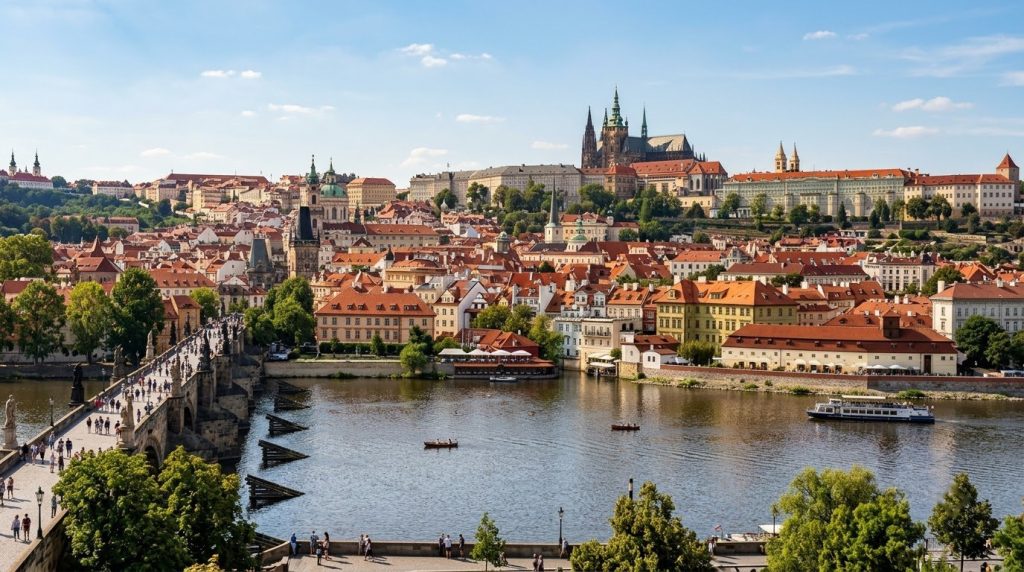
The honest downside is crowds. Prague’s center is small, so tour groups pile into the same few streets. Budapest spreads its visitors between Buda Castle, the Parliament, the baths and the Jewish Quarter, so outside a few hotspots it feels less packed.
Verdict: if this is your first trip and you have 3 days, choose Prague.
Couples: Budapest is the more romantic weekend
Budapest gives couples things Prague simply does not have. The biggest is the thermal bath culture. A full-day ticket at Széchenyi, the giant yellow bath complex in City Park, costs USD 40–45 (HUF 13,200–14,800), depending on weekday or weekend. Add a sunset walk along the Danube, the floodlit Parliament from the Buda side, and dinner in District V, and you have a better date-night city than Prague.
Verdict: couples should pick Budapest, especially from October to April, when an outdoor hot pool beats any museum.
Families: Prague’s short distances help kids
With children, walking distance matters more than nightlife. Prague’s sights cluster tightly, trams are frequent, and kids under 6 ride free. Budapest works too, but you will spend more time on the metro and crossing bridges, and its best-known evening draw, the ruin bars, is adult territory.
Is either city a safety worry for families? Not really. Both see mostly petty crime, mainly pickpocketing on crowded trams and around the big squares. Our breakdown of whether Prague is safe covers the scams worth knowing, from bad-rate currency exchange booths to inflated taxi fares.
Verdict: families should go to Prague.
Budget travelers: the old “Budapest is cheaper” rule is out of date
For years, the standard advice was that Budapest costs less. In 2026 that holds only partly. Numbeo’s crowd-sourced comparison shows overall consumer prices about 6% lower in Budapest. Restaurant prices, though, run about 13% higher there.
Some examples, converted at USD 1 = HUF 327 = CZK 21.7:
– Meal at an inexpensive restaurant: about USD 11 in Prague, USD 14 in Budapest – Half-liter of local draft beer: about USD 3.20 in Prague, USD 3.70 in Budapest – 24-hour transit pass: USD 6.45 (CZK 140 in the PID Lítačka app) in Prague, USD 8.40 (HUF 2,750) in Budapest
Prague raised single-ticket fares in January 2026, and the paper 24-hour ticket now costs CZK 150. Even so, a day of transit is still cheaper than Budapest’s.
Verdict: budget travelers who eat out a lot will spend slightly less in Prague. The gap is small, so choose on interests, not price.
Best time to visit Prague and Budapest
Both cities share the same broad Central European pattern: shoulder season (April to May and September to October) brings the best trade-off of mild weather and manageable crowds, while July and August bring the longest daylight and the warmest temperatures alongside the thickest tour groups in both Old Towns.
Winter has its own appeal, especially the Christmas markets that run through December in Wenceslas Square and Vorosmarty Square, but expect cold, short days and a Danube wind in Budapest that cuts through a light jacket fast.
Prague’s peak crowding is the more acute problem of the two, since its sights cluster into a small historic core that absorbs tour buses less gracefully than Budapest’s two-bank layout. If crowds bother you more than cold does, a December or January trip to Prague trades the castle’s queues for a quieter, frostier version of the same views.
Budapest’s thermal baths are also genuinely better in cool weather, since sitting in a steaming outdoor pool while it is cold out is most of the appeal.
Early spring (March into April) is the gamble season for both cities: genuinely cheaper flights and hotel rates, but weather that can swing from a sunny riverside afternoon to a cold, grey week with little warning.
If your itinerary depends on an outdoor day, such as a Danube boat trip or a long walk around Prague Castle’s grounds, build in a flexible day you can move around rather than anchoring it to one specific date on a shoulder-season trip. Those adding this stop to a longer trip should first check our travel guide to Ljubljana for planning basics.
Whichever season you pick, book the big-ticket, timed-entry sights ahead for summer dates. Prague Castle’s interior buildings and Budapest’s Parliament tours both sell out same-day slots quickly from June through August, and arriving without a booking means watching the view from outside instead.
Food, nightlife and things to do
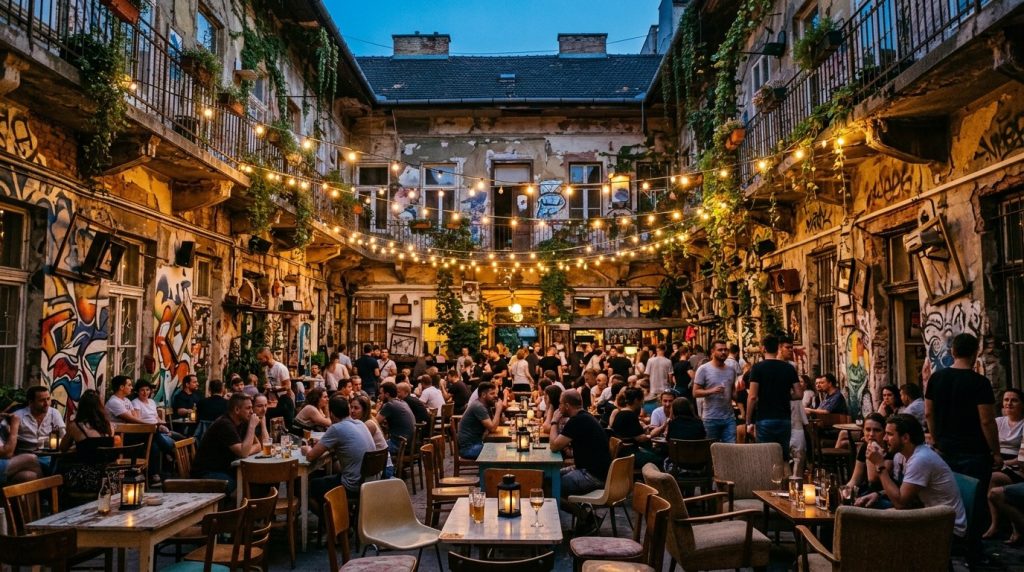
Budapest wins on food and nightlife. Hungarian cooking, from goulash and lángos to paprika-heavy stews, has more range than Prague’s pork-and-dumpling staples. The ruin bars of District VII, led by Szimpla Kert, are unlike anything in Prague.
Prague wins on sheer density of sights. Within a short walk you get Gothic churches, Baroque palaces, a castle complex and centuries-old synagogues. It is also an excellent base for day trips.
Kutná Hora’s bone chapel and Český Krumlov’s river-loop old town are the two classics, and our guide to day trips from Prague lays out the logistics. From Budapest, the Danube Bend towns and Lake Balaton are the main escapes.
Getting there and between them
American Airlines added seasonal nonstop flights from Philadelphia to both cities, starting May 21, 2026, on a Boeing 787-8. That makes American the only airline flying nonstop from the US to Budapest. Outside summer, expect a connection through a hub such as Frankfurt, Vienna or London.
Linking the two by rail is easy. Trainline lists about 21 trains a day, run by ÖBB and RegioJet. The fastest direct trip takes 6 hours 53 minutes, and advance fares start around USD 16–20.
Both countries are in the Schengen Area, so US passport holders get the standard 90 days in any 180 without a visa. ETIAS, the EUR 20 pre-travel authorization, has not launched yet. Check the EU’s official site before you book.
Timing matters more in Prague, where summer crowds peak. Our guide to the best time to visit Prague compares shoulder seasons and the Christmas market weeks.
A simple 3-day itinerary for each city
Use these as a starting skeleton, not a rigid schedule; both cities reward slowing down on at least one afternoon.
| Day | Prague | Budapest |
|---|---|---|
| 1 | Old Town Square, the astronomical clock, a Vltava riverside walk | District V, St. Stephen’s Basilica, a sunset walk along the Danube promenade |
| 2 | Prague Castle complex in the morning, Charles Bridge at golden hour, Lesser Town streets | Buda Castle and Fisherman’s Bastion, then a full-day ticket at Széchenyi Baths |
| 3 | Jewish Quarter sights, a free afternoon for shopping or a day trip | Parliament exterior and a District VII evening among the ruin bars |
With a fourth day in either city, a day trip is the obvious add-on: Kutná Hora from Prague, or the Danube Bend towns from Budapest. Travelers doing both cities on one trip should still give each the full three days above rather than compressing to two and two, since the train journey between them already eats a half day on its own.
Build slack into each day rather than stacking sights back to back. Prague’s castle complex alone can absorb a full morning if you go inside St. Vitus Cathedral and the Old Royal Palace rather than only photographing the courtyard, and Budapest’s Széchenyi Baths reward a slow afternoon far more than a rushed hour between other stops.
Travelers who try to hit every listed sight on both days usually remember the rushing more than the sights themselves.
If you only have one city in you this trip, use the table to decide which three-day plan excites you more on paper. A Prague itinerary front-loaded with the castle and Charles Bridge suits a first European city break; a Budapest plan built around the baths and the ruin bars suits a trip that is more about unwinding than checklist sightseeing. Those adding this stop to a longer trip should first check our travel guide to Plitvice Lakes for planning basics.
Where to stay
The map below covers Budapest, where picking the right side of the river matters most.
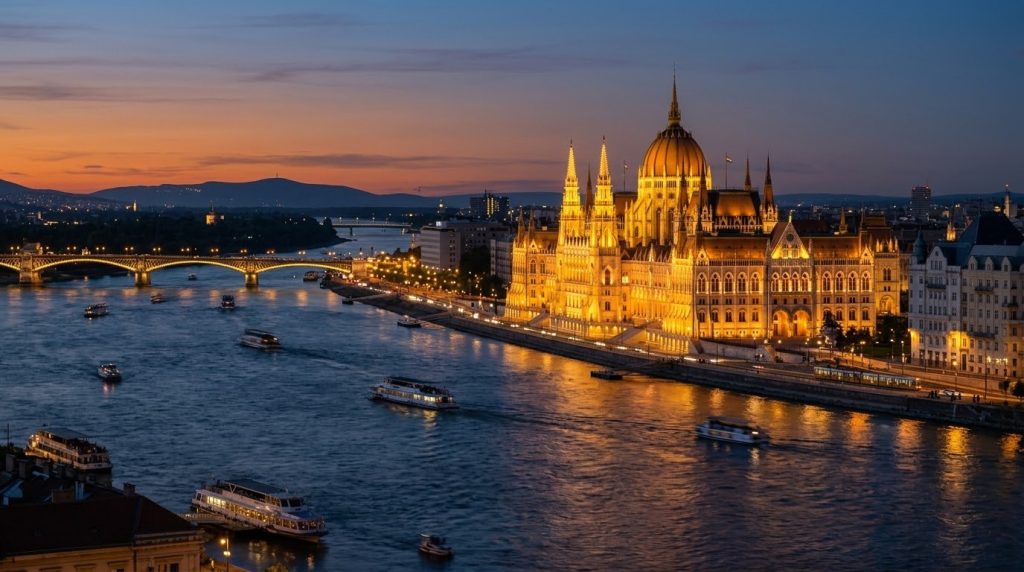
– District V (Belváros-Lipótváros): Pest’s central core, near the Parliament, the river promenade and St. Stephen’s Basilica. Best for first-timers and couples who want everything walkable. – District VII (Erzsébetváros, the Jewish Quarter): ruin bars, late kitchens and lower room rates. Best for nightlife and younger travelers.
Light sleepers should ask for a courtyard-facing room. – District I (Castle District, Buda): quiet, hilly and atmospheric, with views back over the Parliament. Best for couples and families who want calm evenings and don’t mind a bus or funicular ride to Pest.
In Prague, the Old Town suits short first trips. Vinohrady suits travelers who want local restaurants and a tram ride into the center.
Find your Budapest hotel on the map
Live prices from Booking, Airbnb and more — move the map or change dates to compare stays across Budapest.
Currency and avoiding bad exchange rates
Both cities have a well-known scam pattern worth knowing before you land: storefront currency exchange booths, often clustered near the main tourist squares, that advertise a headline rate but apply a poor real rate or a hidden commission once you are at the counter. The fix is simple.
Withdraw cash from an ATM run by a recognized local bank rather than exchanging bills at a counter, and when the ATM screen offers to convert the amount to US dollars at its own rate (dynamic currency conversion), always decline and let your card’s issuer handle the conversion instead; the bank’s rate is consistently better.
Standalone exchange machines and kiosks with no visible bank name, and ATMs branded Euronet in particular, have drawn repeated complaints over poor rates and high fixed fees in both cities.
If a machine’s screen pushes you hard toward accepting its conversion rate before showing the ATM-operator’s own exchange rate, that is the signal to cancel and find a bank-branded machine instead. A small amount of local cash from a bank ATM on arrival covers trams, small cafes and tips; everything else goes on a card with no foreign transaction fee.
Keep the two currencies straight in your head, since Czech koruna and Hungarian forint are both priced in the hundreds or thousands for everyday items and it is easy to misjudge a bill at a glance when you are switching between them mid-trip.
A mental shortcut, such as rounding to the nearest round number in your home currency before you tap your card, catches most pricing mistakes before they happen rather than after you have already paid.
Neither currency has a fixed peg, so the rates move week to week; check a current conversion the morning you arrive in each city rather than relying on a figure from months earlier, especially if you are comparing a restaurant bill against what you would expect to pay at home.
Frequently Asked Questions
Is Prague or Budapest better for a first trip to Europe?
Prague is better for most first-timers. Its historic center is compact, so Prague Castle, Charles Bridge and Old Town Square fit into 3 relaxed days on foot. Budapest is more spread out across Buda and Pest and rewards a fourth day. If you have under a week and only want one city, Prague is the lower-effort choice.
Is Budapest cheaper than Prague in 2026?
Only partly. Numbeo’s crowd-sourced data puts overall consumer prices about 6% lower in Budapest, but restaurant prices about 13% higher. A mid-range dinner for two runs about USD 61 in Budapest against USD 51 in Prague. Transit is also pricier in Budapest. Lodging is where Budapest may still save you money, so compare live hotel rates for your dates.
How long does the train take from Prague to Budapest?
The fastest direct trains take 6 hours 53 minutes, and many take closer to 8 hours. Trainline lists about 21 departures a day, run by ÖBB and RegioJet. Advance fares start around USD 16–20. A daytime train costs you only half a day of sightseeing.
How many days do you need for Prague and Budapest together?
Plan at least 7 days: 3 in Prague, 3 in Budapest and a travel day on the train between them. With 9 or 10 days, add a day trip from each city, such as Kutná Hora from Prague or the Danube Bend from Budapest. Trying both in 5 days means seeing each only on the surface.
Do Americans need a visa for Prague or Budapest?
No. The Czech Republic and Hungary are both in the Schengen Area, and US passport holders can stay up to 90 days in any 180-day period without a visa. The EU’s ETIAS travel authorization, which will cost EUR 20, has not started yet. Check the official EU travel site shortly before departure, because the launch date has moved several times.