
Disclosure: Some links in this guide are affiliate links. If you book or buy through them, we may earn a small commission at no extra cost to you — it helps keep our guides free.
Ultimate Ljubljana Travel Guide 2026: Castle, Old Town + Costs
Ljubljana is one of Europe’s most underrated capital cities, and the evidence is easy to find. Slovenia’s capital of 295,000 people won the European Green Capital Award in 2016, with 30% of its city center permanently car-free. It’s small enough to cover in a weekend, yet packed with Baroque architecture, riverside cafe culture, and day trips to some of the continent’s best scenery. This ljubljana travel guide covers every essential: what to see, where to stay, how to get here, and what you’ll actually spend.
Key Takeaways
– Ljubljana is Slovenia’s capital (pop. 295,000) and Europe’s 2016 Green Capital, with 30% of the city center permanently car-free
– Ljubljana Castle is free to enter the courtyards; the funicular costs €4 (2 min) or hike up free in 15 minutes
– Budget range: €30-50/day for budget travel, €60-100/day mid-range — affordable by Western European standards
– Best months: May-September for markets and outdoor dining; December for one of Europe’s best Christmas markets
– Day trips to Lake Bled (55 km, 1h) and Postojna Cave (1h) are among Central Europe’s top excursions
We only recommend services we genuinely rate.
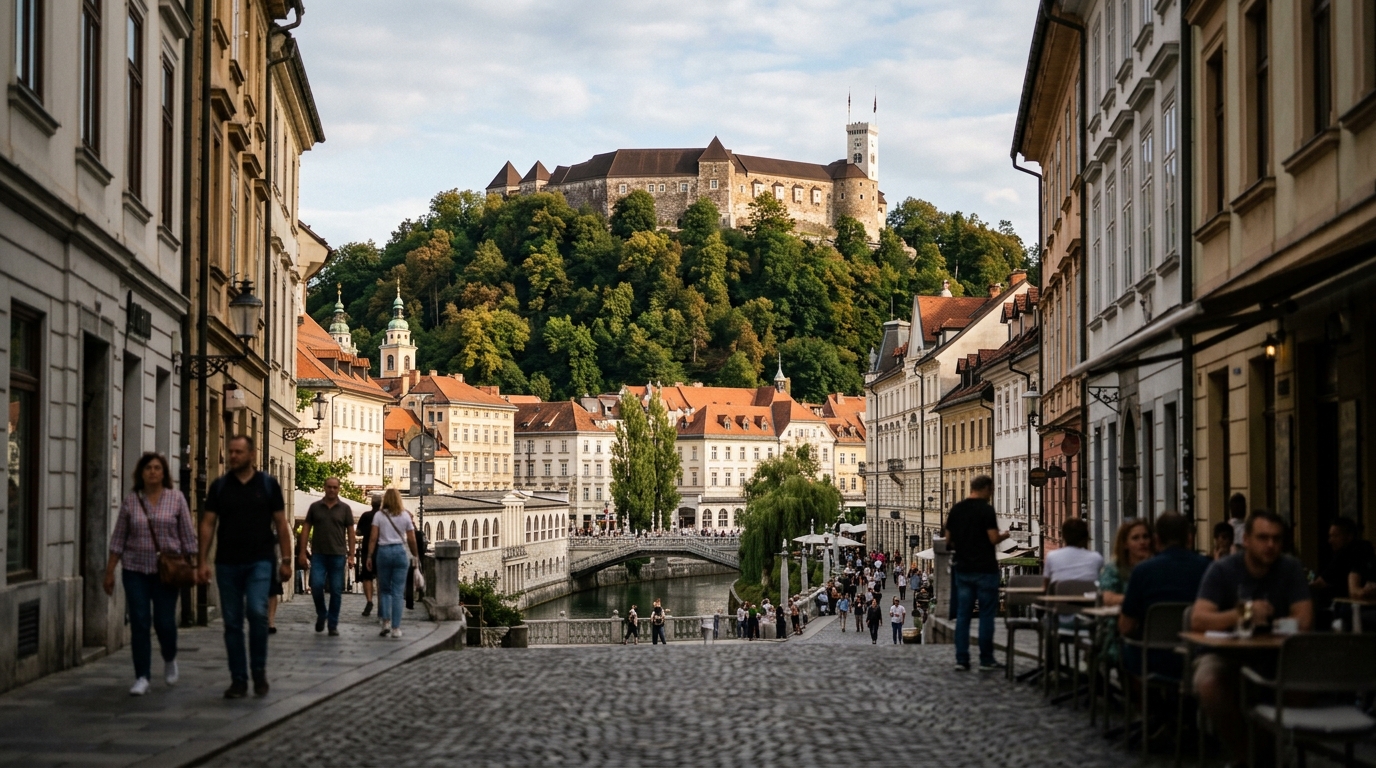
Ljubljana Travel Guide: Why This Small Capital Punches Above Its Weight
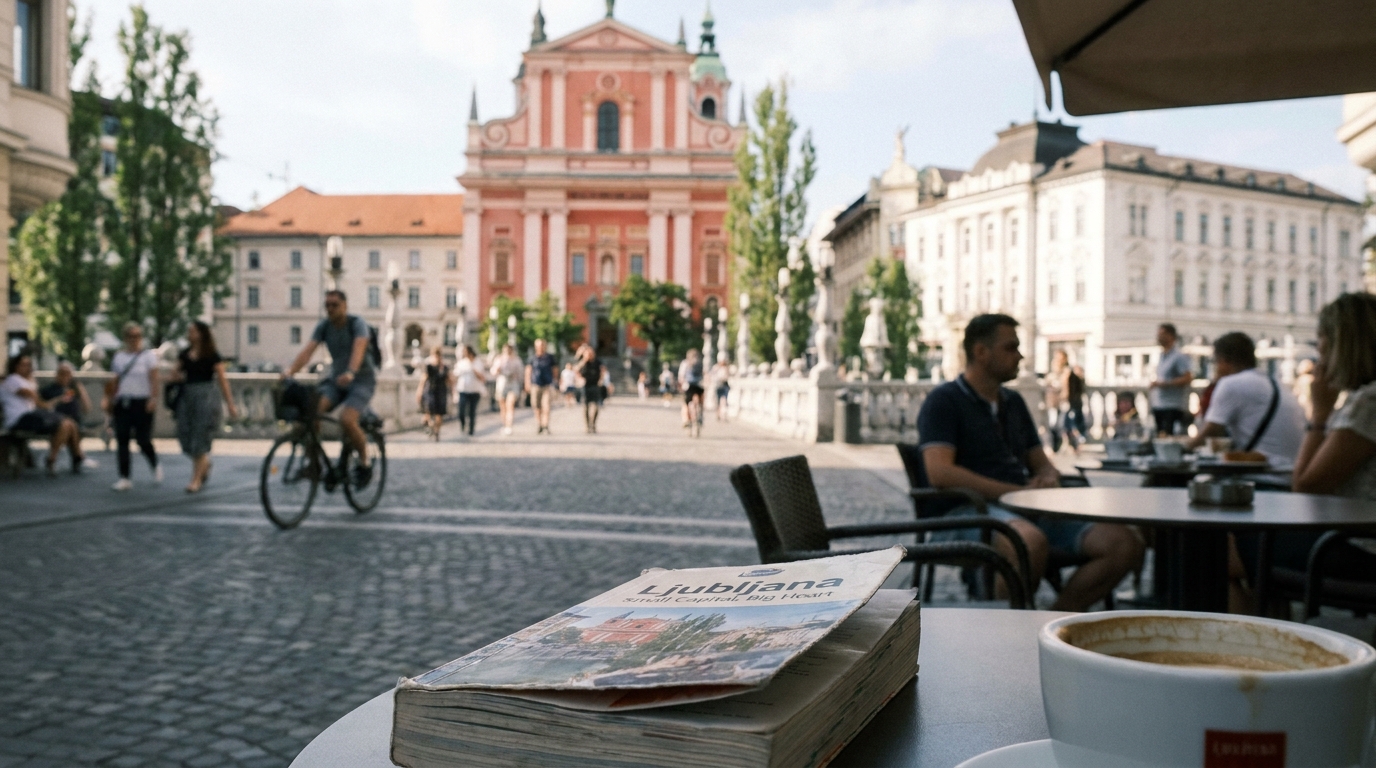
Ljubljana attracts around 1 million overnight visitors per year (Slovenian Tourist Board, 2024), a modest number that keeps the old town feeling genuinely livable rather than overrun. The entire historic core is walkable in under 20 minutes, yet it holds Baroque palaces, a hilltop castle, a lively riverside market, and cafe terraces that fill from noon until midnight in summer.
What surprises most first-time visitors is the coherence of the city’s design. The Slovenian architect Jože Plečnik spent decades from the 1920s onward reshaping Ljubljana with colonnaded market halls, ornate lamp-posts, bridges, and public spaces that feel like a single unified vision rather than a patchwork of eras. His Triple Bridge (Tromostovje) over the Ljubljanica river, completed in its current three-span form between 1931 and 1932, is the most photographed result of that vision.
Here’s what most guides skip over: Plečnik was actually passed over for the commission to redesign Vienna’s city center before returning to Ljubljana. The city you’re walking through today is, in part, the product of one architect channeling decades of European ambition into a compact Slovenian canvas. That context makes the lamp-posts and bridge railings read differently once you know it.
The car-free zone is not a temporary pedestrian scheme. Ljubljana began closing its center to traffic permanently in 2007, and the policy has since expanded. Streets that once carried cars now have outdoor restaurant tables from May through October, and the riverside Kongresni trg area feels more like a park than a city center.
best things to do in ljubljana
What Are the Top Attractions in Ljubljana?
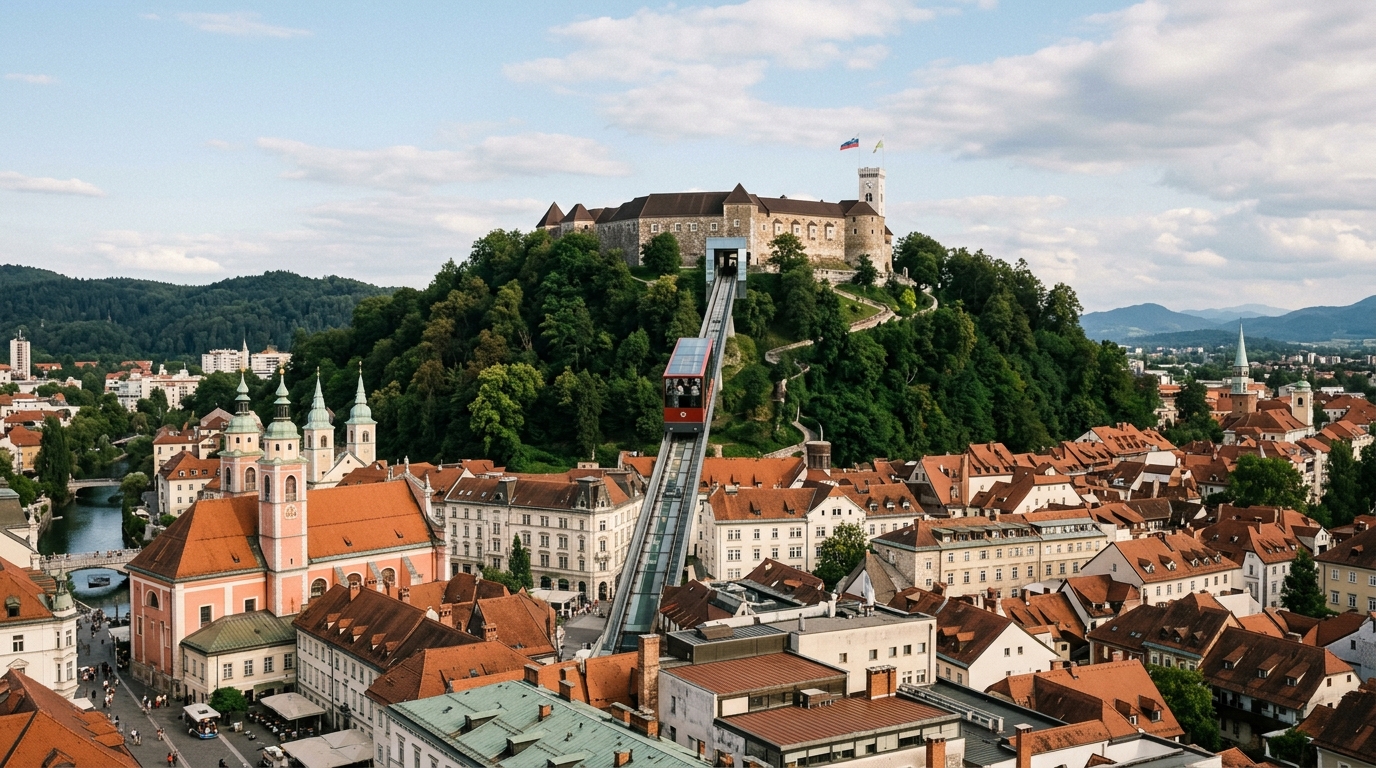
Ljubljana Castle sits on a 375-metre hill directly above the old town and is the city’s defining landmark. The courtyard and ramparts are free to enter any time. You can reach the top by funicular (€4, 2 minutes) or on foot via a well-marked 15-minute trail through the wooded hillside. The panoramic views over orange rooftops and the Kamnik-Savinja Alps are exceptional on clear days. A virtual history exhibition inside the castle costs €12 for adults.
| Attraction | Price (Adult) | Time Needed | Notes |
|---|---|---|---|
| Ljubljana Castle courtyard | Free | 1-2 hrs | Funicular €4 optional |
| Castle Virtual History Exhibition | €12 | 45-60 min | Included in castle combo |
| Triple Bridge (Tromostovje) | Free | 15-20 min | Best at dusk |
| Dragon Bridge (Zmajski most) | Free | 10-15 min | Art Nouveau, 1901 |
| Central Market (open-air) | Free | 30-60 min | Best Saturday mornings |
| Odprta Kuhna (Open Kitchen) | Free entry | 1-2 hrs | Friday lunch, May-Oct only |
| National Museum of Slovenia | €8 | 1.5-2 hrs | Closed Monday |
| Rožnik Hill hike | Free | 60 min return | Just west of city center |
Source: Ljubljana Tourism official website, 2026
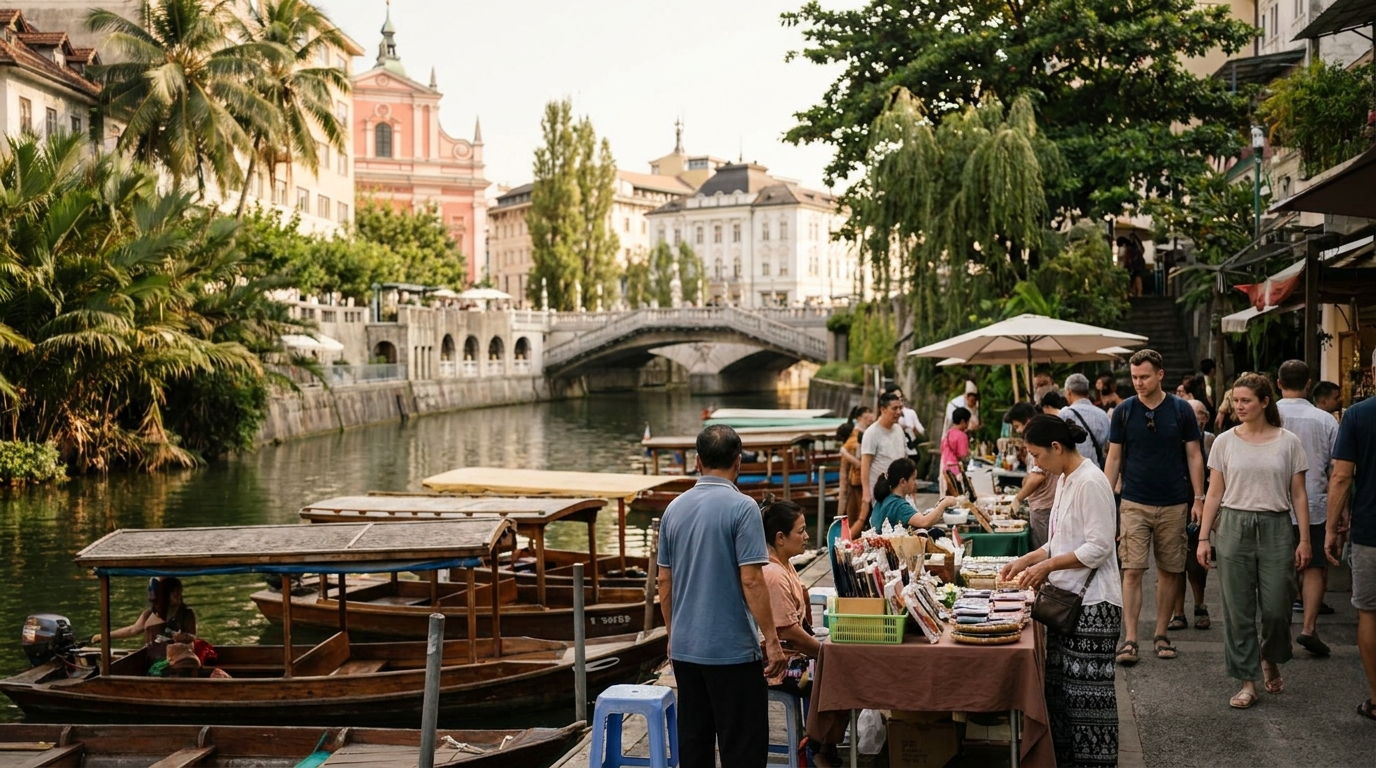
Triple Bridge and Dragon Bridge are both free and unmissable. The Triple Bridge crosses the Ljubljanica river with three parallel spans, all visible from a single viewpoint — an architectural trick that makes the crossing feel theatrical. The Dragon Bridge, four minutes’ walk east, dates to 1901 and carries four bronze dragon statues, Ljubljana’s official symbol. Local legend holds that anyone who crosses as a virgin will cause the dragons to wag their tails.
Central Market runs along the Ljubljanica riverbank and is most vibrant on Saturday mornings, when stalls sell fresh produce, flowers, local cheeses, and honey. The Plečnik-designed colonnaded market hall on the river edge is worth seeing even when stalls are quiet.
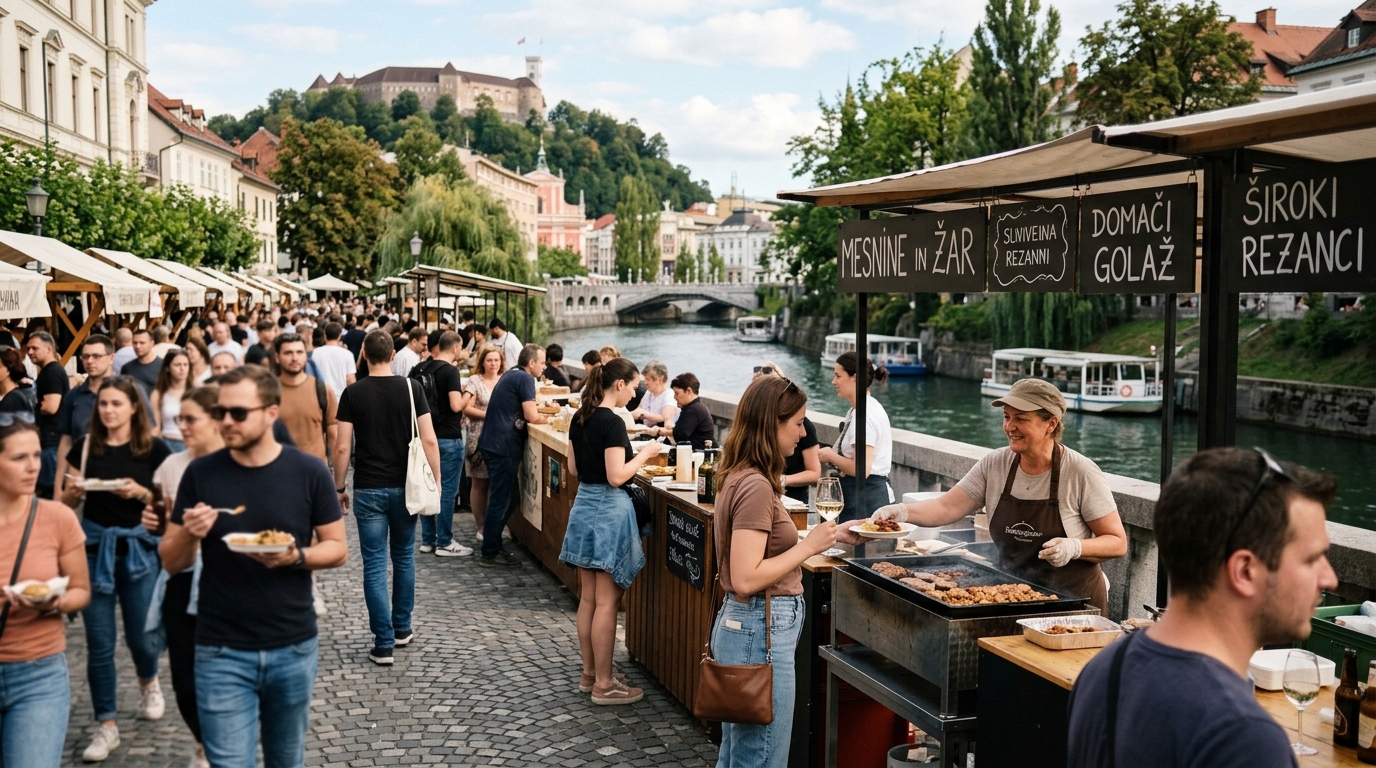
Odprta Kuhna (Open Kitchen) is a Friday outdoor food market running from May through October, typically 10am-3pm. Local restaurants and street food vendors set up along the riverside, and it’s the best single place to try Slovenian food in one session. Entry is free; dishes range from €3-10.
For a full curated list, see best things to do in Ljubljana.
Find your Ljubljana hotel on the map
Live prices from Booking, Airbnb and more — move the map or change dates to compare stays around Ljubljana.
Where Should You Stay in Ljubljana?
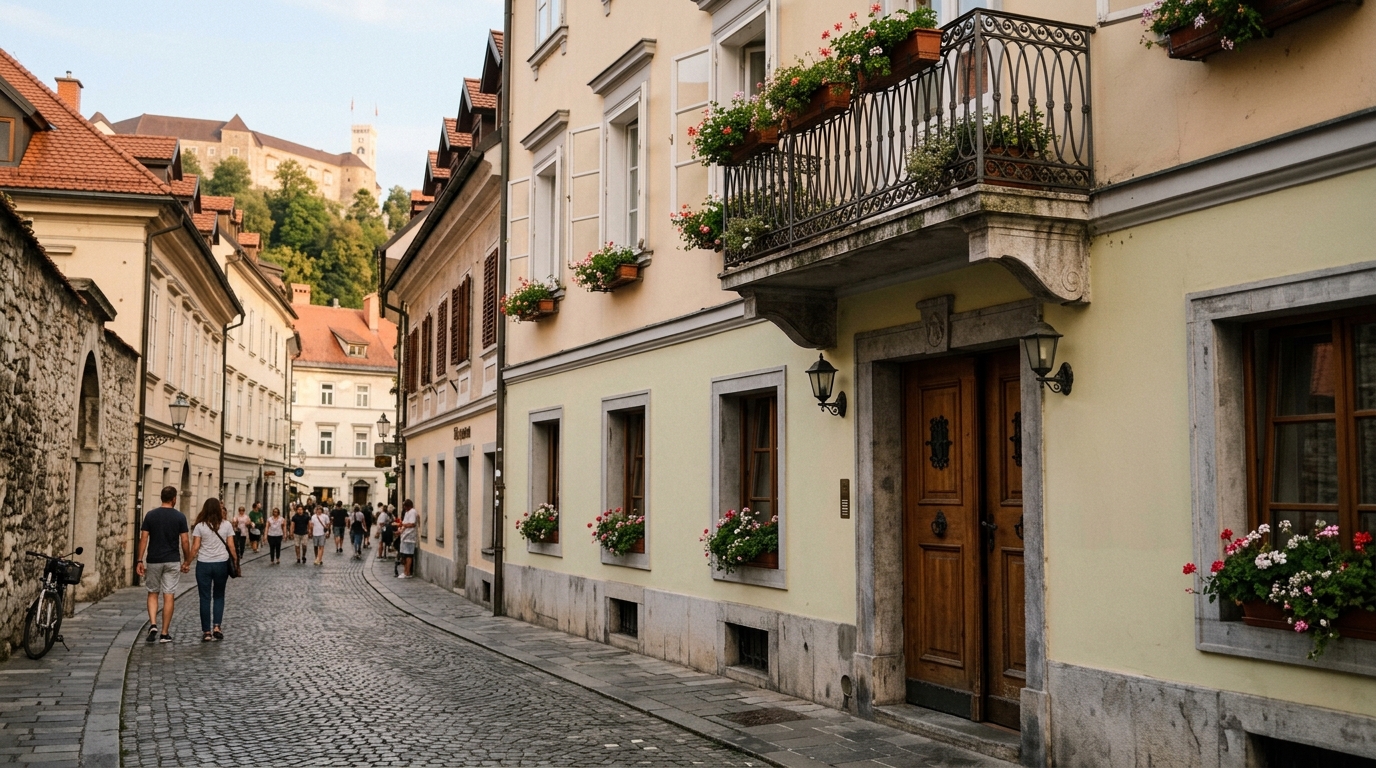
Ljubljana’s compact center makes location straightforward: staying within the old town or within five minutes of it puts you walking distance from every major sight, the market, and the main restaurant strip. The city is affordable by Western European standards, with mid-range options undercutting equivalent quality in Vienna or Prague by 20-30%.
Vander Urbani Resort is the old town’s most-cited boutique property, combining 19th-century townhouse architecture with contemporary design. Rates run €150-220/night. It sits directly on the Ljubljanica, which means river-view rooms are worth requesting. Book via Booking.com for flexible cancellation options.
Hotel Cubo is a design hotel positioned closer to Congress Square, about five minutes from the Triple Bridge. Rates run €120-180/night and the interior design is notably considered for this price point. It attracts a business and design-conscious traveller crowd.
Hostel Celica is genuinely one of Europe’s most unusual hostels. The building is a former military prison from 1882, and 80 international artists each redesigned one of the original cells as individual rooms. Dorm beds run €25-40/night. It sits in the Metelkova district, which is Ljubljana’s arts and alternative culture hub, about a 10-minute walk from the old town.
For budget travellers, several well-reviewed hostels in the center offer dorms from €18-25/night, making Ljubljana one of the cheaper European capitals for shoestring travel.
How Do You Get to Ljubljana?
Ljubljana Jože Pučnik Airport handles direct flights from most major European hubs. Journey times are short: London takes 2 hours 20 minutes, Frankfurt 1 hour 40 minutes, and Vienna just 1 hour. Ryanair, easyJet, and Wizz Air all serve Ljubljana, which keeps fares competitive. The airport sits 26 km from the city center, and a shuttle bus runs to the main bus station (€4.10, 45 minutes).
From Vienna: The train takes 6 hours and runs twice daily. It’s a scenic route through the Austrian Alps and is comfortable for those who prefer rail. One-way fares run €29-60 booked in advance via Book trains to Ljubljana on Trainline.
From Venice: There is no direct train; the most practical connection uses a bus via Trieste or a combined bus-train route. Journey time is around 3 hours 30 minutes. Several operators run direct coach services from Venice Santa Lucia bus station.
From Zagreb: The train from Croatia’s capital takes 2 hours 15 minutes and costs €10-20. This is one of Central Europe’s most affordable cross-border rail connections and is a natural pairing for a Slovenia-Croatia itinerary.
By Car: Slovenia’s motorway network (A1/A2) connects Ljubljana easily to Austria, Croatia, and Italy. Note that Slovenia requires a motorway vignette (€15 for 7 days, €30 for a month) available at border stations and petrol stations. Parking in the center costs €1.20-2.00/hour; the Kozolec garage near the old town is the most central covered option.
What Are the Best Day Trips from Ljubljana?
Ljubljana’s location in the Slovenian interior gives it access to some of Central Europe’s best day trips within a 90-minute radius. Most visitors combine the city with at least one of these destinations.
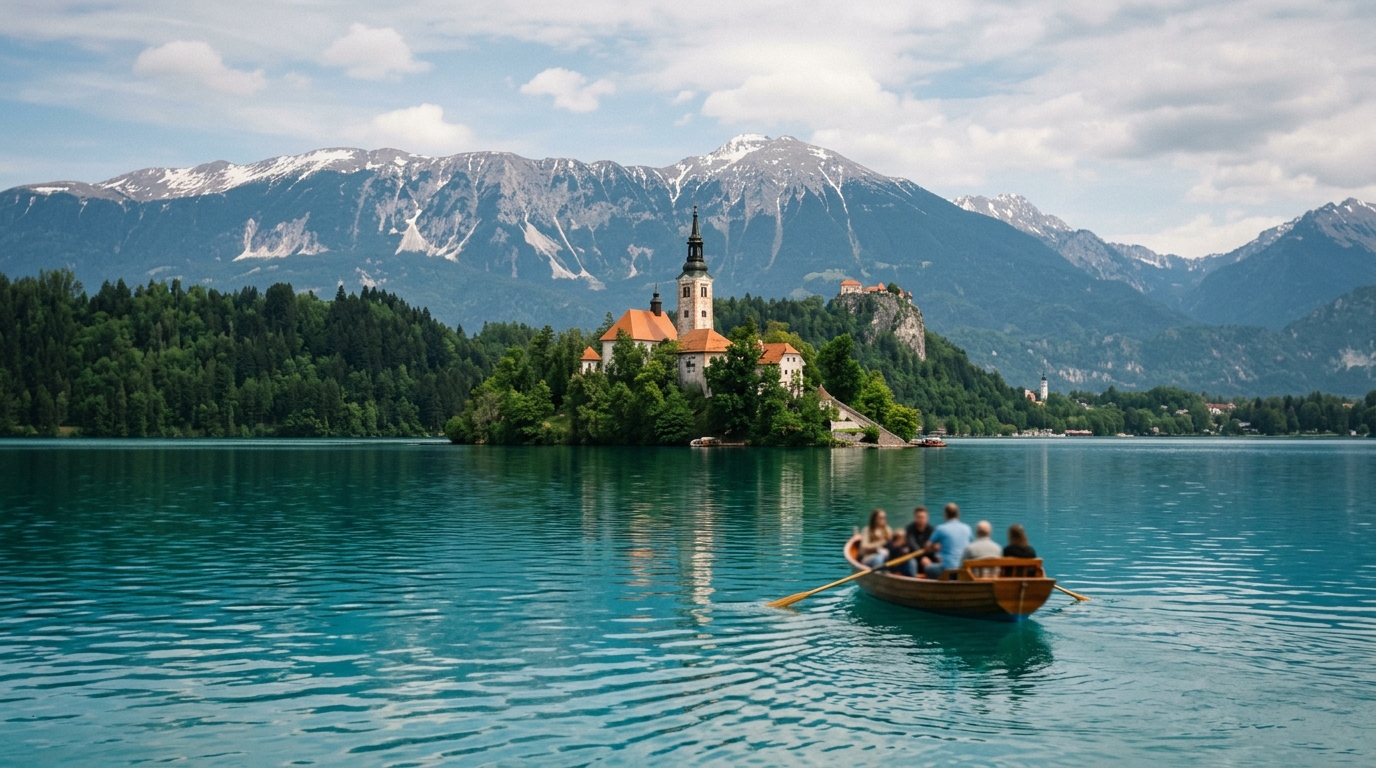
Lake Bled (55 km, 1 hour) is Slovenia’s most iconic image: a glacial lake with a church-topped island and a clifftop castle, surrounded by Julian Alps scenery. Buses depart from Ljubljana bus station roughly every 1-2 hours (€6-8 one way). Most visitors do the lake walk (6 km circuit, 1.5-2 hours), take a traditional pletna wooden rowing boat to the island (€16 return), and climb to Bled Castle for views (€13 entry). A full day is needed to do it justice.
Postojna Cave (1 hour, 50 km) is one of Europe’s longest cave systems, with 24 km of passages and an electric train that carries visitors 3.7 km into the cave interior (Postojna Cave, 2025). Entry costs €29.80 for adults. The adjacent Predjama Castle, built into a cliff face 9 km away, adds another hour and costs €15.80. Both together make a full-day excursion.
Škocjan Caves (1 hour 30 minutes, 80 km) is a UNESCO World Heritage Site and arguably a more dramatic underground experience than Postojna, though smaller in scale. The highlight is the 150-metre-deep underground canyon with a river running through it. Entry costs €22 for adults. Tour slots are limited, so advance booking is recommended in summer.
In our experience, visitors who try to combine Lake Bled and Postojna Cave in a single day consistently find themselves rushed at both. They’re each worth the time to linger. Pick one per day, or allocate two day trip days to your Ljubljana itinerary.
What Does a Ljubljana Trip Actually Cost?
Ljubljana sits comfortably below Vienna, Amsterdam, and Paris in cost, and roughly comparable with Prague and Krakow. The car-free center also means transport within the city costs almost nothing beyond shoe leather.
| Category | Budget | Mid-Range | Comfort |
|---|---|---|---|
| Accommodation (per night) | €18-40 (hostel/dorm) | €80-150 (3-star hotel) | €150-220 (boutique) |
| Meals (per day) | €15-25 (market/takeaway) | €30-50 (restaurants) | €60+ (fine dining) |
| Attractions (per day) | €0-8 (free sites only) | €15-30 (2-3 paid entries) | €30-50 (castle + museum + tour) |
| Transport in city | €0 (walkable) | €0-4 (funicular) | €4-10 (funicular + kayak) |
| Total per day (approx) | €30-50 | €60-100 | €150+ |
Source: TravelTipNow research, 2026
Where to save: The Triple Bridge, Dragon Bridge, Rožnik Hill hike, Central Market, and castle courtyards are all free. Odprta Kuhna on Fridays lets you graze on Slovenian food for €10-15 without sitting down in a restaurant. The castle hike (free, 15 min) delivers the same view as the €4 funicular.
What to spend on: A Ljubljana Card (€32 for 24 hours, €42 for 48 hours, €52 for 72 hours) covers public transport, castle entry including the virtual exhibition, and free entry to seven museums. It pays off if you plan to visit the castle exhibition plus two or three museums in two days.
Slovenian food to try: Potica (walnut roll pastry, €2-4 at bakeries), kranjska klobasa (Carniolan sausage with mustard and bread, €3-5 at the market), and struklji (cottage cheese dumplings, €6-9 as a starter). These are cheaper and more representative than tourist-facing restaurant menus.
When Is the Best Time to Visit Ljubljana?
Slovenia’s capital has a continental climate with warm summers and cold winters, and the best time to visit depends entirely on what you want from the trip. The city’s outdoor culture is its main appeal in summer; its Christmas market is one of Europe’s most genuine in winter.
May-September is peak season. The Odprta Kuhna food market runs every Friday, outdoor restaurant terraces fill along the river, and kayaking on the Ljubljanica (€15 for 2 hours) is a genuinely enjoyable way to see the city from the water. July-August sees the warmest temperatures (25-30°C) but also the most visitors. June and September offer the best balance of weather and manageable crowds.
December brings Ljubljana’s Christmas market, consistently rated among Central Europe’s best by European Best Destinations (European Best Destinations, 2023). Entry is free, the market runs through the old town and castle, and illuminations cover much of the historic core. Accommodation prices rise 20-30% in December, so book two months ahead.
October-November and March-April are shoulder seasons with lower prices and fewer visitors. The city is fully functional and pleasant; the main trade-off is reduced outdoor activity and shorter daylight hours.
January-February is Ljubljana at its quietest. Cold temperatures (often below 0°C) and occasional snow make this a harder sell, though the city is beautiful under light snow and accommodation is cheapest of the year.
Ljubljana Travel Guide: Practical Tips + FAQ
Getting a SIM or eSIM: Slovenia uses EU roaming rules, so any EU SIM works without surcharge. If arriving from outside the EU, Get Slovenia eSIM on Airalo is the simplest option, with Slovenia data packages from around €4.50 for 1 GB.
Getting around the city center: The entire old town is walkable. Ljubljana also operates free Kavalir electric buggy shuttles for mobility-impaired visitors within the car-free zone — a genuinely useful service if you have reduced mobility. Cycling along the flat Ljubljanica river path is a popular option; bike rentals are available from €3/hour near the main bridge.
Money: Slovenia uses the Euro. ATMs are widely available in the center. Cards are accepted almost everywhere, but the Saturday Central Market has some cash-only stalls. Carry €20-30 in small notes.
Language: Slovenian is the official language, but English is spoken at virtually every tourist-facing business, hotel, and restaurant. Younger locals in particular are highly proficient. No Slovenian phrases are strictly necessary, though a simple “hvala” (thank you) is always appreciated.
Connectivity: Free Wi-Fi is available in most hotels, cafes, and the main public squares. The Tourist Information Centre on Adamič-Lundrovo nabrežje has fast free Wi-Fi and helpful English-language staff.
Book Ljubljana guided tours: Book Ljubljana guided tours on GetYourGuide for walking tours, castle tours, and day trips to Lake Bled and Postojna that include return transport from the city.
Frequently Asked Questions
How many days do you need in Ljubljana?
Two days covers the city comfortably: castle, old town, both bridges, the market, and an evening along the riverside. Three days lets you add a day trip to Lake Bled or Postojna Cave without feeling rushed. One day is feasible if you’re passing through, but the city rewards a slower pace. (Ljubljana Tourism, 2025)
Is Ljubljana safe for tourists?
Ljubljana consistently ranks among Europe’s safest capitals. Violent crime is rare, and petty theft is far less common than in larger Western European cities. The car-free center and walkable layout make the city easy to navigate safely at night. Standard travel precautions apply: watch your bag in the Central Market area and on public transport.
Can you do Ljubljana on a day trip from Vienna or Venice?
It’s possible but not ideal. Vienna to Ljubljana by train takes 6 hours one way, making a day trip genuinely exhausting. Venice to Ljubljana by bus takes around 3 hours 30 minutes, which is more manageable but still leaves only 5-6 hours in the city. A one or two-night stay is far more rewarding and relatively affordable.
What is Ljubljana best known for?
Ljubljana is best known for its Plečnik-designed old town, the hilltop castle with free courtyard access, the Ljubljanica riverside cafe culture, the Triple Bridge and Dragon Bridge, and its status as Europe’s 2016 Green Capital. It’s also the starting point for Slovenia’s two most famous day trips: Lake Bled and Postojna Cave.
Is Ljubljana expensive compared to other European capitals?
No. Ljubljana is one of Western-Central Europe’s more affordable capitals. A mid-range day costs €60-100, compared to €120-150 in Vienna or Amsterdam at the same comfort level. Budget travelers using hostels and free attractions can get by on €30-50/day. The weaker price pressure compared to Prague and Budapest is partly because Ljubljana sees fewer mass-tourism visitors.
Final Thoughts on Planning Your Ljubljana Visit
Ljubljana rewards the traveller who wasn’t expecting much. It’s genuinely small, the castle is free, the food market is excellent, and the architecture is more coherent and considered than almost any other city of its size in Europe. Two days in the city plus one day trip to Lake Bled is a combination that almost universally exceeds expectations.
May through September is the best window. Book accommodation two to three months ahead in July and August if you want decent choices in the old town. The Christmas market in December is worth the trip if you’re willing to book early and accept slightly higher prices.
For your next planning step, Book Ljubljana guided tours on GetYourGuide has a full selection of walking tours, castle visits, and day trip transfers with English-speaking guides.
Last updated: May 2026. Prices are accurate as of the date of publication but may change. Always verify current entry fees at official venue websites before your visit.