Is the Amalfi Coast Worth Visiting? (2026)
Disclosure: Some links in this guide are affiliate links. If you book or buy through them, we may earn a small commission at no extra cost to you — it helps keep our guides free.
Yes, the Amalfi Coast is worth visiting if you give it at least three nights and accept that a sea-view room in Positano averages USD 213 (EUR 183) a night while roughly 5 million visitors share the coast every year.
It is not worth visiting as a rushed day trip, on a tight budget, or without booking hotels and ferries ahead, because the single coastal road turns each of those shortcuts into wasted hours.
| Traveller type | Worth it? | Nights to give it | Why |
|---|---|---|---|
| Slow, romantic trips | Yes | 4-5 | Sunset dinners and boat time reward a slower pace |
| Boat and swim lovers | Yes | 3-4 | Coves and grottoes are only reachable by water |
| Photographers | Yes | 3 | Cliffside light works best outside midday crowds |
| Budget travelers | Think twice | 2, and choose a cheaper base | Sea-view rooms and ferries add up fast |
| Day-trippers from Naples or Rome | Skip | 0, stay over instead | The coast road eats a day trip’s clock |
| Families with young kids | Think twice | 2-3 | Steps, cliffs, and thin sidewalks slow everyone down |
| Anyone who gets carsick or hates crowds | Skip | 0 | Hairpin bends and August crowds are unavoidable |
What the Amalfi Coast delivers that photos undersell
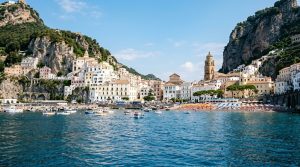
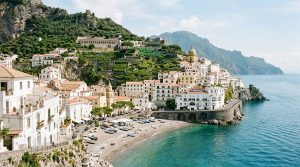
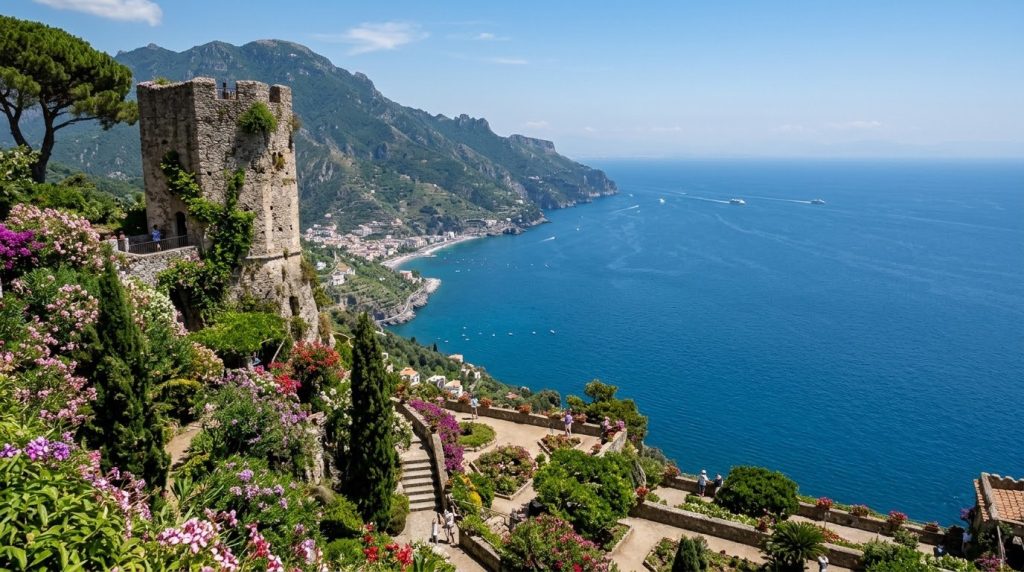
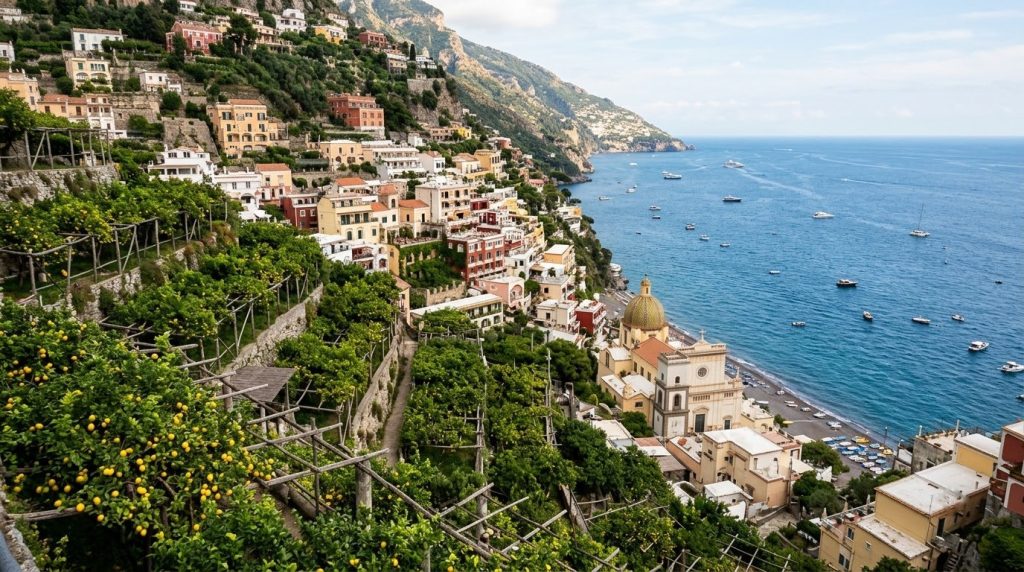
The Amalfi Coast delivers scenery that no photograph fully captures, and for most travelers that alone earns the trip. Towns like Positano and Amalfi stack pastel houses onto cliffs that drop straight into water the color of blue glass, and the effect reads differently in person than on a screen.
A short boat ride reaches coves and grottoes the coast road never touches, which is the real payoff for the extra planning that a car or a bus schedule cannot replicate.
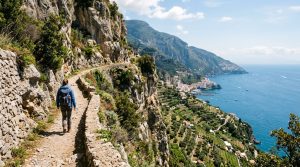
Lemon terraces climb the hillsides behind every town, feeding a local limoncello and ceramics trade that gives Amalfi and Vietri sul Mare a working identity beyond the view, and the Path of the Gods hike above Positano is free and does not depend on a car, a bus, or a ferry schedule.
The full Amalfi Coast travel guide covers all 13 towns along this roughly 50-kilometer stretch of coast, home to about 60,000 residents who share it with those 5 million annual visitors.
The coast road, honestly
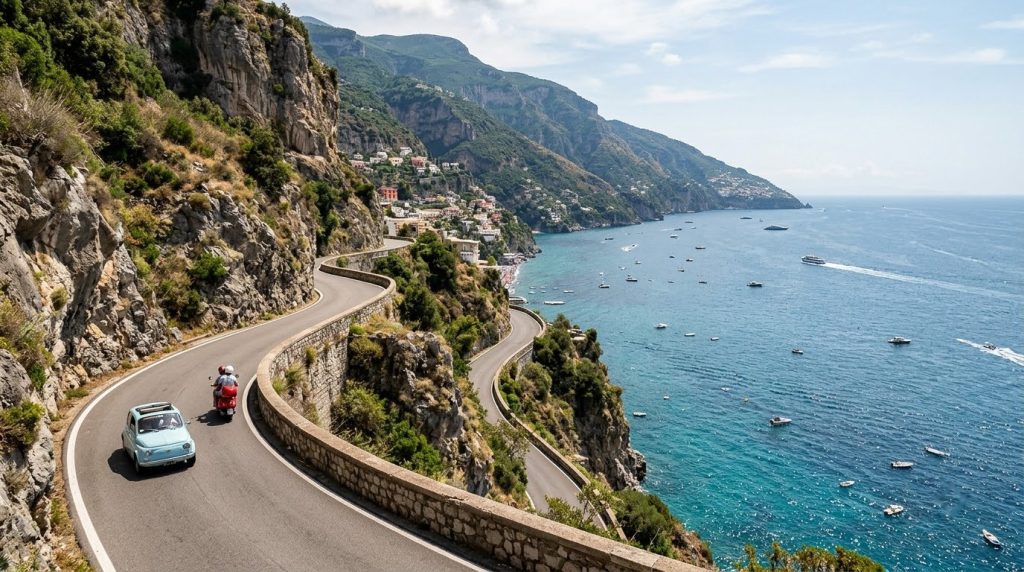
The SS163 coast road is the honest reason the Amalfi Coast wears people out, and no amount of scenery erases that. The road holds one lane in each direction across roughly 350 hairpin turns, and coaches routinely have to back up so an oncoming bus can pass on the narrower bends.
During peak summer hours, the stretch between Maiori and Amalfi has taken over 40 minutes to cover just a few kilometers, and that kind of congestion does not care how good your itinerary looks on paper.
Most travelers are better off leaving a rental car behind: SITA buses run the coast for USD 3 (EUR 2.60, at today’s EUR/USD rate near 1.16) a ride, and the COSTIERASITA day pass covers 24 hours of unlimited rides for about USD 12 (EUR 10).
The towns themselves compound the problem, since many stretches of the busiest roads have no real sidewalk, and getting between a hotel and the water often means steps and steep inclines rather than a flat walk. Anyone piecing together a multi-town route should start from the Amalfi Coast itinerary, which is built to dodge the worst traffic windows.
What it actually costs
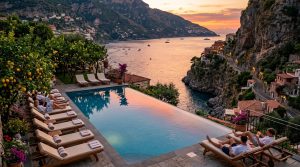
The Amalfi Coast costs more than most of Italy, and the premium is steepest for anything with a sea view. A Positano hotel with a sea-facing room averages USD 213 (EUR 183) a night, while the same town’s five-star properties run USD 3,667 (EUR 3,152) a night in high season.
Amalfi town itself is calmer on price at an average of USD 151 (EUR 130) a night, and Praiano and Vietri sul Mare undercut both at USD 128 (EUR 110) and USD 70 (EUR 60) and up.
Ferries between towns run USD 10 to USD 17 (EUR 9-15) a trip, and a realistic mid-range daily budget, room included, lands around USD 169 to USD 244 (EUR 145-210) per person.
A backpacker-style budget of USD 70 to USD 99 (EUR 60-85) a day is possible, but it means basing in a cheaper town like Vietri sul Mare or Cetara and commuting in by bus rather than sleeping where the view is.
None of that is outrageous by Capri or Positano-adjacent Riviera standards, but it is real money for a coastline most visitors cover in three to five days, and prices climb further the closer a booking date sits to July or August.
The crowds, and the months that fix them
The Amalfi Coast is worst between mid-July and late August, when narrow towns and a narrow road absorb the same crowd at the same time. Ferries run a near-full daily timetable from April to October, but in winter that schedule drops to weekends only on limited routes, with the SITA bus standing in as the year-round backup.
Capri day trips feel the seasonal squeeze hardest, since ferry capacity there tightens first whenever demand rises. In peak August, Positano’s main beach and the Amalfi cathedral steps can feel packed by mid-morning, and the SS163 traffic described above is at its worst on exactly those days.
Shoulder season, the best time to visit the Amalfi Coast, runs May through early June and again from late September into October, when towns thin out but ferries and restaurants stay fully open.
Who should skip the Amalfi Coast
Day-trippers from Naples or Rome should skip the Amalfi Coast, because the coast road alone can burn half a planned day in traffic before anyone reaches a beach or a viewpoint, and a single bus delay can erase the rest of the itinerary.
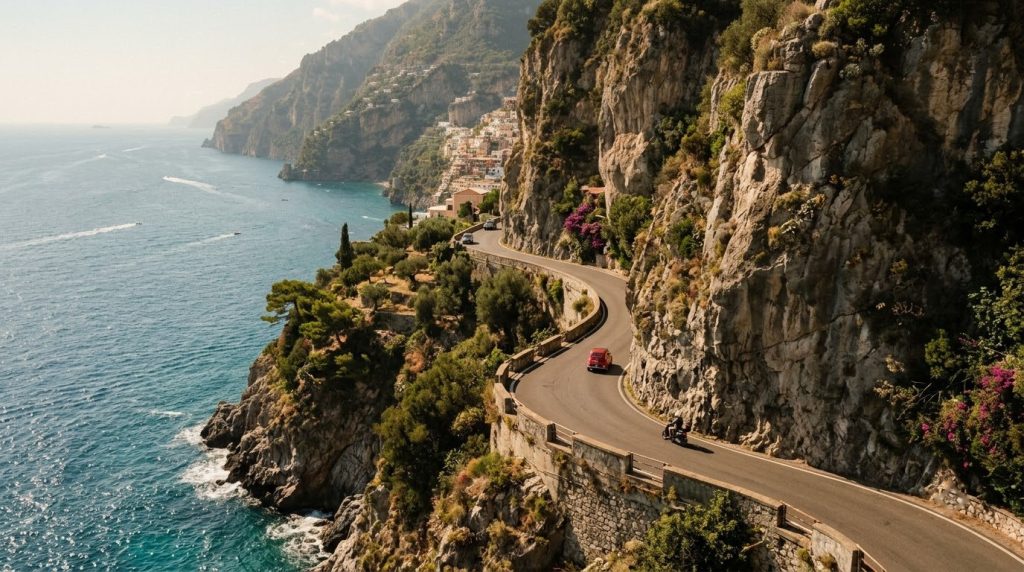
Budget travelers who need sub-USD 100 nights should also pass, since sea-view rooms and ferry tickets push costs well above backpacker-friendly Italy. Anyone who gets carsick, hates crowds, or refuses to book hotels and ferries weeks ahead will spend more time frustrated than impressed, especially in August when every hairpin bend on the SS163 backs up with tour coaches.
Travelers with limited mobility should also think twice, since the lack of sidewalks and the steep steps connecting most hotels to the water are unavoidable rather than occasional. The coast rewards patience and a booked calendar, and it punishes anyone hoping to wing it.
Where to stay if you decide to go
Location matters more here than almost anywhere else in Italy, since every extra kilometer from your hotel to dinner means more time spent on the SS163 after dark. A base in Amalfi or Positano cuts that travel time to a walk, while a cheaper room in Vietri sul Mare or Cetara trades convenience for a lower nightly rate and a longer bus ride each way.
Find your Amalfi Coast hotel on the map
Live prices from Booking, Airbnb and more — move the map or change dates to compare stays along the Amalfi Coast.