Is Barcelona Worth Visiting? (2026)
Disclosure: Some links in this guide are affiliate links. If you book or buy through them, we may earn a small commission at no extra cost to you — it helps keep our guides free.
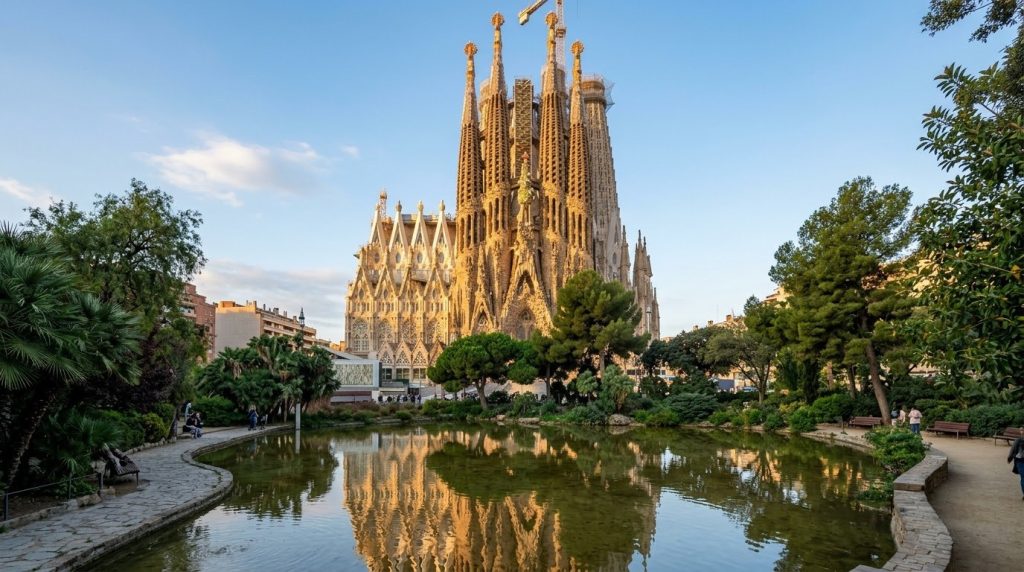
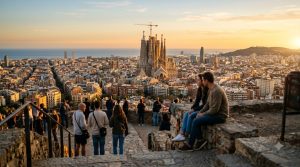
Barcelona is worth visiting in 2026, backed by two numbers: the Sagrada Familia’s central tower topped out at 172.5 meters in February, making it the tallest church spire on earth, and citywide pickpocketing complaints fell by roughly 40% this year under a dedicated police crackdown.
It is not worth visiting if you refuse to book sights in advance and expect a quiet July afternoon on Las Ramblas, because that exact combination, no planning, peak summer, a headline sight, is where Barcelona disappoints people.
| Traveller type | Worth it? | Nights to give it | Why |
|---|---|---|---|
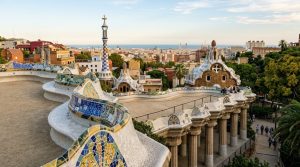
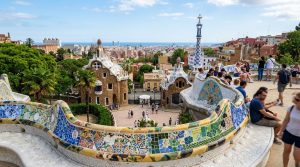
| First-time architecture and culture traveller | Yes | 3-4 nights | Sagrada Familia, Park Güell and the Gothic Quarter sit inside one metro network |
| Family with kids under 12 | Yes | 3 nights | City beach, Park Güell and short walking distances between sights |
| Budget traveller in July or August | No | Skip peak summer | Tourist tax stacks on top of peak-season rates and the worst crowds of the year |
| Repeat visitor who has done the center | Maybe | 2 nights, based outside Eixample | The core sights are unchanged since your last trip; the value now is in the neighborhoods |
| Traveller who wants a quiet, uncrowded city | No | Skip entirely | The headline sights run timed-entry queues most of the year |
| Beach-first traveller comparing the Mediterranean | Maybe | 2 nights, add a coastal stop after | City beaches are convenient, not the region’s best sand |
What Barcelona has that few cities can match
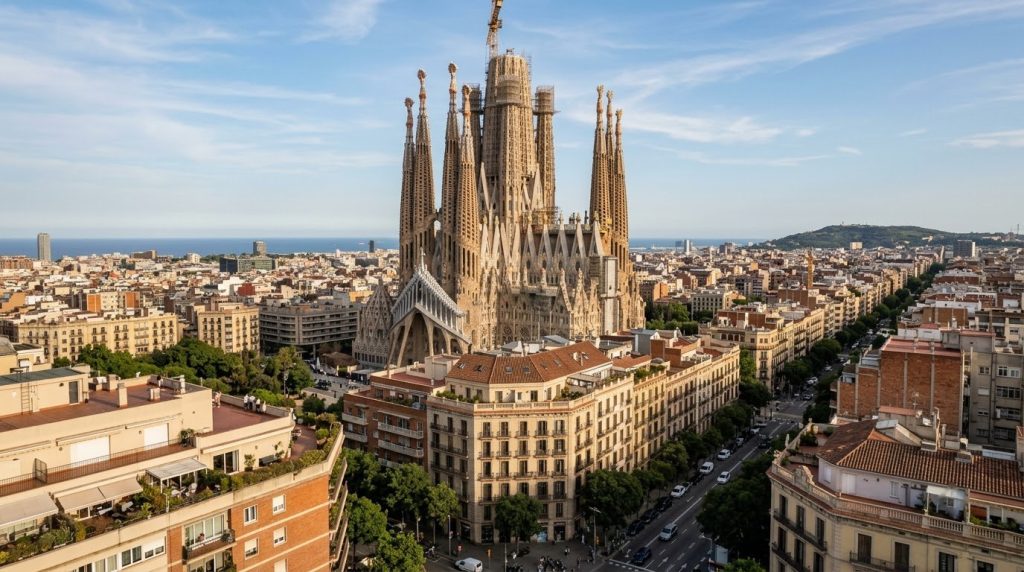
Few European capitals stack a beach, a mountain and a UNESCO-dense old town inside one 25-minute metro ride, and that combination is what makes Barcelona worth the trip even with the crowds factored in. Gaudí’s buildings are not replicated anywhere else on earth, so the architecture argument alone clears the bar for most first-time visitors.
The food culture runs from EUR 2 vermouth-bar snacks to multi-course tasting menus without a real gap in between, and the city is flat and walkable in a way Lisbon and Rome are not.
Barcelona also runs on a working port and a genuine local economy outside tourism, which is why neighborhoods ten minutes off the tourist track still feel like a Spanish city and not a theme park built around a handful of landmarks.
That density of things worth doing inside a compact, flat footprint is the actual case for Barcelona, separate from the postcard photos.
The pickpocket reputation, in practice
The pickpocket reputation is earned, but it is concentrated in a few well-known blocks, not spread evenly across the city. Las Ramblas, the Gothic Quarter and the L3 metro line between Catalunya, Liceu and Drassanes stations account for the bulk of tourist theft reports, with that L3 corridor alone linked to close to half of all reported metro thefts.
The city logged over 110,000 theft reports in 2024, and pickpocketing fell by roughly 40% in 2026 after police launched Pla Kanpai, a crackdown targeting repeat offenders.
In practice that means keeping your bag zipped and in front of you on Las Ramblas and on the metro during rush hour, and treating quieter streets in the Eixample or Gràcia as normal-risk rather than high-risk.
The pattern is opportunistic distraction theft, not confrontation, so a crossbody bag worn in front, a zipped inside pocket for your phone, and skepticism toward anyone who suddenly needs your attention on a crowded platform cover most of the real risk.
The anti-tourism tension, and what it means for you
The tension is real at a policy level, and it will affect where you can stay, but it will not follow you around the street.
Barcelona is phasing out all roughly 10,100 licensed tourist-apartment permits by November 2028, has issued no new licenses since 2026, and has already returned more than 3,500 apartments to the regular housing market; a 2026 survey found about 75% of residents support the move.
That policy targets whole-apartment, Airbnb-style rentals inside residential buildings, not hotels or hostels, so booking a hotel or a licensed serviced apartment means the phase-out barely touches your trip.
What does touch your trip is the tourist tax: as of April 2026, Catalonia’s overnight tax runs EUR 10 to EUR 15 a night by hotel category, on top of Barcelona’s flat EUR 5 municipal surcharge, so a mid-range hotel stay can add close to EUR 20 a night, or USD 23 (EUR 20) at today’s EUR/USD rate of 1.16.
The open hostility you may have read about, the 2024 water-pistol protests, was aimed at housing policy and cruise-ship volume, not at individual visitors, and it does not translate into tourists being targeted on the street.
The practical takeaway is to book accommodation early and expect fewer whole-apartment listings in the historic center as 2028 approaches, not to expect a hostile welcome once you arrive.
The crowds at the headline sights
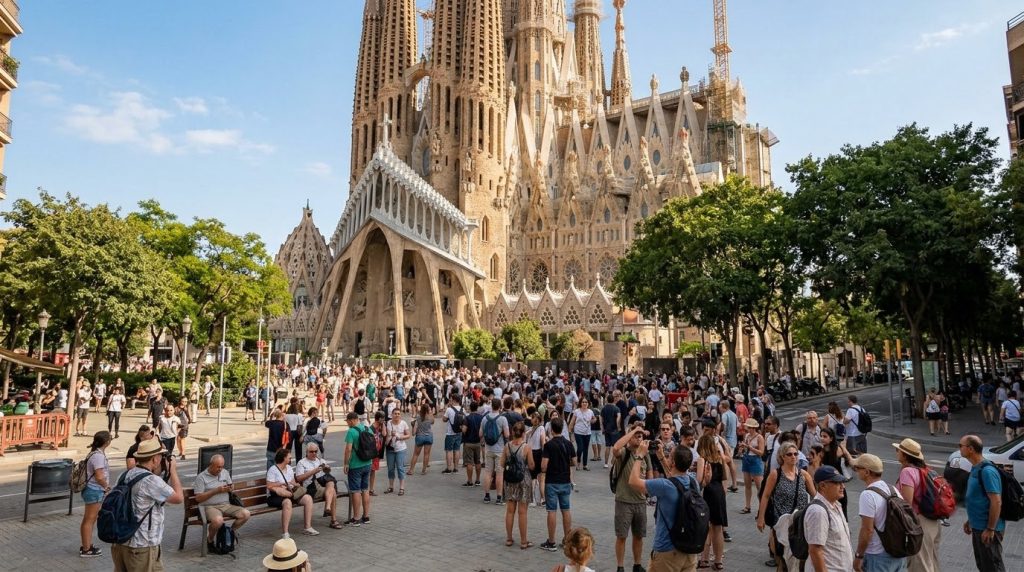
The headline sights queue up for most of the year now, and the Sagrada Familia is the clearest case. Since its central tower topped out in February 2026 and Pope Leo XIV blessed the completed exterior in June, during the centenary year of Gaudí’s death, timed-entry slots have been selling out further in advance than before.
Book Sagrada Familia and Park Güell at least two to three weeks ahead for a fixed entry window, and take the first slot of the day or the last one before closing to cut the visible crowd roughly in half.
The same logic applies to Park Güell’s monumental zone and to Casa Batlló, both of which sell fixed entry windows rather than open access, so arriving without a booking now means either paying a premium for a same-day slot or being turned away.
If your dates are flexible, the best time to visit Barcelona breaks down which months trade crowd size for weather, and shoulder-season mornings are the closest this city gets to calm at its own landmarks.
Who should skip Barcelona
Skip Barcelona if you want a genuinely quiet trip, because the Gothic Quarter and Sagrada Familia run at tourist-season density nearly year-round and there is no realistic way to book around that entirely.
Skip it if you are a strict budget traveller visiting in July or August, when peak hotel rates stack on the new overnight tax and afternoon heat regularly pushes past 90°F.
Skip it if you have already spent four or more days in the center on a past trip and are hunting for a different Barcelona rather than a repeat of Park Güell and Las Ramblas; what is left for you is neighborhoods like Sant Antoni or Poblenou, not another pass through the greatest hits.
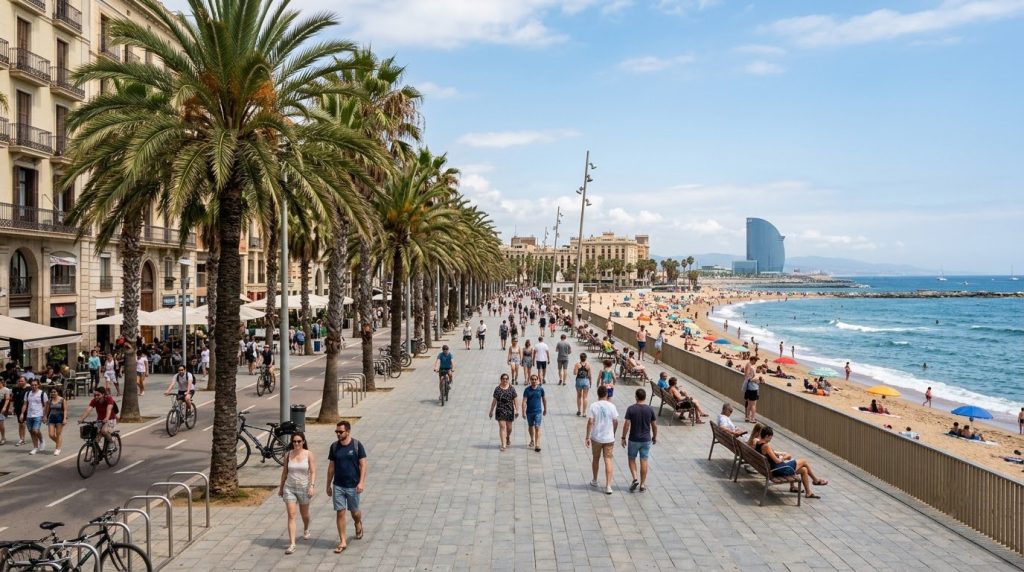
Skip it, too, if beaches are the actual point of your trip: Barcelona’s city beaches are fine for an afternoon, not a reason to choose this city over the Amalfi Coast or the Greek islands.
When to go for the best balance of weather and crowds
Spring, roughly April through June, and autumn, September into October, are Barcelona’s shoulder seasons and the best trade-off between comfortable weather and the crowd levels described above.
Spring temperatures climb from the high teens into the low-to-mid 20s Celsius, autumn runs a similar range in reverse, and both seasons stay well short of the roughly 28 to 30C afternoon heat that settles in through July and August.
Winter, December through February, is mild by northern European standards but genuinely cool and sometimes damp, with daytime temperatures commonly in the single digits to mid-teens Celsius, so it suits a traveller prioritising low prices and thin crowds over beach weather or long outdoor evenings.
None of this changes the booking advice already covered: Sagrada Familia and Park Guell sell timed slots year-round regardless of season, so a quieter month reduces the general street-level crowd and the heat, not the need to book those two sights ahead.
If a trip has to land in July or August, shifting outdoor sightseeing to the morning and treating the afternoon as pool, beach or indoor museum time does more for comfort than any other single adjustment.
Autumn also tends to bring more rain than the dry summer months, usually as a short, heavy downpour rather than a day-long soak, so packing a light rain layer for a spring or autumn trip is worth doing even though the overall weather is milder than summer.
Getting around without overspending on transport
Barcelona’s metro and bus network covers the city well enough that a rental car is a liability rather than a convenience for a trip centred on the sights already covered above.
The T-Casual card, which replaced the old T-10, gives 10 journeys on metro, bus, tram and local train within Zone 1 for EUR 13, officially about USD 15 at the EUR/USD rate used elsewhere in this guide, and can be shared between multiple people on the same trip since it is not tied to one name.
A single one-way ticket costs EUR 2.90 if you only need an occasional ride rather than ten.
The airport sits in the same transport zone as the city centre, so the T-Casual also covers the metro or train ride in from El Prat, which is both cheaper and, outside rush hour, faster than a taxi once you include the walk from arrivals to the platform.
Walking covers most of the Gothic Quarter and Eixample comfortably given the flat terrain already noted, and a metro or bus ride only really earns its fare for longer hops, such as reaching Park Guell’s hillside location or crossing from the beach to Gracia.
The dedicated Aerobus shuttle between the airport and Placa Catalunya is a direct, no-transfer alternative to the metro for about EUR 5 to EUR 8 one-way, running roughly every 10 minutes and taking about 30 minutes, which is worth the small premium over the T-Casual fare on arrival if you are tired, carrying heavy luggage, or unsure of the metro layout on a first visit.
Taxis and ride-hailing apps are available and metered fairly, but they sit well above the price of either public option for the same airport run and make more sense for a late-night arrival than for daytime sightseeing once you are settled in.
Who gets the most out of Barcelona
Barcelona rewards a specific kind of traveller more than others, and knowing which one you are shapes how much the crowds and the tourist tax actually bother you.
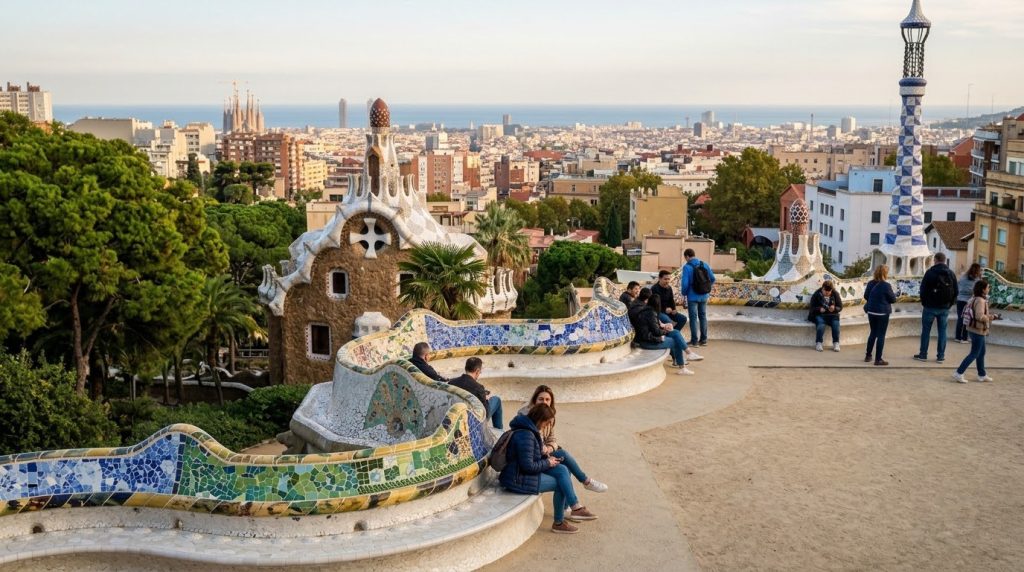
Architecture and design-focused travellers get the clearest payoff, since Gaudi’s buildings, the Gothic Quarter’s layered street plan and the Eixample’s grid are genuinely hard to find packed this densely anywhere else in Europe.
Food-first travellers also do well here, given the range from cheap vermouth-bar snacks to serious tasting menus already covered, and a trip built loosely around neighbourhood food crawls tends to dodge the worst of the headline-sight queues almost by accident.
First-time visitors to Spain or Catalonia benefit from Barcelona working as an easy, well-connected introduction, with direct flights from most of Europe, North America and Australia and a transport network simple enough to learn in a day.
Groups mixing different interests, one person who wants beach time, another who wants museums, another who wants nightlife, also do well, since all three exist within the same compact footprint rather than requiring a multi-city trip to cover.
The traveller who gets the least out of Barcelona is the one chasing a single quiet, uncrowded experience with no other agenda, which circles back to the main reason to skip it covered above.
Travellers who want strong nightlife and a late-night food and drink scene also tend to rate the city highly, since bars and restaurants routinely stay busy well past midnight in a way many northern European capitals do not, though that same nightlife density is part of why the Gothic Quarter and Barri area carry the higher petty-theft risk already covered.
Where to stay if you decide to go
Where you stay changes how much of Barcelona’s tension you actually feel, so pick a base first. Where to stay in Barcelona breaks the areas down by traveller type, and if you are still deciding how long to give the city, how many days to spend in Barcelona and the 3-day Barcelona itinerary cover trip length and route in full.
Find your Barcelona hotel on the map
Live prices from Booking, Airbnb and more — move the map or change dates to compare stays across Barcelona.