Best Time to Visit Okinawa (2026)
Disclosure: Some links in this guide are affiliate links. If you book or buy through them, we may earn a small commission at no extra cost to you — it helps keep our guides free.
- The best time to visit Okinawa is April to June, with typhoon activity under one storm per month.
- Water temperature peaks in July and August, right as typhoon frequency roughly doubles.
- August has the most typhoon approaches of any month.
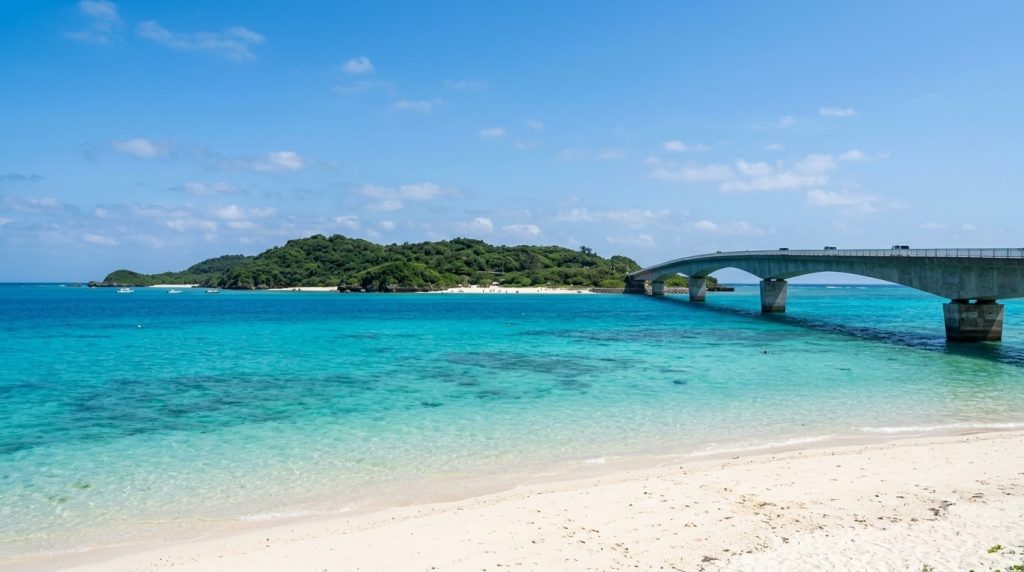
The best time to visit Okinawa is April to June, when air temperatures average 22°C to 28°C and typhoon activity stays under one storm per month. This window shifts for anyone chasing the warmest sea and the fullest beach infrastructure, since water temperature does not peak until July and August, right as typhoon frequency roughly doubles.
| Month | Air Temp | Sea Temp | Typhoon Risk | Verdict |
|---|---|---|---|---|
| January | 15-20°C | 22.5°C | Low | Whale season opens, quiet beaches |
| February | 15-20°C | 22°C | Low | Peak whale watching, coolest sea |
| March | 17-22°C | 22.5°C | Low | Southern islands open for swimming |
| April | 19-24°C | 23.5°C | Low | Main-island beaches open, best window starts |
| May | 22-27°C | 25°C | Rising | Warm, thinner crowds, rainy season begins |
| June | 25-30°C | 27°C | Moderate | Rainy season ends, jellyfish nets go up |
| July | 27-32°C | 29°C | High | Peak heat, first real storm risk |
| August | 27-32°C | 29.1°C | Peak | Most typhoon-approaches of any month |
| September | 26-31°C | 28.5°C | High | Second-highest typhoon month |
| October | 24-28°C | 27°C | Moderate-high | Beach season closes on the 31st |
| November | 20-25°C | 25.5°C | Low | Cooling fast, storms mostly done |
| December | 17-22°C | 24°C | Low | Whale season starts again, mild and dry |
April to June – the strongest window
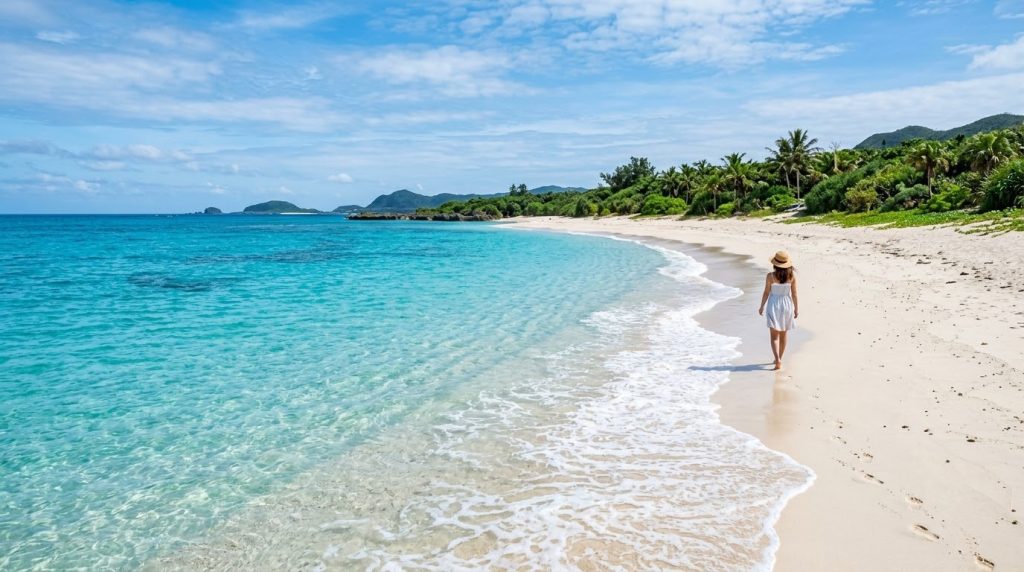
April, May, and early June deliver the best combination of warm air, manageable rain, and typhoon activity that stays below one storm per month.
Air temperature climbs from a 19-24°C range in April to a 25-30°C range by June, and the sea warms from 23.5°C to 27°C over the same stretch, so swimming becomes genuinely comfortable by mid-May rather than merely tolerable.
The trade-off is Okinawa’s version of the baiu rainy season, which typically starts in May and runs into June, bringing intermittent overcast days rather than the washed-out weeks mainland Japan sees.
Late April through the last week of May is the sweet spot inside this window, landing after the rains fully arrive but before the July-to-September typhoon peak begins to matter.
Why typhoon season decides more than the weather forecast
Okinawa sits in the most typhoon-exposed part of Japan, and its season runs from May through October, far longer than the mainland’s roughly August-to-October window.
An average of 7.8 typhoons approach the Okinawa region each year, and the monthly count is not evenly spread: August averages 2.2 approaching storms, September averages 1.9, and July averages 1.5, so the back half of summer carries most of the season’s disruption. The practical risk is not a rained-out beach day, it is a cancelled inter-island ferry.
Routes to the Kerama Islands and to Ishigaki and Miyako cancel well before flights do, typically once Japan Meteorological Agency gale warnings, wave heights of two to three meters, or sustained winds of 15 to 20 meters per second are forecast.
A cancelled Kerama or Ishigaki crossing can strand an entire day-trip itinerary, since the high-speed Queen Zamami boat cancels before the slower Ferry Zamami does, and both can be suspended a day or two ahead of a storm’s actual arrival. Anyone booking an outer-island crossing between July and September should build in a buffer day rather than a same-day return.
The official swimming season, and why warm days are not enough
Okinawa’s beaches are not open year-round even though the air feels warm enough to swim in March or November. Each beach holds its own umi-biraki, or official sea-opening ceremony, and only operates lifeguards, jellyfish nets, and rental facilities between its opening and closing dates.
The southern outer islands open earliest, with Ishigaki’s 2026 umi-biraki held on March 14 and Zamami’s on April 18, while Naha-area and mainland-Okinawa resort beaches such as Emerald Beach at Ocean Expo Park typically open around April 1.
Almost every managed beach on the main island closes for the season on October 31, regardless of how warm the water still is. Inside that window, a second seasonal hazard appears: Okinawa Prefecture issues a habu jellyfish (box jellyfish) outbreak advisory every year from June 1 through September 30, with stings peaking in July and August.
Swimming outside the netted, patrolled area during that stretch carries real risk, so a warm day in early November with no lifeguard on duty and no net in the water is not a safe swim, whatever the air temperature says.
Winter in Okinawa – whale watching and empty beaches
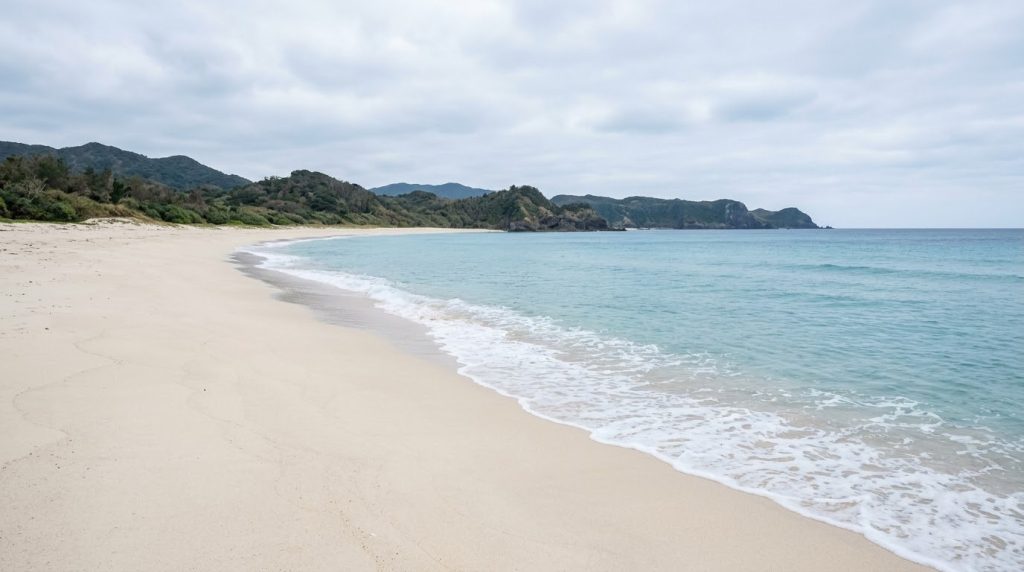
Winter trades beach time for humpback whale season, which is the main reason to visit Okinawa between December and April. Humpback whales arrive in Okinawan waters from late December through early April to breed and raise calves, with the most reliable sightings from mid-January through March and the single best window in the first three weeks of February.
The Kerama Islands, especially the waters around Zamami and Tokashiki, produce the most consistent encounters. Air temperature in this stretch runs a cool 15-22°C and the sea holds around 22-24°C, too cold for most travelers to swim comfortably, but typhoon risk is effectively zero and hotel rates and crowds both drop.
Anyone prioritizing whale watching, quiet dive sites, or lower prices over beach time should target February specifically.
When NOT to visit Okinawa
Late August and September are the two months to avoid unless a trip is fully typhoon-flexible, since they combine the year’s highest air and sea temperatures with the heaviest storm activity, an average of 2.2 approaching typhoons in August and 1.9 in September.
Any trip built around a single outer-island ferry crossing, such as a day trip to Zamami or a multi-night stay on Ishigaki, is especially exposed in this window because those routes are the first to cancel. Early June is a secondary caution window because the rainy season can still be active even after the calendar says summer has arrived.
None of this rules out a July or August trip entirely, since most days are storm-free and the heat and sea temperature are genuinely at their best, but it does mean booking refundable flights and accommodation and watching the Japan Meteorological Agency’s tracker in the two weeks before departure.
Plan your Okinawa trip
Okinawa’s calendar is different enough from the mainland that it is worth planning as its own trip rather than an add-on. Travelers building a wider Japan itinerary can compare it against the best time to visit Tokyo, roughly 1,500 kilometers north and governed by an entirely separate seasonal calendar, or check a Tokyo budget guide for mainland cost planning. Zamami sits in the Kerama Islands, the snorkeling area our honest Okinawa verdict rates as the strongest reason to go.
For the Okinawa leg itself, a detailed Okinawa itinerary helps sequence beach days around the umi-biraki dates and typhoon-prone months above, and a look at the best hotels in Okinawa is worth doing before locking in dates, since resort rates swing hard between the April-to-June window and the August peak.
At today’s verified rate of USD 1 to JPY 154.36, a one-way high-speed ferry ticket to Zamami costs JPY 3,950, or about USD 26.
Find your Okinawa hotel on the map
Live prices from Booking, Airbnb and more — move the map or change dates to compare stays across Okinawa.