
Disclosure: Some links in this guide are affiliate links. If you book or buy through them, we may earn a small commission at no extra cost to you — it helps keep our guides free.
Best Food in Kyoto 2026: What & Where to Eat
The best food in Kyoto in 2026 is its refined vegetarian-leaning cuisine: multi-course kaiseki, silky yudofu and yuba tofu, home-style obanzai, pressed saba-zushi, and Uji matcha sweets, most of which you can try for under ¥2,000 a bite at Nishiki Market or splurge on from ¥10,000 at a temple-side restaurant. Kyoto spent over a thousand years as Japan’s imperial capital, far from the sea, and that history shaped a kitchen built on tofu, seasonal vegetables, pickles, and preserved fish rather than fresh sashimi.
This guide walks through the dishes we keep going back for, what each one actually is, where to try it, and roughly what it costs in 2026 yen. We cover kaiseki, yudofu, yuba, obanzai, nishin soba, saba-zushi, Nishiki Market street food, and the city’s famous matcha sweets, then finish with where to eat by area, reservation and etiquette tips, and an FAQ. For the wider trip, our full Kyoto travel guide handles logistics, budgets, and district maps.
Key Takeaways
– Kyoto’s signature cuisine is kyo-ryori — tofu, yuba, seasonal vegetables and pickles — a legacy of the inland old capital, not a seafood city.
– Kaiseki is the fine-dining peak, from around ¥5,000 at lunch to ¥10,000-¥60,000 at dinner, and almost always needs a reservation.
– Nishiki Market is the cheapest way to graze, with more than 100 stalls and most snacks priced ¥200-¥800.
– Yudofu (simmered tofu) clusters near Nanzenji, where Okutan has served it since 1635.
– Matcha here means Uji matcha — the region south of Kyoto is one of Japan’s oldest and best tea areas.[PERSONAL EXPERIENCE] Across two trips to Kyoto we worked through most of this list, and the pattern that stuck was this: eat cheap and fast by day (a Nishiki skewer, a bowl of nishin soba), then spend once on something slow — a kaiseki lunch or a proper yudofu set by a temple. That rhythm gave us the full range without blowing the budget on every meal.
What Food Is Kyoto Known For?
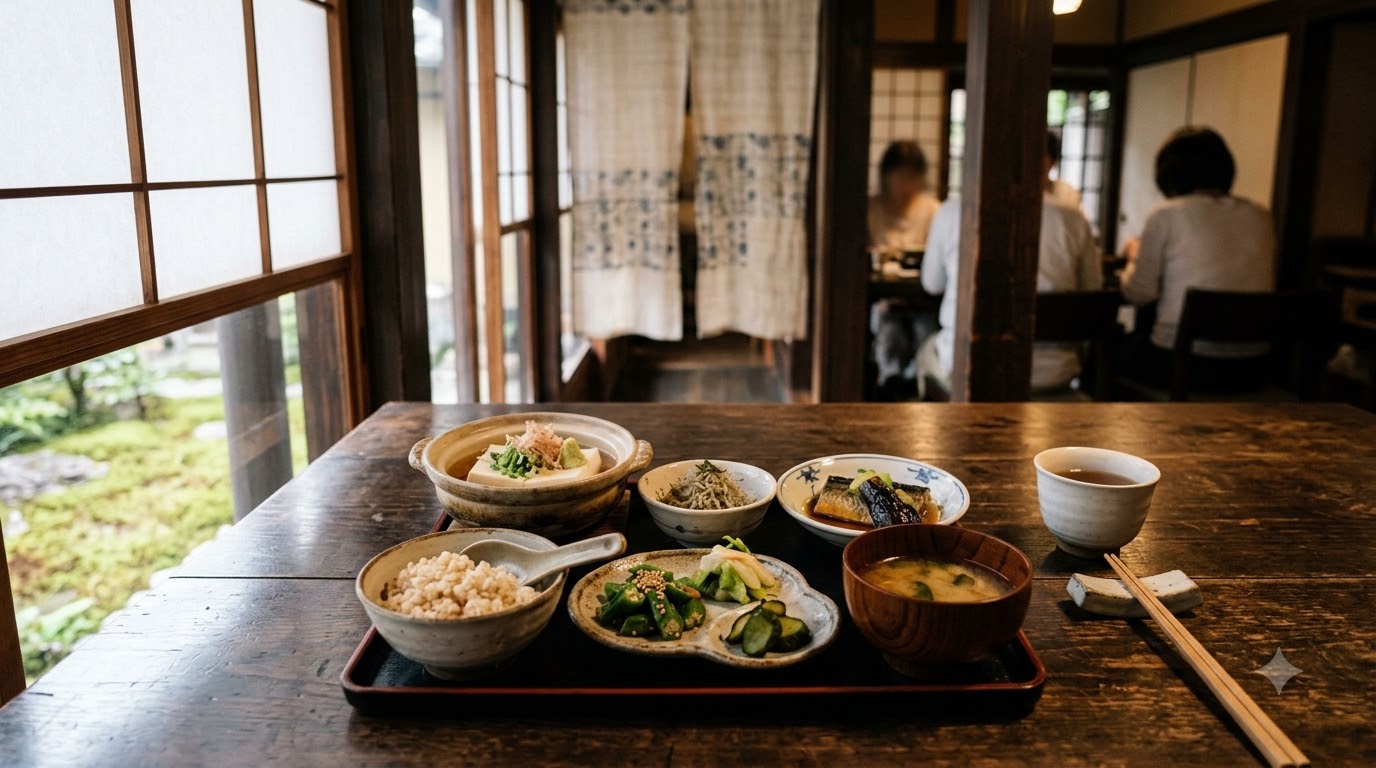
Kyoto is known for kyo-ryori, an elegant, vegetable-forward style of cooking developed for the imperial court, Buddhist temples, and tea houses. Because the old capital sits inland, its classic dishes lean on tofu, yuba, kyo-yasai (heritage Kyoto vegetables), pickles, and preserved fish rather than the fresh seafood you find in coastal Japan. Here is the shortlist we would not leave the city without trying:
- Kaiseki — the multi-course seasonal tasting menu, Kyoto’s haute cuisine.
- Yudofu — silken tofu simmered in kombu broth, a temple-district specialty.
- Yuba — delicate soy-milk skin, best fresh in Arashiyama.
- Obanzai — Kyoto home-style side dishes, the everyday counterpart to kaiseki.
- Nishin soba — buckwheat noodles topped with sweet-simmered herring.
- Saba-zushi — pressed mackerel sushi wrapped in kombu.
- Nishiki Market snacks — skewers, tofu, pickles, and sweets to eat as you walk.
- Matcha and wagashi — Uji-grade green tea and the seasonal sweets served alongside.
If you are timing your visit around seasonal specialties, our best time to visit Kyoto guide notes when things like bamboo shoots, hamo eel, and autumn matsutake mushrooms are at their peak.
Kaiseki: Kyoto’s Multi-Course Fine Dining
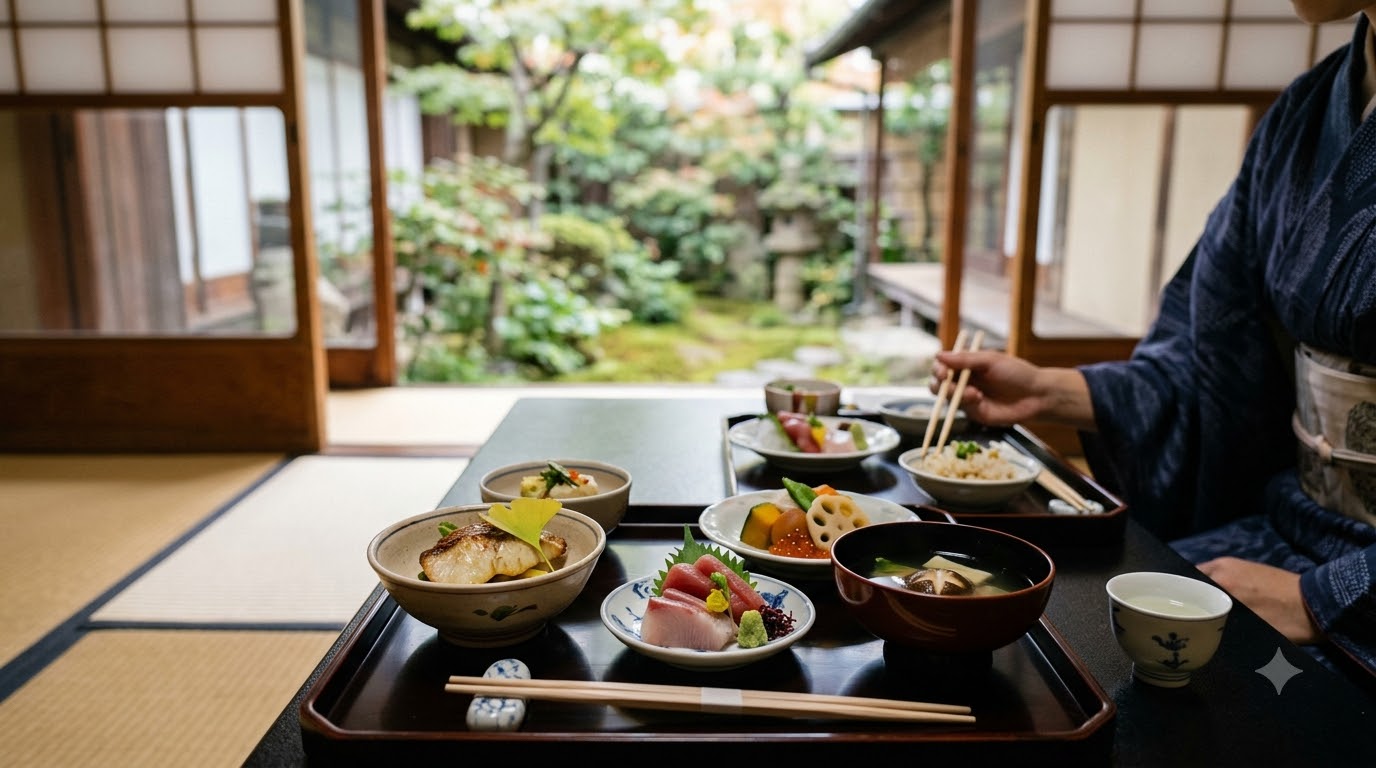
Kaiseki is Kyoto’s most refined meal, a procession of small seasonal courses that showcase technique, presentation, and whatever is best that month. A typical menu moves from an appetizer to a seasonal platter, clear soup, sashimi, a grilled dish and a simmered dish, then rice, miso soup, pickles, and a light dessert. Summer might feature hamo (pike conger eel); autumn brings matsutake mushrooms.
Expect to pay from around ¥5,000 for a lunch course up to ¥10,000-¥60,000 for dinner at the top houses. The most celebrated rooms cluster in Gion and Higashiyama — names like Kikunoi and Gion Nishikawa carry Michelin stars and book out well ahead. For a gentler introduction, we booked a kaiseki lunch rather than dinner: same craft, a fraction of the price. Reservations are essential, and many top places ask you to book through your hotel concierge.
Yudofu: Simmered Tofu by the Temples
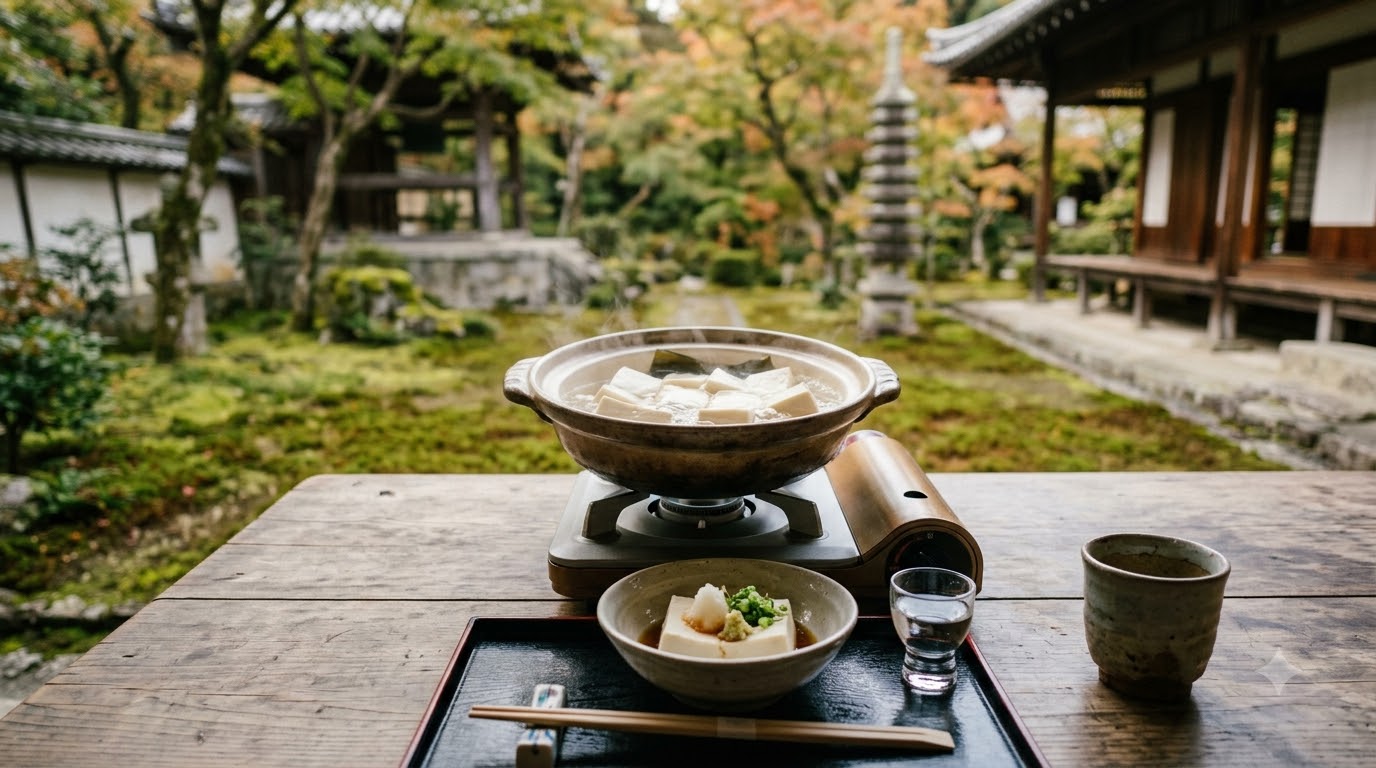
Yudofu is Kyoto comfort food at its purest: blocks of silken tofu warmed gently in a kombu (kelp) broth, then dipped in ponzu or soy with scallions and grated ginger. It sounds plain, and that is the point — Kyoto’s soft water and long tofu tradition make the tofu itself the star. The dish grew up alongside the city’s Buddhist temples, where monks ate no meat or fish.
The classic place to eat it is along the temple streets near Nanzenji in eastern Kyoto, where Okutan has been serving yudofu since 1635, and Nanzenji Junsei sets it in a garden. A yudofu set runs roughly ¥2,500-¥5,000, usually padded out with tempura, yuba, and vegetable sides. It makes a serene lunch after a morning of Higashiyama temples.
Yuba: Delicate Tofu Skin
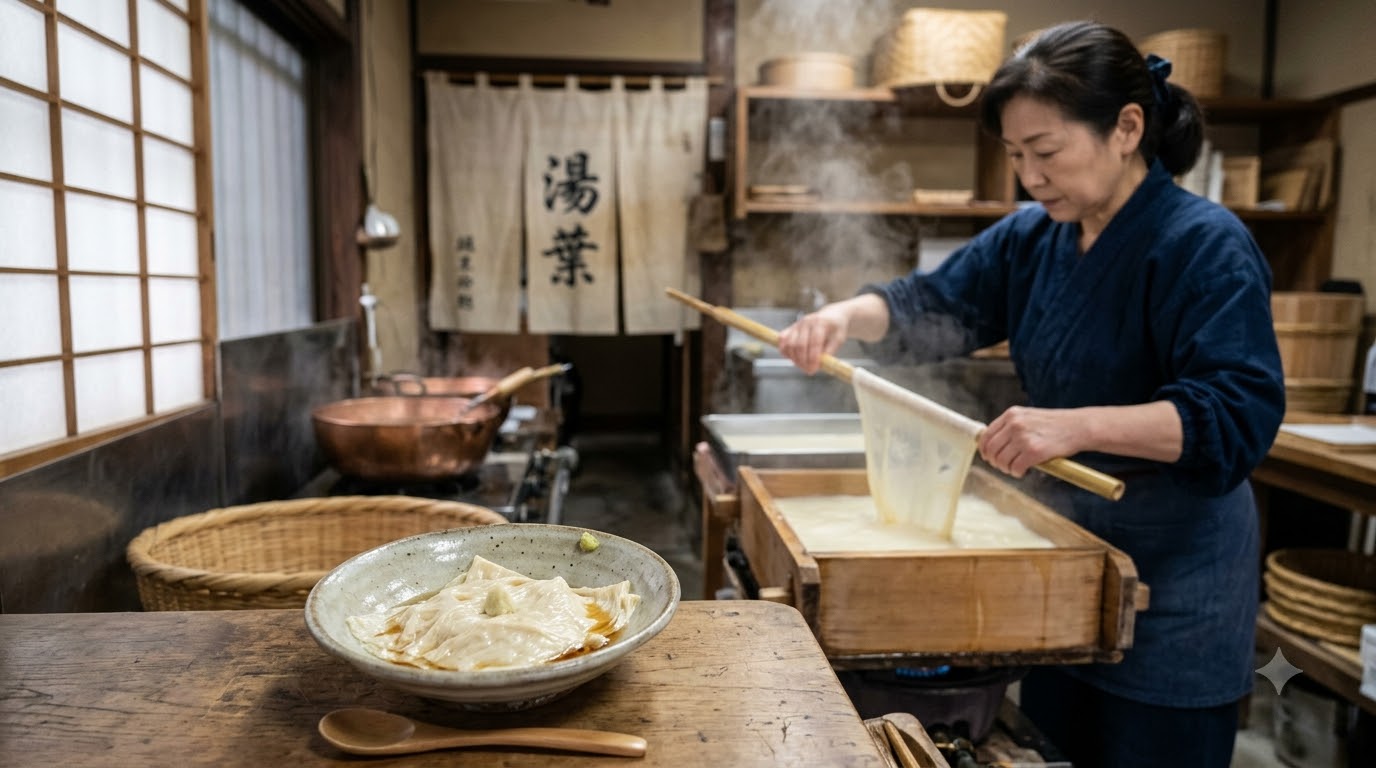
Yuba is the thin, silky skin that forms on the surface of heated soy milk, lifted off and served either fresh (nama yuba) or dried. Fresh yuba has a subtle, creamy texture that barely holds together, and it turns up as sashimi-style rolls, in clear soups, or draped over rice. Like yudofu, it is rooted in the vegetarian cooking of Kyoto’s temples.
The best fresh yuba is in Sagano and Arashiyama in the west of the city, partly because nama yuba keeps for only about a day. Prices range from about ¥800 for a small dish to ¥3,500 as part of a set. If you are already heading to the Arashiyama bamboo grove — one of the best things to do in Kyoto — build a yuba lunch into the same morning.
Obanzai: Kyoto Home-Style Cooking
If kaiseki is Kyoto’s special-occasion food, obanzai is its everyday table. These are simple, seasonal home-style side dishes — simmered vegetables, tofu, small pieces of fish, pickles — typically served as a set of three or four alongside rice and miso soup. Obanzai is how locals actually eat, and it is the most affordable way to taste real Kyoto cooking.
You will find obanzai at casual counters and izakaya around downtown and the Pontocho and Kiyamachi lanes, where you point at the dishes laid out on the counter. A set or a few plates with a drink usually lands around ¥1,000-¥2,500. We liked it as an easy dinner after a big lunch, letting us sample five or six little dishes without committing to a full tasting menu.
Nishin Soba and Kyoto Noodles
Nishin soba is one of Kyoto’s signature comfort bowls: buckwheat soba noodles in a light kombu dashi, topped with a fillet of nishin (herring) that has been slowly simmered in sweet soy until it is meltingly tender. The dried-herring topping is another inland-preservation trick, and the dish was reportedly created at Matsuba near Nanzenji back in 1882. A bowl costs around ¥900-¥1,600.
Kyoto also does a gentle, pale udon and a distinctive local ramen with a rich chicken-and-soy broth topped with Kujo green onions. Noodles are the easy default when you want something hot, fast, and cheap between sights — most bowls sit comfortably under ¥1,500.
Saba-Zushi and Kyoto Sushi
Kyoto sushi is not the fresh nigiri of Tokyo; it is pressed and preserved, again because the sea was far away. The icon is saba-zushi (also called sabazushi): a fat fillet of vinegar-cured mackerel pressed over seasoned rice and wrapped in a sheet of kombu, then sliced into thick, glossy pieces. It is rich, tangy, and satisfying. You will also see temari-zushi, small hand-pressed sushi balls that look like colorful marbles.
The definitive saba-zushi address is Izuju, opposite Yasaka Shrine in Gion and in business since 1781. A serving typically runs ¥2,500-¥5,000, and it travels well, so it is a good thing to grab for a train picnic. Inari-zushi — sweet rice in fried tofu pouches — is another cheap classic, sold near the Fushimi Inari shrine approach for a few hundred yen.
Nishiki Market: Kyoto’s Kitchen
Nishiki Market is the single best place to eat like a local, a 400-meter covered arcade downtown nicknamed “Kyoto’s Kitchen.” Its 100-plus stalls sell tofu and yuba, mountains of kyo-tsukemono (Kyoto pickles), grilled skewers, fish cakes, and matcha sweets, and the signature bite is tako-tamago — a small candied octopus with a whole quail egg tucked inside the head. Most items cost ¥200-¥800, so you can graze a whole lunch for well under ¥2,000.
A few practical notes for 2026:
- Go on a weekday morning for the freshest stock and the thinnest crowds.
- Eat where you buy — walking while eating is discouraged, and most stalls have a spot to stand.
- Bring cash — many stalls are cash-only, so carry small yen.
The market sits a short walk from Gion and the downtown tea houses, making it an easy anchor for an afternoon. It is also one of the best things to do in Kyoto even if you are not especially hungry.
Matcha, Wagashi and Kyoto Sweets
Kyoto is Japan’s matcha heartland thanks to the Uji tea region just south of the city, and the sweets scene here is world-class. A bowl of whisked, frothy Uji matcha served with a seasonal wagashi confection runs about ¥800-¥2,500 in the tea houses of Gion and Higashiyama, while modern cafes turn the same tea into soft serve, parfaits, and tiramisu.
Beyond matcha drinks, look for these Kyoto sweets:
- Yatsuhashi — cinnamon-scented mochi, sold hard-baked or as soft (nama) triangles around a bean filling; ¥500-¥3,000 a box, and the classic edible souvenir.
- Warabi mochi — silky bracken-starch jelly dusted with roasted soybean flour; about ¥1,000-¥2,000.
- Mitarashi dango — grilled rice dumplings glazed in sweet soy, said to have originated at Shimogamo Shrine; ¥150 and up per skewer.
- Uji kintoki — summer shaved ice drenched in matcha syrup with sweet azuki beans.
A boxed set of yatsuhashi is the gift we bring home every time; it is light, keeps for weeks, and tastes unmistakably of Kyoto.
| Dish | What it is | Where to try | Rough price (2026) |
|---|---|---|---|
| Kaiseki | Multi-course seasonal menu | Gion, Higashiyama | ¥5,000 lunch / ¥10,000+ dinner |
| Yudofu | Simmered silken tofu | Nanzenji temple streets | ¥2,500-¥5,000 |
| Yuba | Fresh tofu skin | Arashiyama, Sagano | ¥800-¥3,500 |
| Obanzai | Home-style side dishes | Downtown, Pontocho | ¥1,000-¥2,500 |
| Nishin soba | Herring soba noodles | Matsuba, near Nanzenji | ¥900-¥1,600 |
| Saba-zushi | Pressed mackerel sushi | Izuju, Gion | ¥2,500-¥5,000 |
| Nishiki snacks | Skewers, tofu, pickles | Nishiki Market | ¥200-¥800 per bite |
| Matcha + wagashi | Uji tea with a sweet | Gion, Higashiyama | ¥800-¥2,500 |
Find your Kyoto hotel on the map
Live prices from Booking & Airbnb — tap a pin to compare stays around Gion and Kyoto Station and beyond.
Where to Eat by Area
Kyoto’s food maps neatly onto its sightseeing districts, so you rarely have to detour far for a good meal:
- Gion and Higashiyama — kaiseki, saba-zushi (Izuju), and the best matcha tea houses, close to Kiyomizu-dera and the geisha lanes.
- Nanzenji and eastern temples — yudofu specialists like Okutan and the original nishin soba at Matsuba.
- Arashiyama and Sagano — fresh yuba, tofu, and shojin ryori (Buddhist vegetarian temple cuisine), best as a lunch by the bamboo grove.
- Downtown (Nishiki, Pontocho, Kiyamachi) — Nishiki Market grazing by day, obanzai counters and izakaya by night.
- Fushimi — Kyoto’s sake district, plus inari-zushi near the shrine.
Basing yourself near the center or Higashiyama keeps most of these within walking or a short bus ride; our where to stay in Kyoto guide breaks down the neighborhoods by budget and vibe.
Reservations and Dining Etiquette
Two things trip up first-timers in Kyoto. First, the best kaiseki and popular yudofu restaurants need advance reservations, sometimes weeks ahead, and some accept bookings only through a hotel concierge — do not count on walking in. Second, many traditional restaurants close one weekday (often Tuesday or Wednesday), so check before you plan a special meal around one.
A few etiquette basics keep things smooth:
- Carry cash. Market stalls and older establishments are frequently cash-only.
- Say “itadakimasu” before eating, and slurping noodles is perfectly acceptable.
- Do not stick chopsticks upright in rice or pass food chopstick-to-chopstick — both carry funeral associations.
- Tipping is not expected anywhere in Japan and can cause confusion.
Get those right and you will be treated warmly. Deciding between Japan’s two food capitals? Our Tokyo vs Kyoto comparison weighs the dining scenes side by side.
Frequently Asked Questions
What food is Kyoto most famous for?
Kyoto is most famous for kyo-ryori, its refined, vegetable- and tofu-forward cuisine. The standout dishes are kaiseki (multi-course fine dining), yudofu (simmered tofu), yuba (tofu skin), obanzai (home-style side dishes), and Uji matcha sweets. Because the old capital is inland, it built its kitchen on tofu, pickles, and preserved fish like saba-zushi rather than fresh seafood.
What should I eat at Nishiki Market?
At Nishiki Market, start with tako-tamago (candied octopus with a quail egg), then work through grilled skewers, fresh yuba and tofu, Kyoto pickles, tamagoyaki omelette, and matcha or sesame soft serve. Most items cost ¥200-¥800, so a full grazing lunch stays under ¥2,000. Go on a weekday morning for the freshest stock and fewer crowds, and eat at each stall rather than walking with food.
How much does a kaiseki meal cost in Kyoto?
A kaiseki meal in Kyoto typically costs from around ¥5,000 for a lunch course up to ¥10,000-¥60,000 for dinner at the top restaurants in 2026. Lunch is the smart value option — you get the same seasonal craft for a fraction of the dinner price. Reservations are essential, and many of the most celebrated houses in Gion and Higashiyama book out weeks ahead.
Is Kyoto good for vegetarians?
Kyoto is one of the best cities in Japan for vegetarians thanks to its Buddhist temple heritage. Shojin ryori (temple vegetarian cuisine) uses no meat, fish, or dairy, and staples like yudofu, yuba, obanzai vegetable dishes, and tofu dengaku are naturally plant-based. Do confirm the broth, though, as many soups use bonito-based dashi; ask for a kombu-only version where possible.
Do I need reservations to eat in Kyoto?
For casual food — Nishiki Market, noodle shops, obanzai counters, and sweets — you do not need reservations and can simply walk in. For kaiseki and the well-known yudofu restaurants, you should book ahead, sometimes weeks in advance, and some take reservations only through a hotel concierge. Also check closing days, as many traditional restaurants shut one weekday.
Final Thoughts
Kyoto is a city best eaten slowly. Its food is quieter than Tokyo’s — more tofu than tuna, more pickles than pyrotechnics — but that restraint is exactly what makes it special, and it rewards a bit of planning. Mix the cheap and the splurge: graze Nishiki by day, then sit down once for a kaiseki lunch or a temple-side bowl of yudofu. Do that, and you will taste the thousand-year-old capital far better than any single fancy dinner could show you. When you are ready to build the rest of the trip around these meals, our complete Kyoto travel guide ties it all together.