
Disclosure: Some links in this guide are affiliate links. If you book or buy through them, we may earn a small commission at no extra cost to you — it helps keep our guides free.
10 Best Day Trips from Barcelona 2026: Trains, Times & Tours
The best day trips from Barcelona are Montserrat, Girona, Sitges, Tarragona and the Penedès wine region, and most of them sit under 90 minutes away by direct train. You do not need a rental car to escape the city. Barcelona has two rail networks (Renfe and the regional FGC and Rodalies lines) that fan out to medieval towns, Roman ruins, cava cellars and beaches, so you can leave after breakfast and be back for dinner.
We have grouped these ten trips by how you get there and how long you need, so you can match a destination to the time and energy you have. Whether you want a Gaudí crypt 20 minutes away or a surrealist museum two hours north, there is a trip here that fits a single day.
Key Takeaways
– Fastest escape: Colònia Güell is 20 minutes from Plaça Espanya on the FGC line, and Sitges is 30 to 40 minutes on the Rodalies R2.
– Most iconic: Montserrat, about 90 minutes door to door including the rack railway or cable car up the mountain.
– No car needed: Nine of these ten trips run on public trains or scheduled coaches; only the Costa Brava villages reward having wheels.
– Book the train, not always a tour: For Girona, Sitges and Tarragona, a regional train ticket is cheaper and just as easy as a guided tour.
– Best combined trip: Figueres (Dalí Museum) pairs naturally with Girona on the same northbound rail line.Affiliate Disclosure: Some links in this guide are affiliate links. If you book a tour or hotel through them, we earn a small commission at no extra cost to you. We only recommend services we would use ourselves. Learn more.
If this is part of a bigger trip, pair these escapes with our Barcelona travel guide for the city itself, and check the best time to visit Barcelona before you lock in dates, since shoulder-season trains and trails are far quieter.
1. Montserrat
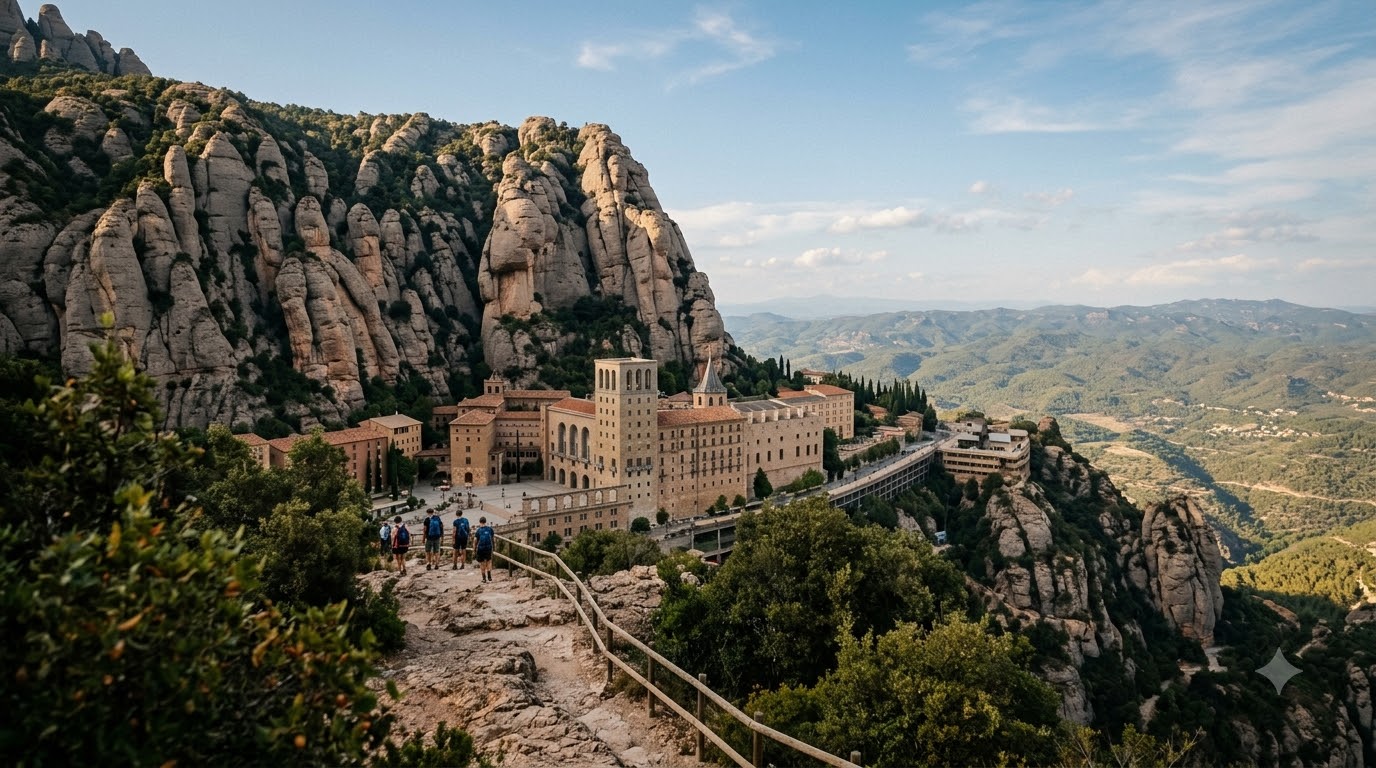
Why go: Montserrat is the signature day trip, a serrated ridge of rounded rock pillars with a Benedictine monastery wedged into the cliffs and the revered Black Madonna (La Moreneta) inside. The views over Catalonia from the top are the reason people come back.
How to get there: Take the FGC R5 line from Plaça Espanya toward Manresa (about one hour), then a combined ticket covers either the Aeri cable car or the Cremallera rack railway up to the monastery. Door to door is roughly 90 minutes.
How long: A full day. Add the Sant Joan or Santa Cova funiculars for short hikes to viewpoints and hermitages.
Best for: First-time visitors, hikers and anyone who wants one big-scenery day.
2. Girona
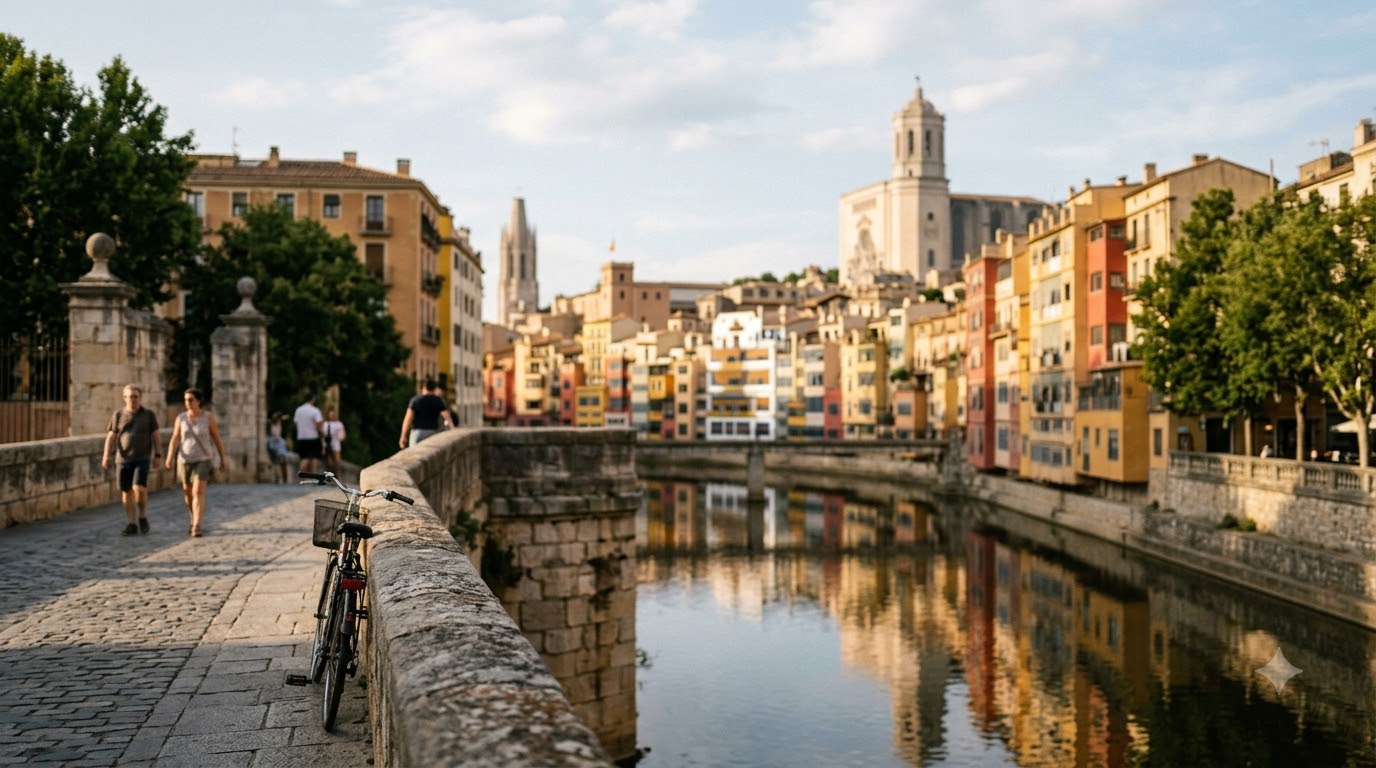
Why go: Girona packs a well-preserved medieval old town, one of Europe’s best-kept Jewish quarters (the Call), a hulking Gothic cathedral, and the pastel houses of the Onyar riverfront into a compact, walkable centre. Game of Thrones fans will recognise several streets.
How to get there: Renfe trains run from Barcelona Sants. High-speed AVE and Avant services reach Girona in about 38 minutes; cheaper regional trains take closer to 1 hour 20 minutes. Typical fares run roughly 9 to 20 EUR each way.
How long: Half to full day. Easy to combine with Figueres further up the line.
Best for: History lovers, photographers and slow wanderers.
3. Sitges
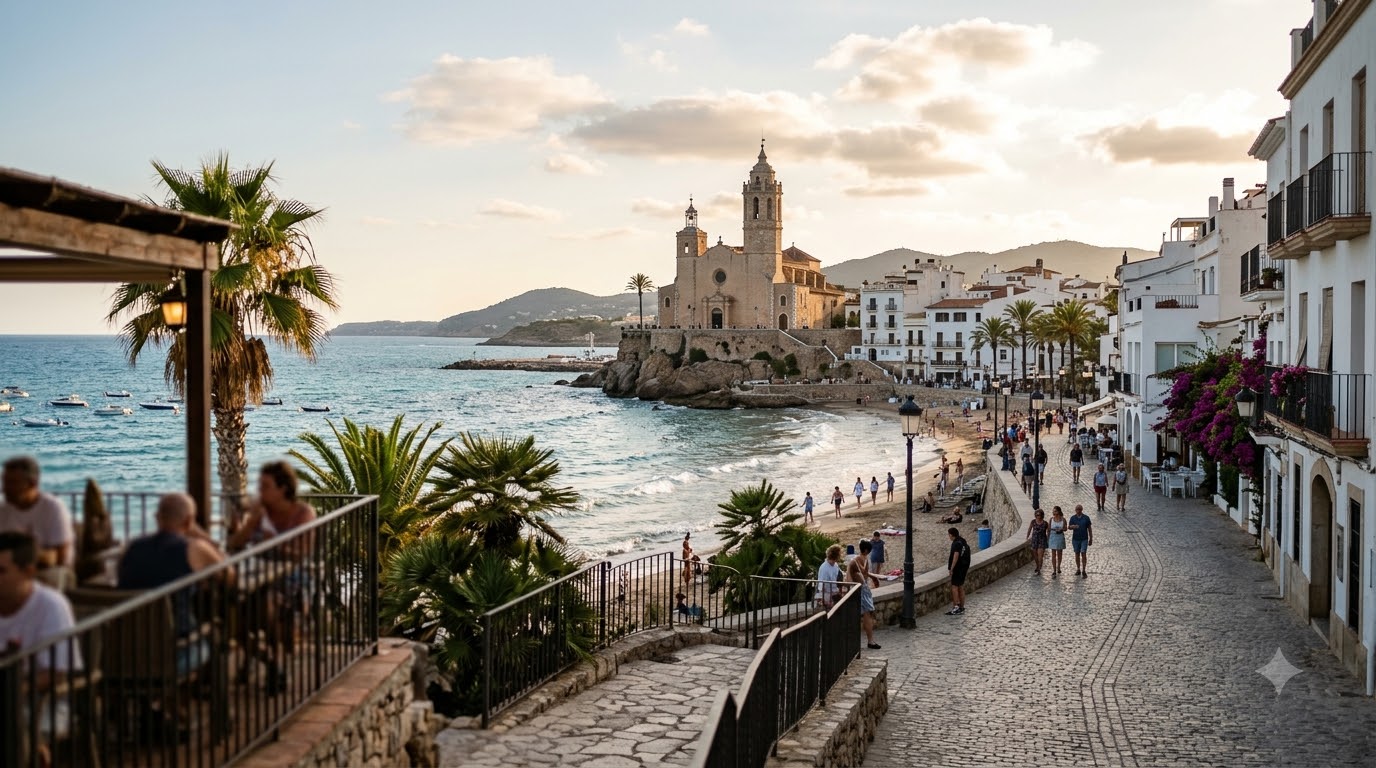
Why go: Sitges is Barcelona’s easy beach town: 17 sandy stretches, a palm-lined promenade, whitewashed lanes and a famously relaxed, LGBTQ-friendly scene. The seafront church of Sant Bartomeu is the postcard shot.
How to get there: The Rodalies R2 line runs from Passeig de Gràcia, Sants or Estació de França in about 30 to 45 minutes. Trains are frequent all day.
How long: Half day, or a full lazy beach day in summer.
Best for: Beach seekers, couples and anyone wanting sun without a long journey.
4. Tarragona
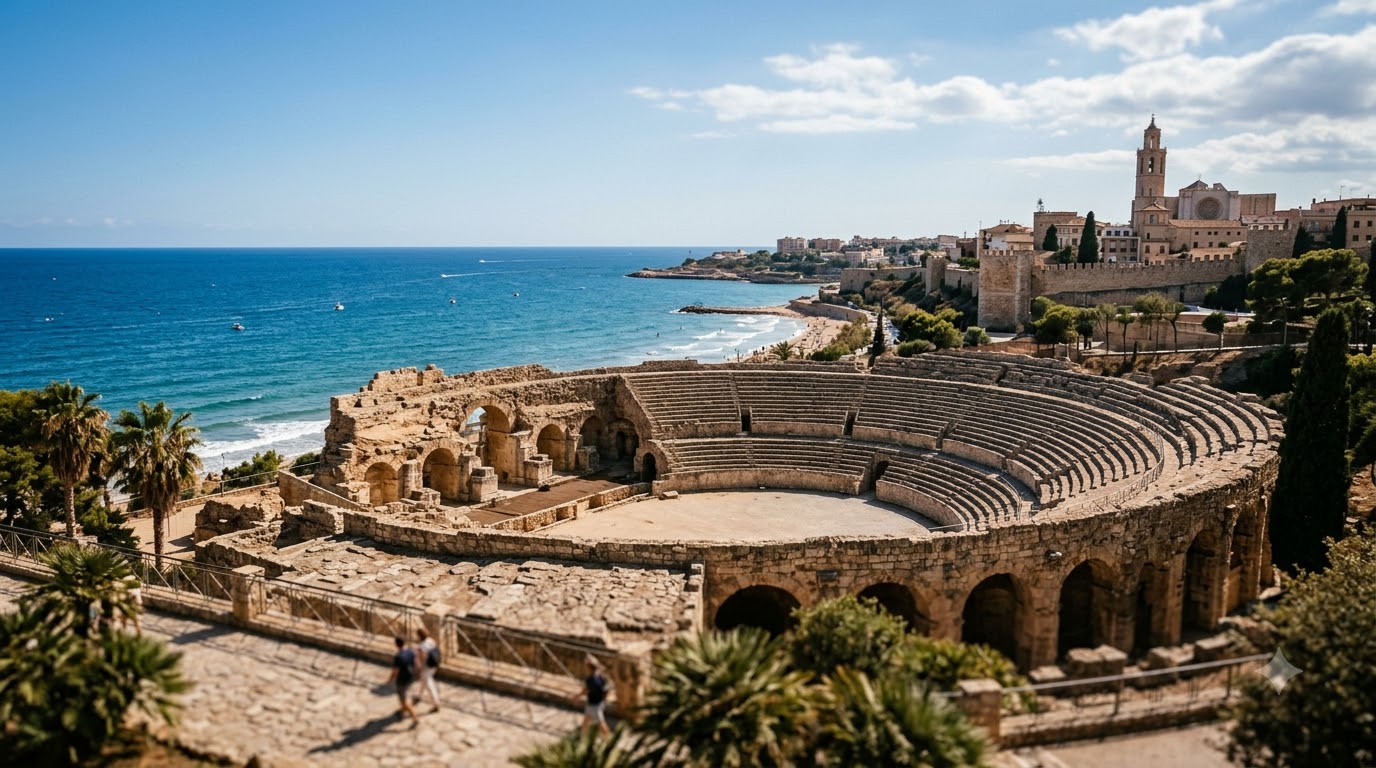
Why go: Tarragona was the capital of Roman Hispania, and its UNESCO-listed ruins prove it: a seafront amphitheatre, a circus, an aqueduct outside town, and Roman walls, all layered under a Gothic cathedral and a breezy coastal old town. It is history and beach in one stop.
How to get there: Renfe trains from Sants take about 35 minutes on fast services or up to 1 hour 10 minutes on regional lines. Fares range from roughly 9 to 40 EUR depending on the train type.
How long: Full day.
Best for: Ruins fans and travellers who want culture plus a swim.
5. Figueres and the Dalí Theatre-Museum
Why go: Figueres is the birthplace of Salvador Dalí, and his Theatre-Museum here is the largest surrealist object in the world, a building he designed himself and where he is buried. It is unlike any other museum in Spain.
How to get there: AVE or Avant trains from Sants reach Figueres in about one hour; regional trains take closer to two hours. It sits on the same northbound line as Girona, so many visitors do both.
How long: Half day for the museum, or a full day paired with Girona. Book museum tickets ahead in high season.
Best for: Art lovers and anyone chasing something genuinely strange.
6. Tossa de Mar and the Costa Brava
Why go: Tossa de Mar is the most photogenic gateway to the Costa Brava, with a medieval walled old town (the Vila Vella) tumbling down to a curved beach and turquoise coves. It captures the rugged, cliff-and-cove coastline the region is famous for.
How to get there: There is no direct train. Take a Moventis Sarfa coach from Barcelona Nord bus station (about 1 hour 20 minutes). A rental car opens up neighbouring coves and villages like Begur and Calella de Palafrugell.
How long: Full day.
Best for: Beach hoppers and travellers happy to take a coach or drive.
7. Penedès Wine Region
Why go: The Penedès is Catalonia’s wine and cava heartland. Around Sant Sadurní d’Anoia and Vilafranca del Penedès you can tour landmark cellars, walk the vines, and taste sparkling cava at the source, often with local cheese.
How to get there: Rodalies R4 trains from Sants reach Sant Sadurní d’Anoia or Vilafranca in about 45 minutes to an hour. Many visitors book a guided wine tour with hotel pickup so no one has to skip the tasting; you can compare small-group Penedès wine tours on our live travel map to line up cellar visits and transport in one booking.
How long: Half to full day.
Best for: Wine and cava fans, and anyone wanting a relaxed, indulgent day.
8. Cadaqués
Why go: Cadaqués is the whitewashed fishing village that captivated Dalí, tucked on a remote bay past Cap de Creus. The Dalí House-Museum at nearby Portlligat, the rocky coves and the end-of-the-road quiet make it feel like a reward for the effort of getting there.
How to get there: No train reaches Cadaqués. A Sarfa coach from Barcelona Nord takes roughly 2.5 to 3 hours over a winding mountain road, or you can drive. It is the longest trip on this list.
How long: A long full day; some travellers prefer an overnight.
Best for: Art pilgrims and travellers who like their villages hard to reach.
Find your Barcelona hotel on the map
Live prices from Booking & Airbnb — tap a pin to compare stays around Eixample and the Gothic Quarter and beyond.
9. Colònia Güell
Why go: If Gaudí is why you came to Barcelona, Colònia Güell delivers more of him with almost none of the crowds. The UNESCO-listed Crypt, with its leaning brick columns and organic stained glass, was Gaudí’s testing ground for the Sagrada Família. The site is a preserved early industrial workers’ village.
How to get there: Take the FGC S3, S4, S8 or S9 line from Plaça Espanya to Colònia Güell station (about 20 to 25 minutes), then a short signposted walk.
How long: Half day. Easy to pair with an afternoon back in the city.
Best for: Architecture fans and anyone short on time.
10. Andorra
Why go: Andorra is a tiny mountain nation wedged between Spain and France, known for dramatic Pyrenees scenery, duty-free shopping, spa resorts and, in winter, some of the closest skiing to Barcelona.
How to get there: No train. Direct coaches (ALSA and Andorra-bound lines) from Barcelona take about three hours each way, or you can join an organised tour. Bring your passport, since you leave the EU.
How long: A full, long day; better as an overnight if you plan to ski.
Best for: Shoppers, skiers and mountain-scenery seekers who do not mind an early start.
Barcelona Day Trips Compared
| Day trip | How to get there | Travel time (one way) | Time needed | Best for |
|---|---|---|---|---|
| Montserrat | FGC R5 + cable car/rack railway | ~90 min | Full day | Scenery, hiking |
| Girona | Renfe from Sants | 38 min to 1h20 | Half-full day | History, photos |
| Sitges | Rodalies R2 | 30-45 min | Half day | Beaches |
| Tarragona | Renfe from Sants | 35 min to 1h10 | Full day | Roman ruins |
| Figueres (Dalí) | AVE/Avant from Sants | ~1 hour | Half-full day | Art |
| Tossa de Mar | Sarfa coach from Barcelona Nord | ~1h20 | Full day | Coastal beaches |
| Penedès wine | Rodalies R4 or tour | ~45-60 min | Half-full day | Wine, cava |
| Cadaqués | Sarfa coach or car | 2.5-3 hours | Long day | Art, villages |
| Colònia Güell | FGC S3/S4/S8/S9 | 20-25 min | Half day | Gaudí, quick trips |
| Andorra | Coach or tour | ~3 hours | Long day | Skiing, shopping |
How to Choose Your Day Trip
Start with the clock. If you only have half a day, pick something close: Colònia Güell, Sitges or Penedès all sit under an hour away and leave your afternoon free. For a first big day out, Montserrat is the crowd-pleaser, while Girona and Tarragona reward travellers who like walking a historic centre at their own pace.
Match the trip to your interest, too. Choose Figueres or Cadaqués for Dalí and art, Tarragona for Roman history, Sitges or the Costa Brava for beaches, and the Penedès for wine. Save the three-hour hauls to Cadaqués and Andorra for when you have a full day and an early start in you.
A few practical notes. Buy Renfe and Rodalies tickets at station machines or the app, and validate regional tickets before boarding. Trains run less often on Sundays, so check the last return time before you leave. For wine tours and the longer coach trips, booking a guided option with transport bundled in saves the logistics headache, and you can browse Barcelona day tours and excursions on our live travel map to compare pickups and prices. If you would rather build these escapes around a longer stay, our 3-day Barcelona itinerary shows where a day trip fits without missing the city’s highlights, and the best things to do in Barcelona covers what to prioritise on your days in town.
Frequently Asked Questions
What is the best day trip from Barcelona?
Montserrat is the most popular and scenic day trip from Barcelona, with its mountain monastery reachable in about 90 minutes by FGC train and cable car. For history and walkable old towns, Girona and Tarragona are the top alternatives, both under 90 minutes away by Renfe train.
Can you do day trips from Barcelona without a car?
Yes. Nine of the ten trips in this guide run on public transport. Montserrat, Sitges, Tarragona, Girona, Figueres, Colònia Güell and the Penedès are all reachable by train, while Tossa de Mar, Cadaqués and Andorra are served by scheduled coaches from Barcelona Nord. A car mainly helps for exploring multiple Costa Brava villages in one day.
What is the closest day trip from Barcelona?
Colònia Güell is the closest worthwhile day trip, about 20 to 25 minutes from Plaça Espanya on the FGC line, where you can see Gaudí’s UNESCO-listed Crypt. Sitges, at 30 to 45 minutes by Rodalies train, is the closest beach town.
How far is Montserrat from Barcelona?
Montserrat is roughly 50 kilometres northwest of Barcelona. By public transport it takes about 90 minutes door to door: around one hour on the FGC R5 line to the base of the mountain, then the Aeri cable car or Cremallera rack railway up to the monastery.
Is Girona or Tarragona a better day trip?
Choose Girona for medieval streets, the Jewish quarter, the Onyar riverfront houses and Game of Thrones filming locations, plus an easy pairing with the Dalí Museum in Figueres. Choose Tarragona for Roman ruins, a seafront amphitheatre and a beach. Both are under 90 minutes from Sants, so many travellers do one on each of a two-day visit.
Final Thoughts
Barcelona is one of the easiest European cities to escape for a day, and you rarely need more than a train ticket to do it. Montserrat and Girona are the safe first choices, Colònia Güell and Sitges are the quick wins, and the Penedès, Costa Brava and Andorra reward a longer day out. Sort the trips by how much time you have, book any tours or longer coaches ahead, and check return times before you set off. For everything you will do back in the city between these escapes, keep our Barcelona travel guide close at hand.