
Disclosure: Some links in this guide are affiliate links. If you book or buy through them, we may earn a small commission at no extra cost to you — it helps keep our guides free.
Mount Fuji Day Trip From Tokyo: Bus vs Train 2026 Guide
A Mount Fuji day trip from Tokyo is completely doable in one day, and the cheapest way to do it in 2026 is the highway bus from Busta Shinjuku to Kawaguchiko, which costs 2,200 JPY (about 15 USD) one-way and takes roughly 1 hour 45 minutes (Highway-buses.jp, 2026). If you want no traffic and a reserved seat, the Fuji Excursion limited express covers nearly the same route in about 1 hour 53 minutes for 4,130 JPY (28 USD) (JR East, 2026).
This guide answers the questions people actually ask before booking: bus or train, Kawaguchiko or Hakone, what you can realistically see in a day, what it all costs, and when the mountain is likely to be out of the clouds. Japan expects over 35 million international visitors in 2026 (Japan National Tourism Organization, 2026), and Fuji sits near the top of almost every itinerary. For the full regional picture, start with our Mount Fuji travel guide and use this page to nail down the logistics.
Key Takeaways
– Cheapest option: Highway bus from Busta Shinjuku to Kawaguchiko Station is 2,200 JPY (15 USD) one-way, about 1h45, departing roughly every 30 minutes.
– Fastest comfortable option: The Fuji Excursion limited express runs Shinjuku to Kawaguchiko in about 1h53 for 4,130 JPY (28 USD), no transfers, reserved seats.
– Hakone alternative: The Odakyu Romancecar reaches Odawara in 59 to 90 minutes for 2,420 JPY (17 USD); the 2-day Hakone Free Pass is 7,100 JPY (49 USD).
– Day-trip budget: A no-tour Fuji day from Tokyo runs roughly 6,000 to 12,000 JPY (41 to 83 USD) all-in, including transport, a ropeway, and lunch.
– Best views: Winter mornings clear the mountain on 70 to 80 percent of days; in summer, aim to be lakeside before 9:00 AM.[PERSONAL EXPERIENCE] We have run this day trip both ways. On our last visit in spring 2026 we took the 7:30 AM bus out of Busta Shinjuku, reached Kawaguchiko by 9:20, and had the north shore almost to ourselves before the tour coaches arrived. The train is calmer, but the bus dropped us 200 meters closer to the lake and saved us nearly 2,000 yen each.
Bus or train to Mount Fuji: which should you take?
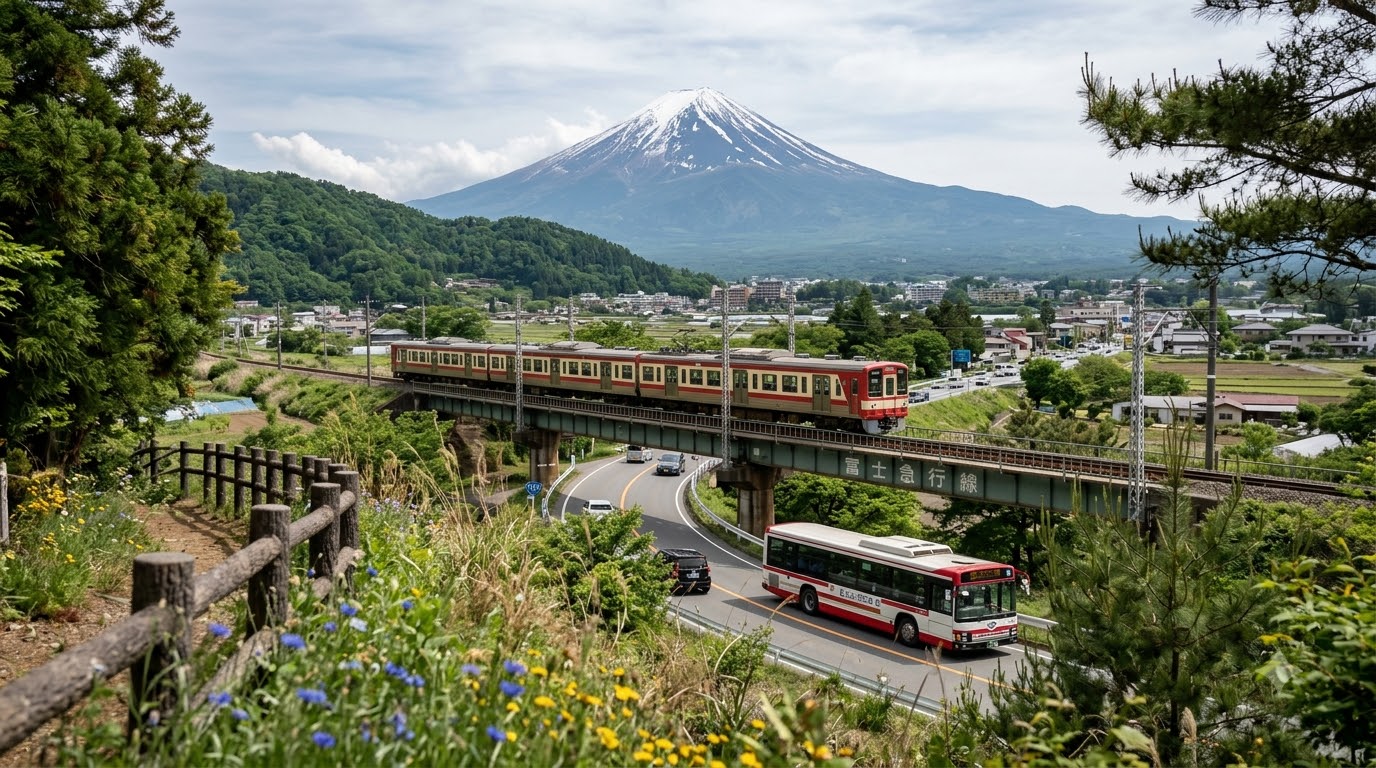
For most people the highway bus wins on price and the Fuji Excursion train wins on comfort. Both leave from Shinjuku and both end at Kawaguchiko Station, the gateway to the Fuji Five Lakes. The bus is cheaper and more frequent; the train skips road traffic, which matters most on autumn weekends when the Chuo Expressway backs up.
Here is how the three main ways to reach Fuji from Tokyo compare in 2026.
| Option | From | To | Time | One-way fare | Frequency |
|---|---|---|---|---|---|
| Highway bus | Busta Shinjuku (4F) | Kawaguchiko Station | ~1h45 | 2,200 JPY (15 USD) | Every ~30 min |
| Fuji Excursion (train) | Shinjuku Station | Kawaguchiko Station | ~1h53 | 4,130 JPY (28 USD) | 3 morning trains (4 on weekends) |
| Romancecar (to Hakone) | Shinjuku Station | Odawara | 59-90 min | 2,420 JPY (17 USD) | Frequent, all day |
Sources: Highway-buses.jp, 2026; JR East, 2026; Odakyu Hakone, 2026.
Quick decision rules from our own trips:
- Take the bus if you are on a budget, want flexible departure times, or are traveling in a group. At 2,200 JPY one-way it is the best-value link to Kawaguchiko.
- Take the train if you have a fixed schedule, get carsick, or are visiting during peak foliage weekends when expressway traffic can add 60 to 90 minutes to the bus.
- A Japan Rail Pass covers the JR Chuo Line portion (Shinjuku to Otsuki) but not the Fujikyu Railway segment or the limited express surcharge, so budget the difference.
How the highway bus from Shinjuku works
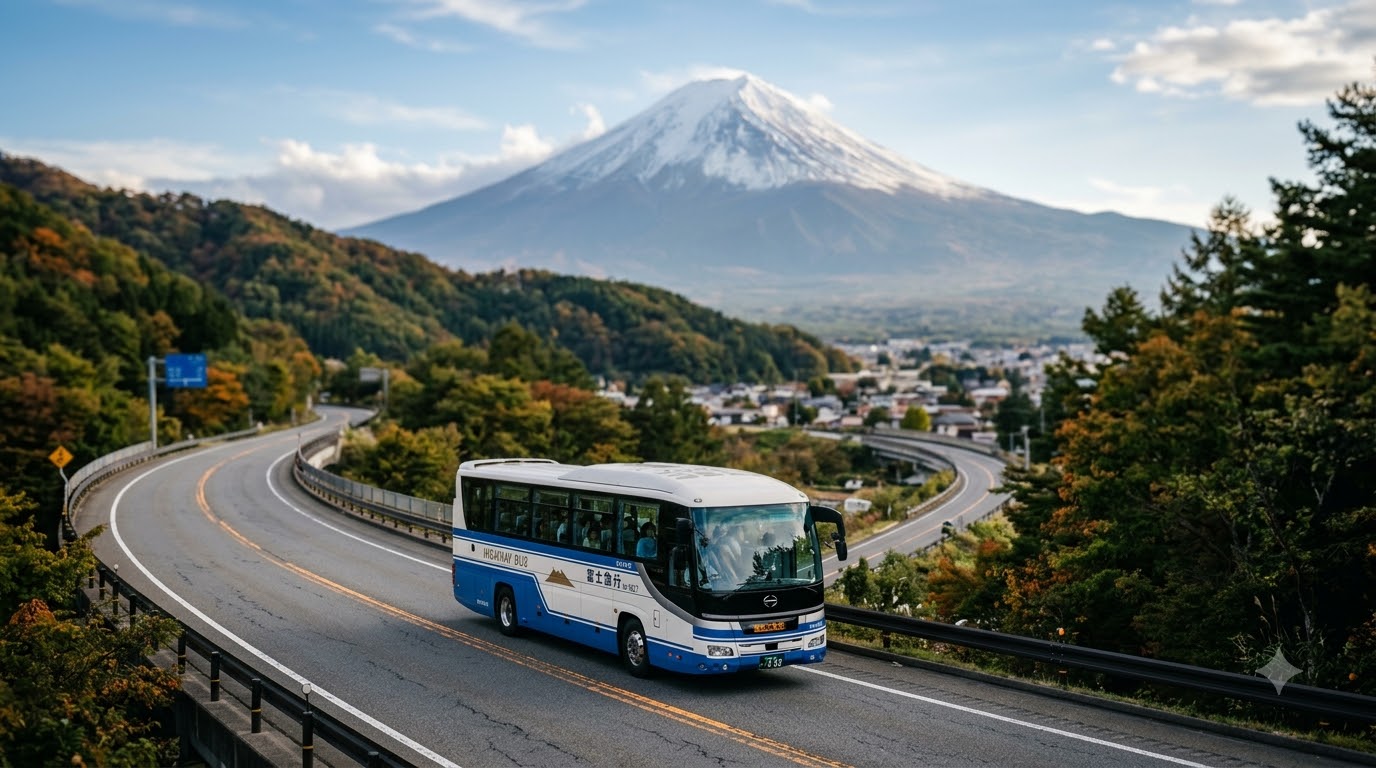
The highway bus is the simplest link between Tokyo and Mount Fuji, and it is the one we recommend for first-timers. Buses leave from Busta Shinjuku, the fourth-floor terminal directly above the JR Shinjuku south exit, and run direct to Kawaguchiko Station with no transfers. Three operators share the route pool, so fares and times are identical whichever ticket you buy.
- Terminal: Busta Shinjuku, 4th floor, above the JR Shinjuku south exit.
- Operators: Keio Bus, Fujikyu Bus, and JR Bus co-run the route; buy whichever departure is open.
- Fare and time: 2,200 JPY (15 USD) one-way, about 1 hour 45 minutes in clear traffic.
- Frequency: Departures roughly every 30 minutes from early morning; the 7:30 AM bus gets you to Kawaguchiko around 9:20 AM.
- Booking: Reserve on Highway-buses.jp; autumn and cherry-blossom weekend mornings sell out several days ahead.
We book a morning departure out and leave the return open, because Fuji clouds over most afternoons and there is no reason to rush back to a fixed bus. Buses also run from Tokyo Station and Shibuya, though Shinjuku has the most departures.
The Fuji Excursion limited express, explained

The Fuji Excursion is the only direct train from central Tokyo to the base of Mount Fuji, and it is worth the extra yen on busy weekends. Operated by JR East, it runs on the JR Chuo Line from Shinjuku to Otsuki, then continues onto the Fujikyu Railway Line to Kawaguchiko, so you never change trains even though two railways are involved.
- Route: Shinjuku to Otsuki (JR Chuo Line), then Otsuki to Kawaguchiko (Fujikyu Railway), one seamless service.
- Time and fare: About 1 hour 53 minutes, 4,130 JPY (28 USD) one-way including the reserved-seat charge.
- Schedule: Three morning departures on weekdays, with a fourth added on weekends and national holidays.
- Reservations: Seats are reserved and sell out on peak dates; book ahead at a JR ticket office, a green ticket machine, or online.
Compared with the bus, the train costs about 1,930 yen more each way but removes any risk of expressway traffic. On a clear-view priority trip, that reliability can be the difference between reaching the lake by mid-morning or after the clouds build.
Kawaguchiko or Hakone for your Fuji day trip?
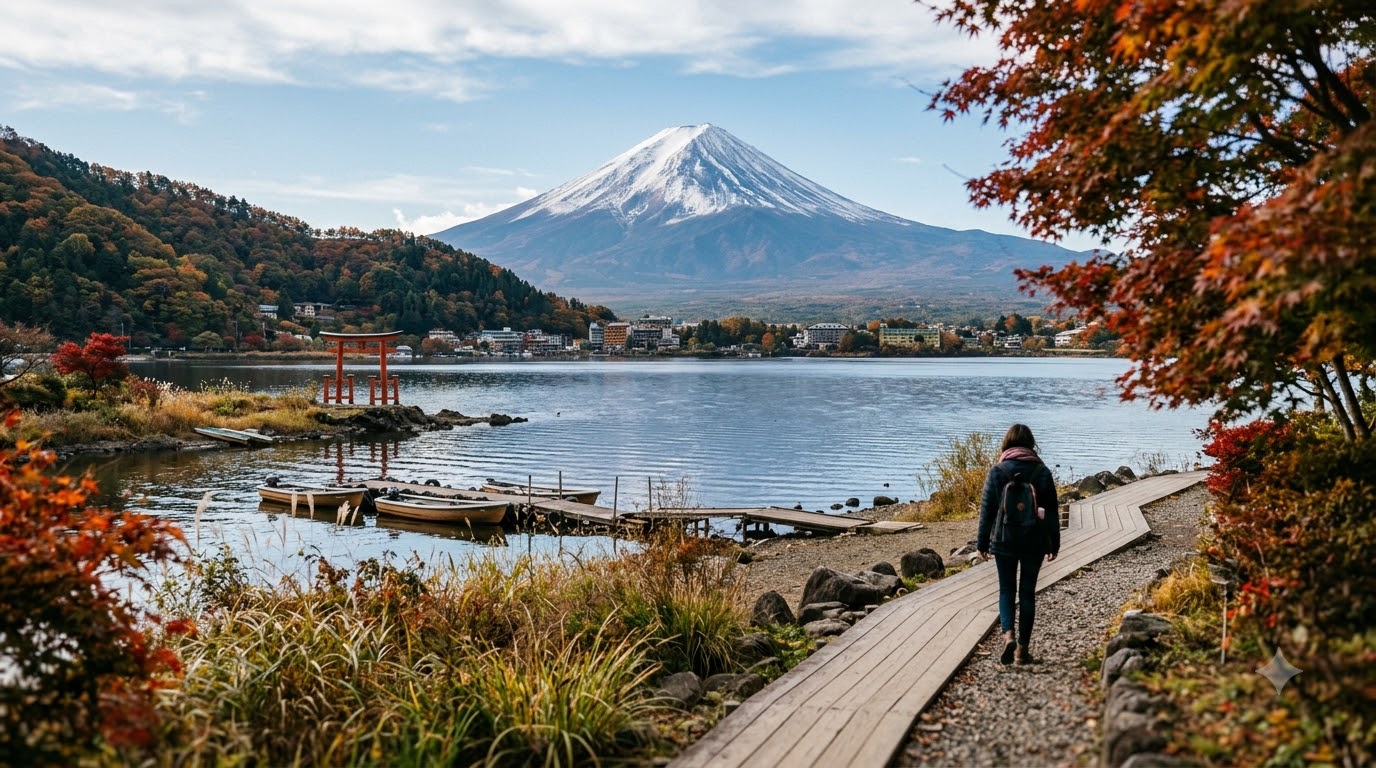
Choose Kawaguchiko for the closest, most iconic Fuji views and Hakone for hot springs plus a scenic transport loop. Both work as day trips from Tokyo, but they deliver different experiences. Kawaguchiko puts you on the north shore of Lake Kawaguchi, where the mountain reflects in the water on calm mornings. Hakone is a hot-spring town where Fuji appears across Lake Ashi, weather permitting, framed by the red torii gate of Hakone Shrine.
| Factor | Kawaguchiko | Hakone |
|---|---|---|
| Access from Shinjuku | Bus 2,200 JPY / train 4,130 JPY | Romancecar 2,420 JPY to Odawara |
| Travel time | ~1h45 to 1h53 | 59-90 min to Odawara |
| Best for | Classic Fuji views, Five Lakes | Onsen, ropeway loop, art museums |
| Fuji visibility | Higher, closer to the mountain | Lower, roughly 80 clear days/year |
| Handy pass | Retro Bus 2-day, ~1,500 JPY | Hakone Free Pass, 7,100 JPY (2 days) |
Sources: Highway-buses.jp, 2026; Hakone Navi, 2026.
If Fuji itself is the goal, we point people to Kawaguchiko every time. Hakone is the better pick when you want an onsen soak and a full-day transport adventure and treat a Fuji sighting as a bonus. For a fuller list of stops and activities on either side, see our roundup of the best things to do around Mount Fuji.
Find your Tokyo hotel on the map
Live prices from Booking & Airbnb — tap a pin to compare stays around Shinjuku and Shibuya and beyond.
What to see on a Mount Fuji day trip
From Kawaguchiko you can realistically hit three or four viewpoints in a single day, all within a short bus or train ride of the station. The Retro Sightseeing Bus loops the main sights on a 2-day pass for around 1,500 JPY (10 USD), which beats buying single fares once you make more than two stops.
- Lake Kawaguchi north shore: The classic mirror-reflection spot, a 15 to 20 minute walk or short Retro Bus ride from the station. Best on windless mornings before 9:00 AM.
- Chureito Pagoda: The red five-story pagoda with Fuji behind it, reached by Fujikyu Railway to Shimoyoshida Station (about 5 minutes) plus a 398-step climb. Arrive before 6:00 AM in blossom season to beat the crowds.
- Oshino Hakkai: Eight spring-fed ponds fed by Fuji snowmelt, with the peak looming behind. Entry is free; go before 10:00 AM.
- Kawaguchiko Ropeway: A cable car to a 1,075-meter observation deck for a lake-and-mountain panorama, around 900 JPY (6 USD) round-trip.
We usually pair the north shore at sunrise-adjacent hours with Chureito Pagoda, then finish at Oshino Hakkai before the mid-morning coaches. That loop takes about five to six hours at a relaxed pace. For timing each stop against the weather, our best time to see Mount Fuji breakdown is the companion page to bookmark.
A realistic one-day Mount Fuji itinerary from Tokyo
A well-run day trip means catching an early departure and building the schedule around clear morning light. Fuji hides behind clouds on roughly 200 days a year, and afternoons are almost always worse than mornings, so the whole plan should front-load the views.
- 6:45 AM — Arrive at Busta Shinjuku, collect your reserved bus ticket, grab a conbini breakfast.
- 7:30 AM — Board the highway bus to Kawaguchiko (2,200 JPY, ~1h45).
- 9:20 AM — Reach Kawaguchiko Station; walk or ride the Retro Bus to the Lake Kawaguchi north shore for reflection shots.
- 10:30 AM — Take the Fujikyu Railway to Shimoyoshida and climb to Chureito Pagoda.
- 12:30 PM — Lunch: try Yamanashi hoto (thick noodle hotpot) near the station.
- 2:00 PM — Visit Oshino Hakkai or ride the Kawaguchiko Ropeway.
- 4:30 PM — Catch a late-afternoon bus or the Fuji Excursion back to Shinjuku.
If you have any flexibility at all, we suggest turning this into an overnight. Staying lakeside lets you catch the 5:30 AM window that day trippers always miss; our guide to where to stay near Mount Fuji covers onsen ryokans and budget bases within walking distance of the station.
How much a Mount Fuji day trip costs
A do-it-yourself Fuji day trip from Tokyo costs roughly 6,000 to 12,000 JPY (41 to 83 USD) per person in 2026, depending on whether you bus or train and how many paid sights you add. The single biggest variable is your transport choice, followed by the ropeway and any lake activities.
| Expense | Budget (bus) | Comfort (train) |
|---|---|---|
| Round-trip Tokyo to Kawaguchiko | 4,400 JPY (30 USD) | 8,260 JPY (57 USD) |
| Retro Bus 2-day pass | 1,500 JPY (10 USD) | 1,500 JPY (10 USD) |
| Kawaguchiko Ropeway | 900 JPY (6 USD) | 900 JPY (6 USD) |
| Lunch (hoto or set meal) | 1,200 JPY (8 USD) | 1,500 JPY (10 USD) |
| Day total | ~8,000 JPY (55 USD) | ~12,160 JPY (84 USD) |
Source: fares and typical prices compiled August 2026 from operator sites listed above.
Ways we cut the cost without cutting the day short:
- Skip the guided tour. Independent transport plus a Retro Bus pass is far cheaper than the 9,800 to 14,000 JPY that packaged Fuji tours charge.
- Leave the return open. Buy only the outbound in advance; return buses run into the evening, and open-jaw flexibility means you never pay to re-book.
- Pack a conbini lunch if you want to spend the midday hours shooting rather than sitting in a restaurant.
When are Mount Fuji views clear?
Winter offers the clearest Fuji views, with the mountain visible on roughly 70 to 80 percent of December-to-February days, while summer is the haziest season despite being climbing season. Whatever the month, mornings beat afternoons, because heat and humidity build cloud over the peak as the day goes on.
| Season | Clear-view days | Best time of day | Notes |
|---|---|---|---|
| Winter (Dec-Feb) | 70-80% | All day | Crisp air, snow cap; coldest but clearest |
| Spring (Mar-May) | 50-60% | 5-8 AM | Cherry blossoms add foreground in April |
| Summer (Jun-Aug) | 30-40% | Before 9 AM | Haze dominates afternoons; climbing season |
| Autumn (Sep-Nov) | 50-65% | Morning and late afternoon | October foliage is underrated |
Source: seasonal visibility patterns, Japan Meteorological Corporation data, 2026.
Two habits raise your odds on any single day:
- Check the visibility forecast at fuji-san.info the night before; it rates conditions from 1 to 10, and we skip going out below a 6.
- Be lakeside early. On summer trips we are on the north shore by 8:00 AM, because the mountain routinely vanishes into cloud by mid-morning.
If timing your visit around the weather is your main concern, the dedicated best time to see Mount Fuji page goes month by month, and the main Mount Fuji travel guide ties viewpoints and seasons together.
Frequently Asked Questions
Can you do Mount Fuji as a day trip from Tokyo?
Yes. Kawaguchiko is about 1 hour 45 minutes from Shinjuku by highway bus (2,200 JPY) or 1 hour 53 minutes by the Fuji Excursion train (4,130 JPY), so a same-day round trip is easy. Leave on a morning departure, spend five to six hours at the viewpoints, and return in the late afternoon or evening.
Is the bus or train better to Mount Fuji?
The bus is cheaper and more frequent at 2,200 JPY one-way with departures roughly every 30 minutes, while the Fuji Excursion train costs 4,130 JPY but avoids expressway traffic and gives you a reserved seat. Choose the bus for budget and flexibility, the train for busy foliage weekends when roads clog.
How much does a Mount Fuji day trip from Tokyo cost?
Budget roughly 6,000 to 12,000 JPY (41 to 83 USD) per person for a self-guided day, covering round-trip transport, a local sightseeing pass, the ropeway, and lunch. The bus route lands near the low end and the train near the high end; skipping a packaged tour saves the most.
Should I visit Kawaguchiko or Hakone for Mount Fuji?
Pick Kawaguchiko for the closest and most iconic Fuji views and the Five Lakes, and Hakone for hot springs and a scenic transport loop where a Fuji sighting is a bonus. Hakone sees the mountain on only about 80 days a year, so Kawaguchiko is the safer choice if Fuji itself is the point.
What is the best time of day to see Mount Fuji?
Early morning, ideally before 9:00 AM, when the air is clearest and cloud has not yet built over the summit. For the mirror reflection on Lake Kawaguchi you also need near-zero wind, so check the forecast the night before and aim to be lakeside at first light.
Final word
A Mount Fuji day trip from Tokyo comes down to two early decisions: catch a morning departure, and pick the bus for budget or the train for a guaranteed schedule. Do that, keep the return open, and the mountain does the rest. Book your seat, set an early alarm, and you can be watching Fuji reflect in Lake Kawaguchi before Tokyo has finished its first coffee.