Best Things to Do Around Mount Fuji in 2026
Disclosure: Some links in this guide are affiliate links. If you book or buy through them, we may earn a small commission at no extra cost to you — it helps keep our guides free.
- Chureito Pagoda: 398 steps to the platform, free entry, best light before 6:30 AM; the red pagoda plus Fuji shot is the region’s signature image.
- Fuji Five Lakes: Lake Kawaguchi is the most accessible; Lake Motosu is the view printed on the back of the 1,000-yen note.
- Oshino Hakkai: eight snowmelt-fed ponds, free to walk; the deep-blue Nakaike Pond charges about 300 JPY (2 USD).
- Fuji-Q Highland: a 1-Day Pass runs about 6,000 to 7,900 JPY (40 to 53 USD) in 2026, with variable daily pricing.
- Climbing season 2026: Yoshida and Subashiri trails open July 1, the other routes July 10, all closing September 10, with a mandatory 4,000 JPY permit per climber.
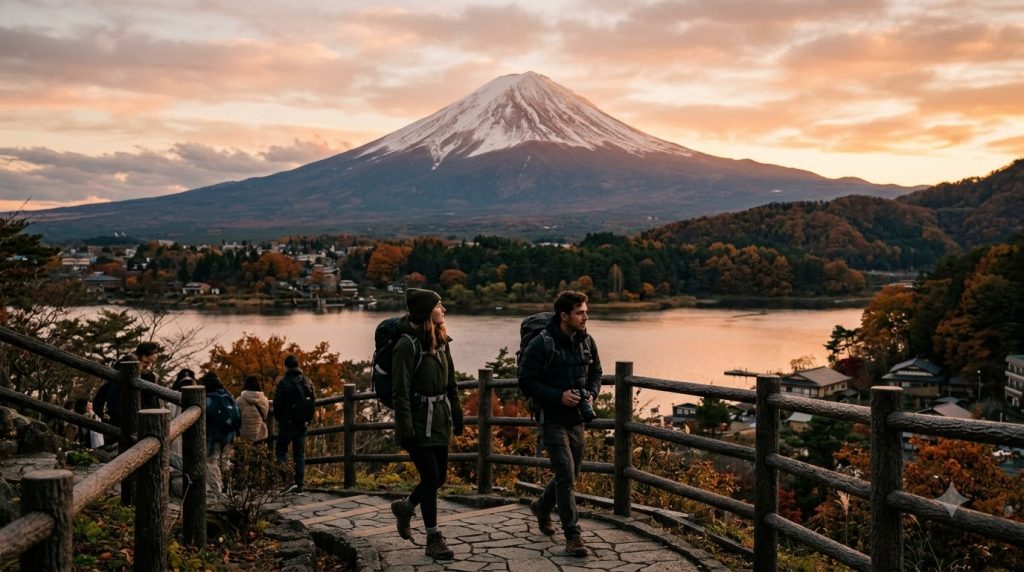
The best things to do around Mount Fuji are photographing the Chureito Pagoda at sunrise, circling the Fuji Five Lakes, drinking from the spring-fed ponds at Oshino Hakkai, riding the record-breaking coasters at Fuji-Q Highland, and, in summer, climbing to the 3,776-meter summit itself. You do not have to pick one.
The whole region sits within a 90-minute bus ride of Tokyo, so most of these can be strung together over two or three days.
Japan expects over 35 million international visitors in 2026 (Japan National Tourism Organization, 2026), and the Fuji area is one of the top reasons they board a Shinkansen. Roughly 300,000 people attempt the summit each climbing season, but the mountain rewards people who never lace up boots just as much.
We have made the trip out from Shinjuku more times than we can count, in cherry-blossom crowds and in dead-quiet November mornings, and the mix below is what actually earns a place on a two- or three-day itinerary. For the wider picture, start with our Mount Fuji travel guide, then use this article to plan the days.
Treat Fuji as a two-base trip: one night in Kawaguchiko for the lake and pagoda, and, in summer, a mountain hut on the Yoshida Trail. On our last November visit we caught the peak clear at 6:20 AM from the Chureito platform, watched it vanish into cloud by 8:00 AM, and still filled the afternoon with ponds and a ropeway. The mountain hides often, so we always build a flexible day around it rather than betting everything on one viewpoint.
What are the best things to do around Mount Fuji?
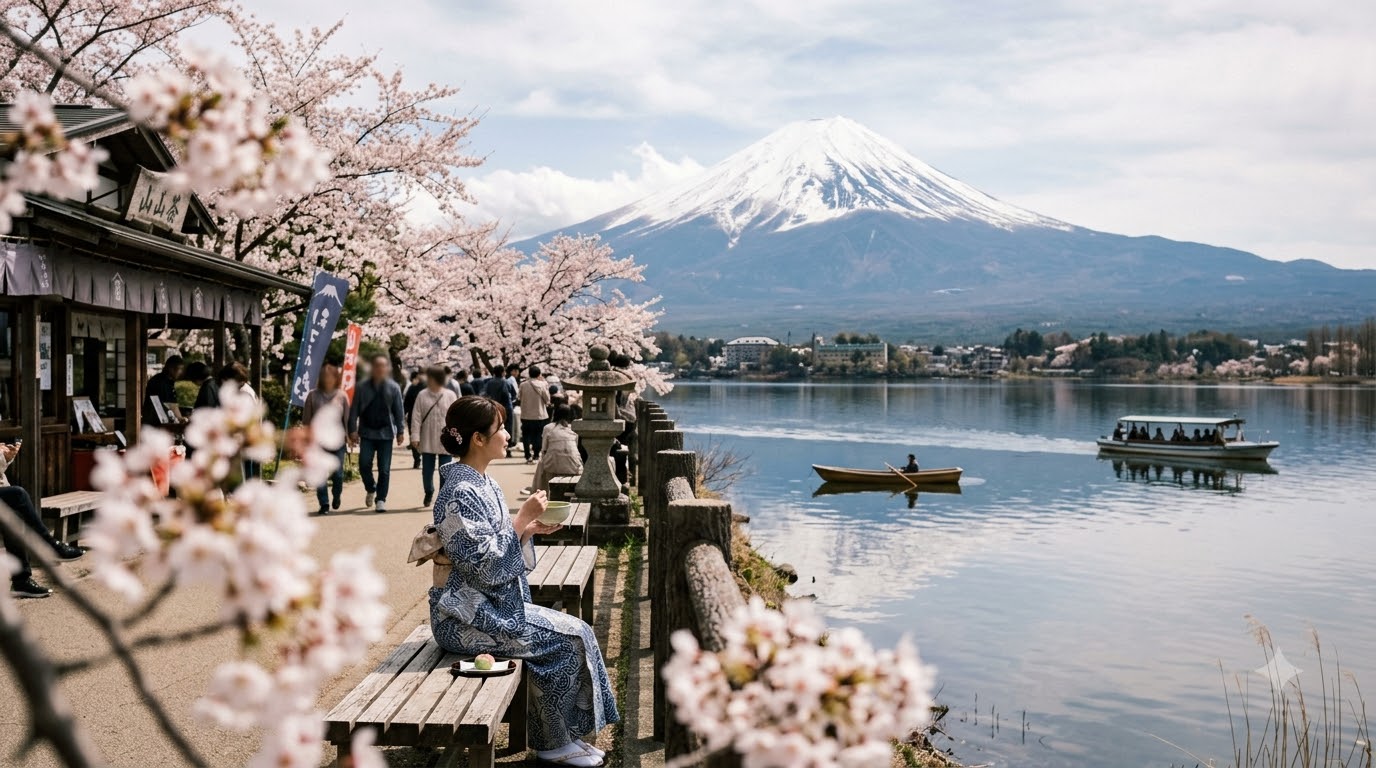
The best things to do around Mount Fuji split into photography, water, thrills, and the climb itself, and each one has a clear standout. Here is how we rank the essentials, each strong enough to anchor half a day on its own.
- Chureito Pagoda (Arakurayama Sengen Park): climb 398 steps in Fujiyoshida for the red-pagoda-and-Fuji frame; free entry, best at sunrise.
- Lake Kawaguchi north shore: the most reliable mirror reflection of the Fuji Five Lakes, reachable by a 1-hour-45-minute bus from Shinjuku.
- Oshino Hakkai: a village of eight crystal-clear ponds fed by Fuji snowmelt, free to wander, about 300 JPY for the famous Nakaike Pond.
- Fuji-Q Highland: a thrill-ride park at the mountain’s foot, home to the Fujiyama coaster with a 70-meter (230-foot) drop.
- Climbing Mount Fuji: the 3,776-meter summit, open only July through mid-September, requiring a 4,000 JPY permit and advance registration.
The rest of this guide breaks each of these down with 2026 prices, access, and timing tips. If you only have a single day, our Mount Fuji day trip from Tokyo itinerary shows how to fit the top three into one loop.
Chureito Pagoda: the iconic Fuji photo
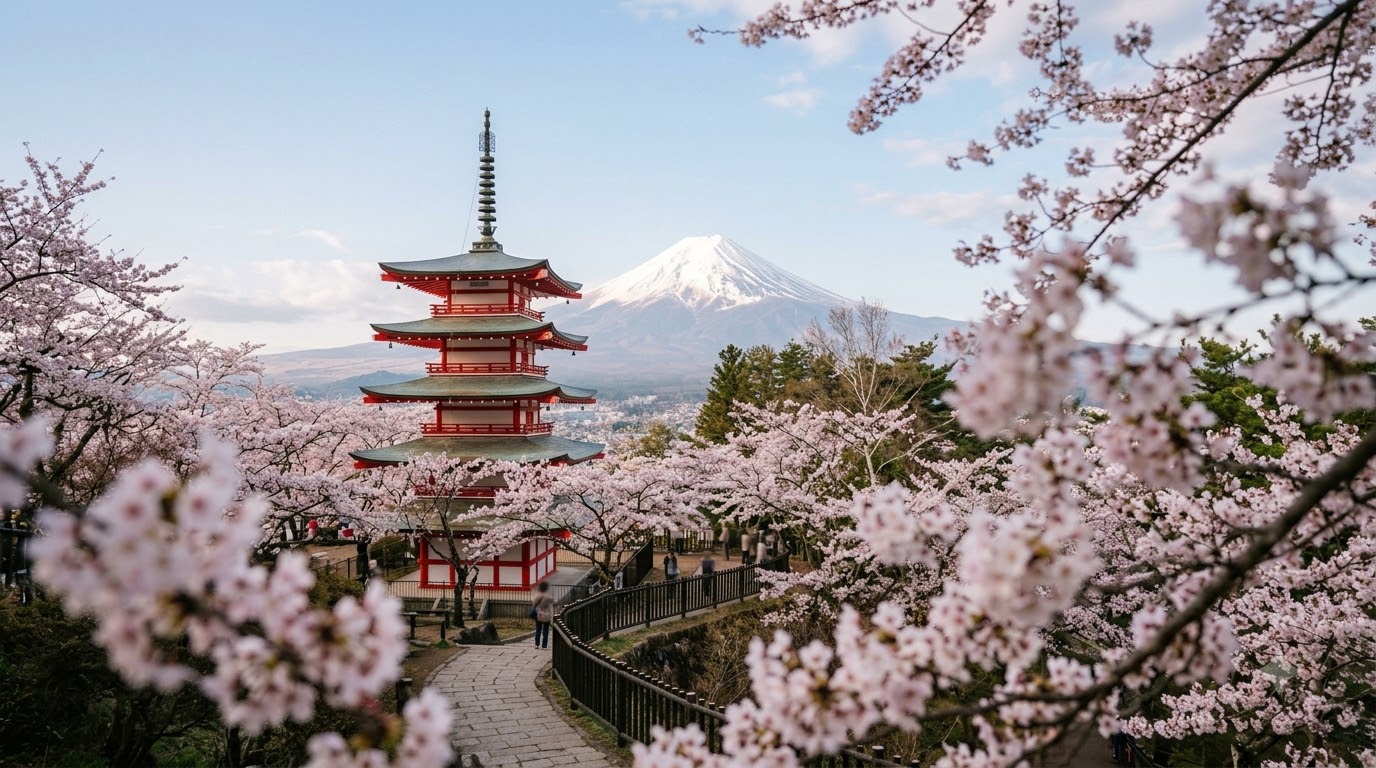
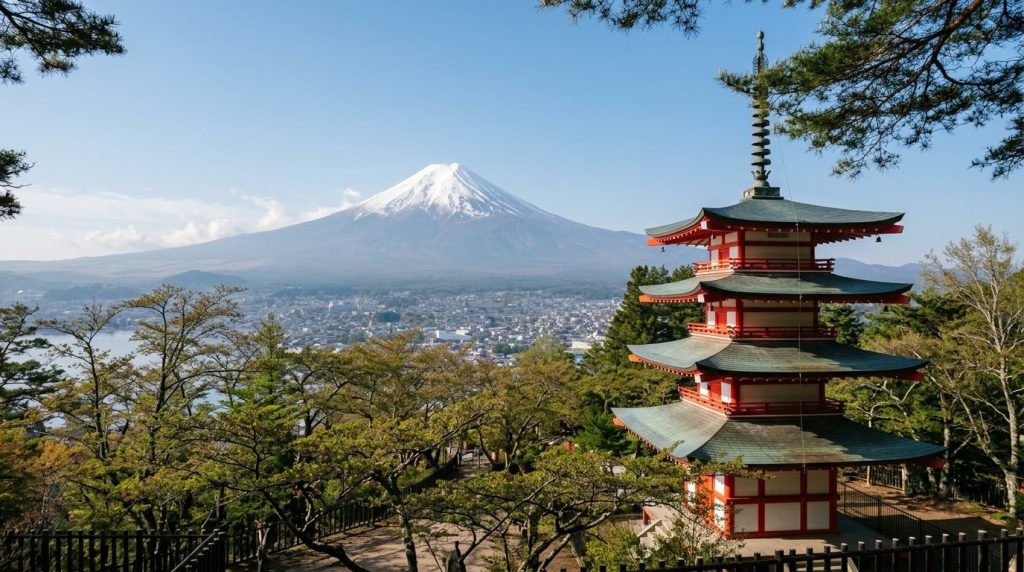
Chureito Pagoda is the single most photographed thing to do around Mount Fuji, and it is completely free. The five-story vermilion pagoda sits inside Arakurayama Sengen Park in Fujiyoshida, and from the upper viewing platform it lines up with Fuji rising behind it. In April the frame fills with cherry blossoms; in mid-November it turns to red and gold foliage.
Getting to the platform means climbing 398 stone steps, a 10- to 20-minute effort. There is a gentler zigzag path to the right of the shrine if the stairs are a problem. We always arrive before dawn, because the difference between 5:30 AM and 8:00 AM is the difference between an empty railing and a wall of tripods.
- Cost: free entry to the park and platform.
- Steps: 398 to the upper viewpoint, with a flat zigzag alternative alongside.
- Best light: sunrise to about 6:30 AM; the peak clears most reliably in early morning.
- Peak seasons: late March to mid-April for blossoms, mid-November for autumn color.
- Access: Fujikyu Railway to Shimoyoshida Station, then a 10-minute walk uphill to the park entrance.
For the clearest odds of a cloud-free peak, cross-check the month you are visiting against our best time to see Mount Fuji breakdown before you commit to a sunrise alarm.
Exploring the Fuji Five Lakes and Lake Kawaguchi
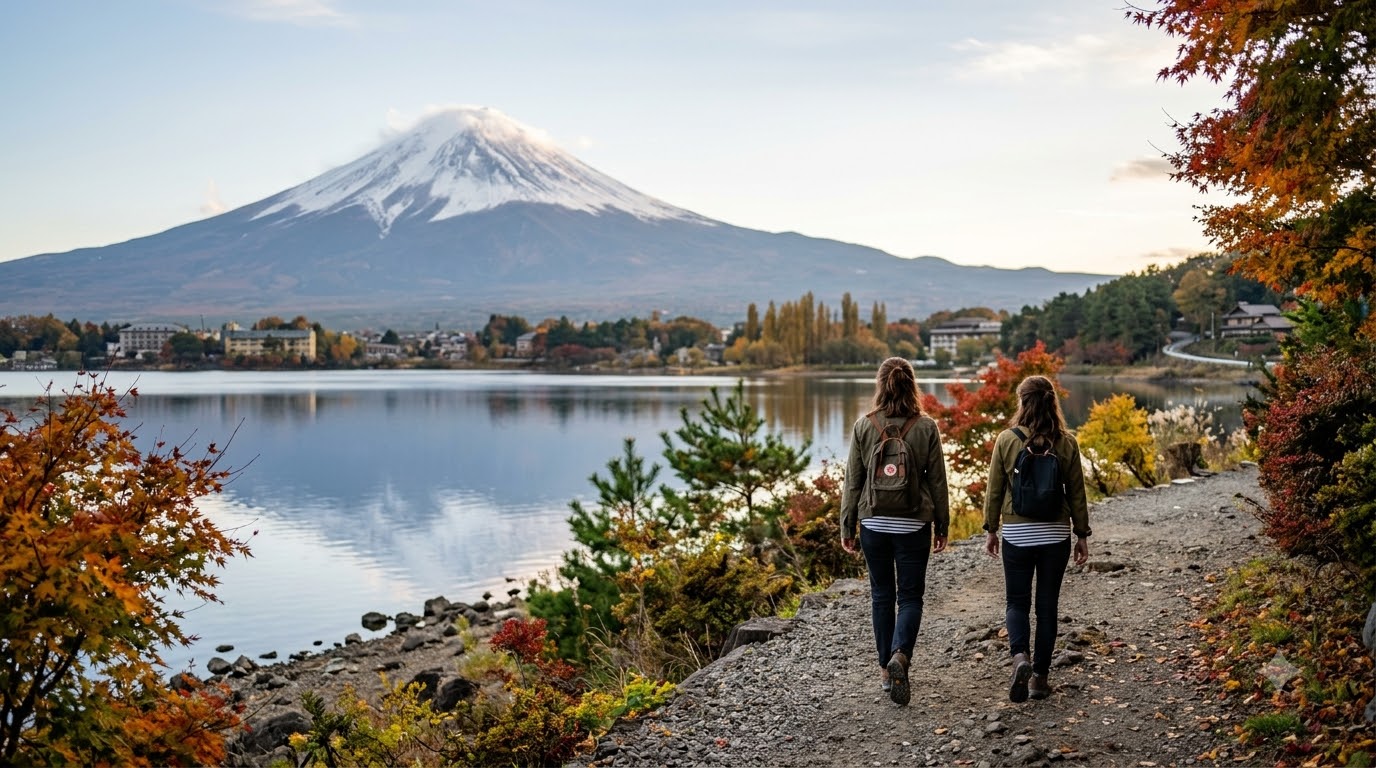
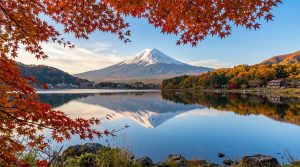
The Fuji Five Lakes (Fujigoko) are the calm-water counterpoint to the climb, and Lake Kawaguchi is where most visitors base themselves. The five lakes ring the mountain’s northern base, each with a different character, and on a windless morning they hand you a perfect mirror image of Fuji.
We usually spend a full morning on the Lake Kawaguchi north shore, between the Music Forest area and the Ubuyagasaki Peninsula, where the reflections are strongest. The Kawaguchiko Panoramic Ropeway lifts you to an observation deck at 1,075 meters for a view across the water, and weekday queues are a fraction of weekend ones.
- Lake Kawaguchi: the most accessible lake, best north-shore reflections, ringed by hotels and cafes.
- Lake Yamanaka: the largest of the five, popular for cycling and stand-up paddleboarding.
- Lake Sai (Saiko): quieter and forested, close to the Narusawa Ice Cave and Aokigahara.
- Lake Shoji (Shojiko): the smallest, favored by anglers and photographers who want space.
- Lake Motosu: the deepest, and the exact Fuji-and-lake view printed on the back of the 1,000-yen note.
A red retro sightseeing bus loops the Kawaguchiko shore and connects most viewpoints, so we rarely bother with a rental car here. If you want to stay lakeside rather than day-trip, our guide to where to stay near Mount Fuji compares Kawaguchiko ryokan against cheaper Fujiyoshida bases.
Oshino Hakkai: eight spring-fed ponds

Oshino Hakkai is a free, walkable village of eight crystal-clear ponds, and it is the most underrated thing to do around Mount Fuji. The name means “eight seas of Oshino,” and each pond is fed by Fuji snowmelt that has filtered underground for decades before surfacing, which is why the water runs startlingly transparent and cold even in August.
Most of the village and its ponds cost nothing to visit. The exception is the deep-blue Nakaike Pond, the one you see in every photo, which sits on private property and charges a small entry fee. We like arriving mid-morning on a weekday, before tour coaches from Tokyo unload, and pairing it with a bowl of the soba the village is known for.
- Entry: free to the village and most of the eight ponds.
- Nakaike Pond: about 300 JPY (2 USD) for the famous deep-blue pond on private land.
- Water source: Mt. Fuji snowmelt, naturally filtered underground for years.
- What to eat: hand-cut soba and grilled mochi from village stalls.
- Access: a short bus ride from Fujisan or Kawaguchiko Station on the local sightseeing lines.
Find your Mount Fuji hotel on the map
Live prices from Booking, Airbnb and more — move the map or change dates to compare stays around Mount Fuji.
Fuji-Q Highland: thrill rides under the mountain
Fuji-Q Highland is the region’s adrenaline option, an amusement park at the very foot of Fuji known for record-breaking roller coasters. Fujiyama, once the world’s tallest and fastest coaster, still drops riders 70 meters (230 feet) with the mountain filling the horizon behind the track. On clear days the view from the lift hill is genuinely distracting.
Pricing in 2026 uses a variable daily system, so the exact number shifts with demand. A 1-Day Pass covering entry and unlimited rides runs roughly 6,000 to 7,900 JPY for adults, while an Afternoon Pass from 1:00 PM costs about 4,100 to 6,000 JPY.
Entry to the park grounds without ride access is far cheaper if you are only there for the Fuji backdrop. Always confirm whether headline rides are running, as individual coasters can be suspended for maintenance windows.
| Fuji-Q Highland 2026 ticket | Adult price (approx.) | What it covers |
|---|---|---|
| 1-Day Pass | 6,000 to 7,900 JPY (40 to 53 USD) | Entry plus unlimited rides, full day |
| Afternoon Pass (from 1 PM) | 4,100 to 6,000 JPY (28 to 40 USD) | Entry plus unlimited rides, half day |
| Entry only | Lowest tier | Park grounds and Fuji views, pay per ride |
Prices are variable and set daily by the park; check the official Fuji-Q Highland site for the exact date you plan to visit.
Climbing Mount Fuji: 2026 season, trails, and fees
Climbing Mount Fuji is only possible for about ten weeks a year, and 2026 brings a stricter system than most first-timers expect. The Yoshida and Subashiri trails open July 1, while the Fujinomiya Trail, Gotemba Trail, and the summit crater-rim walk open July 10; all four routes close September 10 (Japan Guide, 2026). Outside that window the huts shut, the gates lock, and an attempt becomes genuinely dangerous.
For 2026, a 4,000 JPY fee applies to every trail, including the Shizuoka-side routes, and all four now require online pre-registration and payment through the official climbing website before you arrive. The Yoshida Trail, used by roughly 60% of climbers for its many huts and easy Tokyo access, is capped at 4,000 climbers per day.
We book a hut halfway up months ahead, because gate access between 2:00 PM and 3:00 AM is restricted to climbers who hold a confirmed hut reservation.
- Season 2026: Yoshida and Subashiri open July 1; Fujinomiya, Gotemba, and the crater rim open July 10; all close September 10.
- Permit: 4,000 JPY per climber on all four trails, paid during mandatory online pre-registration.
- Yoshida cap: 4,000 climbers per day, after which the gate closes.
- Gate hours: open 3:00 AM to 2:00 PM; after 2:00 PM a confirmed hut reservation is required to pass.
- Summit height: 3,776 meters, roughly a 5- to 7-hour climb and 3- to 5-hour descent on Yoshida.
| 2026 trail | 2026 open date | Permit fee | Notes |
|---|---|---|---|
| Yoshida (Yamanashi) | July 1 | 4,000 JPY | Most huts, best Tokyo access, 4,000/day cap |
| Subashiri (Shizuoka) | July 1 | 4,000 JPY | Forested lower section, merges with Yoshida near summit |
| Fujinomiya (Shizuoka) | July 10 | 4,000 JPY | Shortest route to summit, steep and rocky |
| Gotemba (Shizuoka) | July 10 | 4,000 JPY | Longest, quietest, famous sand-run descent |
Dates and fees per Japan Guide and the official Mt. Fuji Climbing website, 2026; confirm before booking as hut availability changes fast.
How to get to Mount Fuji from Tokyo
Getting to Mount Fuji from Tokyo is easiest by highway bus, which drops you right in the Kawaguchiko hub near the lakes, pagoda transfers, and Fuji-Q. The bus leaves from Busta Shinjuku, the terminal on the south side of Shinjuku Station, and runs roughly hourly from 06:00 to 22:00. We reserve online during climbing and autumn-foliage season, since seats sell out days ahead.
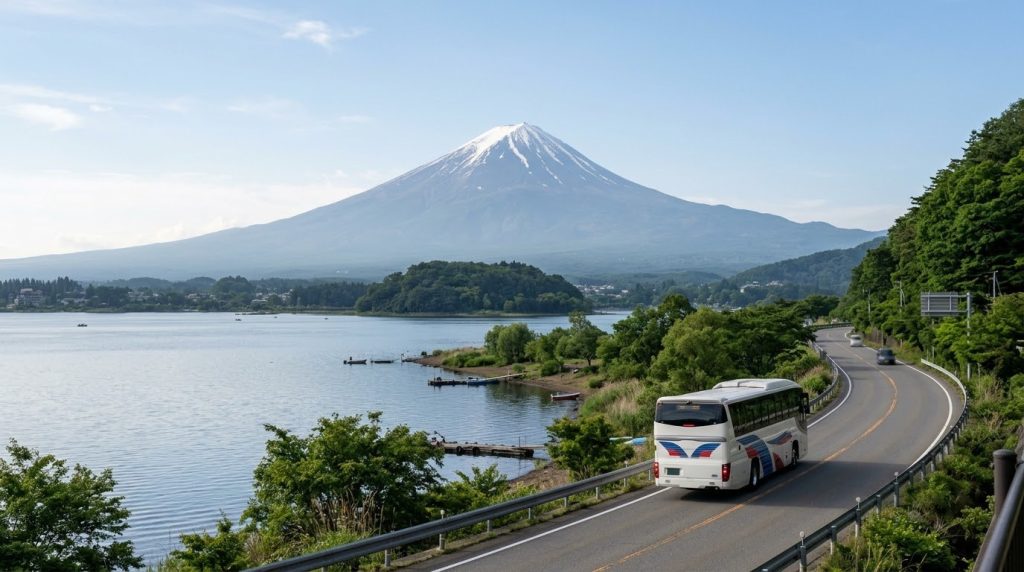
Trains work too, though none beat the bus on price. The direct Fuji Excursion limited express is the fastest rail option, and a cheaper local-train combination via Otsuki trades money for two transfers. Whichever you pick, aim to arrive early so the peak is still clear.
| Route from Tokyo | One-way fare | Time | Frequency |
|---|---|---|---|
| Highway bus (Busta Shinjuku to Kawaguchiko) | 2,200 JPY (15 USD) | ~1 hr 45 min | Hourly, 06:00 to 22:00 |
| Fuji Excursion limited express | 4,200 JPY (28 USD) | ~2 hr | 4 trains daily |
| Chuo Line + Fujikyu local (via Otsuki) | 2,560 JPY (17 USD) | ~2 hr 45 min | Frequent, with transfers |
Fares verified against 2026 Shinjuku-Kawaguchiko schedules; peak-season buses require advance booking.
Frequently Asked Questions
What is the number one thing to do around Mount Fuji?
Photographing the Chureito Pagoda at sunrise is the single most popular thing to do around Mount Fuji. It is free, involves a 398-step climb in Fujiyoshida, and delivers the classic red-pagoda-and-mountain frame. Cherry blossoms in April and red foliage in mid-November are the two peak windows.
Do you need a reservation to climb Mount Fuji in 2026?
Yes. In 2026 all four trails require online pre-registration and a 4,000 JPY permit before you arrive, and the Yoshida Trail is capped at 4,000 climbers per day. If you plan to start after 2:00 PM or climb overnight, you also need a confirmed mountain-hut reservation to pass the gate.
Can you see Mount Fuji without climbing it?
Absolutely, and most visitors never touch the trail. The Chureito Pagoda, the Lake Kawaguchi north shore, Oshino Hakkai, and the Kawaguchiko Panoramic Ropeway all offer full-mountain views. Clear-peak odds are highest on winter mornings and on summer mornings before about 9:00 AM, as our guide to the best time to see Mount Fuji explains in detail.
How many days do you need around Mount Fuji?
Two days is the sweet spot for a non-climbing trip: one for the Chureito Pagoda and Fuji Five Lakes, and one for Oshino Hakkai plus Fuji-Q Highland or a ropeway. If you intend to summit, add a third day and a mountain-hut night on the Yoshida Trail so you can catch sunrise from the top.
Is Fuji-Q Highland worth visiting near Mount Fuji?
Fuji-Q Highland is worth it if you want thrill rides with the mountain as a backdrop, especially for families and coaster fans. The Fujiyama coaster drops 70 meters (230 feet) with Fuji in view, and a 2026 1-Day Pass runs about 6,000 to 7,900 JPY. Check which headline rides are operating before you buy, as coasters occasionally close for maintenance.
Planning your Fuji days
Mount Fuji rewards people who leave room in the plan. We have watched the peak vanish behind cloud at 8:00 AM and reappear at sunset from the far side of Lake Kawaguchi, so we never pin an entire trip on one viewpoint or one hour.
Stack the pagoda, the lakes, the ponds, and the rides across a couple of unhurried days, and, if the season is right and you have registered ahead, add the climb. For the full regional overview and more day-trip routing, our complete Mount Fuji travel guide ties every piece together.
However the weather behaves, the region gives you more than enough reasons to be glad you came out from Tokyo.