Where to Stay Near Mount Fuji 2026: Best Areas by Budget
Disclosure: Some links in this guide are affiliate links. If you book or buy through them, we may earn a small commission at no extra cost to you — it helps keep our guides free.
- Best overall base: Lake Kawaguchiko. Lakeside rooms with a confirmed Fuji view run roughly 15,000-30,000 JPY ($100-200 USD) per person with dinner and breakfast.
- Cheapest option: Fujiyoshida hostels start around 3,900-7,800 JPY ($26-52 USD) per night for a dorm bed or basic private room, a 5-minute train from Chureito Pagoda.
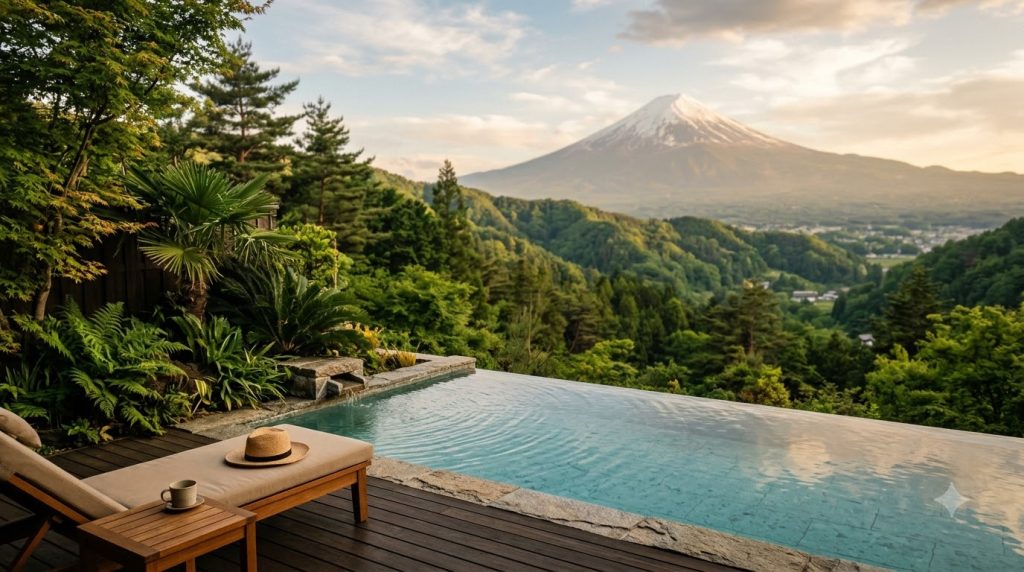
- Best onsen luxury: Hakone ryokan with meals typically start near 30,000 JPY per person and climb past 100,000 JPY; a private open-air bath adds 5,000-15,000 JPY per person.
- Best value with a view: Gotemba hotels start around 5,500 JPY ($37 USD); Hotel Clad beside the outlets pairs Fuji views and an onsen for roughly 34,000 JPY ($230 USD) a night.
- Booking rule: Even at “Fuji view” properties, not every room faces the peak. Always book a named “Mt. Fuji side” room type, not just a Fuji-view hotel.
Pick your area
Deciding where to stay near Mount Fuji comes down to four bases: Lake Kawaguchiko for the classic lake-and-mountain view, Hakone for onsen ryokan and the easiest return to Tokyo, Fujiyoshida for cheap beds near Chureito Pagoda, and Gotemba for outlet shopping plus good-value onsen hotels.
Kawaguchiko wins for most first-time visitors because roughly half its lakeside rooms actually face the mountain, and it sits about 100 minutes by direct bus from Shinjuku.
Quick answer: Lake Kawaguchiko is the best base for most first-timers, with Hakone best for onsen ryokan, Fujiyoshida for cheap beds and Gotemba for outlet shopping and value onsen hotels.
The Fuji Five Lakes region books out fastest during cherry blossom season (late March to mid-April) and autumn foliage (mid-November).
This guide compares all four areas side by side, lists real 2026 nightly prices in yen, and names specific ryokan with Fuji views at every budget so you can book the right base the first time. For the wider region, start with our Mount Fuji travel guide.
A north-shore Kawaguchiko ryokan in winter can give you a cloudless Fuji view when you open the curtains at dawn. The key lesson: the room type matters more than the town. A cheap “Fuji-view hotel” with a room facing the parking lot beats nothing, but it is not the shot you flew for.
Find your Mount Fuji hotel on the map
Live prices from Booking, Airbnb and more — move the map or change dates to compare stays around Mount Fuji.
Where to stay near Mount Fuji: which area is right for you?
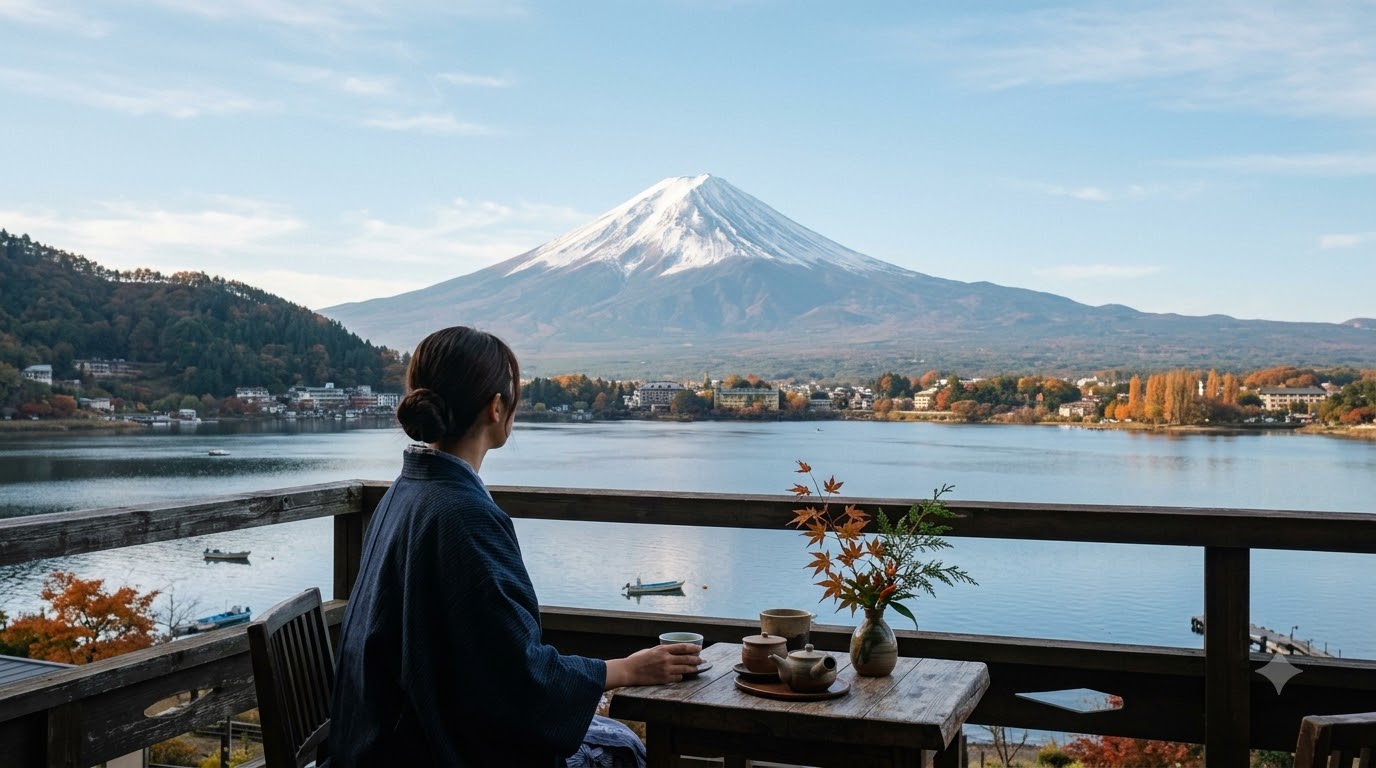
Choose your base by what you want your mornings to look like. Kawaguchiko is for lake reflections, Hakone is for hot springs and a fast Tokyo exit, Fujiyoshida is for budget travelers chasing the Chureito Pagoda photo, and Gotemba is for shoppers who still want an onsen and a mountain view.
Here is how the four areas compare on the factors that actually change your trip: access from Tokyo, typical view quality, nightly price, and who each one suits.
| Area | Time from Tokyo | Fuji view | Nightly price (per person, meals in) | Best for |
|---|---|---|---|---|
| Lake Kawaguchiko | ~100 min bus from Shinjuku | Excellent (lake reflections) | 12,000-80,000+ JPY | First-timers, photographers |
| Hakone | ~85 min by Romancecar from Shinjuku | Good (across Lake Ashi) | 20,000-100,000+ JPY | Onsen lovers, couples |
| Fujiyoshida | ~110 min bus, then local train | Good (near Chureito Pagoda) | 3,900-15,000 JPY | Backpackers, photographers |
| Gotemba | ~100 min bus / 80 min train | Fair to good (south face) | 5,500-40,000 JPY | Shoppers, value seekers |
Prices reflect 2026 listings on Booking.com, Expedia, and Tripadvisor at roughly 150 JPY to 1 USD; peak seasons run 20-30% higher.
The quick decision rule:
- Want the postcard lake-and-Fuji reflection? Book Lake Kawaguchiko north shore.
- Want a private open-air onsen and a short train back to Tokyo? Book Hakone.
- Traveling cheap and want the pagoda shot at dawn? Book Fujiyoshida.
- Combining Fuji with outlet shopping or driving? Book Gotemba.
Lake Kawaguchiko: the best all-round base for Fuji views
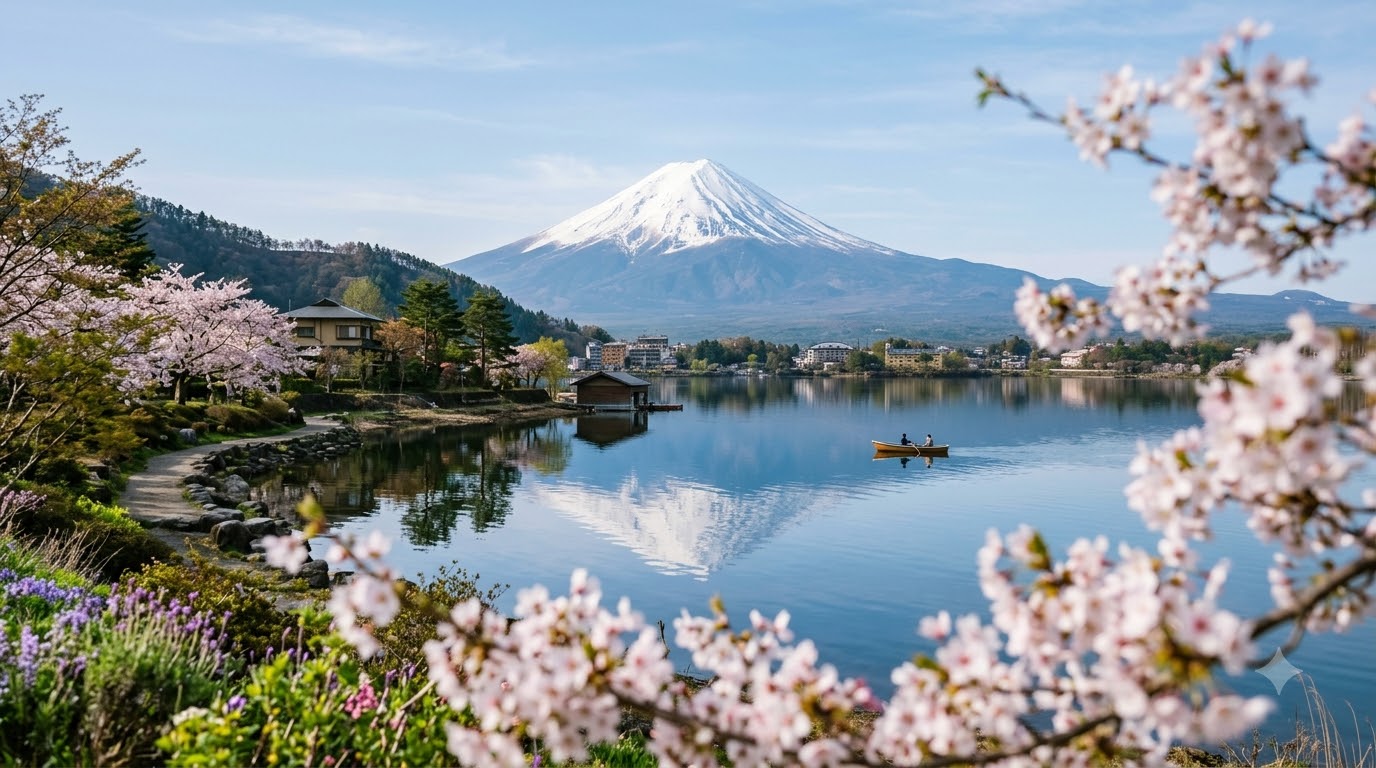
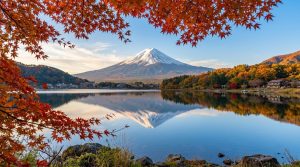
Lake Kawaguchiko is where most first-time visitors should stay near Mount Fuji, because the north shore delivers the classic mirror reflection and the town is walkable with a retro sightseeing bus loop. The lake sits about 100 minutes by direct highway bus from Shinjuku, and the Fujikyu Railway connects it to Fujiyoshida and Chureito Pagoda in minutes.
Nightly rates spread wide depending on whether your room faces the mountain. Based on 2026 listings (Booking.com and Expedia, 2026):
- Budget hotels and no-meal ryokan: roughly 12,000-22,000 JPY per room, often lake-view rather than direct Fuji-view.
- Mid-range ryokan with kaiseki dinner and breakfast: roughly 15,000-30,000 JPY per person.
- Luxury north-shore ryokan: roughly 30,000-80,000+ JPY per person; suites at the top properties run higher.
- La Vista Fujikawaguchiko: known for its rooftop Fuji-view onsen, mid-range pricing, and rooms that book out months ahead in autumn.
- Kozantei Ubuya and Kawaguchiko Fufu: the north-shore luxury benchmarks, where nearly every room and bath faces the peak.
The trade-off at Kawaguchiko is crowds and price during blossom and foliage weeks. If you want the reflection without the luxury bill, the free lakeside paths on the north shore between the Music Forest and Ubuyagasaki Peninsula deliver the same view your ryokan charges for. Pair your stay with our roundup of the best things to do around Mount Fuji to fill the daylight hours.
Check hotels in Lake Kawaguchiko →
Hakone: onsen ryokan and the easiest Tokyo access
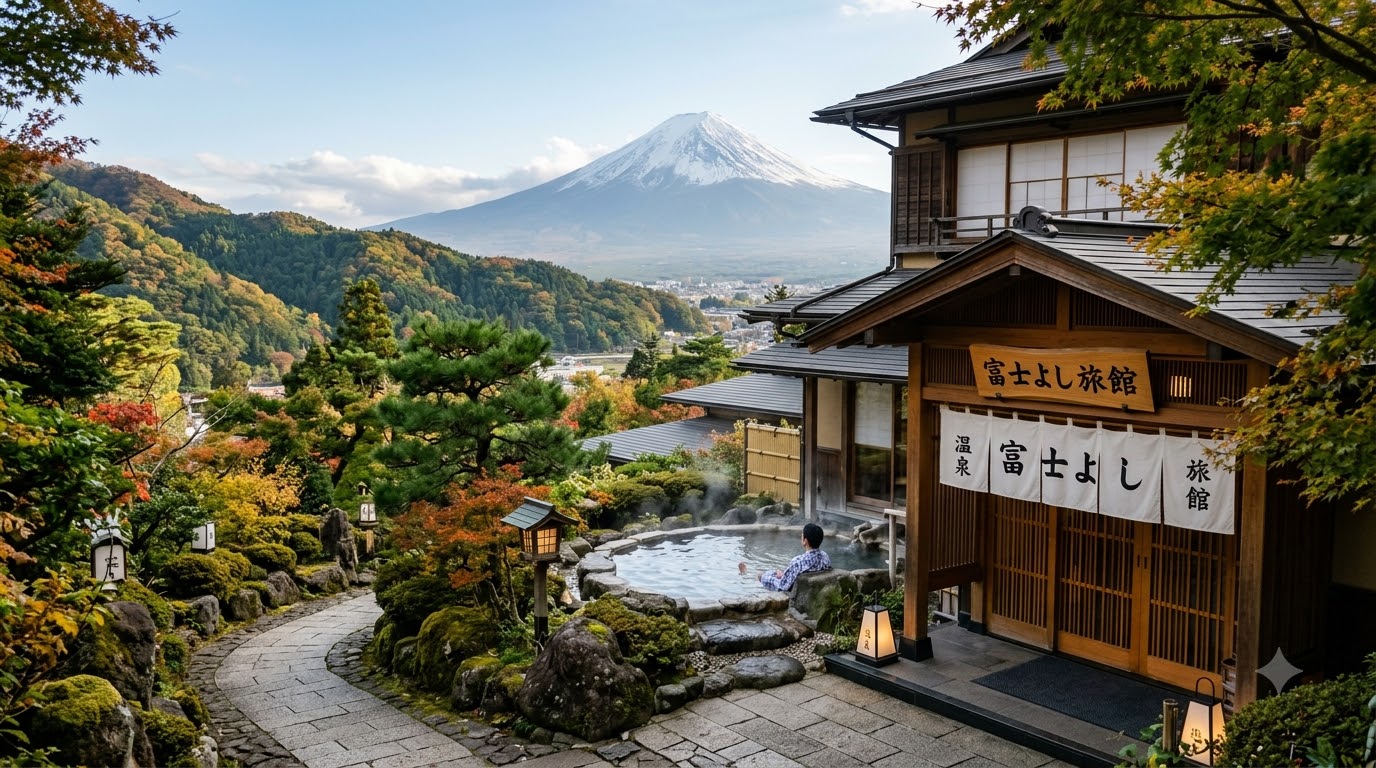
Hakone is the base to choose if soaking in a private open-air onsen matters more than a lakeside reflection, and it offers the fastest return to Tokyo of any Fuji base. The Odakyu Romancecar reaches Shinjuku in about 85 minutes, which is why we send couples and first-timers short on time here.
Fuji appears across Lake Ashi behind the red Hakone Shrine torii on clear days, though the mountain is farther off than at Kawaguchiko.
Hakone is the priciest of the four bases because its ryokan culture is built around meals and baths. From 2026 rate research (Expedia and industry pricing guides, 2026):
- Onsen ryokan with dinner and breakfast: typically start near 30,000 JPY per person and climb past 100,000 JPY at the luxury end.
- Roughly half of a 30,000 JPY ryokan rate covers the kaiseki dinner and breakfast, not just the room.
- Private onsen or semi-open-air bath upgrade: adds about 5,000-15,000 JPY per person over a standard room.
- Yoshiike Ryokan and the Gora-area inns: mid-to-upper pricing with garden baths, near the Hakone Tozan Railway.
- Budget no-meal options exist from around 12,000-18,000 JPY per room, but they trade away the ryokan dinner that defines the experience.
Hakone works best as a one or two-night onsen stop rather than a photography base. If your priority is a guaranteed clear Fuji rather than hot springs, check our guide to the best time to see Mount Fuji before you lock in dates here.
Fujiyoshida: budget beds near Chureito Pagoda
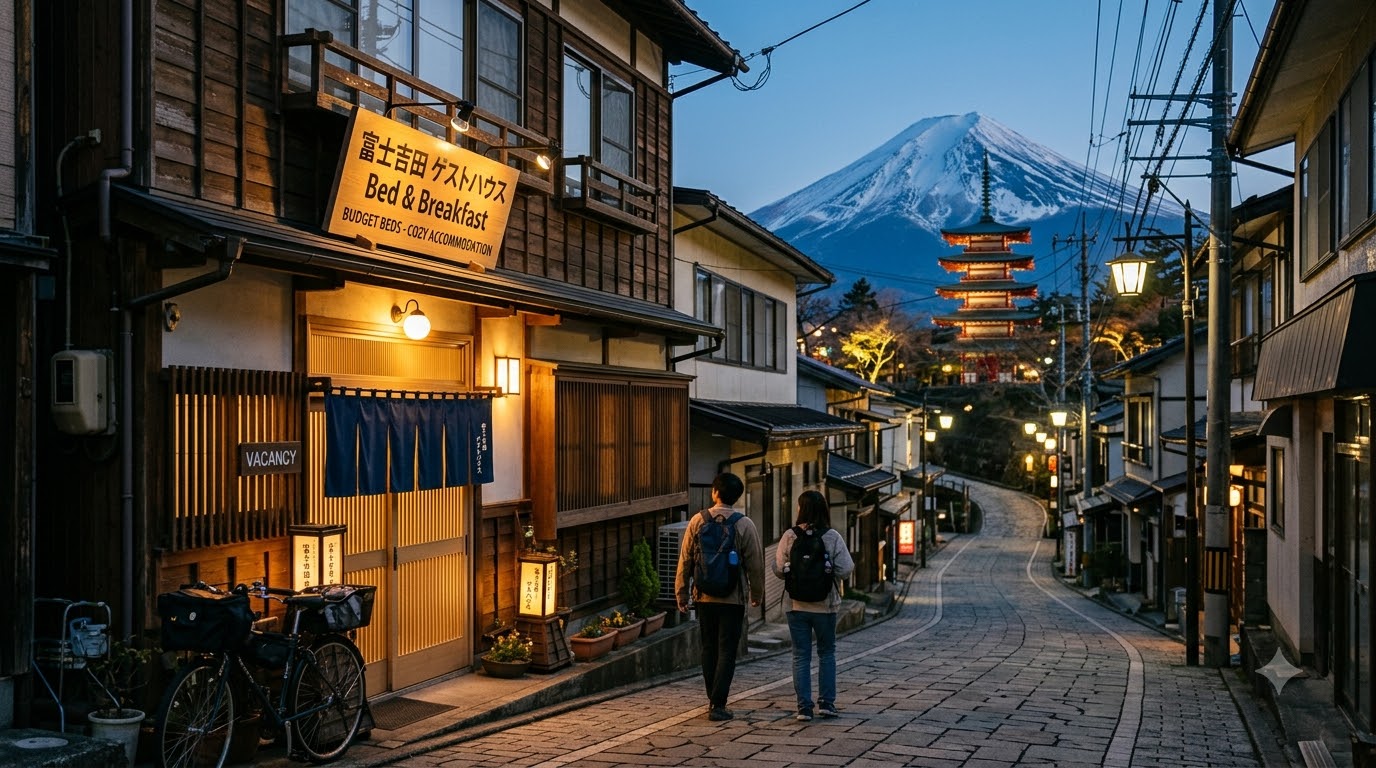
Fujiyoshida is the cheapest place to stay near Mount Fuji and the smartest base if the Chureito Pagoda sunrise shot is your goal. The pagoda sits at Arakurayama Sengen Park, a 5-minute Fujikyu train ride plus a short uphill walk from central Fujiyoshida, so you can be on the platform before the tour buses arrive. Staying here lets you shoot the pagoda without a pre-dawn drive.
Prices are a fraction of the lakeside towns. From 2026 listings (Booking.com, Tripadvisor, and Hostelz, 2026):
- Hostel dorm beds: from roughly 3,900 JPY ($26 USD) per night at the cheapest backpacker houses.
- Basic private guesthouse rooms: from roughly 4,600-7,800 JPY ($31-52 USD) per night.
- Hostel Mt. Fuji FUKUYA and T&T Fujiyama Guest House: reliable budget names with English-speaking hosts and Fuji-view common areas.
- Business hotels: from around 8,000-12,000 JPY per room for a private bathroom and no meals.
- Average all-types nightly rate: around 22,000 JPY ($147 USD), which shows how much the budget options undercut the market.
The catch is that Fujiyoshida is a working town, not a resort, so evenings are quiet and dinner options thin out after 8:00 PM. It works as a functional dawn-shooting base, with honesty-box udon shops locals swear by nearby. It is also the natural launch point for a Mount Fuji day trip from Tokyo if you only have hours, not nights.
Gotemba: outlet shopping and value onsen hotels
Gotemba is the base for travelers who want Fuji views, an onsen, and outlet shopping in one stop without paying Hakone prices. It sits on Fuji’s southern flank, about 100 minutes by bus or 80 minutes by train from Tokyo, and Gotemba Premium Outlets is one of Japan’s largest outlet malls. The newer hotels here offer surprisingly good value.
From 2026 listings (Tripadvisor, Expedia, and Trip.com, 2026):
- Budget hotels: from roughly 5,500 JPY ($37 USD) per night for a basic room.
- Dormy Inn Express Gotemba Hot Springs: around 12,000 JPY ($81 USD) with a hot-spring bath.
- Hotel Clad: beside the outlets with Fuji views from rooms and its onsen, around 34,000 JPY ($230 USD) a night.
- Mars Garden Wood Gotemba: cabin-style resort stays around 21,000 JPY ($144 USD).
- The south-face view here is less iconic than the lake reflection but clears earlier on some winter mornings.
Gotemba suits self-drivers and shoppers more than photographers chasing the mirror shot. If you are not renting a car, Kawaguchiko or Fujiyoshida put you closer to the signature viewpoints.
Best ryokan with Mount Fuji views, by budget
A ryokan with a genuine Mount Fuji view is the reason many travelers pick this region, and the price ladder is clear once you separate view-guaranteed rooms from generic lake-view stock. The single most important booking step is choosing a named “Mt. Fuji side” room, because even top ryokan sell cheaper rooms that face the garden or car park.
Here is the budget ladder we recommend, drawn from 2026 rates:
- Budget with a view (under 15,000 JPY per person): Fujiyoshida guesthouses with Fuji-view lounges, or off-season Kawaguchiko no-meal ryokan; the view is from common areas, not always the room.
- Mid-range (15,000-30,000 JPY per person): La Vista Fujikawaguchiko and similar Kawaguchiko ryokan with rooftop Fuji-view onsen and in-room lake vistas, meals included.
- Upper-mid (30,000-50,000 JPY per person): Hakone onsen ryokan with private open-air baths, or Hotel Clad in Gotemba for a modern take.
- Luxury (50,000-100,000+ JPY per person): Kozantei Ubuya and Kawaguchiko Fufu on the north shore, where the mountain fills the window from bed and bath.
Whatever tier you pick, book at least two to three months ahead for blossom and foliage weeks, when the best Fuji-facing rooms vanish first. Cross-check your dates against the best time to see Mount Fuji so you are not paying premium rates for a cloudy week.
How to guarantee a Fuji-view room when you book
The difference between a memorable stay and a disappointing one is the room type, not the town, so treat the booking details as seriously as the destination. Some travelers book a “Fuji view hotel” and end up facing a hillside. A few rules keep that from happening:
- Book a room explicitly labeled “Mt. Fuji side,” “Fuji view guaranteed,” or “lake and Fuji view,” never just a Fuji-view property.
- Message the property directly to confirm the peak is visible from the room, not only the lobby or rooftop bath.
- Aim for higher floors on the north or lake-facing side; lower floors often lose the view behind trees or buildings.
- Add a private open-air bath (rotenburo) if the view matters at bath time, budgeting an extra 5,000-15,000 JPY per person in Hakone.
- Travel in winter (December-February) for the clearest skies, when Fuji is visible on roughly 70% of days, then keep mornings free for the reveal.
Lake Yamanakako, Saiko and Shojiko: Quieter Alternatives
Kawaguchiko is the most developed of the Fuji Five Lakes, but it is not the only place to sleep. The other lakes have far fewer beds, so choose them on purpose rather than as a fallback.
Lake Yamanakako
Yamanakako is the largest of the five lakes and the second most developed after Kawaguchiko. Guides describe larger resort hotels, pensions and lodges, and a family-friendly feel. It is reachable by bus from Kawaguchiko in roughly 25 minutes, and there are also direct buses from Shinjuku.
Lake Saiko and Lake Shojiko
Saiko is smaller and much less developed than Kawaguchiko, and Shojiko is the smallest of the five lakes. Accommodation is limited, and bus service is less frequent, so these lakes suit travelers with a car or people willing to plan around the bus timetable.
The Omni Bus Green Line links Kawaguchiko Station to Saiko, but frequency differs between sources, so check the current timetable.
Lake Motosu
Motosuko is known mainly for campgrounds rather than hotels. It is a choice for campers and early-morning photographers, not for a typical hotel stay.
If you are not renting a car and have only one or two nights, stay at Kawaguchiko and visit the other lakes as day trips.
Check hotels in Lake Yamanakako, Saiko and Shojiko →
Fuji-Q Highland, Oshino and Other Bases for Families and Drivers
Not everyone comes for the lake view. Families and drivers have a few other places to stay in the Fuji area, and each fits a different plan.
Near Fuji-Q Highland
Fuji-Q Highland is a theme park on the edge of Fujiyoshida. Staying close removes the trip back to Kawaguchiko before and after a full day at the park. The highway bus from Shinjuku stops at the park and at Kawaguchiko Station, and Fujisan Station is the nearest rail stop. Treat this as a one-night base for ride days, not a general Fuji base.
Oshino
Oshino is a village within a short drive of Lake Yamanaka, Fuji-Q Highland and the Oshino Hakkai ponds, which are fed by springs from the mountain and are described as not freezing in winter. The area has smaller inns and suits travelers with a rental car. Without one, buses are less frequent.
Lake Yamanaka
Yamanakako has larger hotels and a family feel, as noted above. Oshino Hakkai is reachable from the lake by bus.
If you do not drive
The Retro Bus and the Omnibus circuits from Kawaguchiko Station cover the main viewpoints, but guides say a taxi or rental car is more efficient for Oshino Hakkai and Chureito Pagoda in a single day. If you want several sights, stay in Kawaguchiko and use a taxi for one long loop.
Getting Around the Lakes Once You Arrive
Your base matters less if you understand the local transport, because several visitors stay in Kawaguchiko and still see Saiko, Motosu and Fujiyoshida in a day.
One reported option is the Kawaguchiko Saiko Motosuko Bus Pass, listed at JPY 1,500 (USD 10) for one day and JPY 2,000 (USD 13) for two days. It can be bought at Kawaguchiko Station. Prices and routes change, so confirm them at the station or on the operator’s site.
The Fujikyu Railway connects Kawaguchiko with Fujiyoshida and the Chureito Pagoda area. The retro sightseeing bus loops cover the main lakeside viewpoints in Kawaguchiko itself.
Practical advice for planning:
- Check the last bus back to your hotel before you set out for a farther lake.
- Buses run less often to Saiko and Shojiko than to central Kawaguchiko.
- If you stay at a ryokan with a set dinner time, build your return trip around it.
- Keep a taxi number or app ready for the end of a long day, since taxi availability is lower in the countryside.
Chureito Pagoda in 2026: Crowds, Timing and Entry
The Chureito Pagoda viewpoint in Arakurayama Sengen Park is the reason many travelers choose Fujiyoshida. Several guides say entry to the park and pagoda is free and that the park is open around the clock, so sunrise and sunset visits are possible. Check locally before you go, since one booking site hedges on whether a small fee applies.
Crowds are the main planning issue. Reports say Fujiyoshida will not hold its cherry blossom festival in 2026, citing overtourism and the effect on residents. One April 2026 guide warns of waits of one to three hours at the pagoda terrace in peak blossom season, which usually falls in early to mid April but varies each year.
What to expect on the way:
- The nearest station is Shimo-Yoshida on the Fujikyuko Line, and the walk to the park entrance takes roughly 10 to 20 minutes.
- The final climb is uphill, with about 398 steps to the pagoda.
- Plan on roughly 1.5 to 2.5 hours for the park and pagoda.
Staying in Fujiyoshida lets you arrive at sunrise before the tour groups. If you visit in spring, build in extra time or choose a quieter weekday. Winter often gives clearer skies and fewer visitors, though spring and autumn remain the busiest seasons.
Check hotels in Chureito Pagoda in 2026 →
Getting to the Fuji Five Lakes by Train and Bus
For many visitors the rail route from Shinjuku changes at Otsuki on the JR Chuo Line. The limited express takes about 60 minutes and costs JPY 2,430 (about USD 16) one way. Slower trains take 80-90 minutes for JPY 1,410 (about USD 9), with a transfer. From Otsuki, the Fujikyu Railway continues toward the lakes.
Local buses
Local buses are priced per route. One regular bus from Kawaguchiko Station to Fuji Midorino Kyukamura takes about 20 minutes for JPY 600 (about USD 4). The Omni Bus Blue Line from Kawaguchiko to Michi-no-eki Narusawa takes about 25 minutes for JPY 680 (about USD 4.50) one way.
The cost adds up quickly if you stay away from the station, so weigh a cheaper room against daily bus fares for short stays.
Choosing a Hakone Sub-Area: Yumoto, Gora, Sengokuhara and Lake Ashi
Hakone is not one place but a loop of small areas linked by train, cable car, ropeway and bus. Where you sleep decides how many transfers you make, and guides disagree on rankings, so match the area to your itinerary.
Hakone-Yumoto
Yumoto is the gateway at the foot of the mountains, with the fewest transfers from Odawara and Tokyo. Guides recommend it for a quick trip or when you arrive late. It has many onsen inns, but fewer of the scenic setting that draws people higher up.
Gora
Gora is the last stop on the Hakone Tozan Railway and the base for the ropeway toward Owakudani and Lake Ashi. It has museums and some of the area’s best-regarded onsen, according to one guide, and suits relaxed sightseeing without long bus rides.
Sengokuhara
Sengokuhara is a highland plateau, quieter and more focused on nature. It sits slightly off the main Hakone Free Pass loop and is reached by bus, about 30 minutes from Yumoto. It is a good choice for clear-day Fuji views and for travelers who want seclusion.
Moto-Hakone and Lake Ashi
The lakeshore is the scenic option, with the floating torii of Hakone Shrine and a pedestrian-friendly setting. Reaching it takes several transfers, so it works better for a two-night stay than a single night.
Miyanoshita, a retro mountain village, is another option for classic atmosphere. Before booking, check how far the inn is from the nearest bus stop or station, and whether it offers pickup.
Check hotels in Choosing a Hakone Sub-Area →
Hakone Transport: Free Pass and Romancecar Costs
Hakone is easy to reach from Tokyo, but the transport costs add up. Guides report that the two-day Hakone Free Pass from Shinjuku costs JPY 7,100 (USD 47) for an adult after a price increase in October 2025, while some older pages still list JPY 6,100. A cheaper version sold from Odawara also exists, and sources disagree on its price.
The Romancecar is not covered by the pass. Reserved seats require a limited express surcharge, which sources put at around JPY 1,200 to 1,290 (USD 8 to 9). Riding the regular Odakyu express avoids the surcharge but takes about two hours to Hakone-Yumoto, compared with roughly 80 to 85 minutes on the Romancecar.
Whether the pass pays off depends on how much you ride. It covers local trains, buses and other Hakone transport, so it makes sense if you plan to visit several attractions around Lake Ashi. If you only travel to a ryokan and back, a regular fare may cost less.
Confirm all prices on the Odakyu website before you buy, since several blogs quote outdated figures.
Check hotels in Hakone Transport →
Climbing Mount Fuji: Season, Fee, and Gate Rules for the Yoshida Trail
If you are staying near Mount Fuji to climb it, the Yoshida Trail rules matter as much as the hotel. According to the Yamanashi Prefecture notice dated April 17, 2026, the season is scheduled for July 1 to September 10. Weather or leftover snow can delay the start.
Fee and reservation
- The hiking fee is JPY 4,000 (about USD 27) per person per visit, including for mountain hut guests.
- Passage reservations are optional and made through asoview. They close once the daily limit is reached.
- Personal-reason cancellations, including transport delays, are non-refundable.
Gate hours and daily cap
The 5th station gate closes from 2 PM to 3 AM the next day. You can still descend at any time. The gate also closes when climbers for the day reach 4,000, and people without a reservation cannot pass after that. Mountain hut guests are exempt.
Rules to follow
Bring cold-weather clothing, separate rain gear, and climbing shoes. The notice warns against bullet climbs without a mountain hut stay. Stay on the trail, take your trash home, and do not remove lava or plants. The free Mt. Fuji app offers maps and offline GPS.
Outside the season, the trails are closed above the 5th station, so a hotel stay then is about views rather than a climb.
Check hotels in Climbing Mount Fuji →
Sending Luggage Ahead to Your Fuji Hotel
Trains and buses to the Fuji Five Lakes are crowded, and the walk from a stop to a ryokan can be long. Japan’s luggage-forwarding service, called takkyubin, lets you send suitcases from your hotel or the airport to your next stay and travel with a small bag.
How it works
Staff at hotels and convenience stores can usually arrange it. Ask for a Yamato (Ta-Q-Bin) form and give the address and the arrival date of the guest at the next property. One 2026 guide reports next-day arrival on a Tokyo to Kyoto move, so confirm the delivery date for your route.
Cost and timing
No source priced the Kawaguchiko route. For reference, guides report that a standard suitcase costs roughly JPY 2,000 to 4,500 on longer domestic routes, depending on size and provider, and published rates change, so check the current chart. If you send bags from an airport, one guide suggests doing so at least two days before departure.
Tips for a ryokan stay
- Confirm in advance that the property accepts deliveries and will hold them until you arrive.
- Ship the bag that holds your main clothing and keep a one-night bag with you, since the hotel may not receive the delivery until the day you check in.
- Ryokan with a staffed front desk are easier than self-service apartments.
- Do not send passports, medicine, electronics or cash.
Ryokan and Onsen Rules for First-Timers
Staying at a ryokan means following a few customs, and the rules matter more near Fuji because many ryokan have shared baths.
- Baths are separated by gender in most shared onsen, and you bathe without clothing. Wash and rinse before you enter the water.
- Avoid alcohol before bathing. Hot water and alcohol together can make you lightheaded.
- Tattoos are the main hurdle. Policies vary by property, and some facilities refuse entry while others offer cover patches or allow small tattoos.
- If you have tattoos, book a room with a private bath or a private reservable bath (kashikiri), and ask the property in advance.
Many ryokan serve dinner and breakfast at set times, so confirm yours when you book, and tell the property about any food allergies before you arrive. Late arrivals can miss dinner.
The Fuji-view rooms mentioned above are the ones to request by name when you make a reservation.
Day-Use Onsen Baths Near Kawaguchiko
If your hotel has no private bath, several day-use baths near Kawaguchiko charge a set admission. Prices come from a Japan Guide listing, so confirm at the door because weekend rates differ.
- Fujiyama Onsen: JPY 800 in the morning, JPY 1,600 on weekdays, JPY 2,000 on weekends.
- Hotel Mifujien: JPY 1,200 in the daytime.
- Kaiun no Yu: JPY 1,000 for two hours.
- Yurari: JPY 1,400 on weekdays, JPY 1,700 on weekends. A private mountain-view bath is JPY 3,500 for 60 minutes.
- Benifuji no Yu and Ishiwari no Yu: JPY 900 each.
A bus to Ishiwari no Yu from Fujisan Station takes about 45 minutes and costs JPY 910 one way, so factor in transport. Hotel Mifujien, Yurari, and Benifuji no Yu are listed among the baths with Mount Fuji views.
Staying Near Fuji in Winter: Views, Cold and Closures
Winter is the best season for a clear view of the peak, as the section on guaranteeing a view says, but it changes what you need from a hotel. Cold, short days and some early closures affect the plan more than the room does.
What to expect
From December to February the mountain is snow-covered and striking, and the weather can be very cold. Guides note that some attractions close early and that many hiking routes are closed because of snow. Sources reviewed did not confirm winter schedules for specific bus routes to the 5th Station or the theme park, so check with the operator before you plan around them.
What to check when booking
- Heating: confirm that the room has proper heating, since some budget inns rely on small units.
- Bath season: an outdoor onsen is a highlight in cold air, though the walk from the changing room can be chilly.
- Access: if roads are icy, a taxi may be slower, so allow extra time for the transfer.
- Daylight: plan sightseeing for the morning, and leave the late afternoon for the bath.
Pack warm layers, gloves and shoes with good grip. For a stay in snow, keep one extra night as a buffer, in case clouds or storms hide the mountain on the day you planned to see it.
Check hotels in Staying Near Fuji in Winter →
Which Fuji Base Fits Your Trip Type and Length?
- One night after Tokyo: Hakone for the shortest transfer and an onsen evening.
- Two nights with photography as the goal: Kawaguchiko, with the second night kept flexible for weather.
- Budget travel: Fujiyoshida, then day trips to the lakes.
- Shopping or a road trip: Gotemba, especially if you have a car.
- Families with a car: Yamanakako for larger hotels and space.
- Couples seeking a private bath: a Kawaguchiko or Hakone ryokan with an in-room open-air bath.
Weather decides the view. Allow at least two nights in the lakes if seeing the mountain matters, because clouds can hide it for a full day.
A Two-Night Fuji Itinerary by Base
These outlines show how the choice of base changes your days. Check timetables before you go.
Kawaguchiko base
- Day 1: arrive by bus from Shinjuku, walk the north shore path and check into a ryokan with a Fuji-facing room.
- Day 2: watch the early reveal, take the Fujikyu Railway to the Chureito Pagoda area, then return for dinner.
- Day 3: take a morning lakeside walk and return to Tokyo by bus.
Hakone base
- Day 1: take the Romancecar, ride around Lake Ashi and soak in the ryokan bath before dinner.
- Day 2: head back to Tokyo after breakfast, or add an extra night for a quieter pace.
Common Booking Mistakes Near Mount Fuji
- Booking a “mountain view” without confirming that the specific room faces the peak.
- Planning to see several lakes on a day pass without checking the last bus.
- Ignoring the meal schedule at a ryokan and arriving after dinner service.
- Choosing Hakone for the Fuji view when the mountain is much farther away across Lake Ashi.
- Booking only one night and having no weather buffer.
Read recent reviews for cleanliness and noise, and keep a refundable rate if your forecast looks uncertain.
Frequently Asked Questions
Where is the best place to stay near Mount Fuji for first-time visitors?
Lake Kawaguchiko is the best base for first-timers. It offers the classic lake-and-mountain reflection, a walkable town with a sightseeing bus loop, and a direct 100-minute highway bus from Shinjuku. Book a north-shore ryokan with a confirmed Mt. Fuji-side room for the strongest view.
How much does it cost to stay near Mount Fuji per night in 2026?
It ranges from roughly 3,900 JPY ($26 USD) for a Fujiyoshida hostel dorm to 100,000+ JPY per person at a luxury Hakone or Kawaguchiko ryokan. Mid-range lakeside ryokan with dinner and breakfast run about 15,000-30,000 JPY per person, and value Gotemba hotels start near 5,500 JPY per room.
Is it better to stay in Hakone or Kawaguchiko for Mount Fuji?
Choose Kawaguchiko for the best Fuji views and lake reflections, and Hakone for onsen ryokan plus the fastest return to Tokyo (about 85 minutes by Romancecar). Hakone’s Fuji view is more distant, across Lake Ashi, while Kawaguchiko puts the mountain directly across the water.
Can you stay near Mount Fuji on a budget?
Yes. Fujiyoshida has hostel dorm beds from around 3,900 JPY and basic private rooms from 4,600-7,800 JPY per night, a 5-minute train from Chureito Pagoda. Off-season Kawaguchiko no-meal ryokan and Gotemba business hotels from 5,500 JPY are the other value options.
Do all ryokan near Mount Fuji have Fuji-view rooms?
No. Even properties marketed as Fuji-view sell cheaper rooms that face gardens, hillsides, or parking. Always book a room type explicitly labeled “Mt. Fuji side” or “Fuji view guaranteed,” and message the property to confirm the peak is visible from the room itself.
Final thoughts
Where you stay near Mount Fuji shapes the trip more than almost any other choice, and the honest answer is that the town matters less than the room.
Kawaguchiko gives you the reflection, Hakone gives you the onsen and the fast Tokyo link, Fujiyoshida gives you the cheapest dawn access to the pagoda, and Gotemba gives you value with a view. Pick the base that matches your mornings, book a confirmed Fuji-facing room a few months out, and let the mountain do the rest.
When you are ready to plan the rest of the region, our Mount Fuji travel guide ties every piece together.