Where to Stay in Kuala Lumpur 2026: Best Areas & Hotels
Disclosure: Some links in this guide are affiliate links. If you book or buy through them, we may earn a small commission at no extra cost to you — it helps keep our guides free.
- Bukit Bintang remains KL’s top tourist district; mid-range hotels here average USD 55-85/night in 2026 (Booking.com data, 2026)
- The KL MRT and LRT network now covers 166 stations across 9 lines, making car-free travel genuinely feasible (Prasarana, 2025)
- KLCC/City Centre commands a 40-60% hotel premium over Bukit Bintang for largely the same attractions
- Malaysia’s tourist visa-on-arrival covers 90+ nationalities for stays up to 30 days, with no fee (Immigration Malaysia, 2026)
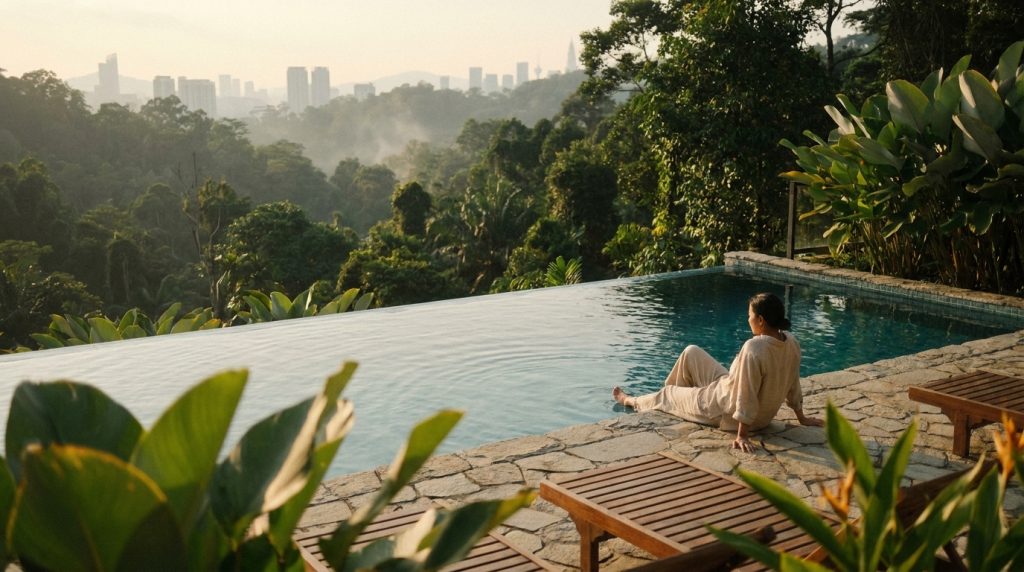
Pick your area
Kuala Lumpur packs more per square kilometer than almost any city in Southeast Asia — colonial shophouses sit two streets from gleaming skyscrapers, and a single MRT ride takes you from jungle park to rooftop bar. Knowing which neighborhood fits your travel style makes the difference between a smooth trip and an expensive, frustrating commute. It is worth pairing this page with this Kuala Lumpur travel guide before mapping out transport, neighborhoods, and a rough daily schedule.
We’ve broken down the six best areas to stay in KL for 2026, with current prices, transit times, and the hotels we’d actually book.
Quick answer: Bukit Bintang is the best base for first-timers, with mid-range hotels around USD 55-85 a night, while KLCC costs 40-60% more for largely the same attractions.
Find your Kuala Lumpur hotel on the map
Live prices from Booking & Airbnb — tap a pin to compare stays around Bukit Bintang and KLCC and beyond.
Why Kuala Lumpur Neighborhood Choice Matters More Than You Think
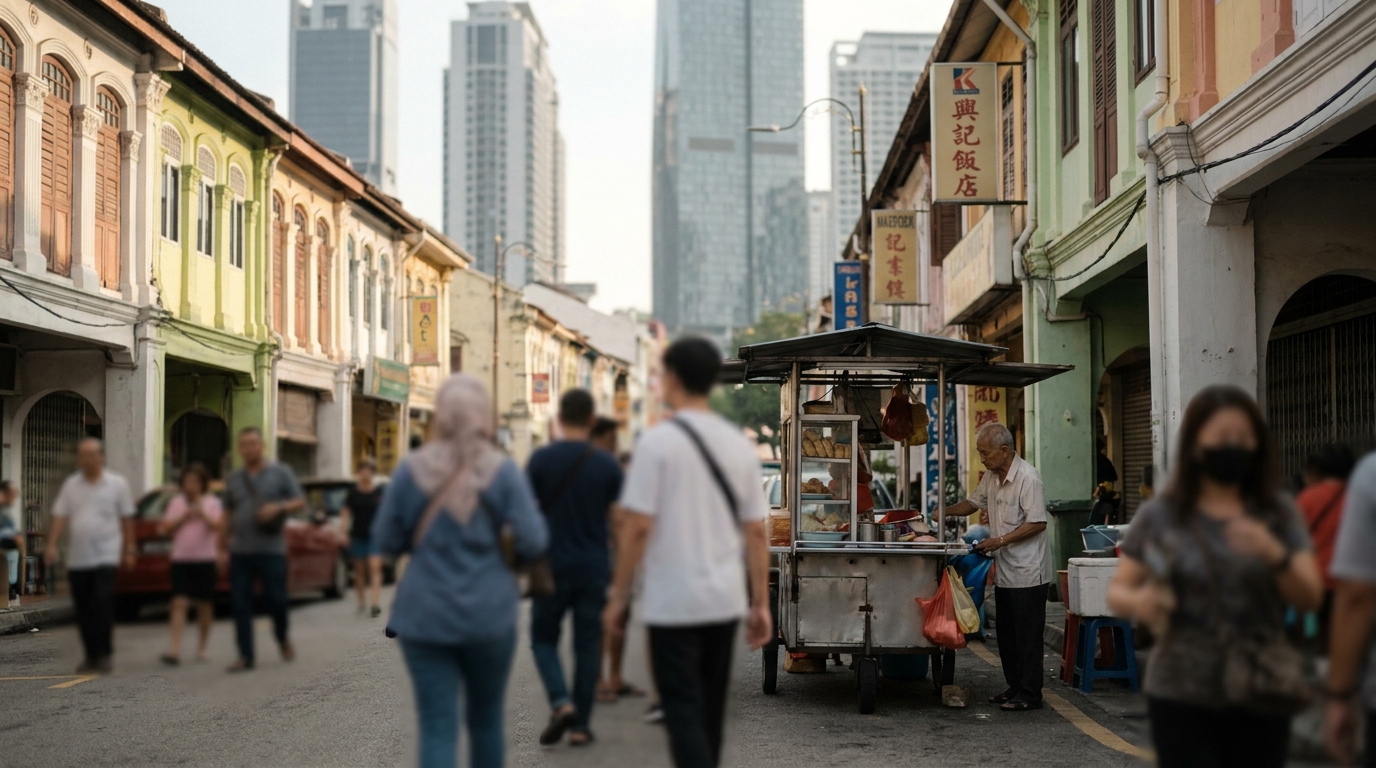
Choosing the wrong area in KL costs you real money and real time. The city sprawls across 243 square kilometers, and without the right base, you’ll spend USD 8-12 per Grab ride just getting to dinner.
Bukit Bintang and KLCC sit within 1.5 km of each other but differ dramatically in price — a comparable 4-star room runs USD 60 in Bukit Bintang versus USD 95 in KLCC. Factor in a 5-night stay and that’s USD 175 in savings you could spend on food, day trips, or a Borneo flight.
The good news: KL’s transit network is genuinely excellent. The Klang Valley Integrated Transit system connects all major tourist neighborhoods, so you’re never truly stranded regardless of where you book. That said, walking between districts in 34°C heat with humidity above 80% is miserable — proximity to your priority sights still matters.
Bukit Bintang: Best for First-Timers and Nightlife
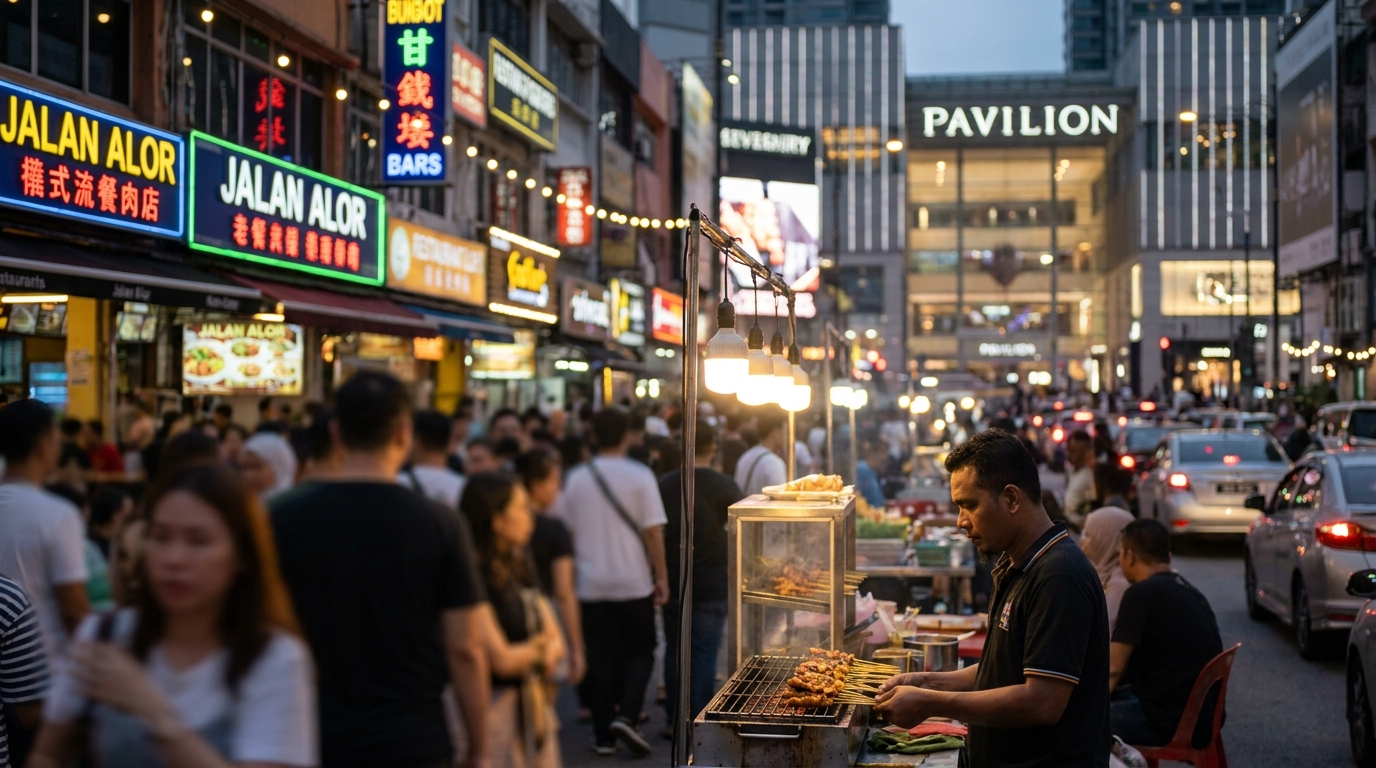
Bukit Bintang is where most first-time visitors should stay, and the neighborhood earns that reputation honestly. It’s walkable to Pavilion KL mall, Jalan Alor street food, and the Bintang Walk, and it connects to the monorail, MRT Putrajaya Line, and multiple bus routes. Hotel density is the highest in KL, which keeps prices competitive.
Budget guesthouses start at USD 18-25/night for a clean private room. Mid-range 3-4 star hotels like Berjaya Times Square Hotel and Hotel Stripes KL run USD 55-80/night. Luxury options including the Ritz-Carlton and Aloft KL Sentral sit at USD 140-200/night. Check live hotel prices consistently shows the widest availability in this district, and free cancellation rates are easier to find here than anywhere else in the city.
Best for: First-timers, solo travelers, nightlife seekers, shoppers
Avoid if: You need early-morning quiet or budget under USD 18/night
Check hotels in Bukit Bintang →
KLCC and City Centre: Best for the Petronas Towers View
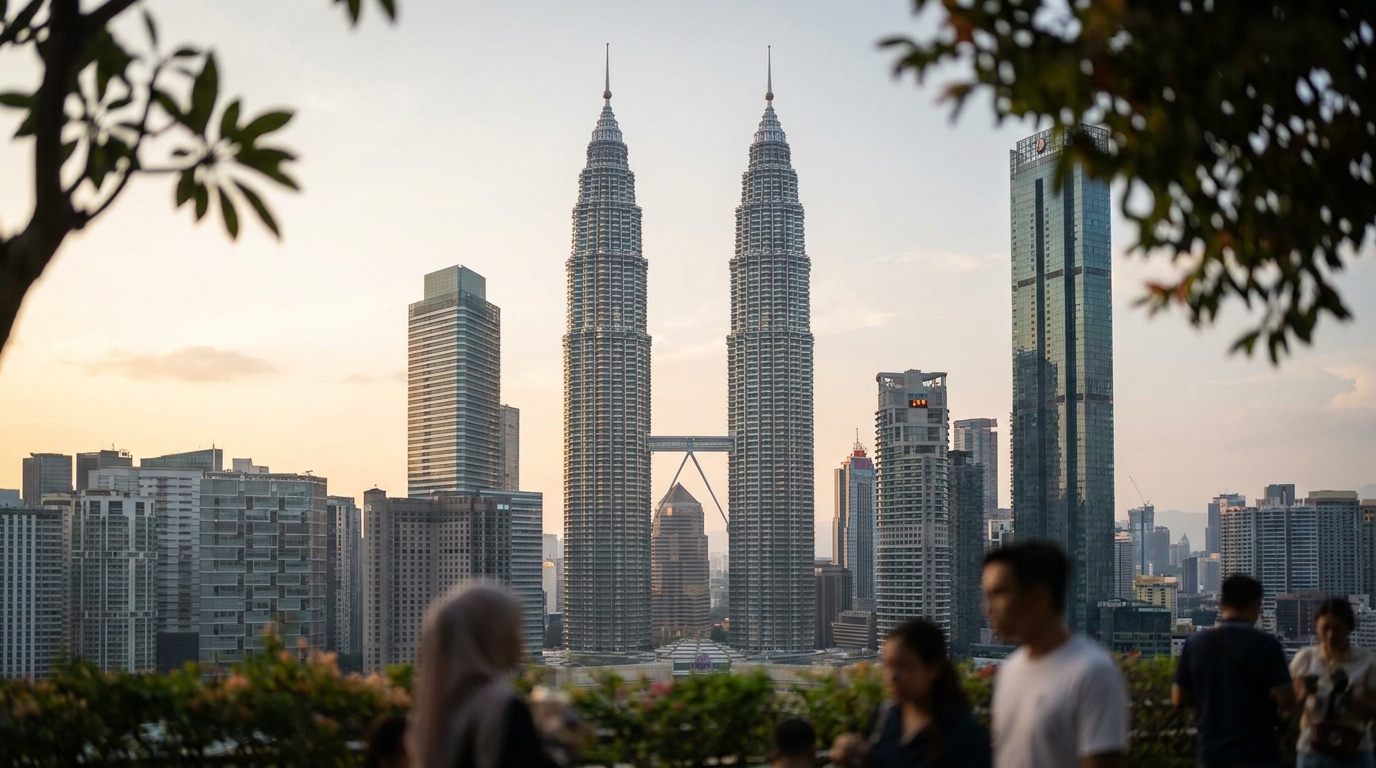
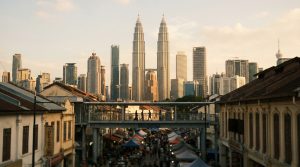
KLCC is KL’s postcard district — the Petronas Twin Towers dominate the skyline, Suria KLCC mall is below them, and KLCC Park offers a rare green escape within walking distance. You’re paying for location and prestige, and the hotels here know it. Rates at the Mandarin Oriental, Grand Hyatt, and Traders Hotel run USD 180-320/night in peak season (December, July-August).
The value case for KLCC is strongest if your itinerary is heavily business-focused or if you’re splurging for a special occasion. For a tower-view room at Traders Hotel, you’ll pay around USD 200/night but wake up to one of the most photographed skylines on earth. Mid-range options are thin here — the district skews heavily luxury, with the occasional 3-star property at USD 90-120/night accessed via Booking.com.
Best for: Luxury travelers, business visitors, anniversary trips
Avoid if: You’re budget-conscious or plan to explore beyond the towers district
| Area | Budget (USD/night) | Mid-Range (USD/night) | Luxury (USD/night) | Nearest Transit |
|---|---|---|---|---|
| Bukit Bintang | 18-30 | 55-85 | 140-200 | Bukit Bintang MRT / Monorail |
| KLCC / City Centre | N/A | 90-120 | 180-320 | KLCC MRT |
| KL Sentral | 25-40 | 60-90 | 150-220 | KL Sentral (all lines) |
| Chow Kit / Titiwangsa | 15-25 | 40-60 | N/A | Chow Kit LRT / Monorail |
| Masjid India / Chinatown | 12-22 | 35-55 | N/A | Masjid Jamek LRT |
| Bangsar / Mid Valley | 20-35 | 55-80 | 110-160 | Bangsar LRT / Mid Valley KTM |
Check hotels in KLCC and City Centre →
KL Sentral: Best for Arrivals, Departures, and Transit Hubs
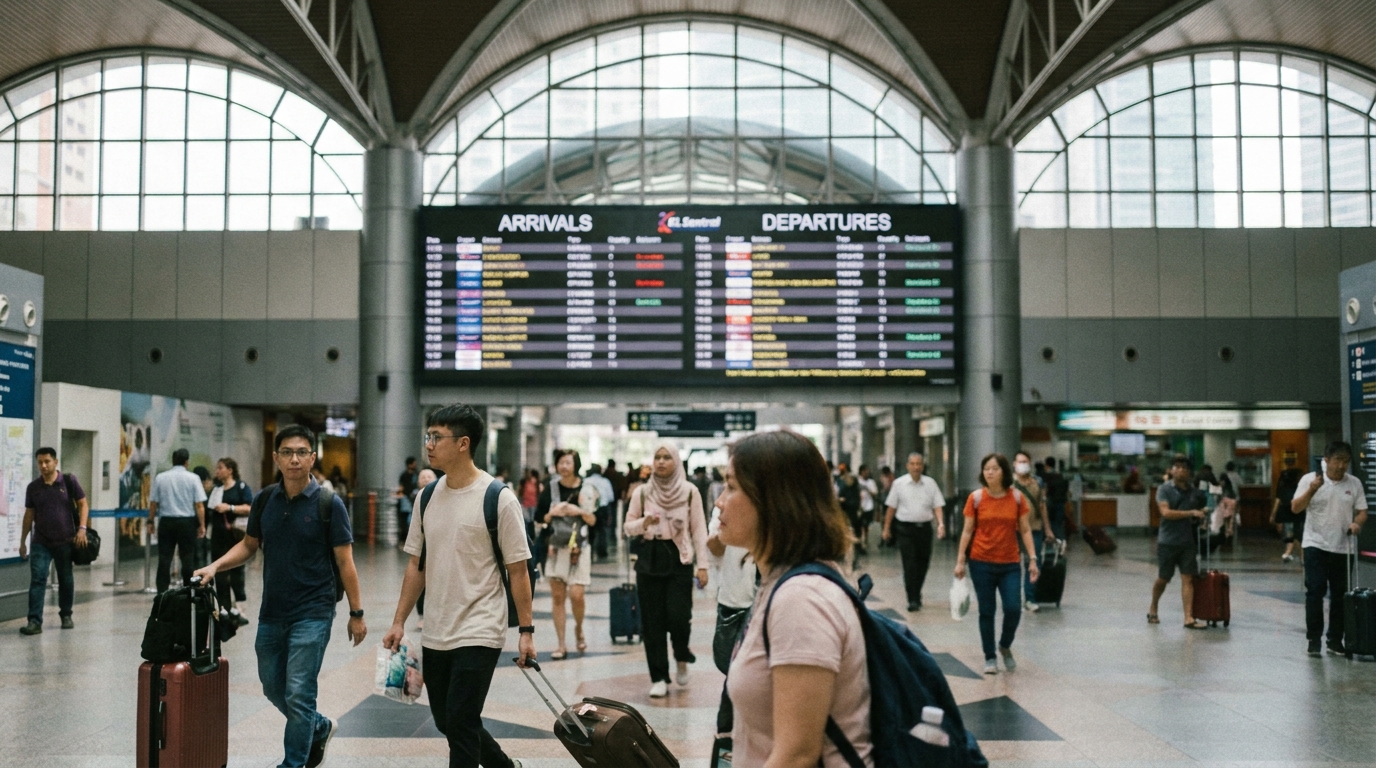
KL Sentral is the city’s transport nerve center, and staying here makes logistical sense if you’re combining KL with Penang, Malacca, or Singapore by train. The KLIA Ekspres from the airport takes 28 minutes and drops you directly at KL Sentral station, which also connects to the LRT, MRT, KTM, and Monorail. You won’t be stranded by a late-night arrival or early-morning departure.
The hotel options are solid without being exciting. The Aloft KL Sentral (USD 85-120/night) and DoubleTree by Hilton (USD 110-145/night) are the standout mid-range picks, both with direct station access via covered walkways. The Hilton KL and Le Meridien sit in the same complex and offer rooms from USD 150/night.
Book via Booking.com and filter by “KL Sentral” in the map view to avoid nearby properties that require a 10-minute walk in the heat.
If you’re using Trainline or Omio to plan cross-country rail legs, staying in KL Sentral cuts check-in time and removes one transit step from your journey.
Best for: Travelers connecting to other Malaysian cities, airport arrivals, frequent transit users
Avoid if: You want to walk to nightlife or street food without a transit hop
Chow Kit and Titiwangsa: Best Value for Budget Travelers
Chow Kit gets an unfair reputation. Yes, it has a wholesale wet market that operates from 5am and a reputation as a working-class district — but that’s exactly what makes it interesting and affordable. Hotels here run USD 15-25/night for a clean guesthouse and USD 40-60/night for a decent 3-star, which is 25-35% cheaper than comparable options in Bukit Bintang.
The Chow Kit LRT station puts you 8 minutes from KLCC and 12 minutes from Bukit Bintang. The Royale Chulan Chow Kit (USD 55-70/night) is the neighborhood’s most polished mid-range hotel. For budget travelers, Hotel Malaysia and the dozen independent guesthouses along Jalan Haji Hussein offer private rooms under USD 25.
The area around Titiwangsa Lake Park, just north, adds a genuine green space that Bukit Bintang completely lacks. Check Booking.com’s budget filter for KL to surface these properties, as they’re under-represented on other platforms.
Best for: Budget travelers, repeat visitors wanting an authentic local experience, long-stay visitors
Avoid if: It’s your first trip and you want everything within walking distance
Check hotels in Chow Kit and Titiwangsa →
Masjid India and Chinatown (Petaling Street): Best for Culture and Street Food
These two adjacent historic districts offer the densest concentration of KL’s cultural heritage and cheapest street food. Masjid India’s weekend market and Little India cluster run from the Masjid Jamek LRT station, while Chinatown’s Petaling Street starts one block south. Both connect to the Masjid Jamek station, where the Ampang and Sri Petaling LRT lines cross.
Hotels here lean budget and guesthouse-style. Backhome Hostel and Reggae Mansion are consistently the highest-rated budget picks in Chinatown (USD 12-20/dorm, USD 28-40/private). The boutique Mingle Hostel and Ansa Hotel KL represent the mid-range ceiling at USD 50-65/night.
If you plan to eat at Jalan Petaling hawker stalls nightly and walk to Merdeka Square in the morning, this is a strong base. For longer stays or if you’re travelling with family, the value-to-location ratio here is hard to match.
Best for: History buffs, street food lovers, backpackers, budget travelers
Avoid if: You need full-service amenities or a quiet residential feel
Check hotels in Masjid India and Chinatown (Petaling Street) →
Bangsar and Mid Valley: Best for Expats and Longer Stays
Bangsar sits 4 km southwest of KLCC and functions as KL’s expat heartland — leafy streets, independent cafes, a reliable Bangsar LRT station, and a food scene that punches well above its local fame. Mid Valley, adjacent, hosts one of KL’s largest malls and the Mid Valley KTM Komuter station. Together they form a self-contained district that works especially well for stays of 5+ nights.
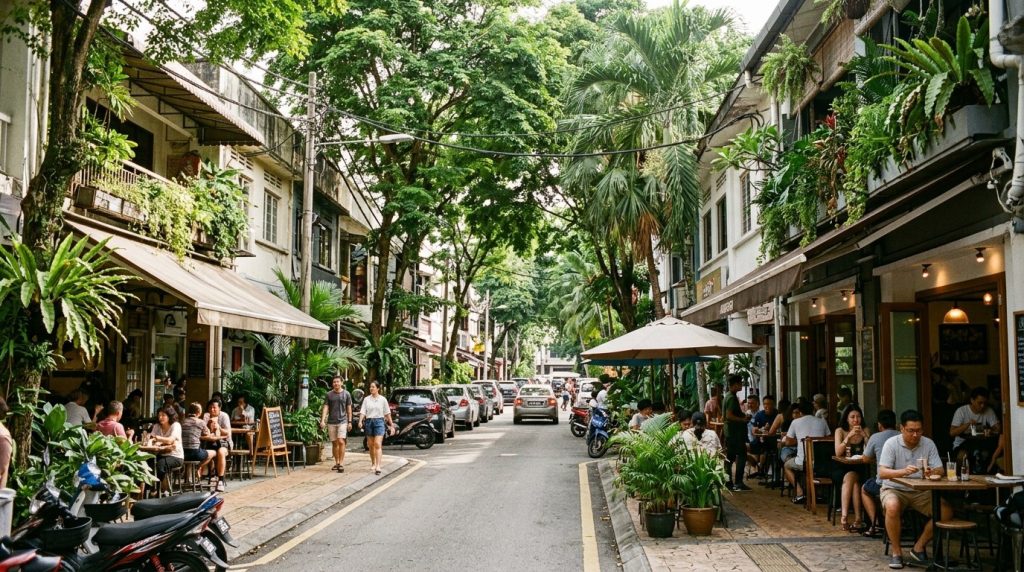
Apartment-style hotels and serviced residences are easier to find here than anywhere in the city center. The Stadia Bangsar Suites and Vortex Suites offer kitchen-equipped units from USD 50-80/night on Booking.com’s serviced apartment filter. For traditional hotel stays, Hilton Garden Inn and The Gardens Hotel at Mid Valley run USD 90-130/night with direct mall access.
The Discover Cars pickup point at Mid Valley also makes this the best base if you’re planning day trips to Batu Caves, Shah Alam, or Port Dickson by car.
Best for: Long-stay visitors, families, digital nomads, anyone renting a car
Avoid if: You’re on a 2-3 night trip and want to maximize walking proximity to tourist sites
Check hotels in Bangsar and Mid Valley →
Brickfields and Mont Kiara: Two More Bases Worth Knowing
The six areas above cover most itineraries, but two other districts come up often in guides and suit travelers the main list misses.
Brickfields (Little India)
Brickfields sits right next to KL Sentral and is known for its Indian-Malaysian culture, temples and street life. Temples, sari shops and South Indian restaurants line the main streets, which makes it a favorite with food-focused travelers on a budget.
It combines a cheap, characterful base with a walk to the main rail hub. That helps if you are catching an early train or airport service and do not want to pay KL Sentral hotel prices.
Mont Kiara
Mont Kiara is the quieter choice. Guides describe it as residential with upscale cafes, leafy streets and a large expat and family population.
It is not close to the major sights, so every outing needs a ride, and it suits longer stays far better than a two-night city break. Pick it if your priority is calm streets, serviced apartments and easy grocery shopping.
Which one to choose
- Choose Brickfields for a low-cost base with food and a rail link close at hand.
- Choose Mont Kiara for a family or remote-work stay where quiet matters more than walkability.
- Stick to Bukit Bintang or KLCC if you have only two or three nights and plan to see the major landmarks.
Check hotels in Brickfields and Mont Kiara →
What Is Malaysia’s Tourism Tax and How Does It Affect Your Hotel Bill?
Foreign guests pay a flat tourism tax of RM10 per room per night at registered accommodations in Malaysia. Hotel notices in 2025 and 2026 repeat this figure, and Malaysian citizens and permanent residents are exempt. The tax applies regardless of hotel class.
That is a small amount compared with the room rate, but it is worth knowing for budgeting and for reading invoices.
- Per room, not per person: two guests in one room pay the tax once per night.
- Charged on check-in or check-out: some hotels add it at the desk instead of in the online price.
- Service charge and government tax: hotel quotes often add these separately, so check whether the price is net or inclusive.
On a five-night stay, the tourism tax comes to RM50 per room. No 2026 government notice changing the rate was found, so verify it on your hotel confirmation. Compare final totals, since a lower headline rate may exclude fees.
How to Pick Between Bukit Bintang, KLCC and KL Sentral
These three districts overlap in what they offer, and most readers narrow the decision to two of them. A few rules of thumb break the tie.
Bukit Bintang or KLCC
Bukit Bintang is the lively center for shopping and nightlife, and guides note it can stay loud late. KLCC is calmer and more polished, with parkland around the towers.
If you want street life outside your door, choose Bukit Bintang. If you want a tidy lobby, a tower view and a quieter night, choose KLCC and accept the cost.
Bukit Bintang or KL Sentral
KL Sentral beats Bukit Bintang on logistics but loses on atmosphere. You can reach the airport train and intercity rail without a ride, but you will take a short train hop to find dinner and nightlife.
That trade makes sense if you arrive late, leave early or spend most days on day trips. It makes less sense if you want to wander out for a late snack.
KLCC or KL Sentral
Both lean toward business travelers and polished hotels. KLCC offers views and parks. KL Sentral offers connections. Pick the one that matches your plans for the first and last day, since the middle days work from either.
A quick filter
- Landing after 10 p.m. or leaving before 7 a.m.: KL Sentral or Brickfields.
- Shopping and street food: Bukit Bintang.
- Views, calm and park walks: KLCC.
Which Kuala Lumpur Area Is Best for Each Type of Traveler?
| Traveler | Best base | Why |
|---|---|---|
| First-timers and nightlife | Bukit Bintang | Malls, street food, and transit within walking distance |
| Skyline and business | KLCC | Petronas Towers views and upscale hotels |
| Rail connections | KL Sentral | Airport train, intercity rail, and city lines in one hub |
| Budget travelers | Chow Kit or Chinatown | Low room rates and local food |
| Long stays and families | Bangsar or Mid Valley | Residential feel, malls, and cafes |
| Culture and food | Masjid India or Chinatown | Markets, temples, and street stalls |
Choose by the plan for your days. If most of your time is spent in malls and restaurants, Bukit Bintang is hard to beat. If you travel by train to Penang or Singapore, KL Sentral saves an early-morning transfer.
Always check the walking distance from the nearest station in the heat, because a “5-minute walk” on a map feels longer in KL’s humidity.
Late Arrival, Early Flight and In-Town Check-In at KL Sentral
Kuala Lumpur’s main rail hub offers one useful trick for departure days: some airlines let you drop bags in the city before you go to the airport.
In-town baggage check-in
The service sits in the KLIA Ekspres departure hall at KL Sentral. Reports say it reopened in 2023 for Malaysia Airlines and Batik Air passengers, with a cut-off of two hours before departure, and that other carriers did not take part at that time. You need a valid KLIA Ekspres ticket, and your bags travel on the train.
Airline participation and counter hours change. Check with the airline or the airport rail operator before you build a plan around it, and ask your hotel if it can hold your bags if the counter is closed.
Why it matters for choosing an area
If your flight leaves in the evening, you can check out, drop your bags in the city and spend the afternoon free. That tilts the decision toward KL Sentral or a hotel one rail stop away on your last night.
Landing late
For midnight arrivals, rail and ride-hailing both work, but rail services end at night, so confirm the last departure from the airport. A hotel at KL Sentral keeps the final leg short, while a base in Bukit Bintang or Bangsar needs a ride from the station.
Always message the hotel with your arrival time, and ask whether the front desk is staffed all night.
Is Kuala Lumpur Safe, and Does Your Neighborhood Matter?
Kuala Lumpur is a major city where most visitors have trouble-free stays, but petty theft can happen in crowded areas. Bag snatching from passing motorbikes is a recognized risk, so carry your bag on the side away from the road and keep your phone out of sight near busy curbs.
- Bukit Bintang and Chinatown: crowded at night, so keep a close eye on bags in markets and on pedestrian streets.
- KLCC and Bangsar: generally calm, with well-lit streets, though standard precautions apply.
- Chow Kit: busy by day, quieter at night. Use a ride-hailing app for late returns.
Use registered taxis or ride-hailing apps and check the plate and driver before you get in. Keep valuables in the room safe, and carry a photocopy of your passport.
Check official government travel advice before your trip, since guidance is updated regularly.
Respect local customs: dress modestly when visiting mosques and temples, and note that some areas are shared with large Muslim communities. Alcohol is sold at many restaurants and bars in tourist districts but is more limited elsewhere.
How Does Kuala Lumpur’s Weather Shape Your Choice of Area?
Kuala Lumpur is hot and humid year-round, with heavy rain showers that often arrive in the afternoon. That affects how you plan your days and what you want near your hotel.
- Sheltered walkways: Bukit Bintang and KLCC have covered links to malls and stations, which help during downpours.
- Air-conditioned breaks: a base near a mall gives you somewhere to cool down mid-afternoon.
- Morning outdoor plans: schedule temples, parks and walking tours early, and keep malls for later.
- Pool access: a rooftop pool is a real plus after a hot day of sightseeing.
If you dislike heat, choose a base close to a rail station so you can skip long walks. Pack a small umbrella and a quick-dry layer. Rain also affects traffic, so allow extra time for rides at rush hour.
Check a current forecast before your trip, because patterns shift between monsoon seasons.
How to Book Your KL Hotel Without Overpaying
The KL hotel market has significant price variation by day of week and booking window. Rates on weekends (Friday-Saturday) run 15-25% higher in Bukit Bintang and KLCC because of domestic Malaysian travelers. Booking 3-4 weeks out typically yields the best rates; last-minute deals exist but inventory thins fast during school holidays (March, June, November in Malaysia).
Check live hotel prices offers the widest KL inventory and allows free cancellation on most properties, which matters given how aggressively Malaysian hotel prices shift. We recommend filtering by “free cancellation” and locking in a rate 3 weeks out, then checking again 5 days before arrival — prices sometimes drop for the same room.
Use the map view to verify that “KL City Centre” properties are actually near an MRT or LRT station, not just near the district boundary. For an eSIM to stay connected while comparing rates on arrival, Airalo’s Malaysia plan runs around USD 5 for 1GB/7 days.
For airport transfers, the KLIA Ekspres (USD 14 one-way, USD 25 return) is faster and more reliable than Grab during peak hours. Book via the official KLIA Ekspres app or terminals at both ends — no advance booking required. /kuala-lumpur-airport-guide/ Travelers budgeting the trip often check this things to do in Kuala Lumpur before deciding which attractions are worth the time on a short visit.
Hotel or Serviced Apartment in Kuala Lumpur?
Kuala Lumpur has a large stock of condo-style apartments in towers, particularly in Bangsar, Mid Valley, Mont Kiara and around KLCC. They offer more space for the money than hotels, but the experience differs in useful ways.
What hotels do better
Hotels provide a staffed front desk, daily cleaning, luggage storage and help with taxis. They are easier for arrivals at odd hours and for first-time visitors who prefer to ask questions in person.
What apartments do better
Apartments add a kitchen, laundry and separate sleeping space. They fit families, groups and stays of five nights or more, especially when you want to cook breakfast or wash clothes in the humidity.
Check before you book an apartment
- Self check-in method: ask how you get into the tower, whether a guard desk or key box is used, and who to call at night.
- Building rules: some towers limit access to pools and gyms for short-stay guests, so confirm what is included.
- Noise and walls: read reviews for mentions of neighbors, construction and elevator waits.
- Fees: confirm cleaning charges, deposits and the tourism tax discussed earlier.
For a first visit, a hotel near a rail station is the lower-risk choice. For a long stay, an apartment with a recent review history usually offers better value.
A Sample Three-Night Kuala Lumpur Stay Plan
This plan assumes a Bukit Bintang base.
Day 1: Bukit Bintang and Jalan Alor
Arrive via the KLIA Ekspres to KL Sentral, then continue by rail or ride-hailing. Explore the mall district and eat dinner at Jalan Alor street stalls.
Day 2: KLCC and culture
Visit the Petronas Towers area and KLCC Park in the morning. Book observation deck tickets in advance if you want a specific time slot. Spend the afternoon in malls or museums, then return for dinner in Bukit Bintang.
Day 3: Chinatown and Masjid India
Walk through Petaling Street, then visit the markets around Masjid India. Plan lunch at a local stall. Take the LRT to move between districts.
If you want a quieter final night, move to Bangsar or Chow Kit. Allow extra time for your airport train, since KL Sentral is the main hub for departures.
A Five-Night Kuala Lumpur Plan With Two Bases
With five nights you can split your stay and see two sides of the city without wasting days on transfers.
Nights 1 to 3: Bukit Bintang
Use the first three nights to cover the major sights from one base: malls, street food, KLCC, Chinatown and Masjid India. Move around by rail and keep afternoons flexible for rain and heat.
Nights 4 and 5: Bangsar or KL Sentral
Move to a quieter base for the end of the trip. Bangsar suits slow mornings, cafes and shopping. KL Sentral suits an early flight or a train onward to another city.
How to avoid wasting time on the move
- Check out in the morning, store bags with the front desk and do your last sights before the new check-in time.
- Book each base on a free-cancellation rate so you can adjust after seeing the area.
- Avoid changing hotels more than once in five nights.
When to keep one base
If you plan day trips to Batu Caves, Malacca or other places outside the city, a single central base is usually simpler. Return to a familiar hotel at night and keep your luggage in one place.
Frequently Asked Questions
What is the best area to stay in Kuala Lumpur for first-time visitors?
Bukit Bintang is the strongest choice for a first visit. It’s walkable to street food, malls, and nightlife, connects to three transit lines, and has the widest range of hotel prices. Mid-range options run USD 55-85/night, and free-cancellation rates are easy to find on Booking.com.
Is KLCC or Bukit Bintang better for tourists?
For most tourists, Bukit Bintang wins on value. KLCC is 40-60% more expensive for similar room quality, and the Petronas Towers are a 10-minute walk or one MRT stop from Bukit Bintang anyway. Save KLCC for a splurge night if the tower view matters to you.
How far is KL Sentral from KLCC and Bukit Bintang?
KL Sentral is roughly 4 km from KLCC and 3 km from Bukit Bintang. The MRT Putrajaya Line connects KL Sentral to Bukit Bintang in about 8 minutes. It’s a practical base if you’re arriving from the airport or planning train trips to Penang or Singapore.
Is it safe to stay in Chow Kit, KL?
Yes, Chow Kit is safe for tourists in 2026. Like any busy urban market district, standard precautions apply — keep bags close in crowded areas and avoid poorly lit side streets after midnight. The area is busiest and safest during the day when the wet market is active.
What is the cheapest area to stay in Kuala Lumpur?
Chinatown (Petaling Street area) and Masjid India offer the lowest hotel rates in the city center, with private rooms from USD 12-15/night in reputable guesthouses. Chow Kit runs slightly higher (USD 15-25) but offers better mid-range options. Both connect to the LRT network.
Do I need a car to get around Kuala Lumpur?
No. KL’s MRT, LRT, and Monorail network covers all major tourist areas. The only time a car helps is for day trips to Batu Caves (though there’s a KTM train), day trips to Malacca, or exploring the outer suburbs. Grab (Southeast Asia’s Uber equivalent) fills in gaps cheaply — most rides within the city cost USD 3-8.
When is the cheapest time to book hotels in Kuala Lumpur?
Shoulder season is April-May and September-October — avoid major Malaysian public holidays (Hari Raya, Chinese New Year, Deepavali) when domestic travel spikes. Booking 3-4 weeks ahead on Booking.com with free cancellation is our standard approach for getting competitive rates with flexibility.
The Bottom Line: Where to Stay in Kuala Lumpur
For most travelers, Bukit Bintang delivers the best combination of location, price, and convenience — it’s our default recommendation unless you have a specific reason to look elsewhere. KLCC makes sense for a luxury splurge. KL Sentral is the practical choice for transit-heavy itineraries. Chow Kit, Chinatown, and Bangsar all shine for specific traveler types — budget visitors, cultural explorers, and long-stay guests respectively.
Before you book, confirm that your shortlisted hotel is within a 5-minute walk of an MRT or LRT station. That single filter eliminates most of the frustration that comes with staying in KL. Once you have a transit-connected base, the city opens up quickly — Batu Caves, the Perhentian Islands, and Penang are all reachable on day trips or short overnight trains.
Search current rates and availability on Check live hotel prices in Kuala Lumpur — filter by neighborhood, free cancellation, and your preferred star rating to narrow down fast. KL rewards travelers who plan the logistics early; the city itself takes care of the rest.