Disclosure: Some links in this guide are affiliate links. If you book or buy through them, we may earn a small commission at no extra cost to you — it helps keep our guides free.
The 30-second version
Scale: Milan has 1,362,863 residents in the city proper and a metro area of roughly 6.55 million (Wikipedia, 2026).
Last Supper: Reservations are mandatory, visits last 15 minutes, and the museum is closed Mondays (Cenacolo Vinciano, 2026).
Metro: Five lines cover 111.8 km (69.5 miles), and the network carried 369 million passengers in 2018 (Wikipedia: Milan Metro, 2018).
Climate: July highs average 30.7 C (87.3 F), while January highs reach 7.3 C (45.1 F) (Wikipedia, 1991-2020 normals).
Lake Como: The lake lies about 45 km north of Milan and is roughly 46 km long (Wikipedia: Lake Como, 2026).
Last Supper15-minute visitreservations mandatory; closed Mondays
Metro5 lines, 111.8 kmcovers the city's sights
Malpensa airport49 km northwestlargest for international traffic
Lake Como45 km northlake roughly 46 km long
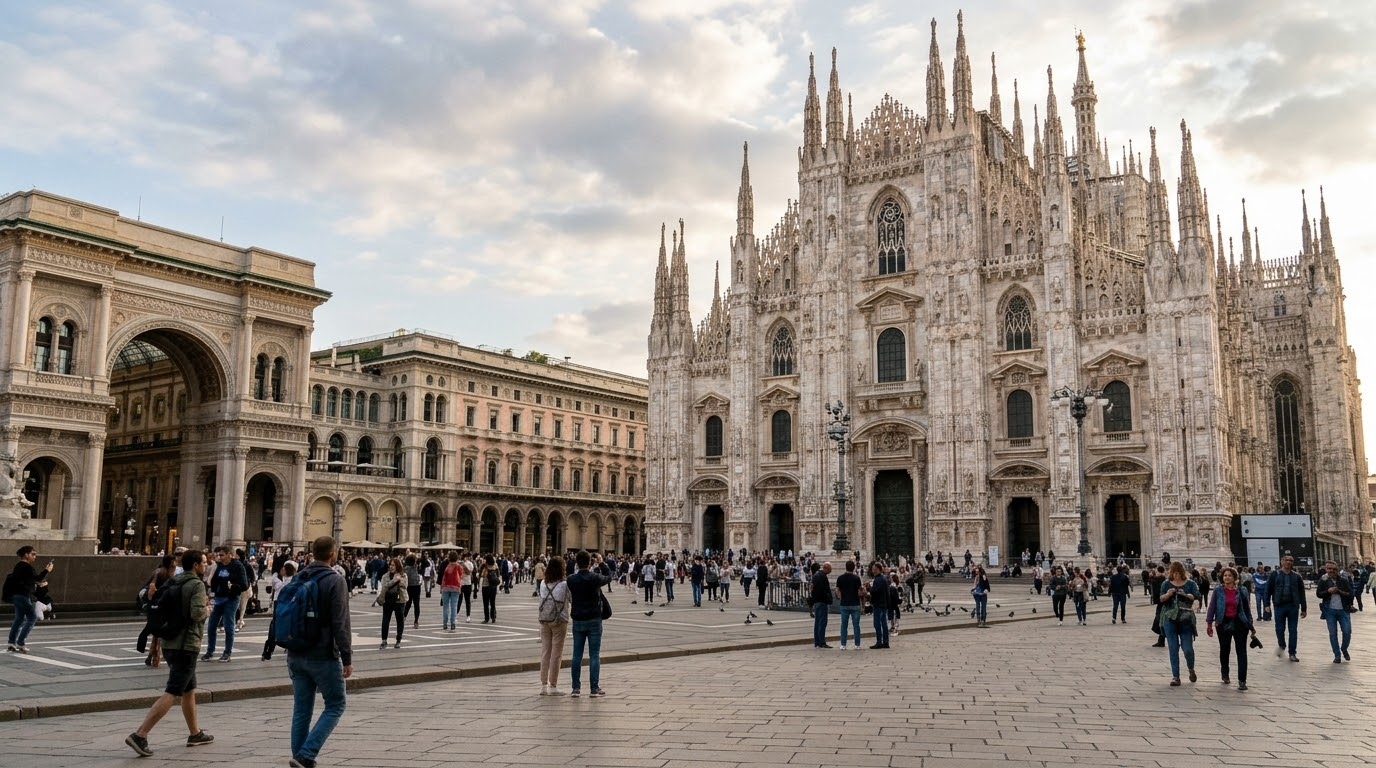
Milan is Italy’s fashion and business capital, and it is also a city with a Gothic cathedral, one of the best-known paintings in the world and a fast metro that links the sights. It is less picturesque than Venice or Florence, but it is easier to use and it opens the door to Lake Como and the Alps.
This guide gives the overview: whether Milan is worth your time, when to go, how to arrive, how to get around and what to see. Each section points to a deeper guide so you can plan the details without wading through repeated advice.
Affiliate Disclosure: Some links in this guide are affiliate links. If you book through them, we earn a small commission at no extra cost to you. We only recommend services we genuinely trust. Learn more.
Is Milan Worth Visiting?
Milan is a working city first and a tourist city second. It has about 1.36 million residents, and its metro region is one of the largest in Europe (Wikipedia, 2026). That shapes the visit: restaurants serve locals, public transport is frequent, and the pace is quicker than in most Italian destinations.
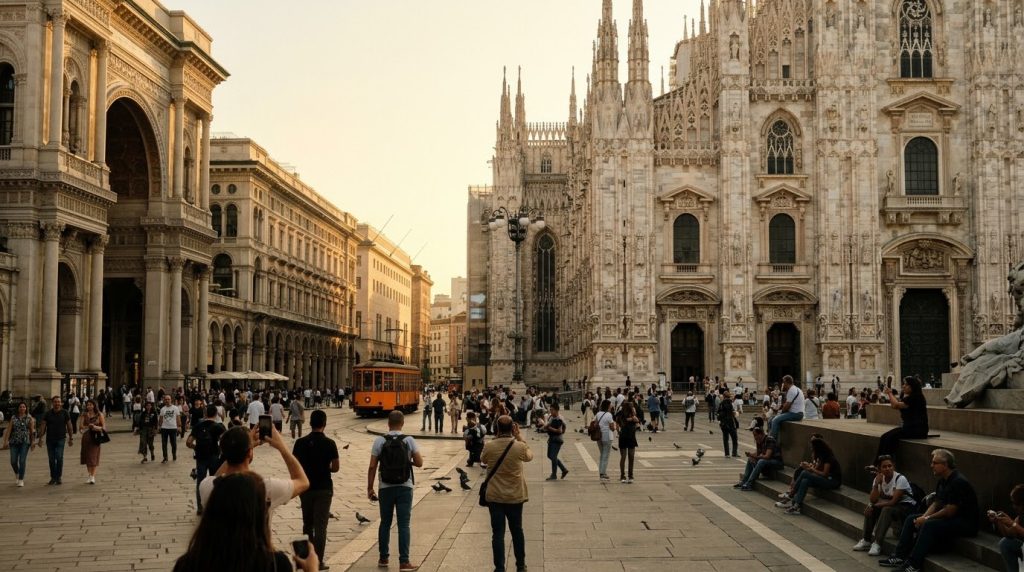
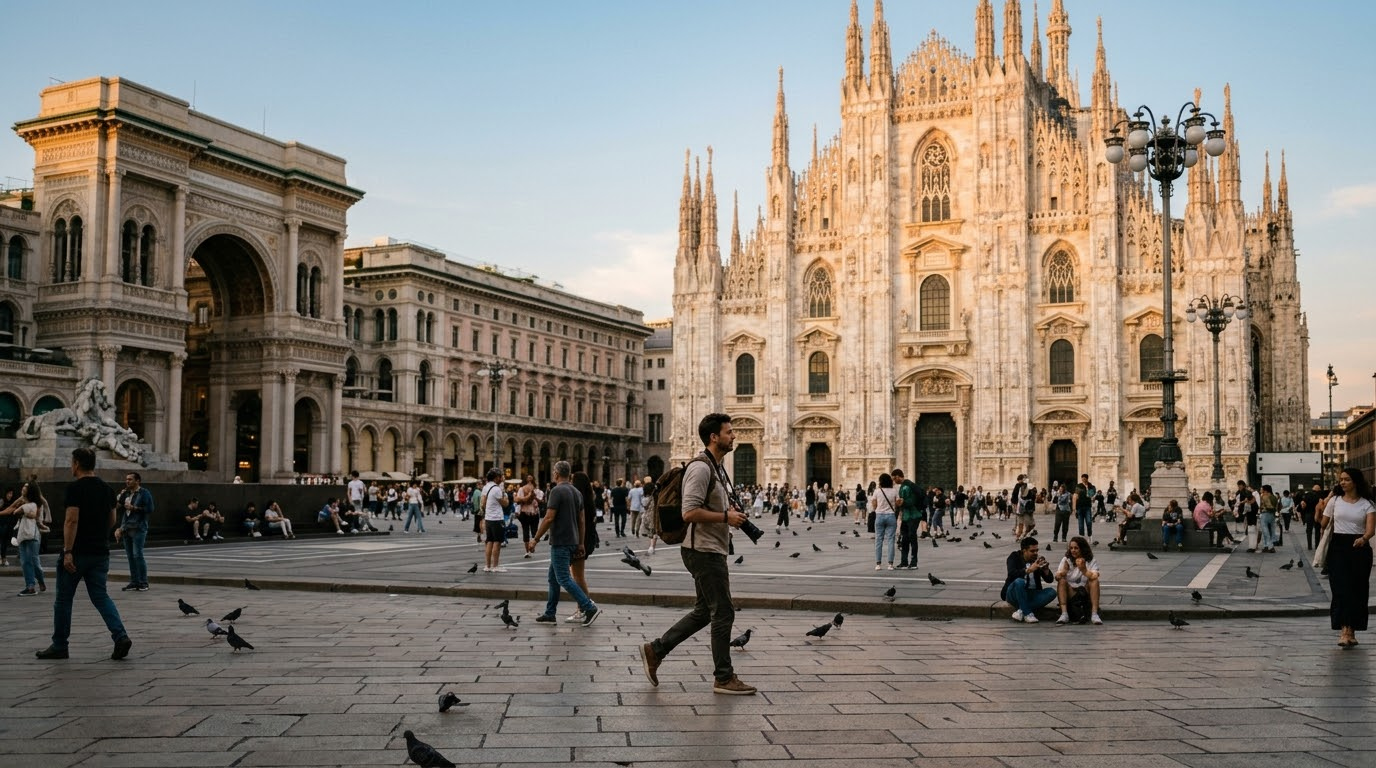
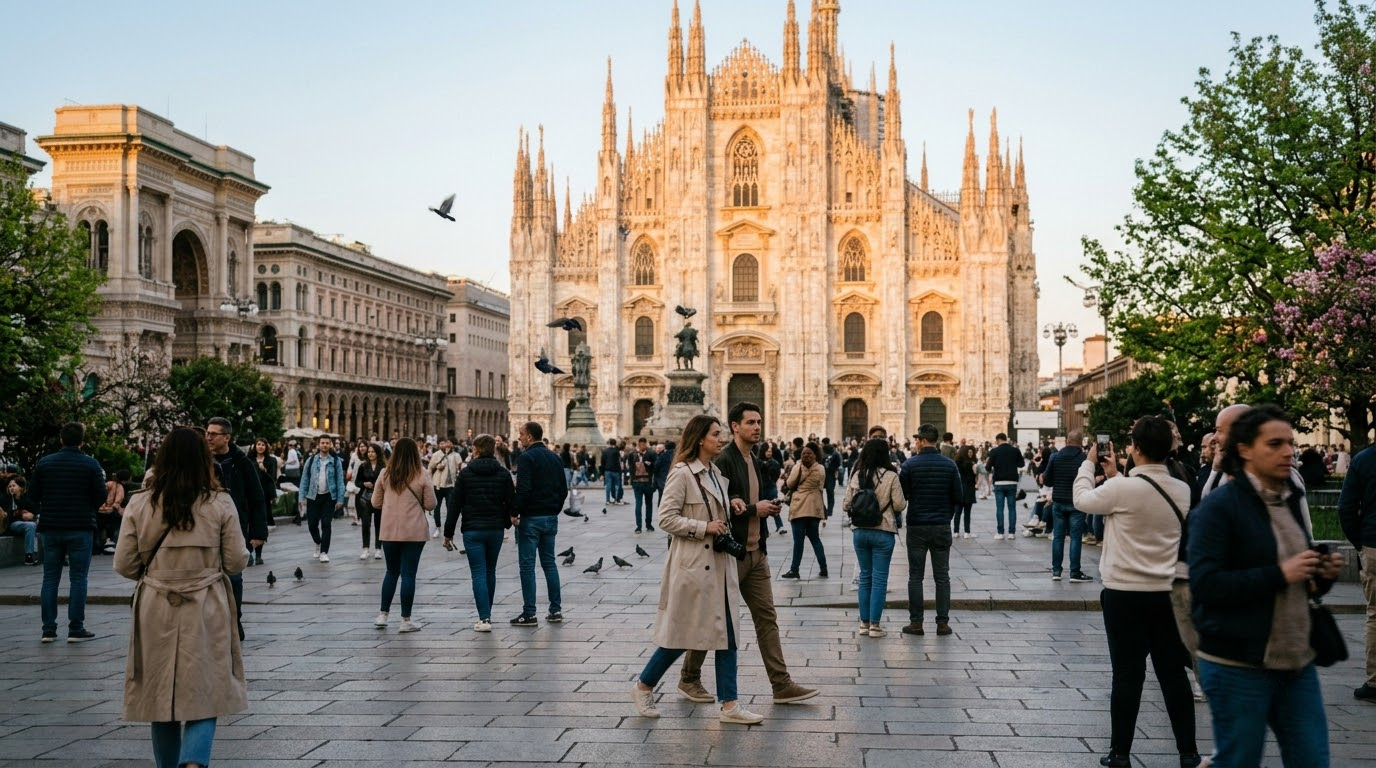
The highlights are concentrated. Milan Cathedral was begun in 1386 and its last portal was inaugurated on 6 January 1965; the cathedral has a capacity of 40,000 and the spire carrying the Madonnina rises 108.5 m (Wikipedia: Milan Cathedral, 2026). Leonardo da Vinci’s The Last Supper, painted around 1495-1498 and measuring 460 cm by 880 cm, is in the refectory of Santa Maria delle Grazie (Wikipedia, 2026).
Milan suits travelers who want design, shopping, aperitivo culture and an easy base for Lake Como. It suits less well those who want a postcard old town. The full verdict is in is Milan worth visiting.
Milan has a continental climate with hot summers and cold winters. Climate normals from Linate Airport show a July mean daily maximum of 30.7 C (87.3 F) and a mean minimum of 19.3 C (66.7 F). January has a mean daily maximum of 7.3 C (45.1 F) and a mean minimum of -0.4 C (31.3 F) (Wikipedia, 1991-2020 normals).
Spring and autumn fall between those extremes and are generally the most comfortable for walking. Summer is hot and can feel heavy in a dense city, while winter is cold and often gray.
Season
General feel
Planning note
Spring
Mild
Good for walking and Lake Como
Summer
Hot
Plan indoor time midday
Autumn
Cool and comfortable
Good for museums and food
Winter
Cold
Short days, fewer crowds
These ratings are planning guidance drawn from the temperature normals above. Fashion weeks and major trade fairs can push hotel rates up sharply, so check event dates before booking. For a month-by-month view, see best time to visit Milan.
How to Get to Milan
Milan is served by three airports, and Malpensa is the largest for international traffic. Milan Malpensa lies 49 km northwest of the city and handled about 28.9 million passengers in 2024 (Wikipedia: Milan Malpensa Airport, 2024). The Malpensa Express rail service is operated by Trenord. Linate Airport is closer to the center, and Bergamo handles many low-cost flights.
By rail, Milan Centrale is the main station for high-speed services across Italy and into neighboring countries. For many visitors the train is the easiest way to combine Milan with Florence, Venice or Rome.
Fares and timetables change often, so confirm them with the operator before you travel. If Lake Como is your main reason for coming, plan the transfer from the start: how to get to Lake Como from Milan compares trains, buses and driving.
Malpensa Express: Fares, Frequency and Journey Times
The Malpensa Express is the rail link between the airport and the city. Trains stop at both Terminal 1 and Terminal 2, and the station sits on level -1 in each. From the city side, two trains an hour run from Milano Centrale and two from Cadorna, so a train leaves every 30 minutes from each station.
Approximate journey times are:
Cadorna to Terminal 1: about 37 minutes
Centrale to Terminal 1: about 50 minutes
Centrale to Terminal 2: about 57 minutes
Terminal 1 to Terminal 2: about 6 minutes
The adult single fare is USD 17.50 (EUR 15) in 2026, after a rise from EUR 13 on 1 August 2025. It is the same from any Milan station, so getting off early saves nothing. Children aged 4 to 13 pay about USD 8.70 (EUR 7.50), and children up to age 3 travel free.
A return costs about USD 29 (EUR 25), and a family ticket for two adults and two children costs about USD 42 (EUR 36). The first train from Milan leaves around 4:57 am and the last around 11:27 pm.
From Malpensa, trains start at about 5:37 am from Terminal 2 and run until about 12:20 am. Timetables change, so check the operator before an early or late flight.
Getting Around Milan
The metro is the backbone of local transport. It has 5 lines totaling 111.8 km (69.5 miles), the first line opened on 1 November 1964, and ridership reached 369 million in 2018 (Wikipedia: Milan Metro, 2018). Trams and buses fill the gaps, and some of the older tram cars are attractions in themselves.
The central sights are close together. From the Duomo you can walk to the Galleria Vittorio Emanuele II, the Brera district and the Castello Sforzesco in a few minutes each. Use the metro for the Last Supper area, the Navigli canals and the train stations.
Buy tickets from the transport operator’s machines or app, and validate them if required. Check the current fare structure with ATM, the city’s transit operator, because prices and passes are updated periodically.
Walking is also a fair option for short hops. Milan is flat, so distances between central sights feel shorter than in hillier cities, and a pair of comfortable shoes goes a long way.
Driving in the center is not recommended. Italian cities commonly limit private traffic in their historic cores, and parking is difficult. Rail and metro are faster for visitors.
Milan Transit Tickets and Passes
One ticket system covers the metro, trams, buses and trolleybuses in zones Mi1 to Mi3, which includes every metro line except the far end of the M2 Gessate branch beyond Cascina Burrona. That stretch needs an extra Mi4-Mi5 charge, and few visitors will go there.
Ticket
Approx. price (2026)
Validity
Ordinary
USD 2.60 (EUR 2.20)
90 minutes from validation
Daily
USD 8.80 (EUR 7.60)
24 hours from validation
3-day
USD 18 (EUR 15.50)
Until 3:45 am on the third consecutive day
10-ticket booklet
USD 22.70 (EUR 19.50)
10 single 90-minute rides
A daily ticket pays for itself after about four separate rides, which a day split between the Last Supper area, the Duomo and Navigli can easily reach. A 3-day ticket suits the 3-day plan below, because it costs less than three daily tickets combined.
Practical rules
Validate before boarding and keep the ticket, since it must be scanned again to exit the metro.
The 90-minute window allows unlimited changes between metro, tram and bus.
Paper tickets have been replaced by rechargeable RicaricaMi tickets, so expect a card or app rather than a printed slip.
Contactless bank cards and phone wallets are accepted at the turnstiles and work as a single ticket.
Subscriptions need a separate ATM card and make sense only for stays longer than about two weeks. Prices come from a ticketing reference that mirrors the operator’s fares, and the operator revises them periodically, so confirm on ATM’s site or app.
Top Things to Do in Milan
Duomo di Milano. The cathedral took almost 600 years to finish, and its roof is open to visitors for a fee (Wikipedia: Milan Cathedral, 2026). The official site, duomomilano.it, links to the ticketing page for current prices and rooftop access, so confirm those before you go.
The Last Supper. Leonardo’s painting is displayed in the Convent of Santa Maria delle Grazie. The museum is open Tuesday to Sunday, 8:15 am to 7:00 pm, with last entry at 6:45 pm. Reservations are mandatory for every ticket type, visits last 15 minutes and groups are limited to 40 people. Sales open every three months, with September-December 2026 tickets released on June 23 (Cenacolo Vinciano, 2026). Book as soon as your dates are known.
Galleria Vittorio Emanuele II and La Scala. The arcade leads from the cathedral square to the opera house district. Even if you do not attend a performance, the walk is worth the time.
Castello Sforzesco and Parco Sempione. A good half-day combining museums and green space.
Navigli. The canal district comes alive in the evening and suits aperitivo.
Day trips. Lake Como is the headline excursion, and the region offers more options. Day trips from Milan compares lakes, cities and mountain towns by distance and effort.
Where to Stay in Milan
Milan is a large city, so the area you pick affects both costs and convenience.
Duomo and Brera: Central, walkable and expensive. Best for short stays.
Centrale station area: Practical for airport trains and day trips, with a wide range of prices. Review the specific street before booking.
Navigli: Lively evenings and many restaurants, but noise can be an issue on weekends.
Porta Garibaldi and Isola: Modern, well connected and good for food.
Porta Romana and Porta Venezia: Residential feel with good restaurants and metro links.
Stay near a metro line and you can reach most sights within 20 minutes. Prices spike during fashion weeks and major fairs, so compare dates before locking in rooms. Travelers who plan to use Milan as a base for Lake Como may prefer a hotel near Centrale or Garibaldi stations for early train departures.
Where to Eat in Milan
Lombard cooking leans on rice, butter and slow-cooked meat more than on tomato and pasta. Dishes to look for include risotto alla milanese (saffron risotto), cotoletta alla milanese (breaded veal cutlet), ossobuco (braised veal shank) and panettone, the sweet bread associated with Christmas.
Aperitivo is the city’s signature habit. In the early evening, many bars serve a drink with snacks or a buffet. Navigli, Brera and Porta Venezia are popular areas for it.
Practical tips:
Lunch menus in business districts are often better value than dinner.
Restaurants beside the cathedral square usually cater to passing visitors, so walk a few blocks for better value.
Reserve dinner on weekends, especially in Navigli and Brera.
Sample 3-Day Plan
Use this as a starting point and adjust to your reservation times. More detail, including one-day and five-day versions, is in the Milan itinerary guide.
Day 1: Center. Visit the Duomo in the morning, walk through the Galleria Vittorio Emanuele II, then spend the afternoon in Brera. End with aperitivo near the cathedral or in Brera.
Day 2: Last Supper and castles. Take your timed Last Supper slot, then continue to Castello Sforzesco and Parco Sempione. Dinner in Navigli.
Day 3: Lake Como. Take a train or bus to the lake. Como sits at the southwestern arm and Bellagio at the point where the branches meet; Varenna is on the eastern shore (Wikipedia: Lake Como, 2026). Return to Milan in the evening. See Lake Como from Milan for routes.
With only two days, skip the lake and keep the first two days. With four or more days, add a second excursion.
Frequently Asked Questions
How many days do you need in Milan?
Two days cover the Duomo, the Last Supper and the main districts. Three days add a Lake Como excursion or a slower pace. See how many days in Milan for a breakdown.
Is Milan safe for tourists?
Milan is a big city, so use the same awareness you would in any large European center: watch for pickpockets in crowded places such as the metro and around the station. Details are in is Milan safe.
Do you need to book the Last Supper in advance?
Yes. Reservations are mandatory for all ticket types, and sales open every three months (Cenacolo Vinciano, 2026). Visits last only 15 minutes, so arrive on time.
How far is Lake Como from Milan?
The lake lies about 45 km north of the city and is about 46 km long, with a maximum depth of 425 m (1,394 ft) (Wikipedia: Lake Como, 2026). Transfers by train, bus or car are covered in the Lake Como transfer guide.
Is Milan better than Venice or Rome?
They suit different trips. Milan is modern and efficient, Venice is atmospheric and Rome has ancient history. Compare them in Milan vs Venice and Milan vs Rome.