
Disclosure: Some links in this guide are affiliate links. If you book or buy through them, we may earn a small commission at no extra cost to you — it helps keep our guides free.
Singapore Travel Guide 2026: First-Timer Essentials
Singapore works for a first trip because it packs a full country’s worth of sights into a city you can cross by train in under an hour. This Singapore travel guide covers the four things that trip up newcomers: what to see around Marina Bay, where to eat cheaply at hawker centres, how the MRT and EZ-Link system works, and the local rules that carry real fines. The city-state drew roughly 16.5 million international visitors in 2024 (Singapore Tourism Board, 2025), and it stays one of the easiest Asian capitals for anyone who has never traveled the region.
You do not need a lot of days here. Three to four is enough to see Marina Bay Sands, Gardens by the Bay, a hawker centre or two, and half a day on Sentosa. Below we lay out costs in Singapore dollars, the best months to come, and the etiquette that keeps you out of trouble. For the deep list of sights, pair this with our roundup of the best things to do in Singapore.
Key Takeaways
– Budget mid-range on about SGD 200-350 (USD 150-260) per person per day, covering a hotel, mixed hawker and restaurant meals, transport, and two or three paid attractions (Budget Your Trip, 2026).
– Hawker meals cost SGD 3-8 per plate, including Michelin Bib Gourmand stalls where chicken rice starts around S$5.
– The MRT is the cheapest way around, with adult card fares of S$1.28 to about S$2.57 per ride after the December 2025 fare adjustment.
– Come February to April or June to September for the driest, most comfortable stretch; December is the wettest month at roughly 330mm of rain.
– Chewing gum sale and import stay banned in 2026, with fines up to S$2,000 for a first selling offence, though chewing gum you already own is legal.[PERSONAL EXPERIENCE] On our last visit we based ourselves near Chinatown and used only the MRT and our feet for four days. We spent three separate evenings eating our way through Maxwell Food Centre and Lau Pa Sat, and never paid more than S$8 for a main dish. The single biggest time-saver was buying stored-value transport cards on arrival at Changi rather than queuing for tickets at each station.
Is Singapore a good first trip to Asia?
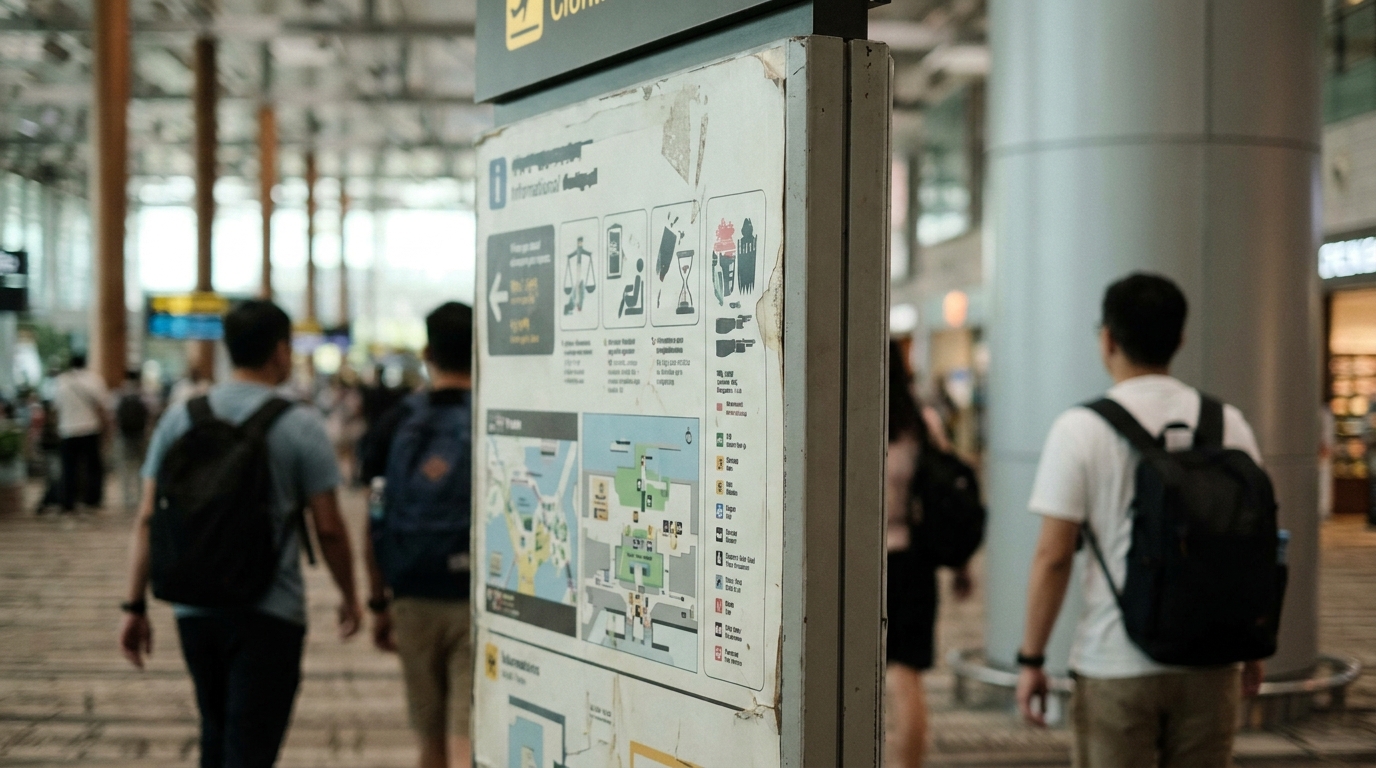
Yes, Singapore is one of the gentlest introductions to Asia for a first-timer. English is an official language and appears on every sign, tap water is safe to drink, and the city ranks among the safest in the world for solo and night walking. The trade-off is price: Singapore is expensive by regional standards, closer to London or Sydney than to Bangkok or Hanoi.
What makes it manageable is that the costly parts (hotels, cocktails, theme parks) sit next to genuinely cheap ones (hawker food, MRT rides, free gardens and waterfront walks). A first-timer can eat like royalty for S$6 and still splash out on one big-ticket attraction. If you are weighing this city against its northern neighbour, our Kuala Lumpur vs Singapore comparison breaks down cost, food, and pace side by side.
Here is what surprises most first-time visitors:
- Distances are short: the whole island is about 50km east to west, so no sight is more than an hour from another by train.
- The airport is an attraction: Jewel Changi has the world’s tallest indoor waterfall and is worth arriving early or leaving late to see.
- Air-conditioning is everywhere: malls, stations, and covered walkways connect much of downtown, which matters in the heat.
- Cash is barely needed: cards and contactless payments work almost everywhere, including most hawker stalls.
The 3-Day Singapore Itinerary
The plan we use ourselves — sent straight to your inbox.
- Day-by-day route
- Where to stay
- Real 2026 costs
Free · No spam · Unsubscribe anytime
When is the best time to visit Singapore?
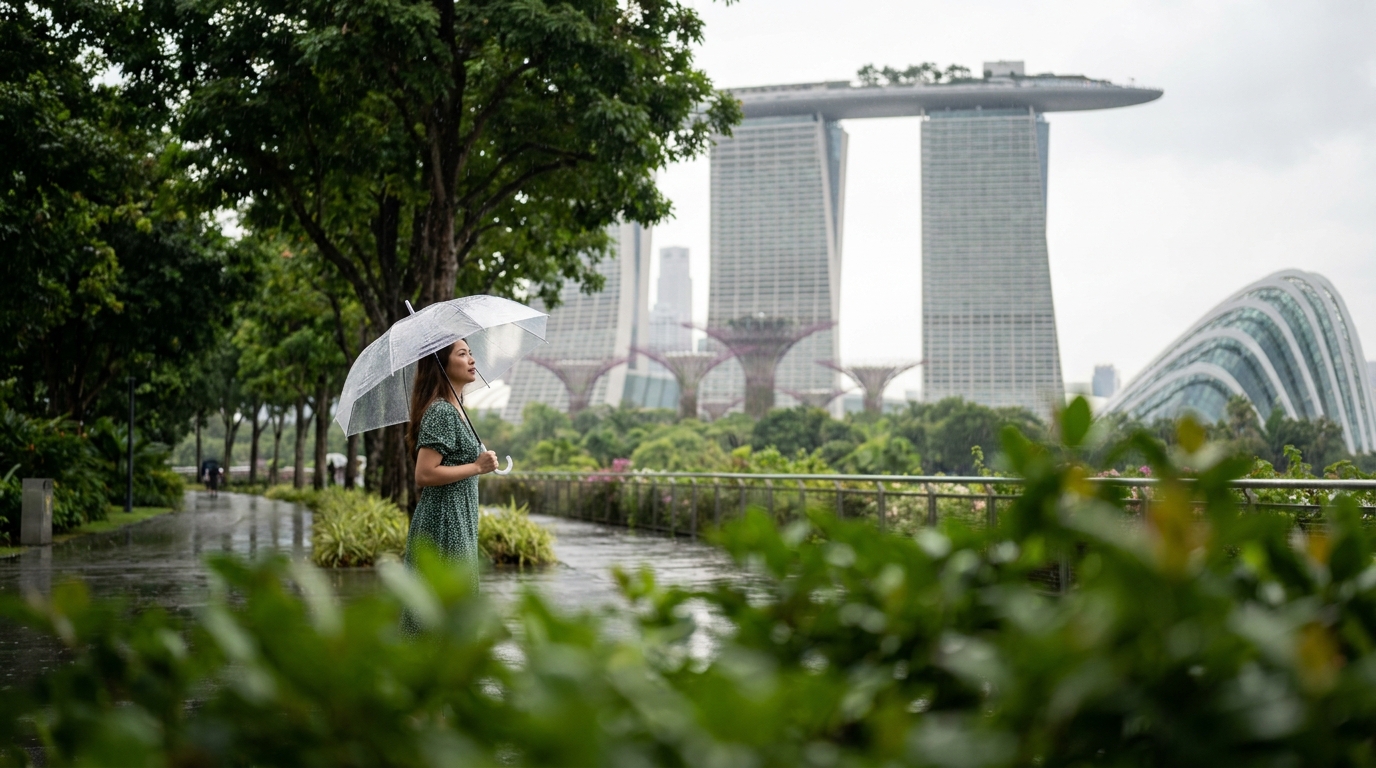
The best time to visit Singapore is February to April, when rainfall is lowest and outdoor sightseeing is most comfortable. Singapore sits nearly on the equator, so temperatures barely move all year, holding at a constant 26-33C (79-91F) with high humidity. There is no cool season; you choose by rainfall and crowds, not temperature.
Two monsoons shape the calendar. The Northeast Monsoon from November to January is the wettest window, with December averaging around 330mm of rain over 19 rainy days. The drier stretch runs February to October, when rain tends to fall as short afternoon storms rather than all-day downpours. February is the single driest month at about 111mm across nine rainy days.
| Period | Weather | Crowds | Best for |
|---|---|---|---|
| February-April | Driest, ~26-33C | Moderate | First-timers, walking tours |
| May-August | Warm, short storms | High (school holidays) | Sentosa, indoor attractions |
| September-October | Warm, moderate rain | Lower, better deals | Value seekers |
| November-January | Wettest, ~19 rain days (Dec) | High (year-end, festivals) | City lights, indoor plans |
If you want fewer crowds and better hotel rates, September and October are the quiet sweet spot. For a detailed month-by-month read on festivals and weather, see our guide to the best time to visit Singapore.
What to see at Marina Bay Sands and Gardens by the Bay
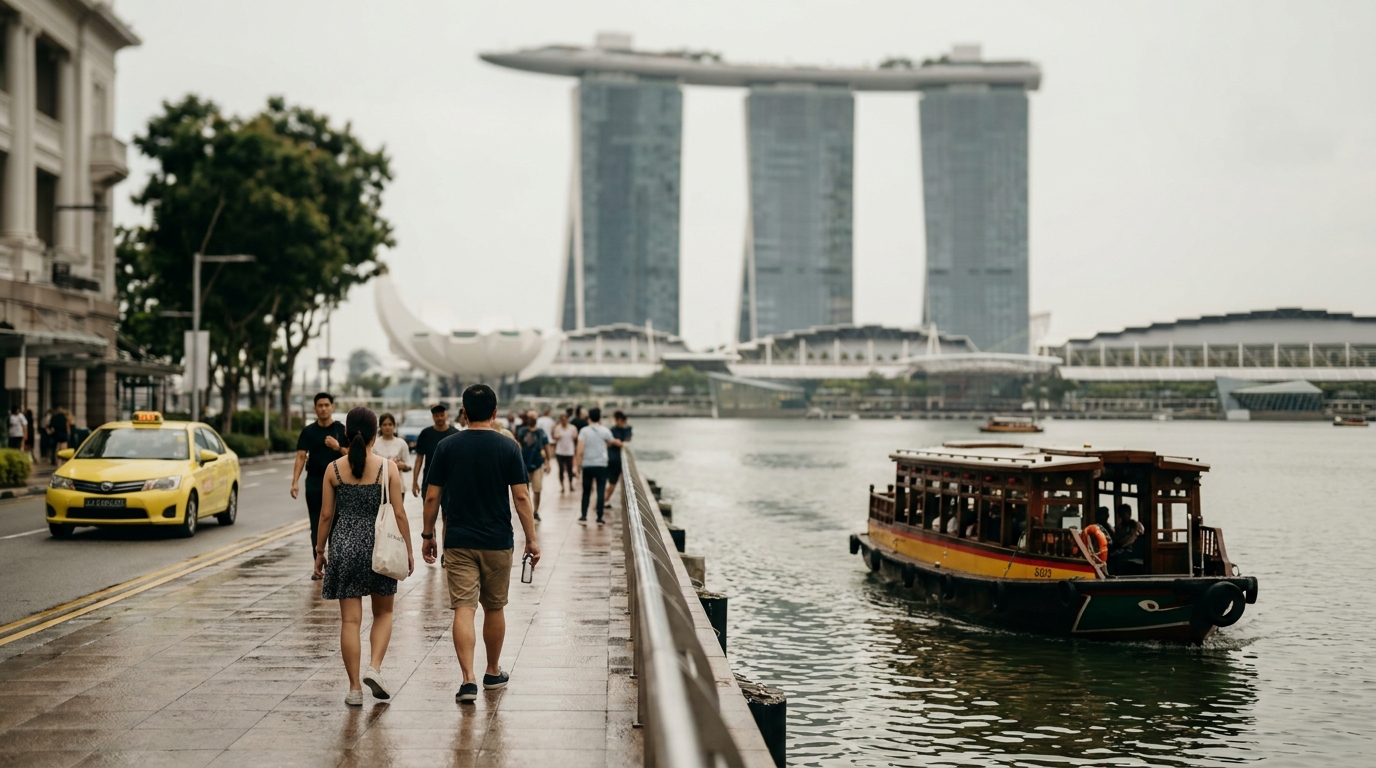
Marina Bay is the postcard core of Singapore, and two sights anchor it: Marina Bay Sands and Gardens by the Bay, which sit a short walk apart. Marina Bay Sands is the three-tower hotel topped by a boat-shaped SkyPark; Gardens by the Bay is the futuristic park with the Supertree grove and two climate-controlled conservatories.
You can see the outdoor parts for free. The Supertree Grove and the waterfront promenade cost nothing, and the free Garden Rhapsody light show runs nightly at the Supertrees. Pay only for the elevated views and the domes:
- Marina Bay Sands SkyPark Observation Deck: tourist adult tickets run S$32 on daily hours and S$36 at peak, with day sessions 10:00-16:30 and evening sessions 17:00-21:00.
- Gardens by the Bay conservatories: a combo ticket for the Flower Dome and Cloud Forest costs about S$48 for a tourist adult, GST included.
- Cloud Forest: built around a 35-metre indoor waterfall, it is the more dramatic of the two domes and the better pick if you only choose one.
- Garden Rhapsody: free nightly, typically at 19:45 and 20:45, and one of the best no-cost shows in the city.
- Marina Bay Sands light and water show: free, usually nightly on the event plaza and waterfront.
Time your visit so you catch the Supertree light show after the domes; both are steps apart and the evening version of each is the more atmospheric. For the full sightseeing shortlist beyond Marina Bay, our best things to do in Singapore post lays out Chinatown, Little India, and the Botanic Gardens.
The 3-Day Singapore Itinerary
Hour-by-hour plan, where to stay and what it really costs — free PDF.
Free · No spam · Unsubscribe anytime
Find your Singapore hotel on the map
Live prices from Booking & Airbnb — tap a pin to compare stays around Marina Bay and Bugis and beyond.
Where do locals eat in Singapore?
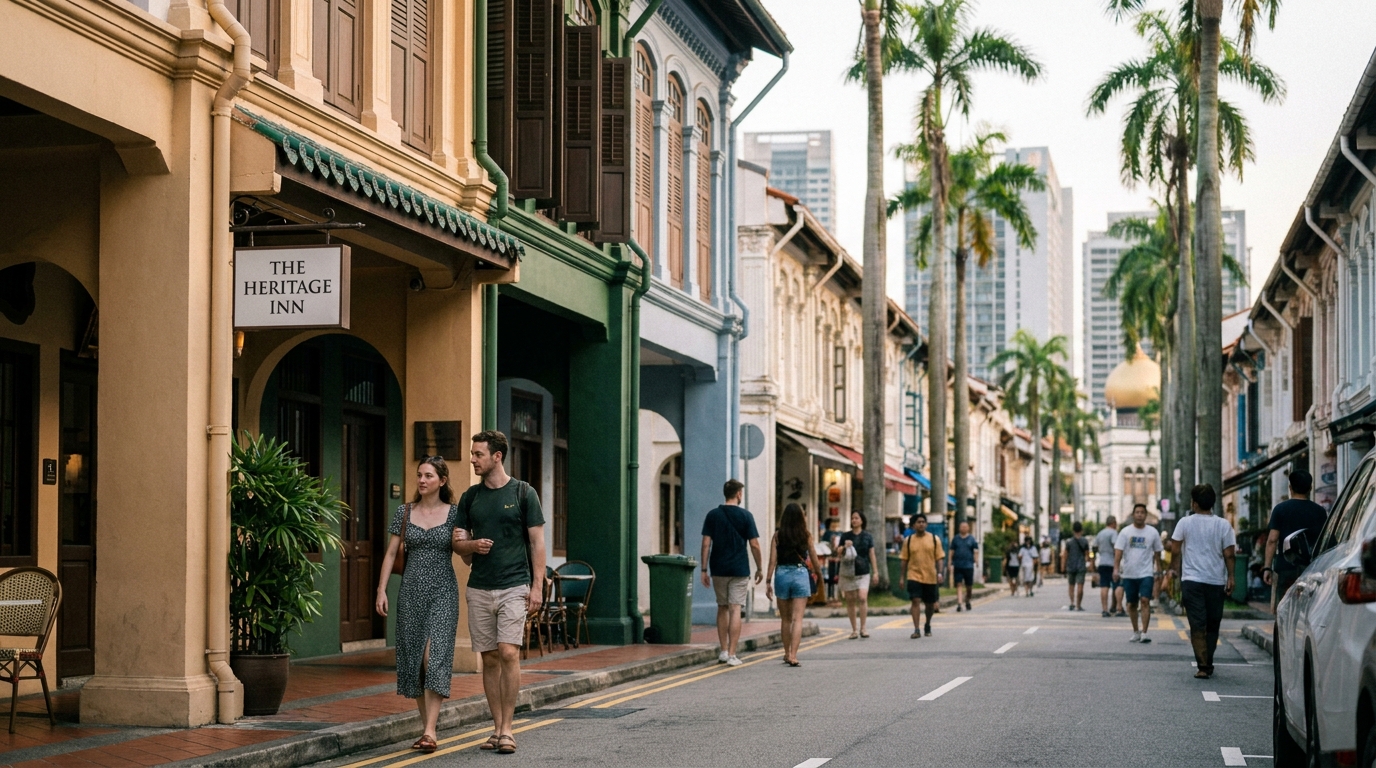
Locals eat at hawker centres, open-air food courts where dozens of stalls sell single dishes cheaply, and this is where a first-timer should eat too. Hawker culture is on the UNESCO Intangible Cultural Heritage list, and it is both the cheapest and most authentic food in the city. Most mains cost SGD 3-8, and even Michelin-recognised stalls stay under S$10.
Three hawker centres are easy first stops:
- Maxwell Food Centre (Chinatown): over 100 stalls, open roughly 08:00-22:00; Tian Tian Hainanese Chicken Rice draws the longest queue, from about S$5 a plate.
- Lau Pa Sat (CBD): a Victorian cast-iron octagonal hall that runs close to 24 hours; its satay street opens in the evening when the surrounding lane closes to traffic.
- Old Airport Road Food Centre (Geylang): a local favourite with less tourist traffic and strong char kway teow and lor mee.
Dishes to try first: Hainanese chicken rice, laksa, char kway teow, chilli crab (a splurge at seafood restaurants, not hawker stalls), and kaya toast with soft eggs for breakfast.
| Dish | Typical hawker price (SGD) | Where it shines |
|---|---|---|
| Hainanese chicken rice | 5-7 | Maxwell, Tian Tian |
| Laksa | 5-8 | Katong-style stalls |
| Char kway teow | 5-7 | Old Airport Road |
| Kaya toast set | 4-6 | Kopitiam breakfast stalls |
| Satay (10 sticks) | 8-12 | Lau Pa Sat satay street |
Order by pointing, pay by card or cash at the stall, and return your tray to the racks; leaving an uncleared tray can now draw a fine at many centres.
How does the MRT and EZ-Link system work?
The MRT (Mass Rapid Transit) is the fastest, cheapest way around Singapore, and a stored-value card is the simplest way to pay. Adult card fares run from S$1.28 for short trips up to about S$2.57 for the longest, following the fare adjustment that took effect 27 December 2025. Paying cash adds a S$0.22 surcharge per leg, so a card always wins.
You have three main ways to tap in:
- EZ-Link card: costs about S$10 (a S$5 non-refundable card fee plus S$5 of travel credit); buy it at Changi, station kiosks, or 7-Eleven.
- Contactless bank card: tap your own Visa or Mastercard for the exact same fare, with no card to buy; the easiest option for a short trip.
- Singapore Tourist Pass: unlimited rides from about S$17 for a one-day pass, worthwhile only if you plan four or more journeys a day.
| Payment method | Upfront cost | Best for |
|---|---|---|
| Contactless bank card | None | 1-3 day visits, light riding |
| EZ-Link card | ~S$10 | 3+ days, flexible itinerary |
| Singapore Tourist Pass (1-day) | ~S$17 | Heavy sightseeing days |
From Changi Airport, the MRT reaches the city in about 45 minutes for a few dollars, changing once at Tanah Merah. A private airport transfer runs around US$43 if you prefer door-to-door with luggage. Transfers within 45 minutes on the same card count as one distance-based journey, so short hops between lines do not each cost full fare.
Is Sentosa Island worth it?
Sentosa is worth it if you are traveling with kids or want beaches and theme parks, and it is easy to skip if you are short on time. The island sits just off the south coast and holds Universal Studios Singapore, beaches, a cable car, and resort hotels. There is no general island entry fee, and the free Sentosa Islander shuttle moves you around once you arrive.
Costs to plan for:
- Universal Studios Singapore: tickets from S$83, with standard adult admission around S$81 and child around S$61; the new Minion Land is the headline draw.
- Singapore Cable Car: a round-trip Sky Pass runs about S$27 and gives the best aerial views of the harbour.
- Beaches (Siloso, Palawan, Tanjong): free to use, with Palawan Beach popular for families.
- Getting there: the Sentosa Express monorail, a boardwalk walk, or the cable car; the boardwalk is the cheapest.
Half a day covers the beaches and a cable car ride; a full day is needed if you commit to Universal Studios. If theme parks are not your priority, spend that time on the mainland instead.
What are Singapore’s laws and etiquette rules?
Singapore enforces public-order rules that surprise first-timers, and a few carry steep fines, so it pays to know them. The famous chewing gum ban is still in force in 2026: selling or importing gum is illegal, with fines up to S$2,000 for a first selling offence, though chewing gum you brought in for personal use is not a crime.
Other fines worth respecting:
- Littering: fines commonly start around S$300 for a first offence and rise with repeats.
- Eating or drinking on the MRT: prohibited, with fines up to S$500, including water.
- Jaywalking: crossing away from designated points can draw a fine of around S$50 and up.
- Smoking outside designated zones: banned in most public indoor and many outdoor areas, with fines up to S$1,000.
None of this makes Singapore stiff to visit; the rules are simply enforced, and following them is second nature within a day. Keep gum for personal use only, use bins and crossings, and finish drinks before you tap into a station.
How much does a Singapore trip cost in 2026?
A mid-range visitor should budget about SGD 200-350 (USD 150-260) per person per day in 2026, covering a comfortable hotel, mixed meals, transport, and a couple of paid attractions. Accommodation is the biggest lever: a mid-range hotel room runs roughly US$100-200 a night, while hostels and capsule stays cut that sharply.
| Expense | Budget (SGD/day) | Mid-range (SGD/day) |
|---|---|---|
| Accommodation | 40-90 (hostel/capsule) | 150-280 (hotel room) |
| Food | 15-30 (hawker) | 40-80 (mixed) |
| Transport | 6-12 (MRT) | 15-30 (MRT + some taxis) |
| Attractions | 0-30 | 40-90 |
| Daily total | ~70-160 | ~250-480 |
Where you save is food and transport: eat at hawker centres and ride the MRT, and even an expensive city stays affordable. Where you spend is beds and big attractions. For a fuller breakdown by travel style, see our Singapore travel budget guide, and for choosing a base, our notes on where to stay in Singapore cover Marina Bay, Chinatown, and Orchard Road.
Frequently Asked Questions
How many days do you need in Singapore?
Three to four days is enough for a first visit. That covers Marina Bay Sands and Gardens by the Bay, one or two hawker centres, a neighbourhood like Chinatown or Little India, and a half or full day on Sentosa. Add a day if you want to slow down or include the Botanic Gardens and the Singapore Zoo.
Is Singapore expensive to visit?
Singapore is expensive by Southeast Asian standards but manageable if you eat local. Hotels and paid attractions cost close to Western-city prices, yet hawker meals stay at SGD 3-8 and MRT rides under S$3. A mid-range traveler spends about SGD 200-350 per day, while budget travelers using hostels and hawker food can stay well under that.
Do I need cash in Singapore?
You barely need cash. Contactless bank cards work on the MRT, in shops, and at most hawker stalls, and you can tap your own card to ride without buying a transport card. Carry a small amount for older stalls and markets, but cards cover almost everything.
What is the best area to stay in Singapore for first-timers?
Marina Bay, Chinatown, and the Bugis-Bras Basah area suit first-timers best. Marina Bay puts you next to the headline sights, Chinatown offers cheaper stays near great hawker food and an MRT interchange, and Bugis balances price with a central location. All three connect easily by train to the rest of the island.
Is Singapore safe for solo and family travelers?
Yes, Singapore is consistently ranked among the safest cities in the world, with low crime and reliable, well-lit public transport that runs late. It suits solo travelers, women traveling alone, and families with children. Normal precautions with belongings are enough; violent crime is rare and the streets feel secure at night.
Singapore rewards a first-timer who plans lightly and eats locally. Base yourself near an MRT interchange, buy a transport card at the airport, split your days between the free waterfront and one or two paid highlights, and keep the local rules in mind. Do that, and a short stay here feels far bigger than the small island it sits on.